Decision Making Presentation2010Here you can enteryour own personal message. Just select all of this existing text and start typing your own message.
Threat-Rigidity Effects inOrganizational BehaviorA Multilevel AnalysisLuke Chiu
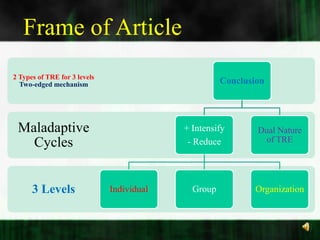
Frame of Article
2010/5/124Intensification of Threat (Radical Change)    ***↑Maladaptive Cycles↑Environmental ChangeInformation Restriction Threats(Lost / Cost)Rigidity in Response (well-learned / dominant response)Constriction in Control ↓Functional Adaption↓Reducing of Threat (Incremental Change)***Conclusion mentioned that when adversity results from radical change, organizational control and press efficiency may be dysfunction due to  [Resource Scarcity]. (page 519)
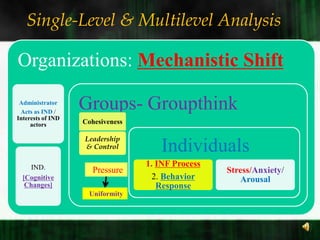
   Single-Level & Multilevel Analysis  PressureUniformity
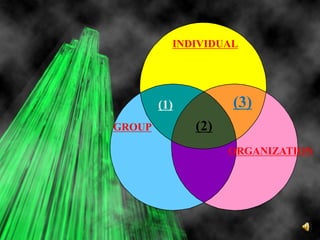
INDIVIDUALGROUP(3)(1)(2)ORGANIZATION
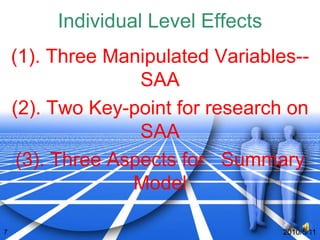
2010/5/127Individual Level Effects(1). Three Manipulated Variables-- SAA(2). Two Key-point for research on SAA (3). Three Aspects for   Summary Model
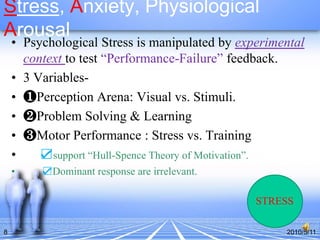
2010/5/128Stress, Anxiety, Physiological ArousalPsychological Stress is manipulated by experimental context to test “Performance-Failure” feedback.3 Variables-❶Perception Arena: Visual vs. Stimuli.❷Problem Solving & Learning❸Motor Performance : Stress vs. Training☑support “Hull-Spence Theory of Motivation”.☑Dominant response are irrelevant.STRESS
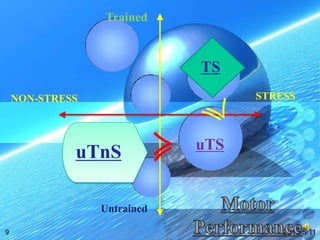
2010/5/129TrainedTSSTRESS≽NON-STRESS≽uTSuTnSMotor PerformanceUntrained
2010/5/1210Stress, Anxiety, Physiological Arousal2 Sub stream Studies-❶Correlation [Anxiety] vs. [Performance Indicator]Anxiety↑; Visual Stimulation ↓❷ [ Experimental Manipulations ] ≋[ Stress Study]ANXIETY
2010/5/1211Stress, Anxiety, Physiological Arousal❶Effect of Arousal on Perception❷ Learning❸Motor Performance[ Psychological ]                    [ Physical]ComplementaryStress  & AnxietyAROUSALAROUSAL
Model of Individual Threat-Response  STRESS ANXIETYAROUSALNatural Cognitive Indicates SAAThreat SituationLink     Properties of Individual Behaviors[Psychological]   STRESS & ANXIETY[Physical]
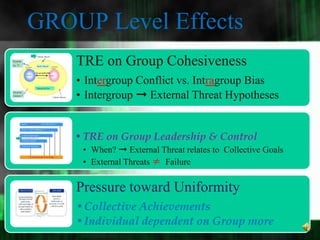
GROUP Level Effects
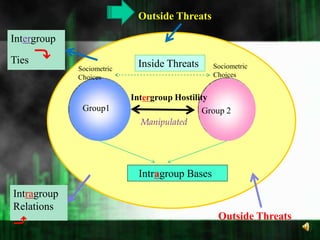
Outside Threats IntergroupTies  ⤵Inside ThreatsSociometric ChoicesSociometric ChoicesIntergroup HostilityGroup1Group 2Manipulated   Intragroup BasesIntragroupRelations ⤴Outside Threats
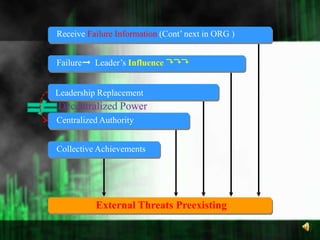
Receive Failure Information (Cont’ next in ORG )Failure➞ Leader’s Influence ⤵⤵⤵ Leadership Replacement Decentralized Power Centralized Authority Collective AchievementsExternal Threats Preexisting
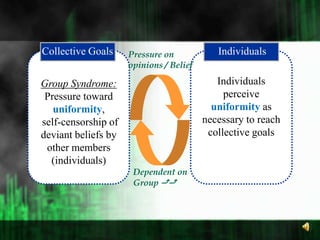
Collective GoalsIndividualsPressure on opinions / BeliefIndividuals perceive uniformity as necessary to reach collective goalsGroup Syndrome:Pressure toward uniformity, self-censorship of deviant beliefs by other members      (individuals)Dependent on Group ⤴⤴
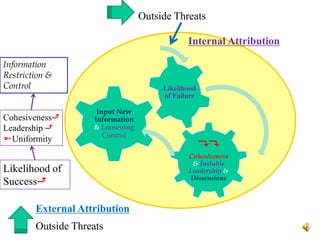
Outside Threats Internal AttributionInformation Restriction & ControlCohesiveness⤴Leadership ⤴➵UniformityLikelihood of Success⤴External AttributionOutside Threats
2010/5/1218Organizational Level Effects 1. The Effects of Threat on Information Process.2. The Effects of Threat in Control (Mechanistic Shift)
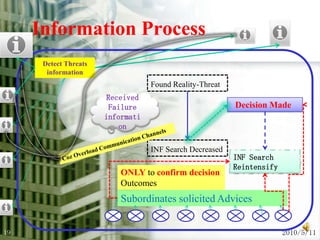
2010/5/1219Information ProcessDetect Threats  informationFound Reality-ThreatReceived Failure information   Decision MadeCoz Overload Communication Channels INF Search DecreasedINF SearchReintensify ONLY to confirmdecision OutcomesSubordinates solicited Advices
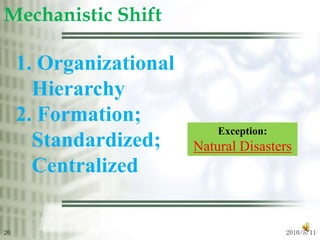
2010/5/1220Mechanistic Shift 1. Organizational Hierarchy2. Formation; Standardized; CentralizedException:Natural Disasters
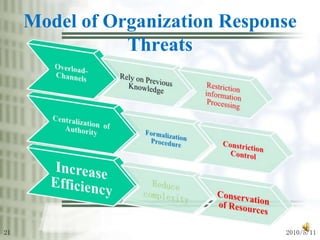
2010/5/1221Model of Organization Response Threats
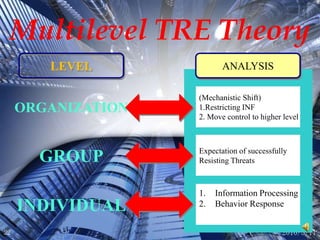
2010/5/1222LEVELANALYSISORGANIZATION(Mechanistic Shift)1.Restricting INF2. Move control to higher level GROUPExpectation of successfully Resisting Threats INDIVIDUALInformation ProcessingBehavior ResponseMultilevel TRE Theory
2010/5/1223Individual-Level Effect in Group Settings   IndividualOrganizationGroupMay be explained by [ Cognitive Changes] in the individuals who compose the group.
2010/5/1224         IndividualsORGGroupGroup Effects in Org Any rigidity generated by [ Groupthink] process under threats may be manifested or regarded as [Organizational Actions].
2010/5/1225 Individual  ORGIndividual Effects in ORG  Decision originates with administrator acting alone, so regarded as “Individual”Organizational challenges usually cover [ interests of individual actors].Individual may exacerbate the power differential between subunits and administrators.
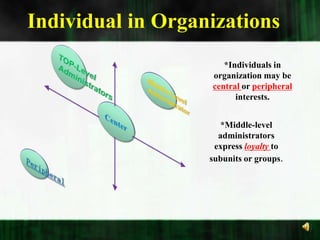
Individual in OrganizationsCenterTOP-LevelAdministrators*Individuals in organization may be central or peripheral interests. Middle-LevelAdministrator*Middle-level administrators express loyalty to subunits or groups.Peripheral
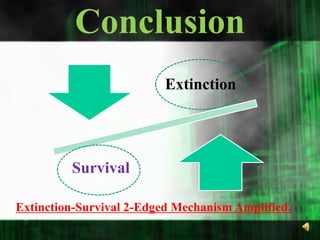
ConclusionExtinction-Survival 2-Edged Mechanism Amplified.
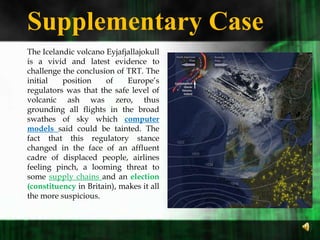
Supplementary Case  The Icelandic volcano Eyjafjallajokull is a vivid and latest evidence to challenge the conclusion of TRT. The initial position of Europe’s regulators was that the safe level of volcanic ash was zero, thus grounding all flights in the broad swathes of sky which computer models said could be tainted. The fact that this regulatory stance changed in the face of an affluent cadre of displaced people, airlines feeling pinch, a looming threat to some supply chains and an election (constituency in Britain), makes it all the more suspicious.
TRT in Organization BehaviorIn the field of organization behavior, there are two conflict theories in explaining the risk-taking-driven behaviors. Threat-rigidity theory asserts that organizations will behave conservatively under threat conditions; meanwhile, “Prospect theory”argues that organizations will behave in a risk-taking manner when they is below a specific self-perceived reference point.
Thank you!

Threat Rigidity Effects in Organizational Behavior- Multilevel Analysis

  • 1.
    Decision Making Presentation2010Hereyou can enteryour own personal message. Just select all of this existing text and start typing your own message.
  • 2.
    Threat-Rigidity Effects inOrganizationalBehaviorA Multilevel AnalysisLuke Chiu
  • 3.
  • 4.
    2010/5/124Intensification of Threat(Radical Change) ***↑Maladaptive Cycles↑Environmental ChangeInformation Restriction Threats(Lost / Cost)Rigidity in Response (well-learned / dominant response)Constriction in Control ↓Functional Adaption↓Reducing of Threat (Incremental Change)***Conclusion mentioned that when adversity results from radical change, organizational control and press efficiency may be dysfunction due to [Resource Scarcity]. (page 519)
  • 5.
    Single-Level & Multilevel Analysis PressureUniformity
  • 6.
  • 7.
    2010/5/127Individual Level Effects(1).Three Manipulated Variables-- SAA(2). Two Key-point for research on SAA (3). Three Aspects for Summary Model
  • 8.
    2010/5/128Stress, Anxiety, PhysiologicalArousalPsychological Stress is manipulated by experimental context to test “Performance-Failure” feedback.3 Variables-❶Perception Arena: Visual vs. Stimuli.❷Problem Solving & Learning❸Motor Performance : Stress vs. Training☑support “Hull-Spence Theory of Motivation”.☑Dominant response are irrelevant.STRESS
  • 9.
  • 10.
    2010/5/1210Stress, Anxiety, PhysiologicalArousal2 Sub stream Studies-❶Correlation [Anxiety] vs. [Performance Indicator]Anxiety↑; Visual Stimulation ↓❷ [ Experimental Manipulations ] ≋[ Stress Study]ANXIETY
  • 11.
    2010/5/1211Stress, Anxiety, PhysiologicalArousal❶Effect of Arousal on Perception❷ Learning❸Motor Performance[ Psychological ] [ Physical]ComplementaryStress & AnxietyAROUSALAROUSAL
  • 12.
    Model of IndividualThreat-Response STRESS ANXIETYAROUSALNatural Cognitive Indicates SAAThreat SituationLink Properties of Individual Behaviors[Psychological] STRESS & ANXIETY[Physical]
  • 13.
  • 14.
    Outside Threats IntergroupTies ⤵Inside ThreatsSociometric ChoicesSociometric ChoicesIntergroup HostilityGroup1Group 2Manipulated Intragroup BasesIntragroupRelations ⤴Outside Threats
  • 15.
    Receive Failure Information(Cont’ next in ORG )Failure➞ Leader’s Influence ⤵⤵⤵ Leadership Replacement Decentralized Power Centralized Authority Collective AchievementsExternal Threats Preexisting
  • 16.
    Collective GoalsIndividualsPressure onopinions / BeliefIndividuals perceive uniformity as necessary to reach collective goalsGroup Syndrome:Pressure toward uniformity, self-censorship of deviant beliefs by other members (individuals)Dependent on Group ⤴⤴
  • 17.
    Outside Threats InternalAttributionInformation Restriction & ControlCohesiveness⤴Leadership ⤴➵UniformityLikelihood of Success⤴External AttributionOutside Threats
  • 18.
    2010/5/1218Organizational Level Effects1. The Effects of Threat on Information Process.2. The Effects of Threat in Control (Mechanistic Shift)
  • 19.
    2010/5/1219Information ProcessDetect Threats informationFound Reality-ThreatReceived Failure information Decision MadeCoz Overload Communication Channels INF Search DecreasedINF SearchReintensify ONLY to confirmdecision OutcomesSubordinates solicited Advices
  • 20.
    2010/5/1220Mechanistic Shift 1.Organizational Hierarchy2. Formation; Standardized; CentralizedException:Natural Disasters
  • 21.
  • 22.
    2010/5/1222LEVELANALYSISORGANIZATION(Mechanistic Shift)1.Restricting INF2.Move control to higher level GROUPExpectation of successfully Resisting Threats INDIVIDUALInformation ProcessingBehavior ResponseMultilevel TRE Theory
  • 23.
    2010/5/1223Individual-Level Effect inGroup Settings IndividualOrganizationGroupMay be explained by [ Cognitive Changes] in the individuals who compose the group.
  • 24.
    2010/5/1224 IndividualsORGGroupGroup Effects in Org Any rigidity generated by [ Groupthink] process under threats may be manifested or regarded as [Organizational Actions].
  • 25.
    2010/5/1225 Individual ORGIndividual Effects in ORG Decision originates with administrator acting alone, so regarded as “Individual”Organizational challenges usually cover [ interests of individual actors].Individual may exacerbate the power differential between subunits and administrators.
  • 26.
    Individual in OrganizationsCenterTOP-LevelAdministrators*Individualsin organization may be central or peripheral interests. Middle-LevelAdministrator*Middle-level administrators express loyalty to subunits or groups.Peripheral
  • 27.
  • 28.
    Supplementary Case The Icelandic volcano Eyjafjallajokull is a vivid and latest evidence to challenge the conclusion of TRT. The initial position of Europe’s regulators was that the safe level of volcanic ash was zero, thus grounding all flights in the broad swathes of sky which computer models said could be tainted. The fact that this regulatory stance changed in the face of an affluent cadre of displaced people, airlines feeling pinch, a looming threat to some supply chains and an election (constituency in Britain), makes it all the more suspicious.
  • 29.
    TRT in OrganizationBehaviorIn the field of organization behavior, there are two conflict theories in explaining the risk-taking-driven behaviors. Threat-rigidity theory asserts that organizations will behave conservatively under threat conditions; meanwhile, “Prospect theory”argues that organizations will behave in a risk-taking manner when they is below a specific self-perceived reference point.
  • 30.