THREAD SCHEDULING AND
MULTIPLE-PROCESSOR SCHEDULING
IN OPERATING SYSTEMS
An Overview of key Concepts and Techniques
By
P.RubyStellaMary
Overview of Threads
 Definition of a Thread
 Differences between Threads and processes
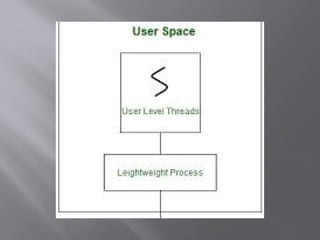
 Types of Threads : User – level and Kernel - level
Thread scheduling
Models
 Many-to-one model
 One-to- one model
 Many-to-many model
Common Thread
scheduling
Algorithms
 First-come,First-served(FCFS)
 Shortest job next (SJN)
 Round Robin(RR)
 Priority Scheduling
Scheduling Criteria
 CPU Utilization
 Thoughput
 Turnaround Time
 Waiting Time
 Response Time
MULTIPLE-PROCESSOR SCHEDULING
Types of Multiple-
processor Systems
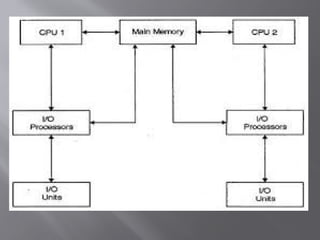
 Symmetric Multiprocessing(SMP)
 Asymmetric Multiprocessing(AMP
Scheduling in
Symmetric
Multiprocessing
 How SMP Systems schedule Threads
 Load Balancing
Scheduling in
Asymmetric
Multiprocessing
 How Amp Systems schedule Threads
 Master-Slave Scheduling Model
Processor Affinity
 Definition of processor Affinity
 Types: Soft Affinity, Hard Affinity
Load Balancing
Techniques
 Push Migration
 Pull Migration
Challenges in
Scheduling
 Scalability issues
 Power Efficiency considerations
Future Trends in
scheduling
 Trends in Multi-core processing
 Energy-Aware Scheduling
THANK YOU

Thread Scheduling and Multiple-Processor_os.pptx