Download to read offline
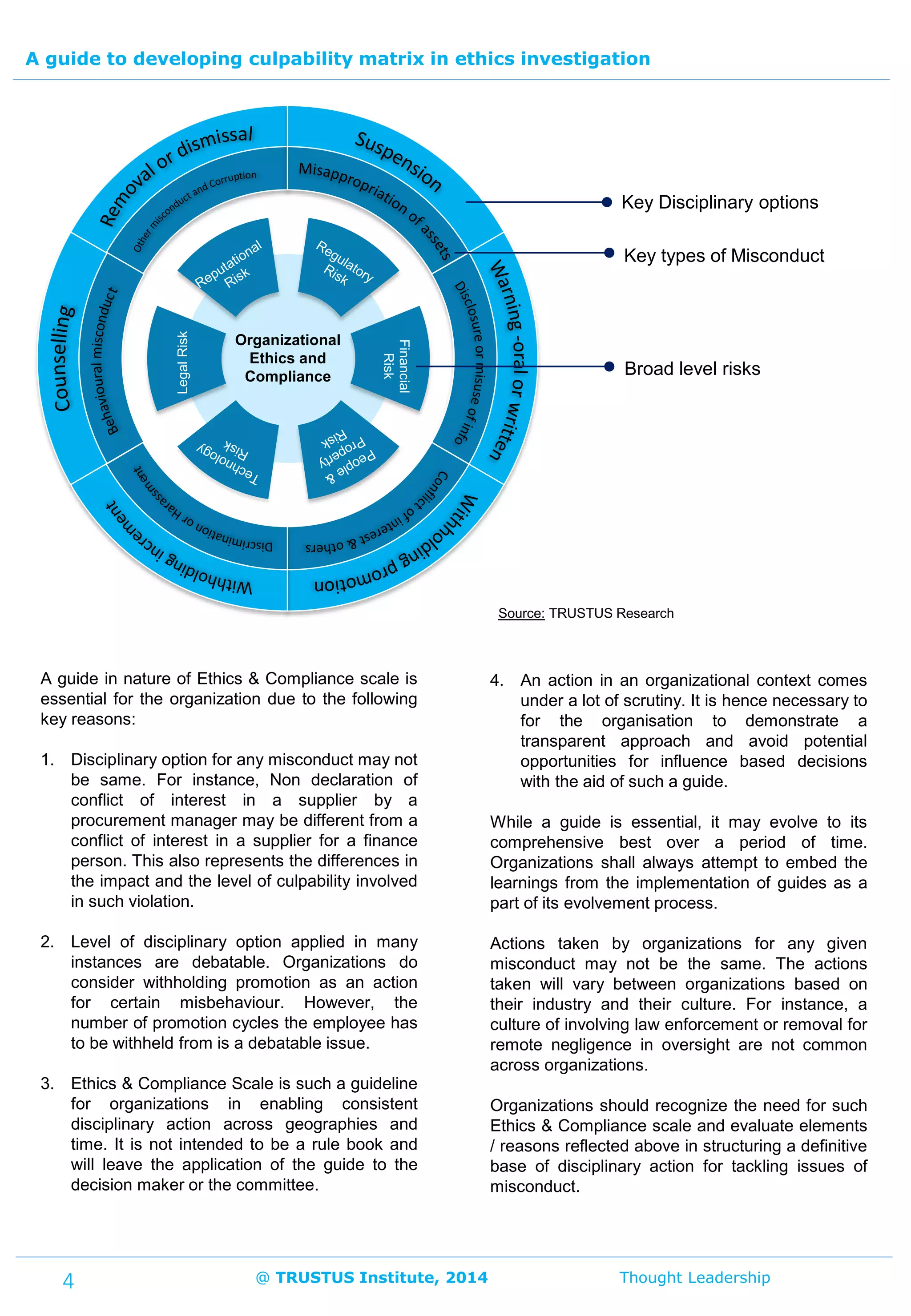




This document discusses developing a culpability matrix for ethics investigations. It explains that misconduct comes in many forms with varying root causes, impacts, and levels of intent. A culpability matrix can help ensure consistent disciplinary actions that are appropriate to the type of misconduct. The key factors discussed for determining disciplinary actions are: the act of misconduct itself, the role of the subject, any motivations, behavioral aspects, and the organization's perspective. Consistent guidelines help ensure transparency and prevent arbitrary decision making, while still allowing flexibility. Organizations should structure disciplinary guidelines but also continue evolving them over time.


