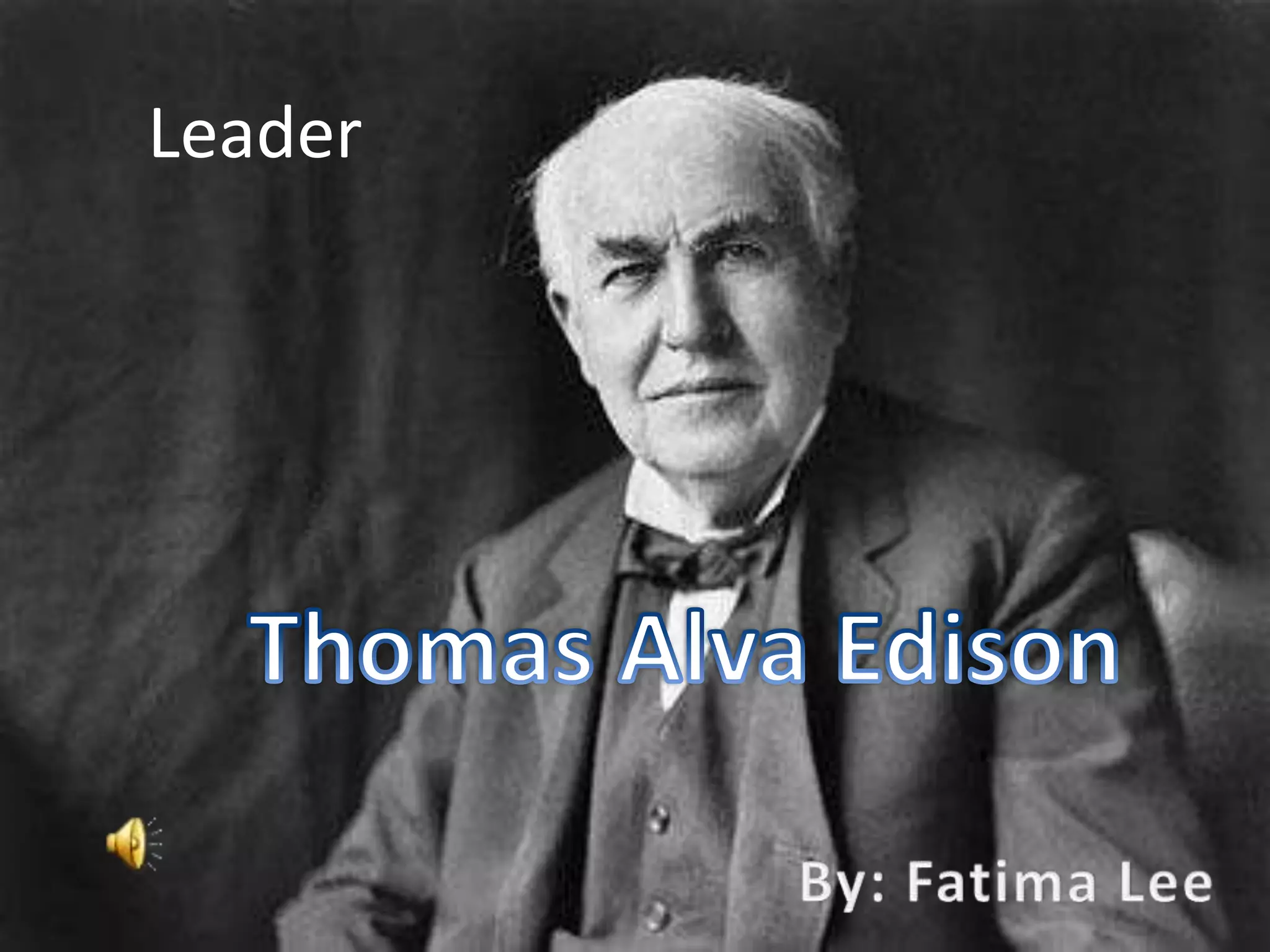
Leader
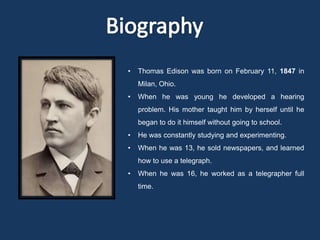
•   Thomas Edison was born on February 11, 1847 in
    Milan, Ohio.
•   When he was young he developed a hearing
    problem. His mother taught him by herself until he
    began to do it himself without going to school.
•   He was constantly studying and experimenting.
•   When he was 13, he sold newspapers, and learned
    how to use a telegraph.
•   When he was 16, he worked as a telegrapher full
    time.
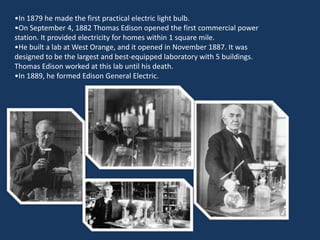
•In 1879 he made the first practical electric light bulb.
•On September 4, 1882 Thomas Edison opened the first commercial power
station. It provided electricity for homes within 1 square mile.
•He built a lab at West Orange, and it opened in November 1887. It was
designed to be the largest and best-equipped laboratory with 5 buildings.
Thomas Edison worked at this lab until his death.
•In 1889, he formed Edison General Electric.
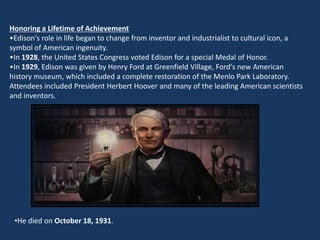
Honoring a Lifetime of Achievement
•Edison's role in life began to change from inventor and industrialist to cultural icon, a
symbol of American ingenuity.
•In 1928, the United States Congress voted Edison for a special Medal of Honor.
•In 1929, Edison was given by Henry Ford at Greenfield Village, Ford's new American
history museum, which included a complete restoration of the Menlo Park Laboratory.
Attendees included President Herbert Hoover and many of the leading American scientists
and inventors.


 •He died on October 18, 1931.
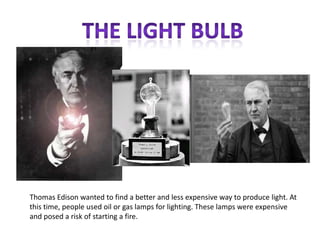
Thomas Edison wanted to find a better and less expensive way to produce light. At
this time, people used oil or gas lamps for lighting. These lamps were expensive
and posed a risk of starting a fire.
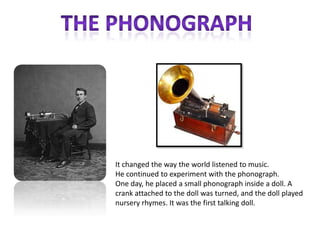
It changed the way the world listened to music.
He continued to experiment with the phonograph.
One day, he placed a small phonograph inside a doll. A
crank attached to the doll was turned, and the doll played
nursery rhymes. It was the first talking doll.
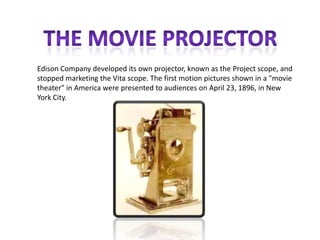
Edison Company developed its own projector, known as the Project scope, and
stopped marketing the Vita scope. The first motion pictures shown in a "movie
theater" in America were presented to audiences on April 23, 1896, in New
York City.
I choose him as a leader because

He turned darkness into light (light bulb),

  gave a machine a voice (phonograph),

made pictures to move (movie projector).
He was a great inventor and a hero
       recognized by society .

On October 21, the night of his funeral,

 people turned off their lights for one

minute to honour the Wizard, Thomas
Perseverance

• Continued steadily his beliefs on his work.

• Had self- confidence on his inventions created.

• Never gave up in improving his inventions and took
all the opportunities to learn new things in his
experiences through different places of learning
processes.
Communication

• Was intelligent in transmitting his creations through
communication.

• Smart to realize that any invention wasn’t worth
anything if people didn’t love it.

• Challenged to develop better his discoveries.

•Brought all the companies starting to make his
inventions together into one corporation.
“Genius is one percent inspiration and ninety-nine percent
perspiration”


“Being busy does not always mean real work. The object of
all work is production or accomplishment and to either of
these ends there must be
forethought, system, planning, intelligence, and honest
purpose, as well as perspiration. Seeming to do is not
doing”
Thomas Edison Leadership

Thomas Edison Leadership

  • 1.
  • 2.
    Thomas Edison was born on February 11, 1847 in Milan, Ohio. • When he was young he developed a hearing problem. His mother taught him by herself until he began to do it himself without going to school. • He was constantly studying and experimenting. • When he was 13, he sold newspapers, and learned how to use a telegraph. • When he was 16, he worked as a telegrapher full time.
  • 4.
    •In 1879 hemade the first practical electric light bulb. •On September 4, 1882 Thomas Edison opened the first commercial power station. It provided electricity for homes within 1 square mile. •He built a lab at West Orange, and it opened in November 1887. It was designed to be the largest and best-equipped laboratory with 5 buildings. Thomas Edison worked at this lab until his death. •In 1889, he formed Edison General Electric.
  • 5.
    Honoring a Lifetimeof Achievement •Edison's role in life began to change from inventor and industrialist to cultural icon, a symbol of American ingenuity. •In 1928, the United States Congress voted Edison for a special Medal of Honor. •In 1929, Edison was given by Henry Ford at Greenfield Village, Ford's new American history museum, which included a complete restoration of the Menlo Park Laboratory. Attendees included President Herbert Hoover and many of the leading American scientists and inventors. •He died on October 18, 1931.
  • 7.
    Thomas Edison wantedto find a better and less expensive way to produce light. At this time, people used oil or gas lamps for lighting. These lamps were expensive and posed a risk of starting a fire.
  • 8.
    It changed theway the world listened to music. He continued to experiment with the phonograph. One day, he placed a small phonograph inside a doll. A crank attached to the doll was turned, and the doll played nursery rhymes. It was the first talking doll.
  • 9.
    Edison Company developedits own projector, known as the Project scope, and stopped marketing the Vita scope. The first motion pictures shown in a "movie theater" in America were presented to audiences on April 23, 1896, in New York City.
  • 10.
    I choose himas a leader because He turned darkness into light (light bulb), gave a machine a voice (phonograph), made pictures to move (movie projector).
  • 11.
    He was agreat inventor and a hero recognized by society . On October 21, the night of his funeral, people turned off their lights for one minute to honour the Wizard, Thomas
  • 13.
    Perseverance • Continued steadilyhis beliefs on his work. • Had self- confidence on his inventions created. • Never gave up in improving his inventions and took all the opportunities to learn new things in his experiences through different places of learning processes.
  • 14.
    Communication • Was intelligentin transmitting his creations through communication. • Smart to realize that any invention wasn’t worth anything if people didn’t love it. • Challenged to develop better his discoveries. •Brought all the companies starting to make his inventions together into one corporation.
  • 15.
    “Genius is onepercent inspiration and ninety-nine percent perspiration” “Being busy does not always mean real work. The object of all work is production or accomplishment and to either of these ends there must be forethought, system, planning, intelligence, and honest purpose, as well as perspiration. Seeming to do is not doing”