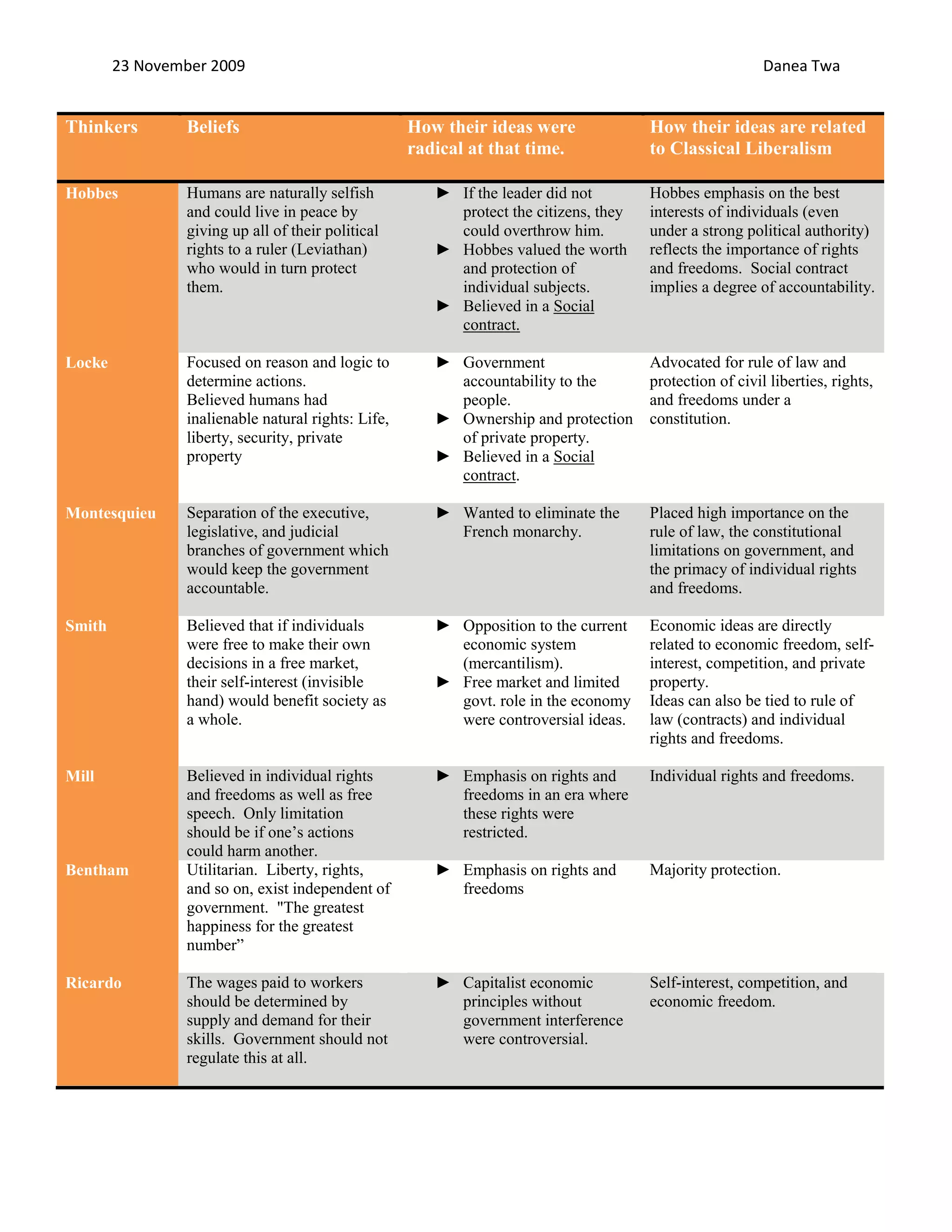
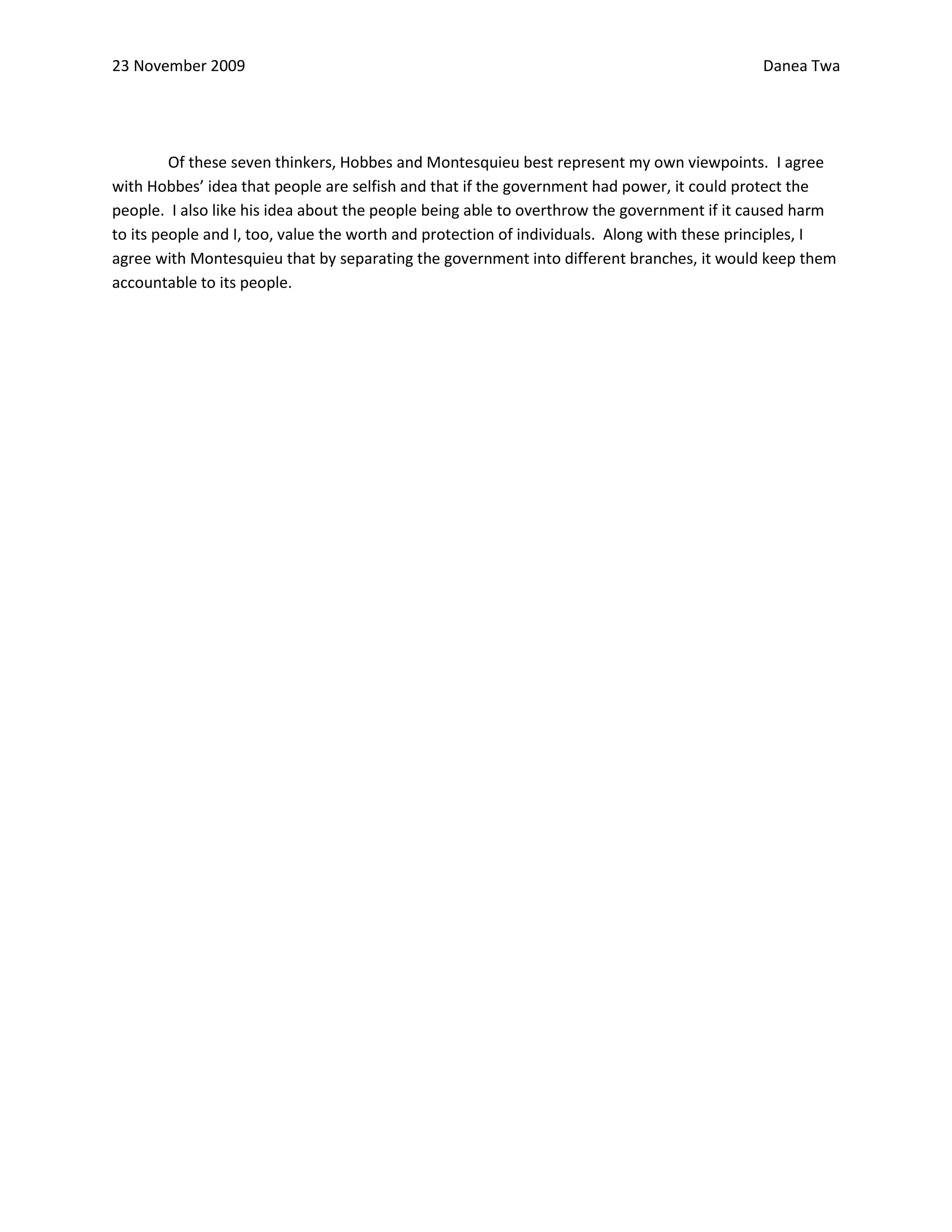
ThinkersBeliefsHow their ideas were radical at that time.How their ideas are related to Classical LiberalismHobbesHumans are naturally selfish and could live in peace by giving up all of their political rights to a ruler (Leviathan) who would in turn protect them.If the leader did not protect the citizens, they could overthrow him.Hobbes valued the worth and protection of individual subjects.Believed in a Social contract.Hobbes emphasis on the best interests of individuals (even under a strong political authority) reflects the importance of rights and freedoms.  Social contract implies a degree of accountability.LockeFocused on reason and logic to determine actions.Believed humans had inalienable natural rights: Life, liberty, security, private propertyGovernment accountability to the people.Ownership and protection of private property.Believed in a Social contract.Advocated for rule of law and protection of civil liberties, rights, and freedoms under a constitution.MontesquieuSeparation of the executive, legislative, and judicial branches of government which would keep the government accountable.Wanted to eliminate the French monarchy.Placed high importance on the rule of law, the constitutional limitations on government, and the primacy of individual rights and freedoms.SmithBelieved that if individuals were free to make their own decisions in a free market, their self-interest (invisible hand) would benefit society as a whole.Opposition to the current economic system (mercantilism).Free market and limited govt. role in the economy were controversial ideas.Economic ideas are directly related to economic freedom, self-interest, competition, and private property.Ideas can also be tied to rule of law (contracts) and individual rights and freedoms.MillBelieved in individual rights and freedoms as well as free speech.  Only limitation should be if one’s actions could harm another.Emphasis on rights and freedoms in an era where these rights were restricted.Individual rights and freedoms.Bentham Utilitarian.  Liberty, rights, and so on, exist independent of government.  "The greatest happiness for the greatest number” Emphasis on rights and freedomsMajority protection.RicardoThe wages paid to workers should be determined by supply and demand for their skills.  Government should not regulate this at all.Capitalist economic principles without government interference were controversial.Self-interest, competition, and economic freedom.Of these seven thinkers, Hobbes and Montesquieu best represent my own viewpoints.  I agree with Hobbes’ idea that people are selfish and that if the government had power, it could protect the people.  I also like his idea about the people being able to overthrow the government if it caused harm to its people and I, too, value the worth and protection of individuals.  Along with these principles, I agree with Montesquieu that by separating the government into different branches, it would keep them accountable to its people.<br />
Thinkers

Thinkers

  • 1.
    ThinkersBeliefsHow their ideaswere radical at that time.How their ideas are related to Classical LiberalismHobbesHumans are naturally selfish and could live in peace by giving up all of their political rights to a ruler (Leviathan) who would in turn protect them.If the leader did not protect the citizens, they could overthrow him.Hobbes valued the worth and protection of individual subjects.Believed in a Social contract.Hobbes emphasis on the best interests of individuals (even under a strong political authority) reflects the importance of rights and freedoms. Social contract implies a degree of accountability.LockeFocused on reason and logic to determine actions.Believed humans had inalienable natural rights: Life, liberty, security, private propertyGovernment accountability to the people.Ownership and protection of private property.Believed in a Social contract.Advocated for rule of law and protection of civil liberties, rights, and freedoms under a constitution.MontesquieuSeparation of the executive, legislative, and judicial branches of government which would keep the government accountable.Wanted to eliminate the French monarchy.Placed high importance on the rule of law, the constitutional limitations on government, and the primacy of individual rights and freedoms.SmithBelieved that if individuals were free to make their own decisions in a free market, their self-interest (invisible hand) would benefit society as a whole.Opposition to the current economic system (mercantilism).Free market and limited govt. role in the economy were controversial ideas.Economic ideas are directly related to economic freedom, self-interest, competition, and private property.Ideas can also be tied to rule of law (contracts) and individual rights and freedoms.MillBelieved in individual rights and freedoms as well as free speech. Only limitation should be if one’s actions could harm another.Emphasis on rights and freedoms in an era where these rights were restricted.Individual rights and freedoms.Bentham Utilitarian. Liberty, rights, and so on, exist independent of government. "The greatest happiness for the greatest number” Emphasis on rights and freedomsMajority protection.RicardoThe wages paid to workers should be determined by supply and demand for their skills. Government should not regulate this at all.Capitalist economic principles without government interference were controversial.Self-interest, competition, and economic freedom.Of these seven thinkers, Hobbes and Montesquieu best represent my own viewpoints. I agree with Hobbes’ idea that people are selfish and that if the government had power, it could protect the people. I also like his idea about the people being able to overthrow the government if it caused harm to its people and I, too, value the worth and protection of individuals. Along with these principles, I agree with Montesquieu that by separating the government into different branches, it would keep them accountable to its people.<br />