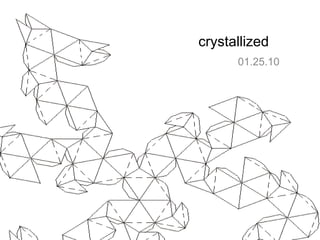
crystallized01.25.10
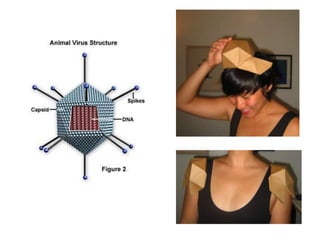
research concept Molecular biology is a source of myriad well-validated structures & shapesThese forms can be deconstructed or abstracted and used as building blocks to create novel wearables and explore unprecedented applications.
design questionsHow can biological structures and forms be meaningfully deconstructed and applied to wearables?What novel and functional architectures can be createdWhen thinking of these geometries as building blocks, which elements must be held constant and which may be stretched or changed?What applications might there be for such forms in other realms?
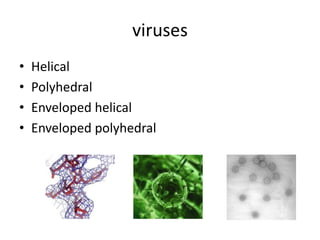
virusesHelicalPolyhedralEnveloped helicalEnveloped polyhedral
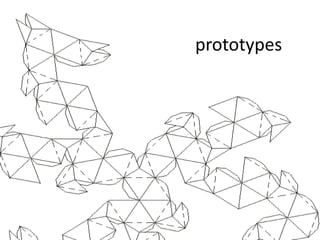
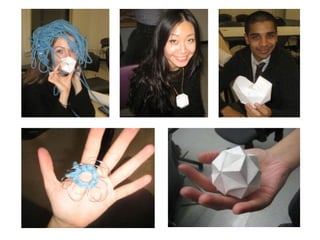
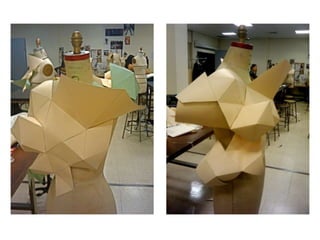
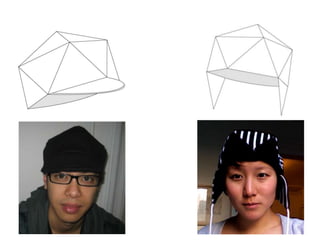
prototypes
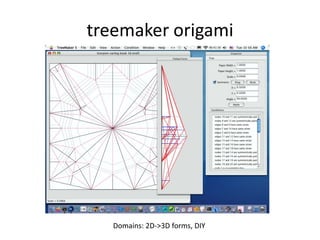
treemaker origamiDomains: 2D->3D forms, DIY
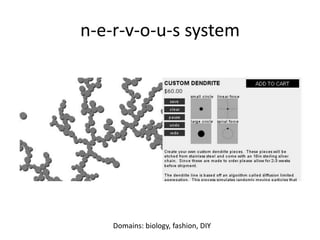
n-e-r-v-o-u-s systemDomains: biology, fashion, DIY
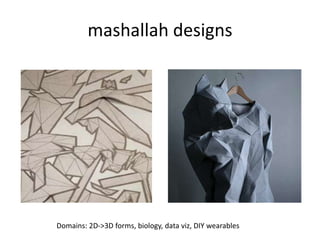
mashallah designsDomains: 2D->3D forms, biology, data viz, DIY wearables
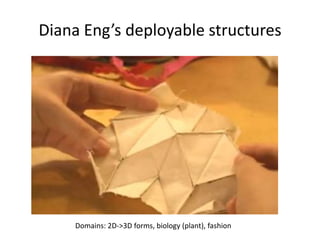
Diana Eng’s deployable structuresDomains: 2D->3D forms, biology (plant), fashion
users
target user profileCategory: Fashion/design enthusiasts, particularly DIY communityAge: 18-40
prototypes
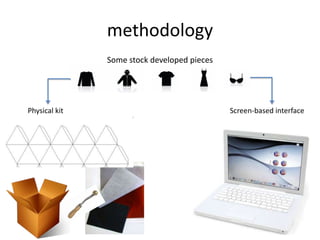
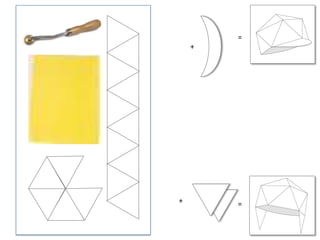
methodologySome stock developed piecesScreen-based interfacePhysical kit
=++=
challengesScalabilityCan this be a small business?TechnicalMust build a friendlier interface than what’s out there nowSocial assumptions about virusesThis concept doesn’t address genetic content of viruses, either the genetic material encased inside viruses, genetic variance, evolution, or mutations
connectionsOutside design worldDiana EngBurdastyleGregNervous SystemFundingIndieGoGoKickstarter

Thesis Brief012510

Editor's Notes

  • #3 Explore the relationships that arise from using molecular forms in wearables. What unique shapes can be achieved?
  • #7 2D->3D, Robert Lang
  • #9 Biology, DIY, 2D->3D