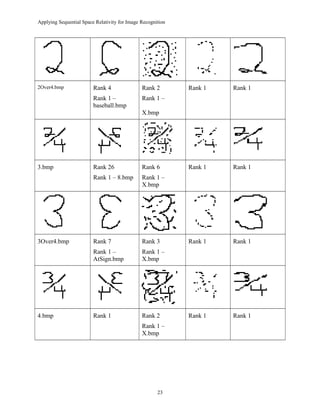
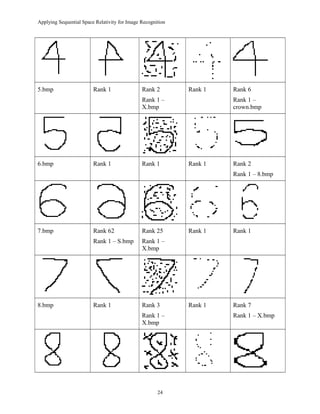
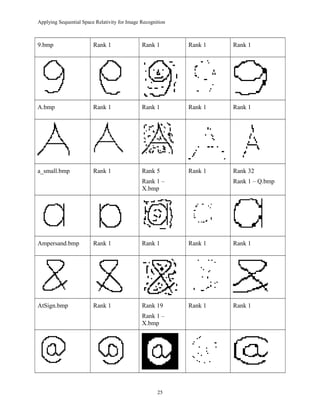
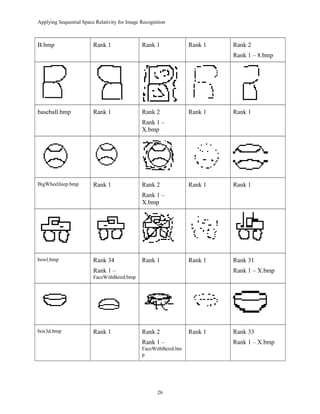
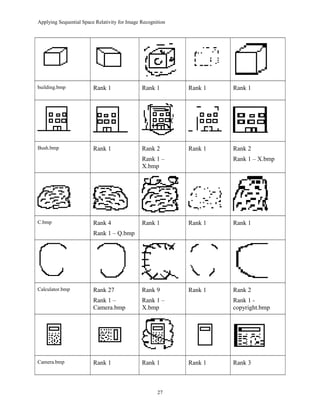
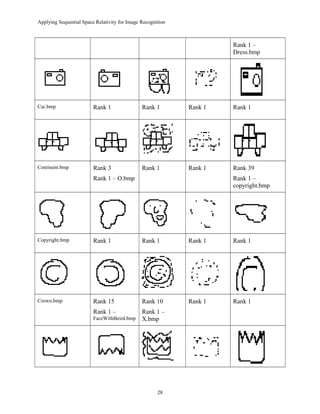
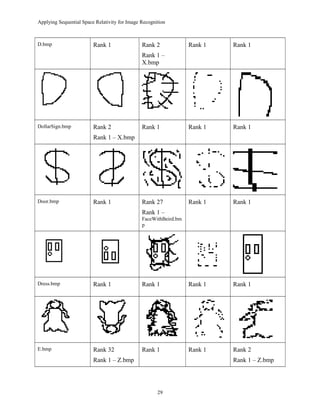
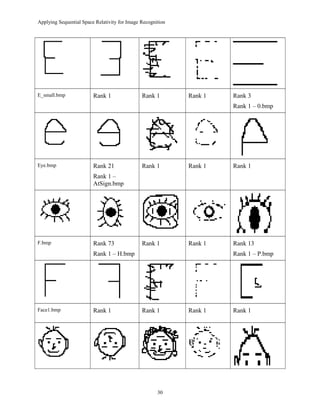
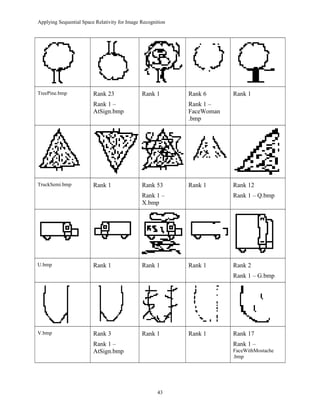
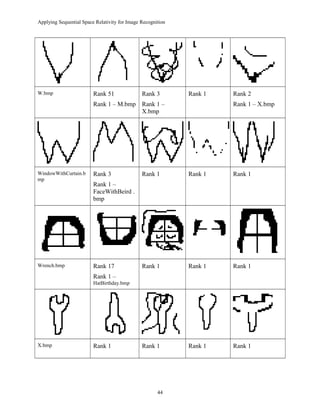
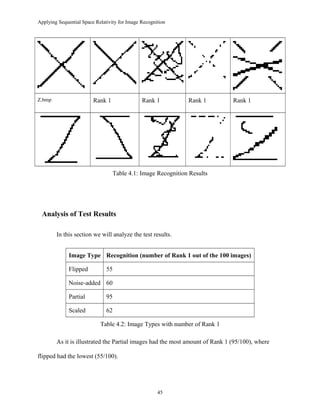
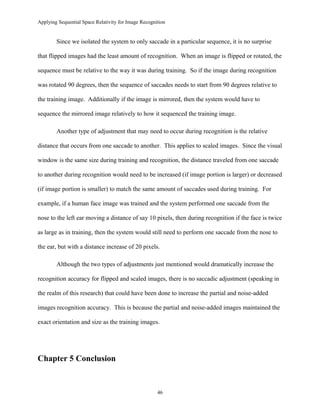
This document describes a thesis that aims to perform image recognition using properties of human vision. Specifically, it uses the property of the eye making saccadic eye movements when viewing an image. Space is defined as the area viewed during each saccade, and time is defined as the sequence of saccades. A system was developed that used this "sequential space relativity" approach on 100 training images and 400 distorted test images. The system achieved a 95% accuracy rate for partially removed images, 62% for scaled images, 60% for noise-added images, and 55% for flipped images, showing promise for this theory in industrial applications if it can dynamically change saccade paths and distances during recognition.



![Applying Sequential Space Relativity for Image Recognition
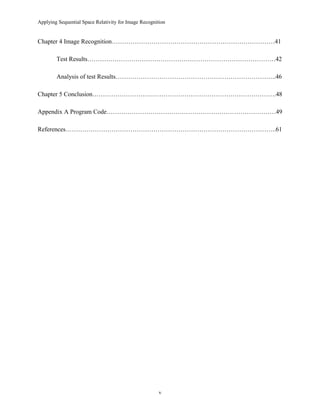
Figure 1.1: Schematic diagram of a neuron. The Terminal buttons are the synapses. [1]
What is the threshold? The threshold potential can be as low as -55mV or as high as
-40mV. This means when the neuron’s threshold potential is met, then the neuron will fire. The
resting membrane potential is lower than the threshold potential and is typically from -70mV to
-60mV [2]. When the neuron fires (A.K.A. spikes), the membrane potential reaches +30mV for
1 to 2 ms. It is agreed upon that the neuron does fire when the membrane potential reaches the
threshold potential for that neuron. But what makes the membrane potential reach the threshold
potential?
The classic view is that if enough input is applied to a neuron then the membrane
potential will reach the threshold potential and fire. However experiments have been performed
that contradict this notion [2]. As it can be seen in figure 1.2, the neuron fires on
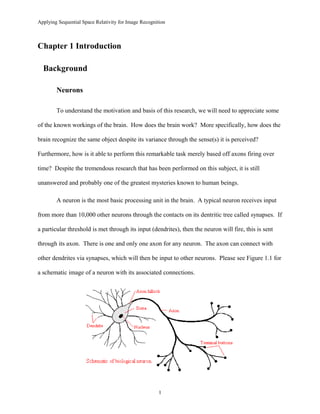
Figure 1.2: Varying input to neuron. Here is the resonant response of the mesencephalic V
neuron of rat brainstem to pulses of injected current having 10ms period (in vitro). [2]
varying input. Please note the “inhibitory burst” figure in 1.2, the neuron fires to bursts of
negative input, which contradicts the idea that a neuron will only fire if enough positively input
is applied. It has been argued that neurons are dynamical systems [2] which we agree with. The
Spiking Model by Izhikevich [3] (biologically plausible as the Hodgkin-Huxley model) can
2](https://image.slidesharecdn.com/a1bbff2d-439a-48b3-87ed-7f0594e26bcf-170204124315/85/Thesis-10-320.jpg)
![Applying Sequential Space Relativity for Image Recognition
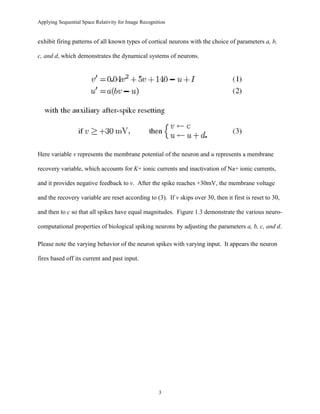
Figure 1.3: Summary of the neuro-computational properties of biological spiking neurons using
the Spiking Model by Izhikevich [3][4].
4](https://image.slidesharecdn.com/a1bbff2d-439a-48b3-87ed-7f0594e26bcf-170204124315/85/Thesis-12-320.jpg)
![Applying Sequential Space Relativity for Image Recognition
Saccadic Eye Movement
Saccadic eye movements occur when the eyes fixate from one point to another. One
reason why the eye saccades from one point to another is to keep the image of interest in the area
of the eye that has the highest concentration of cone cells, the Optic fovea [7]. Exactly how the
brain uses the information from the saccades, and knowing when and where to saccade is
currently unknown. But it is generally agreed upon that the eye makes saccade movements at
least during recognition.
Figure 1.4: The picture on the right shows the gaze of a subject exploring the portrait on the left.
[6]
Overview
Although this research is to apply sequential space relativity for image recognition, the
reader must note this theory can be applied to anything that can be broken down to space and
time, which will be defined in the next chapter. This is analogous to the brain in that it is not
5](https://image.slidesharecdn.com/a1bbff2d-439a-48b3-87ed-7f0594e26bcf-170204124315/85/Thesis-13-320.jpg)

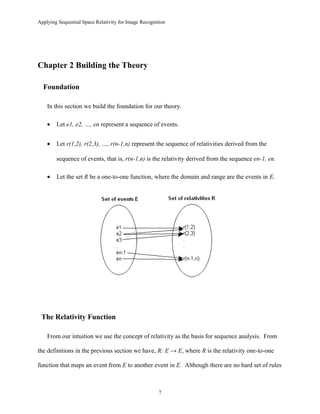
![Applying Sequential Space Relativity for Image Recognition
to follow to determine which relativity function to use, we however, want to choose a function
that fits our perception of the relativity from one event to another. So in this research, the events
represent the amount of space being used from one saccade to another. We define the relativity
function as:
r(n) = e(n+1) / e(n) , where e(n), e(n+1) ∈ and r(n) ∈
The Score Function
The score function is used to determine the score of how close one sequence matches
another. The higher the score, the closer the match, which is somewhat similar to the BLAST
theory used in DNA sequence analysis [8].
• Let i represent a relativity of the sequence of relativities I.
• Let j represent a relativity of the sequence of relativities J.
• We will define the score function as:
S(i,j) = i / (i + E(i,j) ), where E(i,j) = |i - j| and i,j > 0
We will now justify how this function was derived. When determining the score outcome from
comparing two relativities, i and j, we defined the upper bound to be 1, which will be reached if
the relativities match exactly. The lower bound to be 0, which will be approached as the error
(difference) between the relativities increases.
lim S(i,j) = 1
E(i,j) → 0
lim S(i,j) = 0
E(i,j) → ∞
8](https://image.slidesharecdn.com/a1bbff2d-439a-48b3-87ed-7f0594e26bcf-170204124315/85/Thesis-16-320.jpg)
![Applying Sequential Space Relativity for Image Recognition
In order to achieve this type of behavior, we intuitively started with f: x → 1/x and modified it to
better suit our needs, which gave us the score function defined.
To achieve the total score when comparing two sequences, we sum the comparative result
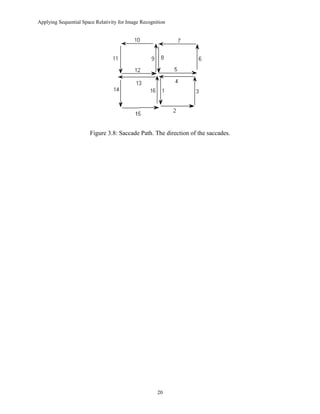
from each score function per alignment. Since we ensured every saccade would have at least 1
unit of space (1 black pixel), we always received a result from the score function in the range
(0,1] for each alignment. All sequences had to be the same length (training and recognition), so
the maximum score any two sequences could have when compared to each other is the sequence
length (predefined) multiplied by the maximum score (1) per alignment comparison.
9](https://image.slidesharecdn.com/a1bbff2d-439a-48b3-87ed-7f0594e26bcf-170204124315/85/Thesis-17-320.jpg)
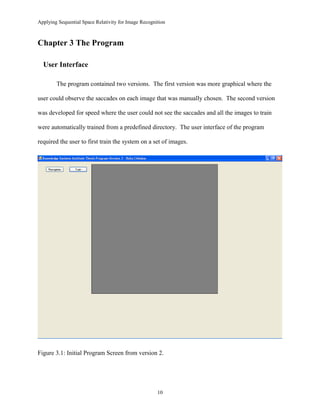
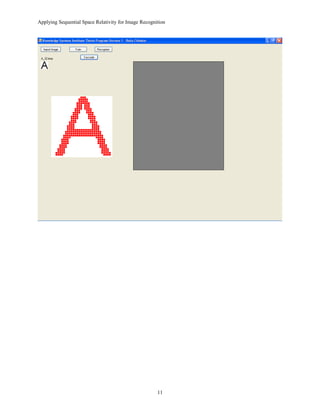

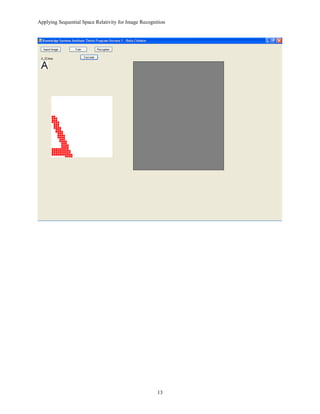
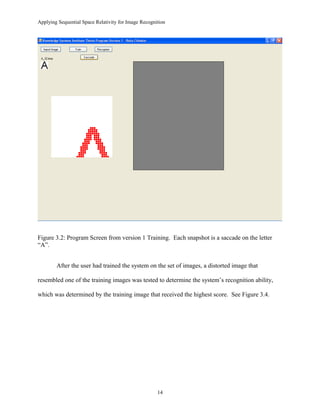
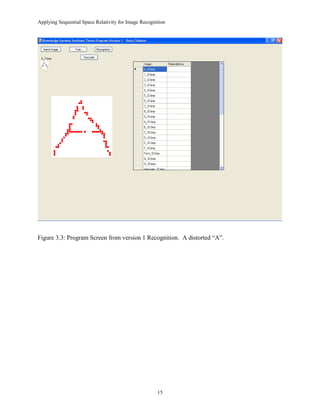
![Applying Sequential Space Relativity for Image Recognition
Figure 3.4: Program Screen from version 2 Results. The results after presenting a distorted “A”.
Implementation
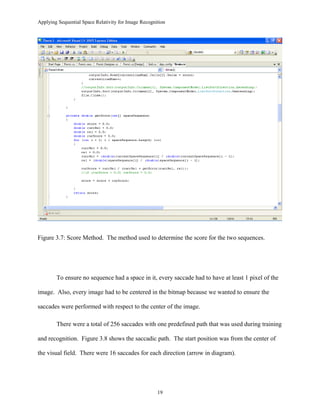
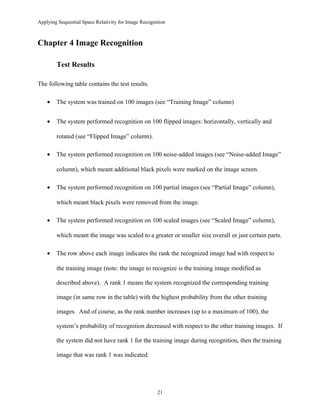
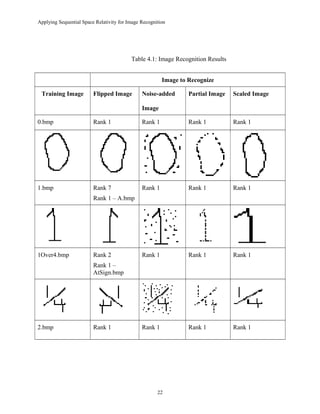
The program was written in Microsoft C# 2005 Express Edition [5]. We trained and
performed the recognition on 32 by 32 bitmap (black & white) pixels. Each image was
represented by black pixels. When the system was instructed to be in ‘train’ mode, it read from
every bitmap image within a predefined directory (version 2). For each image, it determined the
total amount of black pixels that existed for each saccade, which was then written to memory (a
16](https://image.slidesharecdn.com/a1bbff2d-439a-48b3-87ed-7f0594e26bcf-170204124315/85/Thesis-24-320.jpg)
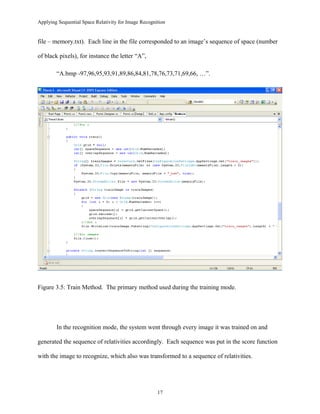
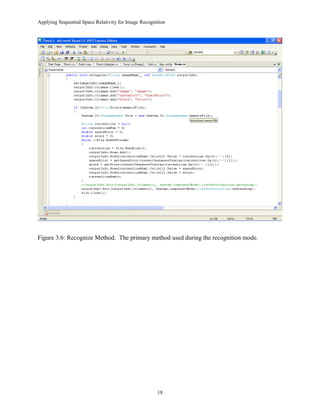
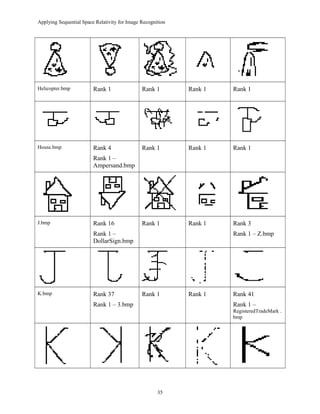
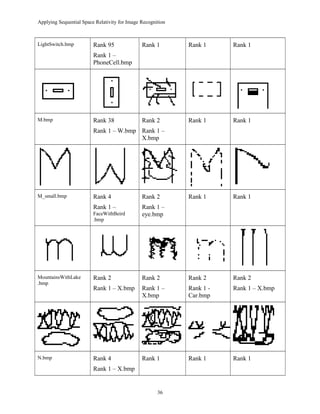
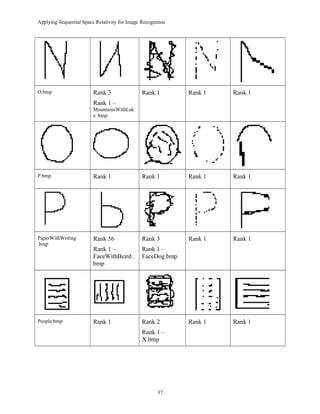
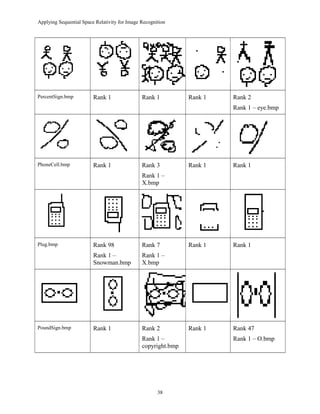
![Applying Sequential Space Relativity for Image Recognition
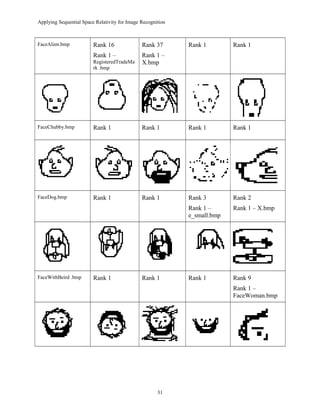
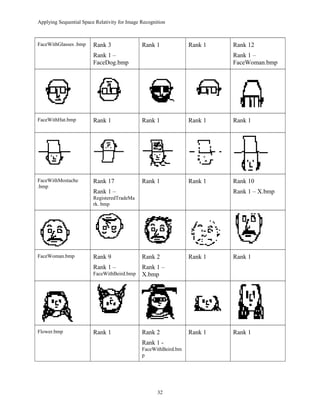
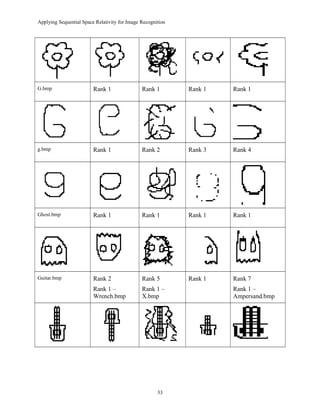
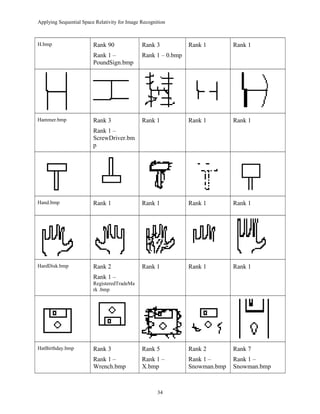
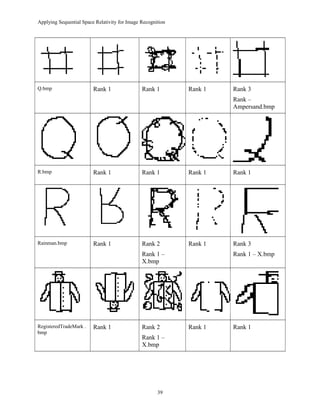
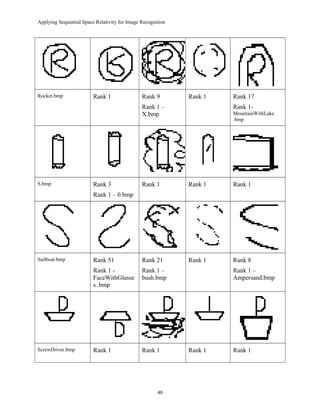
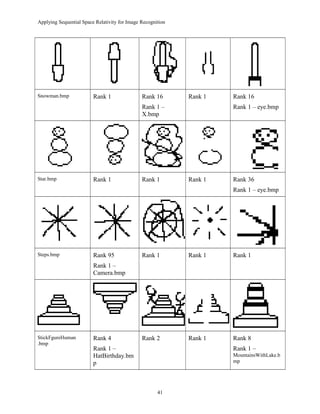
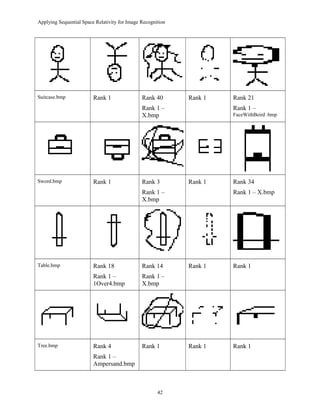
In this research it was demonstrated that very high accuracy can be obtained in image
recognition by taking an image over time, which was accomplished by taking the sequential
space relativity from one saccade to another. For this theory to be practical in the real world,
dynamic saccadic adjustments would have to be made by the system during recognition to
accommodate image scaling or rotation/mirroring as discussed in the previous chapter.
Furthermore, the system must only saccade on parts of the visual field that are of interest, that is,
if the system is looking for a dog’s face, it must saccade in the relative manner as done in
training.
As mentioned in the introduction of this research, although the theory is applied
for image recognition, the theory can be applied to anything that can be broken down to space
and time. More specifically, at any particular time (sequence) there must be particular space,
where space can be anything that is guaranteed to occur. In this research the amount of space
(pixels) occupied from one saccade to another was guaranteed to occur.
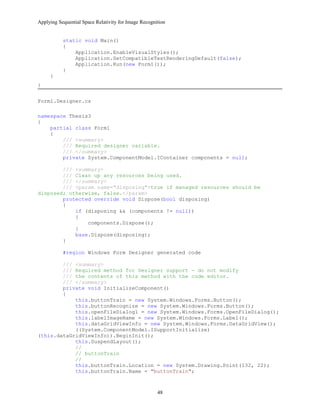
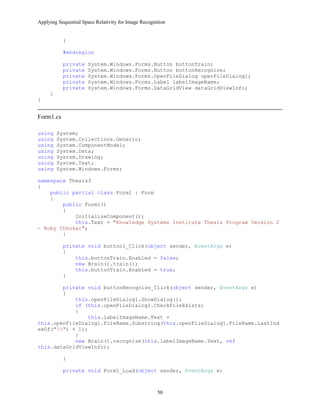
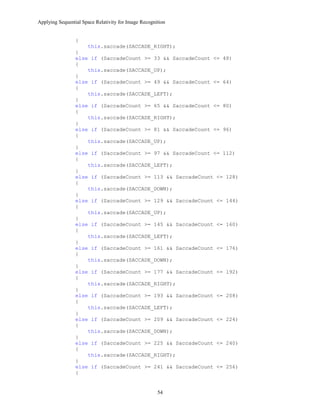
Appendix A Program Code
The following is the program code used to make the system in this research. It is organized in
files.
Program.cs
using System;
using System.Collections.Generic;
using System.Windows.Forms;
namespace Thesis3
{
static class Program
{
/// <summary>
/// The main entry point for the application.
/// </summary>
[STAThread]
47](https://image.slidesharecdn.com/a1bbff2d-439a-48b3-87ed-7f0594e26bcf-170204124315/85/Thesis-55-320.jpg)

![Applying Sequential Space Relativity for Image Recognition
{
}
}
}
Grid.cs
using System;
using System.Collections.Generic;
using System.Text;
using System.Data;
using System.Drawing;
using System.Text;
using System.Windows.Forms;
namespace Thesis3
{
public class Grid
{
private bool[,] gridCells; //true if an image cell
private Rectangle visualWindow; //top-left corner of visual field is
with respect to the grid Cells.
private bool[,] visualCellsPrev; //true if an image cell
private bool[,] visualCellsCurr; //true if an image cell
private int SaccadeCount = 0;
private int saccadeAmount;
private const byte SACCADE_LEFT = 1;
private const byte SACCADE_RIGHT = 2;
private const byte SACCADE_UP = 3;
private const byte SACCADE_DOWN = 4;
public static int NumSaccades = 256;
private int currentOverlap;
public int getSaccadeCount()
{
return this.SaccadeCount;
}
public Grid(Bitmap image)
{
this.gridCells = new bool[image.Width * 3, image.Height * 3];
this.visualCellsPrev = new bool[image.Width, image.Height];
this.visualCellsCurr = new bool[image.Width, image.Height];
for (int i = image.Width; i < image.Width * 2; i++)
{
for (int j = image.Height; j < image.Height * 2; j++)
{
if (image.GetPixel(i - image.Width, j -
image.Height).Name != "ffffffff")
{
gridCells[i, j] = true;
51](https://image.slidesharecdn.com/a1bbff2d-439a-48b3-87ed-7f0594e26bcf-170204124315/85/Thesis-59-320.jpg)
![Applying Sequential Space Relativity for Image Recognition
visualCellsCurr[i - image.Width,j - image.Height] =
true;
}
}//for j
}//for i
this.visualWindow = new Rectangle(new Point(image.Width,
image.Height), new Size(image.Width, image.Height));
saccadeAmount = this.visualWindow.Width / 32;
}
public int getCurrentOverlap()
{
int overlap = 0;
for (int i = 0; i < visualWindow.Width; i++)
{
for (int j = 0; j < visualWindow.Height; j++)
{
if (visualCellsPrev[i, j] && visualCellsCurr[i, j])
{
overlap++;
}
}//for j
}//for i
return overlap;
}
public int getCurrentSpace()
{
int space = 0;
for (int i = visualWindow.Location.X; i < visualWindow.Location.X
+ visualWindow.Size.Width; i++)
{
for (int j = visualWindow.Location.Y; j <
visualWindow.Location.Y + visualWindow.Size.Height; j++)
{
if (gridCells[i, j])
{
space++;
}
}//for j
}//for i
return space;
}
private void saccade(byte saccadeDirection)
{
Point newLocation = new Point(this.visualWindow.Location.X,
this.visualWindow.Location.Y);
switch (saccadeDirection)
{
case SACCADE_DOWN: newLocation.Y = newLocation.Y +
saccadeAmount; break;
case SACCADE_UP: newLocation.Y = newLocation.Y -
saccadeAmount; break;
52](https://image.slidesharecdn.com/a1bbff2d-439a-48b3-87ed-7f0594e26bcf-170204124315/85/Thesis-60-320.jpg)
![Applying Sequential Space Relativity for Image Recognition
case SACCADE_RIGHT: newLocation.X = newLocation.X +
saccadeAmount; break;
case SACCADE_LEFT: newLocation.X = newLocation.X -
saccadeAmount; break;
}
this.visualWindow.Location = newLocation;
copyCurrentToPrevVisualCells();
setCurrentVisualCells();
}
private void setCurrentVisualCells()
{
for (int i = visualWindow.Location.X; i < visualWindow.Location.X
+ visualWindow.Size.Width; i++)
{
for (int j = visualWindow.Location.Y; j <
visualWindow.Location.Y + visualWindow.Size.Height; j++)
{
if (gridCells[i, j])
{
visualCellsCurr[i - visualWindow.Location.X, j -
visualWindow.Location.Y] = true;
}
else
{
visualCellsCurr[i - visualWindow.Location.X, j -
visualWindow.Location.Y] = false;
}
}//for j
}//for i
}
private void copyCurrentToPrevVisualCells()
{
for (int i = 0; i < visualWindow.Width; i++)
{
for (int j = 0; j < visualWindow.Height; j++)
{
visualCellsPrev[i, j] = visualCellsCurr[i, j];
}//for j
}//for i
}
public void saccade()
{
SaccadeCount++;
/* 256 */
if (SaccadeCount >= 1 && SaccadeCount <= 16)
{
this.saccade(SACCADE_DOWN);
}
else if (SaccadeCount >= 17 && SaccadeCount <= 32)
53](https://image.slidesharecdn.com/a1bbff2d-439a-48b3-87ed-7f0594e26bcf-170204124315/85/Thesis-61-320.jpg)
![Applying Sequential Space Relativity for Image Recognition
this.saccade(SACCADE_UP);
}
}
}
}
Brain.cs
using System;
using System.Collections.Generic;
using System.Text;
using System.Configuration;
using System.IO;
using System.Data;
using System.Drawing;
using System.Text;
using System.Windows.Forms;
namespace Thesis3
{
class Brain
{
private String memoryFile =
ConfigurationSettings.AppSettings.Get("memory_file");
private int[] currentSpaceSequence = new int[Grid.NumSaccades];
private int[] currentSpaceOverlap = new int[Grid.NumSaccades];
public void recognize(String imageName_, ref DataGridView outputInfo)
{
setImageInfo(imageName_);
outputInfo.Columns.Clear();
outputInfo.Columns.Add("Image", "Image");
outputInfo.Columns.Add("Score", "Score");
outputInfo.Columns.Add("Rank", "Rank");
if (System.IO.File.Exists(memoryFile))
{
System.IO.StreamReader file = new
System.IO.StreamReader(memoryFile);
String currentLine = null;
int currentLineNum = 0;
double spaceError = 0;
double score = 0;
while (!file.EndOfStream)
{
currentLine = file.ReadLine();
outputInfo.Rows.Add();
outputInfo.Rows[currentLineNum].Cells[0].Value =
currentLine.Split('-')[0];
55](https://image.slidesharecdn.com/a1bbff2d-439a-48b3-87ed-7f0594e26bcf-170204124315/85/Thesis-63-320.jpg)
![Applying Sequential Space Relativity for Image Recognition
score =
getScore(convertSequenceToArray(currentLine.Split('-')[1]));
outputInfo.Rows[currentLineNum].Cells[1].Value = score;
currentLineNum++;
}
file.Close();
outputInfo.Sort(outputInfo.Columns[1],
System.ComponentModel.ListSortDirection.Descending);
for (int i = 0; i < outputInfo.Rows.Count; i++)
{
outputInfo.Rows[i].Cells[2].Value = i + 1;
}
}
}
private double getScore(int[] spaceSequence)
{
double score = 0.0;
double currRel = 0.0;
double rel = 0.0;
double curScore = 0.0;
for (int i = 1; i < spaceSequence.Length; i++)
{
currRel = 0.0;
rel = 0.0;
currRel = (double)currentSpaceSequence[i] /
(double)currentSpaceSequence[i - 1];
rel = (double)spaceSequence[i] / (double)spaceSequence[i - 1];
curScore = currRel / (currRel + getError(currRel, rel));
//if (curScore < 0.0) curScore = 0.0;
score = score + curScore;
}
return score;
}
private double getSpaceError(int [] spaceSequence)
{
double spaceError = 0.0;
double currRel = 0.0;
double rel = 0.0;
double error = 0.0;
for (int i = 1; i < spaceSequence.Length; i++)
{
currRel = 0.0;
rel = 0.0;
currRel = (double)currentSpaceSequence[i] /
(double)currentSpaceSequence[i - 1];
rel = (double)spaceSequence[i] / (double)spaceSequence[i - 1];
56](https://image.slidesharecdn.com/a1bbff2d-439a-48b3-87ed-7f0594e26bcf-170204124315/85/Thesis-64-320.jpg)
![Applying Sequential Space Relativity for Image Recognition
spaceError = spaceError + getError(currRel, rel);
}
return spaceError;
}
private double getError(double trainRel, double recRel)
{
double error = 0.0;
//error = Math.Abs(trainRel - recRel) / trainRel;
error = Math.Abs(trainRel - recRel);
return error;
}
private double getOverlapError(int[] overlapSequence)
{
double overlapError = 0.0;
double currRel = 0.0;
double rel = 0.0;
double error = 0.0;
for (int i = 1; i < overlapSequence.Length; i++)
{
currRel = 0.0;
rel = 0.0;
currRel = (double)currentSpaceOverlap[i] /
(double)currentSpaceOverlap[i - 1];
rel = (double)overlapSequence[i] / (double)overlapSequence[i
- 1];
overlapError = overlapError + getError(currRel, rel);
}
return overlapError;
}
private void setImageInfo(String imageName) {
Grid grid = new Grid(new Bitmap(imageName));
for (int i = 0; i < Grid.NumSaccades; i++)
{
currentSpaceSequence[i] = grid.getCurrentSpace();
grid.saccade();
currentSpaceOverlap[i] = grid.getCurrentOverlap();
}//for i
}
public void train()
{
Grid grid = null;
int[] spaceSequence = new int[Grid.NumSaccades];
int[] overlapSequence = new int[Grid.NumSaccades];
String[] trainImages =
Directory.GetFiles(ConfigurationSettings.AppSettings.Get("train_images"));
if (System.IO.File.Exists(memoryFile) && (new
System.IO.FileInfo(memoryFile).Length > 0))
{
System.IO.File.Copy(memoryFile, memoryFile + "_bak", true);
57](https://image.slidesharecdn.com/a1bbff2d-439a-48b3-87ed-7f0594e26bcf-170204124315/85/Thesis-65-320.jpg)
![Applying Sequential Space Relativity for Image Recognition
}
System.IO.StreamWriter file = new
System.IO.StreamWriter(memoryFile);
foreach (String trainImage in trainImages)
{
grid = new Grid(new Bitmap(trainImage));
for (int i = 0; i < Grid.NumSaccades; i++)
{
spaceSequence[i] = grid.getCurrentSpace();
grid.saccade();
overlapSequence[i] = grid.getCurrentOverlap();
}//for i
file.WriteLine(trainImage.Substring(ConfigurationSettings.AppSettings.Get("tr
ain_images").Length) + " - " + convertSequenceToString(spaceSequence) + " - "
+ convertSequenceToString(overlapSequence));
}//for images
file.Close();
}
private String convertSequenceToString(int [] sequence)
{
String seqStr = "";
foreach (int i in sequence)
{
seqStr = seqStr + "," + i;
}
return seqStr.Substring(1); //remove first comma
}
private int [] convertSequenceToArray(String sequence)
{
String [] seqArrTemp = sequence.Split(',');
int[] seqArr = new int[seqArrTemp.Length];
for (int i = 0; i < seqArrTemp.Length; i++ )
{
seqArr[i] = Int32.Parse(seqArrTemp[i]);
}
return seqArr; //remove first comma
}
}
}
58](https://image.slidesharecdn.com/a1bbff2d-439a-48b3-87ed-7f0594e26bcf-170204124315/85/Thesis-66-320.jpg)
![Applying Sequential Space Relativity for Image Recognition
References
[1] Fraser, Neil. (1998). The Biological Neuron. Retrieved November 30, 2005, from
http://www.virtualventures.ca/~neil/neural/neuron-a.html
[2] Izhikevich, M., Eugene. (2006). Dynamical Systems in Neuroscience: The Geometry of
Excitability and Bursting (December 2005 Version). Cambridge, MA: The MIT Press,
[3] Izhikevich, M., Eugene. (2004). Which Model to Use for Cortical Spiking Neurons?:
IEEE Transactions on Neural Networks, Vol. 15, NO. 5. New York, New York: IEEE
[4] Izhikevich, M., Eugene. (2003). Simple Model of Spiking Neurons. IEEE Transactions
on Neural Networks, Vol. 14, NO. 6. New York, New York: IEEE
[5] Visual C# 2005 Express Edition [Computer Software]. Redmond, WA: Microsoft
Corporation.
59](https://image.slidesharecdn.com/a1bbff2d-439a-48b3-87ed-7f0594e26bcf-170204124315/85/Thesis-67-320.jpg)
![Applying Sequential Space Relativity for Image Recognition
[6] Smeraldi, Fabrizio. (1999). Saccadic Eye Movements. Retrieved December 15, 2005,
from http://diwww.epfl.ch/lami/team/smeraldi/saccadic/yarbus.html
[7] Wikipedia, Optic Fovea. Retrieved November 11, 2005, from
http://en.wikipedia.org/wiki/Optic_fovea
[8] Ewens, J., Warren, & Grant, R., Gregory. (2001). Statistical Methods in Bioinformatics:
An Introduction. New York, New York: Springer-Verlag.
60](https://image.slidesharecdn.com/a1bbff2d-439a-48b3-87ed-7f0594e26bcf-170204124315/85/Thesis-68-320.jpg)



![[Research] Detection of MCI using EEG Relative Power + DNN](https://cdn.slidesharecdn.com/ss_thumbnails/20180619a-gisteegaddiagnosisdkimconference-180622113717-thumbnail.jpg?width=640&height=640&fit=bounds)


