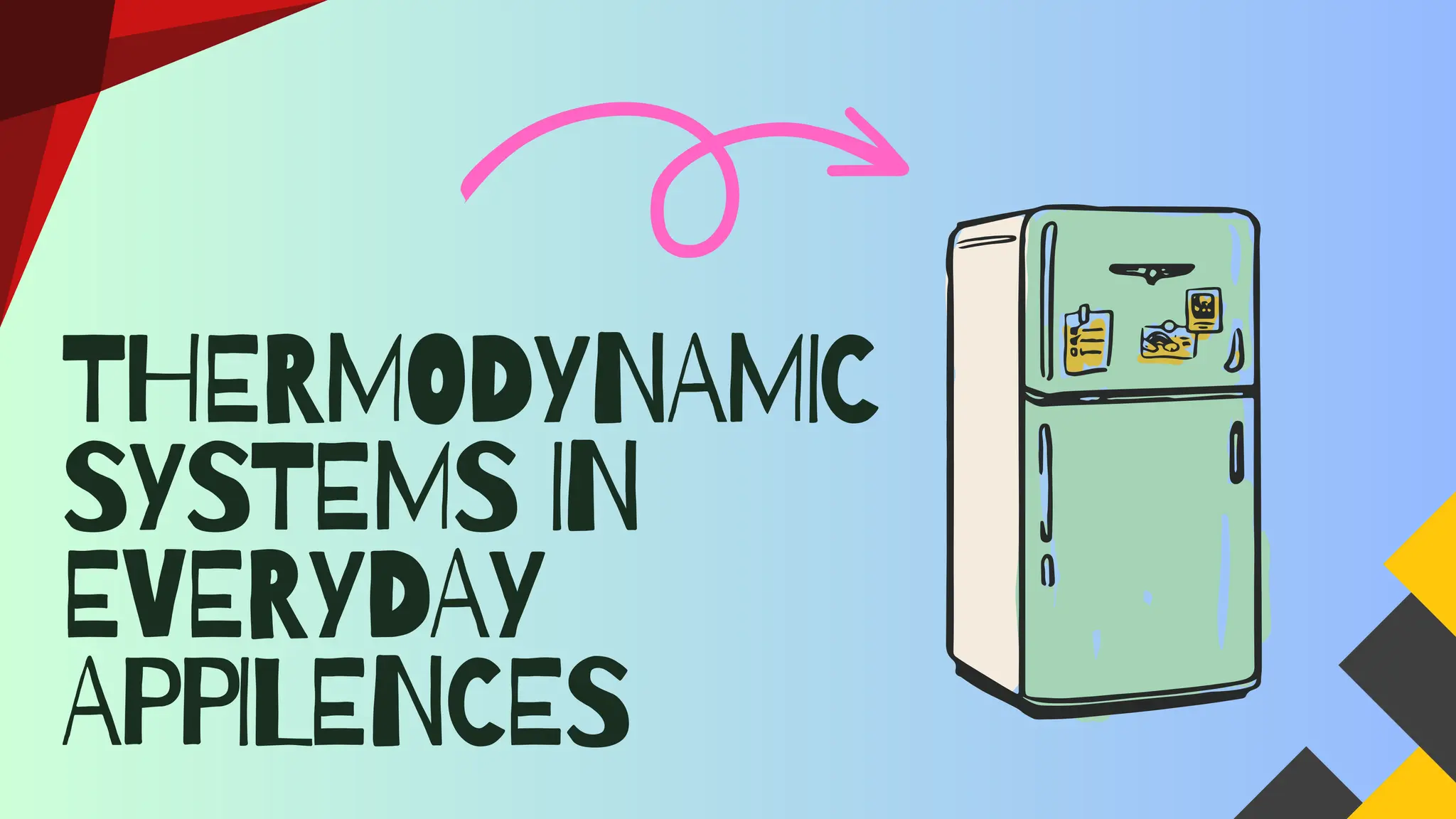
THERMODYNAMIC
SYSTEMS IN
EVERYDAY
APPILENCES
#A REFRIGERATOR
A refrigerator is a thermodynamic system
designed to transfer heat from a low-
temperature reservoir (the interior of the
fridge) to a high-temperature reservoir (the
external environment), thus maintaining a
cool environment for food preservation.
LET’S GET
STARTED
#TYPES OF REFRIGERATORS
1. NATURAL REFRIGERATORS:
THESE REFRIGERATORS USE NATURAL PROCESSES LIKE
EVAPORATION, ICE, OR THERMOELECTRIC EFFECTS TO
ACHIEVE COOLING. THEY DON’T RELY ON MECHANICAL
COMPRESSORS OR COMPLEX SYSTEMS.
2. MECHANICAL REFRIGERATORS
THESE REFRIGERATORS USE THE VAPOR-COMPRESSION CYCLE OR
SIMILAR MECHANICAL PROCESSES FOR COOLING. THEY RELY ON A
COMPRESSOR, CONDENSER, EXPANSION VALVE, AND EVAPORATOR TO
CIRCULATE REFRIGERANT AND REMOVE HEAT.
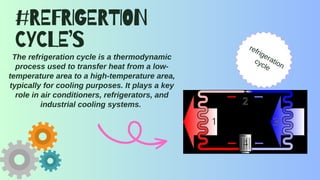
#REFRIGERTION
CYCLE’S refrigeration
cycle
The refrigeration cycle is a thermodynamic
process used to transfer heat from a low-
temperature area to a high-temperature area,
typically for cooling purposes. It plays a key
role in air conditioners, refrigerators, and
industrial cooling systems.
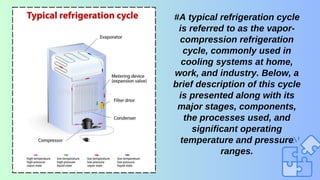
#A typical refrigeration cycle
is referred to as the vapor-
compression refrigeration
cycle, commonly used in
cooling systems at home,
work, and industry. Below, a
brief description of this cycle
is presented along with its
major stages, components,
the processes used, and
significant operating
temperature and pressure
ranges.
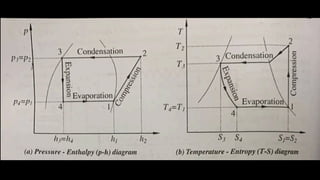
The Vapor-Compression Refrigeration Cycle
is the most widely used method for cooling
systems, found in refrigerators, air
conditioners, and heat pumps. Below is a
more detailed explanation of this cycle,
including each component's role, the
thermodynamic changes, and key stages.
#VAPOUR COMPRESSION
REFRIGERATION CYCLE (VCR
CYCLE)
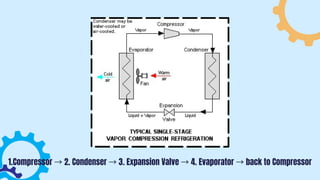
1.Compressor → 2. Condenser → 3. Expansion Valve → 4. Evaporator → back to Compressor
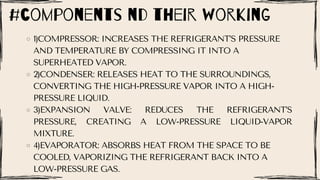
1)COMPRESSOR: INCREASES THE REFRIGERANT’S PRESSURE
AND TEMPERATURE BY COMPRESSING IT INTO A
SUPERHEATED VAPOR.
2)CONDENSER: RELEASES HEAT TO THE SURROUNDINGS,
CONVERTING THE HIGH-PRESSURE VAPOR INTO A HIGH-
PRESSURE LIQUID.
3)EXPANSION VALVE: REDUCES THE REFRIGERANT’S
PRESSURE, CREATING A LOW-PRESSURE LIQUID-VAPOR
MIXTURE.
4)EVAPORATOR: ABSORBS HEAT FROM THE SPACE TO BE
COOLED, VAPORIZING THE REFRIGERANT BACK INTO A
LOW-PRESSURE GAS.
#components nd their working
THE VAR CYCLE IS A REPLACEMENT FOR THE VAPOR-
COMPRESSION CYCLE THAT USES THERMAL
ENERGY, OR HEAT, TO DRIVE THE REFRIGERANT
CIRCULATION INSTEAD OF MECHANICAL WORK. THIS
IS ALSO THE CYCLE COMMONLY USED IN INDUSTRIAL
CHILLERS AND ABSORPTION REFRIGERATORS.
#vapour absorption
refrigeration cycle(vAR)
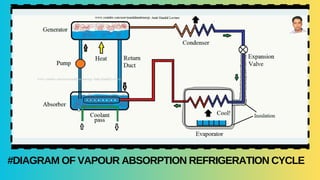
#DIAGRAM OF VAPOUR ABSORPTION REFRIGERATION CYCLE
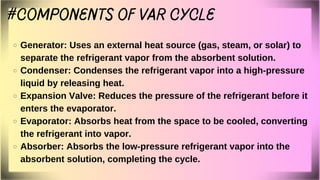
Generator: Uses an external heat source (gas, steam, or solar) to
separate the refrigerant vapor from the absorbent solution.
Condenser: Condenses the refrigerant vapor into a high-pressure
liquid by releasing heat.
Expansion Valve: Reduces the pressure of the refrigerant before it
enters the evaporator.
Evaporator: Absorbs heat from the space to be cooled, converting
the refrigerant into vapor.
Absorber: Absorbs the low-pressure refrigerant vapor into the
absorbent solution, completing the cycle.
#Components of VAR cycle
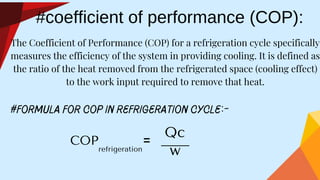
#coefficient of performance (COP):
The Coefficient of Performance (COP) for a refrigeration cycle specifically
measures the efficiency of the system in providing cooling. It is defined as
the ratio of the heat removed from the refrigerated space (cooling effect)
to the work input required to remove that heat.
#Formula for COP in Refrigeration Cycle:-
COP​
refrigeration
=
Qc
w
#Limitation:-
The refrigeration cycle has limitations, such as lower efficiencies at
higher temperature differences, dependence on external power sources,
issues of leakage of refrigerant, and issues regarding global warming
potential.
#improvment:-
One of the proposed solutions is the use of variable-speed compressors that
alter operating conditions based on actual cooling requirements; such new
technology optimizes energy consumption since it allows the compressor to
work at different speeds, thus in periods of low loads, it cuts down power
consumption without compromise on cooling efficiency.
#in conclusion.....
In conclusion, refrigeration systems play a greatly significant role in
food preservation, air conditioning, and the industrial sector. As such,
knowledge of compressors and condensers forms an integral part of
the process of optimizing their efficiency. Performance and
environmental sensitiveness are always undergoing advancements
with variable speed technology and more so with the use of newer,
more environmentally friendly refrigerants. The innovation that keeps
it sustainable and efficient as a refrigerant. THANK YOU!
THERMODYNAMICS SYSTEM IN EVERYDAY APPLIANCES

THERMODYNAMICS SYSTEM IN EVERYDAY APPLIANCES

  • 1.
  • 2.
    #A REFRIGERATOR A refrigeratoris a thermodynamic system designed to transfer heat from a low- temperature reservoir (the interior of the fridge) to a high-temperature reservoir (the external environment), thus maintaining a cool environment for food preservation.
  • 3.
  • 4.
    #TYPES OF REFRIGERATORS 1.NATURAL REFRIGERATORS: THESE REFRIGERATORS USE NATURAL PROCESSES LIKE EVAPORATION, ICE, OR THERMOELECTRIC EFFECTS TO ACHIEVE COOLING. THEY DON’T RELY ON MECHANICAL COMPRESSORS OR COMPLEX SYSTEMS. 2. MECHANICAL REFRIGERATORS THESE REFRIGERATORS USE THE VAPOR-COMPRESSION CYCLE OR SIMILAR MECHANICAL PROCESSES FOR COOLING. THEY RELY ON A COMPRESSOR, CONDENSER, EXPANSION VALVE, AND EVAPORATOR TO CIRCULATE REFRIGERANT AND REMOVE HEAT.
  • 5.
    #REFRIGERTION CYCLE’S refrigeration cycle The refrigerationcycle is a thermodynamic process used to transfer heat from a low- temperature area to a high-temperature area, typically for cooling purposes. It plays a key role in air conditioners, refrigerators, and industrial cooling systems.
  • 6.
    #A typical refrigerationcycle is referred to as the vapor- compression refrigeration cycle, commonly used in cooling systems at home, work, and industry. Below, a brief description of this cycle is presented along with its major stages, components, the processes used, and significant operating temperature and pressure ranges.
  • 7.
    The Vapor-Compression RefrigerationCycle is the most widely used method for cooling systems, found in refrigerators, air conditioners, and heat pumps. Below is a more detailed explanation of this cycle, including each component's role, the thermodynamic changes, and key stages. #VAPOUR COMPRESSION REFRIGERATION CYCLE (VCR CYCLE)
  • 8.
    1.Compressor → 2.Condenser → 3. Expansion Valve → 4. Evaporator → back to Compressor
  • 9.
    1)COMPRESSOR: INCREASES THEREFRIGERANT’S PRESSURE AND TEMPERATURE BY COMPRESSING IT INTO A SUPERHEATED VAPOR. 2)CONDENSER: RELEASES HEAT TO THE SURROUNDINGS, CONVERTING THE HIGH-PRESSURE VAPOR INTO A HIGH- PRESSURE LIQUID. 3)EXPANSION VALVE: REDUCES THE REFRIGERANT’S PRESSURE, CREATING A LOW-PRESSURE LIQUID-VAPOR MIXTURE. 4)EVAPORATOR: ABSORBS HEAT FROM THE SPACE TO BE COOLED, VAPORIZING THE REFRIGERANT BACK INTO A LOW-PRESSURE GAS. #components nd their working
  • 11.
    THE VAR CYCLEIS A REPLACEMENT FOR THE VAPOR- COMPRESSION CYCLE THAT USES THERMAL ENERGY, OR HEAT, TO DRIVE THE REFRIGERANT CIRCULATION INSTEAD OF MECHANICAL WORK. THIS IS ALSO THE CYCLE COMMONLY USED IN INDUSTRIAL CHILLERS AND ABSORPTION REFRIGERATORS. #vapour absorption refrigeration cycle(vAR)
  • 12.
    #DIAGRAM OF VAPOURABSORPTION REFRIGERATION CYCLE
  • 13.
    Generator: Uses anexternal heat source (gas, steam, or solar) to separate the refrigerant vapor from the absorbent solution. Condenser: Condenses the refrigerant vapor into a high-pressure liquid by releasing heat. Expansion Valve: Reduces the pressure of the refrigerant before it enters the evaporator. Evaporator: Absorbs heat from the space to be cooled, converting the refrigerant into vapor. Absorber: Absorbs the low-pressure refrigerant vapor into the absorbent solution, completing the cycle. #Components of VAR cycle
  • 14.
    #coefficient of performance(COP): The Coefficient of Performance (COP) for a refrigeration cycle specifically measures the efficiency of the system in providing cooling. It is defined as the ratio of the heat removed from the refrigerated space (cooling effect) to the work input required to remove that heat. #Formula for COP in Refrigeration Cycle:- COP​ refrigeration = Qc w
  • 15.
    #Limitation:- The refrigeration cyclehas limitations, such as lower efficiencies at higher temperature differences, dependence on external power sources, issues of leakage of refrigerant, and issues regarding global warming potential. #improvment:- One of the proposed solutions is the use of variable-speed compressors that alter operating conditions based on actual cooling requirements; such new technology optimizes energy consumption since it allows the compressor to work at different speeds, thus in periods of low loads, it cuts down power consumption without compromise on cooling efficiency.
  • 16.
    #in conclusion..... In conclusion,refrigeration systems play a greatly significant role in food preservation, air conditioning, and the industrial sector. As such, knowledge of compressors and condensers forms an integral part of the process of optimizing their efficiency. Performance and environmental sensitiveness are always undergoing advancements with variable speed technology and more so with the use of newer, more environmentally friendly refrigerants. The innovation that keeps it sustainable and efficient as a refrigerant. THANK YOU!