The WEAI: Conception to Adolescence
Emily Hogue
Team Leader for Monitoring, Evaluation, and Learning
USAID’s Bureau for Food Security
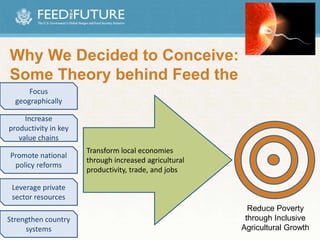
Why We Decided to Conceive:
Some Theory behind Feed the
Future
Transform local economies
through increased agricultural
productivity, trade, and jobs
Focus
geographically
Strengthen country
systems
Leverage private
sector resources
Promote national
policy reforms
Increase
productivity in key
value chains
Reduce Poverty
through Inclusive
Agricultural Growth
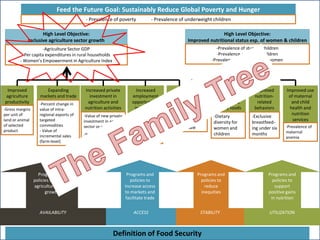
High Level Objective:
Improved nutritional status esp. of women & children
Increased
resilience of
vulnerable
communities and
households
Increased
employment
opportunities
in targeted
value chains
Programs and
policies to
reduce
inequities
Improved
agriculture
productivity
Expanding
markets and trade
Increased private
investment in
agriculture and
nutrition activities
Improved
access to
diverse and
quality foods
Improved
nutrition-
related
behaviors
Improved use
of maternal
and child
health and
nutrition
services
Programs and
policies to support
agriculture sector
growth
Programs and
policies to
support
positive gains
in nutrition
Feed the Future Goal: Sustainably Reduce Global Poverty and Hunger
AVAILABILITY ACCESS UTILIZATIONSTABILITY
Programs and
policies to
increase access
to markets and
facilitate trade
High Level Objective:
Inclusive agriculture sector growth
- Prevalence of poverty - Prevalence of underweight children
-Agriculture Sector GDP
-Per capita expenditures in rural households
- Women’s Empowerment in Agriculture Index
-Prevalence of stunted children
-Prevalence of wasted children
-Prevalence of underweight women
-Gross margins
per unit of
land or animal
of selected
product
-Percent change in
value of intra-
regional exports of
targeted
commodities
- Value of
incremental sales
(farm-level)
-Value of new private
investment in ag
sector or value chain
-% pub. expenditure
on ag. and nutrition
- # of local firms/CSO
operating sustainably
-Jobs created
by investment
in agricultural
value chains
-Household
Hunger Scale
-Dietary
diversity for
women and
children
-Exclusive
breastfeed-
ing under six
months
-Prevalence of
maternal
anemia
Definition of Food Security
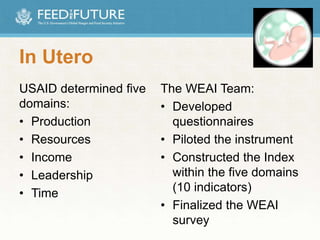
In Utero
USAID determined five
domains:
• Production
• Resources
• Income
• Leadership
• Time
The WEAI Team:
• Developed
questionnaires
• Piloted the instrument
• Constructed the Index
within the five domains
(10 indicators)
• Finalized the WEAI
survey
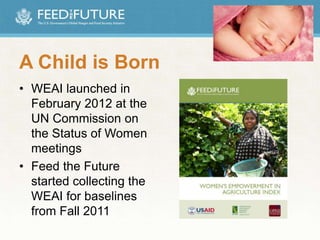
A Child is Born
• WEAI launched in
February 2012 at the
UN Commission on
the Status of Women
meetings
• Feed the Future
started collecting the
WEAI for baselines
from Fall 2011
The Joys:
• Discovery of using as
a diagnostic tool
• Feedback that women
respondents felt
valued
• Other organizations
The Woes:
• Feedback it was too
long
• Some questions were
problematic, trouble in
different contexts
• Partners had trouble
The Joys and Woes
of the Toddler
Years:
Baselines 2011-
2013
School Age and
Its Wonders:
First Results
• Findings through the data
• Partners had adapted and were using the
WEAI and had results to share: new
domains, new calculations
• When we started to really learn from our
child
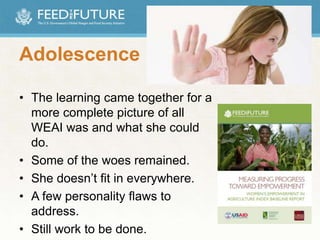
Adolescence
• The learning came together for a
more complete picture of all
WEAI was and what she could
do.
• Some of the woes remained.
• She doesn’t fit in everywhere.
• A few personality flaws to
address.
• Still work to be done.
Which brings us to…
college?
a year of finding herself?
the Peace Corps years???

The WEAI: Conception to Adolescence

  • 1.
    The WEAI: Conceptionto Adolescence Emily Hogue Team Leader for Monitoring, Evaluation, and Learning USAID’s Bureau for Food Security
  • 2.
    Why We Decidedto Conceive: Some Theory behind Feed the Future Transform local economies through increased agricultural productivity, trade, and jobs Focus geographically Strengthen country systems Leverage private sector resources Promote national policy reforms Increase productivity in key value chains Reduce Poverty through Inclusive Agricultural Growth
  • 3.
    High Level Objective: Improvednutritional status esp. of women & children Increased resilience of vulnerable communities and households Increased employment opportunities in targeted value chains Programs and policies to reduce inequities Improved agriculture productivity Expanding markets and trade Increased private investment in agriculture and nutrition activities Improved access to diverse and quality foods Improved nutrition- related behaviors Improved use of maternal and child health and nutrition services Programs and policies to support agriculture sector growth Programs and policies to support positive gains in nutrition Feed the Future Goal: Sustainably Reduce Global Poverty and Hunger AVAILABILITY ACCESS UTILIZATIONSTABILITY Programs and policies to increase access to markets and facilitate trade High Level Objective: Inclusive agriculture sector growth - Prevalence of poverty - Prevalence of underweight children -Agriculture Sector GDP -Per capita expenditures in rural households - Women’s Empowerment in Agriculture Index -Prevalence of stunted children -Prevalence of wasted children -Prevalence of underweight women -Gross margins per unit of land or animal of selected product -Percent change in value of intra- regional exports of targeted commodities - Value of incremental sales (farm-level) -Value of new private investment in ag sector or value chain -% pub. expenditure on ag. and nutrition - # of local firms/CSO operating sustainably -Jobs created by investment in agricultural value chains -Household Hunger Scale -Dietary diversity for women and children -Exclusive breastfeed- ing under six months -Prevalence of maternal anemia Definition of Food Security
  • 4.
    In Utero USAID determinedfive domains: • Production • Resources • Income • Leadership • Time The WEAI Team: • Developed questionnaires • Piloted the instrument • Constructed the Index within the five domains (10 indicators) • Finalized the WEAI survey
  • 5.
    A Child isBorn • WEAI launched in February 2012 at the UN Commission on the Status of Women meetings • Feed the Future started collecting the WEAI for baselines from Fall 2011
  • 6.
    The Joys: • Discoveryof using as a diagnostic tool • Feedback that women respondents felt valued • Other organizations The Woes: • Feedback it was too long • Some questions were problematic, trouble in different contexts • Partners had trouble The Joys and Woes of the Toddler Years: Baselines 2011- 2013
  • 7.
    School Age and ItsWonders: First Results • Findings through the data • Partners had adapted and were using the WEAI and had results to share: new domains, new calculations • When we started to really learn from our child
  • 8.
    Adolescence • The learningcame together for a more complete picture of all WEAI was and what she could do. • Some of the woes remained. • She doesn’t fit in everywhere. • A few personality flaws to address. • Still work to be done.
  • 9.
    Which brings usto… college? a year of finding herself? the Peace Corps years???