Download to read offline



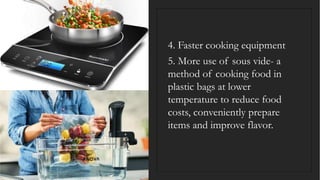






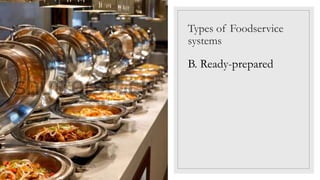
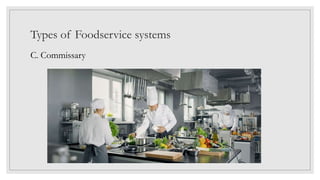




The document discusses innovations and trends in the restaurant industry to address challenges including more energy efficient equipment, self-service options, electronic inventory management, faster cooking equipment, sous vide cooking, on-the-spot training, management software, environmentally friendly disposable ware, safer spill-proof take out containers, safer shoes and mats, whole grains, trans fat-free oils, and international flavors. It also defines foodservice terms and classifications and describes four types of foodservice systems: conventional, ready-prepared, commissary, and assembly/serve. Students are assigned to discuss the advantages and disadvantages of implementing these foodservice types.


