Júlia Anglada, Estel Francisco, Pascal Grimaldi i Maria Valldeoriola
Escola Farigola 6è
Science Project 1
INDEX
1.The Sun
2.Mercury
3.Venus
4.Mars
2
3
The Sun is in the centre of the solar system. The Sun gives life
to the Earth.
The Sun is only one of milions and milions of stars in the Galaxy
4
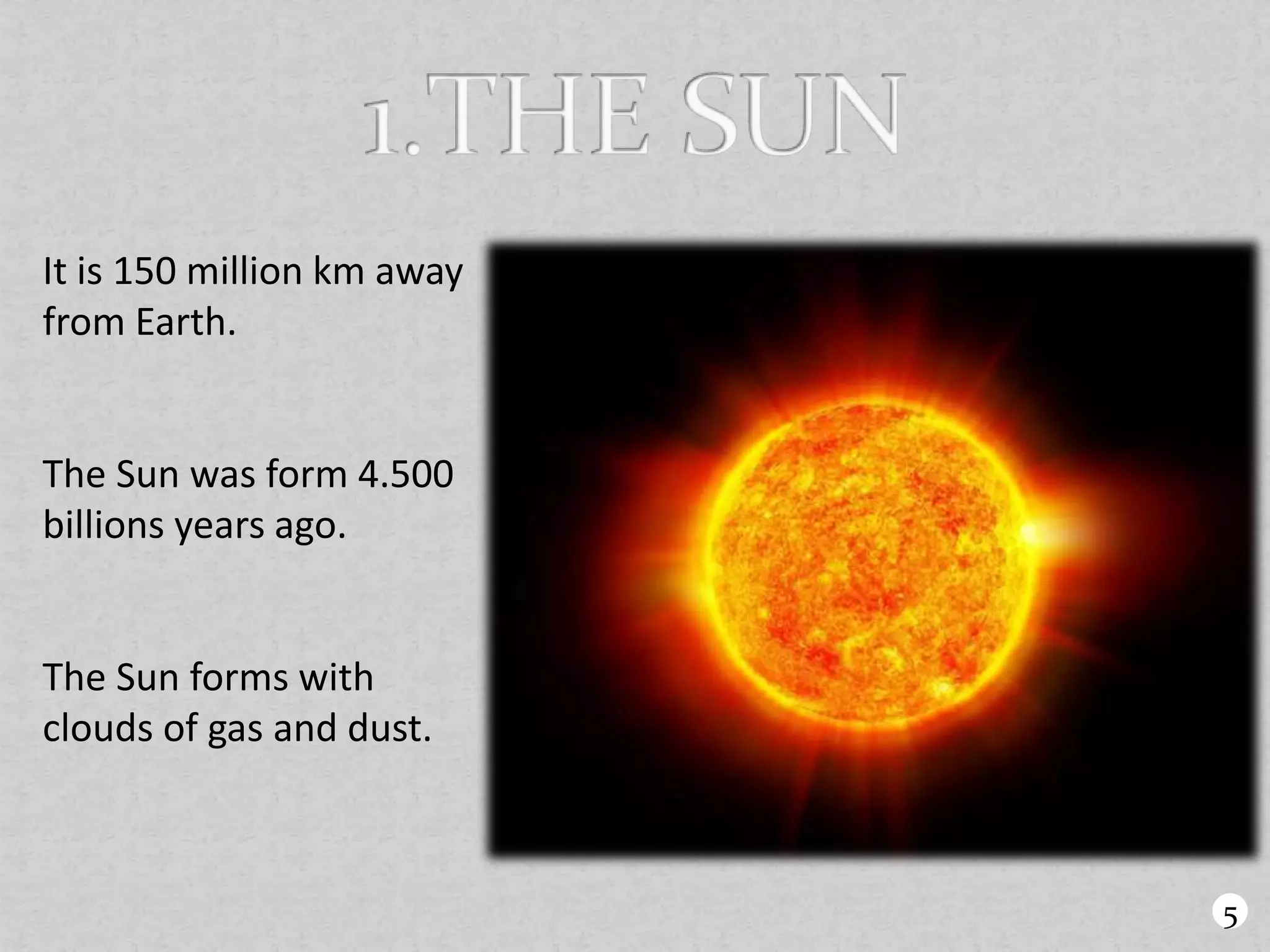
It is 150 million km away
from Earth.
The Sun was form 4.500
billions years ago.
The Sun forms with
clouds of gas and dust.
5
Mercury is the smallest and nearest planet to the sun.
6
You can see Mercury from the Earth.
Mercury is similar to the Moon.
Mercury has got craters like the Moon.
MOON
MERCURY
7
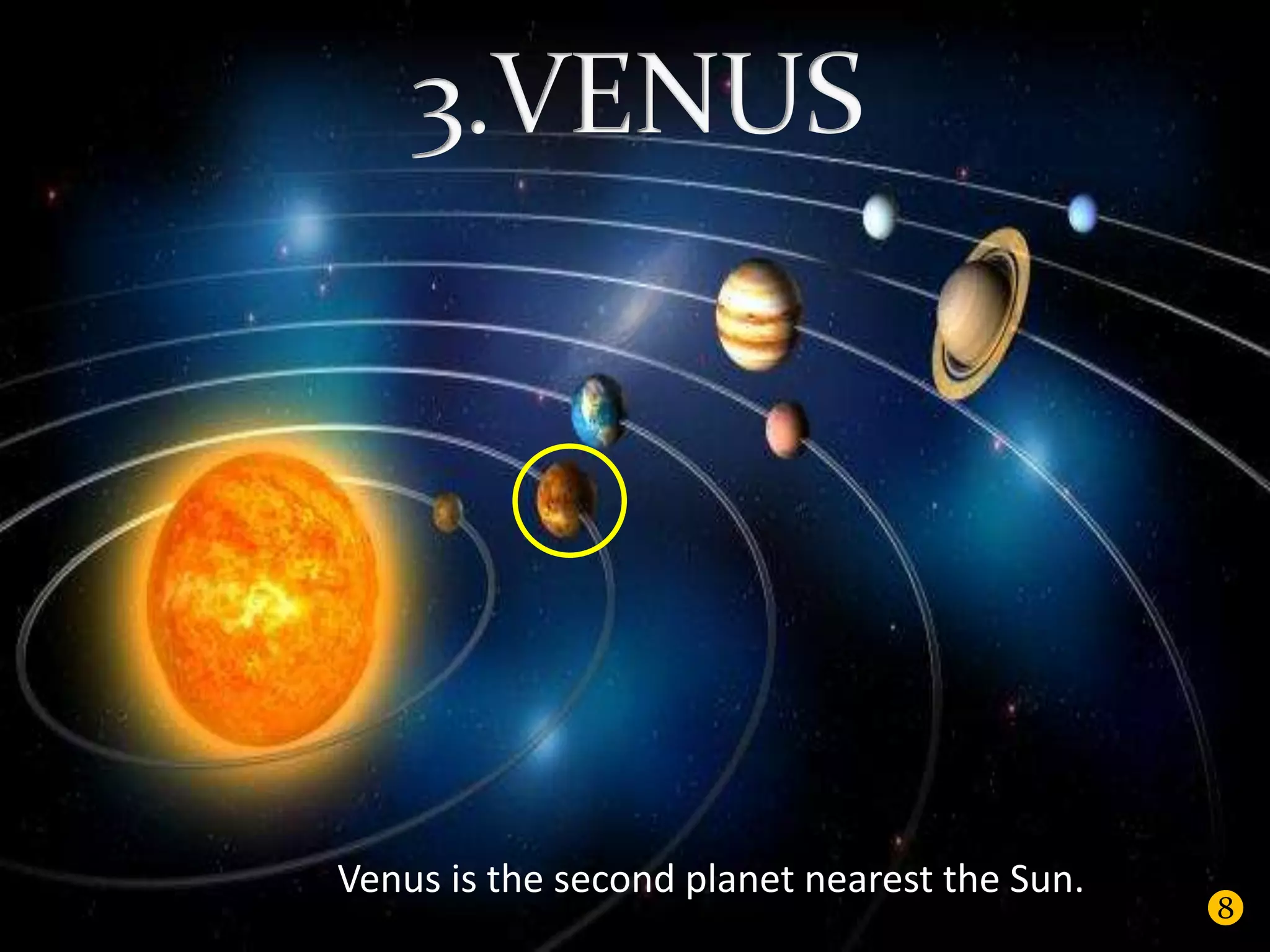
Venus is the second planet nearest the Sun.
8
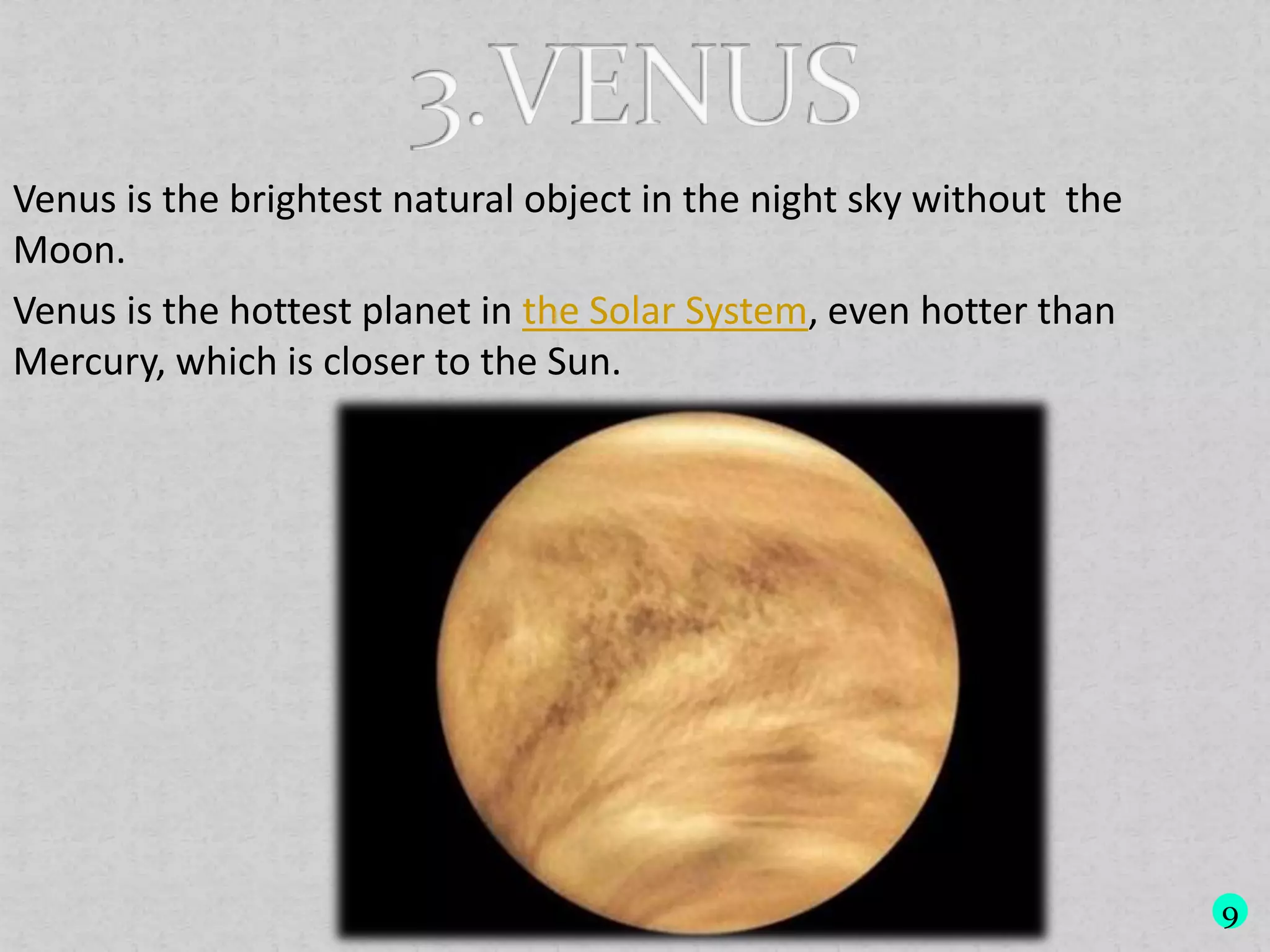
Venus is the brightest natural object in the night sky without the
Moon.
Venus is the hottest planet in the Solar System, even hotter than
Mercury, which is closer to the Sun.
9
10
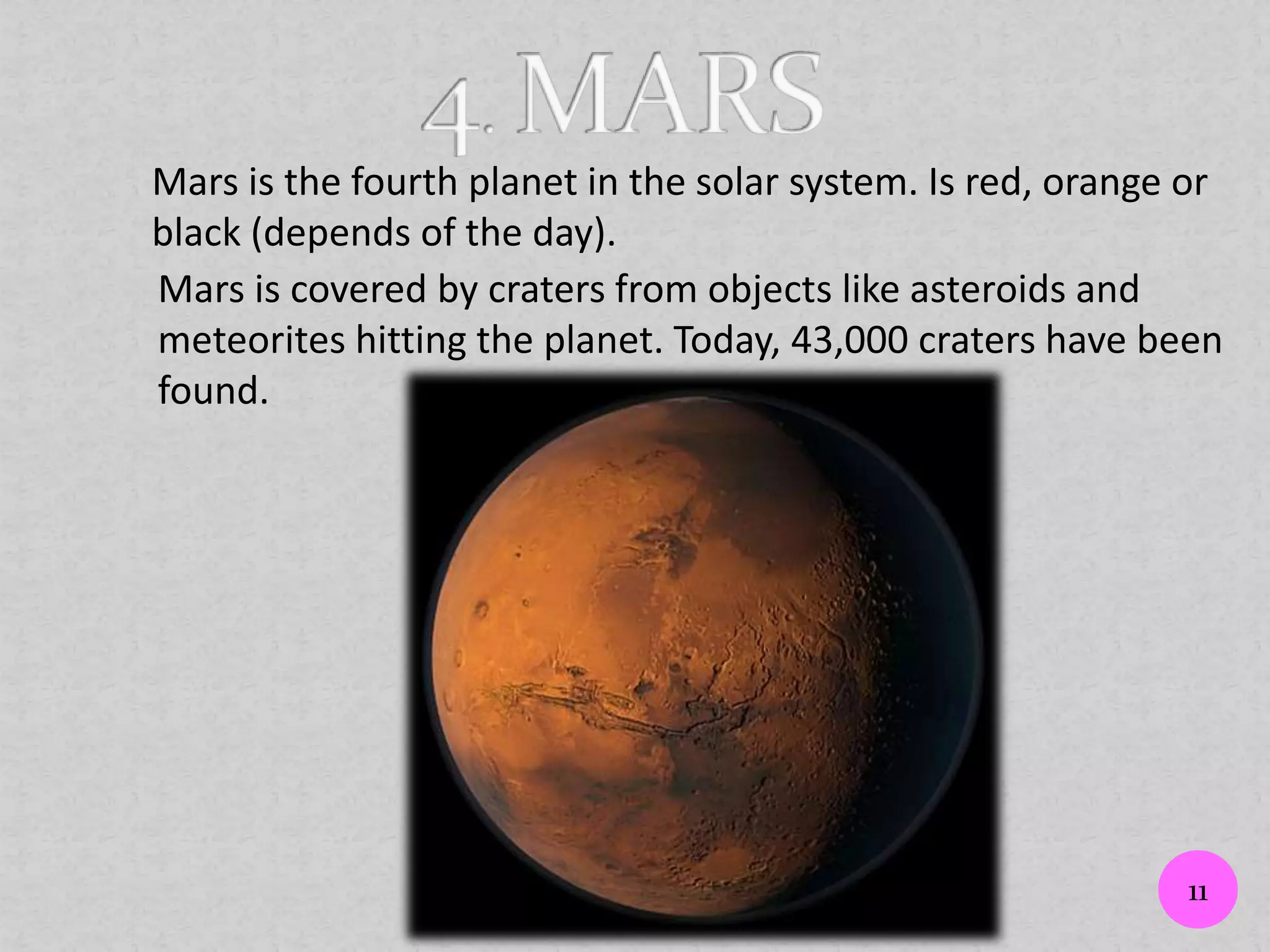
Mars is the fourth planet in the solar system. Is red, orange or
black (depends of the day).
11
Mars is covered by craters from objects like asteroids and
meteorites hitting the planet. Today, 43,000 craters have been
found.
12
The Sun is
made up of
superheated
hydrogen and
helium gas.
13
explanation MERCURY VENUS MARS
Time of one
orbit
88 days 225 days 687 days
Time of one
rotation
59 days 243 days 25 hours
Moons 0 0 2
Special
Information
- Closest the Sun
- No water
- Little air
- Moon-like
Surface
- Surface
temperature
- -170·C to 430·C
- Rocky with iron
core
- Atmosphere of
carbon dioxide
with thick clouds
of toxic sulphuric
acid.
- No Water
-Rocky with iron
core
- It has got a lot
of volcanoes
- Has the highest
volcano in the solar
system (about 25 km
high)
- Has valleys and
canyons
-Thin atmosphere
mostly made up of
carbon dioxide
- Called the red
planet because its
surface is coverd in
red iron oxide
15
16

The sun,mercury, venus and mars

  • 1.
    Júlia Anglada, EstelFrancisco, Pascal Grimaldi i Maria Valldeoriola Escola Farigola 6è Science Project 1
  • 2.
  • 3.
  • 4.
    The Sun isin the centre of the solar system. The Sun gives life to the Earth. The Sun is only one of milions and milions of stars in the Galaxy 4
  • 5.
    It is 150million km away from Earth. The Sun was form 4.500 billions years ago. The Sun forms with clouds of gas and dust. 5
  • 6.
    Mercury is thesmallest and nearest planet to the sun. 6
  • 7.
    You can seeMercury from the Earth. Mercury is similar to the Moon. Mercury has got craters like the Moon. MOON MERCURY 7
  • 8.
    Venus is thesecond planet nearest the Sun. 8
  • 9.
    Venus is thebrightest natural object in the night sky without the Moon. Venus is the hottest planet in the Solar System, even hotter than Mercury, which is closer to the Sun. 9
  • 10.
  • 11.
    Mars is thefourth planet in the solar system. Is red, orange or black (depends of the day). 11 Mars is covered by craters from objects like asteroids and meteorites hitting the planet. Today, 43,000 craters have been found.
  • 12.
  • 13.
    The Sun is madeup of superheated hydrogen and helium gas. 13
  • 14.
    explanation MERCURY VENUSMARS Time of one orbit 88 days 225 days 687 days Time of one rotation 59 days 243 days 25 hours Moons 0 0 2 Special Information - Closest the Sun - No water - Little air - Moon-like Surface - Surface temperature - -170·C to 430·C - Rocky with iron core - Atmosphere of carbon dioxide with thick clouds of toxic sulphuric acid. - No Water -Rocky with iron core - It has got a lot of volcanoes - Has the highest volcano in the solar system (about 25 km high) - Has valleys and canyons -Thin atmosphere mostly made up of carbon dioxide - Called the red planet because its surface is coverd in red iron oxide
  • 15.
  • 16.