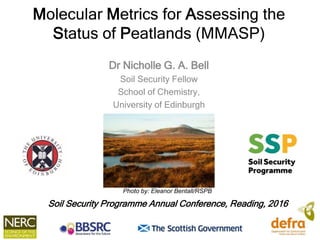
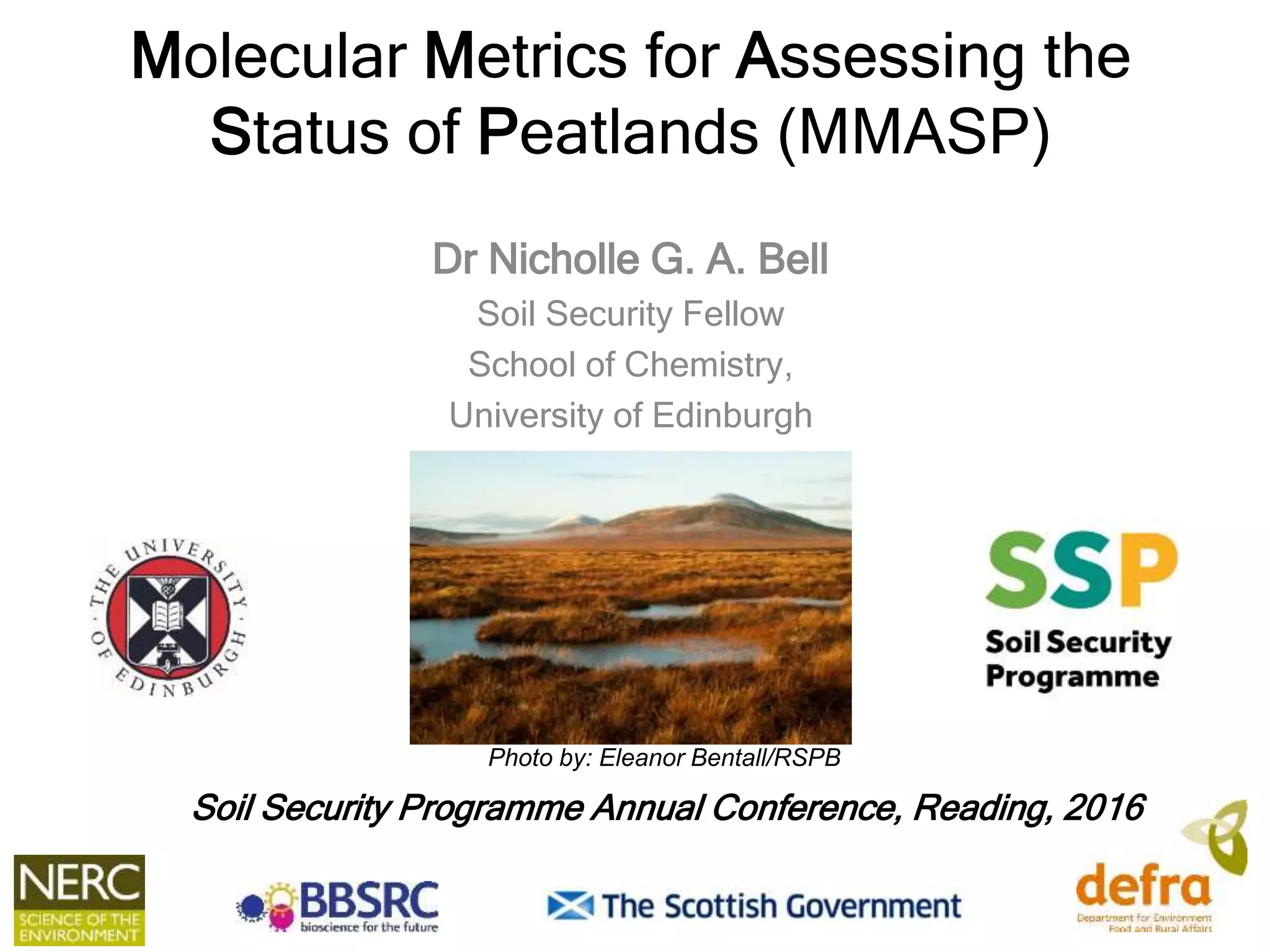
Molecular Metrics for Assessing the
Status of Peatlands (MMASP)
Dr Nicholle G. A. Bell
Soil Security Fellow
School of Chemistry,
University of Edinburgh
Photo by: Eleanor Bentall/RSPB
Soil Security Programme Annual Conference, Reading, 2016
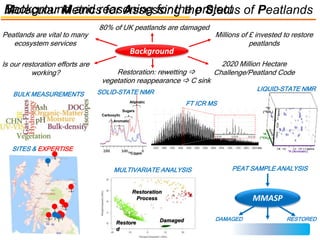
Background and reasoning for the projectMolecular Metrics for Assessing the Status of Peatlands
Background
Peatlands are vital to many
ecosystem services
80% of UK peatlands are damaged
2020 Million Hectare
Challenge/Peatland CodeRestoration: rewetting 
vegetation reappearance  C sink
Is our restoration efforts are
working?
m/z
1H (Aromatic)
13C
(13CH3)
1H
(13CH3)
13C/ppm
Aliphatic
Sugars
Aromatic
Carboxylic
MMASP
Restore
d
Damaged
Restoration
Process
Millions of £ invested to restore
peatlands
LIQUID-STATE NMR
FT ICR MS
MULTIVARIATE ANALYSIS
BULK MEASUREMENTS
SITES & EXPERTISE
PEAT SAMPLE ANALYSIS
DAMAGED RESTORED
SOLID-STATE NMR
Rothamsted Research
where knowledge grows
Rothamsted Research
where knowledge grows
Dr Jackie Stroud
Sustainable Soils and Grassland
Systems Department
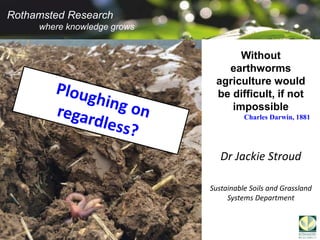
Without
earthworms
agriculture would
be difficult, if not
impossible
Charles Darwin, 1881
Forecasting land management and extreme weather
effects on earthworm populations, soil function
and ecosystem services
Dr Alice S.A. Johnston
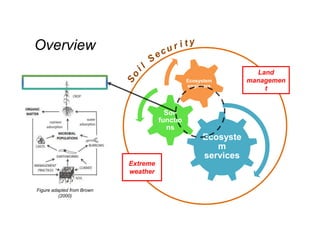
Overview
Ecosyste
m
services
Soil
functio
ns
Ecosystem
engineers
Extreme
weather
Land
managemen
t
Figure adapted from Brown
(2000)
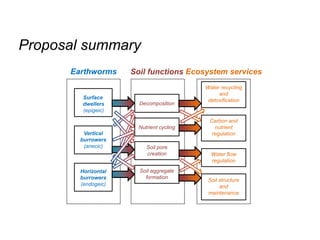
Vertical
burrowers
(anecic)
Horizontal
burrowers
(endogeic)
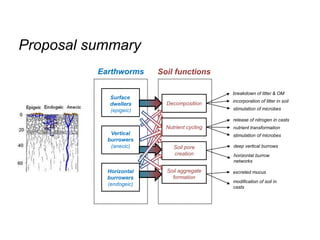
Decomposition
Surface
dwellers
(epigeic)
Nutrient cycling
Soil pore
creation
Soil aggregate
formation
Water recycling
and
detoxification
Water flow
regulation
Carbon and
nutrient
regulation
Soil structure
and
maintenance
Earthworms Soil functions Ecosystem services
Proposal summary
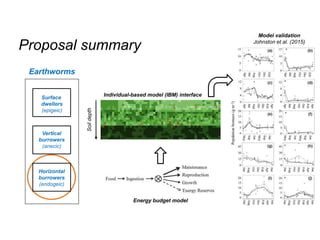
Proposal summary
Vertical
burrowers
(anecic)
Horizontal
burrowers
(endogeic)
Surface
dwellers
(epigeic)
Earthworms
Model validation
Johnston et al. (2015)
Energy budget model
Individual-based model (IBM) interface
Soildepth
Proposal summary
Vertical
burrowers
(anecic)
Horizontal
burrowers
(endogeic)
Decomposition
Surface
dwellers
(epigeic)
Nutrient cycling
Soil pore
creation
Soil aggregate
formation
Earthworms Soil functions
breakdown of litter & OM
incorporation of litter in soil
stimulation of microbes
release of nitrogen in casts
nutrient transformation
stimulation of microbes
deep vertical burrows
horizontal burrow
networks
excreted mucus
modification of soil in
casts
Proposal summary
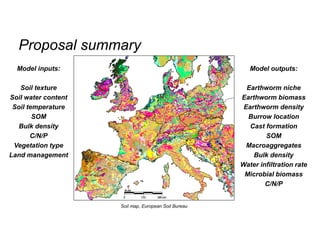
Model inputs:
Soil texture
Soil water content
Soil temperature
SOM
Bulk density
C/N/P
Vegetation type
Land management
Model outputs:
Earthworm niche
Earthworm biomass
Earthworm density
Burrow location
Cast formation
SOM
Macroaggregates
Bulk density
Water infiltration rate
Microbial biomass
C/N/P
Soil map, European Soil Bureau
Proposal summary
Decomposition
Nutrient cycling
Soil pore
creation
Soil aggregate
formation
Water recycling
and
detoxification
Water flow
regulation
Carbon and
nutrient
regulation
Soil structure
and
maintenance
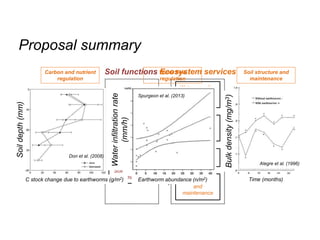
Soil functions Ecosystem services
Spurgeon et al. (2013)
Waterinfiltrationrate
(mm/h)
Don et al. (2008)
Carbon and nutrient
regulation
Water flow
regulation
Soildepth(mm)
C stock change due to earthworms (g/m2) Earthworm abundance (n/m2)
Soil structure and
maintenance
Alegre et al. (1996)
Bulkdensity(mg/m3)
Time (months)
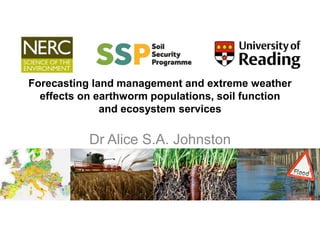
Forecasting land management and extreme weather
effects on earthworm populations, soil function
and ecosystem services
Dr Alice S.A. Johnston
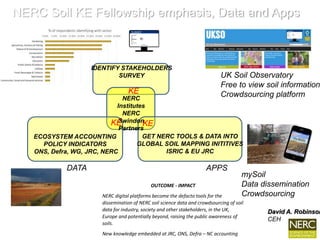
NERC Soil KE Fellowship emphasis, Data and Apps
OUTCOME - IMPACT
NERC digital platforms become the defacto tools for the
dissemination of NERC soil science data and crowdsourcing of soil
data for industry, society and other stakeholders, in the UK,
Europe and potentially beyond, raising the public awareness of
soils.
New knowledge embedded at JRC, ONS, Defra – NC accounting
KE
IDENTIFY STAKEHOLDERS
SURVEY
GET NERC TOOLS & DATA INTO
GLOBAL SOIL MAPPING INITITIVES
ISRIC & EU JRC
ECOSYSTEM ACCOUNTING
POLICY INDICATORS
ONS, Defra, WG, JRC, NERC
NERC
Institutes
NERC
Swindon
Partners
KE KE
DATA APPS
UK Soil Observatory
Free to view soil information
Crowdsourcing platform
mySoil
Data dissemination
Crowdsourcing
David A. Robinson
CEH

The Soil Security Programme Fellows Introduction

  • 1.
    Molecular Metrics forAssessing the Status of Peatlands (MMASP) Dr Nicholle G. A. Bell Soil Security Fellow School of Chemistry, University of Edinburgh Photo by: Eleanor Bentall/RSPB Soil Security Programme Annual Conference, Reading, 2016
  • 2.
    Background and reasoningfor the projectMolecular Metrics for Assessing the Status of Peatlands Background Peatlands are vital to many ecosystem services 80% of UK peatlands are damaged 2020 Million Hectare Challenge/Peatland CodeRestoration: rewetting  vegetation reappearance  C sink Is our restoration efforts are working? m/z 1H (Aromatic) 13C (13CH3) 1H (13CH3) 13C/ppm Aliphatic Sugars Aromatic Carboxylic MMASP Restore d Damaged Restoration Process Millions of £ invested to restore peatlands LIQUID-STATE NMR FT ICR MS MULTIVARIATE ANALYSIS BULK MEASUREMENTS SITES & EXPERTISE PEAT SAMPLE ANALYSIS DAMAGED RESTORED SOLID-STATE NMR
  • 3.
    Rothamsted Research where knowledgegrows Rothamsted Research where knowledge grows Dr Jackie Stroud Sustainable Soils and Grassland Systems Department Without earthworms agriculture would be difficult, if not impossible Charles Darwin, 1881
  • 4.
    Forecasting land managementand extreme weather effects on earthworm populations, soil function and ecosystem services Dr Alice S.A. Johnston
  • 5.
  • 6.
    Vertical burrowers (anecic) Horizontal burrowers (endogeic) Decomposition Surface dwellers (epigeic) Nutrient cycling Soil pore creation Soilaggregate formation Water recycling and detoxification Water flow regulation Carbon and nutrient regulation Soil structure and maintenance Earthworms Soil functions Ecosystem services Proposal summary
  • 7.
  • 8.
    Proposal summary Vertical burrowers (anecic) Horizontal burrowers (endogeic) Decomposition Surface dwellers (epigeic) Nutrient cycling Soilpore creation Soil aggregate formation Earthworms Soil functions breakdown of litter & OM incorporation of litter in soil stimulation of microbes release of nitrogen in casts nutrient transformation stimulation of microbes deep vertical burrows horizontal burrow networks excreted mucus modification of soil in casts
  • 9.
    Proposal summary Model inputs: Soiltexture Soil water content Soil temperature SOM Bulk density C/N/P Vegetation type Land management Model outputs: Earthworm niche Earthworm biomass Earthworm density Burrow location Cast formation SOM Macroaggregates Bulk density Water infiltration rate Microbial biomass C/N/P Soil map, European Soil Bureau
  • 10.
    Proposal summary Decomposition Nutrient cycling Soilpore creation Soil aggregate formation Water recycling and detoxification Water flow regulation Carbon and nutrient regulation Soil structure and maintenance Soil functions Ecosystem services Spurgeon et al. (2013) Waterinfiltrationrate (mm/h) Don et al. (2008) Carbon and nutrient regulation Water flow regulation Soildepth(mm) C stock change due to earthworms (g/m2) Earthworm abundance (n/m2) Soil structure and maintenance Alegre et al. (1996) Bulkdensity(mg/m3) Time (months)
  • 11.
    Forecasting land managementand extreme weather effects on earthworm populations, soil function and ecosystem services Dr Alice S.A. Johnston
  • 12.
    NERC Soil KEFellowship emphasis, Data and Apps OUTCOME - IMPACT NERC digital platforms become the defacto tools for the dissemination of NERC soil science data and crowdsourcing of soil data for industry, society and other stakeholders, in the UK, Europe and potentially beyond, raising the public awareness of soils. New knowledge embedded at JRC, ONS, Defra – NC accounting KE IDENTIFY STAKEHOLDERS SURVEY GET NERC TOOLS & DATA INTO GLOBAL SOIL MAPPING INITITIVES ISRIC & EU JRC ECOSYSTEM ACCOUNTING POLICY INDICATORS ONS, Defra, WG, JRC, NERC NERC Institutes NERC Swindon Partners KE KE DATA APPS UK Soil Observatory Free to view soil information Crowdsourcing platform mySoil Data dissemination Crowdsourcing David A. Robinson CEH