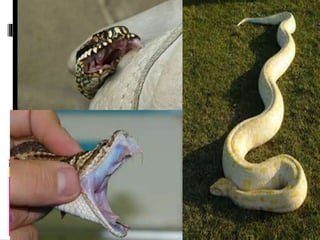
THE SNAKE
THE SNAKE
 They are reptiles, legless (without legs) and
carnivorous (meat eaters).
 They don’t have eyelids and external ears (like
lizards)
 Covered by scales.
 3.400 species
 Found on every continent (except Antartica)
Biology
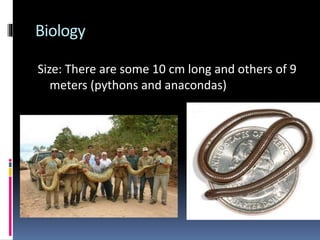
Size: There are some 10 cm long and others of 9
meters (pythons and anacondas)
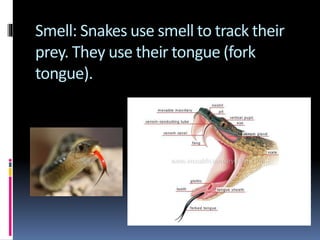
Smell: Snakes use smell to track their
prey. They use their tongue (fork
tongue).
Infrared sensitivity
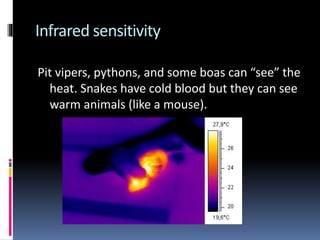
Pit vipers, pythons, and some boas can “see” the
heat. Snakes have cold blood but they can see
warm animals (like a mouse).
Skin
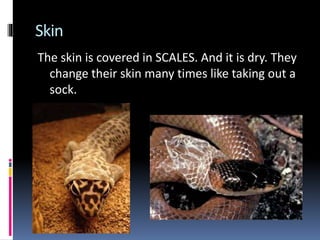
The skin is covered in SCALES. And it is dry. They
change their skin many times like taking out a
sock.
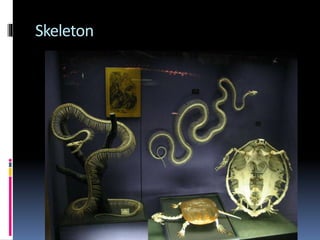
Skeleton
Diet
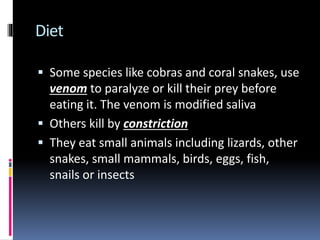
 Some species like cobras and coral snakes, use
venom to paralyze or kill their prey before
eating it. The venom is modified saliva
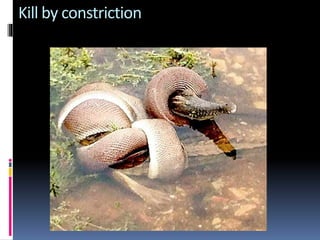
 Others kill by constriction
 They eat small animals including lizards, other
snakes, small mammals, birds, eggs, fish,
snails or insects
Kill by constriction
Winter dormancy
 In regions where winters are colder than
snakes can tolerate, local species will
brumate. Unlike hibernation, in which
mammals are actually asleep, brumating
reptiles are awake but inactive.
 Individual snakes may brumate under rock
piles, or inside fallen trees, or snakes may
aggregate in large numbers.
Feeding
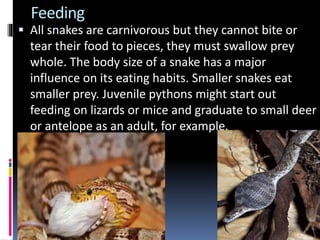
 All snakes are carnivorous but they cannot bite or
tear their food to pieces, they must swallow prey
whole. The body size of a snake has a major
influence on its eating habits. Smaller snakes eat
smaller prey. Juvenile pythons might start out
feeding on lizards or mice and graduate to small deer
or antelope as an adult, for example.
Bite
 Snakes do not normally prey on humans.
Most snakes prefer to avoid contact and will
not attack humans. With the exception of
large constrictors, nonvenomous snakes are
not a threat to humans. The bite of a
nonvenomous snake is usually harmless; their
teeth are not designed for tearing but rather
grabbing and holding. The possibility of
infection is present in the bite of a
nonvenomous snake.
THANKS FOR WATCHING
By: Juana Sturla.

The snake by Juani S

  • 1.
  • 2.
    THE SNAKE  Theyare reptiles, legless (without legs) and carnivorous (meat eaters).  They don’t have eyelids and external ears (like lizards)  Covered by scales.  3.400 species  Found on every continent (except Antartica)
  • 3.
    Biology Size: There aresome 10 cm long and others of 9 meters (pythons and anacondas)
  • 4.
    Smell: Snakes usesmell to track their prey. They use their tongue (fork tongue).
  • 5.
    Infrared sensitivity Pit vipers,pythons, and some boas can “see” the heat. Snakes have cold blood but they can see warm animals (like a mouse).
  • 6.
    Skin The skin iscovered in SCALES. And it is dry. They change their skin many times like taking out a sock.
  • 7.
  • 8.
    Diet  Some specieslike cobras and coral snakes, use venom to paralyze or kill their prey before eating it. The venom is modified saliva  Others kill by constriction  They eat small animals including lizards, other snakes, small mammals, birds, eggs, fish, snails or insects
  • 9.
  • 10.
    Winter dormancy  Inregions where winters are colder than snakes can tolerate, local species will brumate. Unlike hibernation, in which mammals are actually asleep, brumating reptiles are awake but inactive.  Individual snakes may brumate under rock piles, or inside fallen trees, or snakes may aggregate in large numbers.
  • 11.
    Feeding  All snakesare carnivorous but they cannot bite or tear their food to pieces, they must swallow prey whole. The body size of a snake has a major influence on its eating habits. Smaller snakes eat smaller prey. Juvenile pythons might start out feeding on lizards or mice and graduate to small deer or antelope as an adult, for example.
  • 12.
    Bite  Snakes donot normally prey on humans. Most snakes prefer to avoid contact and will not attack humans. With the exception of large constrictors, nonvenomous snakes are not a threat to humans. The bite of a nonvenomous snake is usually harmless; their teeth are not designed for tearing but rather grabbing and holding. The possibility of infection is present in the bite of a nonvenomous snake.
  • 14.