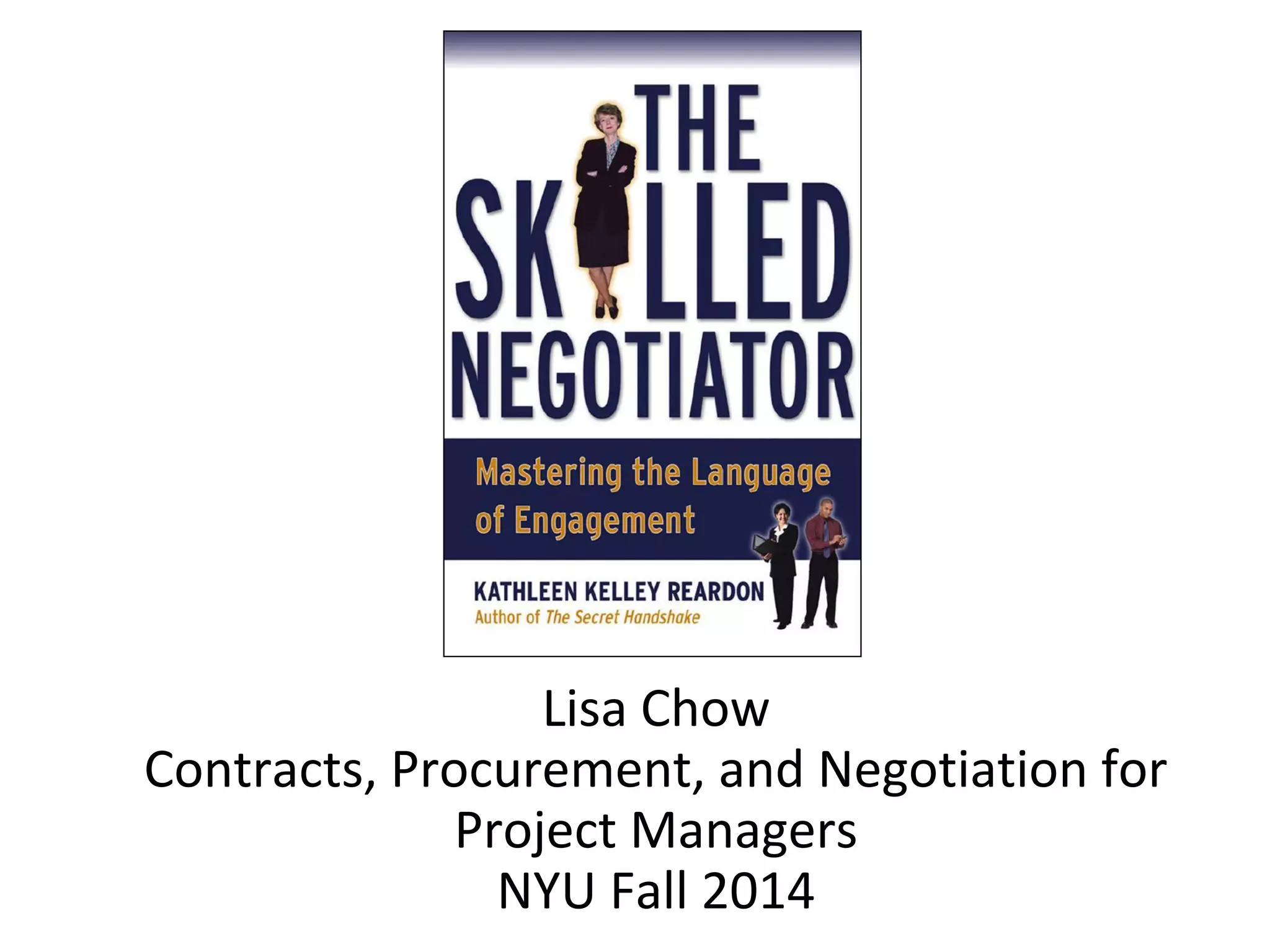
Lisa Chow 
Contracts, Procurement, and Negotiation for 
Project Managers 
NYU Fall 2014
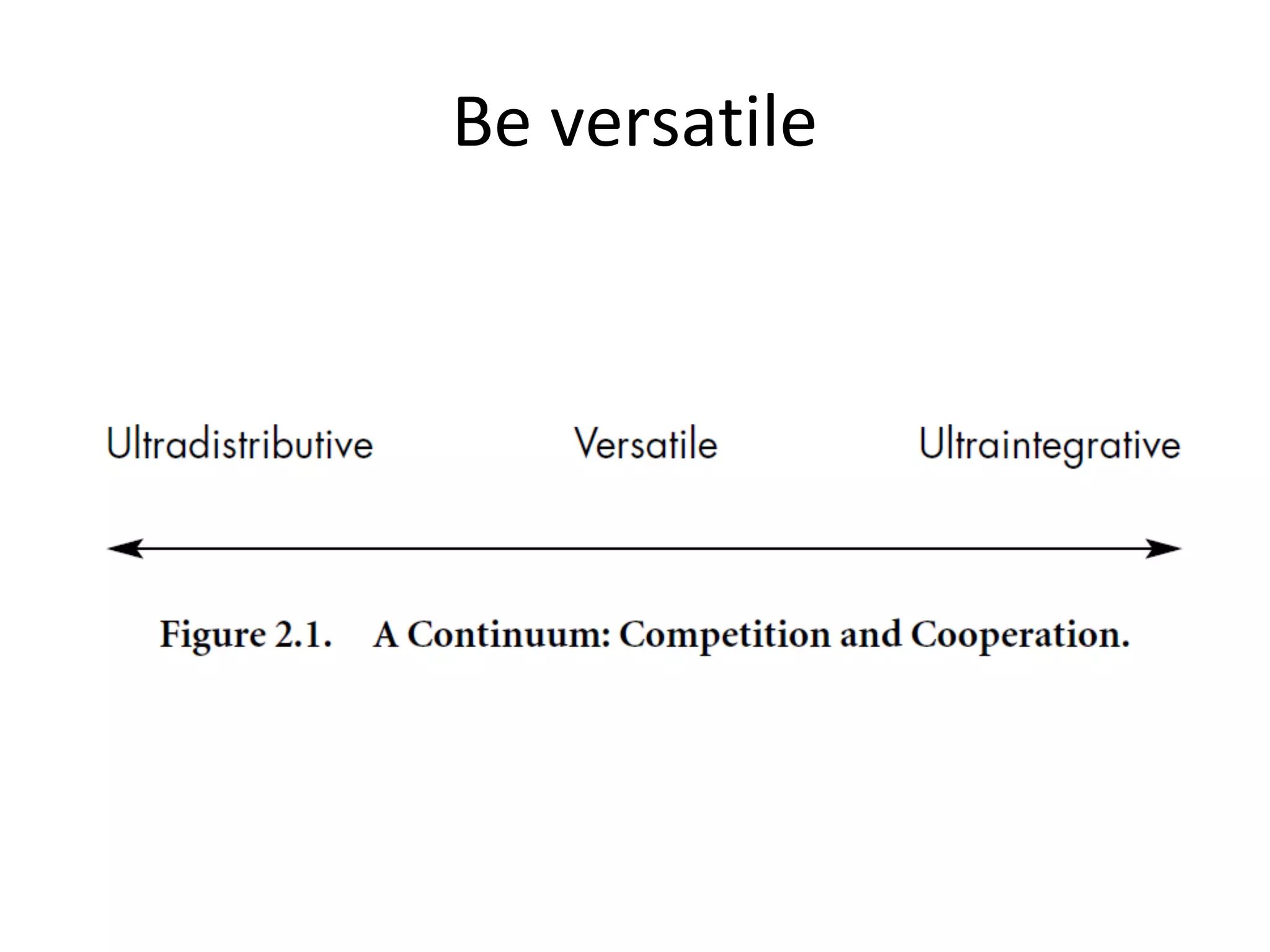
Be versatile
Assess interests, concerns, and emotions 
prior to and during negotiation
Set an agenda 
• Setting an agenda is a negotiation in and of 
itself. 
• Process guidelines include: 
– Who will start 
– Order of topics to be addressed 
– Time to be allocated to each topic 
– Issues that should not be addressed during the 
negotiation
Identify primary claims
Try all possible options
Find out your negotiation styles
Prioritize and negotiate issues
Persuasion strategies 
• Framing 
• ACE Model 
– Appropriateness 
– Consistency 
– Effectiveness
Losing or Saving Face 
• Face - “the positive social value a person 
effectively claims for himself [or herself] by 
the line others assume he [or she] has taken 
during a particular encounter.” 
• Whenever possible, negotiators should try to 
maintain the other side’s face. 
• The fear of losing face can be used as a 
strategy – can be risky.
Power is negotiable 
• Static indicators of power: rank, gender, age, 
reputation, status, intelligence, reputation, 
appearance, physical size 
• Respect > authority 
• Perception of power 
• Credibility 
• Use the power of who you know
Dealing with deception
In general, skilled negotiators 
are… 
• More observant 
• More versatile 
• Confident but not arrogant 
• Life-long learners 
• Experimenters
“In business and in life, 
you don’t get what you 
deserve, you get what 
you negotiate.” 
- Chester L. Karrass

The Skilled Negotiator

  • 1.
    Lisa Chow Contracts,Procurement, and Negotiation for Project Managers NYU Fall 2014
  • 2.
  • 3.
    Assess interests, concerns,and emotions prior to and during negotiation
  • 4.
    Set an agenda • Setting an agenda is a negotiation in and of itself. • Process guidelines include: – Who will start – Order of topics to be addressed – Time to be allocated to each topic – Issues that should not be addressed during the negotiation
  • 5.
  • 6.
  • 7.
    Find out yournegotiation styles
  • 8.
  • 9.
    Persuasion strategies •Framing • ACE Model – Appropriateness – Consistency – Effectiveness
  • 10.
    Losing or SavingFace • Face - “the positive social value a person effectively claims for himself [or herself] by the line others assume he [or she] has taken during a particular encounter.” • Whenever possible, negotiators should try to maintain the other side’s face. • The fear of losing face can be used as a strategy – can be risky.
  • 11.
    Power is negotiable • Static indicators of power: rank, gender, age, reputation, status, intelligence, reputation, appearance, physical size • Respect > authority • Perception of power • Credibility • Use the power of who you know
  • 12.
  • 13.
    In general, skillednegotiators are… • More observant • More versatile • Confident but not arrogant • Life-long learners • Experimenters
  • 14.
    “In business andin life, you don’t get what you deserve, you get what you negotiate.” - Chester L. Karrass