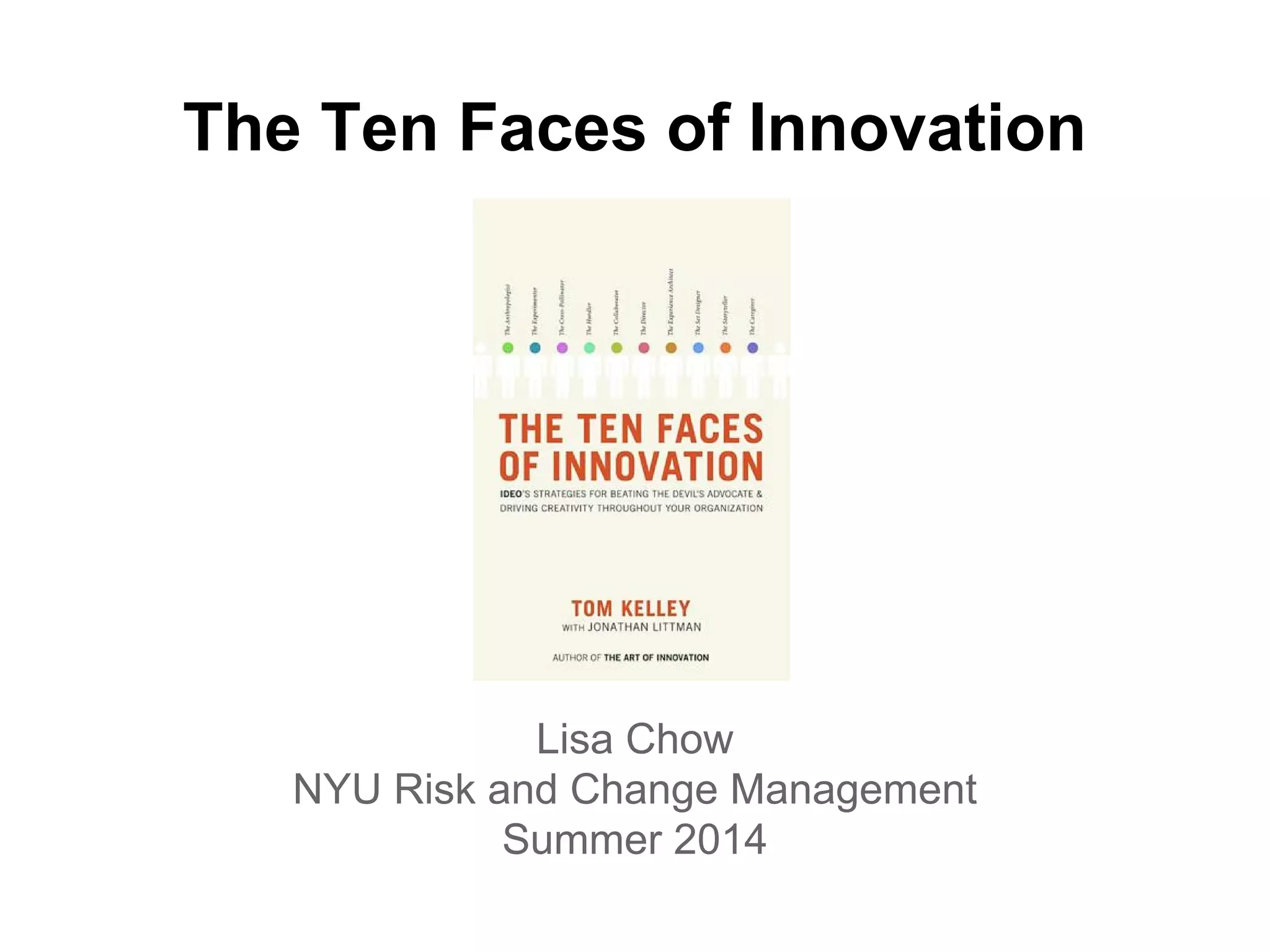
The Ten Faces of Innovation
Lisa Chow
NYU Risk and Change Management
Summer 2014
Innovation doesn’t just happen
Innovation Network’s definition of innovation:
People creating value through the
implementation of new ideas.
New ideas = change
Being innovation rather than doing innovation
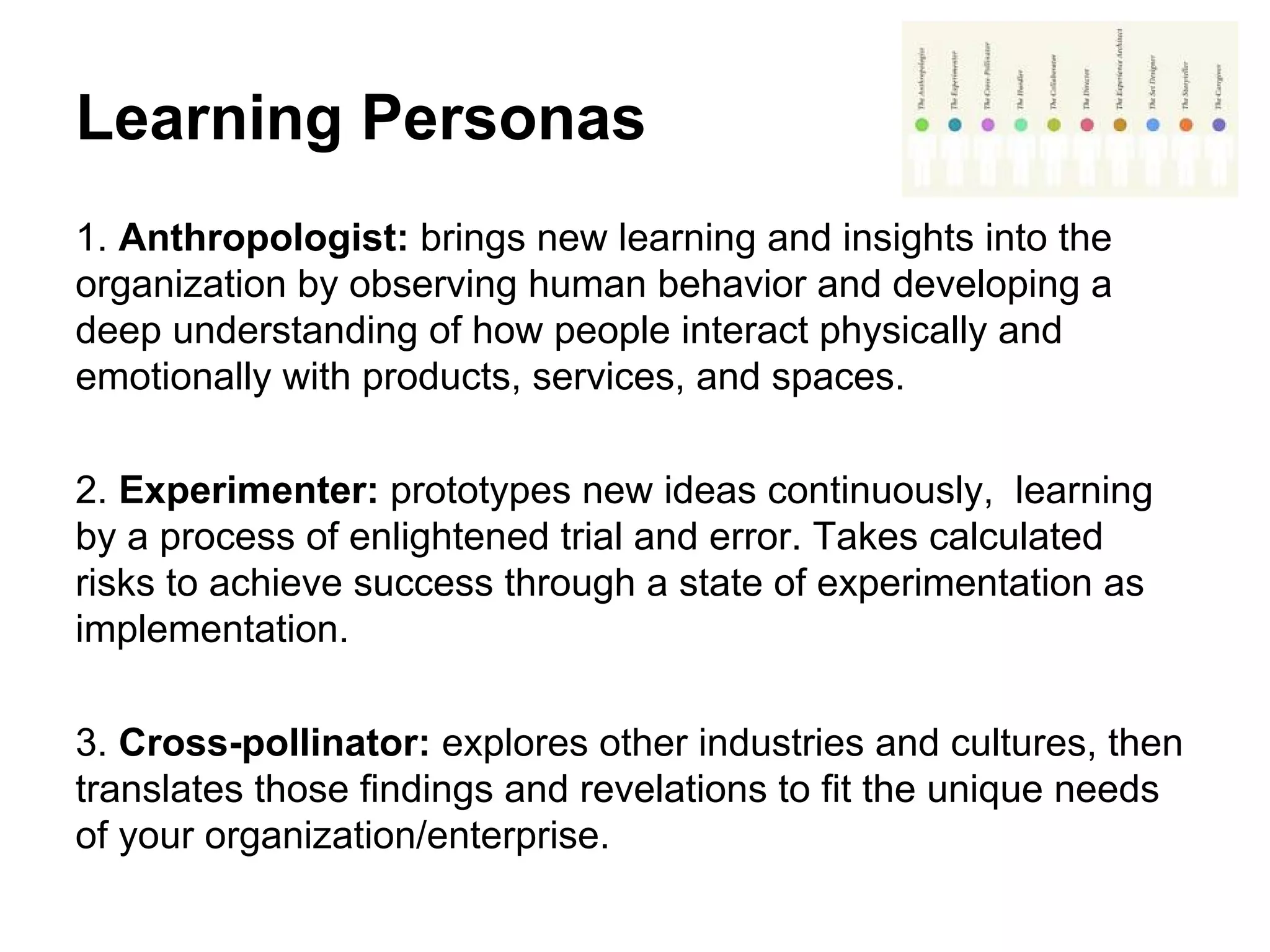
Learning Personas
1. Anthropologist: brings new learning and insights into the
organization by observing human behavior and developing a
deep understanding of how people interact physically and
emotionally with products, services, and spaces.
2. Experimenter: prototypes new ideas continuously, learning
by a process of enlightened trial and error. Takes calculated
risks to achieve success through a state of experimentation as
implementation.
3. Cross-pollinator: explores other industries and cultures, then
translates those findings and revelations to fit the unique needs
of your organization/enterprise.
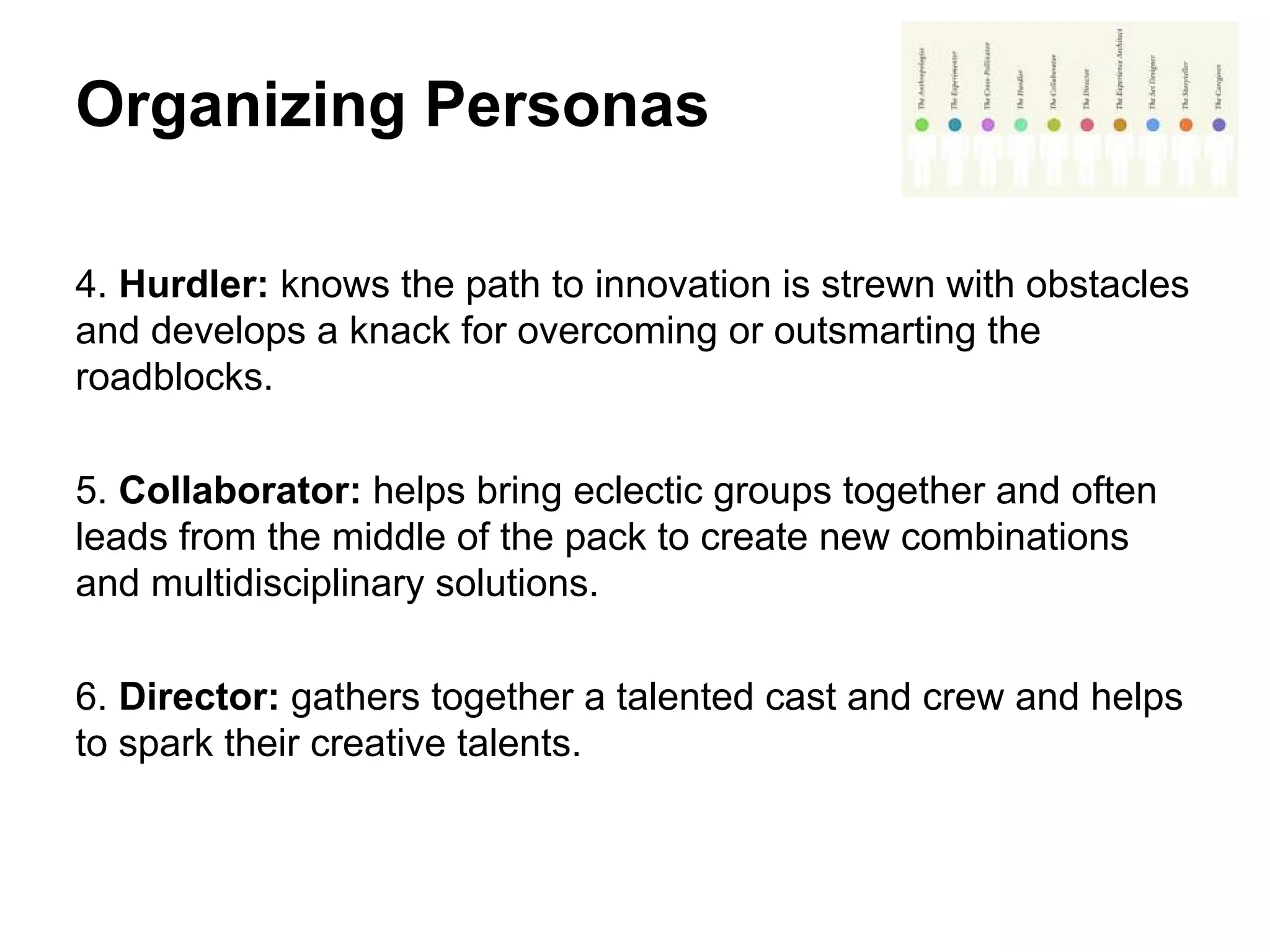
Organizing Personas
4. Hurdler: knows the path to innovation is strewn with obstacles
and develops a knack for overcoming or outsmarting the
roadblocks.
5. Collaborator: helps bring eclectic groups together and often
leads from the middle of the pack to create new combinations
and multidisciplinary solutions.
6. Director: gathers together a talented cast and crew and helps
to spark their creative talents.
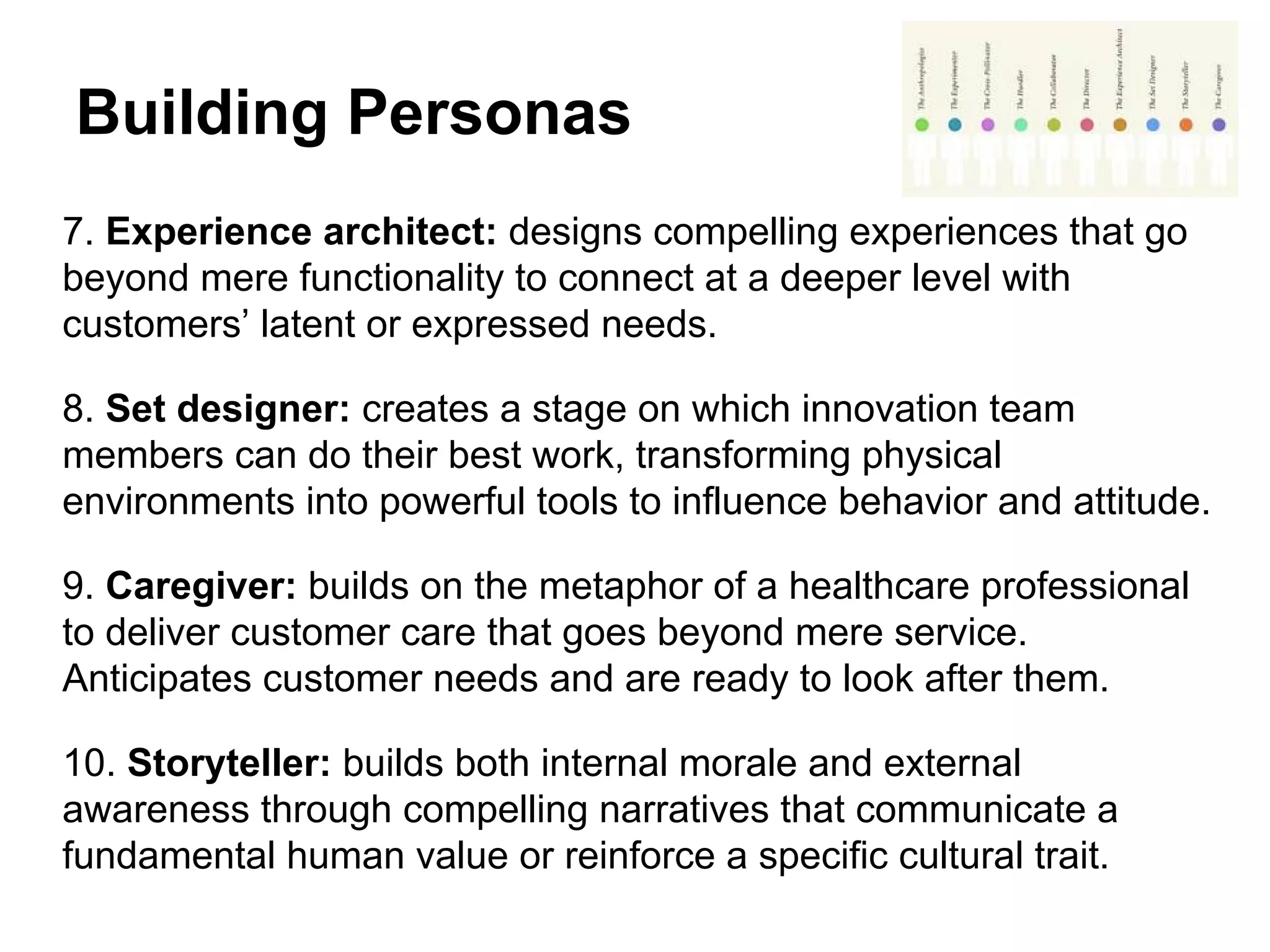
Building Personas
7. Experience architect: designs compelling experiences that go
beyond mere functionality to connect at a deeper level with
customers’ latent or expressed needs.
8. Set designer: creates a stage on which innovation team
members can do their best work, transforming physical
environments into powerful tools to influence behavior and attitude.
9. Caregiver: builds on the metaphor of a healthcare professional
to deliver customer care that goes beyond mere service.
Anticipates customer needs and are ready to look after them.
10. Storyteller: builds both internal morale and external
awareness through compelling narratives that communicate a
fundamental human value or reinforce a specific cultural trait.
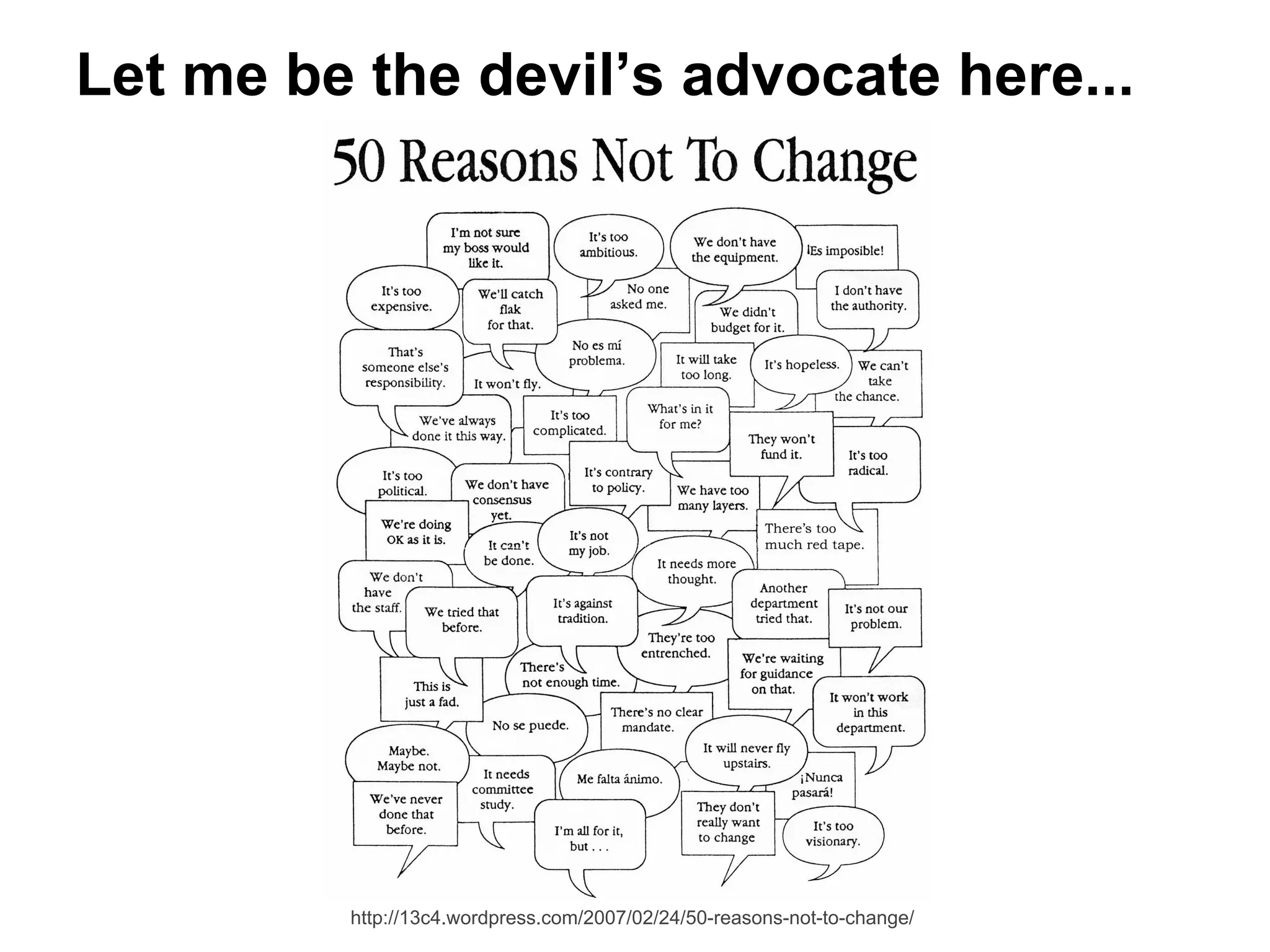
http://13c4.wordpress.com/2007/02/24/50-reasons-not-to-change/
Let me be the devil’s advocate here...
Takeaways
● Seizing innovation opportunities
● Developing the personas of your team to
maximize its influence
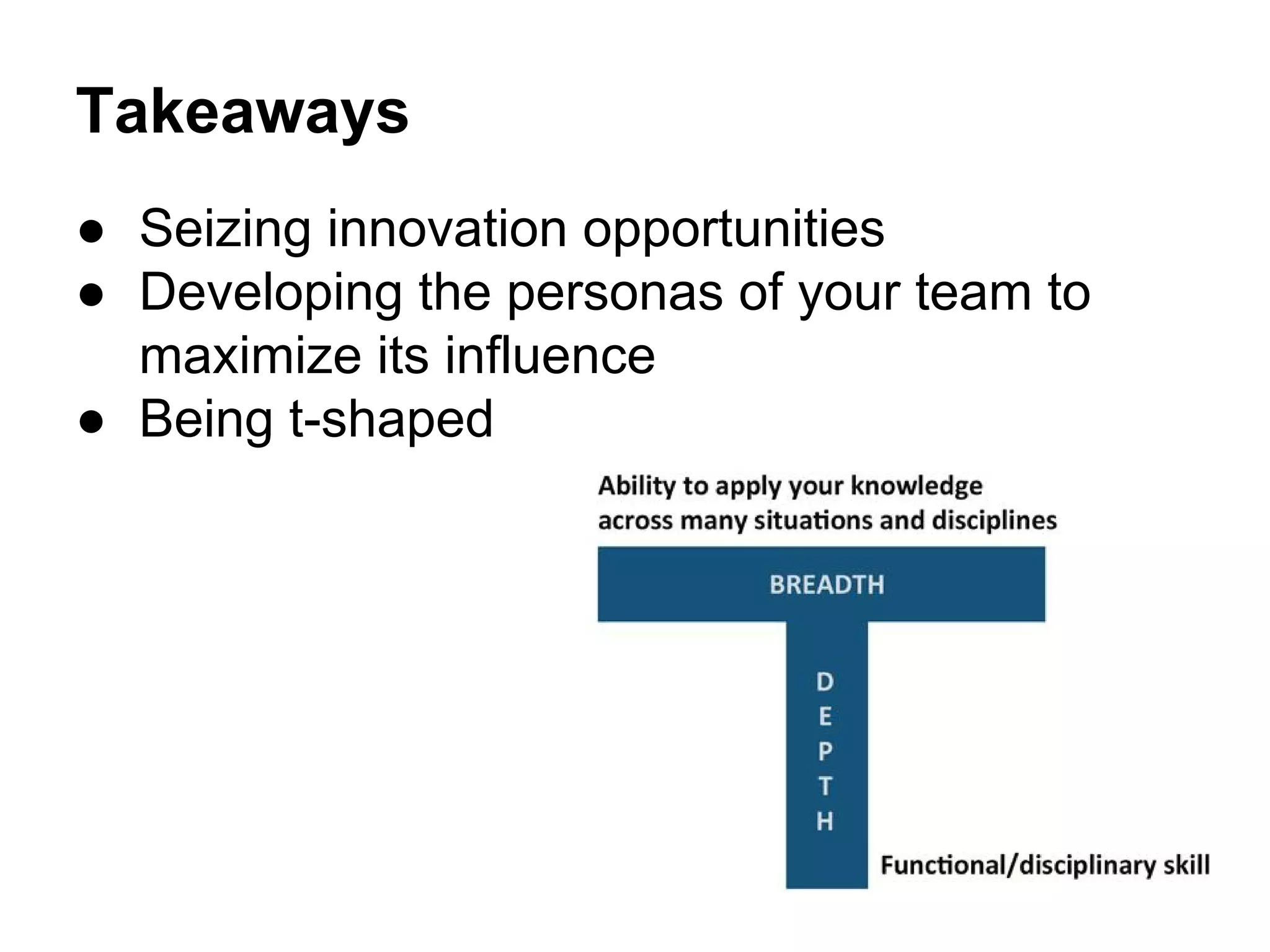
● Being t-shaped
Knowing yourself and your team
Persona SWOT analysis: The Cross-Pollinator
S = Strengths:
● Like to share knowledge and ideas
● Like to think in metaphors
● Believe in the usefulness of reverse mentoring
W = Weaknesses:
● Don’t write down insights and ideas
● Have not travelled often or widely
O = Opportunities:
● Opportunities and trends for collaboration and innovation
in the library and information science field
T = Threats:
● Fear and resistance to innovation in the field and
profession
NYU Risk and Change Management - Ten Faces of Innovation

NYU Risk and Change Management - Ten Faces of Innovation

  • 1.
    The Ten Facesof Innovation Lisa Chow NYU Risk and Change Management Summer 2014
  • 2.
    Innovation doesn’t justhappen Innovation Network’s definition of innovation: People creating value through the implementation of new ideas. New ideas = change Being innovation rather than doing innovation
  • 3.
    Learning Personas 1. Anthropologist:brings new learning and insights into the organization by observing human behavior and developing a deep understanding of how people interact physically and emotionally with products, services, and spaces. 2. Experimenter: prototypes new ideas continuously, learning by a process of enlightened trial and error. Takes calculated risks to achieve success through a state of experimentation as implementation. 3. Cross-pollinator: explores other industries and cultures, then translates those findings and revelations to fit the unique needs of your organization/enterprise.
  • 4.
    Organizing Personas 4. Hurdler:knows the path to innovation is strewn with obstacles and develops a knack for overcoming or outsmarting the roadblocks. 5. Collaborator: helps bring eclectic groups together and often leads from the middle of the pack to create new combinations and multidisciplinary solutions. 6. Director: gathers together a talented cast and crew and helps to spark their creative talents.
  • 5.
    Building Personas 7. Experiencearchitect: designs compelling experiences that go beyond mere functionality to connect at a deeper level with customers’ latent or expressed needs. 8. Set designer: creates a stage on which innovation team members can do their best work, transforming physical environments into powerful tools to influence behavior and attitude. 9. Caregiver: builds on the metaphor of a healthcare professional to deliver customer care that goes beyond mere service. Anticipates customer needs and are ready to look after them. 10. Storyteller: builds both internal morale and external awareness through compelling narratives that communicate a fundamental human value or reinforce a specific cultural trait.
  • 6.
  • 7.
    Takeaways ● Seizing innovationopportunities ● Developing the personas of your team to maximize its influence ● Being t-shaped
  • 8.
    Knowing yourself andyour team Persona SWOT analysis: The Cross-Pollinator S = Strengths: ● Like to share knowledge and ideas ● Like to think in metaphors ● Believe in the usefulness of reverse mentoring W = Weaknesses: ● Don’t write down insights and ideas ● Have not travelled often or widely O = Opportunities: ● Opportunities and trends for collaboration and innovation in the library and information science field T = Threats: ● Fear and resistance to innovation in the field and profession