CANADIAN FORCES COLLEGE / COLLÈGE DES FORCES CANADIENNES
JCSP 34 / PCEMI 34
MASTER OF DEFENCE STUDIES
RESEARCH PROJECT
THE SHARPEST KNIFE IN A GUNFIGHT:
ADAPTING TO THE UNCONVENTIONAL THREAT
By/par Maj Ted Middleton
This paper was written by a student attending the
Canadian Forces College in fulfilment of one of
the requirements of the Course of Studies. The
paper is a scholastic document, and thus contains
facts and opinions, which the author alone
considered appropriate and correct for the
subject. It does not necessarily reflect the policy
or the opinion of any agency, including the
Government of Canada and the Canadian
Department of National Defence. This paper may
not be released, quoted or copied, except with the
express permission of the Canadian Department
of National Defence.
Ce présente étude a été rédigée par un stagiaire
du Collège des Forces canadiennes pour
satisfaire à l'une des exigences du cours.
L'étude est un document qui se rapporte au
cours et contient donc des faits et des opinions
que seul l'auteur considère appropriés et
convenables au sujet. Elle ne reflète pas
nécessairement la politique ou l'opinion d'un
organisme quelconque, y compris le
gouvernement du Canada et le ministère de la
Défense nationale du Canada. Il est défendu de
diffuser, de citer ou de reproduire cette étude
sans la permission expresse du ministère de la
Défense nationale.
i
ABSTRACT
THE SHARPEST KNIFE IN A GUNFIGHT: ADAPTING TO THE UNCONVENTIONAL
THREAT, by Major Ted Middleton, Canadian Command and Staff Program 34, 103 pages.
The rise of the unconventional has dramatically changed the security environment as nations
are confronted by highly adaptive, technologically enabled, media savvy foes bent less on
defeating armed forces than eroding a nation’s will to fight. Threats to vital national interests
are no longer posed exclusively – or explicitly – by near-peer competitors in the conventional
arena. Guerrilla militias, criminals and terrorists typical of today’s insurgencies have
increased the complexity of warfare so much so that it is difficult to discern the Davids from
the Goliaths.
This research project frames the problem posed by evolved forms of insurgency and
highlights the challenges of adapting organizational, doctrinal, and strategic frameworks to
beat insurgents at their own game.
It concludes that to extrapolate the ideas, strategies, doctrine, and operational concepts from
several decades ago and apply them to the complex insurgencies of the 21st
century is a
recipe for ineffectiveness. The challenges that confront the transformation of these
frameworks are shown to be less technological than they are cultural and institutional. Key
to successfully overcoming these challenges will be overcoming the bureaucratic, cultural,
doctrinal and organizational inertia that inhibits interoperability, information sharing, and
mission effectiveness.
ii
CONTENTS
ABSTRACT i
CONTENTS ii
LIST OF FIGURES iv
INTRODUCTION 1
The Complexity of the Threat, Simply Described 2
The Thesis and Roadmap 6
CHAPTER 1 OLD WINE, NEW BOTTLE? 8
UNCONVENTIONAL WARFARE 9
Unconventional Warfare: The New Black 10
A FRAMEWORK FOR THE EVOLUTION TO THE UNCONVENTIONAL 14
Fourth Generation Warfare 17
The Nature of Fourth Generation War 18
Levels of Conflict 19
Strategic 4GW 20
Operational 4GW 24
Tactical 4GW 26
A FINAL NOTE ON THE NATURE OF 4GW 27
CHAPTER 2 INFORMATION AGE ADVERSARIES 29
NETWAR 29
Defining Netwar 29
A Metaphor for Netwar 31
Netwar Actors 32
NETWORKS 34
Networked Organizational Design 34
Networks versus Hierarchies 39
NETWORKS, NETWAR ACTORS AND TECHNOLOGY 41
Netwar and the Internet 42
Low-Tech Netwar 44
Emerging Netwar Doctrine 46
A FINAL NOTE ON INFORMATION AGE ADVERSARIES 48
CHAPTER 3 HEZBOLLAH: THE A-TEAM OF 4GW ADVERSARIES 50
The Genesis of Hezbollah 51
HEZBOLLAH AS A NETWAR ACTOR 52
Leadership and Organizational Design 52
iii
Hezbollah’s Military and Security Organizations 55
Securing a Power Base: Hezbollah’s Comprehensive Social Networks 56
The Narrative of the Resistance Society 58
Both a Trans-national and Sub-national Actor 61
Hezbollah and the Information Age 64
HEZBOLLAH’S NETWAR 68
David Becomes Goliath: The 2000 Israeli Withdrawal from South Lebanon 68
A FINAL NOTE ON HEZBOLLAH AS A 4GW ACTOR AND ITS NETWAR OF 2000 72
CHAPTER 4 STUDENTS OF THE FOURTH GENERATION 73
The Canadian Army and the Future Security Environment 74
EVOLVING TO COUNTER NETWAR 76
Adaptive Dispersed Operations 76
Network Enabled Operations (NEOps) 78
Joint, Interagency, Multinational, Public (JIMP) Effects 81
RHETORIC OR ROADMAP? 83
Challenges to ADO 83
Challenges to JIMP 87
High-Tech versus the Right-Tech 88
Organizational Design 90
A FINAL WORD ON ADAPTING TO THE FUTURE SECURITY ENVIRONMENT 91
CONCLUSION 92
The “So What?” of it All 93
Where to From Here? 97
BIBLIOGRAPHY 99
iv
LIST OF FIGURES
Figure 1 - Basic Models of Networks 35
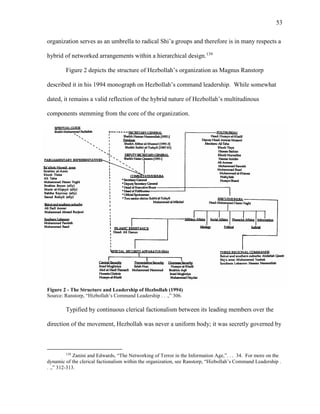
Figure 2 - The Structure and Leadership of Hezbollah (1994) 53
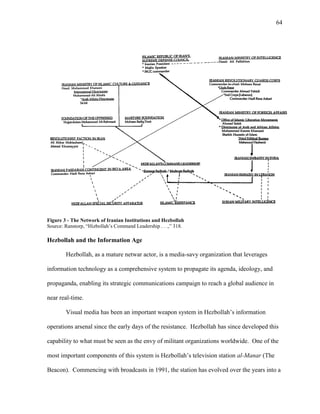
Figure 3 - The Network of Iranian Institutions and Hezbollah 64
Figure 4 - The Spectrum of Conflict 76
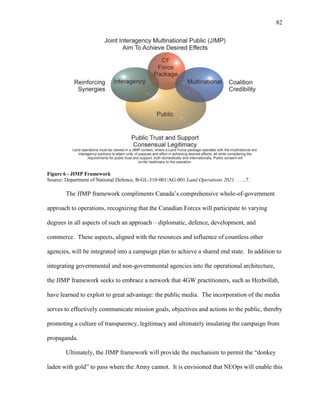
Figure 5 - The Tenets of NEOps 79
Figure 6 - JIMP Framework 82
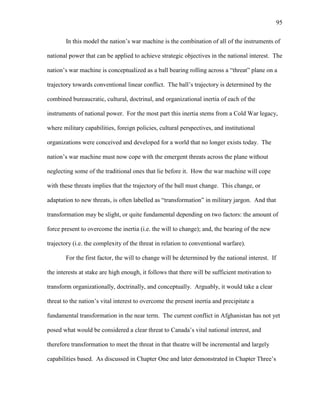
Figure 7 - The Trajectory of the Nation's War Machine 94
1
INTRODUCTION
In 1989, some American military experts predicted a fundamental
change in the future form of warfare . . . They predicted that the wars of the
21st
century would be dominated by a kind of warfare they called “the fourth
generation of wars.” Others called it asymmetric warfare . . . .
This new type of war presents significant difficulties for the Western
war machine and it can be expected that [Western] armies will change
fundamentally.1
The above quotation appeared in a February 2002 edition of al-Ansar, an al-Qaeda
sponsored online magazine, and to some it marked the validation of a theorized shift in the
traditional conflict paradigm from armies attacking armies on the battlefield to a “de-
statization” of warfare that blends the civil-military distinction into complex, violent, and
unconventional struggles that cannot be decided militarily.
The rise of the unconventional has dramatically changed the security environment as
nations are confronted by highly adaptive, technologically enabled, media savvy foes bent
less on defeating armed forces than eroding a nation’s will to fight.2
Threats to vital national
interests are no longer posed exclusively – or explicitly – by near-peer competitors in the
conventional arena. The guerrilla militias, criminals and terrorists typical of today’s
insurgencies have increased the complexity of warfare so much so that it is difficult to
discern the Davids from the Goliaths.
While insurgency has a long history that pre-dates Westphalia, its strategic salience
cannot be taken in stride – its protracted and complex nature increasingly frustrates
1
Ubeid al-Qurashi quoted in “Bin Laden Lieutenant Admits to September 11 and Explains Al-Qa'ida's
Combat Doctrine,” The Middle East Media Research Institute Special Dispatch Series, no. 344 (10 February
2002) [journal on-line]; available from
http://www.memri.org/bin/articles.cgi?Page=archives&Area=sd&ID=SP34402; Internet; accessed 9 April 2008.
2
Department of National Defence, B-GL-310-001/AG-001 Land Operations 2021: Adaptive
Dispersed Operations, The Force Employment Concept for Canada’s Army of Tomorrow (Ottawa: DND
Canada, 2007), 4.
2
conventional military capabilities and the instruments of national power today. Insurgency is
mutating from what it was understood to be during its “golden age” in the latter half of the
20th
century to more unique, complex, and volatile campaigns that concentrate more on the
political and psychological domains, subsequently making the military battlespace less and
less decisive. “To simply extrapolate the ideas, strategies, doctrine, and operational concepts
from several decades ago and apply them to 21st
century insurgency is a recipe for
ineffectiveness.”3
Western nations need to re-evaluate their grand strategies for
counterinsurgency and reconceptualise military and other components of government “. . . to
confront the new variants of this old challenge and to distinguish insurgency’s enduring
characteristics from those undergoing change.”4
The Complexity of the Threat, Simply Described
For the most part, it would be convenient to draw a line differentiating insurgency
from conventional warfare. However, the security environment has become far too complex
to permit such a distinction. Unfortunately, insurgency – in both its classic and more evolved
forms – and conventional warfare are not mutually exclusive concepts. Their elements are
often intertwined, complementing one another occasionally, but mostly creating a complex,
adaptive, non-contiguous, asymmetric threat environment that cannot be easily reduced to
constituent parts for conventional military forces to either defeat piecemeal or to focus a
strategically decisive blow on some centre of gravity.
However, efforts to understand the nature of insurgencies have resulted in two broad
forms. The first form is that of a “national” insurgency where the primary antagonists are the
3
Steven Metz and Rayond Millen, Insurgency and Counterinsurgency in the 21st
Century:
Reconceptualizing Threat and Response, Report Prepared for the U.S. Army War College Strategic Studies
Institute (Carlisle PA: Strategic Studies Institute Publishing, November 2004), 1.
4
Ibid., 1.
3
insurgents and national government. The government regime, which is assumed to have at
least some degree of legitimacy and support, can be distinguished from the insurgents based
on a variety of factors including economic class, ideology, ethnicity, race, religion, or
political belief. While the conflict is clearly between the insurgents and an endogenous
regime, national insurgencies may involve a host of actors who can influence the struggle by
shifting their support between the antagonists. The most important of these actors is
typically national or sub-national – i.e. the populace of the country or region within the
country – but the significance of entities such as external states, international organizations,
or trans-national groups should not be underestimated as these actors contribute significantly
to the complexity of the conflict. Generally speaking, national insurgencies reflect the
struggle between the antagonists to weaken one another while simultaneously attempting to
win over the neutrals or those not committed to either side.5
The second form is that of the “liberation” insurgency where the insurgents are pitted
against a ruling group that is seen as foreign occupiers by virtue of race, religion, ethnicity,
or culture. The goal of the insurgents is to liberate their territory from alien occupation.
Examples of insurgencies of liberation include the Afghan resistance to Soviet occupation,
the current Taliban resistance against NATO and the Canadian Forces, and the quagmire that
continues to unfold in Iraq.
What makes liberation insurgencies particularly difficult to counter is the motivation
of the insurgent. Unlike national insurgencies, where a government can attempt to address
the root causes through reform, liberation insurgencies are driven by resentment of
occupation and the perception of oppression by foreigners. Unfortunately the leopard cannot
5
Ibid., 2.
4
change its spots – the foreign regime will always remain foreign to the insurgents. This
presents quite the conundrum for the counterinsurgent who is affronted by a movement, or
various factions of movements, that can exploit an “organic” mobilizing factor of alien
occupation in a unifying objective that defies a coherent strategy rooted in political
ideology.6
Take for example the adversaries in Iraq: a loosely affiliated network of Shi’ite
and Sunni extremists, Ansar al-Islam, Baathist loyalists, disgruntled military and security
elements, al-Qaeda, and criminal elements such as Saddam fedayeen all joined in temporary
alliance with no unifying purpose other than to drive the United States out. These factions
have no coherent plan for the political future of Iraq and will likely plunge the country into a
chaotic civil war for power if the Coalition withdraws before a stable government is
established. How does one win such a melee? What does winning look like?
The categorization of insurgencies into one of these two forms is unfortunately not so
cut-and-dried. An insurgent struggle can demonstrate elements of both national and
liberation insurgencies, often with the emphasis shifting over time from one to the other. In
South Vietnam for example, the Viet Cong and North Vietnamese insurgency grew out of
liberation, becoming more national in focus prior to extensive American involvement in the
conflict only to emphasize again the liberation element from 1965 to the early 1970s, and
finally reverted to a national form following the withdrawal of the American forces.7
Historically, successful insurgencies were those that prevented the counterinsurgents
– be they the national ruling regime or foreign occupiers – from achieving strategic decision
in the military battlespace until the balance of power shifted to favour the insurgents. In
6
Ibid., 3, 14.
7
Ibid., 3.
5
other words, while avoiding a crushing military defeat, successful insurgents pursued their
objectives through the political and psychological realms, postponing decisive military
encounters until they developed a critical mass of capability and support that would enable
them to effectively strike at a weakened regime. This strategy was introduced with great
success under Mao in the People’s War and has since been widely used as a model to
generically explain the doctrine of insurgency.
The People’s War was a national insurgency that called for the seizure of power and
the creation of a communist state. Seeing political power as the key to insurgency, Mao
prescribed a strategy of three merging phases, expanding or contracting over time as
necessary, which enabled his guerrillas to overcome the Nationalist Chinese government’s
superior conventional military and economic strength.
Phase I: The insurgents concentrate primarily on building political
strength. Military action is limited to selected, politically motivated
assassinations. Any other military action must have a propaganda purpose to
cement the population’s support of the insurgents.
Phase II: The insurgents gain strength and consolidate control of base
areas. They begin to actively administer some portions of the contested area.
And, because Mao had no outside sponsor providing weapons, they conducted
military operations both to capture arms and to wear down government forces.
Phase III: The insurgents commit regular forces (which have been
carefully husbanded up to this point) in a final offensive against the
government. This phase can succeed only if the “correlation of forces” has
been shifted to the insurgents during the early phases.8
In Mao’s vision, the first two phases served primarily to build the political, social,
and economic power required to shift the “correlation of forces” from the government to the
insurgents. It was only after this shift that the insurgents would be ready to complete the
destruction of the government by conventional military action. National insurgencies since
have refined Mao’s strategy to bring about the defeat of superior regimes, as seen both in
8
Colonel Thomas X. Hammes, The Sling and the Stone: On War in the 21st
Century (St. Paul, MN:
Zenith Press, 2004), 52.
6
Vietnam and in Nicaragua. But there is a danger here in extending Mao’s model to explain
the nature of all insurgencies, particularly those of liberation, as it can lead to the
development of a one-size-fits-all counterinsurgency doctrine that is applied to far more
complex struggles and adversaries.
The Thesis and Roadmap
Due to the Darwinian nature of warfare, some nations have adapted their war
machines in response to the Maoist model, developing effective strategies, doctrine and
forces to counter it. In turn however, insurgency continues to evolve and while some of the
age-old characteristics remain unchanged, there are key variations or discontinuities that are
not yet fully understood, particularly in cases of liberation insurgencies. Tarring all
insurgencies with the Maoist brush will inevitably deceive our recognition of their true and
unique natures and ultimately dupe nations into pursuing strategies that are insufficient and
destined to fail. The aim of this paper is to frame the problem posed by evolved forms of
insurgency and to highlight the challenges of adapting organizational, doctrinal, and strategic
frameworks to beat insurgents at their own game.
This will be accomplished in four chapters. The first chapter establishes that
“mainstream warfare” is now, and is likely to remain for the foreseeable future, irregular and
that conventional warfare, into which we’ve invested extensive military, political, and
economic capital, has become “marginal warfare.” The antagonists in the mainstream have
emerged as masters of what William Lind calls “the fourth generation of warfare”: an
evolved form of insurgency that relies on “. . . all available networks – political, economic,
7
social, and military – to convince the enemy’s political decision makers that their strategic
goals are either unachievable or simply too costly for the perceived benefit.”9
Enabled by the Information Age, these adversaries have adapted their organizational
designs, doctrines, and strategies to effectively wage a form of warfare that has become
synonymous with Lind’s fourth generation: netwar. As a comprehensive approach to
conflict, netwar represents the migration of power to smaller, non-state actors who can
capitalize on the inherent benefits offered by the Information Age and networked
organizations – greater flexibility, agility, adaptivity, and connectivity. Chapter Two of this
paper examines networks in detail, both as an organizational feature of netwar adversaries
and as a strategic enabler in the political and psychological domains.
Chapter Three of this paper is a case study analysis that illustrates how the Shi’a
fundamentalist trans-national organization Hezbollah, a master of strategic netwar, aptly
leveraged all available networks to conduct a strategic communications campaign, supported
by guerrilla and terrorist operations, in an insurgency of liberation to force the unilateral
withdrawal of the Israeli war machine from South Lebanon in 2000.
The final chapter of this paper examines the merits of emerging concepts that are
being developed to combat the asymmetric, unconventional, Information Age opponents that
are frustrating nation-states in the complex conflicts of today and those forecasted for the
coming decades. The challenges that confront these concepts will be highlighted to show
that they are less technological than they are cultural and institutional. Key to successfully
meeting these challenges will be overcoming the bureaucratic, cultural, doctrinal, and
organizational inertia that inhibits interoperability, information sharing, and mission
effectiveness.
9
Ibid., 2.
8
CHAPTER 1
OLD WINE, NEW BOTTLE?
Like a man who has been shot in the head but still manages to stagger
forward a few paces, conventional war may be at its last gasp.10
When we think of warfare per se, we think of it, certainly initially, almost by default
in both the traditional and the conventional sense. That is to say, we see warfare traditionally
as a confrontation between nation-states, or coalitions of nation-states, exemplified by force-
on-force military engagements where conventional military capabilities are employed in the
air, land, maritime, space and cyberspace domains.11
The objective of these military
engagements is typically to convince or coerce key military or political decision makers, to
defeat an enemy’s armed forces, to destroy an adversary’s war-making capacity, or to seize
or retain territory in order to force a change in an adversary’s government or policies.12
To
these ends we have developed a level of comfort with this traditional characterization of
warfare that has shaped the development of most Western nations’ war-fighting capabilities,
doctrines and organizations to the extent that the United States, and any coalition it leads, has
achieved overwhelming dominance in the conventional arena.
Consequently, this conventional dominance has led to a resurgence in the appearance
of unconventional warfare as the means to effect change in the conflicts of the recent past
involving states of conventionally inferior military and economic strength opposing
comparative Goliaths. By mixing modern technology with ancient techniques of insurgency
10
Martin van Creveld, The Transformation of War (New York: Free Press, 1991), 205.
11
United States, Secretary of the Air Force, Air Force Doctrine Document 2-3: Irregular Warfare
(Washington, DC: U.S. Government Printing Office, August 1, 2007), 1 [electronic publication]; available from
http://www.e-publishing.af.mil/; Internet; accessed 1 March 2008.
12
United States, Joint Chiefs of Staff, JP 1 Doctrine for the Armed Forces of the United States
(Washington, DC: U.S. Government Printing Office, 14 May 2007), I-6 [electronic publication]; available from
http://www.dtic.mil/doctrine/jel/new_pubs/jp1.pdf; Internet; accessed 8 March 2008.
9
and terrorism, today’s truly dangerous foe to powerful nation-states can avoid the contest of
contemporary military might and instead aim to exhaust its opponent’s national will,
achieving its goals by undermining and outlasting public support.13
This chapter sets out to
establish the relevance of unconventional warfare and the irregular activities that typify
insurgencies not because they represent a new or independent type of warfare – quite to the
contrary as irregular warfare has a long history that pre-dates Westphalia – but because they
represent a major and pervasive form of warfare that has overtaken the conventional inter-
state conflict that we have mastered and in doing so threaten to negate our military
capabilities and organizations.
UNCONVENTIONAL WARFARE
The U.S. Department of Defence defines unconventional warfare as:
A broad spectrum of military and paramilitary operations, normally of long
duration, predominantly conducted through, with, or by indigenous or
surrogate forces who are organized, trained, equipped, supported, and directed
in varying degrees by an external source. It includes, but is not limited to,
guerrilla warfare, subversion, sabotage, intelligence activities, and
unconventional assisted recovery.14
Unconventional warfare is an irregular activity that is typical of the violent struggles between
state and non-state actors for legitimacy and influence over relevant populations.15
These
complex, nasty, prolonged conflicts avoid the decisive engagements pitched between
13
United States, Department of the Army, FM 3-24 Counterinsurgency (Washington, DC: U.S.
Government Printing Office, 15 December 2006), ix [electronic publication]; available from
http://www.fas.org/irp/doddir/army/fm3-24.pdf; Internet; accessed 8 March 2008.
14
United States, Joint Chiefs of Staff, JP 1-02 Department of Defence Dictionary of Military and
Associated Terms (Washington, DC: U.S. Government Printing Office, 12 April 2001 as amended through
October 17 2007), 564 [electronic publication]; available from
http://www.dtic.mil/doctrine/jel/new_pubs/jp1_02.pdf; Internet; accessed 8 March 2008.
15
Definition of Irregular Warfare, quoted in United States, Secretary of the Air Force, Air Force
Doctrine Document 2-3: Irregular Warfare . . .
10
conventional forces and instead focus on undermining their opposition’s resolve, at least until
the correlation of forces can be swung in their favour, to effect significant change. In the
Canadian context these conditions describe the essence of an insurgency: “a competition
involving at least one non-state movement using means that include violence against an
established authority to achieve political change.”16
Unconventional Warfare: The New Black
Since the Second World War numerous examples have showcased how
unconventional warfare has led to major changes in the political, social, and economic
fabrics of the territories involved. The Communist Revolution in China, the Indochinese
wars, the Algerian War of Independence, the Sandinista struggle in Nicaragua, the Iranian
revolution, the Afghan-Soviet War of the 1980s, the first Intifada, and Chechnya all
demonstrated how the irregular and unconventional behaviour of militarily and economically
inferior adversaries challenged state authority and forced significant change.17
Low-intensity
conflict, a term often used to describe unconventional war, has become the predominant
instrument for bringing about political change, particularly in the Third World, and has
frustrated the most modern and technologically advanced conventional forces of the
industrialized world.
Contrast the political change resulting from these unconventional conflicts with the
relative return to the strategic status quo following conventional wars of the same period: the
Korean War, the Israeli-Arab Wars of 1956, 1967, and 1973, the Falklands War, the Iran-Iraq
16
Definition as developed by a counter-insurgency study group during USMC Joint Urban Warrior
2005, quoted in Department of National Defence, B-GL-323-004/FP-003 Counter-Insurgency Operations
(Kingston: Army Publishing Office, 2007).
17
Colonel Thomas X. Hammes, The Sling and the Stone: On War in the 21st
Century (St. Paul, MN:
Zenith Press, 2004), 4.
11
War, and the first Gulf War. While some of these conventional clashes resulted in regime
change or the to-and-fro of territorial frontiers, for the most part the political, social and
economical structures of each of these states changed very little.18
This contrast is reinforced in Martin van Creveld’s The Transformation of War as he
illustrates the relative successes of unconventional wars against conventional opponents and
argues that the trend since 1945 points to an eventual return to a pre-Westphalian kind of
war; that is to say, a form of war where the principle constituents are not states, but are sub-
national and trans-national groups whom we label today as terrorists, insurgents, guerrillas,
and criminals.19
“Their organizations are likely to be constructed on charismatic lines rather
than institutional ones, and to be motivated less by ‘professionalism’ than by fanatical,
ideologically-based, loyalties.”20
Conventional militaries have generally failed to adapt to
effectively counter the threats posed by such groups, particularly as the distinction between
governments, armies, and citizens has become more and more obscure.21
The dissimilarity between the strategy of the conventional army and the
unconventional warrior has contributed significantly to this failure, a fact which was perhaps
best articulated over a century ago by the British military theorist Colonel Charles E.
Callwell: “. . . the key problem in the conduct of irregular warfare . . . is the difficulty of
persuading or coercing an irregular enemy to come out and fight so that he could be duly
18
Ibid., 4.
19
van Creveld, The Transformation of War, 192-197.
20
Ibid., 197.
21
Ibid., 192-195.
12
slaughtered in satisfactorily large numbers.”22
Van Creveld asserts that classical strategy –
the eternal writings of Jomini and Clausewitz through Moltke to Liddell Hart as preached
dogmatically at command and staff colleges – is inadequate to understand a war without
fronts and will continue to lose relevance, along with conventional militaries and
technologically advanced weaponry, as low-intensity conflict rises to dominance.23
Van Creveld’s theory that in an ever less state-centric world the Clausewitzian
strategic view of war has become obsolete is contested by Colin S. Gray in his work Another
Bloody Century. Essentially, Gray examines a dozen theories that offer useful frameworks to
explain the nature of war – including the rise and fall of total war, the obsolescence of major
interstate war, and revolutions in military affairs to name but a few – and concludes that it
would be in grave error to throw the baby out with the bath water when trying to characterize
conflicts on the horizon. As he cautions about the perils of prediction he establishes that the
alleged obsolescence of major conventional wars between states remains unproven. His
assessment of the likely nature of future warfare does, however, grant that irregular,
unconventional, low-intensity conflict may be dominant for some years. Interestingly,
Gray’s definition of irregular warfare is inclusive of terrorism and “[a]s such it is subject to
the same lore of war and strategy as are other forms of warfare, both regular and irregular.”24
While holding onto his reservation that we have not seen the last of conventional major
22
Colonel Charles E. Callwell, Small Wars: A Tactical Textbook for Imperial Soldiers (London:
Greenhill Books, 1990), quoted in Colin S. Gray, Another Bloody Century: Future Warfare (London:
Weidenfeld and Nicolson, 2005), 224.
23
van Creveld, The Transformation of War, 27, 205, 207.
24
Colin S. Gray, Another Bloody Century: Future Warfare (London: Weidenfeld and Nicolson, 2005),
214.
13
interstate war, Gray concedes that it has been overtaken in frequency by unconventional,
irregular combat more akin to the conflicts in Afghanistan and Iraq today.25
The decline of large-scale state-on-state warfare in favour of protracted, ambiguous,
unconventional conflicts, as introduced by van Creveld and acknowledged by Gray, is a
theme that the U.S. Army War College has picked up on as well. A March 2003 monograph
from the Institute of Strategic Studies’ Dr Steven Metz and Lieutenant Colonel Raymond A.
Millen concludes that “. . . the costs and risks associated with cross-border aggression will
mount to the point that most states will not consider it . . .” in the traditional context.26
The
corollary to this decline is that the tensions that generate violence will, if anything, increase
in the coming decades for primarily three reasons. One is the continuing clash of ethnic
groups, sects, and clans that results from the long process of decolonization and the
dissolution of national borders, which reflected the interests of colonial powers more so than
the economic, religious, and ethnic realities on the ground.27
A second is the effect of
globalization as it enlightens the disparity between the haves and the have-nots in the world
and sparks the disillusionment, frustration, resentment, and anger that fuel radicalism in non-
state entities.28
The third is likely to manifest itself in the poorer regions of the world
through the competition for resources, whether arable land, water, or capital. As states are
discouraged from traditional cross-border aggression by the high political and economical
25
Gray, Another Bloody Century . . ., 170.
26
Steven Metz and Raymond Millen, Future War/Future Battlespace: The Strategic Future of
American Landpower, Report Prepared for the U.S. Army War College Strategic Studies Institute (Carlisle, PA:
Strategic Studies Institute Publishing, March 2003), 3 [electronic publication]; available from
http://www.strategicstudiesinstitute.army.mil/pdffiles/PUB214.pdf; Internet; accessed 8 March 2008.
27
Ibid., 9.
28
Ibid., 9.
14
costs, the antagonists in these resource competitions will likely be sectarian or ethnic
proxies.29
These factors lead Metz and Millen to conclude:
As states themselves are constrained from overt military aggression, the
armed forces of all nations will be involved in promoting internal stability and
confronting internal enemies, whether separatists, militias, insurgents,
terrorists, armed criminal cartels, or something similar. The first two decades
of the 21st century will be dominated by protracted, complex, ambiguous
armed conflicts rather than short, politically and ethically clear ones leading to
decisive outcomes.30
While van Crevald’s speculation that the low-intensity conflict typical of
unconventional warfare has become the prevailing method of war has earned the begrudging
endorsement of the likes of Colin Gray, it has also been widely embraced by many theorists,
such as Metz and Millen, as a signpost pointing to the strategic, operational and even tactical
characteristics future war will take. To summarize the important commonality between these
theorists, we can look to Colonel Thomas X. Hammes, an advocate of the importance of the
unconventional in the evolution of warfare, who offers that “[t]he message is clear for
anyone wishing to shift the political balance of power: only unconventional war works
against established powers.”31
A FRAMEWORK FOR THE EVOLUTION TO THE UNCONVENTIONAL
In order to discuss the nature of the unconventional conflict the Canadian Forces
finds itself in today in Afghanistan and the challenges posed by such conflicts in the
foreseeable future, it is necessary to use a framework upon which one can hang terminology
that illustrates the evolution of warfare to present day and beyond. For that purpose, this
paper will use an architecture that was developed in 1989 by the American theorist William
29
Ibid., 11.
30
Ibid., 14.
31
Hammes, The Sling and the Stone . . ., 4.
15
S. Lind and a team of four officers from the U.S. Army and Marine Corps and has since been
expanded upon most significantly by Colonel Hammes, cited above. The Changing Face of
War: Into the Fourth Generation provides a theory that is congruent with van Creveld’s as it
reflects linearly upon three distinct generations of warfare that support the rise of a fourth
generation where protracted, asymmetric insurgencies overshadow the traditional, decisive
conventional campaigns.32
The First Three Generations of Warfare
Lind’s framework commences at the Peace of Westphalia in 1648 where the state
established a monopoly on war.33
The First Generation reflected the order of the battlefield
in the order of the military culture. Battles were formal engagements of line and column
tactics where mass armies were deployed at the point of main effort to vanquish the enemy’s
formation.
Advances in weaponry such as breach-loaders, the rifled musket, machine guns, and
indirect firepower broke down order on the battlefield in the mid 19th
century, making the
line and column tactics an advance into certain death. Second Generation warfare was the
solution to the chaos and it culminated in World War I as the French developed a mass
firepower doctrine of attrition where “[t]he artillery conquers, the infantry occupies.”34
Linear tactics based on the principles of fire and movement set the conditions for the formal
32
William S. Lind, Colonel Keith Nightengale, Captain John F. Schmitt, Colonel Joseph W. Sutton,
and Lieutenant Colonel Gary I. Wilson, “The Changing Face of War: Into the Fourth Generation,” Marine
Corps Gazette 73, no. 10 (October 1989): 22-26 [electronic publication]; available from http://www.d-n-
i.net/fcs/4th_gen_war_gazette.htm; Internet; accessed 2 March 2008. In this framework, the term “generation”
is used to describe a dialectically qualitative shift or change in the evolution of warfare.
33
Prior to Westphalia marking the end of the Thirty Years War, wars were not fought exclusively by
states; rather, they were fought by families, tribes, clans, sects, cities, religious groups and even business
enterprises using means not limited to armies and navies.
34
William S. Lind, “Understanding Fourth Generation War,” 6 January 2004,
http://www.lewrockwell.com/lind/lind3b.html; Internet; accessed 1 March 2008.
16
adoption of the operational art, initially by the Prussian Army, and the replacement of massed
manpower with massed firepower.35
The set-piece battle emerged with the careful
synchronization of centrally controlled firepower orchestrating the movement of armies onto
objectives. The culture of order was preserved through disciplined adherence to rules,
processes and procedures, which enabled meticulous synchronization of effects.
Interestingly, it can be argued that Second Generation warfare remained the basis of U.S.
doctrine until the 1980s and to an extent is still germane today as the “American way of war”
in both Afghanistan and Iraq where troops-in-contact quickly and decisively “put steel on
target.”36
Borne of the First World War, Third Generation warfare was developed by the
German Army and reached its maturity over twenty years later in the form of Blitzkrieg or
manoeuvre warfare.37
Speed, surprise, and mental and physical dislocation became tenets for
the German Army in 1939 as they capitalized on new capabilities presented by reliable
armour, motorized infantry, mobile artillery, close air support, and radio communication.
Third Generation warfare emphasized the use of initiative over obedience and embraced non-
linear tactics to infiltrate, bypass and collapse the enemy from the rear forward. The
evolution of the Third Generation’s manoeuvre warfare commenced over 90 years ago and
the “manoeuvrist approach” to tactical and operational thinking has been ingrained in
Western doctrine for at least the last 20 years or so.38
35
Lind, Nightengale, Schmitt, Sutton, and Wilson, “The Changing Face of War . . .,” 23.
36
Lind, “Understanding . . . ”
37
Ibid.
38
This observation is based on the professional experience of the author, whose initial tactical training
as a troop commander in the Canadian Army was based on manoeuvre doctrine.
17
The first three generations of this framework provide insight as to the logical
progression of warfare, not by sudden transformations, but as gradual evolutions sparked by
the advancement of ideas and technology that emerged during conflicts that proceeded each
generation. The ideas and technological advancements enabled engagements of each
successive generation to reach deeper into the enemy’s territory in an effort to defeat his
military force. It follows that the Fourth Generation reaches further still, as warfare shifts
from the Industrial-Age focus on the physical destruction of conventional military capability
to an Information-Age focus capable of attacking a society’s very culture and breaking their
political will.39
Fourth Generation Warfare
“You know you never defeated us on the battlefield,” said the American colonel.
The North Vietnamese colonel pondered this remark a moment.
“That may be so,” he replied, “but it is also irrelevant.”40
Fourth Generation Warfare (4GW) is not a new concept; in fact, Lind specifies “. . .
that the 4th
Generation is not novel but a return, specifically a return to the way war worked
before the rise of the state.”41
It represents an evolution of warfare from the short, decisive
campaigns of conventional forces to the protracted asymmetric struggles characteristic of
small wars across the globe. Rooted in the philosophy of Mao Tse-Tsung, 4GW has matured
over the last 80 years and continues to evolve as the only effective means for today’s Davids
to slay the Goliaths that dominate the arena of conventional warfare. It is the only kind of
war that America has ever lost, and she has done so not once, but three times: first in
39
Hammes, The Sling and the Stone . . ., 30, 208.
40
Conversation in Hanoi, April 1975 quoted in Colonel Harry G. Summers Jr., On Strategy: A Critical
Analysis of The Vietnam War (New York: Dell Publishing Co., 1984), 21.
41
Lind, “Understanding . . .”
18
Vietnam, then in Lebanon, and again in Somalia.42
It toppled the French in both Vietnam
and Algeria and likewise overwhelmed the Soviets in Afghanistan. It stymied the Russians
in Chechnya and it continues to affront the Americans in Iraq and NATO in Afghanistan.
The track record of fourth generation proponents against major powers is telling; and failure
to understand and adapt to this form of warfare will be at the peril of not only conventional
militaries, but also nation-states that are opposed by 4GW practitioners.
The Nature of Fourth Generation War
It’s important to recognize that 4GW is war; and as such, Colin S. Gray suggests that
“. . . there is no avoiding the judgement that 4GW is a rediscovery of the obvious and
familiar.”43
What this means is that like all wars, 4GW seeks to change an enemy’s political
position and makes use of all available means to achieve that end.44
And like all modes of
warfare, it was borne of necessity and innovation; however, 4GW matured under the practice
of those who were grossly disadvantaged on the conventional battlefield.
One of the most important characteristics that differentiates 4GW from more
conventional forms of war is the concept of time. 4GW is a complex struggle that is
measured in decades vice months or years and its practitioners are determined to pit superior
political or ideological will against great economic and military power over the long haul.
From its inception under Mao, the Chinese Communists fought a fourth-generation campaign
for twenty-seven years; the Vietnamese for thirty years; and the Sandinistas for eighteen
years. Al-Qaeda has been fighting for their ideology since 1984. The Palestinian fight
42
Hammes, The Sling and the Stone . . ., 3.
43
Gray, Another Bloody Century . . ., 142.
44
Hammes, The Sling and the Stone . . ., 3.
19
continues after more than thirty years while the insurgent battle in Afghanistan approaches
the thirty-year mark following the Soviet invasion of 1979.45
As an evolved form of insurgency 4GW relies on “. . . all available networks –
political, economic, social, and military – to convince the enemy’s political decision makers
that their strategic goals are either unachievable or simply too costly for the perceived
benefit.”46
Its methodology is a mainstay strategy for the insurgent warriors of today in
Palestine, Iraq, and Afghanistan where the military might of conventionally superior forces is
avoided on the battlefield in favour of a much more “comprehensive approach” that
leverages networks to attack, degrade, and eventually destroy their enemies’ political will.
The following discussion examines the characteristics of 4GW across the levels of
conflict, as defined by the Canadian Forces, based on an analysis by Hammes in his work
The Sling and the Stone: On War in the 21st
Century. This examination will serve to develop
a broader understanding of the adversary, his methods, and in particular his extensive use of
networks to shape the operating environment and further his aims. But first, a segue to the
levels of conflict . . .
Levels of Conflict
In the Canadian context, the translation of policy goals into military action flows
across three levels of military activity: strategic, operational, and tactical. At the strategic
level, the top of this hierarchical model, national security objectives are determined and
resources of national power – political, economic, scientific, technological, psychological,
and military – are allocated to accomplish those objectives. At the operational level strategic
intent is translated into effective military plans. At this vital link between strategy and
45
Ibid., 14, 221.
46
Ibid., 2.
20
tactics, campaigns and major military operations are designed, conducted, and sustained
through operational objectives, providing the means for tactical successes to be exploited to
achieve the overarching strategic objectives. At the tactical level, forces are deployed for
battle and combat power is applied directly to defeat an enemy at a particular time and
place.47
It is important to recognize at this juncture that the concept of levels of conflict is a
conventional Western paradigm. It is presumptuous to assume that 4GW adversaries
necessarily categorize their activities across distinct levels that mirror the Western paradigm.
That said, this paradigm will be used as a framework to facilitate our understanding 4GW
activities and to illustrate that there is more to 4GW than merely tactics.
Strategic 4GW
Strategically, 4GW sets out to change the minds of enemy policy makers. This is in
keeping with Clausewitz’s definition of war as “. . . an act of force to compel our enemy to
do our will.”48
The nuance conceptually lies in the application of force. The 4GW adversary
does not attempt to achieve traditional military superiority on the battlefield through mass,
firepower, or manoeuvre; rather, he targets policy makers and those that influence them by
employing all available networks to transmit specific messages convincing them that their
war aims are either unachievable or too costly.49
The conflicts in both Iraq and Afghanistan
are illustrative of how adept the belligerents have become at tailoring messages to various
audiences – one to the supporters of insurgency, another to the mass of neutral population,
47
Department of National Defence, B-GG-005-300/FP-000 Canadian Forces Operations (Ottawa:
DND Canada, 2005), 1-5.
48
Carl von Clausewitz, On War, ed. and trans. Michael Howard and Peter Paret (Princeton, NJ:
Princeton University Press, 1976), 75.
49
Hammes, The Sling and the Stone . . ., 208.
21
and a third to the Coalition decision-makers – all with a view to achieving their greater
purpose.50
In addition to tailoring messages to supporters (the power base) and the
population, 4GW warriors will use networks to extend messages to the decision-makers of
the target nation (often members of provisional authorities or transitional governments), to
the allies of the target nation and even to neutral nations in order to preserve their neutrality
or solicit their tacit support.51
It is important to recognize that the emphasis on strategic messaging via networks
does not imply the absence of violence. Quite to the contrary, 4GW promises brutal and
bloody conflict as civilian populations are drawn into the fray. As we have witnessed in Iraq,
Lebanon and Afghanistan, these casualties are caused not so much by engagement of
conventional military weaponry as they are the result of unconventional methods such as
improvised explosive devices and suicide bombing attacks.
Hammes points out that the strategic significance of these tactics is important. As
4GW warriors resort to developing the tools to deliver violence from materials that are
readily found in the society they are attacking, they avoid the requirement to build the
massive war-fighting infrastructures that propelled the previous generations. Bombing
campaigns can be supported locally without the reliance on heavy logistics, vulnerable lines
of communication, or the necessity to defend core production assets. In short, the 4GW
warrior’s strategic focus can be primarily on the offence.52
50
Ibid., 209.
51
Ibid., 214.
52
Ibid., 209.
22
This offensive focus often finds a soft target in the underbelly of democracy. From a
Canadian, American or British perspective, most 4GW adversaries of today are directly
engaged by expeditionary operations and the violence is contained abroad (the attacks of
9/11 notwithstanding). Unfortunately, expeditionary operations are far from the “splendid
little wars”53
of the past and the 4GW warrior has recognized the strategic value in targeting
“national interest.” More specifically, the 4GW adversary has recognized the strategic merits
of exploiting violent attacks via the media to cast doubt upon national interests of the
countries involved. If a nation’s vital national interests are clearly not at stake, images on
CNN of a downed pilot being dragged through the streets of Mogadishu or the occasional
beheading of a contractor will just as likely result in withdrawal as retaliation.54
As a comprehensive approach to conflict, 4GW has a well developed strategic-
political side as well, which makes extensive use of international, trans-national, national,
and sub-national networks to further its aims. A 4GW campaign will consider the roles of
international organizations, such as the United Nations, NATO, the World Bank, the World
Trade Organization, and the International Monetary Fund to name but a few, and can
leverage these networks to achieve political paralysis on the international stage or
specifically in the target nation’s government process. Consider the causal connection
between a nation’s security situation and its ability to secure loans. A 4GW adversary need
only to threaten to disrupt a target nation’s security, communicate that message to the IMF
and foreign investors, and measure the effect.55
53
A popular reference to U.S. Secretary of State John Hay’s reference to the 1898 Spanish-American
War, which gave the US dominion over Guam, Puerto Rico and the Philippines.
54
Hammes, The Sling and the Stone . . ., 210. Images of U.S. soldiers being abused in the streets of
Mogadishu precipitated the end of the U.S. commitment to Somalia.
55
Ibid., 211-212.
23
Trans-national elements ranging from belief-based organizations such as the Islamic
jihad, to nationalistic organizations such as the Palestine Liberation Organization, to
humanitarian organizations such as Médecins Sans Frontières, to economic structures, to
even criminal organizations all provide excellent networks for the 4GW adversary. Their
organizations span borders, but are not subject to national control, and have diverse
memberships whose loyalties vary. These organizations are often a source of recruits,
funding, or even legitimacy for their cause.56
National organizations, both internal and external to the target nation, can be
leveraged in a 4GW campaign as well. For example, the Congress of the United States, a
national organization, was both a target of and a network for the North Vietnamese and the
Sandinistas.57
Non-governmental national groups such as churches, businesses, and lobbyists
have all provided the networks to transmit the strategic messages in 4GW conflicts.58
On the sub-national level, there are many organizations that represent nations in the
absence of states. These sub-national elements are typically minorities in their traditional
homelands who readily align themselves with whoever best serves their interests.59
The
Palestinians, the Bosnian Serbs, the Kosovo Albanians, and the Kurds all exemplify sub-
national groups who have played significant roles in recent conflicts demonstrating 4GW
strategy. These groups may be used as a social network to gather intelligence, provide
56
Ibid., 212-213. This does not suggest that Médecins Sans Frontières supports 4GW adversaries or
their campaigns. It merely serves to illustrate that humanitarian organizations provide another network that
4GW actors can exploit.
57
Both the Vietnamese and the Sandinistas targeted their efforts to neutralize U.S. military power
through Congressional action to remove funding for their opponents, the South Vietnamese and the Somoza
regime respectively. For more information, see chapters 6 and 7 of Hammes, The Sling and the Stone . . .
58
Ibid., 213.
59
Ibid., 213.
24
logistical support, camouflage militant activity, or even conduct information operations
amongst the greater population.
All of these networks have grown to take on a larger and larger strategic role in 4GW,
particularly due to globalization, the increased awareness of the power of the media, and of
course, the Internet. Colonel Hammes published an article in 2007 updating his original
book and in it he suggests that 4GW is undergoing a strategic shift whereby “. . . insurgent
campaigns have shifted from military campaigns supported by information operations to
strategic communications campaigns supported by guerrilla and terrorist operations.” 60
Operational 4GW
At the level which links strategic goals to tactical execution, the 4GW adversary
designs his campaign to ensure that tactical events target selected audiences and deliver
specific messages that will influence decision-makers on the strategic level. From a
Canadian military perspective, this concept is analogous to an Effects Based Approach to
Operations: the 4GW opponent’s operational design “. . . attempts to establish a link between
action and effect in war . . . It defines success through the impact on human psychological
and sociological behaviour, as opposed to a mechanistic approach focussed only on physical
material and quantitative effects.”61
To this end,
. . . the 4GW operational planner must determine the message he wants to
send, the networks available to him, the types of messages those networks are
60
Colonel Thomas X. Hammes, “Fourth Generation Warfare Evolves, Fifth Emerges,” Military
Review 87, no. 3 (May-June 2007): 14 [journal on-line]; available from http://www.proquest.com/; Internet;
accessed 9 March 2008.
61
Colonel Craig King, “Effects Based Operations: Buzzword or Blueprint?,” in Operational Art:
Canadian Perspectives Context and Concepts, ed. Allan English, Daniel Gosselin, Howard Coombs, and
Lawrence M. Hickey, 313-330 (Kingston: Canadian Defence Academy Press, 2005), 314.
25
best suited to carry, the action that will cause the network to send the message,
and the feedback system that will tell him if the message is being received.62
4GW opponents have proven to be capable of integrating this understanding of
networks into highly sophisticated and complex campaigns designed to attack cultural and
societal vulnerabilities that are the foundation of political will. What’s more, the 4GW
adversary understands how to attack networks to achieve far-reaching effects. Hammes asks
his readers to consider the effect on the international trade network that would result if a
high-yield explosive or weapon of mass destruction were delivered to North America via a
commercial seaborne shipping container. The economic impact alone would have a
staggering effect on society; arguably enough to sway political decision-makers to leave well
enough alone or at the very least question their “vital national interests” of pursing
expeditionary operations against a 4GW opponent.63
The First Intifada provides an excellent illustration of 4GW at the operational level.
The Palestinian strategic messages needed to reach three different audiences: their
Palestinian supporters, the international community, and of course, Israel. The operational
design relied on 4GW techniques to communicate messages tailored to each of these
audiences. For their power base, the message was that they could sustain the resistance to
Israeli occupation and the Palestinians reinforced this message by providing economic,
medical and social support to their people while continuing to demonstrate and agitate before
Israeli authority. For international consumption, the message portrayed the Palestinians as an
oppressed, impoverished people struggling for human dignity in their homeland. Israel was
no longer cast as the underdog amongst the Arab states; rather, it was portrayed as an
62
Hammes, The Sling and the Stone . . ., 216.
63
Ibid., 216-218.
26
occupying power. The Palestinian decision to limit violence and not take up arms was
instrumental to this end as the media repeatedly showed the world young Palestinians armed
with rocks and bottles confronting tanks and heavily armed professional Israeli soldiers. For
Israel, the message was simply that as long as the territories remained occupied, there would
be no peace. The Israeli people began to question the value of the occupation since the
Palestinians confined the limited violence to the occupied territories, deliberately avoiding
spill-over into Israel proper. The operational application of 4GW during the First Intifada
effectively won concessions, forcing the Israelis to the negotiating table. “[It] neutralized
U.S. support for continued Israeli action in the territories, froze the Israeli defence forces, and
affected the Israeli national election.”64
Tactical 4GW
4GW will tactically unfold in the complex, ambiguous environment of low-intensity
conflict not unlike that described by Martin van Creveld. As Metz and Millen have written,
“[t]he era of the ‘stupid’ enemy is over.”65
4GW adversaries are all too aware of the
conventional military might that can be brought to bear against them. They have adapted
their tactics and continue to refine the lessons of Somalia, Afghanistan, Nicaragua, and
Palestine. Tactical military action, primarily guerrilla or terrorist and occasionally even
conventional, will be supportive of strategic messages targeting specific audiences.66
However, tactical activities in 4GW are not limited to strictly military action. The
4GW adversary will use a more comprehensive approach to deliver messages by various
64
Ibid., 104-110, 216.
65
Metz and Millen, “Future War/Future Battlespace . . .,” viii.
66
Hammes, The Sling and the Stone . . ., 220.
27
means, including through business, religious, economic, academic, artistic, and even social
networks. These messages will likely be far less violent than the bloody images that are used
for shock-value on political decision-makers. As van Creveld forecasts, the distinction
between combatant and non-combatant in low-intensity conflict becomes very obscure,
challenging conventional forces. Non-violent actors will play a critical role at the tactical
level of 4GW as “. . . protestors, media interviews, web sites, and other ‘nonviolent’ [sic]
resources . . . can create tactical dilemmas . . .” that will frustrate political will.67
A FINAL NOTE ON THE NATURE OF 4GW
The first, the supreme, the most far-reaching act of judgement that the
statesman and commander have to make is to establish . . . the kind of war on
which they are embarking; neither mistaking it for, nor trying to turn it into,
something that is alien to its nature.68
4GW is indicative not only of the nature of the fight the Canadian Forces are
experiencing today in Afghanistan, but also of the nature of the conflicts that in all likelihood
lie before the Canadian Forces in the future. It is essential that the nature of 4GW is
recognized and well understood so that the Canadian Forces can avoid the pitfall of
embarking upon a Third Generation campaign of manoeuvre to combat adversaries who are
well versed in this evolved form of networked insurgency. Rather than play into our
conventional strengths, the 4GW warrior will seek to fight a netwar that will frustrate our
“manoeuvrist approach” and affront our political will. They will remain committed to their
cause for the long term and will accept numerous tactical and operational setbacks in pursuit
67
Ibid., 219.
68
von Clausewitz, On War . . ., 88.
28
of their strategic objectives. Winning on the battlefield may be irrelevant in terms of the
strategic approach to winning the war.69
69
Hammes, The Sling and the Stone . . ., 222.
29
CHAPTER 2
INFORMATION AGE ADVERSARIES
The previous chapter established that low-intensity, asymmetric, unconventional
warfare has manifested itself as the dominant form of conflict confronting nation-sates and
conventional militaries today. The protagonists in these conflicts have emerged as masters of
Fourth Generation Warfare (4GW), an evolved form of insurgency that relies on all available
networks – political, economic, social, and military – to conduct strategic communications
campaigns, supported by guerrilla and terrorist operations, to convince the enemy’s political
decision makers that their strategic goals are either unachievable or simply too costly for the
perceived benefit. This chapter will examine networks as an organizational feature of
Information Age adversaries and their abilities to wage a form of warfare that has become
synonymous with the Fourth Generation: netwar.
NETWAR
Defining Netwar
As the framework in Chapter One portrayed, the nature of warfare has shifted from
the Industrial-Age focus on decisive battlefield engagements to the Information-Age focus on
winning complex wars. The information age has affected more than the types of targets and
weaponry at the disposal of fourth generation adversaries; it has significantly shaped their
organization, doctrine, and strategy. Just as the information age has given rise to networked
forms of organization in private sector commerce as an effective alternative to traditional
hierarchical bureaucracies, it has also encouraged 4GW adversaries to disaggregate from
30
centralized revolutionary movements built along Marxist lines to flatter, decentralized webs
of groups united by common goals.70
The rise of networked organizations is one of the single most important effects of the
information age on the dimensions that Hammes identifies as key to a 4GW campaign:
political, economic, social, and military.71
John Arquilla and David Ronfeldt explain the
impact of this effect in a RAND report as the shift to netwar.
Netwar refers to an emerging mode of conflict (and crime) at societal levels,
short of traditional military warfare, in which the protagonists use network
forms of organization and related doctrines, strategies, and technologies
attuned to the information age.72
As a comprehensive approach to conflict based on the centrality of information, netwar
represents the migration of power to smaller, non-state actors who can capitalize on the
inherent benefits offered by networked organization – greater flexibility, agility, adaptivity,
and connectivity – with far greater ease than comparatively rigid, traditionally hierarchical,
nation-states. For professional military forces whose cores are formed by classical
hierarchies, these nimble networked foes pose a serious threat to conventional field
operations.73
70
Michelle Zanini and Sean J.A. Edwards, “The Networking of Terror in the Information Age,” in
Networks and Netwars: The Future of Terror, Crime, and Militancy, ed. John Arquilla and David Ronfeldt, 29-
60 (Santa Monica, CA: RAND, 2001), 30.
71
John Arquilla and David Ronfeldt, “A New Epoch – and Spectrum – of Conflict,” in In Athena’s
Camp: Preparing for War in the Information Age, ed. John Arquilla and David Ronfeldt, 1-20 (Santa Monica,
CA: RAND, 1997), 5.
72
John Arquilla and David Ronfeldt, “The Advent of Netwar (Revisited),” in Networks and Netwars:
The Future of Terror, Crime, and Militancy, ed. John Arquilla and David Ronfeldt, 1-25 (Santa Monica, CA:
RAND, 2001), 6.
73
Arquilla and Ronfeldt, “A New Epoch – and Spectrum – of Conflict,” . . . 5.
31
A Metaphor for Netwar
The following metaphor is borrowed from Arquilla and Rondfeldt as it aptly
describes the contrast between the natures of conventional warfare and netwar. The
metaphor uses chess to reflect conventional warfare and the Chinese game Wei Qi,
commonly known as Go, to represent netwar.74
The chess analogy is quite straightforward and really not much of a stretch for any
student of military history. The opponents each form their pieces up on fronts defined by
hierarchical worth on opposite sides of the board. They exchange manoeuvres to control the
“no-man’s land” that is the board’s centre, threaten or capture their opponent’s pieces, shield
their own valuable pieces, and deliver victory through the decapitation of their opponent’s
one and only king. It is a game of linear strategy and the parallels to the first three
generations of warfare are evident.
Netwar is not so linear and consequently is much more akin to Go, which, unlike
chess, starts with an empty board. The board resembles a vast grid of many small squares.
Opponents each take turns placing “stones” anywhere on the board, one by one, but not on
the squares like chess; rather, on the intersections of the grid lines. There is no king, only
stones of equal value. Stones cannot move once placed; they can only be removed if
captured by becoming completely surrounded by the opponent’s stones. However, the game
is not about capturing the opponent’s stones; it is about controlling territory or, in a
conceptual military context, dominating the battlespace. Once played, stones form connected
groups or chains to surround as many empty points of intersection, or opponent's stones, as
74
Ibid., 11. Invented in China in about 2000BC, Go has been played in Japan since 740AD, in Europe
since 1880 and in Britain since 1930. As a game of strategy, chess can be viewed as ‘battle’ whereas Go is
irregular warfare. For more information on Go, see http://www.tradgames.org.uk/games/Wei-Chi.htm.
32
possible. As a result, there is rarely a front line and opponents may act anywhere on the
board at any time. The real battles are not for domination of the board’s centre, but for the
peripheries as they are easier to secure. The game is won by he who controls the most
territory, not by toppling a king.75
Go, therefore, differs from chess much like netwar differs from conventional war. Go
is not about manoeuvre or massed concentrations; it is more about proactive insertion and
presence; it is more about deciding where to stand than whether to advance or withdraw; it is
more about developing web-like links than about developing the set-piece battle; it is more
about creating networks of pieces than about protecting hierarchies of pieces. Go illustrates
netwar’s simultaneity of offence and defence as a single action may both attack and defend.76
With its simple rules governing the incredible complexity of play, Go is a relatively
accurate metaphorical representation of the nature of netwar as it is practiced by 4GW
adversaries today. But netwar is not a game; it represents a form of conflict that “. . . spans
economic, political, and social as well as military forms of ‘war’.”77
The challenge that
confronts Western war machines is how to defeat an adversary who is effectively playing Go
with an organization, doctrine, and strategy that have been conceptualized to win at chess.
Netwar Actors
Netwar is likely to involve non-state, paramilitary, insurgent or other irregular forces
who may be both sub-national and trans-national in scope. While netwar strategies and
tactics have been adopted by enlightened civil-society action groups and many non-
75
Ibid., 11.
76
Ibid., 11.
77
John Arquilla and David Ronfeldt, “Cyberwar is Coming!,” in In Athena’s Camp: Preparing for
War in the Information Age, ed. John Arquilla and David Ronfeldt, 23-60 (Santa Monica, CA: RAND, 1997),
28.
33
governmental organizations (NGOs), this chapter will confine its discussion to those actors
who resort to violence as a means to deliver their messages and further their goals.
Historically, there are many examples of netwar actors that resorted to irregular or
unconventional tactics; however, these actors were forced to adapt to their tactical
environments by evolving as social networks. These were not organizational designs that
were progressed by specific doctrines or could be sustained over great distances.78
Newer
militant groups and terrorist organizations (i.e. post-1970s) have evolved from the nationalist
or Marxist agendas of relatively hierarchical organizations, such as the Palestine Liberation
Organization, to more loosely organized assemblies with religious or ideological motives and
horizontal coordination mechanisms that allow for tactical independence while providing
strategic direction.79
Examples such as Hamas, the Palestinian Islamic Jihad, Algeria’s
Armed Islamic Group, and the Egyptian Islamic Group are all representative of netwar actors
that have capitalized on the information revolution and steady rise of network designs.
Many netwar actors are anarchistic or nihilistic revolutionaries who advocate post-
industrial, information-age ideologies, such as Osama bin Laden’s multi-national alliance of
Islamic extremists, al-Qaeda.80
It is important to recognize at this juncture that netwar actors
such as bin Laden do not necessarily represent the centre of gravity of mature and well
developed 4GW adversaries. While a key figure in the Islamic terror network, he does not
play a direct command-and-control role over all operatives. The network conducts many
78
John Arquilla and David Ronfeldt, “The Advent of Netwar,” in In Athena’s Camp: Preparing for
War in the Information Age, ed. John Arquilla and David Ronfeldt, 275-293 (Santa Monica, CA: RAND, 1997),
278. Arquilla and Rondfedlt expand on examples deriving from North America’s French and Indian Wars, the
American Revolution, and Spanish guerrillas fighting Napoleonic occupation in the early nineteenth century.
79
Zanini and Edwards, “The Networking of Terror in the Information Age,” . . . 32-33.
80
Arquilla and Ronfeldt, “The Advent of Netwar,” in In Athena’s Camp . . . 278.
34
operations without his leadership and has the resilience to persevere should he be killed or
captured.81
Archetypal netwar organizations are characterized by multiple leaders diffused
throughout their network acting in coordination with each other, but in the absence of central
control.
[T]he kind of leader who may be most important for the development and
conduct of netwar is not the “great man” or the administrative leadership that
people are accustomed to seeing, but rather doctrinal leadership – the
individual or set of individuals who, far from acting as commander, is in
charge of shaping the flow of communications, the “story” expressing the
netwar, and the doctrine guiding its strategy and tactics.82
NETWORKS
Networked Organizational Design
Netwar is enabled principally by the organizational dynamics of networks.83
One of
the most common forms of social interaction, networks are “. . . simultaneously pervasive
and intangible, ubiquitous and invisible, everywhere and nowhere.”84
Netwar organizations consist generally of dispersed small groups who communicate,
coordinate, and act in an internetted manner, often without the guidance of a defined
headquarters element or central leadership.85
The dispersal of these groups can be viewed as
81
Zanini and Edwards, “The Networking of Terror in the Information Age,” . . . 34.
82
David Ronfeldt and John Arquilla, “What Next for Networks and Netwars?,” in Networks and
Netwars: The Future of Terror, Crime, and Militancy, ed. John Arquilla and David Ronfeldt, 311-362 (Santa
Monica, CA: RAND, 2001), 327.
83
David Ronfeldt and John Arquilla, “Networks, Netwars, and the Fight for the Future,” in First
Monday 6, no. 10 (October 2001): 5 [journal on-line]; available from
http://www.uic.edu/htbin/cgiwrap/bin/ojs/index.php/fm/; Internet; accessed 14 March 2008. Rondfedlt and
Arquilla expand upon both the social and organizational analysis of networks and conclude that while both
provide significant insight as to how well a network is designed to execute netwar strategies and tactics, the
decisive factor is its organizational design.
84
Phil Williams, “Transnational Criminal Networks,” in Networks and Netwars: The Future of Terror,
Crime, and Militancy, ed. John Arquilla and David Ronfeldt, 61-97 (Santa Monica, CA: RAND, 2001), 64.
85
Arquilla and Ronfeldt, “The Advent of Netwar,” in In Athena’s Camp . . . 277.
35
interconnected “nodes” sharing a set of common values, ideas, and interests.86
The
configuration of these networks is generally derived from the following three models
depicted in Figure 1:
Figure 1 - Basic Models of Networks
Source: Arquilla and Ronfeldt, “The Advent of Netwar (Revisited),” in Networks and Netwars . . . 8.
The simplest model is represented by the chain network, which is a linear design
where end-to-end communication must travel through intermediate nodes. The star, hub, or
wheel network is a non-linear design where a central node, which is not indicative of a
hierarchical design, serves as the intermediary for communication and coordination with
other nodes. The most complex model is the all-channel, or full-matrix network, where all
nodes are connected to one another. Conceptually, Arquilla and Rondfeldt explain that
“[e]ach node in the diagrams may refer to an individual, a group, an organization, part of a
group or organization, or even a state.”87
It follows then that these nodes may vary in size,
function, and membership. The cohesion of the interconnecting links may be tight or loose,
spanning boundaries that may be well-defined, obscure or even porous in relation to the
external environment.88
While these links are most often viewed as relationships between
86
Arquilla and Ronfeldt, “The Advent of Netwar (Revisited),” in Networks and Netwars . . . 7.
87
Ibid., 8.
88
Ibid., 8.
36
actors, they may in some cases be nothing more than common ideas, giving the network a
nebulous character that makes it particularly ill-structured; that is to say, making it
interactively complex, non-linear, and chaotic.89
While the most difficult to organize and sustain, the all-channel model yields the
greatest potential for collaborative undertakings thanks to the information revolution.
Despite its geodesic representation in Figure 1, the ideal organizational design of the full-
matrix network is conceptually quite flat, with no single, central leadership node, no
discernable chain of command structure, and no headquarters per se. This means that there is
“no precise head or heart that can be targeted.”90
Writ large, the all-channel network
demonstrates no hierarchies; however, this is not necessarily true of its individual nodes.
Multiple leaders sharing common principles, interests, goals, and often an overarching
doctrine or strategy, enjoy relative autonomy, which enables tactical decentralization.
Consequently, “. . . the design may sometimes appear acephalous (headless), and at other
times polycephalous (Hydra-headed).”91
Netwar actors reflect attributes of these models based largely upon the functional
requirements of their organizations. Chain networks are conducive to smuggling operations;
hub networks are found at the core of cartels, criminal syndicates, and terrorist organizations;
and all-channel networks serve highly internetted, decentralized militant groups. Larger and
more complex organizations, such as radical trans-national terrorist groups, may incorporate
89
United States, Department of the Army, TRADOC Pamphlet 525-5-500 The U.S. Army
Commander’s Appreciation and Campaign Design (Washington, DC: U.S. Government Printing Office, 28
January, 2008), 9.
90
Ibid., 9.
91
Ibid., 9.
37
combinations of these models to form hybrid networks with fully-matrixed councils at their
strategic core and hub or chain networks executing tactical operations at their peripheries.
The concept of network cores and peripheries is particularly germane to highly
developed trans-national 4GW adversaries as it reflects the asymmetries of power, influence,
and interests within the larger network.92
Generally, the core is characterized by dense
connections amongst individuals who may provide strategic direction to nodes on the
periphery or play a key role in their coordination and support. The peripheries on the other
hand, are characterized by looser relationships and less dense patterns of interaction than
those of the core.93
American sociologist Mark S. Granovetter emphasizes the cohesive
power of “weak ties” such as these loose relationships in extending the network beyond its
core: “weak ties are more likely to link members of different small groups than are strong
ones . . . .”94
Phil Williams translates the significance of these weak links to the trans-
national threat network, explaining how they give the network diversity and resilience,
enabling it “ . . . to operate at a far greater distance – both geographically and socially – than
would otherwise be the case, facilitating more extensive operations, more diverse activities,
and the capacity to carry out effective intelligence collection.”95
The complexity of the organizational designs increases as hybrids form within
networks, often coexisting with or even including traditional hierarchies. The configurations
92
Williams, “Transnational Criminal Networks,” . . . 72. While Dr. Williams’ work analyzes trans-
national criminal networks, much of the analysis is equally applicable to militant groups, terrorist organizations,
and 4GW practitioners, many of whom incorporate criminal endeavours in their operations as a source of
funding.
93
Ibid., 73.
94
Mark S. Granovetter, “The Strength of Weak Ties,” in The American Journal of Sociology 78, no. 6
(May 1973): 1370, 1371, 1376 [journal on-line]; available from http://www.jstor.org/; Internet; accessed 13
March 2008.
95
Williams, “Transnational Criminal Networks,” . . . 73.
38
are unique to each organization, making the analytical mapping of netwar adversaries and the
identification of their centers of gravity very challenging.96
To illustrate this complexity,
consider a “spider-web” network that features a small number of highly connected actors
functioning as key hubs in the core, around which are arrayed a large number of actors,
linked to the hubs but only loosely connected in the periphery to one another, yet with
frequent all-channel information-sharing across all actors.97
This configuration proves to be
very resilient to attack, forcing its opponents to identify and target one or more of the key
hubs, while remaining highly agile and collaborative in pursuing its strategic vision.
This section has focused on the organizational design of netwar actors; however, it is
important to recognize that the effectiveness of these actors relies upon more than just the
foundation of their configuration. The strength of their performance depends on their ability
to function across five dimensions Arquilla and Rondfeldt describe as the:
 Organizational dimension – the netwar actor’s organizational design;
 Narrative dimension – their story being told or the message delivered;
 Doctrinal dimension – their shared strategies and tactics;
 Technological dimension – the information systems at their disposal; and,
 Social dimension – the personal ties that assure trust and loyalty.98
These dimensions are not viewed as mutually exclusive levels; they are entwined such that
the characteristics of each are likely to affect the others. The strongest netwar actor,
therefore, is the one whose “. . . organizational design is sustained by a winning story and a
96
Ibid., 8,9.
97
Ronfeldt and Arquilla, “Networks, Netwars, and the Fight for the Future,” . . . 9.
98
Ronfeldt and Arquilla, “What Next for Networks and Netwars?,” . . . 324.
39
well-defined doctrine, and in which all this is layered atop advanced communications
systems and rests on strong personal and social ties at the base.”99
Networks versus Hierarchies
Netwars differ from the more traditional conflicts, such as those that Lind would
describe as forms of Second or Third Generation Warfare, in which the actors prefer formal,
stand-alone, hierarchical organizations, doctrines, and strategies.100
In their book Power to
the Edge, Alberts and Hayes attribute hierarchy to the “. . . organizational consequence of
Industrial Age specialization . . .” and reason that large organizations require many layers of
middle management to coordinate and integrate specialists and specialized sub-organizations
due to the limits of effective span of control.101
In an effort to transform the complexity of
war and reduce the fog and friction of battle into a collection of manageable tasks and
problems, Industrial Age militaries resorted to the optimization of processes,102
which
decomposed operations by creating layered organizations based on specializations organized
along hierarchical lines.103
Nowhere is this more evident than in the present-day architecture
of the U.S. Army, which can trace its lineage back to the U.S. Civil War. The more unwieldy
the organization – like the Department of National Defence – the greater is the requirement
99
Ibid., 234.
100
Zanini and Edwards, “The Networking of Terror in the Information Age,”. . . 30.
101
David S. Alberts and Richard E. Hayes, Power to the Edge: Command, Control, in the Information
Age (Washington, DC: CCRP Publications, 2003), 41.
102
Recall the description of Second Generation Warfare in Chapter One and the reliance on process.
103
Alberts and Hayes, Power to the Edge . . ., 44.
40
for bureaucratic structures to permit personal interface between responsible managers, or
commanders in the military context, and individuals at the next layers.104
These antiquated structures increase the time required for information to flow,
increase the probability of error or distortion in that flow, and decrease the speed and agility
of the organization to react to changes in information as it flows. The integration of
powerful, high-tech information systems seeks to remedy these conditions and optimize the
military’s efficiency; however, the nature of the hierarchical organization effectively
hamstrings this potential. Consider a typical commander’s requirement for intelligence today
in the most modern of militaries. Intelligence requirements are submitted up the chain of
command where at each level they are validated, consolidated, prioritized and then passed
through a centralized staff system that synchronizes the tasking of information collection
assets. Once the information is collected, it is then fed through a level of analysis,
transformed into usable product, and disseminated back down through the chain of
command. The cumbersome vertical bureaucracy of the organization effectively nullifies the
potential of advanced information systems to provide near real-time intelligence.105
Potential 4GW adversaries are not constrained by structured bureaucracies. They
have evolved into sprawling, loose, leaderless networks, overcoming the vulnerability posed
by small, isolated hierarchies headed by “great men”.106
What’s more, networking has
enabled the 4GW adversary to not only overcome isolation and suppression, but to
104
Ibid., 42.
105
The capabilities of military hierarchies in contrast to 4GW networks are discussed at length in
Hammes, The Sling and the Stone . . . Chapter 13. The specific analogy to intelligence collection is expanded
upon at pages 192-200.
106
Arquilla and Ronfeldt, “The Advent of Netwar (Revisited),” in Networks and Netwars . . . 4.
41
effectively vie against nation-states and powerful hierarchically oriented actors.107
Networked adversaries enjoy a freedom of action that exploits the constraints of their
hierarchical opponents:
It tends to defy and cut across standard boundaries, jurisdictions, and
distinctions between state and society, public and private, war and peace, war
and crime, civilian and military, police and military, and legal and illegal.
This makes it difficult if not impossible for a government to assign
responsibility to any single agency – e.g. military, police, or intelligence – to
be in charge of responding.108
Nation-states are therefore challenged by netwar actors largely because of the
differences in their organizational structures. As government tools for the exercise of
sovereignty and authority, bureaucracies have difficulty fighting networks that can
operate in the nebulous areas where the “. . . operational paradigms of politicians,
officials, soldiers, police officers, and related actors get fuzzy and clash.”109
The
conclusion that Arquilla and Rondfeldt draw from these observations is one that will
be developed further in Chapter Four: It takes networks to fight networks.
NETWORKS, NETWAR ACTORS AND TECHNOLOGY
“Netwar is not mainly about technology – but good information technology sure
makes a difference.”110
Generally speaking, networked organizations are better situated to
exploit new technological opportunities in the information and communications domains than
107
Ibid., 15.
108
Ibid., 14.
109
Ibid., 14.
110
Dorothy E. Denning, “Activism, Hacktivism, and Cyberterrorism: The Internet as a Tool for
Influencing Foreign Policy,” in Networks and Netwars: The Future of Terror, Crime, and Militancy, ed. John
Arquilla and David Ronfeldt, 239-288 (Santa Monica, CA: RAND, 2001), 239.
42
most bureaucratic hierarchies, and trans-national adversaries have exploited these
opportunities, turning them into force multipliers.
Technological advancement in these domains has greatly reduced transmission times,
which in turn has enabled networks to plan, coordinate, and execute operations amongst
geographically dispersed constituents. The extensively networked organizations of today are
in fact only viable because new technologies have significantly reduced the cost of sustaining
information-intensive organizational designs.111
Netwar and the Internet
Perhaps the most significant of these technologies, the Internet has emerged as a
resilient and effective means to communicate across networks, through the strategic cores
and out to the peripheries, while providing a physical separation that adds to their operational
security. As an unparalleled integration medium, the Internet offers networked adversaries
the advantages of:
. . . easy access; little or no regulation, censorship, or other forms of
government control; potentially huge audiences spread throughout the world;
anonymity of communication; a rapid flow of information; the inexpensive
development and maintenance of a web presence; a multimedia environment;
and the ability to shape coverage of the traditional mass media.112
In Gabriel Weimann’s report, www.terror.net: How Modern Terrorism Uses the
Internet, he identifies eight different, though often overlapping, ways Information Age
adversaries use the Internet to target current and potential supporters, international public
opinion, and enemy publics.
111
Zanini and Edwards, “The Networking of Terror in the Information Age,”. . . 36.
112
Gabriel Weimann, “Special Report: www.terror.net – How Modern Terrorism Uses the Internet,” in
United States Institute of Peace Special Report 116 (March 2004): 3 [journal on-line]; available from
http://www.usip.org/pubs/specialreports/sr116.pdf; Internet; accessed 15 March 2008.
43
As an instrument of psychological warfare, “[t]he Internet – an uncensored medium
that carries stories, pictures, threats, or messages regardless of their validity or potential
impact – is peculiarly well suited to allowing even a small group to amplify its message and
exaggerate its importance and the threat it poses.”113
As an instrument of publicity and propaganda, the Internet offers ample opportunity
for the netwar adversary to shape how they are perceived and to manipulate their own image
and the image of their enemies.114
As a vast source of information, the Internet is a colossal intelligence data-base where
subversive groups can legally collect, collate, and analyze details about targets,
organizations, and even opposing military force dispositions, tactics, techniques and
procedures.115
Additionally, the Internet provides effective mechanisms for fundraising, recruitment
and mobilization, networking and information sharing.116
Finally, and perhaps most
importantly, as a mechanism for planning and coordination, the Internet is used in the
direction and execution of attacks. As an example, the militant Islamic group Hamas has
made extensive use of chat rooms to plan operations and e-mail to coordinate actions in
Gaza, the West Bank, and Lebanon.117
113
Ibid., 5.
114
Ibid., 6.
115
Ibid., 7.
116
Ibid., 7-9. In terms of information sharing, the Internet provides a virtual “How-To” manual for
militants and terrorists, including such titles as The Terrorist’s Handbook, The Anarchist Cookbook, The
Mujahadeen Poisons Handbook published on the official Hamas website, and al Qaeda’s The Encyclopaedia of
Jihad.
117
Zanini and Edwards, “The Networking of Terror in the Information Age,”. . . 37.
44
For all intents and purposes, the Internet has become Mao’s “sea” and the messages
within it the “fish” that enjoy the relative security to which his guerrilla fighters grew
accustomed.118
Actors with common agendas can collaborate, mobilize, coordinate, execute,
propagate effects, and quickly dissolve into the electronic ether much to the chagrin of
counterterrorism intelligence organizations who have realized that it is impossible to monitor
the flow and content of all Internet traffic. However, while the Internet itself has proven to
be an effective environment in which to hide communications, it is not an entirely secure
medium for the netwar adversary. Recognizing the vulnerability of electronic
communication to monitoring, sophisticated commercially available encryption programs
protect much of the 4GW practitioner’s information flow. Coded e-mails are becoming
increasingly difficult to break and more and more militant groups have established web sites
where instructions in the form of maps, photographs, directions, and technical details of how
to use explosives can be disguised using technologies such as steganography.119
Low-Tech Netwar
Western populations tend to view modern conflict from a futuristic, high-tech
perspective. Clausewitz’s caution to neither mistake war for, nor try to turn it into,
something that is alien to its nature remains valid when preparing to combat a 4GW opponent
in a netwar.120
118
In Mao’s theory of insurgency, he metaphorically refers to guerrilla fighters as fish swimming in a
sea of people. The cloak of invisibility that a population once provided to a guerrilla fighter can be replicated in
the Information Age by the internet as communications are immersed in the volume of legitimate electronic
correspondence.
119
Zanini and Edwards, “The Networking of Terror in the Information Age,”. . . 38. Steganography is
a method of embedding data within graphic files. Through steganography, insurgents can hide messages in a
single dot in a digital picture, or even in the period at the end of a sentence.
120
Carl von Clausewitz, On War . . ., 88.
45
Netwar is not simply a function of the Internet, and by extension it is not solely about
Internet war. That is to say, the netwar battlefield is not limited to the electronic arena.
Quite to the contrary, while it is increasingly likely that some activity will occur in
cyberspace, the overall conduct of netwar will occur in the “real world” where its effects can
be observed, felt, and measured qualitatively. New technologies, however enabling for
organizational networking, are not absolutely necessary for a netwar actor.121
As an example, consider the utility of a relatively low-tech tool such as the television.
In the war-torn Balkans of 1995, the Bosnian Serb leadership relied on their television sets as
near real-time information collection assets to measure the Western reaction to their seizure
of U.N. hostages. After chaining the hostages to potential NATO targets, they invited the
media to film the scene. Within hours the footage reached the U.N. headquarters in New
York, and the Bosnian Serb message was in the New York Times:
Television footage supplied by the Bosnian Serb forces after the raid showed
eight unarmed United Nations officers chained to doors or posts and a bridge
near the site of the attack. In a radio recording released to Reuters by the
United Nations, one of the officers said, “We've been advised that the next
bomb that falls, we'll be killed.”122
Bosnian Serb leadership was able to again watch their televisions to gauge the
reactions of key players in the U.N. assembly as national positions were aired over CNN.
Consequently, the Bosnian Serbs were able to measure the effects of their actions before the
U.N. commanders on the ground had received any official guidance through their chain of
command. Compared to the use of encryption programs and web sites, the television was a
121
Arquilla and Ronfeldt, “The Advent of Netwar (Revisited),” in Networks and Netwars . . . 11.
122
Roger Cohen, “Conflict in the Balkans: The Overview; After 2d Strike from NATO, Serbs Detain
U.N. Troops,” New York Times, 27 May 1995 [electronic publication]; available from
http://www.nytimes.com/; Internet; accessed 15 March 2008.
46
low-tech tool that a relatively flat organization leveraged to dislocate the decision-action
cycle of an organization renowned for its bureaucratic process.123
Similarly, Somalia warlords used a combination of cell phones, runners, and drum
codes to pass information and coordinate the efforts of dispersed clans and sub-clans across
Mogadishu in 1993. The use of simple codes, nicknames, and slang increased their security
when using cell phones and provided them with effective local and worldwide
communications.124
4GW adversaries have proven that they are adept not only at leveraging high
technology, but any available technology to carry out their activities. The platforms to sense
targets, process information, communicate securely, and deliver precision weapons are not
the prerogative of high-tech conventional forces. Insurgent groups use people, open-source
reporting, Internet mining and commercially available imagery as sensors; their processor is
the human mind; the worldwide web provides secure global connectivity; and their precision
weapons are martyrs willing to ride the ordnance to the target.125
Emerging Netwar Doctrine
Just as warfare can be seen to have evolved through Lind’s generational framework,
so too has the doctrine of the war-fighters. The traditional doctrines of the melee (the
chaotic, undirected free-for-all form of primeval warfare), massing, and manoeuvre evolved
in concert with advances in organizational designs and their abilities to structure and process
123
Hammes, The Sling and the Stone . . ., 196.
124
Ibid., 197.
125
Ibid., 202.
47
information.126
It follows that with the evolution of 4GW in the Information Age new
doctrinal concepts are bound to keep pace. Arquilla and Rondfeldt introduce an approach
that has emerged with the shift to netwar: swarming.
Swarming is the “. . . systematic pulsing of force and/or fire by dispersed, internetted
units, so as to strike the adversary from all directions simultaneously.”127
The key active
process of swarming is “sustainable pulsing” of either a concentration of force, such as a
small group of fighters, or a concentration of fire, such as multiple bombing attacks. Like
fish in Mao’s sea, forces will be widely dispersed, but internetted such that they can swiftly
come together to concentrate their force or fires on selected or opportune targets from all
directions. After striking, they will again disperse, blanketing the battlespace, ready to
“pulse” to attack again when the conditions are favourable. It is important to recognize that
the concept of swarming “fires” is not limited to kinetic weapons effects; non-kinetic “fires”
such as media-oriented messages and propaganda can swarm an opponent with considerable
effect.128
Swarming relies on two fundamental requirements: a large number of tightly
internetted small units of manoeuvre; and the capability of those forces to not only strike, but
also sense, providing operational and strategic awareness.129
126
John Arquilla and David Rondfeldt, Swarming and the Future of Conflict, Report Prepared for the
Office of the Assistant Secretary of Defence (Command, Control, Communications, and Intelligence) project
“Swarming and Information Operations” (Santa Monica, CA: RAND, 2005.), 7-8 [electronic publication];
available from http://rand.org/pubs/documented_briefings/2005/RAND_DB311.pdf; Internet; accessed 16
March 2008. The evolution of these doctrines is expanded on in detail in Chapter One of the report.
127
Ibid., 8.
128
Ibid., 21-22, 39.
129
Ibid., 22.
48
Swarming is a natural doctrine for networked organizations to apply. Since most
netwar actors are operating as non-state, trans-national or sub-national antagonists engaged in
low-intensity, unconventional conflict, swarming is likely to become a widespread
methodology in the coming years. It is a flexible approach that allows those who apply it to
shift easily and swiftly between the offence and the defence and promises high potential as
an offset to conventional hard power.130
The blurring of the lines between offence and defence complicates the nature of the
conflict as it becomes increasingly difficult to distinguish between attacking and defending
actions. Take for example, an enemy that attacks in the name of self-defence. The blending
of offence and defence mires the understanding of the conflict as it often mixes the strategic
and tactical levels of operations. In the war of the Mujahadeen in Afghanistan in the 1980s,
guerrilla fighters were strategically on the defensive yet were tactically offensive.131
A FINAL NOTE ON INFORMATION AGE ADVERSARIES
This chapter has established that the Information Revolution is altering the way
people fight, shifting the focus from decisive battlefield engagements to netwar campaigns
aimed at winning wars. The rise of networked organizations is one of the single most
important effects of the information age, facilitating the reorganization of militant, insurgent,
and terrorist groups into decentralized arrays of trans-national groups, linked to others with
similar agendas or beliefs, communicating and coordinating horizontally rather than
vertically, with speed and complexity. Netwar actors have evolved into sprawling, loose,
leaderless networks capable of vying against powerful nation-states by exploiting the
130
Ibid., 43-44.
131
Arquilla and Ronfeldt, “The Advent of Netwar (Revisited),” in Networks and Netwars . . . 13.
49
comparative rigidity of bureaucratic hierarchies. Embracing technology, netwar
organizations have leveraged the Internet to further their goals in various ways ranging
from psychological warfare and propaganda campaigns to highly instrumental uses such as
fundraising, recruitment, data mining, and coordination of tactical actions. Netwar is,
however, a function of more than just technology. Technology is an enabler that, when
married to a networked organizational design, compliments a shared narrative, well-defined
doctrine, and strong social ties to empower a 4GW adversary to pursue a netwar campaign.
50
CHAPTER 3
HEZBOLLAH: THE A-TEAM OF 4GW ADVERSARIES
Hezbollah, as an organization with capability and worldwide presence, is
[al Qaeda's] equal, if not a far more capable organization. I actually think
they're a notch above in many respects.132
Chapter One demonstrated the decline of large-scale conventional state-on-state
conflicts in favour of unconventional, asymmetric, low-intensity insurgencies featuring non-
state, trans-national actors. As war has evolved over time, so too has insurgency: from
garden variety guerrilla warfare to strategic communications campaigns empowered by the
Information Age and enabled by militias and terrorists. The methodology of the most
dangerous insurgents leverages all available networks – political, economic, social, and
military – to convincingly demonstrate to conventional military and economically superior
states the futility of the continued pursuit of their strategic objectives. This comprehensive
netwar is the way of the Fourth Generation and it is best illustrated by the Shi’a
fundamentalist organization, Hezbollah (the Party of God).
The aim of this chapter is to use Hezbollah to exemplify 4GW as it was used in South
Lebanon to force the unilateral withdrawal of the Israeli war machine in 2000. The nature of
4GW as discussed in Chapter One and the ability of its practitioners to function across the
organizational, narrative, doctrinal, technological, and social dimensions introduced in
Chapter Two, will serve as a guide to illustrate Hezbollah’s emergence as a master of
strategic netwar.
132
George Tenet, former CIA Director George Tenet in a statement to the U.S. Congress in 2003,
quoted in Daniel Byman, “Should Hezbollah be Next?,” Foreign Affairs 82, no.6 (November-December 2003):
54 [journal on-line];available from http://proquest.umi.com/pqdweb?RQT=318&pmid=6; Internet; accessed 17
March 2008.
51
The Genesis of Hezbollah
“Hizbollah is the quintessential organizational manifestation of violent Shi’a reaction
to westernization and secularization in Muslim societies; it epitomizes the radical Shi’a
response to the modern state in general and contemporary Lebanon in particular.”133
Hezbollah emerged in the wake of Israel’s massive invasion of Lebanon in 1982, which
sought to destroy the PLO as a coherent political and military force. The PLO withdrawal
from Beirut placed Israel in control of Lebanon from Beirut southward. The subsequent
assassination of Lebanon’s President-elect Bashir Gemayel, an Israeli protégé, in September
1982 sparked the U.S. to broker a peace agreement in May of 1983 between Israel and the
Lebanese Republic that virtually ceded southern Lebanon to Israel in the form of a “security
zone”.134
In the beginning, Hezbollah could not be labelled a popular movement; rather, it was
more of a conspiracy of a handful of clerics and lay Shi’a, sponsored by the nascent Islamic
Republic of Iran in an effort to progress their campaign to spread the message of “Islamic
revolution.” With the Israeli troops consolidating their occupation of southern Lebanon and
Hezbollah’s popularity on the rise, by 1984 an Islamic resistance took shape with Hezbollah
emerging as a dominant player amongst the radical Shi’a. Moving boldly to strike at
“imperialist” influence in Lebanon, Hezbollah, or groups linked to Hezbollah, targeted
dozens of westerners in a series of abductions, using them as barter for the release of
Lebanese prisoners held in Germany, Israel, and Kuwait. Hezbollah embarked upon a
133
Carl Anthony Wege, “Hizbollah Organization,” Studies in Conflict and Terrorism 17, no. 2
(January 1994): 151 [journal on-line]; available from http://web.ebscohost.com; Internet; accessed 18 March
2008.
134
Augustus Richard Norton, “Hizbollah and the Israeli Withdrawal from Southern Lebanon,” Journal
of Palestine Studies 30, no. 1 (Autumn, 2000): 23 [journal on-line]; available from
http://www.jstor.org/view/0377919x/di020211/02p01053/0; Internet; accessed 17 March 2008.
52
journey into martyrdom, pursuing a jihad that included a series of impressive suicide
bombing attacks on the U.S. embassy, the U.S. embassy annex, the headquarters of Israeli
intelligence located in then-occupied Tyre, the U.S. marine barracks at the Beirut airport, and
the French embassy.135
The sudden withdrawal of the U.S. from Lebanon following the devastating attacks
on their embassy and the Marine barracks was labelled by Hammes’ as one of three
American losses to a 4GW adversary.136
But Hezbollah was arguably still a fledgling
organization; one which was to mature from a rigidly ideological organization reputed for
kidnappings, hijackings, and suicide bombings into “ . . . not only a highly professional
guerrilla force, but also an impressive political organization with a broad and varied
constituency, a pragmatic leadership, and a clearheaded strategy.”137
HEZBOLLAH AS A NETWAR ACTOR
Leadership and Organizational Design
Hezbollah is far from what was believed to be a monolithic proxy of Iran or Syria. It
resembles much more a coalition of Lebanese Shi’a clerics, who each have their own views,
networks of followers, and personal links back to Iranian clergymen.138
Although the
modern structure of Hezbollah, particularly that of the political party, is formal, interactions
among members are volatile and do not follow rigid lines of control. What’s more, the
135
Ibid., 24-25.
136
Hammes, The Sling and the Stone . . . 3.
137
Norton, “Hizbollah and the Israeli Withdrawal from Southern Lebanon,”. . . 23.
138
Magnus Ranstorp, “Hizbollah’s Command Leadership: Its Structure, Decision-Making and
Relationship with Iranian Clergy and Institutions,” Terrorism and Political Violence 6, no. 3 (Autumn 1994):
303 [journal on-line]; available from http://web.ebscohost.com; Internet; accessed 16 March 2008.
53
organization serves as an umbrella to radical Shi’a groups and therefore is in many respects a
hybrid of networked arrangements within a hierarchical design.139
Figure 2 depicts the structure of Hezbollah’s organization as Magnus Ranstorp
described it in his 1994 monograph on Hezbollah’s command leadership. While somewhat
dated, it remains a valid reflection of the hybrid nature of Hezbollah’s multitudinous
components stemming from the core of the organization.
Figure 2 - The Structure and Leadership of Hezbollah (1994)
Source: Ranstorp, “Hizbollah’s Command Leadership . . .,” 306.
Typified by continuous clerical factionalism between its leading members over the
direction of the movement, Hezbollah was never a uniform body; it was secretly governed by
139
Zanini and Edwards, “The Networking of Terror in the Information Age,”. . . 34. For more on the
dynamic of the clerical factionalism within the organization, see Ranstorp, “Hizbollah’s Command Leadership .
. .,” 312-313.
54
a supreme religious body fashioned upon the upper echelons of Iran’s clerical leadership.140
The organizational design of the core is based on a loose religious hierarchy that is governed
by a decision-making council of a dozen clergymen and military commanders that form the
Majlis al-Shura, or Consultative Shura. The Majlis al-Shura includes the Secretary General,
Sheikh Hassan Nasserallah, his deputy and spokesman, the religious authority Sheikh
Muhammad Fadlallah, two senior clerics, and two supervisory organs: the Executive Shura,
which strategically administers seven specialized committees overseeing military, social,
political, financial, information and judicial affairs as well as the party’s ideology; and the
Politbureau, which coordinates the recruitment, propaganda, and support services on regional
and local levels.141
The Executive Shura and its specialized committees are replicated
regionally by three Hezbollah cells in the southern suburbs of Beirut, the Bekka, and south
Lebanon.142
The leadership provided by the Majlis al-Shura exemplifies the “doctrinal leadership”
that was described in Chapter Two as essential to a netwar actor. While Sheikh Muhammad
Fadlallah presides over the Majlis al-Shura as Hezbollah’s spiritual oracle, the main
clergymen who are responsible for specific committees or portfolios wield significant power
in the control of the movement.143
Multiple leaders diffused throughout Hezbollah’s network
act in coordination with each other through loosely organized assemblies governed by
common religious and ideological motives while horizontal coordination mechanisms allow
140
Ranstorp, “Hizbollah’s Command Leadership . . .,” 305.
141
Ibid., 308, 313.
142
Marius Deeb, “Shia Movements in Lebanon: Their Formation, Ideology, Social Basis, and Links
with Iran and Syria,” Third World Quarterly 10, no. 2 (April 1988): 692-693 [journal on-line]; available from
http://www.jstor.org; Internet; accessed 29 March 2008.
143
Ranstorp, “Hizbollah’s Command Leadership . . .,” 308.
55
for tactical independence of committees, clans, factions, and cells operating within the
strategic context of the party. Nasserallah, as Secretary General, is less the “great man” than
he is:
. . . the kind of leader who may be most important for the development and
conduct of netwar . . . the individual or set of individuals who, far from acting
as commander, is in charge of shaping the flow of communications, the
“story” expressing the netwar, and the doctrine guiding its strategy and
tactics.144
Hezbollah’s Military and Security Organizations
As a committee within the Executive Shura, there exists a separate body responsible
for intelligence and security called the Special Security Apparatus. This body is further
subdivided into a central security apparatus responsible for the majority of the kidnapping
operations of foreigners in Lebanon; a preventative security apparatus responsible for
personal security of prominent Hezbollah clergymen; and an overseas security apparatus
responsible for special operations abroad. The strong personal ties required by a netwar actor
to ensure trust and loyalty, as discussed in Chapter Two, are achieved within these security
apparatus by relying primarily on family members from the Mughniya and Hamadi clans.
These family bonds “. . . ensure loyalty to the senior commanders and secrecy surrounding
[hostage-taking] operations.”145
Following the Ta’if Accords in 1989, an Islamically oriented military wing splintered
from the main party of Hezbollah, which was beginning to involve itself in secular Lebanese
politics. Hezbollah military units are lead by local commanders who are organized into
144
David Ronfeldt and John Arquilla, “What Next for Networks and Netwars?,” in Networks and
Netwars: The Future of Terror, Crime, and Militancy, ed. John Arquilla and David Ronfeldt, 311-362 (Santa
Monica, CA: RAND, 2001), 327.
145
Ranstorp, “Hizbollah’s Command Leadership . . .,” 308.
56
regional cells and communicate directly with Hezbollah party members, bypassing
intervening levels of bureaucracy. These self-contained cells of fighters share common
operational objectives that support Hezbollah’s strategic objective – the creation of an
Islamic republic free from the oppression of American-Zionist hegemony – without reliance
on close tactical oversight. Coalescing to attack and disintegrating immediately afterward in
a manner similar to the pulsing swarms described in Chapter Two, the cells of the Islamic
Resistance, Islamic Jihad, Islamic Jihad for the Liberation of Palestine, Revolutionary Justice
Organization, and the Organization of the Oppressed on Earth146
are not “. . . led by
commanders – by a Mr X or a Mr Y, as the media say – [they are] directed by the ideas of
Islam.”147
Quite literally in fact,
[t]he village Imams . . . were asked to mention certain words in their sermons.
These requests came from Beirut, often from Hezbollah; sometimes, not
always, the code-words were devised by Iranians. These words – ‘great
books’, ‘olive groves’, ‘sweet fruits’, there was no limit to the combinations –
would mean nothing to the village sheikhs. Nor to most of their worshippers.
But a few, perhaps only one man, in the mosque would understand their
import. They would be a message. That is how the suicide bombers of
Lebanon used to receive their orders.148
A loosely structured system of fluctuating operational cells, Hezbollah’s military and
security organizations clearly exemplify the essence of a complex, networked adversary.
Securing a Power Base: Hezbollah’s Comprehensive Social Networks
Domestically, Hezbollah has emerged as a dominant order among Lebanese Shi’a.
Why? Hezbollah’s political and social activities operate as an integrated and holistic
network, delivering an array of services to Shi’a groups, which in turn develops the strong
146
Wege, “Hizbollah Organization,” . . . 157.
147
Robert Fisk, Pity the Nation: The Abduction of Lebanon (New York: Thunder’s Mouth Press/Nation
Books, 2002), 578.
148
Ibid., 578.
57
social dimension discussed in Chapter Two that is essential to a netwar actor; and, it
legitimizes their party as an organization that is beyond the common perception of terrorists-
cum-politicos.149
Hezbollah’s Executive Shura created a central social services unit that consists of
institutions that either provide services related to armed resistance or cater to a wider group
of users requiring social, economic, or urban services. These institutions are essentially Non-
Governmental Organizations (NGOs) that function autonomously but depend
administratively on Hezbollah and therefore must respect the overall sense of the Hezbollah
mission.150
Two NGOs – the association of the Martyr (al-Shahid) and the association of the
Wounded (al-Juraha) – manage schools, hospitals, dispensaries, and leverage a wider
network of relationships to stabilize families committed to armed resistance. In 2005, al-
Shahid provided services for 2500 relatives of martyrs, prisoners and missing individuals,
while al-Juraha provided care for more than 3000 wounded.151
Similarly, for the greater population not directly involved in armed resistance,
Hezbollah sponsors a diversity of NGOs that manage social, educational, medical, urban,
economic, cultural, and religious policy sectors. The Educational Institute (al-Mu’assasa al-
Tarbawiyya) reaches some 5300 students through nine schools in an effort to redefine the
structure of Shi’a society through Islamic learning. The Good Loan (al-Qard al-Hassan)
149
Mona Harb and Reinoud Leenders, “Know Thy Enemy: Hizbullah, ‘Terrorism’ and the Politics of
Perception,” Third World Quarterly 26, no. 1 (February 2005): 187 [journal on-line]; available from
http://web.ebscohost.com; Internet; accessed 17 March 2008.
150
Ibid., 187, 188.
151
Ibid., 187.
58
provides micro-credit at drastically reduced rates to an average 750 clients monthly.152
The
network of service providers encompasses aid for the poor and deprived, public health, and
even reconstruction aid to compensate for the substantial urban devastation that resulted from
Israeli occupation. In addition to sponsoring a research centre that studies social, economic,
political, financial, administrative, and development issues, Hezbollah’s reach extends right
through to youth and sports programs as well as women’s activism.153
While Hezbollah’s institutions are autonomous and structured as hierarchies, they
form a holistic network that relies on horizontal coordination mechanisms to optimize their
efficiency by sharing information and expertise across the entire array of service providers.
Not only does this network permit the NGOs to capitalize on resources and shared
knowledge, but it also serves to disseminate codes, norms, and values that progress what
Hezbollah has called the Resistance Society.154
As a non-state actor, Hezbollah has certainly managed to provide services that the
state could not, or would not, and in doing so has cemented an indigenous and highly
networked support base. Its fighters, many of them part-timers, are local men with strong
family ties, homes, jobs, hopes and aspirations for Lebanon. They choose the resistance
because it suits their ideals and provides them networks of social support.155
The Narrative of the Resistance Society
Over the last two decades, Hezbollah has carefully cultivated a variety of institutions
in Lebanon that operate today as a holistic and integrated network that engenders sets of
152
Ibid., 187.
153
Ibid., 188.
154
Ibid., 188.
155
Norton, “Hizbollah and the Israeli Withdrawal from Southern Lebanon,”. . . 26-27.
59
values and meanings embedded in an interrelated religious and political framework. These
ideals are disseminated daily amongst the Shi’a community through Hezbollah’s
institutionalized networks and “. . . serve to mobilize them into ‘the society of Resistance’ in
order to consolidate the foundation of an Islamic sphere.”156
Key to Hezbollah’s narrative is the concept of Muslim oppression by the West.
Colonialism and imperialism are singled out as the major constants of how
countries like France, Britain and, more recently, the USA have trampled on
the Muslim peoples and approached the latter with contempt, double standards
and brutal force in order to impose their hegemony.157
With the rise of the U.S. as a unilateral world power, the French and British colonial
influence has steadily declined in the region over the past two decades. According to Sheik
Naim Qassem, Hezbollah’s Deputy Secretary General and media spokesman, contemporary
U.S. foreign policy has aimed to promote the existence of the Israeli entity, furnishing it with
justifications for financial, military or political power, and nodding favourably towards
Israeli intermediate and long-term strategic objectives.158
Coupled with what Qassem
characterizes as flagrant U.S. hostility towards any movement that either denounces or resists
Israeli occupation, U.S. policy endorses “. . . an ‘American-Zionist project’ that threatens to
usurp the entire region, impose its hegemony and complete the destruction of Palestine.”159
To Hezbollah, therefore, the Israeli state and the U.S. government represent the
manifestation of colonial and imperialist oppression of Muslims. Hence, resistance to this
156
Harb and Leenders, “Know Thy Enemy . . .,” 173.
157
Ibid., 181.
158
Naim Qassem, Hizbullah: The Story from Within trans. Dalia Khalil (London: SAQI, 2005), 246.
159
Speech by Hezbollah’s Secretary General Hasan Nasrallah in Beirut, as cited in Al-Safir 22 May
2004, quoted in Harb and Leenders, “Know Thy Enemy . . .,” 181.
60
oppression is believed to be the mission and responsibility of every Shi’a: it is a choice of life
that embraces not only armed resistance, but social and political resistance as well.
The Shi’a constituency that subscribes to this view is the product of Hezbollah’s
holistic network and this emergent society serves to disseminate the concept of jihad, a basic
behaviour in a Muslim’s life that signifies struggle, either spiritual struggle or the physical
struggle against an enemy. In the Islamic context, jihad has a broader meaning than armed
resistance, which is a lesser test in comparison to spiritual jihad, as illustrated below.
The Prophet (PBUH) expressed this meaning upon reception of a group of
Muslims just back from combat: ‘Welcome to a troop that has fulfilled that
smaller jihad (battle) and whom the bigger jihad still awaits.’ When asked of
that bigger challenge, the Prophet (PBUH) answered: ‘Jihad with the soul.’160
Jihad with the soul is the greater endeavour as it is a constant and permanent struggle that
manifests itself internally as the conflict between virtue and vice. In contrast, combat with an
enemy is a periodic calling to “. . . the triumph of principles, morals, righteousness and the
victory of the nation, when the nation is subject to oppression, occupation, or humiliation.”161
Both military jihad and spiritual jihad are therefore essential components in the
perpetuation of Hezbollah’s resistance society. Together the “smaller” and “bigger” jihads
form a comprehensive dogma that takes the meaning of resistance beyond righteous combat
and transforms it to signify an individual process characterized by humanitarian, moral, and
religious duty. Hence, Hezbollah uses resistance as a strategy to empower Lebanese Shi’a,
providing them an opportunity to reject victimization and instead embrace a culture of
160
Naim Qassem, Hizbullah: The Story from Within trans. Dalia Khalil (London: SAQI, 2005), 34.
161
Ibid., 36.
61
solidarity, commitment, and sacrifice; a culture that offers the prospect of justice in God’s
name.162
We want to disseminate the culture of religious commitment (iltizam). We
insist on culture, because this is what makes identity. Resistance is not an
aim, it is the result of a culture.163
This identity and culture are not only disseminated formally through Hezbollah’s
institutions, they also permeate Shi’a society via an extensive social network ranging from
women volunteers to local clerics. These social networks are reinforced by media campaigns
that broadcast to its power base the core elements of Hezbollah’s resistance society:
martyrdom, Shi’ism, and the Israeli occupation. The net result is a collective identity that
generates a strong sense of belonging, which in turn gives meaning and social importance to
Shi’a individuals. The collective product is known as al-hala al-islamiyya – the Islamic
sphere – and though it, Hezbollah’s power and influence are deeply entrenched.164
Both a Trans-national and Sub-national Actor
Hezbollah’s network extends well beyond Lebanon and even the Middle East. Its
operatives have been located in France, Spain, Cyprus, Singapore, the “tri-border” region of
South America, the Philippines, and a fundraising cell was even discovered in 2001 in North
Carolina.165
However, Hezbollah’s regional ties to Iran, Syria, and the Lebanese government play
a most significant role in the movement’s organizational definition and ability to conduct
162
Harb and Leenders, “Know Thy Enemy . . .,” 189, 190.
163
Vice president of Hezbollah’s Educational Institute, interviewed by Harb and Leenders, 8
September 1998, quoted in Ibid., 190.
164
Harb and Leenders, “Know Thy Enemy . . .,” 190-192.
165
Daniel Byman, “Should Hezbollah be Next?,” Foreign Affairs 82, no. 6 (November/December
2003) n.p. [journal on-line]; available from http://proquest.umi.com; accessed 29 March 2008.
62
netwar. Syria, at odds with Israel over the Golan Heights, emerged as hegemonic regional
power in Lebanon following the Israeli 1985 withdrawal to the Security Zone in south
Lebanon. The Syrian regime established a Lebanese coalition leadership and attempted to
control militant Shi’a Islam in Lebanon; however, Hezbollah, wanting to replace the
Lebanese political system with an Islamic state, could not be contained. It was in Syria’s
national interest to foster an alliance with the Party of God for two reasons: first, it was
important to Syria’s grand strategy since Hezbollah was sponsored by the Republic of Iran;
and second, Syria envisioned the regulation of Hezbollah as a means to apply pressure and
influence upon Israel. Syria therefore became a major Hezbollah supporter, furnishing them
with Iranian supplied arms, missiles, and rockets. Coincidentally with the evolution of the
Syrian relationship, the Lebanese coalition leadership recognized the utility of Hezbollah’s
presence as a means to pressure Israeli to accept the UN Security Council Resolution
(UNSCR) 425, which called upon Israel to immediately cease its military action against
Lebanese territorial integrity and withdraw its forces from all Lebanese territory.166
It was
therefore in the Lebanese government’s interest to at least tacitly endorse Hezbollah.167
As previously stated, Hezbollah is far from a monolithic proxy of Iran. Its
relationship with Iran is influenced largely by the impact of Iranian clerical factionalism on
its institutions, which is often divergent from the official position and policy of Iran’s ruling
clerical elite.168
Strong personal relationships between individual Iranian clergymen and
166
United Nations Security Council Resolution 425 (1978) of 19 March 1978; available from
http://domino.un.org/unispal.nsf; Internet; accessed 29 March 2008.
167
Simon Murden, “Understanding Israel’s Long Conflict in Lebanon: The Search for an Alternative
Approach to Security During the Peace Process,” British Journal of Middle Eastern Studies 27, no. 1 (May
2000): n.p. [journal on-line]; available from http://proquest.com; Internet; accessed 29 March 2008.
168
Ranstorp, “Hizbollah’s Command Leadership . . .,” 316.
63
Hezbollah’s command leadership have politically intertwined institutions in both the Party of
God and the Islamic Republic of Iran. These connections are particularly evident amongst
the more radical clergy who hold senior positions within Iran’s Ministry of Foreign Affairs,
such as the Director of Arab Affairs who placed members of the Pasdaran (Iranian
Revolutionary Guards Corps) in Iranian embassies abroad to participate in operations
coordinated by Hezbollah’s overseas security apparatus. Incidentally, the Pasdaran has
proven to be the most reliable and loyal ally of Hezbollah, as it is not only the most radical
Iranian institution, but also enjoys relative autonomy from the Iranian civilian political
control. This is most apparent in the Pasdaran contingent based in Lebanon, which has
provided extensive training, resources and military support to Hezbollah, even in the face of
contrary direction from Iran’s political leadership.169
In addition to Iranian funding for military capacity building, the Hezbollah-Iranian
network also incorporates the comprehensive social institutions described in the preceding
section. Hezbollah’s social services receive significant funding from the Iranian government,
religious trusts and from income generated by the confiscation of exiled Iranians’ properties.
The Iranian Ministry of Islamic Culture and Guidance provides sponsorship to many of
Hezbollah’s mosques, religious schools, and NGOs such as the Association of the Martyr and
the Foundation of the Oppressed. Iran’s generous financial support has been essential to
Hezbollah’s campaign to secure the hearts and minds of the Lebanese Shi’a.170
Figure 3 illustrates the network of Iranian institutions linked to Hezbollah, on the
political, social and military fronts, all of which are leveraged by this 4GW practitioner to
further its grand strategy and build its society of resistance.
169
Ibid., 319-322.
170
Ibid., 320-321.
64
Figure 3 - The Network of Iranian Institutions and Hezbollah
Source: Ranstorp, “Hizbollah’s Command Leadership . . .,” 318.
Hezbollah and the Information Age
Hezbollah, as a mature netwar actor, is a media-savy organization that leverages
information technology as a comprehensive system to propagate its agenda, ideology, and
propaganda, enabling its strategic communications campaign to reach a global audience in
near real-time.
Visual media has been an important weapon system in Hezbollah’s information
operations arsenal since the early days of the resistance. Hezbollah has since developed this
capability to what must be seen as the envy of militant organizations worldwide. One of the
most important components of this system is Hezbollah’s television station al-Manar (The
Beacon). Commencing with broadcasts in 1991, the station has evolved over the years into a
65
leading news station in the Arab world that is transmitted via satellite worldwide.171
The
station serves as a primary conduit for Hezbollah’s messages to its constituents, enemies and
neutral audiences, particularly in times of intensified conflict. Similarly, Hezbollah operates a
radio station, al-Nur, which compliments al-Manar by broadcasting five daily Arabic news
programs, now downloadable from al-Nur’s website.172
Together these stations provide Hezbollah ready access to not only their subscribers,
but also national and international media networks, broadcasting programmes aimed at
informing viewers about the nature of Israeli and U.S. societies and politics. Al-Manar
frequently broadcasts footage of Israeli political discourse, including in-house commentary
on the workings of the Israeli legislature and policies regarding the Palestinians. On the
lighter side, but in keeping with Hezbollah’s ideology, al-Manar also broadcasts a prime-
time game show that offers the virtual possibility of conquering Jerusalem by answering a
series of questions on resistance operations, Islamic thought, the Palestinian cause, Western
conspiracies, and Israeli plots. The prize money from this radical Jeopardy spin-off is split
between the winner and the Palestinian Intifada.173
Hezbollah’s first website, hizbollah.org, appeared in 1996 and since then Hezbollah
has expanded its Internet presence to at least fifty active websites that provide the Party of
God “. . . with a forum for direct, two-way communication between audiences and
171
Gabriel Weimann, “Hezbollah Dot Com: Hezbollah's Online Campaign,” in New Media and
Innovative Technologies, ed. D. Caspi and T. Azran, 17-38 (Beer Sheva: Ben-Gurion University Press, 2008),
n.p. In 2004 Hezbollah was officially listed as a terrorist organization and consequently paid advertisement on
al-Manar, such as the Coca-Cola commercials that aired on the station in the 1990s, and satellite transmission
of al-Manar’s signal in Europe and North America were banned. For more info on al-Manar, visit
http://www.almanar.com.lb/NewsSite/News.aspx?language=en.
172
Ibid., n.p.
173
Harb and Leenders, “Know Thy Enemy . . .,” 182.
66
operatives, according the group an interactive channel for contact with its local and
international constituency.”174
Hezbollah maintains websites in Arabic, English, German,
and French, which may be broadly classified into six domains based on content. In the first
domain Hezbollah operates between six and eight news and information websites that
. . . provide listings of articles on issues like the influence of Christian
fundamentalism on U.S. policies towards Israel, the Jewish lobby in
Washington, Israel’s evolving notion of national security, Jewish political
philosophy, interviews with Israeli academicians and political activists taken
from the Israeli press and, indeed, investigations into how the notion of
terrorism shapes US foreign policy.175
In the second domain several websites provide welfare and social service information to
Lebanese Shi’a, reinforcing Hezbollah’s social values and channelling social activity towards
political and militant commitment. In the third domain Hezbollah websites are devoted to
religious education and the presentation of Shi’a religious principles to core cadres and
potential converts. In the fourth domain Hezbollah administers several personal websites
offering photos, biographies, and selected writings of key party figures. The fifth domain is
dedicated to anti-Israeli websites, promoting a narrative of Israeli conquest and occupation,
American-Zionist cooperation, and Hezbollah’s jihad against colonialism. The sixth domain
consists of open online bulletin boards providing virtual connectivity for Hezbollah members
and sympathizers. The seventh and final domain targets children and adolescents via online
gaming. Hezbollah developed a game called Special Force that simulates terrorist attacks on
Israeli targets, based on scenarios derived from actual Hezbollah battles. The game also
features a training program in which players can practice their virtual marksmanship on
former Israeli Prime Minister Sharon and other Israeli political and military personalities.
174
Weimann, “Hezbollah Dot Com: Hezbollah's Online Campaign,” . . . n.p.
175
Harb and Leenders, “Know Thy Enemy . . .,” 183.
67
The game ends with a tribute to Hezbollah martyrs, giving the young player a sense of the
resistance.176
Hezbollah’s presence on the Internet has been remarkably resilient to Israeli and
American hackers for reasons elaborated on in Chapter Two. Interestingly, when Hezbollah
sites were assaulted virtually by Israeli hackers, Hezbollah hijacked the websites of cable
service providers in south Texas and Virginia as well as web hosting servers in Delhi,
Montreal, Brooklyn, and New Jersey by adding an extension to their Internet Protocol
addresses. This permitted Hezbollah to then run recruitment videos, post al-Manar’s feed
online, and post bank account numbers for sympathizer donations. While many Hezbollah
sites have moved to Dubai-based servers, some continue to operate from U.S. and Canadian-
based servers.177
As stated in Chapter Two, netwar is not simply a function of the Internet; it is not
solely about Internet war. That said, Hezbollah has proven to be a master of leveraging
information technology and its media empire, including the Internet, to broadcast
propaganda, conduct psychological operations, and communicate its messages to a global
audience.
176
Weimann, “Hezbollah Dot Com: Hezbollah's Online Campaign,” . . . n.p. For more information on
the computer game Special Forces, see the article at
http://www.worldnetdaily.com/news/article.asp?ARTICLE_ID=31323
177
Ibid., n.p.
68
HEZBOLLAH’S NETWAR
David Becomes Goliath: The 2000 Israeli Withdrawal from South Lebanon
The Hezbollah fighter wakes up in the morning, drinks his coffee, takes a
rocket out of his closet, goes to his neighbour’s yard, sticks a clock timer on it,
goes back home and then watches CNN to see where it lands.178
The Israeli invasion of Lebanon in 1982 met the operational objective of routing the
Palestine Liberation Organization; however, the unanticipated second and third order effects
of the invasion drew Israel into a long and costly quagmire of an insurgency led by the
emergent Hezbollah. A seemingly relentless campaign of guerrilla and terrorist attacks
aimed at ousting the Israeli Defence Force (IDF) from the country forced a withdrawal into
southern Lebanon in 1985. The IDF established a security zone encompassing ten percent of
Lebanon and was determined to remain there until the security of Israel’s northern border
could be underpinned with some guarantees against terrorist border incursions and rocket
attacks from Lebanon. This occupation, a clear rejection of UNSCR 425, resulted in the IDF
and its ally, the South Lebanon Army (SLA), adopting a static defence of fortified company-
sized outposts throughout the zone.179
Hezbollah, determined to drive the IDF back into Israel, developed an operational
plan to:
. . . stampede the Israelis and the SLA into as disorderly and costly a
withdrawal as possible by imposing casualties that further eroded the troops’
morale and increased domestic pressure for their departure. Strategists
178
LTC Ishai Efroni, Deputy Commander, Baram Brigade, quoted in Matt M. Matthews, We Were
Caught Unprepared: The 2006 Hezbollah-Israeli War. The Long War Series Occasional Paper 26 (Washington,
DC: CSI Press, 2008), 33 [electronic publication]; available from
http://usacac.army.mil/CAC/csi/RandP/CSIpubs.asp; Internet; accessed 29 March 2008.
179
Matthews, We Were Caught Unprepared . . . , 7.
69
therefore aimed at clever operations that would emphasize Hezbollah’s
implacability and long reach and demonstrate the enemy’s vulnerability.180
Key to Hezbollah’s successful implementation of this plan would be the strategic
communications campaigns supported by guerrilla and terrorist operations that typify 4GW.
Hezbollah had developed considerable experience in information operations as was
demonstrated in 1997 when Hezbollah communications experts uncovered an Israeli plot to
infiltrate a force of elite naval commandos into Lebanon in order to kidnap or assassinate a
Hezbollah party member. Not only did Hezbollah ambush and annihilate the force as it made
its way into Lebanon, but a Hezbollah camera crew provided video footage of the incident to
the international media. The video was a “propaganda coup” for Hezbollah as they were able
to brand the covert Israeli operatives as terrorists caught in the act of a presumed kidnapping
or assassination attempt.181
In keeping with the design of their operational plan, Hezbollah continued to engage
the IDF and SLA in the security zone through similar tactical strikes that achieved
operational effects in support of Hezbollah’s strategic purpose. By March of 1999, Israeli
citizens had grown weary of over twenty years of conflict in Lebanon and Hezbollah,
according to plan, was capitalizing on the “increased domestic pressure.”182
Martyrs in
action, sophisticated ambushes, and resistance assaults on the IDF and SLA positions were
televised via Hezbollah’s television station al-Manar, “. . . offering [Israeli] viewers vivid
images of dead and wounded IDF soldiers that were otherwise muted on Israeli
180
Judith Palmer Harik, Hezbollah: The Changing Face of Terrorism (New York: I.B. Tauris and Co
Ltd, 2004), 130.
181
Ibid., 131.
182
Murden, “Understanding Israel’s Long Conflict in Lebanon . . .,” n.p. A detailed survey carried out
by the Jaffee Center for Strategic Studies at Tel Aviv University between 25 January and 7 March 1999
revealed that 55% of Israeli citizens wanted an immediate, unilateral withdrawal from Lebanon.
70
television.”183
Israeli antiwar groups, politicians, and citizens called for the unilateral
withdrawal from Lebanon, compelling the Prime Ministerial candidate Ehud Barak to
endorse this sentiment as a campaign promise, which, he assured the Israeli people upon his
election in 1999, he would affect within twelve months of assuming office.184
Twelve more months of occupation were twelve too many for Hezbollah. Conscious
of the opportunities presented by the SLA’s crashing morale, Hezbollah attempted to
dislocate the SLA by advertising leniency to all SLA members who surrendered prior to the
commencement of the withdrawal. Concurrently, the tempo of assaults on the IDF and SLA
positions in the security zone increased amidst SLA defections, increasing the pressure to
withdraw.185
These defections became a serious matter for the Israelis to contend with as
they precipitated the closure of SLA outposts in the vicinity of the large Christian town of
Jezzine and the subsequent disorderly withdrawal of SLA militiamen into the depth of the
security zone in June 1999.186
The security zone was beginning to shrink as the IDF
hunkered down in a handful of heavily fortified positions, leaving the majority of them to the
SLA.
Even the fortifications failed to dissuade Hezbollah’s efforts to erode the enemy’s
morale and expose its vulnerabilities as they fired tube-launched, optically-tracked, wire-
guided (TOW) anti-tank missiles into the narrow slits of the bunkers. Adding insult to
injury, the American-made TOWs were reportedly supplied by Israel to Iran in the 1980s as
183
Norton, “Hizbollah and the Israeli Withdrawal from Southern Lebanon,”. . . 31.
184
Augustus Richard Norton, Hezbollah: A Short Story (Princeton: Princeton University Press, 2007),
88.
185
Matthews, We Were Caught Unprepared . . . , 9.
186
Harik, Hezbollah: The Changing Face of Terrorism, 126-127.
71
part of the Iran-Contra deal.187
The number of Israeli casualties to TOW missile attacks (less
than seven in January and February of 2000) was far less significant than the psychological
effect on the IDF and the Israeli people watching the footage in their homes.
On 30 January 2000, despite heavy security precautions, the SLA’s second highest
ranking officer, Colonel Akl Hashim, was assassinated in his home in the security zone by a
Hezbollah bomb. A week later, Israeli news stations repeatedly broadcast Hezbollah video
footage of an ambush that resulted in not only the deaths of several IDF soldiers, but also the
death of the medic trying to save them. Three weeks later, regional newscasts aired another
Hezbollah video of the assassination of Brigadier General Eretz Gerstein, the commander of
all Israeli forces in south Lebanon, whose convoy was targeted by a roadside bomb attack.
Hezbollah was demonstrating more than guerrilla prowess; it was sending a strategic
message to Israel that no Israeli soldiers were safe so long as they remained on Lebanese
soil.188
The message was received. By March 2000, Prime Minister Barak announced that
“by July 2000, the army will withdraw to the international border, and it is from the
international border that we will defend the north of the country.”189
The announcement
further discouraged the SLA and by 21 May the SLA began to disintegrate as their center
brigade collapsed, abandoning their positions in fear of being left to the Hezbollah. The IDF
was forced to accelerate its withdrawal timetable as the SLA withdrew, or surrendered,
destroying their bunkers and outposts as they fled. Al-Manar televised the withdrawal for the
187
Norton, “Hizbollah and the Israeli Withdrawal from Southern Lebanon,”. . . 30.
188
Harik, Hezbollah: The Changing Face of Terrorism, 131.
189
Prime Minister Ehud Barak, quoted in Norton, “Hizbollah and the Israeli Withdrawal from
Southern Lebanon,”. . . 31.
72
world to witness. By 23 May the disintegration of the SLA was complete with the eastern
and western brigades collapsing to the Israeli border. The IDF abandoned much of its
military equipment as it withdrew while Hezbollah planted triumphant yellow flags atop each
of the vacated outposts.190
The Israeli retreat from Lebanon was a complete fiasco as Hezbollah stampeded them
into as disorderly and costly a withdrawal as possible. Hezbollah’s protracted resistance to a
militarily and economically superior nation-state exemplified 4GW as cells totalling at any
given time only about 500 Hezbollah fighters wore down Israel over the years and begot
“. . . the collapse of what had been a corps of 1500 well-armed Israeli regulars and 2,500
SLA militiamen.”191
A FINAL NOTE ON HEZBOLLAH AS A 4GW ACTOR AND ITS NETWAR OF 2000
In 2000, Israel suffered a rout at the hands of a 4GW adversary. Hezbollah is clearly
a movement that boasts a complex organizational design that is a hybrid of a trans-national
network coexisting with a core hierarchy that extends to a loosely structured system of
committees and fluctuating operational cells. Hezbollah’s organizational design is sustained
by a winning narrative and a well-defined doctrine of psychological operations, which is
enabled by advanced information technologies and rests on the strong ties of the
comprehensive social networks at its base. Hezbollah aptly leveraged all available networks
– political, social, military, and economic – to conduct a strategic communications campaign,
supported by guerrilla and terrorist operations, to convince Israel that continued occupation
of the security zone was too costly for any perceived benefit.
190
Matthews, We Were Caught Unprepared . . . , 11.
191
Harik, Hezbollah: The Changing Face of Terrorism, 132.
73
CHAPTER 4
STUDENTS OF THE FOURTH GENERATION
Where an Army cannot pass, a donkey laden with gold often will.192
While Hezbollah may be the A-Team of 4GW adversaries, its principle utility in the
context of this paper is to illustrate the complexity of a netwar actor’s organization and the
effectiveness of its modus operandi – an evolved form of insurgency, empowered by the
Information Age, that leverages all available networks in a strategic communications
campaign supported by guerrilla and terrorist operations – to defeat the political will of
militarily and economically superior nation-states. By contrast, Western powers, led by the
mighty war machine of the U.S., have by and large focussed their vision of warfare for the
last three decades on the European concept of conventional battlefield dominance over near-
peer competitors. The great danger to this conceptual disparity is exasperated by Western
initiatives to improve upon this forte, believing that a capabilities-based approach to defence
will enhance existing second and third generation capabilities sufficiently to defeat all-
comers, including those of the fourth generation such as Hezbollah.
The aim of this final chapter is to examine the merits of emerging concepts that are
being developed to combat the asymmetric, irregular, unconventional opponents that are
frustrating nation-states in the complex conflicts of today and those forecast in the coming
decades. The influence of netwar actors and the fourth generation are clearly evident in these
concepts; however, this chapter will also highlight the magnitude of the challenges
confronting the contemporary militaries and nation-states aiming to adopt concepts based on
netwar organizational designs and strategies.
192
Phillip II, father of Alexander the Great quoted in van Creveld, The Transformation of War, 212.
74
The Canadian Army and the Future Security Environment
Key to a nation’s ability to succeed in the future security environment is its evaluation
of the future threat. The good news is that rise of unconventional conflict and the decline of
inter-state warfare as described in Chapter One has been formally recognized by the
Canadian Army in its guide for Land Force development, Land Operations 2021. Not only
has the reality of today’s asymmetrical security environment been recognized as the likely
norm for future conflict, but the publication also heeds Colin Gray’s caution regarding the
perils of prediction, conceding that the prospect of contemporary warfare, while improbable,
is not entirely obsolete. The result is a well balanced perspective of the challenges
confronting Western nations today and well into the near future:
While the prospect of inter-state war will not disappear, the future challenges
will be more diverse – with asymmetric attacks launched by transnational
terror groups, and the political instability, civil war and humanitarian crises
characteristic of fragile countries making up the lion’s share of turmoil in the
early 21st
century.193
The capstone document goes on to describe the nature of future adversaries, acknowledging
the rise to dominance of the characteristics attributed in Chapter One to the Fourth
Generation warrior:
Increasingly, the likelihood of large force-on-force exchanges will be eclipsed
by irregular warfare conducted by highly adaptive, technologically enabled
adversaries; media-savvy foes intent less on defeating armed forces than
eroding an adversary’s will to fight, rogue states bent on challenging the status
quo, and transnational criminal organizations ready, willing and able to but,
sell, and trade everything from drugs to armaments for their own gain.194
193
Department of National Defence, B-GL-310-001/AG-001 Land Operations 2021: Adaptive
Dispersed Operations, The Force Employment Concept for Canada’s Army of Tomorrow (Ottawa: DND
Canada, 2007), 4.
194
Ibid., 4.
75
The consequence of this evaluation of the future security environment is that the
operating concept for Canada’s Army of Tomorrow must seek to
. . . create and sustain operational advantage over adept, adaptive, adversaries
through the employment of . . . networked and integrated land manoeuvre
forces – supporting and supported by [Joint, Interagency, Multinational,
Public] effects – alternatively dispersing and aggregating over extended
distances to identify, influence, and defeat full spectrum threats throughout the
multidimensional battlespace.195
The parallels in the articulation of this operating concept to the networked nature of 4GW
adversaries and the swarming doctrine of netwar are clearly evident. These parallels are not
all that surprising as Martin van Creveld explains that the outcome of any drawn-out conflict
has always been a mutual learning process, as belligerents who may have been originally
very dissimilar come to gradually resemble one another, first in tactics and then in other
respects. Van Creveld illustrates this explanation by citing the 1989 Israeli kidnapping of
three Hezbollah leaders in Lebanon, thus implying that he who fights terrorists for any period
of time risks becoming one himself.196
That is not to say that the Canadian Army is about to
embrace terrorist or even guerrilla tactics in the future. What it does suggest is that the
Canadian Army is learning from its own military experiences, history, and observable trends
emerging from David-versus-Goliath insurgencies and it recognizes the requirement to adapt
and engage 4GW threats in the future security environment using very the same political,
social, economic and military networks that the netwar adversary has thus far exploited to his
advantage.
195
Ibid., 18, 19.
196
van Creveld, The Transformation of War, 195, 201.
76
EVOLVING TO COUNTER NETWAR
Adaptive Dispersed Operations
In response to the evaluation of the emergent threat in the future security
environment, the discussion of Adaptive Dispersed Operations (ADO) has become de rigueur
in the Canadian Army. ADO aims to “. . . provide the [military] commander with enhanced
capability to create operational and strategic level effects through the use of dispersed teams
able to make rapid decisions in order to achieve the commander’s desired end state.”197
ADO relies on adaptive forces that are agile, lethal and non-lethal, net-enabled, and
multipurpose across the full spectrum of conflict, illustrated in the common doctrinal
representation below, from peacetime military engagements to major combat operations.
Figure 4 - The Spectrum of Conflict
Source: Department of National Defence, B-GL-310-001/AG-001 Land Operations 2021 . . . , 7.
197
Department of National Defence, B-GL-310-001/AG-001 Land Operations 2021 . . . , 22.
77
Agile forces are capable of planning, executing, and reacting faster than the
adversary. Operating across the full spectrum of conflict, the ability to achieve both lethal
and non-lethal battlespace effects at the time and place of one’s choosing is deemed of
paramount importance to success in the future security environment. These effects are to be
enabled by a network of joint sensor, fire support, and command and control (C2) systems
linked to create an acute level of situational awareness and mobility that combine to
overwhelm the adversary’s cognitive awareness and ability to react. The agile forces that
deliver these effects will be founded upon leading edge technologies that enhance their
deployability, mobility, survivability, lethality, and modularity, thereby ensuring their
multipurpose employability in support of a whole-of-government campaign plan.198
ADO will employ these adaptive forces, dispersed in terms of time, space, and
purpose, throughout a non-contiguous battlespace to create effects and exploit opportunities.
“The essence of ADO is the ability to conduct coordinated, interdependent, full spectrum
actions by widely dispersed teams across the moral, physical and informational planes of the
battlespace, ordered and connected within an operational design created to achieve a desired
end state.”199
The ability to disperse land forces across the battlespace will provide the commander
with many of the same advantages a netwar adversary exploits through the doctrine of
swarming introduced in Chapter Two. Recall that as a natural doctrine for networked
organizations, swarming is the “. . . systematic pulsing of force and/or fire by dispersed,
198
Ibid., 18.
199
Ibid., 18.
78
internetted units, so as to strike the adversary from all directions simultaneously.”200
Swarming forces may be widely dispersed, but internetted such that they can swiftly come
together to concentrate kinetic or non-kinetic actions on selected or opportune targets from
all directions. Swarming relies on two fundamental requirements: a large number of tightly
internetted small units of manoeuvre; and the capability of those forces to not only strike, but
also sense, providing operational and strategic awareness.201
Similarly, the dispersed forces
in ADO will develop a greater understanding of the battlespace through the enhanced
capability to collect information, while enabling the commander to find, fix, and strike
lucrative targets at the time and place of his choosing.202
The synchronization of these
dispersed forces to sense and prosecute effects will rely heavily on the functional concept of
Network Enabled Operations discussed in the following section.
Network Enabled Operations (NEOps)
The U.S. concept of networked operations is called Network Centric Warfare (NCW)
and it “. . . seeks to maximize advances in information technology in military operations by
linking all sensors, platforms, and decision makers through an integrated system of robust
networks, thereby lifting the fog and friction of war.”203
Seizing upon the potential of NCW
as a central concept for shaping military transformation to address the emergent threats in the
future security environment, Canada is developing its own functional concept “. . . that has
the potential to generate increased combat power by networking sensors, decision makers
200
Arquilla and Rondfeldt, Swarming and the Future of Conflict, 8.
201
Ibid., 22.
202
Department of National Defence, B-GL-310-001/AG-001 Land Operations 2021 . . . , 21.
203
Michael H. Thompson and Barbara D. Adams, Network Enabled Operations: A Canadian
Perspective, Report Prepared for the Defence Research and Development Canada – Toronto (Guelph:
Humansystems Incorporated, 2005), 3.
79
and combatants to achieve shared battlespace awareness, increased speed of command,
higher operational tempo, greater lethality, increased survivability, and greater adaptability
through rapid feedback loops.”204
This Canadian concept, which is deemed key to ADO, is
called Network Enabled Operations and it is founded on the following basic tenets:
Figure 5 - The Tenets of NEOps
Source: Alberts and Hayes, Power to the Edge . . ., 108.
From Figure Five above, it is clear that a networked enabled operation requires first
and foremost a robustly networked force. Such a force can only be achieved if there is a high
level of interoperability – the ability to work together, to communicate, to share information,
and to collaborate with one another – among the mission participants and the systems that
support them. Consequently, the effectiveness of NEOps, and by extension ADO, is directly
related to the degree of interoperability among not only the military forces, but all of the
other government and non-governmental organizations participating in the mission. To
achieve the highest level of interoperability, all players must be connected to the net, they
must be able to post information to those on the net, they must be able to find, retrieve, and
204
Ibid., 5.
80
understand the information drawn from the net, and they must be able to participate in
collaborative processes via the net. A lack of connectivity or limited interoperability will
result in the marginalization of entities as they are less able to contribute to mission
effectiveness.205
In the military context, NEOps offers considerable benefits that promote its ultimate
objective of increasing mission effectiveness. The primary effect of NEOps is an increase in
shared situational awareness, the ability to regularly translate information and knowledge
into a common understanding, or a common operating picture among the forces. This
common operating picture provides dispersed forces with access to high quality information
with minimum latency, thereby compressing decision-making cycles, increasing the speed of
command, increasing the tempo of operations, and ultimately disrupting the adversary’s
ability to react to the evolving situation. A critical component to the common operating
picture shared across the network is the complete understanding of the commander’s intent.
Knowing the higher commander’s promulgated common intent will allow “. . . individual
unit commanders to synchronize their unit’s individual efforts in order to mutually support
other commander’s units, and accomplish the overall shared goal.”206
This ability is termed
self-synchronization and it implies that dispersed forces will be able to operate almost
autonomously, re-tasking themselves based on shared situational awareness and knowledge
of the commander’s intent. NEOps also offer dispersed tactical forces the capability to
“reach-back” and access valuable resources such as databanks, intelligence, and imagery
despite physical separation from operational or even strategic information sources. The
205
Alberts and Hayes, Power to the Edge . . ., 107-108.
206
Thompson and Adams, Network Enabled Operations . . ., 10.
81
corollary to reach-back is “reach-forward”, which is the ability of commanders far removed
from tactical operations to leverage the network infrastructure to monitor tactical events as
they unfold in near-real time. Finally, NEOps offers commanders a capability beyond
information superiority; it provides commanders with the capability to successfully translate
superior information into knowledge upon which sound and timely decisions can be based.207
Joint, Interagency, Multinational, Public (JIMP) Effects
For the NEOps concept to “dramatically increase mission effectiveness” as
envisioned, it must be inextricably linked to the JIMP framework. Military operations
increasingly require coordinated joint efforts across the environmental services, cooperation
with other agencies, and multinational collaboration to achieve effective results, particularly
in 4GW campaigns. Military power alone will simply be insufficient to achieve national
objectives. All instruments of power – diplomatic, economic, military, and informational –
will be required to be brought to bear in the complex, unconventional, asymmetric conflicts
on the horizon. Arguably, this realization was arrived at decades ago as non-state 4GW
actors began leveraging the political, economic, military, and social networks as part of their
insurgencies to take on nation-states.
The Canadian Forces requires an enhanced ability to operate in the framework
illustrated in Figure 6 below. The broad notion of a harmonious framework such as this
infers that all partners will benefit from the prospects of increased cooperation and the
development of unity of purpose across the diverse constituents.
207
Ibid., 8-12.
82
Figure 6 - JIMP Framework
Source: Department of National Defence, B-GL-310-001/AG-001 Land Operations 2021 . . . , 7.
The JIMP framework compliments Canada’s comprehensive whole-of-government
approach to operations, recognizing that the Canadian Forces will participate to varying
degrees in all aspects of such an approach – diplomatic, defence, development, and
commerce. These aspects, aligned with the resources and influence of countless other
agencies, will be integrated into a campaign plan to achieve a shared end state. In addition to
integrating governmental and non-governmental agencies into the operational architecture,
the JIMP framework seeks to embrace a network that 4GW practitioners, such as Hezbollah,
have learned to exploit to great advantage: the public media. The incorporation of the media
serves to effectively communicate mission goals, objectives and actions to the public, thereby
promoting a culture of transparency, legitimacy and ultimately insulating the campaign from
propaganda.
Ultimately, the JIMP framework will provide the mechanism to permit the “donkey
laden with gold” to pass where the Army cannot. It is envisioned that NEOps will enable this
83
framework by offering “. . . the means to improve the ways that people throughout the
system (i.e. the soldier, the diplomat, and the developer) work together, promoting
information sharing and greater cooperation in a variety of defence, diplomatic, and
developmental contexts.”208
RHETORIC OR ROADMAP?
Earlier in this chapter, it was pointed out that the good news was that the Canadian
Army has formally recognized the rise of unconventional conflict and the decline of inter-
state warfare in Land Operations 2021. And it certainly is good news that the concepts that
fall out from this recognition reflect the agility, robustness, resilience, responsiveness,
flexibility, innovation, and adaptation required by forces pitted against netwar adversaries in
the future security environment. But are these concepts truly achievable? Can conventional
forces and nation-states effectively prosecute netwar or even combat against it? The
challenges that confront these concepts are significant and a failure to address them will
result not in the paradigm shift suggested by ADO; rather, it will exchange the roadmap for
transformation to The Army of Tomorrow for rhetoric, cloaking technologically enhanced
second and third generation capabilities.
Challenges to ADO
While the technological capability to execute ADO is essentially available, the
challenges to this dynamic and decentralized doctrine lie primarily in the human and social
domains. The requirement for dispersal means that relatively junior leaders must make rapid
and bold decisions based on the principles of mission command; that is to say, decision-
making must be decentralized through common situational awareness and a clear
208
Ibid., 5.
84
understanding of the commander’s intent in order to effectively disrupt the adversary’s
decision-action cycle and create opportunities for exploitation.209
Given the military culture
of clear chains of command, one has to wonder if the organization is prepared to devolve the
requisite authority and trust to junior leaders to make those bold and rapid decisions.
The U.S. Marine Corps have recently experimented with dispersed operations in Iraq
and a Marine Corps Gazette article concludes that the Marines are not yet ready for this
doctrine due to localized rules of engagement and command restrictions. Tactically
dispersed manoeuvre units are currently hamstrung by the very technology that is intended to
enable dispersed operations. The capability to “reach-forward”, which promises to be a very
powerful tool to enhance a higher commander’s situational awareness, has resulted in a
dangerous level of micromanagement superimposed upon tactical elements. This is
explained simply as human nature: if a decision-maker is required to authorize a kinetic
action, he’ll naturally want to know why he has been asked to do so, who the action is
targeting, where the action will occur, how it will unfold, the potential collateral damage
associated with the action, and if the action satisfies his superior’s criteria for execution.210
Essentially, the kill chain211
is elongated such that decisions to execute kinetic actions must
be solicited through multiple levels of a hierarchical command structure and the inherent
advantages of dispersal, primarily agility, are effectively negated. Restrictive rules of
engagement, restraints on authority, and the very military ethos of responsibility and
209
Department of National Defence, B-GL-310-001/AG-001 Land Operations 2021 . . . , 21.
210
Major Michael D. Grice, “Distributed Operations: Is the Marine Corps Ready?” Marine Corps
Gazette 92, no. 3 (March 2008), 21 [journal on-line]; available from
http://proquest.umi.com/pqdweb?RQT=318&pmid=27962; Internet; accessed 6 April 2008.
211
The “kill chain” is a U.S. Air Force analogy to the process of Find, Fix, Track, Target, Engage,
Assess.
85
accountability fettered by the chain of command are anathema to the concept of truly
dispersed operations.
The U.S. Air Force has turned to high-tech solutions to compress its kill chain and
despite great success with data processing links, enhanced multi-mission platforms, and web-
based situational awareness software, it has not been able to overcome the cultural stovepipes
of the intelligence, space, surveillance, reconnaissance, and communications communities
that contribute data to a Joint Force Commander. Each of these communities has its own
systems and methods that are guarded almost tribally, creating seams across which data
cannot flow freely.212
Add to these cultural barriers the centralized command authority to
prosecute individual targets using air power and optimization of the kill chain will never be
realized.
Overcoming these challenges will demand a significant cultural shift in military
leadership; a shift that is not required of Hezbollah or other 4GW adversaries who are not so
constrained culturally or organizationally. In the interim, since ADO is grounded in
manoeuvre warfare theory and an effects-based approach,213
what has been accomplished is
the technological “advancement” of the commander’s ability to tactically orchestrate third
generation manoeuvre from afar to efficiently achieve a desired effect. What has not been
realized is the ability to distribute decision-making amongst a dispersed force in order to
achieve self-synchronization.
Another potential drawback to ADO is the doctrinal requirement for dispersed forces
to maintain local superiority over the adversary. While it is clearly advantageous to be able
212
Adam J. Herbert, “Compressing the Kill Chain,” Air Force Magazine Online 86, no. 3 (March
2003) n.p. [electronic publication]; available from http://www.afa.org/magazine/March2003/0303killchain.asp;
Internet; accessed 6 April 2008.
213
Department of National Defence, B-GL-310-001/AG-001 Land Operations 2021 . . . , 21.
86
to disperse and aggregate forces in response to the changes in the tactical environment, the
proposed concept suggests that:
. . . in situations where the adversary can locally mass more combat power
than the dispersed force . . . the potential threat to a dispersed force would
outweigh the potential gain and the force would operate aggregated. Given
the inherent risks of operating in a dispersed posture, a dispersed element
should overmatch the adversary it is likely to encounter in terms of firepower,
mobility, protection, information, and leadership. For example, in situations
where local overmatch is unlikely at the team or section level, dispersion
should be limited to the platoon or company level.214
This demonstrates a degree of general risk aversion and a first generation reliance on mass to
dominate an adversary. This was certainly not a doctrine espoused by Hezbollah when it
forced the Israeli withdrawal from the security zone in 2000. In fact, Hezbollah fighters were
effectively outnumbered by about 8:1 throughout the entire campaign. This illustrates a
significant divergence between the swarming doctrine of netwar actors and ADO, where the
former is a seemingly amorphous and sustained pulsing attack from all directions by small
networked units and the latter is more akin to a dispersed economy of effort, massing a
concentration of force to overmatch a local adversary at a particular time and place. The
comparative analogy of Go to chess introduced in Chapter Two comes to mind when this
divergence is conceptualized.
Developing ADO to its fullest potential implies, among other things, dramatic
changes in current military organizational structures. From command and control of line
units to logistics, profound shifts will have to occur to nurture this concept. Such shifts,
though monumentally challenging, would give a networked ADO force a deliberately
214
Ibid., 21.
87
structured, coordinated, strategic way to strike from all directions, kinetically or non-
kinetically, from close-in as well as from stand-off positions.215
Challenges to JIMP
To respond to 4GW adversaries in the JIMP framework requires a genuine, effective
interagency process.216
That process is yet to have emerged in the Canadian context. As a
result, there is a risk that the instruments of Canada’s national power will be applied in an
uncoordinated and disjointed fashion. In the absence of a process that articulates a unifying
strategy, government departments are contained within their stovepipes, working towards
their self-defined objectives, at times even at cross purposes with other agencies. In order to
effectively engage a 4GW adversary across the political, military, economic, and social
domains leveraged in a netwar, Canada must develop a mechanism to coordinate a
comprehensive whole-of-government response. Hezbollah has such a mechanism in the form
of the Executive Shura, which strategically administers military, social, political, financial,
information and judicial affairs as well as the party’s ideology.
The Canadian approach in Afghanistan to integrate diplomatic, defence, and
developmental efforts is on the right track at the tactical and even operational levels;
however, it is challenged at the strategic level by the stovepipes of DFAIT, DND, and CIDA
as they preserve their bureaucratic functions, adhere to rigid personnel policies, and remain
driven by budgetary process.
These stovepipes lead to one of the most significant challenges to operating within
the JIMP framework: building trust amongst the various governmental departments and
215
Arquilla and Rondfeldt, Swarming and the Future of Conflict, vii.
216
Hammes, The Sling and the Stone . . ., 227.
88
agencies. To this end, the social network becomes far more important than a technologically
enabled network as the huge cultural differences that exist between governmental
departments can only be overcome by establishing personal relationships, reputations, and a
recognizable shared purpose. Unfortunately, the development of NEOps, the functional
concept that will enable the soldier, the diplomat, and the developer to work together, was
developed “. . . largely in isolation, without substantive interagency involvement, which is,
ironically, exactly counter to what the idea entails.”217
High-Tech versus the Right-Tech
In the last decade the world’s most technologically sophisticated militaries have been
confronted by three seemingly primitive foes in Lebanon, Afghanistan and Iraq – and have
failed to win on all three occasions. Technology has driven militaries to develop networked
platforms, sensors, and capabilities that have focussed on accelerating the kill chain to mere
instants. The problem with this network-enabled process of killing is that it only provides
technological solutions to problems at the tactical level of war. It does not provide solutions
to the complex political, economic and social aspects of 4GW conflicts.218
Unlike the U.S. concept of NCW, which overtly seeks to maximize advances in
information technology in military operations, the Canadian concept of NEOps places a
greater emphasis on the human elements and the need for cooperation and collaboration.219
This recognition that netwar extends well beyond information technology and well into the
217
Thompson and Adams, Network Enabled Operations . . ., 15.
218
Hammes, The Sling and the Stone . . ., 191.
219
Thompson and Adams, Network Enabled Operations . . ., 6.
89
domain of social networks has been exemplified by Hezbollah and serves as a reminder for
Canada to resist getting drawn into the quest for technological dominance.
The systems of Western militaries are without a doubt the most powerful, most
capable, and most technologically advanced in the world and their potential to amass
information from across the spectrum of emissions continues to grow. But this technological
prowess does not translate directly into inherent tactical, operational or strategic advantage
due largely to the antiquated hierarchical organizational design of Western militaries.220
Will the transformation of the Canadian Forces to meet the threat in the future
security environment be driven by the high-tech evolution of systems, or will the leadership
of the Canadian Forces pursue “the right-tech” solutions to enable transformation of the
organization, pushing power to the edge221
and integrating other agencies? If the former is
allowed to flourish, high-tech systems will continue to provide militaries with incredible
means to achieve tactical level victories. But in the complex conflicts of the fourth
generation, strategic victory is not the sum of incredible tactical victories.222
The
incorporation of technologies must support the strategic imperatives of today’s conflicts,
which are typically low-tech, protracted, man-power intensive struggles vice futuristic high-
tech precision engagements or rapid-decisive operations. For those that espouse high
technology as a panacea, they tempt the fate of winning battles but losing wars. Technology
may be the answer, but what was the question?
220
Ibid., 192.
221
The hierarchical organization is a centralized status-power topology with a small but powerful
center, a significant middle that serves to operationalize command and exercise control, and an edge that has
very limited means and opportunity (power). See Alberts and Hayes, Power to the Edge . . ., 176.
222
Hammes, The Sling and the Stone . . ., 191.
90
Organizational Design
Arquilla and Ronfeldt posit that “it takes networks to fight networks.”223
This infers
that to defend or disrupt a netwar adversary, nations may have to adopt similar netwar
organizational designs and strategies. This does not mean mirroring the adversary;
governments cannot, and should not, attempt to reject all hierarchies in favour of full-matrix
networks simply because an adversary such as al Qaeda has exploited their use with great
success. It does mean that organizational designs in the JIMP framework should benefit
from the principles demonstrated by netwar actors and embrace the advantages of networks
and the information age in hybrid interagency architectures. These principles will depend not
only on technological innovation, but also on a willingness to innovate organizationally,
culturally, and doctrinally.224
Unfortunately, military and government hierarchies are by their very nature
impediments to this innovation as they are commonly composed of stovepipes that
compartmentalize the organization, creating fiefdoms that resist amalgamation into a
coherent interoperable design. Alberts and Hayes explain that these stovepipes are optimized
to achieve narrowly focussed objectives, which consequently encourages local loyalties and
almost tribal rivalries. Consequently, as hierarchies evolve, they tend to do so as a federation
of individually evolved stovepipes as opposed to as an integrated organization.225
The topology of the traditional Industrial Age hierarchy therefore largely restricts
interactions and information flow across the breadth of the organization. In the NEOps
223
Arquilla and Ronfeldt, “The Advent of Netwar (Revisited),” in Networks and Netwars . . . 15.
224
Ibid., 15.
225
Alberts and Hayes, Power to the Edge . . ., 216.
91
concept, the organizational culture must shift from the need-to-know paradigm of today’s
hierarchies to the need-to-share paradigm of networks. Unfortunately, information hoarding
is an inherent characteristic of organizational stovepipes as information flow is typically
confined to the stovepipe that originated or collected the information. Interestingly, even
when subjected to considerable pressure, exchanges of information and collaborations are
considered to be an exception to be accommodated rather than a basic organizational
principle.226
A FINAL WORD ON ADAPTING TO THE FUTURE SECURITY ENVIRONMENT
The Canadian Army has accurately, and rather boldly, portrayed the asymmetric
nature of the future security environment and unconventional threat that will dominate it.
ADO, as the overarching employment concept for the Army of Tomorrow, reflects the
networking strategies and swarming doctrine exemplified by 4GW adversaries today. The
challenges that confront this concept, as well as the key functional concept of NEOps and the
enabling JIMP framework, are less technological than they are cultural and institutional.
Flattening hierarchical organizations and eliminating bureaucratic stovepipes will be
essential to developing interoperability, sharing information, and dramatically increasing
mission effectiveness. Perhaps the greatest challenge facing this employment concept
initially is the fact that it has been introduced and developed in relative isolation from the
Army rather than from within a JIMP framework. 4GW is a holistic threat, and as such, it
requires an integrated, holistic response.
226
Ibid., 216.
92
CONCLUSION
Although the global superiority of the United States – and by extension the relative
national powers of its Western allies – has continued to increase since the end of the Cold
War, the world has become arguably far less stable, more chaotic, and grossly more complex.
Consequently, the likelihood of large-scale conventional war between states has been
eclipsed by protracted asymmetric unconventional struggles dominated by highly agile,
networked adversaries that exploit the advantages of the Information Age in their
organizational design, doctrines, and strategies to dislocate political will from the traditional
strengths of military and economic power.
Recent history has demonstrated what happens when large, Industrial Age militaries,
even those of superpowers, attempt to combat a fourth generation adversary using a second
or third generation formula for war: they lose. The Chinese communists, the Vietnamese, the
Sandinistas, Hezbollah, the Palestinians in the first Intifada, and the Chechnyans all crippled
militarily and economically superior nation-states by adapting unconventional warfare to suit
their particular form of fourth generation insurgency.227
Conventional forces have generally failed to adapt to effectively counter the threats
posed by such groups, particularly as the distinction between governments, armies, and
citizens has become more and more obscure.228
The Canadian Army has recognized the
potency of netwar and is attempting to shape the Canadian Forces, and by extension
Canadian national power, to adapt to the future security environment by adopting
227
Hammes, The Sling and the Stone . . ., 204.
228
Ibid., 192-195.
93
organizational and cultural principles that will enable the nation to engage netwar adversaries
comprehensively and coherently via political, social, economic and military networks.
Unfortunately, shifts in organizational structures and cultures are often compromised
by a tremendous bureaucratic resistance to change. As the old saying goes, “bureaucracies do
what bureaucracies do; when that doesn’t work, they do more of it.”229
The inertia of
bureaucratic resistance is reinforced by entrenched investments in the defence industry,
competing government budgets, alliances, and partisan politics. Add to these factors the
degree of uncertainty involved in predicting the nature of future warfare and it becomes
culturally and pragmatically difficult to develop an honest appreciation for future threats
beyond the status quo of third generation manoeuvre on the Polish plains or the familiar
Maoist model of 20th
century national insurgency. These prejudices must be overcome in
order to transform the instruments of national power into a more agile and resilient entity that
can combat and defeat insurgents in the fourth generation.
The “So What?” of it All
The “so what?” of it all is that for the most part we are still trying to play chess while
the truly dangerous foes are playing Go. Failure to truly understand the mutations and
unique context of insurgencies will be at the peril of both conventional regular militaries and
the nation-states drawn into such complex, protracted, asymmetric conflicts expecting a short
and decisive commitment. Effectively adapting to the future security environment requires
first and foremost an honest, holistic appreciation of the nature of the likely threats on the
horizon. That appreciation should shape the transformation of organizational, doctrinal, and
strategic concepts, considering the art of the possible while recognizing the unachievable.
229
Ibid., 247.
94
The scope of this paper focused on framing the problem posed by evolved forms of
insurgency and highlighting the challenges of adapting organizational, doctrinal and strategic
frameworks to beat insurgents at their own game. These tasks can be summarized
graphically via the following conceptual model, which is derived from the discussions
presented in the preceding four chapters and illustrates the tensions230
that exist when
attempting to optimize a national security organization for wars of counterinsurgency. These
natural tensions can be attributed to the divergence between the conventional linear threat,
which the organizational, doctrinal and strategic frameworks have been optimized to
mitigate, and the complex emergent threats of fourth generation insurgencies and netwars
that will demand the adaptation of these frameworks from the status quo.
Bureaucratic
Cultural
Doctrinal
Organizational
INERTIA Conventional Warfare
Nation’s
War
Machine
Cold
War
National
Insurgencies
Maoist Model
Phase 1: Build Political Strength
Phase 2: Consolidate
Phase 3: Commit Regular Forces
Liberation Insurgencies
Lebanon
Afghanistan
Iraq
Transformation
Transformation
Threat Plane
Strategy Of
Containment
Strategy Of
Victory
Threat Plane
Bureaucratic
Cultural
Doctrinal
Organizational
INERTIA Conventional Warfare
Nation’s
War
Machine
Cold
War
National
Insurgencies
Maoist Model
Phase 1: Build Political Strength
Phase 2: Consolidate
Phase 3: Commit Regular Forces
Liberation Insurgencies
Lebanon
Afghanistan
Iraq
Transformation
Transformation
Threat Plane
Strategy Of
Containment
Strategy Of
Victory
Threat Plane
Bureaucratic
Cultural
Doctrinal
Organizational
INERTIA Conventional Warfare
Nation’s
War
Machine
Cold
War
National
Insurgencies
Maoist Model
Phase 1: Build Political Strength
Phase 2: Consolidate
Phase 3: Commit Regular Forces
Liberation Insurgencies
Lebanon
Afghanistan
Iraq
Transformation
Transformation
Threat Plane
Strategy Of
Containment
Strategy Of
Victory
Threat Plane
Figure 7 - The Trajectory of the Nation's War Machine
230
The concept of tension is derived from Systemic Operational Design and illustrates opposing or
conflicting goals, actions, or paradigms.
95
In this model the nation’s war machine is the combination of all of the instruments of
national power that can be applied to achieve strategic objectives in the national interest. The
nation’s war machine is conceptualized as a ball bearing rolling across a “threat” plane on a
trajectory towards conventional linear conflict. The ball’s trajectory is determined by the
combined bureaucratic, cultural, doctrinal, and organizational inertia of each of the
instruments of national power. For the most part this inertia stems from a Cold War legacy,
where military capabilities, foreign policies, cultural perspectives, and institutional
organizations were conceived and developed for a world that no longer exists today. The
nation’s war machine must now cope with the emergent threats across the plane without
neglecting some of the traditional ones that lie before it. How the war machine will cope
with these threats implies that the trajectory of the ball must change. This change, or
adaptation to new threats, is often labelled as “transformation” in military jargon. And that
transformation may be slight, or quite fundamental depending on two factors: the amount of
force present to overcome the inertia (i.e. the will to change); and, the bearing of the new
trajectory (i.e. the complexity of the threat in relation to conventional warfare).
For the first factor, the will to change will be determined by the national interest. If
the interests at stake are high enough, it follows that there will be sufficient motivation to
transform organizationally, doctrinally, and conceptually. Arguably, it would take a clear
threat to the nation’s vital interest to overcome the present inertia and precipitate a
fundamental transformation in the near term. The current conflict in Afghanistan has not yet
posed what would be considered a clear threat to Canada’s vital national interest, and
therefore transformation to meet the threat in that theatre will be incremental and largely
capabilities based. As discussed in Chapter One and later demonstrated in Chapter Three’s
96
case study of the Hezbollah, 4GW adversaries have also recognized the strategic merits of
casting doubt upon a nation’s national interests and will leverage all available networks in
strategic communications campaigns, supported by violent guerrilla and terrorist actions, to
target that interest.
For the second factor, the model illustrates two trajectories diverging from the
conventional. The first implies a transformation to counter a nationalist form of insurgency
based on the Mao model. In this case, the nation can pursue a strategy of victory, aiming to
apply the instruments of national power to set the conditions for the insurgent force to be
defeated in its final phase; that is, when the insurgent believes the correlation of forces has
shifted to his favour and he commits to a conventional fight. Transformation to meet this
threat would conceivably not be that dramatic as the Maoist model is well understood and
nations have developed effective strategies, doctrine and forces to counter it.
Of the two broad forms of insurgency introduced, those of liberation are generally
more difficult to counter. A strategy of victory that seeks a definitive end and has proven
successful against national insurgencies is far less likely to succeed against a liberation
insurgency, particularly one that exploits 4GW or netwar techniques. “Traditional thinking is
that victory, defined as the eradication of the insurgency as a political and military force and
the amelioration of the factors that allowed it to emerge in the first place, is the appropriate
goal.”231
But this counterinsurgency strategy is based on the ideas and concepts central to the
understanding of a Maoist-type national insurgency. It fails to acknowledge that in cases of
most liberation insurgencies, such as Iraq, Afghanistan and Lebanon, no matter how much
231
Metz and Millen, Insurgency and Counterinsurgency in the 21st
Century . . ., 23.
97
political, economic and military capital that is invested by a foreign nation, it will always be
perceived as a foreign imposition of a solution.
This appreciation of the threat therefore suggests that when a nation recognizes that it
cannot ameliorate the root cause of the insurgency, a strategy of containment is more
appropriate, where the problem can be cauterized by strengthening the states surrounding the
state facing the insurgency. In this way, the strategic damage could be contained as the
national efforts would focus on managing the problem, ensuring that the insurgents do not
become effectively trans-national and that the conflict does not escalate. The tension
between these two strategies is evident. In the model depicted as Figure 7, the trajectory
leading towards liberation insurgencies implies dramatic transformation of the
organizational, doctrinal and strategic frameworks. This transformation includes the
integration of the emergent concepts discussed in Chapter Four (ADO, NEOps and JIMP).
But to achieve such a complete transformation will require a significant threat to vital
national interests in order to overcome the bureaucratic, cultural, doctrinal, and
organizational inertia of the status quo.
Where to From Here?
An evolved form of insurgency is indicative not only of the nature of the fight the
Canadian Forces is experiencing today in Afghanistan, but also of the nature of the conflicts
that in all likelihood lie before the Canadian Forces in the future. While not all conflicts in
the future will be of the fourth generation, the most dangerous to Western powers likely will
be. The Information Age is altering the way people fight, shifting the focus from decisive
battlefield engagements between armies to blurred, protracted conflicts prosecuted by
decentralized arrays of trans-national groups, linked to others with similar agendas or beliefs,
98
communicating and coordinating horizontally rather than vertically, with speed and
complexity. The Information Age has affected more than the types of targets and weaponry
at the disposal of these adversaries; it has significantly shaped their organization, doctrine,
and strategy to mitigate the effectiveness of Western military power. To extrapolate the
ideas, strategies, doctrine, and operational concepts from several decades ago and apply them
to the complex insurgencies of the 21st
century is a recipe for ineffectiveness that will
ultimately ensure that Canada’s war machine becomes the sharpest knife in the gunfight.
To avoid this fate of irrelevance, the nation’s leaders must heed Clausewitz’s
admonition and understand the nature of the threats of today and tomorrow for what they
really are, not for what we wish them to be. They must distinguish the universal themes and
concepts of insurgencies from the context specific ones and jettison those which no longer
apply.232
The Canadian Forces can be an advocate and a locomotive to not only shape this
understanding, but to also overcome the bureaucratic, cultural, doctrinal, and organizational
inertia that inhibits interoperability, information sharing, and mission effectiveness. The
Army has started in the right direction with its capstone guide for Land Force development,
Land Operations 2021. But neither the Army nor the Canadian Forces can be expected to
independently resolve the tensions of fundamental institutional transformation that would
enable the diplomat, the soldier and the developer to effectively work together in the face of
an evolved and complex insurgency. These struggles require an integrated and holistic
approach; hopefully it will not take a vital threat to our national interest to spark such a
transformation.
232
Ibid., 34.
99
BIBLIOGRAPHY
al-Qurashi, Ubeid. Quoted in “Bin Laden Lieutenant Admits to September 11 and Explains
Al-Qa'ida's Combat Doctrine.” The Middle East Media Research Institute Special
Dispatch Series, no. 344 (10 February 2002). Journal on-line; available from
http://www.memri.org/bin/articles.cgi?Page=archives&Area=sd&ID=SP34402;
Internet; accessed 9 April 2008.
Alberts, David S. and Richard E. Hayes. Power to the Edge: Command, Control, in the
Information Age. Washington, DC: CCRP Publications, 2003.
Arquilla, John and David Ronfeldt. “A New Epoch – and Spectrum – of Conflict.” In
In Athena’s Camp: Preparing for War in the Information Age, edited by John
Arquilla and David Ronfeldt, 1-20. Santa Monica, CA: RAND, 1997.
Arquilla, John and David Ronfeldt. “Cyberwar is Coming!” In In Athena’s Camp:
Preparing for War in the Information Age, edited by John Arquilla and David
Ronfeldt, 23-60. Santa Monica, CA: RAND, 1997.
Arquilla, John and David Rondfeldt. Swarming and the Future of Conflict. Report Prepared
for the Office of the Assistant Secretary of Defence (Command, Control,
Communications, and Intelligence) project “Swarming and Information Operations.”
Santa Monica, CA: RAND, 2005. Electronic publication; available from
http://rand.org/pubs/documented_briefings/2005/RAND_DB311.pdf; Internet;
accessed 16 March 2008.
Arquilla, John and David Ronfeldt, “The Advent of Netwar.” In In Athena’s Camp:
Preparing for War in the Information Age, edited by John Arquilla and David
Ronfeldt, 275-293. Santa Monica, CA: RAND, 1997.
Arquilla, John and David Ronfeldt. “The Advent of Netwar (Revisited).” In Networks and
Netwars: The Future of Terror, Crime, and Militancy, edited by John Arquilla and
David Ronfeldt, 1-25. Santa Monica, CA: RAND, 2001.
Byman, Daniel. “Should Hezbollah be Next?” Foreign Affairs 82, no.6 (November-
December 2003): 54. Journal on-line; available from
http://proquest.umi.com/pqdweb?RQT=318&pmid=6; Internet; accessed 17 March
2008.
Callwell, Colonel Charles E. Small Wars: A Tactical Textbook for Imperial Soldiers.
London: Greenhill Books, 1990.
Canada. Department of National Defence. B-GG-005-300/FP-000 Canadian Forces
Operations. Ottawa: DND Canada, 2005.
100
Canada. Department of National Defence. B-GL-310-001/AG-001 Land Operations 2021:
Adaptive Dispersed Operations, The Force Employment Concept for Canada’s Army
of Tomorrow. Ottawa: DND Canada, 2007.
Canada. Department of National Defence. B-GL-323-004/FP-003 Counter-Insurgency
Operations. Kingston: Army Publishing Office, 2007.
Cohen, Roger. “Conflict in the Balkans: The Overview; After 2d Strike from NATO, Serbs
Detain U.N. Troops.” New York Times, 27 May 1995. Electronic publication;
available from http://www.nytimes.com/; Internet; accessed 15 March 2008
Deeb, Marius. “Shia Movements in Lebanon: Their Formation, Ideology, Social Basis, and
Links with Iran and Syria,” Third World Quarterly 10, no. 2 (April 1988): 683-698.
Journal on-line; available from http://www.jstor.org; Internet; accessed 29 March
2008.
Denning, Dorothy E. “Activism, Hacktivism, and Cyberterrorism: The Internet as a Tool for
Influencing Foreign Policy.” In Networks and Netwars: The Future of Terror, Crime,
and Militancy, edited by John Arquilla and David Ronfeldt, 239-288. Santa Monica,
CA: RAND, 2001.
Fisk, Robert. Pity the Nation: The Abduction of Lebano. New York: Thunder’s Mouth
Press/Nation Books, 2002.
Granovetter, Mark S. “The Strength of Weak Ties.” In The American Journal of Sociology
78, no. 6 (May 1973): 1360-1380. Journal on-line; available from
http://www.jstor.org/; Internet; accessed 13 March 2008.
Gray, Colin S. Another Bloody Century: Future Warfare. London: Weidenfeld and
Nicolson, 2005.
Grice, Major Michael D. “Distributed Operations: Is the Marine Corps Ready?” Marine
Corps Gazette 92, no. 3 (March 2008), 20-21. Journal on-line; available from
http://proquest.umi.com/pqdweb?RQT=318&pmid=27962; Internet; accessed 6 April
2008.
Hammes, Colonel Thomas X. The Sling and the Stone: On War in the 21st
Century. St. Paul,
MN: Zenith Press, 2004.
Hammes, Colonel Thomas X. “Fourth Generation Warfare Evolves, Fifth Emerges.”
Military Review 87, no. 3 (May-June 2007): 14-23. Journal on-line; available from
http://www.proquest.com/; Internet; accessed 9 March 2008.
Harb, Mona and Reinoud Leenders. “Know Thy Enemy: Hizbullah, ‘Terrorism’ and the
Politics of Perception.” Third World Quarterly 26, no. 1 (February 2005): 173-197.
101
Journal on-line; available from http://web.ebscohost.com; Internet; accessed 17
March 2008.
Harik, Judith Palmer. Hezbollah: The Changing Face of Terrorism. New York: I.B. Tauris
and Co Ltd, 2004.
Herbert, Adam J. “Compressing the Kill Chain,” Air Force Magazine Online 86, no. 3,
March 2003, n.p. Electronic publication; available from
http://www.afa.org/magazine/March2003/0303killchain.asp; Internet; accessed 6
April 2008.
King, Colonel Craig. “Effects Based Operations: Buzzword or Blueprint?” In Operational
Art: Canadian Perspectives Context and Concepts, edited by Allan English, Daniel
Gosselin, Howard Coombs, and Lawrence M. Hickey, 313-330. Kingston: Canadian
Defence Academy Press, 2005.
Lind, William S. “Understanding Fourth Generation War.” 6 January 2004.
http://www.lewrockwell.com/lind/lind3b.html; Internet; accessed 1 March 2008.
Lind, William S., Colonel Keith Nightengale, Captain John F. Schmitt, Colonel Joseph W.
Sutton, and Lieutenant Colonel Gary I. Wilson. “The Changing Face of War: Into the
Fourth Generation.” Marine Corps Gazette 73, no. 10 (October 1989): 22-26.
Electronic publication; available from http://www.d-n-
i.net/fcs/4th_gen_war_gazette.htm; Internet; accessed 2 March 2008.
Matthews, Matt M. We Were Caught Unprepared: The 2006 Hezbollah-Israeli War. The
Long War Series Occasional Paper 26. Washington, DC: CSI Press, 2008. Electronic
publication; available from http://usacac.army.mil/CAC/csi/RandP/CSIpubs.asp;
Internet; accessed 29 March 2008.
Metz, Steven and Raymond Millen. Future War/Future Battlespace: The Strategic Future of
American Landpower. Report Prepared for the U.S. Army War College Strategic
Studies Institute. Carlisle PA: Strategic Studies Institute Publishing, March 2003.
Electronic publication; available from
http://www.strategicstudiesinstitute.army.mil/pdffiles/PUB214.pdf; Internet; accessed
8 March 2008.
Metz, Steven and Rayond Millen. Insurgency and Counterinsurgency in the 21st
Century:
Reconceptualizing Threat and Response. Report Prepared for the U.S. Army War
College Strategic Studies Institute. Carlisle PA: Strategic Studies Institute
Publishing, November 2004.
Murden, Simon. “Understanding Israel’s Long Conflict in Lebanon: The Search for an
Alternative Approach to Security During the Peace Process.” British Journal of
Middle Eastern Studies 27, no. 1 (May 2000): 25-48. Journal on-line; available from
http://proquest.com; Internet; accessed 29 March 2008.
102
Norton, Augustus Richard. “Hizbollah and the Israeli Withdrawal from Southern Lebanon.”
Journal of Palestine Studies 30, no. 1 (Autumn, 2000): 22-35. Journal on-line;
available from http://www.jstor.org/view/0377919x/di020211/02p01053/0; Internet;
accessed 17 March 2008.
Qassem, Naim. Hizbullah: The Story from Within translated by Dalia Khalil. London:
SAQI, 2005.
Ranstorp, Magnus. “Hizbollah’s Command Leadership: Its Structure, Decision-Making and
Relationship with Iranian Clergy and Institutions.” Terrorism and Political Violence
6, no. 3 (Autumn 1994): 303-339. Journal on-line; available from
http://web.ebscohost.com; Internet; accessed 16 March 2008.
Ronfeldt, David and John Arquilla. “Networks, Netwars, and the Fight for the Future.” In
First Monday 6, no. 10 (October 2001). Journal on-line; available from
http://www.uic.edu/htbin/cgiwrap/bin/ojs/index.php/fm/; Internet; accessed 14 March
2008.
Ronfeldt, David and John Arquilla. “What Next for Networks and Netwars?” In Networks
and Netwars: The Future of Terror, Crime, and Militancy, edited by John Arquilla
and David Ronfeldt, 311-362. Santa Monica, CA: RAND, 2001.
Summers, Colonel Harry G. Jr. On Strategy: A Critical Analysis of The Vietnam War. New
York: Dell Publishing Co., 1984.
Thompson, Michael H. and Barbara D. Adams. Network Enabled Operations: A Canadian
Perspective. Report Prepared for the Defence Research and Development Canada –
Toronto. Guelph: Humansystems Incorporated, 2005.
United Nations Security Council Resolution 425 (1978) of 19 March 1978. Available from
http://domino.un.org/unispal.nsf; Internet; accessed 29 March 2008.
United States. Department of the Army. TRADOC Pamphlet 525-5-500 The U.S. Army
Commander’s Appreciation and Campaign Design. Washington, DC: U.S.
Government Printing Office, 28 January 2008.
United States. Department of the Army. FM 3-24 Counterinsurgency. Washington, DC:
U.S. Government Printing Office, 15 December 2006. Electronic publication;
available from http://www.fas.org/irp/doddir/army/fm3-24.pdf; Internet; accessed
8 March 2008.
United States. Joint Chiefs of Staff. JP 1 Doctrine for the Armed Forces of the United
States. Washington, DC: U.S. Government Printing Office, May 14, 2007.
Electronic publication; available from
http://www.dtic.mil/doctrine/jel/new_pubs/jp1.pdf; Internet; accessed 8 March 2008.
103
United States. Joint Chiefs of Staff. JP 1-02 Department of Defence Dictionary of Military
and Associated Terms. Washington, DC: U.S. Government Printing Office, April 12,
2001 as amended through October 17 2007. Electronic publication; available from
http://www.dtic.mil/doctrine/jel/new_pubs/jp1_02.pdf; Internet; accessed 8 March
2008.
United States. Secretary of the Air Force. Air Force Doctrine Document 2-3: Irregular
Warfare. Washington, DC: U.S. Government Printing Office, August 1, 2007.
Electronic publication; available from http://www.e-publishing.af.mil/; Internet;
accessed 1 March 2008.
van Creveld, Martin. The Transformation of War. New York: Free Press, 1991.
von Clausewitz, Carl. On War, Edited and translated by Michael Howard and Peter Paret.
Princeton, NJ: Princeton University Press, 1976.
Wege, Carl Anthony. “Hizbollah Organization.” Studies in Conflict and Terrorism 17, no. 2
(January 1994): 151-164. Journal on-line; available from http://web.ebscohost.com;
Internet; accessed 18 March 2008.
Weimann, Gabriel. “Hezbollah Dot Com: Hezbollah's Online Campaign,” in New Media and
Innovative Technologies, edited by D. Caspi and T. Azran, 17-38. Beer Sheva: Ben-
Gurion University Press, 2008.
Weimann, Gabriel. “Special Report: www.terror.net – How Modern Terrorism Uses the
Internet.” In United States Institute of Peace Special Report 116 (March 2004).
Journal on-line; available from http://www.usip.org/pubs/specialreports/sr116.pdf;
Internet; accessed 15 March 2008.
Williams, Phil. “Transnational Criminal Networks.” In Networks and Netwars: The Future
of Terror, Crime, and Militancy, edited by John Arquilla and David Ronfeldt, 61-97.
Santa Monica, CA: RAND, 2001.
Zanini, Michelle and Sean J.A. Edwards. “The Networking of Terror in the Information
Age.” In Networks and Netwars: The Future of Terror, Crime, and Militancy, edited
by John Arquilla and David Ronfeldt, 29-60. Santa Monica, CA: RAND, 2001.

The Sharpest Knife in a Gunfight

  • 1.
    CANADIAN FORCES COLLEGE/ COLLÈGE DES FORCES CANADIENNES JCSP 34 / PCEMI 34 MASTER OF DEFENCE STUDIES RESEARCH PROJECT THE SHARPEST KNIFE IN A GUNFIGHT: ADAPTING TO THE UNCONVENTIONAL THREAT By/par Maj Ted Middleton This paper was written by a student attending the Canadian Forces College in fulfilment of one of the requirements of the Course of Studies. The paper is a scholastic document, and thus contains facts and opinions, which the author alone considered appropriate and correct for the subject. It does not necessarily reflect the policy or the opinion of any agency, including the Government of Canada and the Canadian Department of National Defence. This paper may not be released, quoted or copied, except with the express permission of the Canadian Department of National Defence. Ce présente étude a été rédigée par un stagiaire du Collège des Forces canadiennes pour satisfaire à l'une des exigences du cours. L'étude est un document qui se rapporte au cours et contient donc des faits et des opinions que seul l'auteur considère appropriés et convenables au sujet. Elle ne reflète pas nécessairement la politique ou l'opinion d'un organisme quelconque, y compris le gouvernement du Canada et le ministère de la Défense nationale du Canada. Il est défendu de diffuser, de citer ou de reproduire cette étude sans la permission expresse du ministère de la Défense nationale.
  • 2.
    i ABSTRACT THE SHARPEST KNIFEIN A GUNFIGHT: ADAPTING TO THE UNCONVENTIONAL THREAT, by Major Ted Middleton, Canadian Command and Staff Program 34, 103 pages. The rise of the unconventional has dramatically changed the security environment as nations are confronted by highly adaptive, technologically enabled, media savvy foes bent less on defeating armed forces than eroding a nation’s will to fight. Threats to vital national interests are no longer posed exclusively – or explicitly – by near-peer competitors in the conventional arena. Guerrilla militias, criminals and terrorists typical of today’s insurgencies have increased the complexity of warfare so much so that it is difficult to discern the Davids from the Goliaths. This research project frames the problem posed by evolved forms of insurgency and highlights the challenges of adapting organizational, doctrinal, and strategic frameworks to beat insurgents at their own game. It concludes that to extrapolate the ideas, strategies, doctrine, and operational concepts from several decades ago and apply them to the complex insurgencies of the 21st century is a recipe for ineffectiveness. The challenges that confront the transformation of these frameworks are shown to be less technological than they are cultural and institutional. Key to successfully overcoming these challenges will be overcoming the bureaucratic, cultural, doctrinal and organizational inertia that inhibits interoperability, information sharing, and mission effectiveness.
  • 3.
    ii CONTENTS ABSTRACT i CONTENTS ii LISTOF FIGURES iv INTRODUCTION 1 The Complexity of the Threat, Simply Described 2 The Thesis and Roadmap 6 CHAPTER 1 OLD WINE, NEW BOTTLE? 8 UNCONVENTIONAL WARFARE 9 Unconventional Warfare: The New Black 10 A FRAMEWORK FOR THE EVOLUTION TO THE UNCONVENTIONAL 14 Fourth Generation Warfare 17 The Nature of Fourth Generation War 18 Levels of Conflict 19 Strategic 4GW 20 Operational 4GW 24 Tactical 4GW 26 A FINAL NOTE ON THE NATURE OF 4GW 27 CHAPTER 2 INFORMATION AGE ADVERSARIES 29 NETWAR 29 Defining Netwar 29 A Metaphor for Netwar 31 Netwar Actors 32 NETWORKS 34 Networked Organizational Design 34 Networks versus Hierarchies 39 NETWORKS, NETWAR ACTORS AND TECHNOLOGY 41 Netwar and the Internet 42 Low-Tech Netwar 44 Emerging Netwar Doctrine 46 A FINAL NOTE ON INFORMATION AGE ADVERSARIES 48 CHAPTER 3 HEZBOLLAH: THE A-TEAM OF 4GW ADVERSARIES 50 The Genesis of Hezbollah 51 HEZBOLLAH AS A NETWAR ACTOR 52 Leadership and Organizational Design 52
  • 4.
    iii Hezbollah’s Military andSecurity Organizations 55 Securing a Power Base: Hezbollah’s Comprehensive Social Networks 56 The Narrative of the Resistance Society 58 Both a Trans-national and Sub-national Actor 61 Hezbollah and the Information Age 64 HEZBOLLAH’S NETWAR 68 David Becomes Goliath: The 2000 Israeli Withdrawal from South Lebanon 68 A FINAL NOTE ON HEZBOLLAH AS A 4GW ACTOR AND ITS NETWAR OF 2000 72 CHAPTER 4 STUDENTS OF THE FOURTH GENERATION 73 The Canadian Army and the Future Security Environment 74 EVOLVING TO COUNTER NETWAR 76 Adaptive Dispersed Operations 76 Network Enabled Operations (NEOps) 78 Joint, Interagency, Multinational, Public (JIMP) Effects 81 RHETORIC OR ROADMAP? 83 Challenges to ADO 83 Challenges to JIMP 87 High-Tech versus the Right-Tech 88 Organizational Design 90 A FINAL WORD ON ADAPTING TO THE FUTURE SECURITY ENVIRONMENT 91 CONCLUSION 92 The “So What?” of it All 93 Where to From Here? 97 BIBLIOGRAPHY 99
  • 5.
    iv LIST OF FIGURES Figure1 - Basic Models of Networks 35 Figure 2 - The Structure and Leadership of Hezbollah (1994) 53 Figure 3 - The Network of Iranian Institutions and Hezbollah 64 Figure 4 - The Spectrum of Conflict 76 Figure 5 - The Tenets of NEOps 79 Figure 6 - JIMP Framework 82 Figure 7 - The Trajectory of the Nation's War Machine 94
  • 6.
    1 INTRODUCTION In 1989, someAmerican military experts predicted a fundamental change in the future form of warfare . . . They predicted that the wars of the 21st century would be dominated by a kind of warfare they called “the fourth generation of wars.” Others called it asymmetric warfare . . . . This new type of war presents significant difficulties for the Western war machine and it can be expected that [Western] armies will change fundamentally.1 The above quotation appeared in a February 2002 edition of al-Ansar, an al-Qaeda sponsored online magazine, and to some it marked the validation of a theorized shift in the traditional conflict paradigm from armies attacking armies on the battlefield to a “de- statization” of warfare that blends the civil-military distinction into complex, violent, and unconventional struggles that cannot be decided militarily. The rise of the unconventional has dramatically changed the security environment as nations are confronted by highly adaptive, technologically enabled, media savvy foes bent less on defeating armed forces than eroding a nation’s will to fight.2 Threats to vital national interests are no longer posed exclusively – or explicitly – by near-peer competitors in the conventional arena. The guerrilla militias, criminals and terrorists typical of today’s insurgencies have increased the complexity of warfare so much so that it is difficult to discern the Davids from the Goliaths. While insurgency has a long history that pre-dates Westphalia, its strategic salience cannot be taken in stride – its protracted and complex nature increasingly frustrates 1 Ubeid al-Qurashi quoted in “Bin Laden Lieutenant Admits to September 11 and Explains Al-Qa'ida's Combat Doctrine,” The Middle East Media Research Institute Special Dispatch Series, no. 344 (10 February 2002) [journal on-line]; available from http://www.memri.org/bin/articles.cgi?Page=archives&Area=sd&ID=SP34402; Internet; accessed 9 April 2008. 2 Department of National Defence, B-GL-310-001/AG-001 Land Operations 2021: Adaptive Dispersed Operations, The Force Employment Concept for Canada’s Army of Tomorrow (Ottawa: DND Canada, 2007), 4.
  • 7.
    2 conventional military capabilitiesand the instruments of national power today. Insurgency is mutating from what it was understood to be during its “golden age” in the latter half of the 20th century to more unique, complex, and volatile campaigns that concentrate more on the political and psychological domains, subsequently making the military battlespace less and less decisive. “To simply extrapolate the ideas, strategies, doctrine, and operational concepts from several decades ago and apply them to 21st century insurgency is a recipe for ineffectiveness.”3 Western nations need to re-evaluate their grand strategies for counterinsurgency and reconceptualise military and other components of government “. . . to confront the new variants of this old challenge and to distinguish insurgency’s enduring characteristics from those undergoing change.”4 The Complexity of the Threat, Simply Described For the most part, it would be convenient to draw a line differentiating insurgency from conventional warfare. However, the security environment has become far too complex to permit such a distinction. Unfortunately, insurgency – in both its classic and more evolved forms – and conventional warfare are not mutually exclusive concepts. Their elements are often intertwined, complementing one another occasionally, but mostly creating a complex, adaptive, non-contiguous, asymmetric threat environment that cannot be easily reduced to constituent parts for conventional military forces to either defeat piecemeal or to focus a strategically decisive blow on some centre of gravity. However, efforts to understand the nature of insurgencies have resulted in two broad forms. The first form is that of a “national” insurgency where the primary antagonists are the 3 Steven Metz and Rayond Millen, Insurgency and Counterinsurgency in the 21st Century: Reconceptualizing Threat and Response, Report Prepared for the U.S. Army War College Strategic Studies Institute (Carlisle PA: Strategic Studies Institute Publishing, November 2004), 1. 4 Ibid., 1.
  • 8.
    3 insurgents and nationalgovernment. The government regime, which is assumed to have at least some degree of legitimacy and support, can be distinguished from the insurgents based on a variety of factors including economic class, ideology, ethnicity, race, religion, or political belief. While the conflict is clearly between the insurgents and an endogenous regime, national insurgencies may involve a host of actors who can influence the struggle by shifting their support between the antagonists. The most important of these actors is typically national or sub-national – i.e. the populace of the country or region within the country – but the significance of entities such as external states, international organizations, or trans-national groups should not be underestimated as these actors contribute significantly to the complexity of the conflict. Generally speaking, national insurgencies reflect the struggle between the antagonists to weaken one another while simultaneously attempting to win over the neutrals or those not committed to either side.5 The second form is that of the “liberation” insurgency where the insurgents are pitted against a ruling group that is seen as foreign occupiers by virtue of race, religion, ethnicity, or culture. The goal of the insurgents is to liberate their territory from alien occupation. Examples of insurgencies of liberation include the Afghan resistance to Soviet occupation, the current Taliban resistance against NATO and the Canadian Forces, and the quagmire that continues to unfold in Iraq. What makes liberation insurgencies particularly difficult to counter is the motivation of the insurgent. Unlike national insurgencies, where a government can attempt to address the root causes through reform, liberation insurgencies are driven by resentment of occupation and the perception of oppression by foreigners. Unfortunately the leopard cannot 5 Ibid., 2.
  • 9.
    4 change its spots– the foreign regime will always remain foreign to the insurgents. This presents quite the conundrum for the counterinsurgent who is affronted by a movement, or various factions of movements, that can exploit an “organic” mobilizing factor of alien occupation in a unifying objective that defies a coherent strategy rooted in political ideology.6 Take for example the adversaries in Iraq: a loosely affiliated network of Shi’ite and Sunni extremists, Ansar al-Islam, Baathist loyalists, disgruntled military and security elements, al-Qaeda, and criminal elements such as Saddam fedayeen all joined in temporary alliance with no unifying purpose other than to drive the United States out. These factions have no coherent plan for the political future of Iraq and will likely plunge the country into a chaotic civil war for power if the Coalition withdraws before a stable government is established. How does one win such a melee? What does winning look like? The categorization of insurgencies into one of these two forms is unfortunately not so cut-and-dried. An insurgent struggle can demonstrate elements of both national and liberation insurgencies, often with the emphasis shifting over time from one to the other. In South Vietnam for example, the Viet Cong and North Vietnamese insurgency grew out of liberation, becoming more national in focus prior to extensive American involvement in the conflict only to emphasize again the liberation element from 1965 to the early 1970s, and finally reverted to a national form following the withdrawal of the American forces.7 Historically, successful insurgencies were those that prevented the counterinsurgents – be they the national ruling regime or foreign occupiers – from achieving strategic decision in the military battlespace until the balance of power shifted to favour the insurgents. In 6 Ibid., 3, 14. 7 Ibid., 3.
  • 10.
    5 other words, whileavoiding a crushing military defeat, successful insurgents pursued their objectives through the political and psychological realms, postponing decisive military encounters until they developed a critical mass of capability and support that would enable them to effectively strike at a weakened regime. This strategy was introduced with great success under Mao in the People’s War and has since been widely used as a model to generically explain the doctrine of insurgency. The People’s War was a national insurgency that called for the seizure of power and the creation of a communist state. Seeing political power as the key to insurgency, Mao prescribed a strategy of three merging phases, expanding or contracting over time as necessary, which enabled his guerrillas to overcome the Nationalist Chinese government’s superior conventional military and economic strength. Phase I: The insurgents concentrate primarily on building political strength. Military action is limited to selected, politically motivated assassinations. Any other military action must have a propaganda purpose to cement the population’s support of the insurgents. Phase II: The insurgents gain strength and consolidate control of base areas. They begin to actively administer some portions of the contested area. And, because Mao had no outside sponsor providing weapons, they conducted military operations both to capture arms and to wear down government forces. Phase III: The insurgents commit regular forces (which have been carefully husbanded up to this point) in a final offensive against the government. This phase can succeed only if the “correlation of forces” has been shifted to the insurgents during the early phases.8 In Mao’s vision, the first two phases served primarily to build the political, social, and economic power required to shift the “correlation of forces” from the government to the insurgents. It was only after this shift that the insurgents would be ready to complete the destruction of the government by conventional military action. National insurgencies since have refined Mao’s strategy to bring about the defeat of superior regimes, as seen both in 8 Colonel Thomas X. Hammes, The Sling and the Stone: On War in the 21st Century (St. Paul, MN: Zenith Press, 2004), 52.
  • 11.
    6 Vietnam and inNicaragua. But there is a danger here in extending Mao’s model to explain the nature of all insurgencies, particularly those of liberation, as it can lead to the development of a one-size-fits-all counterinsurgency doctrine that is applied to far more complex struggles and adversaries. The Thesis and Roadmap Due to the Darwinian nature of warfare, some nations have adapted their war machines in response to the Maoist model, developing effective strategies, doctrine and forces to counter it. In turn however, insurgency continues to evolve and while some of the age-old characteristics remain unchanged, there are key variations or discontinuities that are not yet fully understood, particularly in cases of liberation insurgencies. Tarring all insurgencies with the Maoist brush will inevitably deceive our recognition of their true and unique natures and ultimately dupe nations into pursuing strategies that are insufficient and destined to fail. The aim of this paper is to frame the problem posed by evolved forms of insurgency and to highlight the challenges of adapting organizational, doctrinal, and strategic frameworks to beat insurgents at their own game. This will be accomplished in four chapters. The first chapter establishes that “mainstream warfare” is now, and is likely to remain for the foreseeable future, irregular and that conventional warfare, into which we’ve invested extensive military, political, and economic capital, has become “marginal warfare.” The antagonists in the mainstream have emerged as masters of what William Lind calls “the fourth generation of warfare”: an evolved form of insurgency that relies on “. . . all available networks – political, economic,
  • 12.
    7 social, and military– to convince the enemy’s political decision makers that their strategic goals are either unachievable or simply too costly for the perceived benefit.”9 Enabled by the Information Age, these adversaries have adapted their organizational designs, doctrines, and strategies to effectively wage a form of warfare that has become synonymous with Lind’s fourth generation: netwar. As a comprehensive approach to conflict, netwar represents the migration of power to smaller, non-state actors who can capitalize on the inherent benefits offered by the Information Age and networked organizations – greater flexibility, agility, adaptivity, and connectivity. Chapter Two of this paper examines networks in detail, both as an organizational feature of netwar adversaries and as a strategic enabler in the political and psychological domains. Chapter Three of this paper is a case study analysis that illustrates how the Shi’a fundamentalist trans-national organization Hezbollah, a master of strategic netwar, aptly leveraged all available networks to conduct a strategic communications campaign, supported by guerrilla and terrorist operations, in an insurgency of liberation to force the unilateral withdrawal of the Israeli war machine from South Lebanon in 2000. The final chapter of this paper examines the merits of emerging concepts that are being developed to combat the asymmetric, unconventional, Information Age opponents that are frustrating nation-states in the complex conflicts of today and those forecasted for the coming decades. The challenges that confront these concepts will be highlighted to show that they are less technological than they are cultural and institutional. Key to successfully meeting these challenges will be overcoming the bureaucratic, cultural, doctrinal, and organizational inertia that inhibits interoperability, information sharing, and mission effectiveness. 9 Ibid., 2.
  • 13.
    8 CHAPTER 1 OLD WINE,NEW BOTTLE? Like a man who has been shot in the head but still manages to stagger forward a few paces, conventional war may be at its last gasp.10 When we think of warfare per se, we think of it, certainly initially, almost by default in both the traditional and the conventional sense. That is to say, we see warfare traditionally as a confrontation between nation-states, or coalitions of nation-states, exemplified by force- on-force military engagements where conventional military capabilities are employed in the air, land, maritime, space and cyberspace domains.11 The objective of these military engagements is typically to convince or coerce key military or political decision makers, to defeat an enemy’s armed forces, to destroy an adversary’s war-making capacity, or to seize or retain territory in order to force a change in an adversary’s government or policies.12 To these ends we have developed a level of comfort with this traditional characterization of warfare that has shaped the development of most Western nations’ war-fighting capabilities, doctrines and organizations to the extent that the United States, and any coalition it leads, has achieved overwhelming dominance in the conventional arena. Consequently, this conventional dominance has led to a resurgence in the appearance of unconventional warfare as the means to effect change in the conflicts of the recent past involving states of conventionally inferior military and economic strength opposing comparative Goliaths. By mixing modern technology with ancient techniques of insurgency 10 Martin van Creveld, The Transformation of War (New York: Free Press, 1991), 205. 11 United States, Secretary of the Air Force, Air Force Doctrine Document 2-3: Irregular Warfare (Washington, DC: U.S. Government Printing Office, August 1, 2007), 1 [electronic publication]; available from http://www.e-publishing.af.mil/; Internet; accessed 1 March 2008. 12 United States, Joint Chiefs of Staff, JP 1 Doctrine for the Armed Forces of the United States (Washington, DC: U.S. Government Printing Office, 14 May 2007), I-6 [electronic publication]; available from http://www.dtic.mil/doctrine/jel/new_pubs/jp1.pdf; Internet; accessed 8 March 2008.
  • 14.
    9 and terrorism, today’struly dangerous foe to powerful nation-states can avoid the contest of contemporary military might and instead aim to exhaust its opponent’s national will, achieving its goals by undermining and outlasting public support.13 This chapter sets out to establish the relevance of unconventional warfare and the irregular activities that typify insurgencies not because they represent a new or independent type of warfare – quite to the contrary as irregular warfare has a long history that pre-dates Westphalia – but because they represent a major and pervasive form of warfare that has overtaken the conventional inter- state conflict that we have mastered and in doing so threaten to negate our military capabilities and organizations. UNCONVENTIONAL WARFARE The U.S. Department of Defence defines unconventional warfare as: A broad spectrum of military and paramilitary operations, normally of long duration, predominantly conducted through, with, or by indigenous or surrogate forces who are organized, trained, equipped, supported, and directed in varying degrees by an external source. It includes, but is not limited to, guerrilla warfare, subversion, sabotage, intelligence activities, and unconventional assisted recovery.14 Unconventional warfare is an irregular activity that is typical of the violent struggles between state and non-state actors for legitimacy and influence over relevant populations.15 These complex, nasty, prolonged conflicts avoid the decisive engagements pitched between 13 United States, Department of the Army, FM 3-24 Counterinsurgency (Washington, DC: U.S. Government Printing Office, 15 December 2006), ix [electronic publication]; available from http://www.fas.org/irp/doddir/army/fm3-24.pdf; Internet; accessed 8 March 2008. 14 United States, Joint Chiefs of Staff, JP 1-02 Department of Defence Dictionary of Military and Associated Terms (Washington, DC: U.S. Government Printing Office, 12 April 2001 as amended through October 17 2007), 564 [electronic publication]; available from http://www.dtic.mil/doctrine/jel/new_pubs/jp1_02.pdf; Internet; accessed 8 March 2008. 15 Definition of Irregular Warfare, quoted in United States, Secretary of the Air Force, Air Force Doctrine Document 2-3: Irregular Warfare . . .
  • 15.
    10 conventional forces andinstead focus on undermining their opposition’s resolve, at least until the correlation of forces can be swung in their favour, to effect significant change. In the Canadian context these conditions describe the essence of an insurgency: “a competition involving at least one non-state movement using means that include violence against an established authority to achieve political change.”16 Unconventional Warfare: The New Black Since the Second World War numerous examples have showcased how unconventional warfare has led to major changes in the political, social, and economic fabrics of the territories involved. The Communist Revolution in China, the Indochinese wars, the Algerian War of Independence, the Sandinista struggle in Nicaragua, the Iranian revolution, the Afghan-Soviet War of the 1980s, the first Intifada, and Chechnya all demonstrated how the irregular and unconventional behaviour of militarily and economically inferior adversaries challenged state authority and forced significant change.17 Low-intensity conflict, a term often used to describe unconventional war, has become the predominant instrument for bringing about political change, particularly in the Third World, and has frustrated the most modern and technologically advanced conventional forces of the industrialized world. Contrast the political change resulting from these unconventional conflicts with the relative return to the strategic status quo following conventional wars of the same period: the Korean War, the Israeli-Arab Wars of 1956, 1967, and 1973, the Falklands War, the Iran-Iraq 16 Definition as developed by a counter-insurgency study group during USMC Joint Urban Warrior 2005, quoted in Department of National Defence, B-GL-323-004/FP-003 Counter-Insurgency Operations (Kingston: Army Publishing Office, 2007). 17 Colonel Thomas X. Hammes, The Sling and the Stone: On War in the 21st Century (St. Paul, MN: Zenith Press, 2004), 4.
  • 16.
    11 War, and thefirst Gulf War. While some of these conventional clashes resulted in regime change or the to-and-fro of territorial frontiers, for the most part the political, social and economical structures of each of these states changed very little.18 This contrast is reinforced in Martin van Creveld’s The Transformation of War as he illustrates the relative successes of unconventional wars against conventional opponents and argues that the trend since 1945 points to an eventual return to a pre-Westphalian kind of war; that is to say, a form of war where the principle constituents are not states, but are sub- national and trans-national groups whom we label today as terrorists, insurgents, guerrillas, and criminals.19 “Their organizations are likely to be constructed on charismatic lines rather than institutional ones, and to be motivated less by ‘professionalism’ than by fanatical, ideologically-based, loyalties.”20 Conventional militaries have generally failed to adapt to effectively counter the threats posed by such groups, particularly as the distinction between governments, armies, and citizens has become more and more obscure.21 The dissimilarity between the strategy of the conventional army and the unconventional warrior has contributed significantly to this failure, a fact which was perhaps best articulated over a century ago by the British military theorist Colonel Charles E. Callwell: “. . . the key problem in the conduct of irregular warfare . . . is the difficulty of persuading or coercing an irregular enemy to come out and fight so that he could be duly 18 Ibid., 4. 19 van Creveld, The Transformation of War, 192-197. 20 Ibid., 197. 21 Ibid., 192-195.
  • 17.
    12 slaughtered in satisfactorilylarge numbers.”22 Van Creveld asserts that classical strategy – the eternal writings of Jomini and Clausewitz through Moltke to Liddell Hart as preached dogmatically at command and staff colleges – is inadequate to understand a war without fronts and will continue to lose relevance, along with conventional militaries and technologically advanced weaponry, as low-intensity conflict rises to dominance.23 Van Creveld’s theory that in an ever less state-centric world the Clausewitzian strategic view of war has become obsolete is contested by Colin S. Gray in his work Another Bloody Century. Essentially, Gray examines a dozen theories that offer useful frameworks to explain the nature of war – including the rise and fall of total war, the obsolescence of major interstate war, and revolutions in military affairs to name but a few – and concludes that it would be in grave error to throw the baby out with the bath water when trying to characterize conflicts on the horizon. As he cautions about the perils of prediction he establishes that the alleged obsolescence of major conventional wars between states remains unproven. His assessment of the likely nature of future warfare does, however, grant that irregular, unconventional, low-intensity conflict may be dominant for some years. Interestingly, Gray’s definition of irregular warfare is inclusive of terrorism and “[a]s such it is subject to the same lore of war and strategy as are other forms of warfare, both regular and irregular.”24 While holding onto his reservation that we have not seen the last of conventional major 22 Colonel Charles E. Callwell, Small Wars: A Tactical Textbook for Imperial Soldiers (London: Greenhill Books, 1990), quoted in Colin S. Gray, Another Bloody Century: Future Warfare (London: Weidenfeld and Nicolson, 2005), 224. 23 van Creveld, The Transformation of War, 27, 205, 207. 24 Colin S. Gray, Another Bloody Century: Future Warfare (London: Weidenfeld and Nicolson, 2005), 214.
  • 18.
    13 interstate war, Grayconcedes that it has been overtaken in frequency by unconventional, irregular combat more akin to the conflicts in Afghanistan and Iraq today.25 The decline of large-scale state-on-state warfare in favour of protracted, ambiguous, unconventional conflicts, as introduced by van Creveld and acknowledged by Gray, is a theme that the U.S. Army War College has picked up on as well. A March 2003 monograph from the Institute of Strategic Studies’ Dr Steven Metz and Lieutenant Colonel Raymond A. Millen concludes that “. . . the costs and risks associated with cross-border aggression will mount to the point that most states will not consider it . . .” in the traditional context.26 The corollary to this decline is that the tensions that generate violence will, if anything, increase in the coming decades for primarily three reasons. One is the continuing clash of ethnic groups, sects, and clans that results from the long process of decolonization and the dissolution of national borders, which reflected the interests of colonial powers more so than the economic, religious, and ethnic realities on the ground.27 A second is the effect of globalization as it enlightens the disparity between the haves and the have-nots in the world and sparks the disillusionment, frustration, resentment, and anger that fuel radicalism in non- state entities.28 The third is likely to manifest itself in the poorer regions of the world through the competition for resources, whether arable land, water, or capital. As states are discouraged from traditional cross-border aggression by the high political and economical 25 Gray, Another Bloody Century . . ., 170. 26 Steven Metz and Raymond Millen, Future War/Future Battlespace: The Strategic Future of American Landpower, Report Prepared for the U.S. Army War College Strategic Studies Institute (Carlisle, PA: Strategic Studies Institute Publishing, March 2003), 3 [electronic publication]; available from http://www.strategicstudiesinstitute.army.mil/pdffiles/PUB214.pdf; Internet; accessed 8 March 2008. 27 Ibid., 9. 28 Ibid., 9.
  • 19.
    14 costs, the antagonistsin these resource competitions will likely be sectarian or ethnic proxies.29 These factors lead Metz and Millen to conclude: As states themselves are constrained from overt military aggression, the armed forces of all nations will be involved in promoting internal stability and confronting internal enemies, whether separatists, militias, insurgents, terrorists, armed criminal cartels, or something similar. The first two decades of the 21st century will be dominated by protracted, complex, ambiguous armed conflicts rather than short, politically and ethically clear ones leading to decisive outcomes.30 While van Crevald’s speculation that the low-intensity conflict typical of unconventional warfare has become the prevailing method of war has earned the begrudging endorsement of the likes of Colin Gray, it has also been widely embraced by many theorists, such as Metz and Millen, as a signpost pointing to the strategic, operational and even tactical characteristics future war will take. To summarize the important commonality between these theorists, we can look to Colonel Thomas X. Hammes, an advocate of the importance of the unconventional in the evolution of warfare, who offers that “[t]he message is clear for anyone wishing to shift the political balance of power: only unconventional war works against established powers.”31 A FRAMEWORK FOR THE EVOLUTION TO THE UNCONVENTIONAL In order to discuss the nature of the unconventional conflict the Canadian Forces finds itself in today in Afghanistan and the challenges posed by such conflicts in the foreseeable future, it is necessary to use a framework upon which one can hang terminology that illustrates the evolution of warfare to present day and beyond. For that purpose, this paper will use an architecture that was developed in 1989 by the American theorist William 29 Ibid., 11. 30 Ibid., 14. 31 Hammes, The Sling and the Stone . . ., 4.
  • 20.
    15 S. Lind anda team of four officers from the U.S. Army and Marine Corps and has since been expanded upon most significantly by Colonel Hammes, cited above. The Changing Face of War: Into the Fourth Generation provides a theory that is congruent with van Creveld’s as it reflects linearly upon three distinct generations of warfare that support the rise of a fourth generation where protracted, asymmetric insurgencies overshadow the traditional, decisive conventional campaigns.32 The First Three Generations of Warfare Lind’s framework commences at the Peace of Westphalia in 1648 where the state established a monopoly on war.33 The First Generation reflected the order of the battlefield in the order of the military culture. Battles were formal engagements of line and column tactics where mass armies were deployed at the point of main effort to vanquish the enemy’s formation. Advances in weaponry such as breach-loaders, the rifled musket, machine guns, and indirect firepower broke down order on the battlefield in the mid 19th century, making the line and column tactics an advance into certain death. Second Generation warfare was the solution to the chaos and it culminated in World War I as the French developed a mass firepower doctrine of attrition where “[t]he artillery conquers, the infantry occupies.”34 Linear tactics based on the principles of fire and movement set the conditions for the formal 32 William S. Lind, Colonel Keith Nightengale, Captain John F. Schmitt, Colonel Joseph W. Sutton, and Lieutenant Colonel Gary I. Wilson, “The Changing Face of War: Into the Fourth Generation,” Marine Corps Gazette 73, no. 10 (October 1989): 22-26 [electronic publication]; available from http://www.d-n- i.net/fcs/4th_gen_war_gazette.htm; Internet; accessed 2 March 2008. In this framework, the term “generation” is used to describe a dialectically qualitative shift or change in the evolution of warfare. 33 Prior to Westphalia marking the end of the Thirty Years War, wars were not fought exclusively by states; rather, they were fought by families, tribes, clans, sects, cities, religious groups and even business enterprises using means not limited to armies and navies. 34 William S. Lind, “Understanding Fourth Generation War,” 6 January 2004, http://www.lewrockwell.com/lind/lind3b.html; Internet; accessed 1 March 2008.
  • 21.
    16 adoption of theoperational art, initially by the Prussian Army, and the replacement of massed manpower with massed firepower.35 The set-piece battle emerged with the careful synchronization of centrally controlled firepower orchestrating the movement of armies onto objectives. The culture of order was preserved through disciplined adherence to rules, processes and procedures, which enabled meticulous synchronization of effects. Interestingly, it can be argued that Second Generation warfare remained the basis of U.S. doctrine until the 1980s and to an extent is still germane today as the “American way of war” in both Afghanistan and Iraq where troops-in-contact quickly and decisively “put steel on target.”36 Borne of the First World War, Third Generation warfare was developed by the German Army and reached its maturity over twenty years later in the form of Blitzkrieg or manoeuvre warfare.37 Speed, surprise, and mental and physical dislocation became tenets for the German Army in 1939 as they capitalized on new capabilities presented by reliable armour, motorized infantry, mobile artillery, close air support, and radio communication. Third Generation warfare emphasized the use of initiative over obedience and embraced non- linear tactics to infiltrate, bypass and collapse the enemy from the rear forward. The evolution of the Third Generation’s manoeuvre warfare commenced over 90 years ago and the “manoeuvrist approach” to tactical and operational thinking has been ingrained in Western doctrine for at least the last 20 years or so.38 35 Lind, Nightengale, Schmitt, Sutton, and Wilson, “The Changing Face of War . . .,” 23. 36 Lind, “Understanding . . . ” 37 Ibid. 38 This observation is based on the professional experience of the author, whose initial tactical training as a troop commander in the Canadian Army was based on manoeuvre doctrine.
  • 22.
    17 The first threegenerations of this framework provide insight as to the logical progression of warfare, not by sudden transformations, but as gradual evolutions sparked by the advancement of ideas and technology that emerged during conflicts that proceeded each generation. The ideas and technological advancements enabled engagements of each successive generation to reach deeper into the enemy’s territory in an effort to defeat his military force. It follows that the Fourth Generation reaches further still, as warfare shifts from the Industrial-Age focus on the physical destruction of conventional military capability to an Information-Age focus capable of attacking a society’s very culture and breaking their political will.39 Fourth Generation Warfare “You know you never defeated us on the battlefield,” said the American colonel. The North Vietnamese colonel pondered this remark a moment. “That may be so,” he replied, “but it is also irrelevant.”40 Fourth Generation Warfare (4GW) is not a new concept; in fact, Lind specifies “. . . that the 4th Generation is not novel but a return, specifically a return to the way war worked before the rise of the state.”41 It represents an evolution of warfare from the short, decisive campaigns of conventional forces to the protracted asymmetric struggles characteristic of small wars across the globe. Rooted in the philosophy of Mao Tse-Tsung, 4GW has matured over the last 80 years and continues to evolve as the only effective means for today’s Davids to slay the Goliaths that dominate the arena of conventional warfare. It is the only kind of war that America has ever lost, and she has done so not once, but three times: first in 39 Hammes, The Sling and the Stone . . ., 30, 208. 40 Conversation in Hanoi, April 1975 quoted in Colonel Harry G. Summers Jr., On Strategy: A Critical Analysis of The Vietnam War (New York: Dell Publishing Co., 1984), 21. 41 Lind, “Understanding . . .”
  • 23.
    18 Vietnam, then inLebanon, and again in Somalia.42 It toppled the French in both Vietnam and Algeria and likewise overwhelmed the Soviets in Afghanistan. It stymied the Russians in Chechnya and it continues to affront the Americans in Iraq and NATO in Afghanistan. The track record of fourth generation proponents against major powers is telling; and failure to understand and adapt to this form of warfare will be at the peril of not only conventional militaries, but also nation-states that are opposed by 4GW practitioners. The Nature of Fourth Generation War It’s important to recognize that 4GW is war; and as such, Colin S. Gray suggests that “. . . there is no avoiding the judgement that 4GW is a rediscovery of the obvious and familiar.”43 What this means is that like all wars, 4GW seeks to change an enemy’s political position and makes use of all available means to achieve that end.44 And like all modes of warfare, it was borne of necessity and innovation; however, 4GW matured under the practice of those who were grossly disadvantaged on the conventional battlefield. One of the most important characteristics that differentiates 4GW from more conventional forms of war is the concept of time. 4GW is a complex struggle that is measured in decades vice months or years and its practitioners are determined to pit superior political or ideological will against great economic and military power over the long haul. From its inception under Mao, the Chinese Communists fought a fourth-generation campaign for twenty-seven years; the Vietnamese for thirty years; and the Sandinistas for eighteen years. Al-Qaeda has been fighting for their ideology since 1984. The Palestinian fight 42 Hammes, The Sling and the Stone . . ., 3. 43 Gray, Another Bloody Century . . ., 142. 44 Hammes, The Sling and the Stone . . ., 3.
  • 24.
    19 continues after morethan thirty years while the insurgent battle in Afghanistan approaches the thirty-year mark following the Soviet invasion of 1979.45 As an evolved form of insurgency 4GW relies on “. . . all available networks – political, economic, social, and military – to convince the enemy’s political decision makers that their strategic goals are either unachievable or simply too costly for the perceived benefit.”46 Its methodology is a mainstay strategy for the insurgent warriors of today in Palestine, Iraq, and Afghanistan where the military might of conventionally superior forces is avoided on the battlefield in favour of a much more “comprehensive approach” that leverages networks to attack, degrade, and eventually destroy their enemies’ political will. The following discussion examines the characteristics of 4GW across the levels of conflict, as defined by the Canadian Forces, based on an analysis by Hammes in his work The Sling and the Stone: On War in the 21st Century. This examination will serve to develop a broader understanding of the adversary, his methods, and in particular his extensive use of networks to shape the operating environment and further his aims. But first, a segue to the levels of conflict . . . Levels of Conflict In the Canadian context, the translation of policy goals into military action flows across three levels of military activity: strategic, operational, and tactical. At the strategic level, the top of this hierarchical model, national security objectives are determined and resources of national power – political, economic, scientific, technological, psychological, and military – are allocated to accomplish those objectives. At the operational level strategic intent is translated into effective military plans. At this vital link between strategy and 45 Ibid., 14, 221. 46 Ibid., 2.
  • 25.
    20 tactics, campaigns andmajor military operations are designed, conducted, and sustained through operational objectives, providing the means for tactical successes to be exploited to achieve the overarching strategic objectives. At the tactical level, forces are deployed for battle and combat power is applied directly to defeat an enemy at a particular time and place.47 It is important to recognize at this juncture that the concept of levels of conflict is a conventional Western paradigm. It is presumptuous to assume that 4GW adversaries necessarily categorize their activities across distinct levels that mirror the Western paradigm. That said, this paradigm will be used as a framework to facilitate our understanding 4GW activities and to illustrate that there is more to 4GW than merely tactics. Strategic 4GW Strategically, 4GW sets out to change the minds of enemy policy makers. This is in keeping with Clausewitz’s definition of war as “. . . an act of force to compel our enemy to do our will.”48 The nuance conceptually lies in the application of force. The 4GW adversary does not attempt to achieve traditional military superiority on the battlefield through mass, firepower, or manoeuvre; rather, he targets policy makers and those that influence them by employing all available networks to transmit specific messages convincing them that their war aims are either unachievable or too costly.49 The conflicts in both Iraq and Afghanistan are illustrative of how adept the belligerents have become at tailoring messages to various audiences – one to the supporters of insurgency, another to the mass of neutral population, 47 Department of National Defence, B-GG-005-300/FP-000 Canadian Forces Operations (Ottawa: DND Canada, 2005), 1-5. 48 Carl von Clausewitz, On War, ed. and trans. Michael Howard and Peter Paret (Princeton, NJ: Princeton University Press, 1976), 75. 49 Hammes, The Sling and the Stone . . ., 208.
  • 26.
    21 and a thirdto the Coalition decision-makers – all with a view to achieving their greater purpose.50 In addition to tailoring messages to supporters (the power base) and the population, 4GW warriors will use networks to extend messages to the decision-makers of the target nation (often members of provisional authorities or transitional governments), to the allies of the target nation and even to neutral nations in order to preserve their neutrality or solicit their tacit support.51 It is important to recognize that the emphasis on strategic messaging via networks does not imply the absence of violence. Quite to the contrary, 4GW promises brutal and bloody conflict as civilian populations are drawn into the fray. As we have witnessed in Iraq, Lebanon and Afghanistan, these casualties are caused not so much by engagement of conventional military weaponry as they are the result of unconventional methods such as improvised explosive devices and suicide bombing attacks. Hammes points out that the strategic significance of these tactics is important. As 4GW warriors resort to developing the tools to deliver violence from materials that are readily found in the society they are attacking, they avoid the requirement to build the massive war-fighting infrastructures that propelled the previous generations. Bombing campaigns can be supported locally without the reliance on heavy logistics, vulnerable lines of communication, or the necessity to defend core production assets. In short, the 4GW warrior’s strategic focus can be primarily on the offence.52 50 Ibid., 209. 51 Ibid., 214. 52 Ibid., 209.
  • 27.
    22 This offensive focusoften finds a soft target in the underbelly of democracy. From a Canadian, American or British perspective, most 4GW adversaries of today are directly engaged by expeditionary operations and the violence is contained abroad (the attacks of 9/11 notwithstanding). Unfortunately, expeditionary operations are far from the “splendid little wars”53 of the past and the 4GW warrior has recognized the strategic value in targeting “national interest.” More specifically, the 4GW adversary has recognized the strategic merits of exploiting violent attacks via the media to cast doubt upon national interests of the countries involved. If a nation’s vital national interests are clearly not at stake, images on CNN of a downed pilot being dragged through the streets of Mogadishu or the occasional beheading of a contractor will just as likely result in withdrawal as retaliation.54 As a comprehensive approach to conflict, 4GW has a well developed strategic- political side as well, which makes extensive use of international, trans-national, national, and sub-national networks to further its aims. A 4GW campaign will consider the roles of international organizations, such as the United Nations, NATO, the World Bank, the World Trade Organization, and the International Monetary Fund to name but a few, and can leverage these networks to achieve political paralysis on the international stage or specifically in the target nation’s government process. Consider the causal connection between a nation’s security situation and its ability to secure loans. A 4GW adversary need only to threaten to disrupt a target nation’s security, communicate that message to the IMF and foreign investors, and measure the effect.55 53 A popular reference to U.S. Secretary of State John Hay’s reference to the 1898 Spanish-American War, which gave the US dominion over Guam, Puerto Rico and the Philippines. 54 Hammes, The Sling and the Stone . . ., 210. Images of U.S. soldiers being abused in the streets of Mogadishu precipitated the end of the U.S. commitment to Somalia. 55 Ibid., 211-212.
  • 28.
    23 Trans-national elements rangingfrom belief-based organizations such as the Islamic jihad, to nationalistic organizations such as the Palestine Liberation Organization, to humanitarian organizations such as Médecins Sans Frontières, to economic structures, to even criminal organizations all provide excellent networks for the 4GW adversary. Their organizations span borders, but are not subject to national control, and have diverse memberships whose loyalties vary. These organizations are often a source of recruits, funding, or even legitimacy for their cause.56 National organizations, both internal and external to the target nation, can be leveraged in a 4GW campaign as well. For example, the Congress of the United States, a national organization, was both a target of and a network for the North Vietnamese and the Sandinistas.57 Non-governmental national groups such as churches, businesses, and lobbyists have all provided the networks to transmit the strategic messages in 4GW conflicts.58 On the sub-national level, there are many organizations that represent nations in the absence of states. These sub-national elements are typically minorities in their traditional homelands who readily align themselves with whoever best serves their interests.59 The Palestinians, the Bosnian Serbs, the Kosovo Albanians, and the Kurds all exemplify sub- national groups who have played significant roles in recent conflicts demonstrating 4GW strategy. These groups may be used as a social network to gather intelligence, provide 56 Ibid., 212-213. This does not suggest that Médecins Sans Frontières supports 4GW adversaries or their campaigns. It merely serves to illustrate that humanitarian organizations provide another network that 4GW actors can exploit. 57 Both the Vietnamese and the Sandinistas targeted their efforts to neutralize U.S. military power through Congressional action to remove funding for their opponents, the South Vietnamese and the Somoza regime respectively. For more information, see chapters 6 and 7 of Hammes, The Sling and the Stone . . . 58 Ibid., 213. 59 Ibid., 213.
  • 29.
    24 logistical support, camouflagemilitant activity, or even conduct information operations amongst the greater population. All of these networks have grown to take on a larger and larger strategic role in 4GW, particularly due to globalization, the increased awareness of the power of the media, and of course, the Internet. Colonel Hammes published an article in 2007 updating his original book and in it he suggests that 4GW is undergoing a strategic shift whereby “. . . insurgent campaigns have shifted from military campaigns supported by information operations to strategic communications campaigns supported by guerrilla and terrorist operations.” 60 Operational 4GW At the level which links strategic goals to tactical execution, the 4GW adversary designs his campaign to ensure that tactical events target selected audiences and deliver specific messages that will influence decision-makers on the strategic level. From a Canadian military perspective, this concept is analogous to an Effects Based Approach to Operations: the 4GW opponent’s operational design “. . . attempts to establish a link between action and effect in war . . . It defines success through the impact on human psychological and sociological behaviour, as opposed to a mechanistic approach focussed only on physical material and quantitative effects.”61 To this end, . . . the 4GW operational planner must determine the message he wants to send, the networks available to him, the types of messages those networks are 60 Colonel Thomas X. Hammes, “Fourth Generation Warfare Evolves, Fifth Emerges,” Military Review 87, no. 3 (May-June 2007): 14 [journal on-line]; available from http://www.proquest.com/; Internet; accessed 9 March 2008. 61 Colonel Craig King, “Effects Based Operations: Buzzword or Blueprint?,” in Operational Art: Canadian Perspectives Context and Concepts, ed. Allan English, Daniel Gosselin, Howard Coombs, and Lawrence M. Hickey, 313-330 (Kingston: Canadian Defence Academy Press, 2005), 314.
  • 30.
    25 best suited tocarry, the action that will cause the network to send the message, and the feedback system that will tell him if the message is being received.62 4GW opponents have proven to be capable of integrating this understanding of networks into highly sophisticated and complex campaigns designed to attack cultural and societal vulnerabilities that are the foundation of political will. What’s more, the 4GW adversary understands how to attack networks to achieve far-reaching effects. Hammes asks his readers to consider the effect on the international trade network that would result if a high-yield explosive or weapon of mass destruction were delivered to North America via a commercial seaborne shipping container. The economic impact alone would have a staggering effect on society; arguably enough to sway political decision-makers to leave well enough alone or at the very least question their “vital national interests” of pursing expeditionary operations against a 4GW opponent.63 The First Intifada provides an excellent illustration of 4GW at the operational level. The Palestinian strategic messages needed to reach three different audiences: their Palestinian supporters, the international community, and of course, Israel. The operational design relied on 4GW techniques to communicate messages tailored to each of these audiences. For their power base, the message was that they could sustain the resistance to Israeli occupation and the Palestinians reinforced this message by providing economic, medical and social support to their people while continuing to demonstrate and agitate before Israeli authority. For international consumption, the message portrayed the Palestinians as an oppressed, impoverished people struggling for human dignity in their homeland. Israel was no longer cast as the underdog amongst the Arab states; rather, it was portrayed as an 62 Hammes, The Sling and the Stone . . ., 216. 63 Ibid., 216-218.
  • 31.
    26 occupying power. ThePalestinian decision to limit violence and not take up arms was instrumental to this end as the media repeatedly showed the world young Palestinians armed with rocks and bottles confronting tanks and heavily armed professional Israeli soldiers. For Israel, the message was simply that as long as the territories remained occupied, there would be no peace. The Israeli people began to question the value of the occupation since the Palestinians confined the limited violence to the occupied territories, deliberately avoiding spill-over into Israel proper. The operational application of 4GW during the First Intifada effectively won concessions, forcing the Israelis to the negotiating table. “[It] neutralized U.S. support for continued Israeli action in the territories, froze the Israeli defence forces, and affected the Israeli national election.”64 Tactical 4GW 4GW will tactically unfold in the complex, ambiguous environment of low-intensity conflict not unlike that described by Martin van Creveld. As Metz and Millen have written, “[t]he era of the ‘stupid’ enemy is over.”65 4GW adversaries are all too aware of the conventional military might that can be brought to bear against them. They have adapted their tactics and continue to refine the lessons of Somalia, Afghanistan, Nicaragua, and Palestine. Tactical military action, primarily guerrilla or terrorist and occasionally even conventional, will be supportive of strategic messages targeting specific audiences.66 However, tactical activities in 4GW are not limited to strictly military action. The 4GW adversary will use a more comprehensive approach to deliver messages by various 64 Ibid., 104-110, 216. 65 Metz and Millen, “Future War/Future Battlespace . . .,” viii. 66 Hammes, The Sling and the Stone . . ., 220.
  • 32.
    27 means, including throughbusiness, religious, economic, academic, artistic, and even social networks. These messages will likely be far less violent than the bloody images that are used for shock-value on political decision-makers. As van Creveld forecasts, the distinction between combatant and non-combatant in low-intensity conflict becomes very obscure, challenging conventional forces. Non-violent actors will play a critical role at the tactical level of 4GW as “. . . protestors, media interviews, web sites, and other ‘nonviolent’ [sic] resources . . . can create tactical dilemmas . . .” that will frustrate political will.67 A FINAL NOTE ON THE NATURE OF 4GW The first, the supreme, the most far-reaching act of judgement that the statesman and commander have to make is to establish . . . the kind of war on which they are embarking; neither mistaking it for, nor trying to turn it into, something that is alien to its nature.68 4GW is indicative not only of the nature of the fight the Canadian Forces are experiencing today in Afghanistan, but also of the nature of the conflicts that in all likelihood lie before the Canadian Forces in the future. It is essential that the nature of 4GW is recognized and well understood so that the Canadian Forces can avoid the pitfall of embarking upon a Third Generation campaign of manoeuvre to combat adversaries who are well versed in this evolved form of networked insurgency. Rather than play into our conventional strengths, the 4GW warrior will seek to fight a netwar that will frustrate our “manoeuvrist approach” and affront our political will. They will remain committed to their cause for the long term and will accept numerous tactical and operational setbacks in pursuit 67 Ibid., 219. 68 von Clausewitz, On War . . ., 88.
  • 33.
    28 of their strategicobjectives. Winning on the battlefield may be irrelevant in terms of the strategic approach to winning the war.69 69 Hammes, The Sling and the Stone . . ., 222.
  • 34.
    29 CHAPTER 2 INFORMATION AGEADVERSARIES The previous chapter established that low-intensity, asymmetric, unconventional warfare has manifested itself as the dominant form of conflict confronting nation-sates and conventional militaries today. The protagonists in these conflicts have emerged as masters of Fourth Generation Warfare (4GW), an evolved form of insurgency that relies on all available networks – political, economic, social, and military – to conduct strategic communications campaigns, supported by guerrilla and terrorist operations, to convince the enemy’s political decision makers that their strategic goals are either unachievable or simply too costly for the perceived benefit. This chapter will examine networks as an organizational feature of Information Age adversaries and their abilities to wage a form of warfare that has become synonymous with the Fourth Generation: netwar. NETWAR Defining Netwar As the framework in Chapter One portrayed, the nature of warfare has shifted from the Industrial-Age focus on decisive battlefield engagements to the Information-Age focus on winning complex wars. The information age has affected more than the types of targets and weaponry at the disposal of fourth generation adversaries; it has significantly shaped their organization, doctrine, and strategy. Just as the information age has given rise to networked forms of organization in private sector commerce as an effective alternative to traditional hierarchical bureaucracies, it has also encouraged 4GW adversaries to disaggregate from
  • 35.
    30 centralized revolutionary movementsbuilt along Marxist lines to flatter, decentralized webs of groups united by common goals.70 The rise of networked organizations is one of the single most important effects of the information age on the dimensions that Hammes identifies as key to a 4GW campaign: political, economic, social, and military.71 John Arquilla and David Ronfeldt explain the impact of this effect in a RAND report as the shift to netwar. Netwar refers to an emerging mode of conflict (and crime) at societal levels, short of traditional military warfare, in which the protagonists use network forms of organization and related doctrines, strategies, and technologies attuned to the information age.72 As a comprehensive approach to conflict based on the centrality of information, netwar represents the migration of power to smaller, non-state actors who can capitalize on the inherent benefits offered by networked organization – greater flexibility, agility, adaptivity, and connectivity – with far greater ease than comparatively rigid, traditionally hierarchical, nation-states. For professional military forces whose cores are formed by classical hierarchies, these nimble networked foes pose a serious threat to conventional field operations.73 70 Michelle Zanini and Sean J.A. Edwards, “The Networking of Terror in the Information Age,” in Networks and Netwars: The Future of Terror, Crime, and Militancy, ed. John Arquilla and David Ronfeldt, 29- 60 (Santa Monica, CA: RAND, 2001), 30. 71 John Arquilla and David Ronfeldt, “A New Epoch – and Spectrum – of Conflict,” in In Athena’s Camp: Preparing for War in the Information Age, ed. John Arquilla and David Ronfeldt, 1-20 (Santa Monica, CA: RAND, 1997), 5. 72 John Arquilla and David Ronfeldt, “The Advent of Netwar (Revisited),” in Networks and Netwars: The Future of Terror, Crime, and Militancy, ed. John Arquilla and David Ronfeldt, 1-25 (Santa Monica, CA: RAND, 2001), 6. 73 Arquilla and Ronfeldt, “A New Epoch – and Spectrum – of Conflict,” . . . 5.
  • 36.
    31 A Metaphor forNetwar The following metaphor is borrowed from Arquilla and Rondfeldt as it aptly describes the contrast between the natures of conventional warfare and netwar. The metaphor uses chess to reflect conventional warfare and the Chinese game Wei Qi, commonly known as Go, to represent netwar.74 The chess analogy is quite straightforward and really not much of a stretch for any student of military history. The opponents each form their pieces up on fronts defined by hierarchical worth on opposite sides of the board. They exchange manoeuvres to control the “no-man’s land” that is the board’s centre, threaten or capture their opponent’s pieces, shield their own valuable pieces, and deliver victory through the decapitation of their opponent’s one and only king. It is a game of linear strategy and the parallels to the first three generations of warfare are evident. Netwar is not so linear and consequently is much more akin to Go, which, unlike chess, starts with an empty board. The board resembles a vast grid of many small squares. Opponents each take turns placing “stones” anywhere on the board, one by one, but not on the squares like chess; rather, on the intersections of the grid lines. There is no king, only stones of equal value. Stones cannot move once placed; they can only be removed if captured by becoming completely surrounded by the opponent’s stones. However, the game is not about capturing the opponent’s stones; it is about controlling territory or, in a conceptual military context, dominating the battlespace. Once played, stones form connected groups or chains to surround as many empty points of intersection, or opponent's stones, as 74 Ibid., 11. Invented in China in about 2000BC, Go has been played in Japan since 740AD, in Europe since 1880 and in Britain since 1930. As a game of strategy, chess can be viewed as ‘battle’ whereas Go is irregular warfare. For more information on Go, see http://www.tradgames.org.uk/games/Wei-Chi.htm.
  • 37.
    32 possible. As aresult, there is rarely a front line and opponents may act anywhere on the board at any time. The real battles are not for domination of the board’s centre, but for the peripheries as they are easier to secure. The game is won by he who controls the most territory, not by toppling a king.75 Go, therefore, differs from chess much like netwar differs from conventional war. Go is not about manoeuvre or massed concentrations; it is more about proactive insertion and presence; it is more about deciding where to stand than whether to advance or withdraw; it is more about developing web-like links than about developing the set-piece battle; it is more about creating networks of pieces than about protecting hierarchies of pieces. Go illustrates netwar’s simultaneity of offence and defence as a single action may both attack and defend.76 With its simple rules governing the incredible complexity of play, Go is a relatively accurate metaphorical representation of the nature of netwar as it is practiced by 4GW adversaries today. But netwar is not a game; it represents a form of conflict that “. . . spans economic, political, and social as well as military forms of ‘war’.”77 The challenge that confronts Western war machines is how to defeat an adversary who is effectively playing Go with an organization, doctrine, and strategy that have been conceptualized to win at chess. Netwar Actors Netwar is likely to involve non-state, paramilitary, insurgent or other irregular forces who may be both sub-national and trans-national in scope. While netwar strategies and tactics have been adopted by enlightened civil-society action groups and many non- 75 Ibid., 11. 76 Ibid., 11. 77 John Arquilla and David Ronfeldt, “Cyberwar is Coming!,” in In Athena’s Camp: Preparing for War in the Information Age, ed. John Arquilla and David Ronfeldt, 23-60 (Santa Monica, CA: RAND, 1997), 28.
  • 38.
    33 governmental organizations (NGOs),this chapter will confine its discussion to those actors who resort to violence as a means to deliver their messages and further their goals. Historically, there are many examples of netwar actors that resorted to irregular or unconventional tactics; however, these actors were forced to adapt to their tactical environments by evolving as social networks. These were not organizational designs that were progressed by specific doctrines or could be sustained over great distances.78 Newer militant groups and terrorist organizations (i.e. post-1970s) have evolved from the nationalist or Marxist agendas of relatively hierarchical organizations, such as the Palestine Liberation Organization, to more loosely organized assemblies with religious or ideological motives and horizontal coordination mechanisms that allow for tactical independence while providing strategic direction.79 Examples such as Hamas, the Palestinian Islamic Jihad, Algeria’s Armed Islamic Group, and the Egyptian Islamic Group are all representative of netwar actors that have capitalized on the information revolution and steady rise of network designs. Many netwar actors are anarchistic or nihilistic revolutionaries who advocate post- industrial, information-age ideologies, such as Osama bin Laden’s multi-national alliance of Islamic extremists, al-Qaeda.80 It is important to recognize at this juncture that netwar actors such as bin Laden do not necessarily represent the centre of gravity of mature and well developed 4GW adversaries. While a key figure in the Islamic terror network, he does not play a direct command-and-control role over all operatives. The network conducts many 78 John Arquilla and David Ronfeldt, “The Advent of Netwar,” in In Athena’s Camp: Preparing for War in the Information Age, ed. John Arquilla and David Ronfeldt, 275-293 (Santa Monica, CA: RAND, 1997), 278. Arquilla and Rondfedlt expand on examples deriving from North America’s French and Indian Wars, the American Revolution, and Spanish guerrillas fighting Napoleonic occupation in the early nineteenth century. 79 Zanini and Edwards, “The Networking of Terror in the Information Age,” . . . 32-33. 80 Arquilla and Ronfeldt, “The Advent of Netwar,” in In Athena’s Camp . . . 278.
  • 39.
    34 operations without hisleadership and has the resilience to persevere should he be killed or captured.81 Archetypal netwar organizations are characterized by multiple leaders diffused throughout their network acting in coordination with each other, but in the absence of central control. [T]he kind of leader who may be most important for the development and conduct of netwar is not the “great man” or the administrative leadership that people are accustomed to seeing, but rather doctrinal leadership – the individual or set of individuals who, far from acting as commander, is in charge of shaping the flow of communications, the “story” expressing the netwar, and the doctrine guiding its strategy and tactics.82 NETWORKS Networked Organizational Design Netwar is enabled principally by the organizational dynamics of networks.83 One of the most common forms of social interaction, networks are “. . . simultaneously pervasive and intangible, ubiquitous and invisible, everywhere and nowhere.”84 Netwar organizations consist generally of dispersed small groups who communicate, coordinate, and act in an internetted manner, often without the guidance of a defined headquarters element or central leadership.85 The dispersal of these groups can be viewed as 81 Zanini and Edwards, “The Networking of Terror in the Information Age,” . . . 34. 82 David Ronfeldt and John Arquilla, “What Next for Networks and Netwars?,” in Networks and Netwars: The Future of Terror, Crime, and Militancy, ed. John Arquilla and David Ronfeldt, 311-362 (Santa Monica, CA: RAND, 2001), 327. 83 David Ronfeldt and John Arquilla, “Networks, Netwars, and the Fight for the Future,” in First Monday 6, no. 10 (October 2001): 5 [journal on-line]; available from http://www.uic.edu/htbin/cgiwrap/bin/ojs/index.php/fm/; Internet; accessed 14 March 2008. Rondfedlt and Arquilla expand upon both the social and organizational analysis of networks and conclude that while both provide significant insight as to how well a network is designed to execute netwar strategies and tactics, the decisive factor is its organizational design. 84 Phil Williams, “Transnational Criminal Networks,” in Networks and Netwars: The Future of Terror, Crime, and Militancy, ed. John Arquilla and David Ronfeldt, 61-97 (Santa Monica, CA: RAND, 2001), 64. 85 Arquilla and Ronfeldt, “The Advent of Netwar,” in In Athena’s Camp . . . 277.
  • 40.
    35 interconnected “nodes” sharinga set of common values, ideas, and interests.86 The configuration of these networks is generally derived from the following three models depicted in Figure 1: Figure 1 - Basic Models of Networks Source: Arquilla and Ronfeldt, “The Advent of Netwar (Revisited),” in Networks and Netwars . . . 8. The simplest model is represented by the chain network, which is a linear design where end-to-end communication must travel through intermediate nodes. The star, hub, or wheel network is a non-linear design where a central node, which is not indicative of a hierarchical design, serves as the intermediary for communication and coordination with other nodes. The most complex model is the all-channel, or full-matrix network, where all nodes are connected to one another. Conceptually, Arquilla and Rondfeldt explain that “[e]ach node in the diagrams may refer to an individual, a group, an organization, part of a group or organization, or even a state.”87 It follows then that these nodes may vary in size, function, and membership. The cohesion of the interconnecting links may be tight or loose, spanning boundaries that may be well-defined, obscure or even porous in relation to the external environment.88 While these links are most often viewed as relationships between 86 Arquilla and Ronfeldt, “The Advent of Netwar (Revisited),” in Networks and Netwars . . . 7. 87 Ibid., 8. 88 Ibid., 8.
  • 41.
    36 actors, they mayin some cases be nothing more than common ideas, giving the network a nebulous character that makes it particularly ill-structured; that is to say, making it interactively complex, non-linear, and chaotic.89 While the most difficult to organize and sustain, the all-channel model yields the greatest potential for collaborative undertakings thanks to the information revolution. Despite its geodesic representation in Figure 1, the ideal organizational design of the full- matrix network is conceptually quite flat, with no single, central leadership node, no discernable chain of command structure, and no headquarters per se. This means that there is “no precise head or heart that can be targeted.”90 Writ large, the all-channel network demonstrates no hierarchies; however, this is not necessarily true of its individual nodes. Multiple leaders sharing common principles, interests, goals, and often an overarching doctrine or strategy, enjoy relative autonomy, which enables tactical decentralization. Consequently, “. . . the design may sometimes appear acephalous (headless), and at other times polycephalous (Hydra-headed).”91 Netwar actors reflect attributes of these models based largely upon the functional requirements of their organizations. Chain networks are conducive to smuggling operations; hub networks are found at the core of cartels, criminal syndicates, and terrorist organizations; and all-channel networks serve highly internetted, decentralized militant groups. Larger and more complex organizations, such as radical trans-national terrorist groups, may incorporate 89 United States, Department of the Army, TRADOC Pamphlet 525-5-500 The U.S. Army Commander’s Appreciation and Campaign Design (Washington, DC: U.S. Government Printing Office, 28 January, 2008), 9. 90 Ibid., 9. 91 Ibid., 9.
  • 42.
    37 combinations of thesemodels to form hybrid networks with fully-matrixed councils at their strategic core and hub or chain networks executing tactical operations at their peripheries. The concept of network cores and peripheries is particularly germane to highly developed trans-national 4GW adversaries as it reflects the asymmetries of power, influence, and interests within the larger network.92 Generally, the core is characterized by dense connections amongst individuals who may provide strategic direction to nodes on the periphery or play a key role in their coordination and support. The peripheries on the other hand, are characterized by looser relationships and less dense patterns of interaction than those of the core.93 American sociologist Mark S. Granovetter emphasizes the cohesive power of “weak ties” such as these loose relationships in extending the network beyond its core: “weak ties are more likely to link members of different small groups than are strong ones . . . .”94 Phil Williams translates the significance of these weak links to the trans- national threat network, explaining how they give the network diversity and resilience, enabling it “ . . . to operate at a far greater distance – both geographically and socially – than would otherwise be the case, facilitating more extensive operations, more diverse activities, and the capacity to carry out effective intelligence collection.”95 The complexity of the organizational designs increases as hybrids form within networks, often coexisting with or even including traditional hierarchies. The configurations 92 Williams, “Transnational Criminal Networks,” . . . 72. While Dr. Williams’ work analyzes trans- national criminal networks, much of the analysis is equally applicable to militant groups, terrorist organizations, and 4GW practitioners, many of whom incorporate criminal endeavours in their operations as a source of funding. 93 Ibid., 73. 94 Mark S. Granovetter, “The Strength of Weak Ties,” in The American Journal of Sociology 78, no. 6 (May 1973): 1370, 1371, 1376 [journal on-line]; available from http://www.jstor.org/; Internet; accessed 13 March 2008. 95 Williams, “Transnational Criminal Networks,” . . . 73.
  • 43.
    38 are unique toeach organization, making the analytical mapping of netwar adversaries and the identification of their centers of gravity very challenging.96 To illustrate this complexity, consider a “spider-web” network that features a small number of highly connected actors functioning as key hubs in the core, around which are arrayed a large number of actors, linked to the hubs but only loosely connected in the periphery to one another, yet with frequent all-channel information-sharing across all actors.97 This configuration proves to be very resilient to attack, forcing its opponents to identify and target one or more of the key hubs, while remaining highly agile and collaborative in pursuing its strategic vision. This section has focused on the organizational design of netwar actors; however, it is important to recognize that the effectiveness of these actors relies upon more than just the foundation of their configuration. The strength of their performance depends on their ability to function across five dimensions Arquilla and Rondfeldt describe as the:  Organizational dimension – the netwar actor’s organizational design;  Narrative dimension – their story being told or the message delivered;  Doctrinal dimension – their shared strategies and tactics;  Technological dimension – the information systems at their disposal; and,  Social dimension – the personal ties that assure trust and loyalty.98 These dimensions are not viewed as mutually exclusive levels; they are entwined such that the characteristics of each are likely to affect the others. The strongest netwar actor, therefore, is the one whose “. . . organizational design is sustained by a winning story and a 96 Ibid., 8,9. 97 Ronfeldt and Arquilla, “Networks, Netwars, and the Fight for the Future,” . . . 9. 98 Ronfeldt and Arquilla, “What Next for Networks and Netwars?,” . . . 324.
  • 44.
    39 well-defined doctrine, andin which all this is layered atop advanced communications systems and rests on strong personal and social ties at the base.”99 Networks versus Hierarchies Netwars differ from the more traditional conflicts, such as those that Lind would describe as forms of Second or Third Generation Warfare, in which the actors prefer formal, stand-alone, hierarchical organizations, doctrines, and strategies.100 In their book Power to the Edge, Alberts and Hayes attribute hierarchy to the “. . . organizational consequence of Industrial Age specialization . . .” and reason that large organizations require many layers of middle management to coordinate and integrate specialists and specialized sub-organizations due to the limits of effective span of control.101 In an effort to transform the complexity of war and reduce the fog and friction of battle into a collection of manageable tasks and problems, Industrial Age militaries resorted to the optimization of processes,102 which decomposed operations by creating layered organizations based on specializations organized along hierarchical lines.103 Nowhere is this more evident than in the present-day architecture of the U.S. Army, which can trace its lineage back to the U.S. Civil War. The more unwieldy the organization – like the Department of National Defence – the greater is the requirement 99 Ibid., 234. 100 Zanini and Edwards, “The Networking of Terror in the Information Age,”. . . 30. 101 David S. Alberts and Richard E. Hayes, Power to the Edge: Command, Control, in the Information Age (Washington, DC: CCRP Publications, 2003), 41. 102 Recall the description of Second Generation Warfare in Chapter One and the reliance on process. 103 Alberts and Hayes, Power to the Edge . . ., 44.
  • 45.
    40 for bureaucratic structuresto permit personal interface between responsible managers, or commanders in the military context, and individuals at the next layers.104 These antiquated structures increase the time required for information to flow, increase the probability of error or distortion in that flow, and decrease the speed and agility of the organization to react to changes in information as it flows. The integration of powerful, high-tech information systems seeks to remedy these conditions and optimize the military’s efficiency; however, the nature of the hierarchical organization effectively hamstrings this potential. Consider a typical commander’s requirement for intelligence today in the most modern of militaries. Intelligence requirements are submitted up the chain of command where at each level they are validated, consolidated, prioritized and then passed through a centralized staff system that synchronizes the tasking of information collection assets. Once the information is collected, it is then fed through a level of analysis, transformed into usable product, and disseminated back down through the chain of command. The cumbersome vertical bureaucracy of the organization effectively nullifies the potential of advanced information systems to provide near real-time intelligence.105 Potential 4GW adversaries are not constrained by structured bureaucracies. They have evolved into sprawling, loose, leaderless networks, overcoming the vulnerability posed by small, isolated hierarchies headed by “great men”.106 What’s more, networking has enabled the 4GW adversary to not only overcome isolation and suppression, but to 104 Ibid., 42. 105 The capabilities of military hierarchies in contrast to 4GW networks are discussed at length in Hammes, The Sling and the Stone . . . Chapter 13. The specific analogy to intelligence collection is expanded upon at pages 192-200. 106 Arquilla and Ronfeldt, “The Advent of Netwar (Revisited),” in Networks and Netwars . . . 4.
  • 46.
    41 effectively vie againstnation-states and powerful hierarchically oriented actors.107 Networked adversaries enjoy a freedom of action that exploits the constraints of their hierarchical opponents: It tends to defy and cut across standard boundaries, jurisdictions, and distinctions between state and society, public and private, war and peace, war and crime, civilian and military, police and military, and legal and illegal. This makes it difficult if not impossible for a government to assign responsibility to any single agency – e.g. military, police, or intelligence – to be in charge of responding.108 Nation-states are therefore challenged by netwar actors largely because of the differences in their organizational structures. As government tools for the exercise of sovereignty and authority, bureaucracies have difficulty fighting networks that can operate in the nebulous areas where the “. . . operational paradigms of politicians, officials, soldiers, police officers, and related actors get fuzzy and clash.”109 The conclusion that Arquilla and Rondfeldt draw from these observations is one that will be developed further in Chapter Four: It takes networks to fight networks. NETWORKS, NETWAR ACTORS AND TECHNOLOGY “Netwar is not mainly about technology – but good information technology sure makes a difference.”110 Generally speaking, networked organizations are better situated to exploit new technological opportunities in the information and communications domains than 107 Ibid., 15. 108 Ibid., 14. 109 Ibid., 14. 110 Dorothy E. Denning, “Activism, Hacktivism, and Cyberterrorism: The Internet as a Tool for Influencing Foreign Policy,” in Networks and Netwars: The Future of Terror, Crime, and Militancy, ed. John Arquilla and David Ronfeldt, 239-288 (Santa Monica, CA: RAND, 2001), 239.
  • 47.
    42 most bureaucratic hierarchies,and trans-national adversaries have exploited these opportunities, turning them into force multipliers. Technological advancement in these domains has greatly reduced transmission times, which in turn has enabled networks to plan, coordinate, and execute operations amongst geographically dispersed constituents. The extensively networked organizations of today are in fact only viable because new technologies have significantly reduced the cost of sustaining information-intensive organizational designs.111 Netwar and the Internet Perhaps the most significant of these technologies, the Internet has emerged as a resilient and effective means to communicate across networks, through the strategic cores and out to the peripheries, while providing a physical separation that adds to their operational security. As an unparalleled integration medium, the Internet offers networked adversaries the advantages of: . . . easy access; little or no regulation, censorship, or other forms of government control; potentially huge audiences spread throughout the world; anonymity of communication; a rapid flow of information; the inexpensive development and maintenance of a web presence; a multimedia environment; and the ability to shape coverage of the traditional mass media.112 In Gabriel Weimann’s report, www.terror.net: How Modern Terrorism Uses the Internet, he identifies eight different, though often overlapping, ways Information Age adversaries use the Internet to target current and potential supporters, international public opinion, and enemy publics. 111 Zanini and Edwards, “The Networking of Terror in the Information Age,”. . . 36. 112 Gabriel Weimann, “Special Report: www.terror.net – How Modern Terrorism Uses the Internet,” in United States Institute of Peace Special Report 116 (March 2004): 3 [journal on-line]; available from http://www.usip.org/pubs/specialreports/sr116.pdf; Internet; accessed 15 March 2008.
  • 48.
    43 As an instrumentof psychological warfare, “[t]he Internet – an uncensored medium that carries stories, pictures, threats, or messages regardless of their validity or potential impact – is peculiarly well suited to allowing even a small group to amplify its message and exaggerate its importance and the threat it poses.”113 As an instrument of publicity and propaganda, the Internet offers ample opportunity for the netwar adversary to shape how they are perceived and to manipulate their own image and the image of their enemies.114 As a vast source of information, the Internet is a colossal intelligence data-base where subversive groups can legally collect, collate, and analyze details about targets, organizations, and even opposing military force dispositions, tactics, techniques and procedures.115 Additionally, the Internet provides effective mechanisms for fundraising, recruitment and mobilization, networking and information sharing.116 Finally, and perhaps most importantly, as a mechanism for planning and coordination, the Internet is used in the direction and execution of attacks. As an example, the militant Islamic group Hamas has made extensive use of chat rooms to plan operations and e-mail to coordinate actions in Gaza, the West Bank, and Lebanon.117 113 Ibid., 5. 114 Ibid., 6. 115 Ibid., 7. 116 Ibid., 7-9. In terms of information sharing, the Internet provides a virtual “How-To” manual for militants and terrorists, including such titles as The Terrorist’s Handbook, The Anarchist Cookbook, The Mujahadeen Poisons Handbook published on the official Hamas website, and al Qaeda’s The Encyclopaedia of Jihad. 117 Zanini and Edwards, “The Networking of Terror in the Information Age,”. . . 37.
  • 49.
    44 For all intentsand purposes, the Internet has become Mao’s “sea” and the messages within it the “fish” that enjoy the relative security to which his guerrilla fighters grew accustomed.118 Actors with common agendas can collaborate, mobilize, coordinate, execute, propagate effects, and quickly dissolve into the electronic ether much to the chagrin of counterterrorism intelligence organizations who have realized that it is impossible to monitor the flow and content of all Internet traffic. However, while the Internet itself has proven to be an effective environment in which to hide communications, it is not an entirely secure medium for the netwar adversary. Recognizing the vulnerability of electronic communication to monitoring, sophisticated commercially available encryption programs protect much of the 4GW practitioner’s information flow. Coded e-mails are becoming increasingly difficult to break and more and more militant groups have established web sites where instructions in the form of maps, photographs, directions, and technical details of how to use explosives can be disguised using technologies such as steganography.119 Low-Tech Netwar Western populations tend to view modern conflict from a futuristic, high-tech perspective. Clausewitz’s caution to neither mistake war for, nor try to turn it into, something that is alien to its nature remains valid when preparing to combat a 4GW opponent in a netwar.120 118 In Mao’s theory of insurgency, he metaphorically refers to guerrilla fighters as fish swimming in a sea of people. The cloak of invisibility that a population once provided to a guerrilla fighter can be replicated in the Information Age by the internet as communications are immersed in the volume of legitimate electronic correspondence. 119 Zanini and Edwards, “The Networking of Terror in the Information Age,”. . . 38. Steganography is a method of embedding data within graphic files. Through steganography, insurgents can hide messages in a single dot in a digital picture, or even in the period at the end of a sentence. 120 Carl von Clausewitz, On War . . ., 88.
  • 50.
    45 Netwar is notsimply a function of the Internet, and by extension it is not solely about Internet war. That is to say, the netwar battlefield is not limited to the electronic arena. Quite to the contrary, while it is increasingly likely that some activity will occur in cyberspace, the overall conduct of netwar will occur in the “real world” where its effects can be observed, felt, and measured qualitatively. New technologies, however enabling for organizational networking, are not absolutely necessary for a netwar actor.121 As an example, consider the utility of a relatively low-tech tool such as the television. In the war-torn Balkans of 1995, the Bosnian Serb leadership relied on their television sets as near real-time information collection assets to measure the Western reaction to their seizure of U.N. hostages. After chaining the hostages to potential NATO targets, they invited the media to film the scene. Within hours the footage reached the U.N. headquarters in New York, and the Bosnian Serb message was in the New York Times: Television footage supplied by the Bosnian Serb forces after the raid showed eight unarmed United Nations officers chained to doors or posts and a bridge near the site of the attack. In a radio recording released to Reuters by the United Nations, one of the officers said, “We've been advised that the next bomb that falls, we'll be killed.”122 Bosnian Serb leadership was able to again watch their televisions to gauge the reactions of key players in the U.N. assembly as national positions were aired over CNN. Consequently, the Bosnian Serbs were able to measure the effects of their actions before the U.N. commanders on the ground had received any official guidance through their chain of command. Compared to the use of encryption programs and web sites, the television was a 121 Arquilla and Ronfeldt, “The Advent of Netwar (Revisited),” in Networks and Netwars . . . 11. 122 Roger Cohen, “Conflict in the Balkans: The Overview; After 2d Strike from NATO, Serbs Detain U.N. Troops,” New York Times, 27 May 1995 [electronic publication]; available from http://www.nytimes.com/; Internet; accessed 15 March 2008.
  • 51.
    46 low-tech tool thata relatively flat organization leveraged to dislocate the decision-action cycle of an organization renowned for its bureaucratic process.123 Similarly, Somalia warlords used a combination of cell phones, runners, and drum codes to pass information and coordinate the efforts of dispersed clans and sub-clans across Mogadishu in 1993. The use of simple codes, nicknames, and slang increased their security when using cell phones and provided them with effective local and worldwide communications.124 4GW adversaries have proven that they are adept not only at leveraging high technology, but any available technology to carry out their activities. The platforms to sense targets, process information, communicate securely, and deliver precision weapons are not the prerogative of high-tech conventional forces. Insurgent groups use people, open-source reporting, Internet mining and commercially available imagery as sensors; their processor is the human mind; the worldwide web provides secure global connectivity; and their precision weapons are martyrs willing to ride the ordnance to the target.125 Emerging Netwar Doctrine Just as warfare can be seen to have evolved through Lind’s generational framework, so too has the doctrine of the war-fighters. The traditional doctrines of the melee (the chaotic, undirected free-for-all form of primeval warfare), massing, and manoeuvre evolved in concert with advances in organizational designs and their abilities to structure and process 123 Hammes, The Sling and the Stone . . ., 196. 124 Ibid., 197. 125 Ibid., 202.
  • 52.
    47 information.126 It follows thatwith the evolution of 4GW in the Information Age new doctrinal concepts are bound to keep pace. Arquilla and Rondfeldt introduce an approach that has emerged with the shift to netwar: swarming. Swarming is the “. . . systematic pulsing of force and/or fire by dispersed, internetted units, so as to strike the adversary from all directions simultaneously.”127 The key active process of swarming is “sustainable pulsing” of either a concentration of force, such as a small group of fighters, or a concentration of fire, such as multiple bombing attacks. Like fish in Mao’s sea, forces will be widely dispersed, but internetted such that they can swiftly come together to concentrate their force or fires on selected or opportune targets from all directions. After striking, they will again disperse, blanketing the battlespace, ready to “pulse” to attack again when the conditions are favourable. It is important to recognize that the concept of swarming “fires” is not limited to kinetic weapons effects; non-kinetic “fires” such as media-oriented messages and propaganda can swarm an opponent with considerable effect.128 Swarming relies on two fundamental requirements: a large number of tightly internetted small units of manoeuvre; and the capability of those forces to not only strike, but also sense, providing operational and strategic awareness.129 126 John Arquilla and David Rondfeldt, Swarming and the Future of Conflict, Report Prepared for the Office of the Assistant Secretary of Defence (Command, Control, Communications, and Intelligence) project “Swarming and Information Operations” (Santa Monica, CA: RAND, 2005.), 7-8 [electronic publication]; available from http://rand.org/pubs/documented_briefings/2005/RAND_DB311.pdf; Internet; accessed 16 March 2008. The evolution of these doctrines is expanded on in detail in Chapter One of the report. 127 Ibid., 8. 128 Ibid., 21-22, 39. 129 Ibid., 22.
  • 53.
    48 Swarming is anatural doctrine for networked organizations to apply. Since most netwar actors are operating as non-state, trans-national or sub-national antagonists engaged in low-intensity, unconventional conflict, swarming is likely to become a widespread methodology in the coming years. It is a flexible approach that allows those who apply it to shift easily and swiftly between the offence and the defence and promises high potential as an offset to conventional hard power.130 The blurring of the lines between offence and defence complicates the nature of the conflict as it becomes increasingly difficult to distinguish between attacking and defending actions. Take for example, an enemy that attacks in the name of self-defence. The blending of offence and defence mires the understanding of the conflict as it often mixes the strategic and tactical levels of operations. In the war of the Mujahadeen in Afghanistan in the 1980s, guerrilla fighters were strategically on the defensive yet were tactically offensive.131 A FINAL NOTE ON INFORMATION AGE ADVERSARIES This chapter has established that the Information Revolution is altering the way people fight, shifting the focus from decisive battlefield engagements to netwar campaigns aimed at winning wars. The rise of networked organizations is one of the single most important effects of the information age, facilitating the reorganization of militant, insurgent, and terrorist groups into decentralized arrays of trans-national groups, linked to others with similar agendas or beliefs, communicating and coordinating horizontally rather than vertically, with speed and complexity. Netwar actors have evolved into sprawling, loose, leaderless networks capable of vying against powerful nation-states by exploiting the 130 Ibid., 43-44. 131 Arquilla and Ronfeldt, “The Advent of Netwar (Revisited),” in Networks and Netwars . . . 13.
  • 54.
    49 comparative rigidity ofbureaucratic hierarchies. Embracing technology, netwar organizations have leveraged the Internet to further their goals in various ways ranging from psychological warfare and propaganda campaigns to highly instrumental uses such as fundraising, recruitment, data mining, and coordination of tactical actions. Netwar is, however, a function of more than just technology. Technology is an enabler that, when married to a networked organizational design, compliments a shared narrative, well-defined doctrine, and strong social ties to empower a 4GW adversary to pursue a netwar campaign.
  • 55.
    50 CHAPTER 3 HEZBOLLAH: THEA-TEAM OF 4GW ADVERSARIES Hezbollah, as an organization with capability and worldwide presence, is [al Qaeda's] equal, if not a far more capable organization. I actually think they're a notch above in many respects.132 Chapter One demonstrated the decline of large-scale conventional state-on-state conflicts in favour of unconventional, asymmetric, low-intensity insurgencies featuring non- state, trans-national actors. As war has evolved over time, so too has insurgency: from garden variety guerrilla warfare to strategic communications campaigns empowered by the Information Age and enabled by militias and terrorists. The methodology of the most dangerous insurgents leverages all available networks – political, economic, social, and military – to convincingly demonstrate to conventional military and economically superior states the futility of the continued pursuit of their strategic objectives. This comprehensive netwar is the way of the Fourth Generation and it is best illustrated by the Shi’a fundamentalist organization, Hezbollah (the Party of God). The aim of this chapter is to use Hezbollah to exemplify 4GW as it was used in South Lebanon to force the unilateral withdrawal of the Israeli war machine in 2000. The nature of 4GW as discussed in Chapter One and the ability of its practitioners to function across the organizational, narrative, doctrinal, technological, and social dimensions introduced in Chapter Two, will serve as a guide to illustrate Hezbollah’s emergence as a master of strategic netwar. 132 George Tenet, former CIA Director George Tenet in a statement to the U.S. Congress in 2003, quoted in Daniel Byman, “Should Hezbollah be Next?,” Foreign Affairs 82, no.6 (November-December 2003): 54 [journal on-line];available from http://proquest.umi.com/pqdweb?RQT=318&pmid=6; Internet; accessed 17 March 2008.
  • 56.
    51 The Genesis ofHezbollah “Hizbollah is the quintessential organizational manifestation of violent Shi’a reaction to westernization and secularization in Muslim societies; it epitomizes the radical Shi’a response to the modern state in general and contemporary Lebanon in particular.”133 Hezbollah emerged in the wake of Israel’s massive invasion of Lebanon in 1982, which sought to destroy the PLO as a coherent political and military force. The PLO withdrawal from Beirut placed Israel in control of Lebanon from Beirut southward. The subsequent assassination of Lebanon’s President-elect Bashir Gemayel, an Israeli protégé, in September 1982 sparked the U.S. to broker a peace agreement in May of 1983 between Israel and the Lebanese Republic that virtually ceded southern Lebanon to Israel in the form of a “security zone”.134 In the beginning, Hezbollah could not be labelled a popular movement; rather, it was more of a conspiracy of a handful of clerics and lay Shi’a, sponsored by the nascent Islamic Republic of Iran in an effort to progress their campaign to spread the message of “Islamic revolution.” With the Israeli troops consolidating their occupation of southern Lebanon and Hezbollah’s popularity on the rise, by 1984 an Islamic resistance took shape with Hezbollah emerging as a dominant player amongst the radical Shi’a. Moving boldly to strike at “imperialist” influence in Lebanon, Hezbollah, or groups linked to Hezbollah, targeted dozens of westerners in a series of abductions, using them as barter for the release of Lebanese prisoners held in Germany, Israel, and Kuwait. Hezbollah embarked upon a 133 Carl Anthony Wege, “Hizbollah Organization,” Studies in Conflict and Terrorism 17, no. 2 (January 1994): 151 [journal on-line]; available from http://web.ebscohost.com; Internet; accessed 18 March 2008. 134 Augustus Richard Norton, “Hizbollah and the Israeli Withdrawal from Southern Lebanon,” Journal of Palestine Studies 30, no. 1 (Autumn, 2000): 23 [journal on-line]; available from http://www.jstor.org/view/0377919x/di020211/02p01053/0; Internet; accessed 17 March 2008.
  • 57.
    52 journey into martyrdom,pursuing a jihad that included a series of impressive suicide bombing attacks on the U.S. embassy, the U.S. embassy annex, the headquarters of Israeli intelligence located in then-occupied Tyre, the U.S. marine barracks at the Beirut airport, and the French embassy.135 The sudden withdrawal of the U.S. from Lebanon following the devastating attacks on their embassy and the Marine barracks was labelled by Hammes’ as one of three American losses to a 4GW adversary.136 But Hezbollah was arguably still a fledgling organization; one which was to mature from a rigidly ideological organization reputed for kidnappings, hijackings, and suicide bombings into “ . . . not only a highly professional guerrilla force, but also an impressive political organization with a broad and varied constituency, a pragmatic leadership, and a clearheaded strategy.”137 HEZBOLLAH AS A NETWAR ACTOR Leadership and Organizational Design Hezbollah is far from what was believed to be a monolithic proxy of Iran or Syria. It resembles much more a coalition of Lebanese Shi’a clerics, who each have their own views, networks of followers, and personal links back to Iranian clergymen.138 Although the modern structure of Hezbollah, particularly that of the political party, is formal, interactions among members are volatile and do not follow rigid lines of control. What’s more, the 135 Ibid., 24-25. 136 Hammes, The Sling and the Stone . . . 3. 137 Norton, “Hizbollah and the Israeli Withdrawal from Southern Lebanon,”. . . 23. 138 Magnus Ranstorp, “Hizbollah’s Command Leadership: Its Structure, Decision-Making and Relationship with Iranian Clergy and Institutions,” Terrorism and Political Violence 6, no. 3 (Autumn 1994): 303 [journal on-line]; available from http://web.ebscohost.com; Internet; accessed 16 March 2008.
  • 58.
    53 organization serves asan umbrella to radical Shi’a groups and therefore is in many respects a hybrid of networked arrangements within a hierarchical design.139 Figure 2 depicts the structure of Hezbollah’s organization as Magnus Ranstorp described it in his 1994 monograph on Hezbollah’s command leadership. While somewhat dated, it remains a valid reflection of the hybrid nature of Hezbollah’s multitudinous components stemming from the core of the organization. Figure 2 - The Structure and Leadership of Hezbollah (1994) Source: Ranstorp, “Hizbollah’s Command Leadership . . .,” 306. Typified by continuous clerical factionalism between its leading members over the direction of the movement, Hezbollah was never a uniform body; it was secretly governed by 139 Zanini and Edwards, “The Networking of Terror in the Information Age,”. . . 34. For more on the dynamic of the clerical factionalism within the organization, see Ranstorp, “Hizbollah’s Command Leadership . . .,” 312-313.
  • 59.
    54 a supreme religiousbody fashioned upon the upper echelons of Iran’s clerical leadership.140 The organizational design of the core is based on a loose religious hierarchy that is governed by a decision-making council of a dozen clergymen and military commanders that form the Majlis al-Shura, or Consultative Shura. The Majlis al-Shura includes the Secretary General, Sheikh Hassan Nasserallah, his deputy and spokesman, the religious authority Sheikh Muhammad Fadlallah, two senior clerics, and two supervisory organs: the Executive Shura, which strategically administers seven specialized committees overseeing military, social, political, financial, information and judicial affairs as well as the party’s ideology; and the Politbureau, which coordinates the recruitment, propaganda, and support services on regional and local levels.141 The Executive Shura and its specialized committees are replicated regionally by three Hezbollah cells in the southern suburbs of Beirut, the Bekka, and south Lebanon.142 The leadership provided by the Majlis al-Shura exemplifies the “doctrinal leadership” that was described in Chapter Two as essential to a netwar actor. While Sheikh Muhammad Fadlallah presides over the Majlis al-Shura as Hezbollah’s spiritual oracle, the main clergymen who are responsible for specific committees or portfolios wield significant power in the control of the movement.143 Multiple leaders diffused throughout Hezbollah’s network act in coordination with each other through loosely organized assemblies governed by common religious and ideological motives while horizontal coordination mechanisms allow 140 Ranstorp, “Hizbollah’s Command Leadership . . .,” 305. 141 Ibid., 308, 313. 142 Marius Deeb, “Shia Movements in Lebanon: Their Formation, Ideology, Social Basis, and Links with Iran and Syria,” Third World Quarterly 10, no. 2 (April 1988): 692-693 [journal on-line]; available from http://www.jstor.org; Internet; accessed 29 March 2008. 143 Ranstorp, “Hizbollah’s Command Leadership . . .,” 308.
  • 60.
    55 for tactical independenceof committees, clans, factions, and cells operating within the strategic context of the party. Nasserallah, as Secretary General, is less the “great man” than he is: . . . the kind of leader who may be most important for the development and conduct of netwar . . . the individual or set of individuals who, far from acting as commander, is in charge of shaping the flow of communications, the “story” expressing the netwar, and the doctrine guiding its strategy and tactics.144 Hezbollah’s Military and Security Organizations As a committee within the Executive Shura, there exists a separate body responsible for intelligence and security called the Special Security Apparatus. This body is further subdivided into a central security apparatus responsible for the majority of the kidnapping operations of foreigners in Lebanon; a preventative security apparatus responsible for personal security of prominent Hezbollah clergymen; and an overseas security apparatus responsible for special operations abroad. The strong personal ties required by a netwar actor to ensure trust and loyalty, as discussed in Chapter Two, are achieved within these security apparatus by relying primarily on family members from the Mughniya and Hamadi clans. These family bonds “. . . ensure loyalty to the senior commanders and secrecy surrounding [hostage-taking] operations.”145 Following the Ta’if Accords in 1989, an Islamically oriented military wing splintered from the main party of Hezbollah, which was beginning to involve itself in secular Lebanese politics. Hezbollah military units are lead by local commanders who are organized into 144 David Ronfeldt and John Arquilla, “What Next for Networks and Netwars?,” in Networks and Netwars: The Future of Terror, Crime, and Militancy, ed. John Arquilla and David Ronfeldt, 311-362 (Santa Monica, CA: RAND, 2001), 327. 145 Ranstorp, “Hizbollah’s Command Leadership . . .,” 308.
  • 61.
    56 regional cells andcommunicate directly with Hezbollah party members, bypassing intervening levels of bureaucracy. These self-contained cells of fighters share common operational objectives that support Hezbollah’s strategic objective – the creation of an Islamic republic free from the oppression of American-Zionist hegemony – without reliance on close tactical oversight. Coalescing to attack and disintegrating immediately afterward in a manner similar to the pulsing swarms described in Chapter Two, the cells of the Islamic Resistance, Islamic Jihad, Islamic Jihad for the Liberation of Palestine, Revolutionary Justice Organization, and the Organization of the Oppressed on Earth146 are not “. . . led by commanders – by a Mr X or a Mr Y, as the media say – [they are] directed by the ideas of Islam.”147 Quite literally in fact, [t]he village Imams . . . were asked to mention certain words in their sermons. These requests came from Beirut, often from Hezbollah; sometimes, not always, the code-words were devised by Iranians. These words – ‘great books’, ‘olive groves’, ‘sweet fruits’, there was no limit to the combinations – would mean nothing to the village sheikhs. Nor to most of their worshippers. But a few, perhaps only one man, in the mosque would understand their import. They would be a message. That is how the suicide bombers of Lebanon used to receive their orders.148 A loosely structured system of fluctuating operational cells, Hezbollah’s military and security organizations clearly exemplify the essence of a complex, networked adversary. Securing a Power Base: Hezbollah’s Comprehensive Social Networks Domestically, Hezbollah has emerged as a dominant order among Lebanese Shi’a. Why? Hezbollah’s political and social activities operate as an integrated and holistic network, delivering an array of services to Shi’a groups, which in turn develops the strong 146 Wege, “Hizbollah Organization,” . . . 157. 147 Robert Fisk, Pity the Nation: The Abduction of Lebanon (New York: Thunder’s Mouth Press/Nation Books, 2002), 578. 148 Ibid., 578.
  • 62.
    57 social dimension discussedin Chapter Two that is essential to a netwar actor; and, it legitimizes their party as an organization that is beyond the common perception of terrorists- cum-politicos.149 Hezbollah’s Executive Shura created a central social services unit that consists of institutions that either provide services related to armed resistance or cater to a wider group of users requiring social, economic, or urban services. These institutions are essentially Non- Governmental Organizations (NGOs) that function autonomously but depend administratively on Hezbollah and therefore must respect the overall sense of the Hezbollah mission.150 Two NGOs – the association of the Martyr (al-Shahid) and the association of the Wounded (al-Juraha) – manage schools, hospitals, dispensaries, and leverage a wider network of relationships to stabilize families committed to armed resistance. In 2005, al- Shahid provided services for 2500 relatives of martyrs, prisoners and missing individuals, while al-Juraha provided care for more than 3000 wounded.151 Similarly, for the greater population not directly involved in armed resistance, Hezbollah sponsors a diversity of NGOs that manage social, educational, medical, urban, economic, cultural, and religious policy sectors. The Educational Institute (al-Mu’assasa al- Tarbawiyya) reaches some 5300 students through nine schools in an effort to redefine the structure of Shi’a society through Islamic learning. The Good Loan (al-Qard al-Hassan) 149 Mona Harb and Reinoud Leenders, “Know Thy Enemy: Hizbullah, ‘Terrorism’ and the Politics of Perception,” Third World Quarterly 26, no. 1 (February 2005): 187 [journal on-line]; available from http://web.ebscohost.com; Internet; accessed 17 March 2008. 150 Ibid., 187, 188. 151 Ibid., 187.
  • 63.
    58 provides micro-credit atdrastically reduced rates to an average 750 clients monthly.152 The network of service providers encompasses aid for the poor and deprived, public health, and even reconstruction aid to compensate for the substantial urban devastation that resulted from Israeli occupation. In addition to sponsoring a research centre that studies social, economic, political, financial, administrative, and development issues, Hezbollah’s reach extends right through to youth and sports programs as well as women’s activism.153 While Hezbollah’s institutions are autonomous and structured as hierarchies, they form a holistic network that relies on horizontal coordination mechanisms to optimize their efficiency by sharing information and expertise across the entire array of service providers. Not only does this network permit the NGOs to capitalize on resources and shared knowledge, but it also serves to disseminate codes, norms, and values that progress what Hezbollah has called the Resistance Society.154 As a non-state actor, Hezbollah has certainly managed to provide services that the state could not, or would not, and in doing so has cemented an indigenous and highly networked support base. Its fighters, many of them part-timers, are local men with strong family ties, homes, jobs, hopes and aspirations for Lebanon. They choose the resistance because it suits their ideals and provides them networks of social support.155 The Narrative of the Resistance Society Over the last two decades, Hezbollah has carefully cultivated a variety of institutions in Lebanon that operate today as a holistic and integrated network that engenders sets of 152 Ibid., 187. 153 Ibid., 188. 154 Ibid., 188. 155 Norton, “Hizbollah and the Israeli Withdrawal from Southern Lebanon,”. . . 26-27.
  • 64.
    59 values and meaningsembedded in an interrelated religious and political framework. These ideals are disseminated daily amongst the Shi’a community through Hezbollah’s institutionalized networks and “. . . serve to mobilize them into ‘the society of Resistance’ in order to consolidate the foundation of an Islamic sphere.”156 Key to Hezbollah’s narrative is the concept of Muslim oppression by the West. Colonialism and imperialism are singled out as the major constants of how countries like France, Britain and, more recently, the USA have trampled on the Muslim peoples and approached the latter with contempt, double standards and brutal force in order to impose their hegemony.157 With the rise of the U.S. as a unilateral world power, the French and British colonial influence has steadily declined in the region over the past two decades. According to Sheik Naim Qassem, Hezbollah’s Deputy Secretary General and media spokesman, contemporary U.S. foreign policy has aimed to promote the existence of the Israeli entity, furnishing it with justifications for financial, military or political power, and nodding favourably towards Israeli intermediate and long-term strategic objectives.158 Coupled with what Qassem characterizes as flagrant U.S. hostility towards any movement that either denounces or resists Israeli occupation, U.S. policy endorses “. . . an ‘American-Zionist project’ that threatens to usurp the entire region, impose its hegemony and complete the destruction of Palestine.”159 To Hezbollah, therefore, the Israeli state and the U.S. government represent the manifestation of colonial and imperialist oppression of Muslims. Hence, resistance to this 156 Harb and Leenders, “Know Thy Enemy . . .,” 173. 157 Ibid., 181. 158 Naim Qassem, Hizbullah: The Story from Within trans. Dalia Khalil (London: SAQI, 2005), 246. 159 Speech by Hezbollah’s Secretary General Hasan Nasrallah in Beirut, as cited in Al-Safir 22 May 2004, quoted in Harb and Leenders, “Know Thy Enemy . . .,” 181.
  • 65.
    60 oppression is believedto be the mission and responsibility of every Shi’a: it is a choice of life that embraces not only armed resistance, but social and political resistance as well. The Shi’a constituency that subscribes to this view is the product of Hezbollah’s holistic network and this emergent society serves to disseminate the concept of jihad, a basic behaviour in a Muslim’s life that signifies struggle, either spiritual struggle or the physical struggle against an enemy. In the Islamic context, jihad has a broader meaning than armed resistance, which is a lesser test in comparison to spiritual jihad, as illustrated below. The Prophet (PBUH) expressed this meaning upon reception of a group of Muslims just back from combat: ‘Welcome to a troop that has fulfilled that smaller jihad (battle) and whom the bigger jihad still awaits.’ When asked of that bigger challenge, the Prophet (PBUH) answered: ‘Jihad with the soul.’160 Jihad with the soul is the greater endeavour as it is a constant and permanent struggle that manifests itself internally as the conflict between virtue and vice. In contrast, combat with an enemy is a periodic calling to “. . . the triumph of principles, morals, righteousness and the victory of the nation, when the nation is subject to oppression, occupation, or humiliation.”161 Both military jihad and spiritual jihad are therefore essential components in the perpetuation of Hezbollah’s resistance society. Together the “smaller” and “bigger” jihads form a comprehensive dogma that takes the meaning of resistance beyond righteous combat and transforms it to signify an individual process characterized by humanitarian, moral, and religious duty. Hence, Hezbollah uses resistance as a strategy to empower Lebanese Shi’a, providing them an opportunity to reject victimization and instead embrace a culture of 160 Naim Qassem, Hizbullah: The Story from Within trans. Dalia Khalil (London: SAQI, 2005), 34. 161 Ibid., 36.
  • 66.
    61 solidarity, commitment, andsacrifice; a culture that offers the prospect of justice in God’s name.162 We want to disseminate the culture of religious commitment (iltizam). We insist on culture, because this is what makes identity. Resistance is not an aim, it is the result of a culture.163 This identity and culture are not only disseminated formally through Hezbollah’s institutions, they also permeate Shi’a society via an extensive social network ranging from women volunteers to local clerics. These social networks are reinforced by media campaigns that broadcast to its power base the core elements of Hezbollah’s resistance society: martyrdom, Shi’ism, and the Israeli occupation. The net result is a collective identity that generates a strong sense of belonging, which in turn gives meaning and social importance to Shi’a individuals. The collective product is known as al-hala al-islamiyya – the Islamic sphere – and though it, Hezbollah’s power and influence are deeply entrenched.164 Both a Trans-national and Sub-national Actor Hezbollah’s network extends well beyond Lebanon and even the Middle East. Its operatives have been located in France, Spain, Cyprus, Singapore, the “tri-border” region of South America, the Philippines, and a fundraising cell was even discovered in 2001 in North Carolina.165 However, Hezbollah’s regional ties to Iran, Syria, and the Lebanese government play a most significant role in the movement’s organizational definition and ability to conduct 162 Harb and Leenders, “Know Thy Enemy . . .,” 189, 190. 163 Vice president of Hezbollah’s Educational Institute, interviewed by Harb and Leenders, 8 September 1998, quoted in Ibid., 190. 164 Harb and Leenders, “Know Thy Enemy . . .,” 190-192. 165 Daniel Byman, “Should Hezbollah be Next?,” Foreign Affairs 82, no. 6 (November/December 2003) n.p. [journal on-line]; available from http://proquest.umi.com; accessed 29 March 2008.
  • 67.
    62 netwar. Syria, atodds with Israel over the Golan Heights, emerged as hegemonic regional power in Lebanon following the Israeli 1985 withdrawal to the Security Zone in south Lebanon. The Syrian regime established a Lebanese coalition leadership and attempted to control militant Shi’a Islam in Lebanon; however, Hezbollah, wanting to replace the Lebanese political system with an Islamic state, could not be contained. It was in Syria’s national interest to foster an alliance with the Party of God for two reasons: first, it was important to Syria’s grand strategy since Hezbollah was sponsored by the Republic of Iran; and second, Syria envisioned the regulation of Hezbollah as a means to apply pressure and influence upon Israel. Syria therefore became a major Hezbollah supporter, furnishing them with Iranian supplied arms, missiles, and rockets. Coincidentally with the evolution of the Syrian relationship, the Lebanese coalition leadership recognized the utility of Hezbollah’s presence as a means to pressure Israeli to accept the UN Security Council Resolution (UNSCR) 425, which called upon Israel to immediately cease its military action against Lebanese territorial integrity and withdraw its forces from all Lebanese territory.166 It was therefore in the Lebanese government’s interest to at least tacitly endorse Hezbollah.167 As previously stated, Hezbollah is far from a monolithic proxy of Iran. Its relationship with Iran is influenced largely by the impact of Iranian clerical factionalism on its institutions, which is often divergent from the official position and policy of Iran’s ruling clerical elite.168 Strong personal relationships between individual Iranian clergymen and 166 United Nations Security Council Resolution 425 (1978) of 19 March 1978; available from http://domino.un.org/unispal.nsf; Internet; accessed 29 March 2008. 167 Simon Murden, “Understanding Israel’s Long Conflict in Lebanon: The Search for an Alternative Approach to Security During the Peace Process,” British Journal of Middle Eastern Studies 27, no. 1 (May 2000): n.p. [journal on-line]; available from http://proquest.com; Internet; accessed 29 March 2008. 168 Ranstorp, “Hizbollah’s Command Leadership . . .,” 316.
  • 68.
    63 Hezbollah’s command leadershiphave politically intertwined institutions in both the Party of God and the Islamic Republic of Iran. These connections are particularly evident amongst the more radical clergy who hold senior positions within Iran’s Ministry of Foreign Affairs, such as the Director of Arab Affairs who placed members of the Pasdaran (Iranian Revolutionary Guards Corps) in Iranian embassies abroad to participate in operations coordinated by Hezbollah’s overseas security apparatus. Incidentally, the Pasdaran has proven to be the most reliable and loyal ally of Hezbollah, as it is not only the most radical Iranian institution, but also enjoys relative autonomy from the Iranian civilian political control. This is most apparent in the Pasdaran contingent based in Lebanon, which has provided extensive training, resources and military support to Hezbollah, even in the face of contrary direction from Iran’s political leadership.169 In addition to Iranian funding for military capacity building, the Hezbollah-Iranian network also incorporates the comprehensive social institutions described in the preceding section. Hezbollah’s social services receive significant funding from the Iranian government, religious trusts and from income generated by the confiscation of exiled Iranians’ properties. The Iranian Ministry of Islamic Culture and Guidance provides sponsorship to many of Hezbollah’s mosques, religious schools, and NGOs such as the Association of the Martyr and the Foundation of the Oppressed. Iran’s generous financial support has been essential to Hezbollah’s campaign to secure the hearts and minds of the Lebanese Shi’a.170 Figure 3 illustrates the network of Iranian institutions linked to Hezbollah, on the political, social and military fronts, all of which are leveraged by this 4GW practitioner to further its grand strategy and build its society of resistance. 169 Ibid., 319-322. 170 Ibid., 320-321.
  • 69.
    64 Figure 3 -The Network of Iranian Institutions and Hezbollah Source: Ranstorp, “Hizbollah’s Command Leadership . . .,” 318. Hezbollah and the Information Age Hezbollah, as a mature netwar actor, is a media-savy organization that leverages information technology as a comprehensive system to propagate its agenda, ideology, and propaganda, enabling its strategic communications campaign to reach a global audience in near real-time. Visual media has been an important weapon system in Hezbollah’s information operations arsenal since the early days of the resistance. Hezbollah has since developed this capability to what must be seen as the envy of militant organizations worldwide. One of the most important components of this system is Hezbollah’s television station al-Manar (The Beacon). Commencing with broadcasts in 1991, the station has evolved over the years into a
  • 70.
    65 leading news stationin the Arab world that is transmitted via satellite worldwide.171 The station serves as a primary conduit for Hezbollah’s messages to its constituents, enemies and neutral audiences, particularly in times of intensified conflict. Similarly, Hezbollah operates a radio station, al-Nur, which compliments al-Manar by broadcasting five daily Arabic news programs, now downloadable from al-Nur’s website.172 Together these stations provide Hezbollah ready access to not only their subscribers, but also national and international media networks, broadcasting programmes aimed at informing viewers about the nature of Israeli and U.S. societies and politics. Al-Manar frequently broadcasts footage of Israeli political discourse, including in-house commentary on the workings of the Israeli legislature and policies regarding the Palestinians. On the lighter side, but in keeping with Hezbollah’s ideology, al-Manar also broadcasts a prime- time game show that offers the virtual possibility of conquering Jerusalem by answering a series of questions on resistance operations, Islamic thought, the Palestinian cause, Western conspiracies, and Israeli plots. The prize money from this radical Jeopardy spin-off is split between the winner and the Palestinian Intifada.173 Hezbollah’s first website, hizbollah.org, appeared in 1996 and since then Hezbollah has expanded its Internet presence to at least fifty active websites that provide the Party of God “. . . with a forum for direct, two-way communication between audiences and 171 Gabriel Weimann, “Hezbollah Dot Com: Hezbollah's Online Campaign,” in New Media and Innovative Technologies, ed. D. Caspi and T. Azran, 17-38 (Beer Sheva: Ben-Gurion University Press, 2008), n.p. In 2004 Hezbollah was officially listed as a terrorist organization and consequently paid advertisement on al-Manar, such as the Coca-Cola commercials that aired on the station in the 1990s, and satellite transmission of al-Manar’s signal in Europe and North America were banned. For more info on al-Manar, visit http://www.almanar.com.lb/NewsSite/News.aspx?language=en. 172 Ibid., n.p. 173 Harb and Leenders, “Know Thy Enemy . . .,” 182.
  • 71.
    66 operatives, according thegroup an interactive channel for contact with its local and international constituency.”174 Hezbollah maintains websites in Arabic, English, German, and French, which may be broadly classified into six domains based on content. In the first domain Hezbollah operates between six and eight news and information websites that . . . provide listings of articles on issues like the influence of Christian fundamentalism on U.S. policies towards Israel, the Jewish lobby in Washington, Israel’s evolving notion of national security, Jewish political philosophy, interviews with Israeli academicians and political activists taken from the Israeli press and, indeed, investigations into how the notion of terrorism shapes US foreign policy.175 In the second domain several websites provide welfare and social service information to Lebanese Shi’a, reinforcing Hezbollah’s social values and channelling social activity towards political and militant commitment. In the third domain Hezbollah websites are devoted to religious education and the presentation of Shi’a religious principles to core cadres and potential converts. In the fourth domain Hezbollah administers several personal websites offering photos, biographies, and selected writings of key party figures. The fifth domain is dedicated to anti-Israeli websites, promoting a narrative of Israeli conquest and occupation, American-Zionist cooperation, and Hezbollah’s jihad against colonialism. The sixth domain consists of open online bulletin boards providing virtual connectivity for Hezbollah members and sympathizers. The seventh and final domain targets children and adolescents via online gaming. Hezbollah developed a game called Special Force that simulates terrorist attacks on Israeli targets, based on scenarios derived from actual Hezbollah battles. The game also features a training program in which players can practice their virtual marksmanship on former Israeli Prime Minister Sharon and other Israeli political and military personalities. 174 Weimann, “Hezbollah Dot Com: Hezbollah's Online Campaign,” . . . n.p. 175 Harb and Leenders, “Know Thy Enemy . . .,” 183.
  • 72.
    67 The game endswith a tribute to Hezbollah martyrs, giving the young player a sense of the resistance.176 Hezbollah’s presence on the Internet has been remarkably resilient to Israeli and American hackers for reasons elaborated on in Chapter Two. Interestingly, when Hezbollah sites were assaulted virtually by Israeli hackers, Hezbollah hijacked the websites of cable service providers in south Texas and Virginia as well as web hosting servers in Delhi, Montreal, Brooklyn, and New Jersey by adding an extension to their Internet Protocol addresses. This permitted Hezbollah to then run recruitment videos, post al-Manar’s feed online, and post bank account numbers for sympathizer donations. While many Hezbollah sites have moved to Dubai-based servers, some continue to operate from U.S. and Canadian- based servers.177 As stated in Chapter Two, netwar is not simply a function of the Internet; it is not solely about Internet war. That said, Hezbollah has proven to be a master of leveraging information technology and its media empire, including the Internet, to broadcast propaganda, conduct psychological operations, and communicate its messages to a global audience. 176 Weimann, “Hezbollah Dot Com: Hezbollah's Online Campaign,” . . . n.p. For more information on the computer game Special Forces, see the article at http://www.worldnetdaily.com/news/article.asp?ARTICLE_ID=31323 177 Ibid., n.p.
  • 73.
    68 HEZBOLLAH’S NETWAR David BecomesGoliath: The 2000 Israeli Withdrawal from South Lebanon The Hezbollah fighter wakes up in the morning, drinks his coffee, takes a rocket out of his closet, goes to his neighbour’s yard, sticks a clock timer on it, goes back home and then watches CNN to see where it lands.178 The Israeli invasion of Lebanon in 1982 met the operational objective of routing the Palestine Liberation Organization; however, the unanticipated second and third order effects of the invasion drew Israel into a long and costly quagmire of an insurgency led by the emergent Hezbollah. A seemingly relentless campaign of guerrilla and terrorist attacks aimed at ousting the Israeli Defence Force (IDF) from the country forced a withdrawal into southern Lebanon in 1985. The IDF established a security zone encompassing ten percent of Lebanon and was determined to remain there until the security of Israel’s northern border could be underpinned with some guarantees against terrorist border incursions and rocket attacks from Lebanon. This occupation, a clear rejection of UNSCR 425, resulted in the IDF and its ally, the South Lebanon Army (SLA), adopting a static defence of fortified company- sized outposts throughout the zone.179 Hezbollah, determined to drive the IDF back into Israel, developed an operational plan to: . . . stampede the Israelis and the SLA into as disorderly and costly a withdrawal as possible by imposing casualties that further eroded the troops’ morale and increased domestic pressure for their departure. Strategists 178 LTC Ishai Efroni, Deputy Commander, Baram Brigade, quoted in Matt M. Matthews, We Were Caught Unprepared: The 2006 Hezbollah-Israeli War. The Long War Series Occasional Paper 26 (Washington, DC: CSI Press, 2008), 33 [electronic publication]; available from http://usacac.army.mil/CAC/csi/RandP/CSIpubs.asp; Internet; accessed 29 March 2008. 179 Matthews, We Were Caught Unprepared . . . , 7.
  • 74.
    69 therefore aimed atclever operations that would emphasize Hezbollah’s implacability and long reach and demonstrate the enemy’s vulnerability.180 Key to Hezbollah’s successful implementation of this plan would be the strategic communications campaigns supported by guerrilla and terrorist operations that typify 4GW. Hezbollah had developed considerable experience in information operations as was demonstrated in 1997 when Hezbollah communications experts uncovered an Israeli plot to infiltrate a force of elite naval commandos into Lebanon in order to kidnap or assassinate a Hezbollah party member. Not only did Hezbollah ambush and annihilate the force as it made its way into Lebanon, but a Hezbollah camera crew provided video footage of the incident to the international media. The video was a “propaganda coup” for Hezbollah as they were able to brand the covert Israeli operatives as terrorists caught in the act of a presumed kidnapping or assassination attempt.181 In keeping with the design of their operational plan, Hezbollah continued to engage the IDF and SLA in the security zone through similar tactical strikes that achieved operational effects in support of Hezbollah’s strategic purpose. By March of 1999, Israeli citizens had grown weary of over twenty years of conflict in Lebanon and Hezbollah, according to plan, was capitalizing on the “increased domestic pressure.”182 Martyrs in action, sophisticated ambushes, and resistance assaults on the IDF and SLA positions were televised via Hezbollah’s television station al-Manar, “. . . offering [Israeli] viewers vivid images of dead and wounded IDF soldiers that were otherwise muted on Israeli 180 Judith Palmer Harik, Hezbollah: The Changing Face of Terrorism (New York: I.B. Tauris and Co Ltd, 2004), 130. 181 Ibid., 131. 182 Murden, “Understanding Israel’s Long Conflict in Lebanon . . .,” n.p. A detailed survey carried out by the Jaffee Center for Strategic Studies at Tel Aviv University between 25 January and 7 March 1999 revealed that 55% of Israeli citizens wanted an immediate, unilateral withdrawal from Lebanon.
  • 75.
    70 television.”183 Israeli antiwar groups,politicians, and citizens called for the unilateral withdrawal from Lebanon, compelling the Prime Ministerial candidate Ehud Barak to endorse this sentiment as a campaign promise, which, he assured the Israeli people upon his election in 1999, he would affect within twelve months of assuming office.184 Twelve more months of occupation were twelve too many for Hezbollah. Conscious of the opportunities presented by the SLA’s crashing morale, Hezbollah attempted to dislocate the SLA by advertising leniency to all SLA members who surrendered prior to the commencement of the withdrawal. Concurrently, the tempo of assaults on the IDF and SLA positions in the security zone increased amidst SLA defections, increasing the pressure to withdraw.185 These defections became a serious matter for the Israelis to contend with as they precipitated the closure of SLA outposts in the vicinity of the large Christian town of Jezzine and the subsequent disorderly withdrawal of SLA militiamen into the depth of the security zone in June 1999.186 The security zone was beginning to shrink as the IDF hunkered down in a handful of heavily fortified positions, leaving the majority of them to the SLA. Even the fortifications failed to dissuade Hezbollah’s efforts to erode the enemy’s morale and expose its vulnerabilities as they fired tube-launched, optically-tracked, wire- guided (TOW) anti-tank missiles into the narrow slits of the bunkers. Adding insult to injury, the American-made TOWs were reportedly supplied by Israel to Iran in the 1980s as 183 Norton, “Hizbollah and the Israeli Withdrawal from Southern Lebanon,”. . . 31. 184 Augustus Richard Norton, Hezbollah: A Short Story (Princeton: Princeton University Press, 2007), 88. 185 Matthews, We Were Caught Unprepared . . . , 9. 186 Harik, Hezbollah: The Changing Face of Terrorism, 126-127.
  • 76.
    71 part of theIran-Contra deal.187 The number of Israeli casualties to TOW missile attacks (less than seven in January and February of 2000) was far less significant than the psychological effect on the IDF and the Israeli people watching the footage in their homes. On 30 January 2000, despite heavy security precautions, the SLA’s second highest ranking officer, Colonel Akl Hashim, was assassinated in his home in the security zone by a Hezbollah bomb. A week later, Israeli news stations repeatedly broadcast Hezbollah video footage of an ambush that resulted in not only the deaths of several IDF soldiers, but also the death of the medic trying to save them. Three weeks later, regional newscasts aired another Hezbollah video of the assassination of Brigadier General Eretz Gerstein, the commander of all Israeli forces in south Lebanon, whose convoy was targeted by a roadside bomb attack. Hezbollah was demonstrating more than guerrilla prowess; it was sending a strategic message to Israel that no Israeli soldiers were safe so long as they remained on Lebanese soil.188 The message was received. By March 2000, Prime Minister Barak announced that “by July 2000, the army will withdraw to the international border, and it is from the international border that we will defend the north of the country.”189 The announcement further discouraged the SLA and by 21 May the SLA began to disintegrate as their center brigade collapsed, abandoning their positions in fear of being left to the Hezbollah. The IDF was forced to accelerate its withdrawal timetable as the SLA withdrew, or surrendered, destroying their bunkers and outposts as they fled. Al-Manar televised the withdrawal for the 187 Norton, “Hizbollah and the Israeli Withdrawal from Southern Lebanon,”. . . 30. 188 Harik, Hezbollah: The Changing Face of Terrorism, 131. 189 Prime Minister Ehud Barak, quoted in Norton, “Hizbollah and the Israeli Withdrawal from Southern Lebanon,”. . . 31.
  • 77.
    72 world to witness.By 23 May the disintegration of the SLA was complete with the eastern and western brigades collapsing to the Israeli border. The IDF abandoned much of its military equipment as it withdrew while Hezbollah planted triumphant yellow flags atop each of the vacated outposts.190 The Israeli retreat from Lebanon was a complete fiasco as Hezbollah stampeded them into as disorderly and costly a withdrawal as possible. Hezbollah’s protracted resistance to a militarily and economically superior nation-state exemplified 4GW as cells totalling at any given time only about 500 Hezbollah fighters wore down Israel over the years and begot “. . . the collapse of what had been a corps of 1500 well-armed Israeli regulars and 2,500 SLA militiamen.”191 A FINAL NOTE ON HEZBOLLAH AS A 4GW ACTOR AND ITS NETWAR OF 2000 In 2000, Israel suffered a rout at the hands of a 4GW adversary. Hezbollah is clearly a movement that boasts a complex organizational design that is a hybrid of a trans-national network coexisting with a core hierarchy that extends to a loosely structured system of committees and fluctuating operational cells. Hezbollah’s organizational design is sustained by a winning narrative and a well-defined doctrine of psychological operations, which is enabled by advanced information technologies and rests on the strong ties of the comprehensive social networks at its base. Hezbollah aptly leveraged all available networks – political, social, military, and economic – to conduct a strategic communications campaign, supported by guerrilla and terrorist operations, to convince Israel that continued occupation of the security zone was too costly for any perceived benefit. 190 Matthews, We Were Caught Unprepared . . . , 11. 191 Harik, Hezbollah: The Changing Face of Terrorism, 132.
  • 78.
    73 CHAPTER 4 STUDENTS OFTHE FOURTH GENERATION Where an Army cannot pass, a donkey laden with gold often will.192 While Hezbollah may be the A-Team of 4GW adversaries, its principle utility in the context of this paper is to illustrate the complexity of a netwar actor’s organization and the effectiveness of its modus operandi – an evolved form of insurgency, empowered by the Information Age, that leverages all available networks in a strategic communications campaign supported by guerrilla and terrorist operations – to defeat the political will of militarily and economically superior nation-states. By contrast, Western powers, led by the mighty war machine of the U.S., have by and large focussed their vision of warfare for the last three decades on the European concept of conventional battlefield dominance over near- peer competitors. The great danger to this conceptual disparity is exasperated by Western initiatives to improve upon this forte, believing that a capabilities-based approach to defence will enhance existing second and third generation capabilities sufficiently to defeat all- comers, including those of the fourth generation such as Hezbollah. The aim of this final chapter is to examine the merits of emerging concepts that are being developed to combat the asymmetric, irregular, unconventional opponents that are frustrating nation-states in the complex conflicts of today and those forecast in the coming decades. The influence of netwar actors and the fourth generation are clearly evident in these concepts; however, this chapter will also highlight the magnitude of the challenges confronting the contemporary militaries and nation-states aiming to adopt concepts based on netwar organizational designs and strategies. 192 Phillip II, father of Alexander the Great quoted in van Creveld, The Transformation of War, 212.
  • 79.
    74 The Canadian Armyand the Future Security Environment Key to a nation’s ability to succeed in the future security environment is its evaluation of the future threat. The good news is that rise of unconventional conflict and the decline of inter-state warfare as described in Chapter One has been formally recognized by the Canadian Army in its guide for Land Force development, Land Operations 2021. Not only has the reality of today’s asymmetrical security environment been recognized as the likely norm for future conflict, but the publication also heeds Colin Gray’s caution regarding the perils of prediction, conceding that the prospect of contemporary warfare, while improbable, is not entirely obsolete. The result is a well balanced perspective of the challenges confronting Western nations today and well into the near future: While the prospect of inter-state war will not disappear, the future challenges will be more diverse – with asymmetric attacks launched by transnational terror groups, and the political instability, civil war and humanitarian crises characteristic of fragile countries making up the lion’s share of turmoil in the early 21st century.193 The capstone document goes on to describe the nature of future adversaries, acknowledging the rise to dominance of the characteristics attributed in Chapter One to the Fourth Generation warrior: Increasingly, the likelihood of large force-on-force exchanges will be eclipsed by irregular warfare conducted by highly adaptive, technologically enabled adversaries; media-savvy foes intent less on defeating armed forces than eroding an adversary’s will to fight, rogue states bent on challenging the status quo, and transnational criminal organizations ready, willing and able to but, sell, and trade everything from drugs to armaments for their own gain.194 193 Department of National Defence, B-GL-310-001/AG-001 Land Operations 2021: Adaptive Dispersed Operations, The Force Employment Concept for Canada’s Army of Tomorrow (Ottawa: DND Canada, 2007), 4. 194 Ibid., 4.
  • 80.
    75 The consequence ofthis evaluation of the future security environment is that the operating concept for Canada’s Army of Tomorrow must seek to . . . create and sustain operational advantage over adept, adaptive, adversaries through the employment of . . . networked and integrated land manoeuvre forces – supporting and supported by [Joint, Interagency, Multinational, Public] effects – alternatively dispersing and aggregating over extended distances to identify, influence, and defeat full spectrum threats throughout the multidimensional battlespace.195 The parallels in the articulation of this operating concept to the networked nature of 4GW adversaries and the swarming doctrine of netwar are clearly evident. These parallels are not all that surprising as Martin van Creveld explains that the outcome of any drawn-out conflict has always been a mutual learning process, as belligerents who may have been originally very dissimilar come to gradually resemble one another, first in tactics and then in other respects. Van Creveld illustrates this explanation by citing the 1989 Israeli kidnapping of three Hezbollah leaders in Lebanon, thus implying that he who fights terrorists for any period of time risks becoming one himself.196 That is not to say that the Canadian Army is about to embrace terrorist or even guerrilla tactics in the future. What it does suggest is that the Canadian Army is learning from its own military experiences, history, and observable trends emerging from David-versus-Goliath insurgencies and it recognizes the requirement to adapt and engage 4GW threats in the future security environment using very the same political, social, economic and military networks that the netwar adversary has thus far exploited to his advantage. 195 Ibid., 18, 19. 196 van Creveld, The Transformation of War, 195, 201.
  • 81.
    76 EVOLVING TO COUNTERNETWAR Adaptive Dispersed Operations In response to the evaluation of the emergent threat in the future security environment, the discussion of Adaptive Dispersed Operations (ADO) has become de rigueur in the Canadian Army. ADO aims to “. . . provide the [military] commander with enhanced capability to create operational and strategic level effects through the use of dispersed teams able to make rapid decisions in order to achieve the commander’s desired end state.”197 ADO relies on adaptive forces that are agile, lethal and non-lethal, net-enabled, and multipurpose across the full spectrum of conflict, illustrated in the common doctrinal representation below, from peacetime military engagements to major combat operations. Figure 4 - The Spectrum of Conflict Source: Department of National Defence, B-GL-310-001/AG-001 Land Operations 2021 . . . , 7. 197 Department of National Defence, B-GL-310-001/AG-001 Land Operations 2021 . . . , 22.
  • 82.
    77 Agile forces arecapable of planning, executing, and reacting faster than the adversary. Operating across the full spectrum of conflict, the ability to achieve both lethal and non-lethal battlespace effects at the time and place of one’s choosing is deemed of paramount importance to success in the future security environment. These effects are to be enabled by a network of joint sensor, fire support, and command and control (C2) systems linked to create an acute level of situational awareness and mobility that combine to overwhelm the adversary’s cognitive awareness and ability to react. The agile forces that deliver these effects will be founded upon leading edge technologies that enhance their deployability, mobility, survivability, lethality, and modularity, thereby ensuring their multipurpose employability in support of a whole-of-government campaign plan.198 ADO will employ these adaptive forces, dispersed in terms of time, space, and purpose, throughout a non-contiguous battlespace to create effects and exploit opportunities. “The essence of ADO is the ability to conduct coordinated, interdependent, full spectrum actions by widely dispersed teams across the moral, physical and informational planes of the battlespace, ordered and connected within an operational design created to achieve a desired end state.”199 The ability to disperse land forces across the battlespace will provide the commander with many of the same advantages a netwar adversary exploits through the doctrine of swarming introduced in Chapter Two. Recall that as a natural doctrine for networked organizations, swarming is the “. . . systematic pulsing of force and/or fire by dispersed, 198 Ibid., 18. 199 Ibid., 18.
  • 83.
    78 internetted units, soas to strike the adversary from all directions simultaneously.”200 Swarming forces may be widely dispersed, but internetted such that they can swiftly come together to concentrate kinetic or non-kinetic actions on selected or opportune targets from all directions. Swarming relies on two fundamental requirements: a large number of tightly internetted small units of manoeuvre; and the capability of those forces to not only strike, but also sense, providing operational and strategic awareness.201 Similarly, the dispersed forces in ADO will develop a greater understanding of the battlespace through the enhanced capability to collect information, while enabling the commander to find, fix, and strike lucrative targets at the time and place of his choosing.202 The synchronization of these dispersed forces to sense and prosecute effects will rely heavily on the functional concept of Network Enabled Operations discussed in the following section. Network Enabled Operations (NEOps) The U.S. concept of networked operations is called Network Centric Warfare (NCW) and it “. . . seeks to maximize advances in information technology in military operations by linking all sensors, platforms, and decision makers through an integrated system of robust networks, thereby lifting the fog and friction of war.”203 Seizing upon the potential of NCW as a central concept for shaping military transformation to address the emergent threats in the future security environment, Canada is developing its own functional concept “. . . that has the potential to generate increased combat power by networking sensors, decision makers 200 Arquilla and Rondfeldt, Swarming and the Future of Conflict, 8. 201 Ibid., 22. 202 Department of National Defence, B-GL-310-001/AG-001 Land Operations 2021 . . . , 21. 203 Michael H. Thompson and Barbara D. Adams, Network Enabled Operations: A Canadian Perspective, Report Prepared for the Defence Research and Development Canada – Toronto (Guelph: Humansystems Incorporated, 2005), 3.
  • 84.
    79 and combatants toachieve shared battlespace awareness, increased speed of command, higher operational tempo, greater lethality, increased survivability, and greater adaptability through rapid feedback loops.”204 This Canadian concept, which is deemed key to ADO, is called Network Enabled Operations and it is founded on the following basic tenets: Figure 5 - The Tenets of NEOps Source: Alberts and Hayes, Power to the Edge . . ., 108. From Figure Five above, it is clear that a networked enabled operation requires first and foremost a robustly networked force. Such a force can only be achieved if there is a high level of interoperability – the ability to work together, to communicate, to share information, and to collaborate with one another – among the mission participants and the systems that support them. Consequently, the effectiveness of NEOps, and by extension ADO, is directly related to the degree of interoperability among not only the military forces, but all of the other government and non-governmental organizations participating in the mission. To achieve the highest level of interoperability, all players must be connected to the net, they must be able to post information to those on the net, they must be able to find, retrieve, and 204 Ibid., 5.
  • 85.
    80 understand the informationdrawn from the net, and they must be able to participate in collaborative processes via the net. A lack of connectivity or limited interoperability will result in the marginalization of entities as they are less able to contribute to mission effectiveness.205 In the military context, NEOps offers considerable benefits that promote its ultimate objective of increasing mission effectiveness. The primary effect of NEOps is an increase in shared situational awareness, the ability to regularly translate information and knowledge into a common understanding, or a common operating picture among the forces. This common operating picture provides dispersed forces with access to high quality information with minimum latency, thereby compressing decision-making cycles, increasing the speed of command, increasing the tempo of operations, and ultimately disrupting the adversary’s ability to react to the evolving situation. A critical component to the common operating picture shared across the network is the complete understanding of the commander’s intent. Knowing the higher commander’s promulgated common intent will allow “. . . individual unit commanders to synchronize their unit’s individual efforts in order to mutually support other commander’s units, and accomplish the overall shared goal.”206 This ability is termed self-synchronization and it implies that dispersed forces will be able to operate almost autonomously, re-tasking themselves based on shared situational awareness and knowledge of the commander’s intent. NEOps also offer dispersed tactical forces the capability to “reach-back” and access valuable resources such as databanks, intelligence, and imagery despite physical separation from operational or even strategic information sources. The 205 Alberts and Hayes, Power to the Edge . . ., 107-108. 206 Thompson and Adams, Network Enabled Operations . . ., 10.
  • 86.
    81 corollary to reach-backis “reach-forward”, which is the ability of commanders far removed from tactical operations to leverage the network infrastructure to monitor tactical events as they unfold in near-real time. Finally, NEOps offers commanders a capability beyond information superiority; it provides commanders with the capability to successfully translate superior information into knowledge upon which sound and timely decisions can be based.207 Joint, Interagency, Multinational, Public (JIMP) Effects For the NEOps concept to “dramatically increase mission effectiveness” as envisioned, it must be inextricably linked to the JIMP framework. Military operations increasingly require coordinated joint efforts across the environmental services, cooperation with other agencies, and multinational collaboration to achieve effective results, particularly in 4GW campaigns. Military power alone will simply be insufficient to achieve national objectives. All instruments of power – diplomatic, economic, military, and informational – will be required to be brought to bear in the complex, unconventional, asymmetric conflicts on the horizon. Arguably, this realization was arrived at decades ago as non-state 4GW actors began leveraging the political, economic, military, and social networks as part of their insurgencies to take on nation-states. The Canadian Forces requires an enhanced ability to operate in the framework illustrated in Figure 6 below. The broad notion of a harmonious framework such as this infers that all partners will benefit from the prospects of increased cooperation and the development of unity of purpose across the diverse constituents. 207 Ibid., 8-12.
  • 87.
    82 Figure 6 -JIMP Framework Source: Department of National Defence, B-GL-310-001/AG-001 Land Operations 2021 . . . , 7. The JIMP framework compliments Canada’s comprehensive whole-of-government approach to operations, recognizing that the Canadian Forces will participate to varying degrees in all aspects of such an approach – diplomatic, defence, development, and commerce. These aspects, aligned with the resources and influence of countless other agencies, will be integrated into a campaign plan to achieve a shared end state. In addition to integrating governmental and non-governmental agencies into the operational architecture, the JIMP framework seeks to embrace a network that 4GW practitioners, such as Hezbollah, have learned to exploit to great advantage: the public media. The incorporation of the media serves to effectively communicate mission goals, objectives and actions to the public, thereby promoting a culture of transparency, legitimacy and ultimately insulating the campaign from propaganda. Ultimately, the JIMP framework will provide the mechanism to permit the “donkey laden with gold” to pass where the Army cannot. It is envisioned that NEOps will enable this
  • 88.
    83 framework by offering“. . . the means to improve the ways that people throughout the system (i.e. the soldier, the diplomat, and the developer) work together, promoting information sharing and greater cooperation in a variety of defence, diplomatic, and developmental contexts.”208 RHETORIC OR ROADMAP? Earlier in this chapter, it was pointed out that the good news was that the Canadian Army has formally recognized the rise of unconventional conflict and the decline of inter- state warfare in Land Operations 2021. And it certainly is good news that the concepts that fall out from this recognition reflect the agility, robustness, resilience, responsiveness, flexibility, innovation, and adaptation required by forces pitted against netwar adversaries in the future security environment. But are these concepts truly achievable? Can conventional forces and nation-states effectively prosecute netwar or even combat against it? The challenges that confront these concepts are significant and a failure to address them will result not in the paradigm shift suggested by ADO; rather, it will exchange the roadmap for transformation to The Army of Tomorrow for rhetoric, cloaking technologically enhanced second and third generation capabilities. Challenges to ADO While the technological capability to execute ADO is essentially available, the challenges to this dynamic and decentralized doctrine lie primarily in the human and social domains. The requirement for dispersal means that relatively junior leaders must make rapid and bold decisions based on the principles of mission command; that is to say, decision- making must be decentralized through common situational awareness and a clear 208 Ibid., 5.
  • 89.
    84 understanding of thecommander’s intent in order to effectively disrupt the adversary’s decision-action cycle and create opportunities for exploitation.209 Given the military culture of clear chains of command, one has to wonder if the organization is prepared to devolve the requisite authority and trust to junior leaders to make those bold and rapid decisions. The U.S. Marine Corps have recently experimented with dispersed operations in Iraq and a Marine Corps Gazette article concludes that the Marines are not yet ready for this doctrine due to localized rules of engagement and command restrictions. Tactically dispersed manoeuvre units are currently hamstrung by the very technology that is intended to enable dispersed operations. The capability to “reach-forward”, which promises to be a very powerful tool to enhance a higher commander’s situational awareness, has resulted in a dangerous level of micromanagement superimposed upon tactical elements. This is explained simply as human nature: if a decision-maker is required to authorize a kinetic action, he’ll naturally want to know why he has been asked to do so, who the action is targeting, where the action will occur, how it will unfold, the potential collateral damage associated with the action, and if the action satisfies his superior’s criteria for execution.210 Essentially, the kill chain211 is elongated such that decisions to execute kinetic actions must be solicited through multiple levels of a hierarchical command structure and the inherent advantages of dispersal, primarily agility, are effectively negated. Restrictive rules of engagement, restraints on authority, and the very military ethos of responsibility and 209 Department of National Defence, B-GL-310-001/AG-001 Land Operations 2021 . . . , 21. 210 Major Michael D. Grice, “Distributed Operations: Is the Marine Corps Ready?” Marine Corps Gazette 92, no. 3 (March 2008), 21 [journal on-line]; available from http://proquest.umi.com/pqdweb?RQT=318&pmid=27962; Internet; accessed 6 April 2008. 211 The “kill chain” is a U.S. Air Force analogy to the process of Find, Fix, Track, Target, Engage, Assess.
  • 90.
    85 accountability fettered bythe chain of command are anathema to the concept of truly dispersed operations. The U.S. Air Force has turned to high-tech solutions to compress its kill chain and despite great success with data processing links, enhanced multi-mission platforms, and web- based situational awareness software, it has not been able to overcome the cultural stovepipes of the intelligence, space, surveillance, reconnaissance, and communications communities that contribute data to a Joint Force Commander. Each of these communities has its own systems and methods that are guarded almost tribally, creating seams across which data cannot flow freely.212 Add to these cultural barriers the centralized command authority to prosecute individual targets using air power and optimization of the kill chain will never be realized. Overcoming these challenges will demand a significant cultural shift in military leadership; a shift that is not required of Hezbollah or other 4GW adversaries who are not so constrained culturally or organizationally. In the interim, since ADO is grounded in manoeuvre warfare theory and an effects-based approach,213 what has been accomplished is the technological “advancement” of the commander’s ability to tactically orchestrate third generation manoeuvre from afar to efficiently achieve a desired effect. What has not been realized is the ability to distribute decision-making amongst a dispersed force in order to achieve self-synchronization. Another potential drawback to ADO is the doctrinal requirement for dispersed forces to maintain local superiority over the adversary. While it is clearly advantageous to be able 212 Adam J. Herbert, “Compressing the Kill Chain,” Air Force Magazine Online 86, no. 3 (March 2003) n.p. [electronic publication]; available from http://www.afa.org/magazine/March2003/0303killchain.asp; Internet; accessed 6 April 2008. 213 Department of National Defence, B-GL-310-001/AG-001 Land Operations 2021 . . . , 21.
  • 91.
    86 to disperse andaggregate forces in response to the changes in the tactical environment, the proposed concept suggests that: . . . in situations where the adversary can locally mass more combat power than the dispersed force . . . the potential threat to a dispersed force would outweigh the potential gain and the force would operate aggregated. Given the inherent risks of operating in a dispersed posture, a dispersed element should overmatch the adversary it is likely to encounter in terms of firepower, mobility, protection, information, and leadership. For example, in situations where local overmatch is unlikely at the team or section level, dispersion should be limited to the platoon or company level.214 This demonstrates a degree of general risk aversion and a first generation reliance on mass to dominate an adversary. This was certainly not a doctrine espoused by Hezbollah when it forced the Israeli withdrawal from the security zone in 2000. In fact, Hezbollah fighters were effectively outnumbered by about 8:1 throughout the entire campaign. This illustrates a significant divergence between the swarming doctrine of netwar actors and ADO, where the former is a seemingly amorphous and sustained pulsing attack from all directions by small networked units and the latter is more akin to a dispersed economy of effort, massing a concentration of force to overmatch a local adversary at a particular time and place. The comparative analogy of Go to chess introduced in Chapter Two comes to mind when this divergence is conceptualized. Developing ADO to its fullest potential implies, among other things, dramatic changes in current military organizational structures. From command and control of line units to logistics, profound shifts will have to occur to nurture this concept. Such shifts, though monumentally challenging, would give a networked ADO force a deliberately 214 Ibid., 21.
  • 92.
    87 structured, coordinated, strategicway to strike from all directions, kinetically or non- kinetically, from close-in as well as from stand-off positions.215 Challenges to JIMP To respond to 4GW adversaries in the JIMP framework requires a genuine, effective interagency process.216 That process is yet to have emerged in the Canadian context. As a result, there is a risk that the instruments of Canada’s national power will be applied in an uncoordinated and disjointed fashion. In the absence of a process that articulates a unifying strategy, government departments are contained within their stovepipes, working towards their self-defined objectives, at times even at cross purposes with other agencies. In order to effectively engage a 4GW adversary across the political, military, economic, and social domains leveraged in a netwar, Canada must develop a mechanism to coordinate a comprehensive whole-of-government response. Hezbollah has such a mechanism in the form of the Executive Shura, which strategically administers military, social, political, financial, information and judicial affairs as well as the party’s ideology. The Canadian approach in Afghanistan to integrate diplomatic, defence, and developmental efforts is on the right track at the tactical and even operational levels; however, it is challenged at the strategic level by the stovepipes of DFAIT, DND, and CIDA as they preserve their bureaucratic functions, adhere to rigid personnel policies, and remain driven by budgetary process. These stovepipes lead to one of the most significant challenges to operating within the JIMP framework: building trust amongst the various governmental departments and 215 Arquilla and Rondfeldt, Swarming and the Future of Conflict, vii. 216 Hammes, The Sling and the Stone . . ., 227.
  • 93.
    88 agencies. To thisend, the social network becomes far more important than a technologically enabled network as the huge cultural differences that exist between governmental departments can only be overcome by establishing personal relationships, reputations, and a recognizable shared purpose. Unfortunately, the development of NEOps, the functional concept that will enable the soldier, the diplomat, and the developer to work together, was developed “. . . largely in isolation, without substantive interagency involvement, which is, ironically, exactly counter to what the idea entails.”217 High-Tech versus the Right-Tech In the last decade the world’s most technologically sophisticated militaries have been confronted by three seemingly primitive foes in Lebanon, Afghanistan and Iraq – and have failed to win on all three occasions. Technology has driven militaries to develop networked platforms, sensors, and capabilities that have focussed on accelerating the kill chain to mere instants. The problem with this network-enabled process of killing is that it only provides technological solutions to problems at the tactical level of war. It does not provide solutions to the complex political, economic and social aspects of 4GW conflicts.218 Unlike the U.S. concept of NCW, which overtly seeks to maximize advances in information technology in military operations, the Canadian concept of NEOps places a greater emphasis on the human elements and the need for cooperation and collaboration.219 This recognition that netwar extends well beyond information technology and well into the 217 Thompson and Adams, Network Enabled Operations . . ., 15. 218 Hammes, The Sling and the Stone . . ., 191. 219 Thompson and Adams, Network Enabled Operations . . ., 6.
  • 94.
    89 domain of socialnetworks has been exemplified by Hezbollah and serves as a reminder for Canada to resist getting drawn into the quest for technological dominance. The systems of Western militaries are without a doubt the most powerful, most capable, and most technologically advanced in the world and their potential to amass information from across the spectrum of emissions continues to grow. But this technological prowess does not translate directly into inherent tactical, operational or strategic advantage due largely to the antiquated hierarchical organizational design of Western militaries.220 Will the transformation of the Canadian Forces to meet the threat in the future security environment be driven by the high-tech evolution of systems, or will the leadership of the Canadian Forces pursue “the right-tech” solutions to enable transformation of the organization, pushing power to the edge221 and integrating other agencies? If the former is allowed to flourish, high-tech systems will continue to provide militaries with incredible means to achieve tactical level victories. But in the complex conflicts of the fourth generation, strategic victory is not the sum of incredible tactical victories.222 The incorporation of technologies must support the strategic imperatives of today’s conflicts, which are typically low-tech, protracted, man-power intensive struggles vice futuristic high- tech precision engagements or rapid-decisive operations. For those that espouse high technology as a panacea, they tempt the fate of winning battles but losing wars. Technology may be the answer, but what was the question? 220 Ibid., 192. 221 The hierarchical organization is a centralized status-power topology with a small but powerful center, a significant middle that serves to operationalize command and exercise control, and an edge that has very limited means and opportunity (power). See Alberts and Hayes, Power to the Edge . . ., 176. 222 Hammes, The Sling and the Stone . . ., 191.
  • 95.
    90 Organizational Design Arquilla andRonfeldt posit that “it takes networks to fight networks.”223 This infers that to defend or disrupt a netwar adversary, nations may have to adopt similar netwar organizational designs and strategies. This does not mean mirroring the adversary; governments cannot, and should not, attempt to reject all hierarchies in favour of full-matrix networks simply because an adversary such as al Qaeda has exploited their use with great success. It does mean that organizational designs in the JIMP framework should benefit from the principles demonstrated by netwar actors and embrace the advantages of networks and the information age in hybrid interagency architectures. These principles will depend not only on technological innovation, but also on a willingness to innovate organizationally, culturally, and doctrinally.224 Unfortunately, military and government hierarchies are by their very nature impediments to this innovation as they are commonly composed of stovepipes that compartmentalize the organization, creating fiefdoms that resist amalgamation into a coherent interoperable design. Alberts and Hayes explain that these stovepipes are optimized to achieve narrowly focussed objectives, which consequently encourages local loyalties and almost tribal rivalries. Consequently, as hierarchies evolve, they tend to do so as a federation of individually evolved stovepipes as opposed to as an integrated organization.225 The topology of the traditional Industrial Age hierarchy therefore largely restricts interactions and information flow across the breadth of the organization. In the NEOps 223 Arquilla and Ronfeldt, “The Advent of Netwar (Revisited),” in Networks and Netwars . . . 15. 224 Ibid., 15. 225 Alberts and Hayes, Power to the Edge . . ., 216.
  • 96.
    91 concept, the organizationalculture must shift from the need-to-know paradigm of today’s hierarchies to the need-to-share paradigm of networks. Unfortunately, information hoarding is an inherent characteristic of organizational stovepipes as information flow is typically confined to the stovepipe that originated or collected the information. Interestingly, even when subjected to considerable pressure, exchanges of information and collaborations are considered to be an exception to be accommodated rather than a basic organizational principle.226 A FINAL WORD ON ADAPTING TO THE FUTURE SECURITY ENVIRONMENT The Canadian Army has accurately, and rather boldly, portrayed the asymmetric nature of the future security environment and unconventional threat that will dominate it. ADO, as the overarching employment concept for the Army of Tomorrow, reflects the networking strategies and swarming doctrine exemplified by 4GW adversaries today. The challenges that confront this concept, as well as the key functional concept of NEOps and the enabling JIMP framework, are less technological than they are cultural and institutional. Flattening hierarchical organizations and eliminating bureaucratic stovepipes will be essential to developing interoperability, sharing information, and dramatically increasing mission effectiveness. Perhaps the greatest challenge facing this employment concept initially is the fact that it has been introduced and developed in relative isolation from the Army rather than from within a JIMP framework. 4GW is a holistic threat, and as such, it requires an integrated, holistic response. 226 Ibid., 216.
  • 97.
    92 CONCLUSION Although the globalsuperiority of the United States – and by extension the relative national powers of its Western allies – has continued to increase since the end of the Cold War, the world has become arguably far less stable, more chaotic, and grossly more complex. Consequently, the likelihood of large-scale conventional war between states has been eclipsed by protracted asymmetric unconventional struggles dominated by highly agile, networked adversaries that exploit the advantages of the Information Age in their organizational design, doctrines, and strategies to dislocate political will from the traditional strengths of military and economic power. Recent history has demonstrated what happens when large, Industrial Age militaries, even those of superpowers, attempt to combat a fourth generation adversary using a second or third generation formula for war: they lose. The Chinese communists, the Vietnamese, the Sandinistas, Hezbollah, the Palestinians in the first Intifada, and the Chechnyans all crippled militarily and economically superior nation-states by adapting unconventional warfare to suit their particular form of fourth generation insurgency.227 Conventional forces have generally failed to adapt to effectively counter the threats posed by such groups, particularly as the distinction between governments, armies, and citizens has become more and more obscure.228 The Canadian Army has recognized the potency of netwar and is attempting to shape the Canadian Forces, and by extension Canadian national power, to adapt to the future security environment by adopting 227 Hammes, The Sling and the Stone . . ., 204. 228 Ibid., 192-195.
  • 98.
    93 organizational and culturalprinciples that will enable the nation to engage netwar adversaries comprehensively and coherently via political, social, economic and military networks. Unfortunately, shifts in organizational structures and cultures are often compromised by a tremendous bureaucratic resistance to change. As the old saying goes, “bureaucracies do what bureaucracies do; when that doesn’t work, they do more of it.”229 The inertia of bureaucratic resistance is reinforced by entrenched investments in the defence industry, competing government budgets, alliances, and partisan politics. Add to these factors the degree of uncertainty involved in predicting the nature of future warfare and it becomes culturally and pragmatically difficult to develop an honest appreciation for future threats beyond the status quo of third generation manoeuvre on the Polish plains or the familiar Maoist model of 20th century national insurgency. These prejudices must be overcome in order to transform the instruments of national power into a more agile and resilient entity that can combat and defeat insurgents in the fourth generation. The “So What?” of it All The “so what?” of it all is that for the most part we are still trying to play chess while the truly dangerous foes are playing Go. Failure to truly understand the mutations and unique context of insurgencies will be at the peril of both conventional regular militaries and the nation-states drawn into such complex, protracted, asymmetric conflicts expecting a short and decisive commitment. Effectively adapting to the future security environment requires first and foremost an honest, holistic appreciation of the nature of the likely threats on the horizon. That appreciation should shape the transformation of organizational, doctrinal, and strategic concepts, considering the art of the possible while recognizing the unachievable. 229 Ibid., 247.
  • 99.
    94 The scope ofthis paper focused on framing the problem posed by evolved forms of insurgency and highlighting the challenges of adapting organizational, doctrinal and strategic frameworks to beat insurgents at their own game. These tasks can be summarized graphically via the following conceptual model, which is derived from the discussions presented in the preceding four chapters and illustrates the tensions230 that exist when attempting to optimize a national security organization for wars of counterinsurgency. These natural tensions can be attributed to the divergence between the conventional linear threat, which the organizational, doctrinal and strategic frameworks have been optimized to mitigate, and the complex emergent threats of fourth generation insurgencies and netwars that will demand the adaptation of these frameworks from the status quo. Bureaucratic Cultural Doctrinal Organizational INERTIA Conventional Warfare Nation’s War Machine Cold War National Insurgencies Maoist Model Phase 1: Build Political Strength Phase 2: Consolidate Phase 3: Commit Regular Forces Liberation Insurgencies Lebanon Afghanistan Iraq Transformation Transformation Threat Plane Strategy Of Containment Strategy Of Victory Threat Plane Bureaucratic Cultural Doctrinal Organizational INERTIA Conventional Warfare Nation’s War Machine Cold War National Insurgencies Maoist Model Phase 1: Build Political Strength Phase 2: Consolidate Phase 3: Commit Regular Forces Liberation Insurgencies Lebanon Afghanistan Iraq Transformation Transformation Threat Plane Strategy Of Containment Strategy Of Victory Threat Plane Bureaucratic Cultural Doctrinal Organizational INERTIA Conventional Warfare Nation’s War Machine Cold War National Insurgencies Maoist Model Phase 1: Build Political Strength Phase 2: Consolidate Phase 3: Commit Regular Forces Liberation Insurgencies Lebanon Afghanistan Iraq Transformation Transformation Threat Plane Strategy Of Containment Strategy Of Victory Threat Plane Figure 7 - The Trajectory of the Nation's War Machine 230 The concept of tension is derived from Systemic Operational Design and illustrates opposing or conflicting goals, actions, or paradigms.
  • 100.
    95 In this modelthe nation’s war machine is the combination of all of the instruments of national power that can be applied to achieve strategic objectives in the national interest. The nation’s war machine is conceptualized as a ball bearing rolling across a “threat” plane on a trajectory towards conventional linear conflict. The ball’s trajectory is determined by the combined bureaucratic, cultural, doctrinal, and organizational inertia of each of the instruments of national power. For the most part this inertia stems from a Cold War legacy, where military capabilities, foreign policies, cultural perspectives, and institutional organizations were conceived and developed for a world that no longer exists today. The nation’s war machine must now cope with the emergent threats across the plane without neglecting some of the traditional ones that lie before it. How the war machine will cope with these threats implies that the trajectory of the ball must change. This change, or adaptation to new threats, is often labelled as “transformation” in military jargon. And that transformation may be slight, or quite fundamental depending on two factors: the amount of force present to overcome the inertia (i.e. the will to change); and, the bearing of the new trajectory (i.e. the complexity of the threat in relation to conventional warfare). For the first factor, the will to change will be determined by the national interest. If the interests at stake are high enough, it follows that there will be sufficient motivation to transform organizationally, doctrinally, and conceptually. Arguably, it would take a clear threat to the nation’s vital interest to overcome the present inertia and precipitate a fundamental transformation in the near term. The current conflict in Afghanistan has not yet posed what would be considered a clear threat to Canada’s vital national interest, and therefore transformation to meet the threat in that theatre will be incremental and largely capabilities based. As discussed in Chapter One and later demonstrated in Chapter Three’s
  • 101.
    96 case study ofthe Hezbollah, 4GW adversaries have also recognized the strategic merits of casting doubt upon a nation’s national interests and will leverage all available networks in strategic communications campaigns, supported by violent guerrilla and terrorist actions, to target that interest. For the second factor, the model illustrates two trajectories diverging from the conventional. The first implies a transformation to counter a nationalist form of insurgency based on the Mao model. In this case, the nation can pursue a strategy of victory, aiming to apply the instruments of national power to set the conditions for the insurgent force to be defeated in its final phase; that is, when the insurgent believes the correlation of forces has shifted to his favour and he commits to a conventional fight. Transformation to meet this threat would conceivably not be that dramatic as the Maoist model is well understood and nations have developed effective strategies, doctrine and forces to counter it. Of the two broad forms of insurgency introduced, those of liberation are generally more difficult to counter. A strategy of victory that seeks a definitive end and has proven successful against national insurgencies is far less likely to succeed against a liberation insurgency, particularly one that exploits 4GW or netwar techniques. “Traditional thinking is that victory, defined as the eradication of the insurgency as a political and military force and the amelioration of the factors that allowed it to emerge in the first place, is the appropriate goal.”231 But this counterinsurgency strategy is based on the ideas and concepts central to the understanding of a Maoist-type national insurgency. It fails to acknowledge that in cases of most liberation insurgencies, such as Iraq, Afghanistan and Lebanon, no matter how much 231 Metz and Millen, Insurgency and Counterinsurgency in the 21st Century . . ., 23.
  • 102.
    97 political, economic andmilitary capital that is invested by a foreign nation, it will always be perceived as a foreign imposition of a solution. This appreciation of the threat therefore suggests that when a nation recognizes that it cannot ameliorate the root cause of the insurgency, a strategy of containment is more appropriate, where the problem can be cauterized by strengthening the states surrounding the state facing the insurgency. In this way, the strategic damage could be contained as the national efforts would focus on managing the problem, ensuring that the insurgents do not become effectively trans-national and that the conflict does not escalate. The tension between these two strategies is evident. In the model depicted as Figure 7, the trajectory leading towards liberation insurgencies implies dramatic transformation of the organizational, doctrinal and strategic frameworks. This transformation includes the integration of the emergent concepts discussed in Chapter Four (ADO, NEOps and JIMP). But to achieve such a complete transformation will require a significant threat to vital national interests in order to overcome the bureaucratic, cultural, doctrinal, and organizational inertia of the status quo. Where to From Here? An evolved form of insurgency is indicative not only of the nature of the fight the Canadian Forces is experiencing today in Afghanistan, but also of the nature of the conflicts that in all likelihood lie before the Canadian Forces in the future. While not all conflicts in the future will be of the fourth generation, the most dangerous to Western powers likely will be. The Information Age is altering the way people fight, shifting the focus from decisive battlefield engagements between armies to blurred, protracted conflicts prosecuted by decentralized arrays of trans-national groups, linked to others with similar agendas or beliefs,
  • 103.
    98 communicating and coordinatinghorizontally rather than vertically, with speed and complexity. The Information Age has affected more than the types of targets and weaponry at the disposal of these adversaries; it has significantly shaped their organization, doctrine, and strategy to mitigate the effectiveness of Western military power. To extrapolate the ideas, strategies, doctrine, and operational concepts from several decades ago and apply them to the complex insurgencies of the 21st century is a recipe for ineffectiveness that will ultimately ensure that Canada’s war machine becomes the sharpest knife in the gunfight. To avoid this fate of irrelevance, the nation’s leaders must heed Clausewitz’s admonition and understand the nature of the threats of today and tomorrow for what they really are, not for what we wish them to be. They must distinguish the universal themes and concepts of insurgencies from the context specific ones and jettison those which no longer apply.232 The Canadian Forces can be an advocate and a locomotive to not only shape this understanding, but to also overcome the bureaucratic, cultural, doctrinal, and organizational inertia that inhibits interoperability, information sharing, and mission effectiveness. The Army has started in the right direction with its capstone guide for Land Force development, Land Operations 2021. But neither the Army nor the Canadian Forces can be expected to independently resolve the tensions of fundamental institutional transformation that would enable the diplomat, the soldier and the developer to effectively work together in the face of an evolved and complex insurgency. These struggles require an integrated and holistic approach; hopefully it will not take a vital threat to our national interest to spark such a transformation. 232 Ibid., 34.
  • 104.
    99 BIBLIOGRAPHY al-Qurashi, Ubeid. Quotedin “Bin Laden Lieutenant Admits to September 11 and Explains Al-Qa'ida's Combat Doctrine.” The Middle East Media Research Institute Special Dispatch Series, no. 344 (10 February 2002). Journal on-line; available from http://www.memri.org/bin/articles.cgi?Page=archives&Area=sd&ID=SP34402; Internet; accessed 9 April 2008. Alberts, David S. and Richard E. Hayes. Power to the Edge: Command, Control, in the Information Age. Washington, DC: CCRP Publications, 2003. Arquilla, John and David Ronfeldt. “A New Epoch – and Spectrum – of Conflict.” In In Athena’s Camp: Preparing for War in the Information Age, edited by John Arquilla and David Ronfeldt, 1-20. Santa Monica, CA: RAND, 1997. Arquilla, John and David Ronfeldt. “Cyberwar is Coming!” In In Athena’s Camp: Preparing for War in the Information Age, edited by John Arquilla and David Ronfeldt, 23-60. Santa Monica, CA: RAND, 1997. Arquilla, John and David Rondfeldt. Swarming and the Future of Conflict. Report Prepared for the Office of the Assistant Secretary of Defence (Command, Control, Communications, and Intelligence) project “Swarming and Information Operations.” Santa Monica, CA: RAND, 2005. Electronic publication; available from http://rand.org/pubs/documented_briefings/2005/RAND_DB311.pdf; Internet; accessed 16 March 2008. Arquilla, John and David Ronfeldt, “The Advent of Netwar.” In In Athena’s Camp: Preparing for War in the Information Age, edited by John Arquilla and David Ronfeldt, 275-293. Santa Monica, CA: RAND, 1997. Arquilla, John and David Ronfeldt. “The Advent of Netwar (Revisited).” In Networks and Netwars: The Future of Terror, Crime, and Militancy, edited by John Arquilla and David Ronfeldt, 1-25. Santa Monica, CA: RAND, 2001. Byman, Daniel. “Should Hezbollah be Next?” Foreign Affairs 82, no.6 (November- December 2003): 54. Journal on-line; available from http://proquest.umi.com/pqdweb?RQT=318&pmid=6; Internet; accessed 17 March 2008. Callwell, Colonel Charles E. Small Wars: A Tactical Textbook for Imperial Soldiers. London: Greenhill Books, 1990. Canada. Department of National Defence. B-GG-005-300/FP-000 Canadian Forces Operations. Ottawa: DND Canada, 2005.
  • 105.
    100 Canada. Department ofNational Defence. B-GL-310-001/AG-001 Land Operations 2021: Adaptive Dispersed Operations, The Force Employment Concept for Canada’s Army of Tomorrow. Ottawa: DND Canada, 2007. Canada. Department of National Defence. B-GL-323-004/FP-003 Counter-Insurgency Operations. Kingston: Army Publishing Office, 2007. Cohen, Roger. “Conflict in the Balkans: The Overview; After 2d Strike from NATO, Serbs Detain U.N. Troops.” New York Times, 27 May 1995. Electronic publication; available from http://www.nytimes.com/; Internet; accessed 15 March 2008 Deeb, Marius. “Shia Movements in Lebanon: Their Formation, Ideology, Social Basis, and Links with Iran and Syria,” Third World Quarterly 10, no. 2 (April 1988): 683-698. Journal on-line; available from http://www.jstor.org; Internet; accessed 29 March 2008. Denning, Dorothy E. “Activism, Hacktivism, and Cyberterrorism: The Internet as a Tool for Influencing Foreign Policy.” In Networks and Netwars: The Future of Terror, Crime, and Militancy, edited by John Arquilla and David Ronfeldt, 239-288. Santa Monica, CA: RAND, 2001. Fisk, Robert. Pity the Nation: The Abduction of Lebano. New York: Thunder’s Mouth Press/Nation Books, 2002. Granovetter, Mark S. “The Strength of Weak Ties.” In The American Journal of Sociology 78, no. 6 (May 1973): 1360-1380. Journal on-line; available from http://www.jstor.org/; Internet; accessed 13 March 2008. Gray, Colin S. Another Bloody Century: Future Warfare. London: Weidenfeld and Nicolson, 2005. Grice, Major Michael D. “Distributed Operations: Is the Marine Corps Ready?” Marine Corps Gazette 92, no. 3 (March 2008), 20-21. Journal on-line; available from http://proquest.umi.com/pqdweb?RQT=318&pmid=27962; Internet; accessed 6 April 2008. Hammes, Colonel Thomas X. The Sling and the Stone: On War in the 21st Century. St. Paul, MN: Zenith Press, 2004. Hammes, Colonel Thomas X. “Fourth Generation Warfare Evolves, Fifth Emerges.” Military Review 87, no. 3 (May-June 2007): 14-23. Journal on-line; available from http://www.proquest.com/; Internet; accessed 9 March 2008. Harb, Mona and Reinoud Leenders. “Know Thy Enemy: Hizbullah, ‘Terrorism’ and the Politics of Perception.” Third World Quarterly 26, no. 1 (February 2005): 173-197.
  • 106.
    101 Journal on-line; availablefrom http://web.ebscohost.com; Internet; accessed 17 March 2008. Harik, Judith Palmer. Hezbollah: The Changing Face of Terrorism. New York: I.B. Tauris and Co Ltd, 2004. Herbert, Adam J. “Compressing the Kill Chain,” Air Force Magazine Online 86, no. 3, March 2003, n.p. Electronic publication; available from http://www.afa.org/magazine/March2003/0303killchain.asp; Internet; accessed 6 April 2008. King, Colonel Craig. “Effects Based Operations: Buzzword or Blueprint?” In Operational Art: Canadian Perspectives Context and Concepts, edited by Allan English, Daniel Gosselin, Howard Coombs, and Lawrence M. Hickey, 313-330. Kingston: Canadian Defence Academy Press, 2005. Lind, William S. “Understanding Fourth Generation War.” 6 January 2004. http://www.lewrockwell.com/lind/lind3b.html; Internet; accessed 1 March 2008. Lind, William S., Colonel Keith Nightengale, Captain John F. Schmitt, Colonel Joseph W. Sutton, and Lieutenant Colonel Gary I. Wilson. “The Changing Face of War: Into the Fourth Generation.” Marine Corps Gazette 73, no. 10 (October 1989): 22-26. Electronic publication; available from http://www.d-n- i.net/fcs/4th_gen_war_gazette.htm; Internet; accessed 2 March 2008. Matthews, Matt M. We Were Caught Unprepared: The 2006 Hezbollah-Israeli War. The Long War Series Occasional Paper 26. Washington, DC: CSI Press, 2008. Electronic publication; available from http://usacac.army.mil/CAC/csi/RandP/CSIpubs.asp; Internet; accessed 29 March 2008. Metz, Steven and Raymond Millen. Future War/Future Battlespace: The Strategic Future of American Landpower. Report Prepared for the U.S. Army War College Strategic Studies Institute. Carlisle PA: Strategic Studies Institute Publishing, March 2003. Electronic publication; available from http://www.strategicstudiesinstitute.army.mil/pdffiles/PUB214.pdf; Internet; accessed 8 March 2008. Metz, Steven and Rayond Millen. Insurgency and Counterinsurgency in the 21st Century: Reconceptualizing Threat and Response. Report Prepared for the U.S. Army War College Strategic Studies Institute. Carlisle PA: Strategic Studies Institute Publishing, November 2004. Murden, Simon. “Understanding Israel’s Long Conflict in Lebanon: The Search for an Alternative Approach to Security During the Peace Process.” British Journal of Middle Eastern Studies 27, no. 1 (May 2000): 25-48. Journal on-line; available from http://proquest.com; Internet; accessed 29 March 2008.
  • 107.
    102 Norton, Augustus Richard.“Hizbollah and the Israeli Withdrawal from Southern Lebanon.” Journal of Palestine Studies 30, no. 1 (Autumn, 2000): 22-35. Journal on-line; available from http://www.jstor.org/view/0377919x/di020211/02p01053/0; Internet; accessed 17 March 2008. Qassem, Naim. Hizbullah: The Story from Within translated by Dalia Khalil. London: SAQI, 2005. Ranstorp, Magnus. “Hizbollah’s Command Leadership: Its Structure, Decision-Making and Relationship with Iranian Clergy and Institutions.” Terrorism and Political Violence 6, no. 3 (Autumn 1994): 303-339. Journal on-line; available from http://web.ebscohost.com; Internet; accessed 16 March 2008. Ronfeldt, David and John Arquilla. “Networks, Netwars, and the Fight for the Future.” In First Monday 6, no. 10 (October 2001). Journal on-line; available from http://www.uic.edu/htbin/cgiwrap/bin/ojs/index.php/fm/; Internet; accessed 14 March 2008. Ronfeldt, David and John Arquilla. “What Next for Networks and Netwars?” In Networks and Netwars: The Future of Terror, Crime, and Militancy, edited by John Arquilla and David Ronfeldt, 311-362. Santa Monica, CA: RAND, 2001. Summers, Colonel Harry G. Jr. On Strategy: A Critical Analysis of The Vietnam War. New York: Dell Publishing Co., 1984. Thompson, Michael H. and Barbara D. Adams. Network Enabled Operations: A Canadian Perspective. Report Prepared for the Defence Research and Development Canada – Toronto. Guelph: Humansystems Incorporated, 2005. United Nations Security Council Resolution 425 (1978) of 19 March 1978. Available from http://domino.un.org/unispal.nsf; Internet; accessed 29 March 2008. United States. Department of the Army. TRADOC Pamphlet 525-5-500 The U.S. Army Commander’s Appreciation and Campaign Design. Washington, DC: U.S. Government Printing Office, 28 January 2008. United States. Department of the Army. FM 3-24 Counterinsurgency. Washington, DC: U.S. Government Printing Office, 15 December 2006. Electronic publication; available from http://www.fas.org/irp/doddir/army/fm3-24.pdf; Internet; accessed 8 March 2008. United States. Joint Chiefs of Staff. JP 1 Doctrine for the Armed Forces of the United States. Washington, DC: U.S. Government Printing Office, May 14, 2007. Electronic publication; available from http://www.dtic.mil/doctrine/jel/new_pubs/jp1.pdf; Internet; accessed 8 March 2008.
  • 108.
    103 United States. JointChiefs of Staff. JP 1-02 Department of Defence Dictionary of Military and Associated Terms. Washington, DC: U.S. Government Printing Office, April 12, 2001 as amended through October 17 2007. Electronic publication; available from http://www.dtic.mil/doctrine/jel/new_pubs/jp1_02.pdf; Internet; accessed 8 March 2008. United States. Secretary of the Air Force. Air Force Doctrine Document 2-3: Irregular Warfare. Washington, DC: U.S. Government Printing Office, August 1, 2007. Electronic publication; available from http://www.e-publishing.af.mil/; Internet; accessed 1 March 2008. van Creveld, Martin. The Transformation of War. New York: Free Press, 1991. von Clausewitz, Carl. On War, Edited and translated by Michael Howard and Peter Paret. Princeton, NJ: Princeton University Press, 1976. Wege, Carl Anthony. “Hizbollah Organization.” Studies in Conflict and Terrorism 17, no. 2 (January 1994): 151-164. Journal on-line; available from http://web.ebscohost.com; Internet; accessed 18 March 2008. Weimann, Gabriel. “Hezbollah Dot Com: Hezbollah's Online Campaign,” in New Media and Innovative Technologies, edited by D. Caspi and T. Azran, 17-38. Beer Sheva: Ben- Gurion University Press, 2008. Weimann, Gabriel. “Special Report: www.terror.net – How Modern Terrorism Uses the Internet.” In United States Institute of Peace Special Report 116 (March 2004). Journal on-line; available from http://www.usip.org/pubs/specialreports/sr116.pdf; Internet; accessed 15 March 2008. Williams, Phil. “Transnational Criminal Networks.” In Networks and Netwars: The Future of Terror, Crime, and Militancy, edited by John Arquilla and David Ronfeldt, 61-97. Santa Monica, CA: RAND, 2001. Zanini, Michelle and Sean J.A. Edwards. “The Networking of Terror in the Information Age.” In Networks and Netwars: The Future of Terror, Crime, and Militancy, edited by John Arquilla and David Ronfeldt, 29-60. Santa Monica, CA: RAND, 2001.