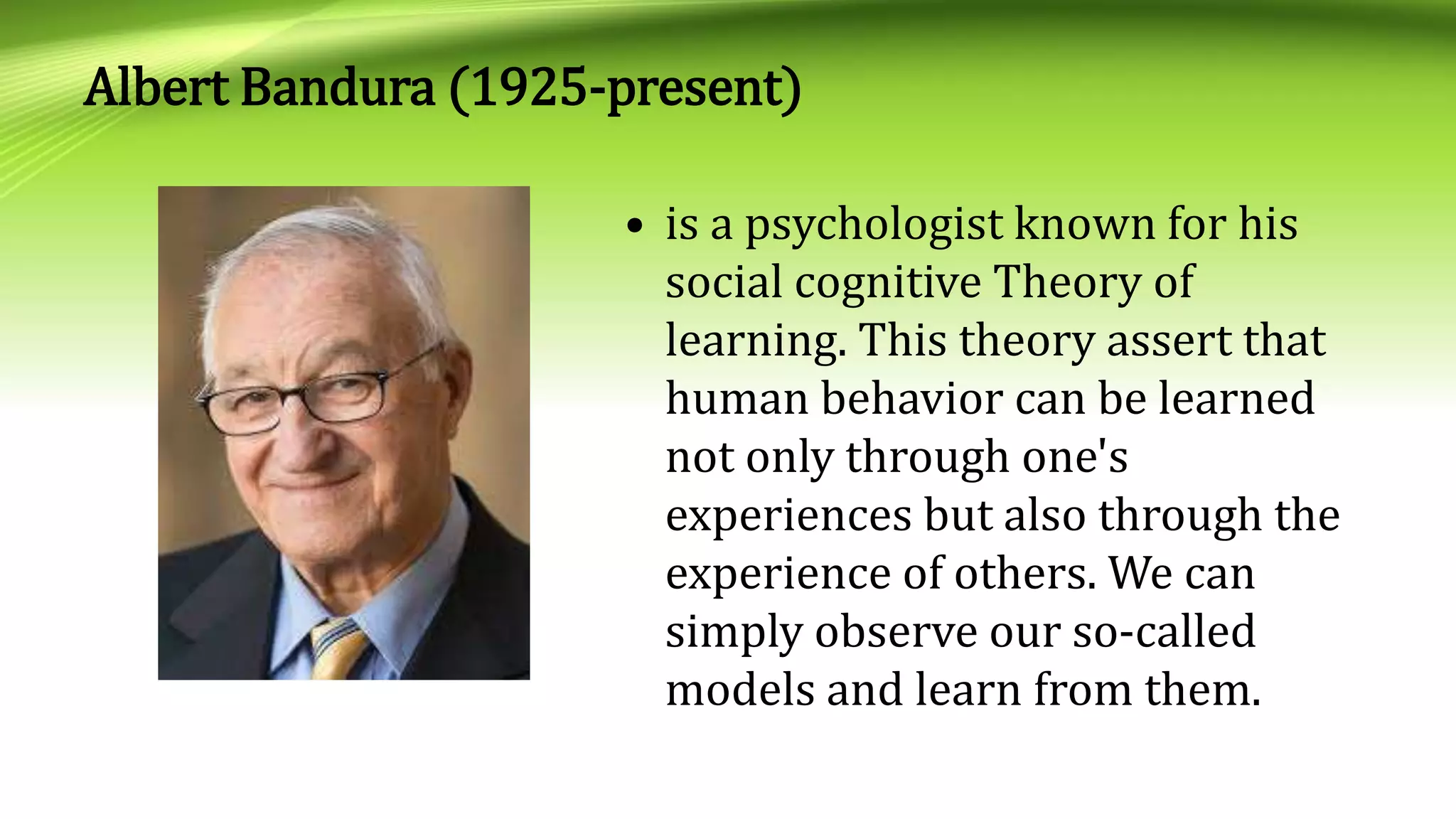
Albert Bandura (1925-present)
Biographical Background
• Born on December 4,1925 in Mundare,
Alberta, Canada
• Youngest and only boy og the six
children
• Bandura graduate in 1949 from the
University of British Columbia in
Vancouver
• Became a clinical intern at the Wichita
(Kansas) Guidance Center.
Albert Bandura (1925-present)
• Accepted a position at Stanford
University
• Became a full professor in 1964 and
in 1974, he was awarded an
endowed chair
• At Stanford, he became field studies
on social learning of aggression
particularly considering the role of
modeling.
Albert Bandura (1925-present)
• is a psychologist known for his
social cognitive Theory of
learning. This theory assert that
human behavior can be learned
not only through one's
experiences but also through the
experience of others. We can
simply observe our so-called
models and learn from them.
Self-efficacy
-Psychologist Albert Bandura has defined self-efficacy as one's belief in one's
ablility to succeed in specific situations or accomplish a task.
One's sense of self-efficacy can play a major role in how one approaches
goals, task, and challenges.
-defined as one's belief that he/she can take on a certain task successfully.
how well we think we can do something
Self-concept
• One's self -concept is a collection og beliefs about oneself.
Generally , selfconcept embodies the answer to “who am I?”. It
is distiguishable from self-awareness, which refer to the
extent to which self-knowledge is defined, consistent, and
currently applicable to one's attitude and dispositions.
• refers how we see ourselves.
Self-esteem
Reflects on individual overall subjective emotional eveluation of
thier own worth.
It is a decision made by individuals as an attitude toward the self
Encompasses beliefs about oneself, as well as emotional state,
such as triumph, despair, pride and shame.
how we feel about ourselves.
- is defined as the aspect of human personality that is
determined by future assessments of one's goals,
objectives and actions. A unified agentic self is composed
of different cognitive components that influence the overall
personality and future aspirations of individuals.
It is emerges on Bandura's Socio Cognitive view of
personality.
Viewed people as AGENTS, or oroginators of
experience.
Concieved HUMAN AGENCY as the ability to act and
make things happen.
FORETHOUGHT: permit as to
anticipates outcomes.
Example: if a person is deciding, that
person has his options. with each option
he has to anticipate outcomes in order for
that person to decides depending on
what might comes out after
SELF REACTIVENESS: allows us to
motivate and regulate actions.
Example: drinking in a beer house gives
a person pleasure and and it will give that
person the motivation to drink yet he will
regulate his actions in order for him to get
away from self-censured stuff
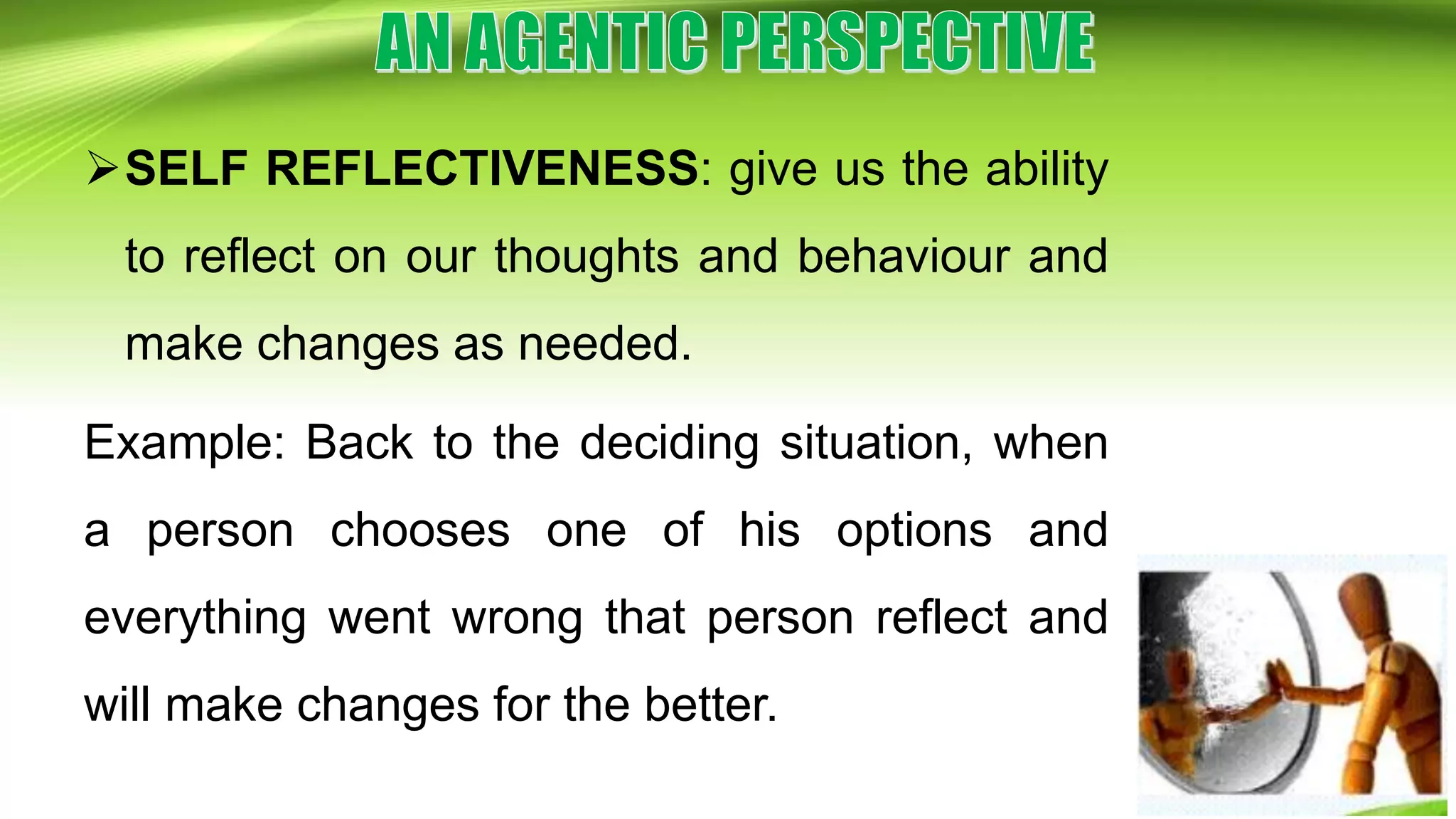
SELF REFLECTIVENESS: give us the ability
to reflect on our thoughts and behaviour and
make changes as needed.
Example: Back to the deciding situation, when
a person chooses one of his options and
everything went wrong that person reflect and
will make changes for the better.
- is apersonality characteristics which has implications
for motivation and action. it is a belief in rich potential
of changes that can be made to improve oneself or
one's environment. this includes values susch as
resourcefulness, responsibility, values and vision.

THE SELF AS PROACTIVE AND AGENTIC.pptx

  • 2.
    Albert Bandura (1925-present) BiographicalBackground • Born on December 4,1925 in Mundare, Alberta, Canada • Youngest and only boy og the six children • Bandura graduate in 1949 from the University of British Columbia in Vancouver • Became a clinical intern at the Wichita (Kansas) Guidance Center.
  • 3.
    Albert Bandura (1925-present) •Accepted a position at Stanford University • Became a full professor in 1964 and in 1974, he was awarded an endowed chair • At Stanford, he became field studies on social learning of aggression particularly considering the role of modeling.
  • 4.
    Albert Bandura (1925-present) •is a psychologist known for his social cognitive Theory of learning. This theory assert that human behavior can be learned not only through one's experiences but also through the experience of others. We can simply observe our so-called models and learn from them.
  • 5.
    Self-efficacy -Psychologist Albert Bandurahas defined self-efficacy as one's belief in one's ablility to succeed in specific situations or accomplish a task. One's sense of self-efficacy can play a major role in how one approaches goals, task, and challenges. -defined as one's belief that he/she can take on a certain task successfully. how well we think we can do something
  • 6.
    Self-concept • One's self-concept is a collection og beliefs about oneself. Generally , selfconcept embodies the answer to “who am I?”. It is distiguishable from self-awareness, which refer to the extent to which self-knowledge is defined, consistent, and currently applicable to one's attitude and dispositions. • refers how we see ourselves.
  • 7.
    Self-esteem Reflects on individualoverall subjective emotional eveluation of thier own worth. It is a decision made by individuals as an attitude toward the self Encompasses beliefs about oneself, as well as emotional state, such as triumph, despair, pride and shame. how we feel about ourselves.
  • 8.
    - is definedas the aspect of human personality that is determined by future assessments of one's goals, objectives and actions. A unified agentic self is composed of different cognitive components that influence the overall personality and future aspirations of individuals.
  • 9.
    It is emergeson Bandura's Socio Cognitive view of personality. Viewed people as AGENTS, or oroginators of experience. Concieved HUMAN AGENCY as the ability to act and make things happen.
  • 10.
    FORETHOUGHT: permit asto anticipates outcomes. Example: if a person is deciding, that person has his options. with each option he has to anticipate outcomes in order for that person to decides depending on what might comes out after
  • 11.
    SELF REACTIVENESS: allowsus to motivate and regulate actions. Example: drinking in a beer house gives a person pleasure and and it will give that person the motivation to drink yet he will regulate his actions in order for him to get away from self-censured stuff
  • 12.
    SELF REFLECTIVENESS: giveus the ability to reflect on our thoughts and behaviour and make changes as needed. Example: Back to the deciding situation, when a person chooses one of his options and everything went wrong that person reflect and will make changes for the better.
  • 13.
    - is apersonalitycharacteristics which has implications for motivation and action. it is a belief in rich potential of changes that can be made to improve oneself or one's environment. this includes values susch as resourcefulness, responsibility, values and vision.