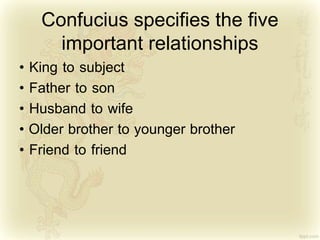
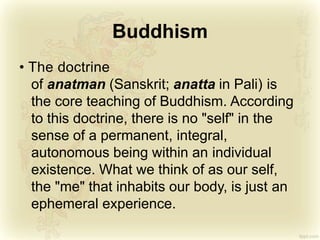
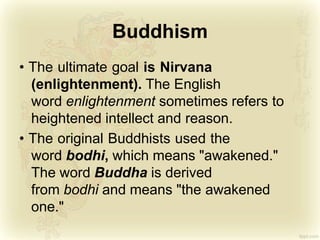
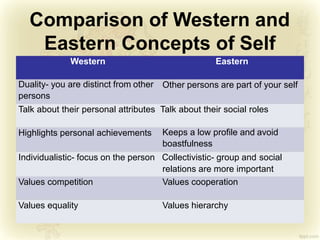
This document compares Western and Eastern concepts of self through examining Confucianism, Taoism, and Buddhism. In Confucianism, the self is relational and defined by significant relationships, with self-cultivation being the purpose of life. The Taoist self is an extension of nature and society, emphasizing balance and selflessness. Buddhism teaches that there is no permanent self, only ephemeral experiences and five aggregates that make up a person. The ultimate goal is enlightenment and escaping rebirth through nirvana. Overall, Eastern views see the self as interconnected and defined by social roles, while Western views are more individualistic and focused on personal attributes.