The Same-Origin Saga
Brendan Eich
AppSec USA 2012
A long time ago in a
galaxy far, far away...
Netscape 2
• 1995 platform push against looming MSFT threat
• Frames, framesets, plugins (first in Netscape 1.1)
• JavaScript, in ten days in May
•window.open(url, name, options)
•window.location, document.cookie
•link.click(), form.submit()
•javascript: (generated docs, bookmarklets)
•document.write(s) still tops for ad insertion
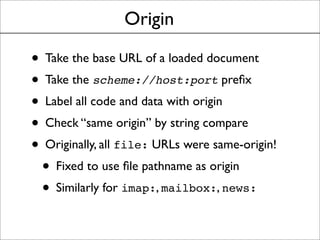
Origin
• Take the base URL of a loaded document
• Take the scheme://host:port prefix
• Label all code and data with origin
• Check “same origin” by string compare
• Originally, all file: URLs were same-origin!
• Fixed to use file pathname as origin
• Similarly for imap:, mailbox:, news:
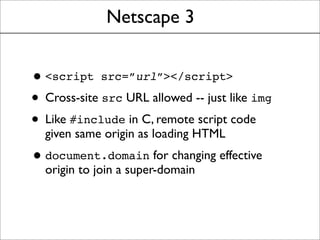
Netscape 3
•<script src=”url”></script>
• Cross-site src URL allowed -- just like img
• Like #include in C, remote script code
given same origin as loading HTML
•document.domain for changing effective
origin to join a super-domain
Apply Murphy’s Law, Iterate
• Miserable XSS history elided...
mozilla
8
mozilla
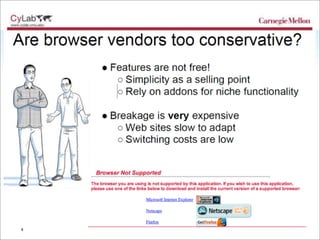
No browser wins by taking overlarge risks
• Previous slide from Collin Jackson’s USENIX Security 2011 invited talk, titled
“Crossing the Chasm: Pitching Security Research to Mainstream Browser
Vendors” [slides]
• Features are not free
• Mozilla commissioned optional CPython integration work by Mark Hammond
• Used by only one embedder
• No CPython distribution for Windows or Mac OS X
• High sunk and recurring engineering costs
9
Hopeful Developments
• JS is almost OCap (Object Capability)
• Browsers use OCap under the hood
• ES5 and ES6 strengthen JS’s OCap nature
• Better Caja/SES efficiency
• “use strict” pseudo-pragma
• OWASP best practices, Origin header, etc.
help outside of JS attack vectors
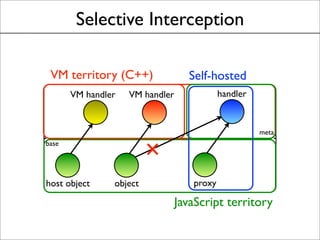
Selective Interception
meta
base
object
VM territory (C++)
JavaScript territory
Self-hosted
host object
VM handler VM handler
proxy
handler
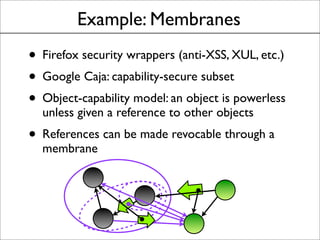
Example: Membranes
• Firefox security wrappers (anti-XSS, XUL, etc.)
• Google Caja: capability-secure subset
• Object-capability model: an object is powerless
unless given a reference to other objects
• References can be made revocable through a
membrane
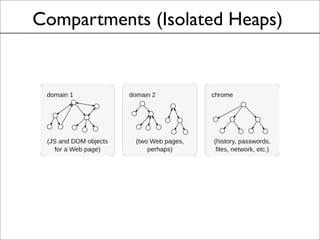
Compartments (Isolated Heaps)
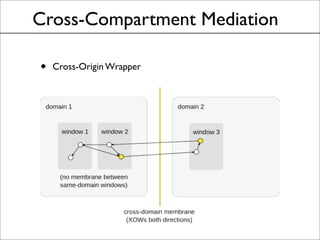
Cross-Compartment Mediation
• Cross-Origin Wrapper
Conclusions + Question
• Same-Origin Policy continues to evolve
• Better isolation, OCap membranes reduce
attack surface
• Can we break the web cooperatively?
• Label cross-site <script src=”url2”>
in document from url1 with subordinate
origin computed from both URLs?

The Same-Origin Saga

  • 1.
    The Same-Origin Saga BrendanEich AppSec USA 2012
  • 2.
    A long timeago in a galaxy far, far away...
  • 4.
    Netscape 2 • 1995platform push against looming MSFT threat • Frames, framesets, plugins (first in Netscape 1.1) • JavaScript, in ten days in May •window.open(url, name, options) •window.location, document.cookie •link.click(), form.submit() •javascript: (generated docs, bookmarklets) •document.write(s) still tops for ad insertion
  • 5.
    Origin • Take thebase URL of a loaded document • Take the scheme://host:port prefix • Label all code and data with origin • Check “same origin” by string compare • Originally, all file: URLs were same-origin! • Fixed to use file pathname as origin • Similarly for imap:, mailbox:, news:
  • 6.
    Netscape 3 •<script src=”url”></script> •Cross-site src URL allowed -- just like img • Like #include in C, remote script code given same origin as loading HTML •document.domain for changing effective origin to join a super-domain
  • 7.
    Apply Murphy’s Law,Iterate • Miserable XSS history elided...
  • 8.
  • 9.
    mozilla No browser winsby taking overlarge risks • Previous slide from Collin Jackson’s USENIX Security 2011 invited talk, titled “Crossing the Chasm: Pitching Security Research to Mainstream Browser Vendors” [slides] • Features are not free • Mozilla commissioned optional CPython integration work by Mark Hammond • Used by only one embedder • No CPython distribution for Windows or Mac OS X • High sunk and recurring engineering costs 9
  • 10.
    Hopeful Developments • JSis almost OCap (Object Capability) • Browsers use OCap under the hood • ES5 and ES6 strengthen JS’s OCap nature • Better Caja/SES efficiency • “use strict” pseudo-pragma • OWASP best practices, Origin header, etc. help outside of JS attack vectors
  • 11.
    Selective Interception meta base object VM territory(C++) JavaScript territory Self-hosted host object VM handler VM handler proxy handler
  • 12.
    Example: Membranes • Firefoxsecurity wrappers (anti-XSS, XUL, etc.) • Google Caja: capability-secure subset • Object-capability model: an object is powerless unless given a reference to other objects • References can be made revocable through a membrane
  • 13.
  • 14.
  • 15.
    Conclusions + Question •Same-Origin Policy continues to evolve • Better isolation, OCap membranes reduce attack surface • Can we break the web cooperatively? • Label cross-site <script src=”url2”> in document from url1 with subordinate origin computed from both URLs?