THE ROMAN HOUSE


            El Ágora del Neri
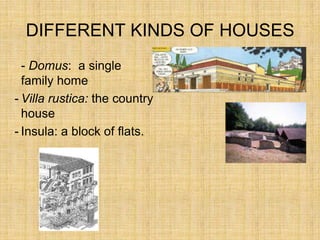
DIFFERENT KINDS OF HOUSES
  - Domus: a single
  family home
- Villa rustica: the country
  house
- Insula: a block of flats.
THE DOMUS
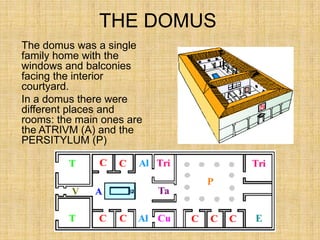
The domus was a single
family home with the
windows and balconies
facing the interior
courtyard.
In a domus there were
different places and
rooms: the main ones are
the ATRIVM (A) and the
PERSITYLUM (P)
VESTIBVLVM
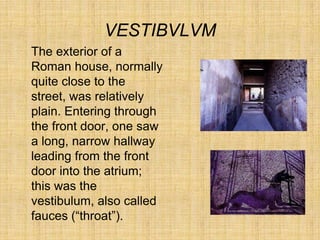
The exterior of a
Roman house, normally
quite close to the
street, was relatively
plain. Entering through
the front door, one saw
a long, narrow hallway
leading from the front
door into the atrium;
this was the
vestibulum, also called
fauces (“throat”).
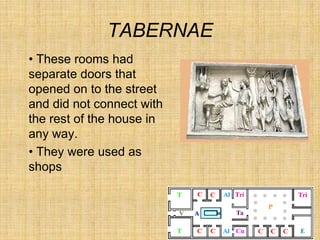
TABERNAE
• These rooms had
separate doors that
opened on to the street
and did not connect with
the rest of the house in
any way.
• They were used as
shops
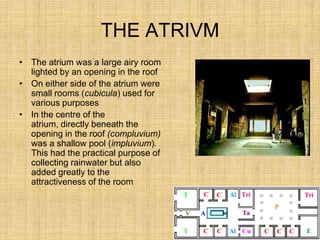
THE ATRIVM
• The atrium was a large airy room
  lighted by an opening in the roof
• On either side of the atrium were
  small rooms (cubicula) used for
  various purposes
• In the centre of the
  atrium, directly beneath the
  opening in the roof (compluvium)
  was a shallow pool (impluvium).
  This had the practical purpose of
  collecting rainwater but also
  added greatly to the
  attractiveness of the room
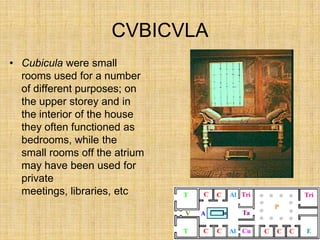
CVBICVLA
• Cubicula were small
  rooms used for a number
  of different purposes; on
  the upper storey and in
  the interior of the house
  they often functioned as
  bedrooms, while the
  small rooms off the atrium
  may have been used for
  private
  meetings, libraries, etc
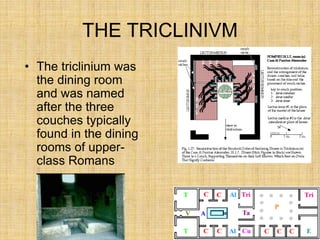
THE TRICLINIVM
• The triclinium was
  the dining room
  and was named
  after the three
  couches typically
  found in the dining
  rooms of upper-
  class Romans
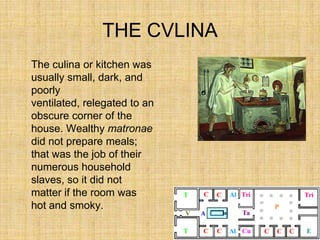
THE CVLINA
The culina or kitchen was
usually small, dark, and
poorly
ventilated, relegated to an
obscure corner of the
house. Wealthy matronae
did not prepare meals;
that was the job of their
numerous household
slaves, so it did not
matter if the room was
hot and smoky.
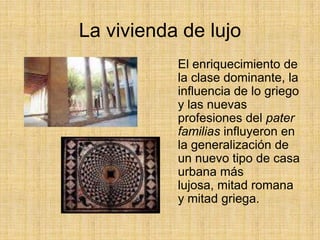
La vivienda de lujo
           El enriquecimiento de
           la clase dominante, la
           influencia de lo griego
           y las nuevas
           profesiones del pater
           familias influyeron en
           la generalización de
           un nuevo tipo de casa
           urbana más
           lujosa, mitad romana
           y mitad griega.
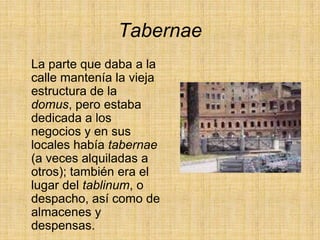
Tabernae
La parte que daba a la
calle mantenía la vieja
estructura de la
domus, pero estaba
dedicada a los
negocios y en sus
locales había tabernae
(a veces alquiladas a
otros); también era el
lugar del tablinum, o
despacho, así como de
almacenes y
despensas.
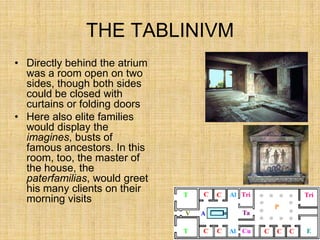
THE TABLINIVM
• Directly behind the atrium
  was a room open on two
  sides, though both sides
  could be closed with
  curtains or folding doors
• Here also elite families
  would display the
  imagines, busts of
  famous ancestors. In this
  room, too, the master of
  the house, the
  paterfamilias, would greet
  his many clients on their
  morning visits
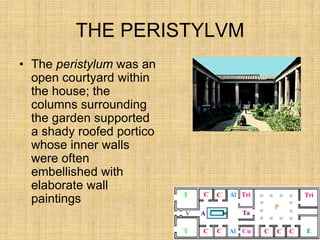
THE PERISTYLVM
• The peristylum was an
  open courtyard within
  the house; the
  columns surrounding
  the garden supported
  a shady roofed portico
  whose inner walls
  were often
  embellished with
  elaborate wall
  paintings
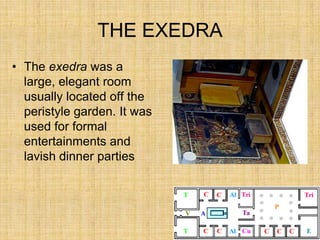
THE EXEDRA
• The exedra was a
  large, elegant room
  usually located off the
  peristyle garden. It was
  used for formal
  entertainments and
  lavish dinner parties
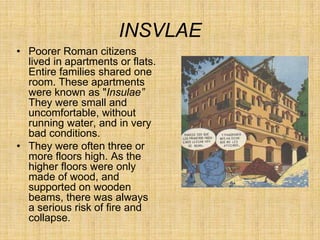
INSVLAE
• Poorer Roman citizens
  lived in apartments or flats.
  Entire families shared one
  room. These apartments
  were known as "Insulae”
  They were small and
  uncomfortable, without
  running water, and in very
  bad conditions.
• They were often three or
  more floors high. As the
  higher floors were only
  made of wood, and
  supported on wooden
  beams, there was always
  a serious risk of fire and
  collapse.
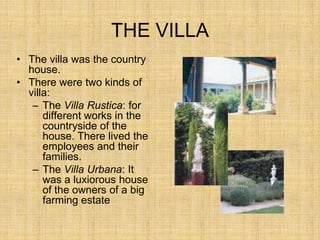
THE VILLA
• The villa was the country
  house.
• There were two kinds of
  villa:
   – The Villa Rustica: for
      different works in the
      countryside of the
      house. There lived the
      employees and their
      families.
   – The Villa Urbana: It
      was a luxiorous house
      of the owners of a big
      farming estate

The roman house

  • 1.
    THE ROMAN HOUSE El Ágora del Neri
  • 2.
    DIFFERENT KINDS OFHOUSES - Domus: a single family home - Villa rustica: the country house - Insula: a block of flats.
  • 3.
    THE DOMUS The domuswas a single family home with the windows and balconies facing the interior courtyard. In a domus there were different places and rooms: the main ones are the ATRIVM (A) and the PERSITYLUM (P)
  • 4.
    VESTIBVLVM The exterior ofa Roman house, normally quite close to the street, was relatively plain. Entering through the front door, one saw a long, narrow hallway leading from the front door into the atrium; this was the vestibulum, also called fauces (“throat”).
  • 5.
    TABERNAE • These roomshad separate doors that opened on to the street and did not connect with the rest of the house in any way. • They were used as shops
  • 6.
    THE ATRIVM • Theatrium was a large airy room lighted by an opening in the roof • On either side of the atrium were small rooms (cubicula) used for various purposes • In the centre of the atrium, directly beneath the opening in the roof (compluvium) was a shallow pool (impluvium). This had the practical purpose of collecting rainwater but also added greatly to the attractiveness of the room
  • 7.
    CVBICVLA • Cubicula weresmall rooms used for a number of different purposes; on the upper storey and in the interior of the house they often functioned as bedrooms, while the small rooms off the atrium may have been used for private meetings, libraries, etc
  • 8.
    THE TRICLINIVM • Thetriclinium was the dining room and was named after the three couches typically found in the dining rooms of upper- class Romans
  • 9.
    THE CVLINA The culinaor kitchen was usually small, dark, and poorly ventilated, relegated to an obscure corner of the house. Wealthy matronae did not prepare meals; that was the job of their numerous household slaves, so it did not matter if the room was hot and smoky.
  • 10.
    La vivienda delujo El enriquecimiento de la clase dominante, la influencia de lo griego y las nuevas profesiones del pater familias influyeron en la generalización de un nuevo tipo de casa urbana más lujosa, mitad romana y mitad griega.
  • 11.
    Tabernae La parte quedaba a la calle mantenía la vieja estructura de la domus, pero estaba dedicada a los negocios y en sus locales había tabernae (a veces alquiladas a otros); también era el lugar del tablinum, o despacho, así como de almacenes y despensas.
  • 12.
    THE TABLINIVM • Directlybehind the atrium was a room open on two sides, though both sides could be closed with curtains or folding doors • Here also elite families would display the imagines, busts of famous ancestors. In this room, too, the master of the house, the paterfamilias, would greet his many clients on their morning visits
  • 13.
    THE PERISTYLVM • Theperistylum was an open courtyard within the house; the columns surrounding the garden supported a shady roofed portico whose inner walls were often embellished with elaborate wall paintings
  • 14.
    THE EXEDRA • Theexedra was a large, elegant room usually located off the peristyle garden. It was used for formal entertainments and lavish dinner parties
  • 15.
    INSVLAE • Poorer Romancitizens lived in apartments or flats. Entire families shared one room. These apartments were known as "Insulae” They were small and uncomfortable, without running water, and in very bad conditions. • They were often three or more floors high. As the higher floors were only made of wood, and supported on wooden beams, there was always a serious risk of fire and collapse.
  • 16.
    THE VILLA • Thevilla was the country house. • There were two kinds of villa: – The Villa Rustica: for different works in the countryside of the house. There lived the employees and their families. – The Villa Urbana: It was a luxiorous house of the owners of a big farming estate