The Risks of YOLOing
Dr. Arnold Yau
Security @ Ava Labs
Intro
● Bio - old school boring crypto guy
○ Crypto means cryptography, also IACR CRYPTO conference
● Speaking from perspective of project evaluator (e.g. for investment /
co-marketing) / security reviewer (“auditor”)
● Mostly aimed at dapp development
● Disclaimer - opinions my own etc
YOLO - acronym meaning you only live once,
used to express the view that one should
make the most of the present moment
without worrying about the future
YOLO Development Model (Caricature)
● Follow tutorial “Build a Dapp in 20 minutes”
● Fork, search & replace $PROJECT_NAME
● TC;DT: outsource to StackOverflow, copy & paste.
Crowdsourcing FTW!
● Build frontend with [framework] using NPM.The
blockchain is immutable and secure, right?
● Testnet: Get friends and family to test! Great it
works.
● Mainnet launch! :crossed-fingers:
● (Documentation is for losers)
Threat Landscape
Threat actors
● Lone hacker
● Criminal gangs
● Law enforcement / intel agencies / nation-state - nuclear program
● Yourself / your team
Threats
● Supply chain attacks - dependencies
● Smart contract bugs - re-entrancy, unauthorized access / state transition
● Defi - flash loan attacks, price oracle manipulation
● Bridge attacks
● Private key compromise
● Phishing / scam
● (Potential) rug pull
● Web 2 attacks
● Privacy / front running
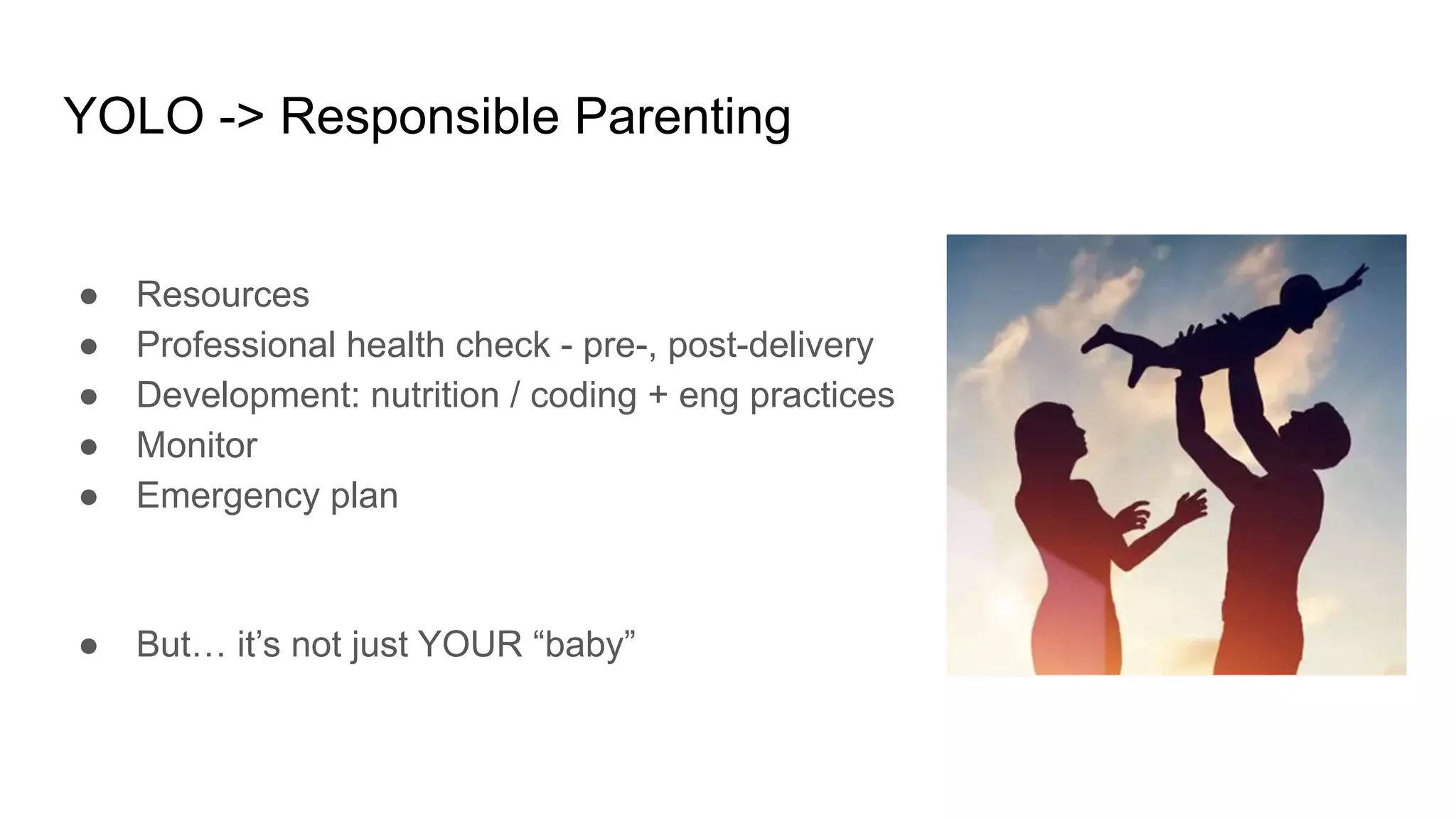
YOLO -> Responsible Parenting
● Resources
● Professional health check - pre-, post-delivery
● Development: nutrition / coding + eng practices
● Monitor
● Emergency plan
● But… it’s not just YOUR “baby”
Fundamentals
● Think about security from the start
● Threat model your whole system
○ Assets - funds, credentials, wallets, PII
○ Attack surface, attack vector
○ Infrastructure and application
○ Source code repository
○ Risk = Impact x likelihood of attack
● Make conscious, documented philosophical decisions on
○ Identified or anonymous
○ Governance model
○ Decentralization objectives
○ Open source development (probably yes?)
Design and Implementation
● Get best developer you can find/afford
● Use audited libraries and design patterns e.g. OpenZeppelin
○ Pausable and upgradeable
○ Monitoring: events, invariants
● Learn about common Solidity vulnerabilities and keep up with the version
changes
● Code defensively
○ Validate parameters
○ Cater for edge cases
● Dependencies
○ Eventstream (Copay), UAParser (miner, password exfil)
● Comment your code - explain what you intend to do before you forget
Security “Audit” Top Tips - Make it Easy
● Pick a reputable vendor - review published audit reports
● Schedule audit early
○ Best vendors can be booked up months in advance
○ Vendor may provide consultation to keep you on the right track
● Clean static analysis / code scanner output
● Documentation
○ Architecture - high level components and interactions
○ Component / function interfaces, param specifications and assumptions
○ Roles and permissions
○ End-to-end flow for major use cases
● Scope
○ Code review
○ Dynamic test - include front end
○ Infrastructure
● Build in time for fixing and retest
● Do not assume audit will identify all vulnerabilities. The buck stops with you.
Deployment and Operations
● Verify contract
● Should have at least a basic IR plan
○ Escalation routes, roles and responsibilities
○ Rehearsed playbook to perform rapid response actions
● Bug bounty / responsible disclosure
● Monitor for scams and phishing
● Secure your domain and cloud infrastructure
○ Hardware 2FA secure everything
○ Set up SPF/DMARC/DKIM for your domain to prevent email spoofing
● Move to multisig wallet
● Be aware of centralization risks
○ Moxie - My first impressions of web3
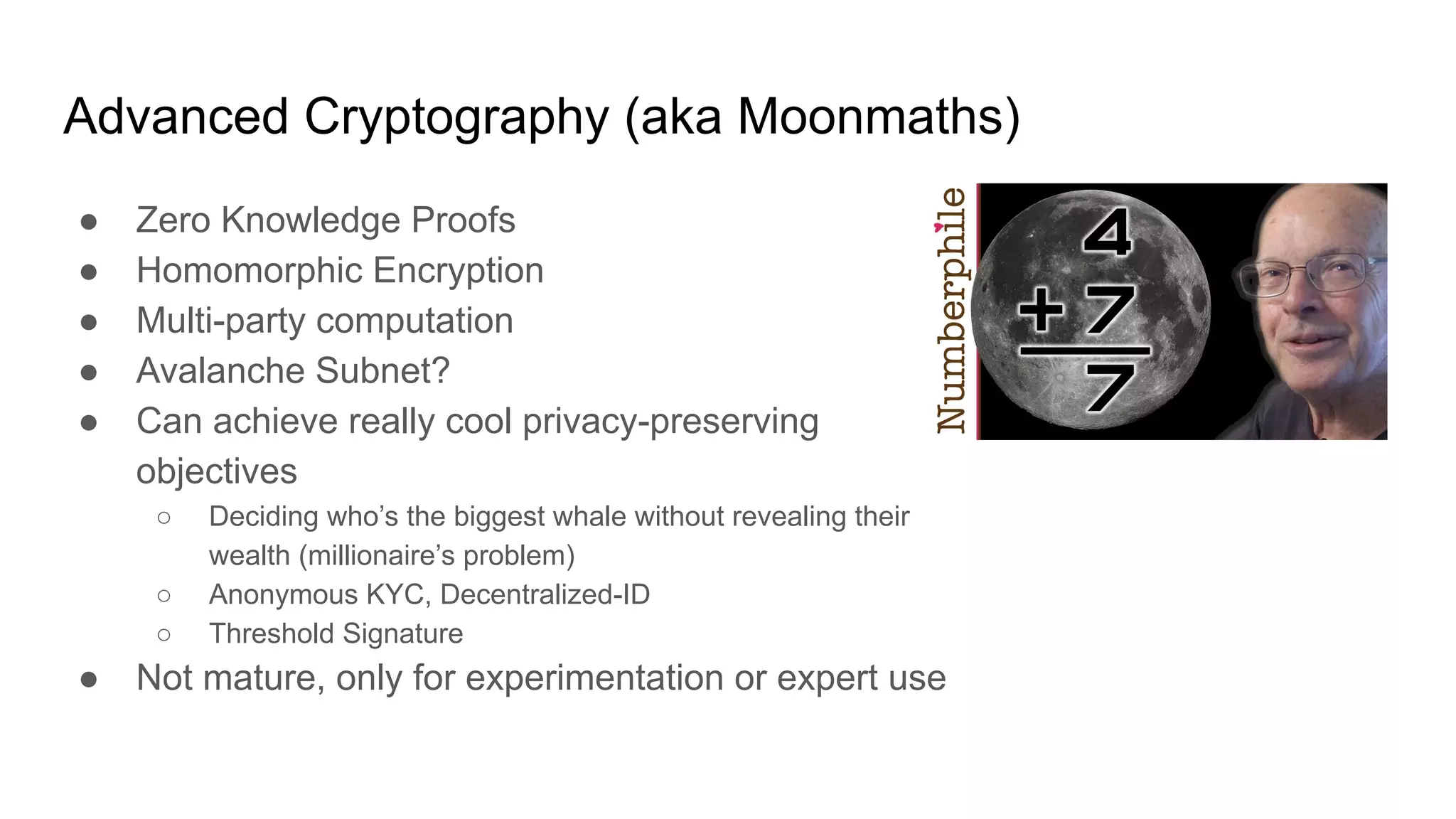
Advanced Cryptography (aka Moonmaths)
● Zero Knowledge Proofs
● Homomorphic Encryption
● Multi-party computation
● Avalanche Subnet?
● Can achieve really cool privacy-preserving
objectives
○ Deciding who’s the biggest whale without revealing their
wealth (millionaire’s problem)
○ Anonymous KYC, Decentralized-ID
○ Threshold Signature
● Not mature, only for experimentation or expert use
Takeaway
● Be responsible - consider the security of your project from Day 1.
Understand and mitigate your risks.
● Be documented - make security audit easy
● Be open - publish and verify your source code, documentation and audit
reports to provide security assurance to your users
● Be prepared - assume something will go wrong, monitor for attacks and
have a plan for it
The Risks of YOLOing-2.pdf

The Risks of YOLOing-2.pdf

  • 1.
    The Risks ofYOLOing Dr. Arnold Yau Security @ Ava Labs
  • 2.
    Intro ● Bio -old school boring crypto guy ○ Crypto means cryptography, also IACR CRYPTO conference ● Speaking from perspective of project evaluator (e.g. for investment / co-marketing) / security reviewer (“auditor”) ● Mostly aimed at dapp development ● Disclaimer - opinions my own etc
  • 3.
    YOLO - acronymmeaning you only live once, used to express the view that one should make the most of the present moment without worrying about the future
  • 4.
    YOLO Development Model(Caricature) ● Follow tutorial “Build a Dapp in 20 minutes” ● Fork, search & replace $PROJECT_NAME ● TC;DT: outsource to StackOverflow, copy & paste. Crowdsourcing FTW! ● Build frontend with [framework] using NPM.The blockchain is immutable and secure, right? ● Testnet: Get friends and family to test! Great it works. ● Mainnet launch! :crossed-fingers: ● (Documentation is for losers)
  • 5.
    Threat Landscape Threat actors ●Lone hacker ● Criminal gangs ● Law enforcement / intel agencies / nation-state - nuclear program ● Yourself / your team Threats ● Supply chain attacks - dependencies ● Smart contract bugs - re-entrancy, unauthorized access / state transition ● Defi - flash loan attacks, price oracle manipulation ● Bridge attacks ● Private key compromise ● Phishing / scam ● (Potential) rug pull ● Web 2 attacks ● Privacy / front running
  • 6.
    YOLO -> ResponsibleParenting ● Resources ● Professional health check - pre-, post-delivery ● Development: nutrition / coding + eng practices ● Monitor ● Emergency plan ● But… it’s not just YOUR “baby”
  • 7.
    Fundamentals ● Think aboutsecurity from the start ● Threat model your whole system ○ Assets - funds, credentials, wallets, PII ○ Attack surface, attack vector ○ Infrastructure and application ○ Source code repository ○ Risk = Impact x likelihood of attack ● Make conscious, documented philosophical decisions on ○ Identified or anonymous ○ Governance model ○ Decentralization objectives ○ Open source development (probably yes?)
  • 8.
    Design and Implementation ●Get best developer you can find/afford ● Use audited libraries and design patterns e.g. OpenZeppelin ○ Pausable and upgradeable ○ Monitoring: events, invariants ● Learn about common Solidity vulnerabilities and keep up with the version changes ● Code defensively ○ Validate parameters ○ Cater for edge cases ● Dependencies ○ Eventstream (Copay), UAParser (miner, password exfil) ● Comment your code - explain what you intend to do before you forget
  • 9.
    Security “Audit” TopTips - Make it Easy ● Pick a reputable vendor - review published audit reports ● Schedule audit early ○ Best vendors can be booked up months in advance ○ Vendor may provide consultation to keep you on the right track ● Clean static analysis / code scanner output ● Documentation ○ Architecture - high level components and interactions ○ Component / function interfaces, param specifications and assumptions ○ Roles and permissions ○ End-to-end flow for major use cases ● Scope ○ Code review ○ Dynamic test - include front end ○ Infrastructure ● Build in time for fixing and retest ● Do not assume audit will identify all vulnerabilities. The buck stops with you.
  • 10.
    Deployment and Operations ●Verify contract ● Should have at least a basic IR plan ○ Escalation routes, roles and responsibilities ○ Rehearsed playbook to perform rapid response actions ● Bug bounty / responsible disclosure ● Monitor for scams and phishing ● Secure your domain and cloud infrastructure ○ Hardware 2FA secure everything ○ Set up SPF/DMARC/DKIM for your domain to prevent email spoofing ● Move to multisig wallet ● Be aware of centralization risks ○ Moxie - My first impressions of web3
  • 11.
    Advanced Cryptography (akaMoonmaths) ● Zero Knowledge Proofs ● Homomorphic Encryption ● Multi-party computation ● Avalanche Subnet? ● Can achieve really cool privacy-preserving objectives ○ Deciding who’s the biggest whale without revealing their wealth (millionaire’s problem) ○ Anonymous KYC, Decentralized-ID ○ Threshold Signature ● Not mature, only for experimentation or expert use
  • 12.
    Takeaway ● Be responsible- consider the security of your project from Day 1. Understand and mitigate your risks. ● Be documented - make security audit easy ● Be open - publish and verify your source code, documentation and audit reports to provide security assurance to your users ● Be prepared - assume something will go wrong, monitor for attacks and have a plan for it