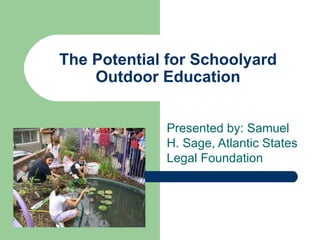
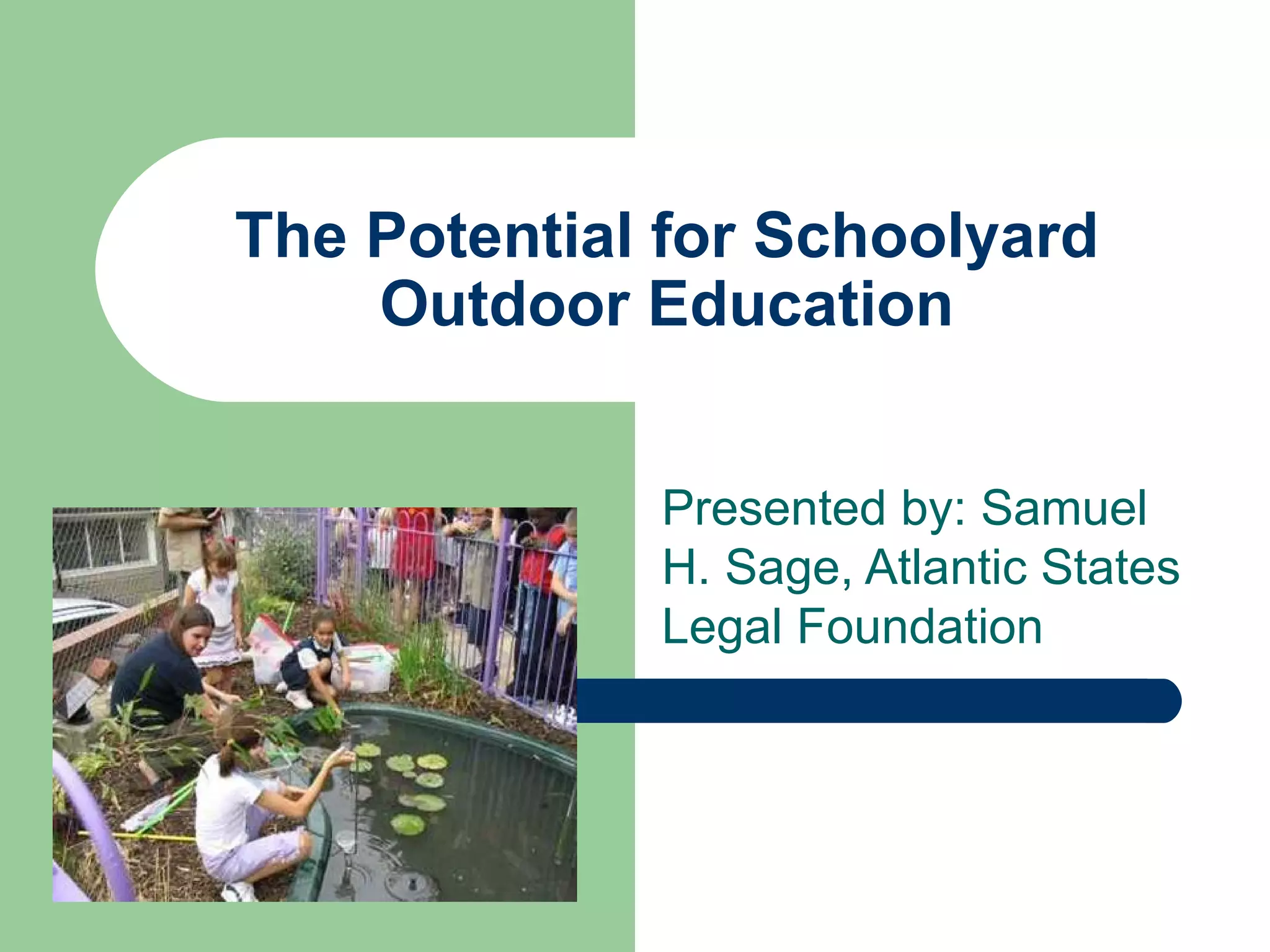
The Potential for Schoolyard
    Outdoor Education


             Presented by: Samuel
             H. Sage, Atlantic States
             Legal Foundation
About Atlantic States Legal
Foundation

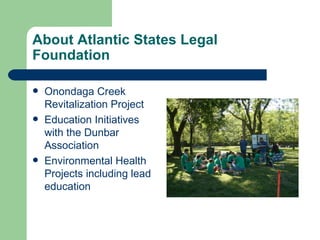
   Onondaga Creek
    Revitalization Project
   Education Initiatives
    with the Dunbar
    Association
   Environmental Health
    Projects including lead
    education
Onondaga Creek Revitalization
Program

   ASLF, OEI, SUNY-ESF, community
    members and other organizations are
    developing a creek revitalization plan
   The results of this plan can incorporate
    outdoor education initiatives
   Fowler High and Clary Middle are perfectly
    located to utilize neighboring creeks
What other School Districts are doing

   Forest Kindergartens in Europe, since the 1950s
   Berkeley school system, Edible Schoolyards Project
   Finger Lakes National Forest and Hillside Children’s
    Center
   Boston Schoolyard Initiative, www.schoolyards.org
   Missoula, Montana, schoolyard habitats
   Springfield, Ohio, curricular gardens
   Many thousands more!
Why do this here?

   Syracuse City schools are becoming
    ‘greener’
   A connection with nature is essential to a
    child’s mental and physical well being
   Addresses growing concern about our
    children’s ‘nature deficit disorder’
   Engage students more with the community
    and the natural world
   Hands-on learning experiences
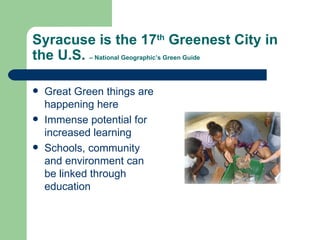
Syracuse is the 17th Greenest City in
the U.S. – National Geographic’s Green Guide

   Great Green things are
    happening here
   Immense potential for
    increased learning
   Schools, community
    and environment can
    be linked through
    education
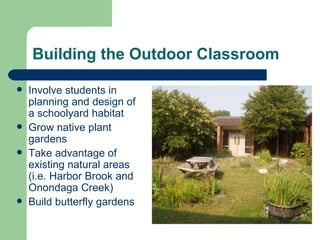
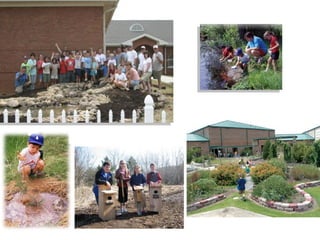
Building the Outdoor Classroom

   Involve students in
    planning and design of
    a schoolyard habitat
   Grow native plant
    gardens
   Take advantage of
    existing natural areas
    (i.e. Harbor Brook and
    Onondaga Creek)
   Build butterfly gardens
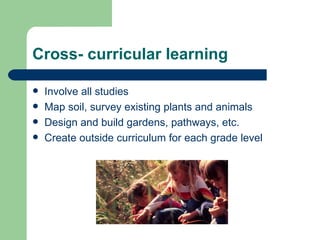
Cross- curricular learning

   Involve all studies
   Map soil, survey existing plants and animals
   Design and build gardens, pathways, etc.
   Create outside curriculum for each grade level
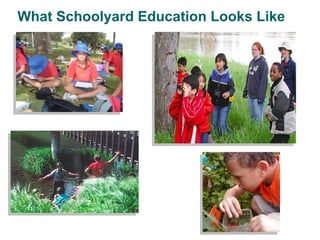
What Schoolyard Education Looks Like
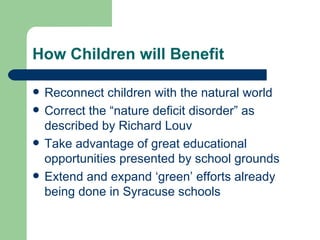
How Children will Benefit

   Reconnect children with the natural world
   Correct the “nature deficit disorder” as
    described by Richard Louv
   Take advantage of great educational
    opportunities presented by school grounds
   Extend and expand ‘green’ efforts already
    being done in Syracuse schools
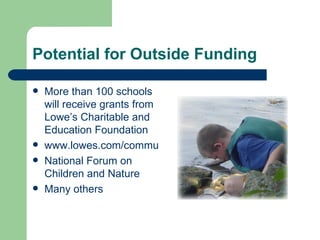
Potential for Outside Funding

   More than 100 schools
    will receive grants from
    Lowe’s Charitable and
    Education Foundation
   www.lowes.com/community
   National Forum on
    Children and Nature
   Many others
How ASLF can help

   Create outdoor education programs
   Provide program assistance
   Work with school officials to secure outside funding
   Help build collaboration with other local
    organizations
   Integrate the schoolyard classroom program with
    greening the schools and the safe route to school
    initiative
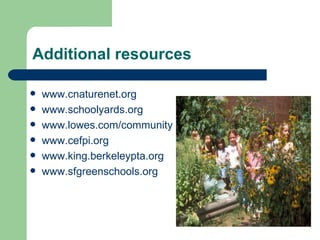
Additional resources

   www.cnaturenet.org
   www.schoolyards.org
   www.lowes.com/community
   www.cefpi.org
   www.king.berkeleypta.org
   www.sfgreenschools.org

The potential for greening school grounds as part

  • 1.
    The Potential forSchoolyard Outdoor Education Presented by: Samuel H. Sage, Atlantic States Legal Foundation
  • 2.
    About Atlantic StatesLegal Foundation  Onondaga Creek Revitalization Project  Education Initiatives with the Dunbar Association  Environmental Health Projects including lead education
  • 3.
    Onondaga Creek Revitalization Program  ASLF, OEI, SUNY-ESF, community members and other organizations are developing a creek revitalization plan  The results of this plan can incorporate outdoor education initiatives  Fowler High and Clary Middle are perfectly located to utilize neighboring creeks
  • 4.
    What other SchoolDistricts are doing  Forest Kindergartens in Europe, since the 1950s  Berkeley school system, Edible Schoolyards Project  Finger Lakes National Forest and Hillside Children’s Center  Boston Schoolyard Initiative, www.schoolyards.org  Missoula, Montana, schoolyard habitats  Springfield, Ohio, curricular gardens  Many thousands more!
  • 5.
    Why do thishere?  Syracuse City schools are becoming ‘greener’  A connection with nature is essential to a child’s mental and physical well being  Addresses growing concern about our children’s ‘nature deficit disorder’  Engage students more with the community and the natural world  Hands-on learning experiences
  • 6.
    Syracuse is the17th Greenest City in the U.S. – National Geographic’s Green Guide  Great Green things are happening here  Immense potential for increased learning  Schools, community and environment can be linked through education
  • 7.
    Building the OutdoorClassroom  Involve students in planning and design of a schoolyard habitat  Grow native plant gardens  Take advantage of existing natural areas (i.e. Harbor Brook and Onondaga Creek)  Build butterfly gardens
  • 8.
    Cross- curricular learning  Involve all studies  Map soil, survey existing plants and animals  Design and build gardens, pathways, etc.  Create outside curriculum for each grade level
  • 9.
  • 11.
    How Children willBenefit  Reconnect children with the natural world  Correct the “nature deficit disorder” as described by Richard Louv  Take advantage of great educational opportunities presented by school grounds  Extend and expand ‘green’ efforts already being done in Syracuse schools
  • 12.
    Potential for OutsideFunding  More than 100 schools will receive grants from Lowe’s Charitable and Education Foundation  www.lowes.com/community  National Forum on Children and Nature  Many others
  • 13.
    How ASLF canhelp  Create outdoor education programs  Provide program assistance  Work with school officials to secure outside funding  Help build collaboration with other local organizations  Integrate the schoolyard classroom program with greening the schools and the safe route to school initiative
  • 14.
    Additional resources  www.cnaturenet.org  www.schoolyards.org  www.lowes.com/community  www.cefpi.org  www.king.berkeleypta.org  www.sfgreenschools.org