+

The Mobile
Innovation Network
building local capacity for youth workforce
development, entrepreneurship and
citizenship in the mobile world
a project of the Center for Mobile Learning
at the MIT Media Lab
+ Background


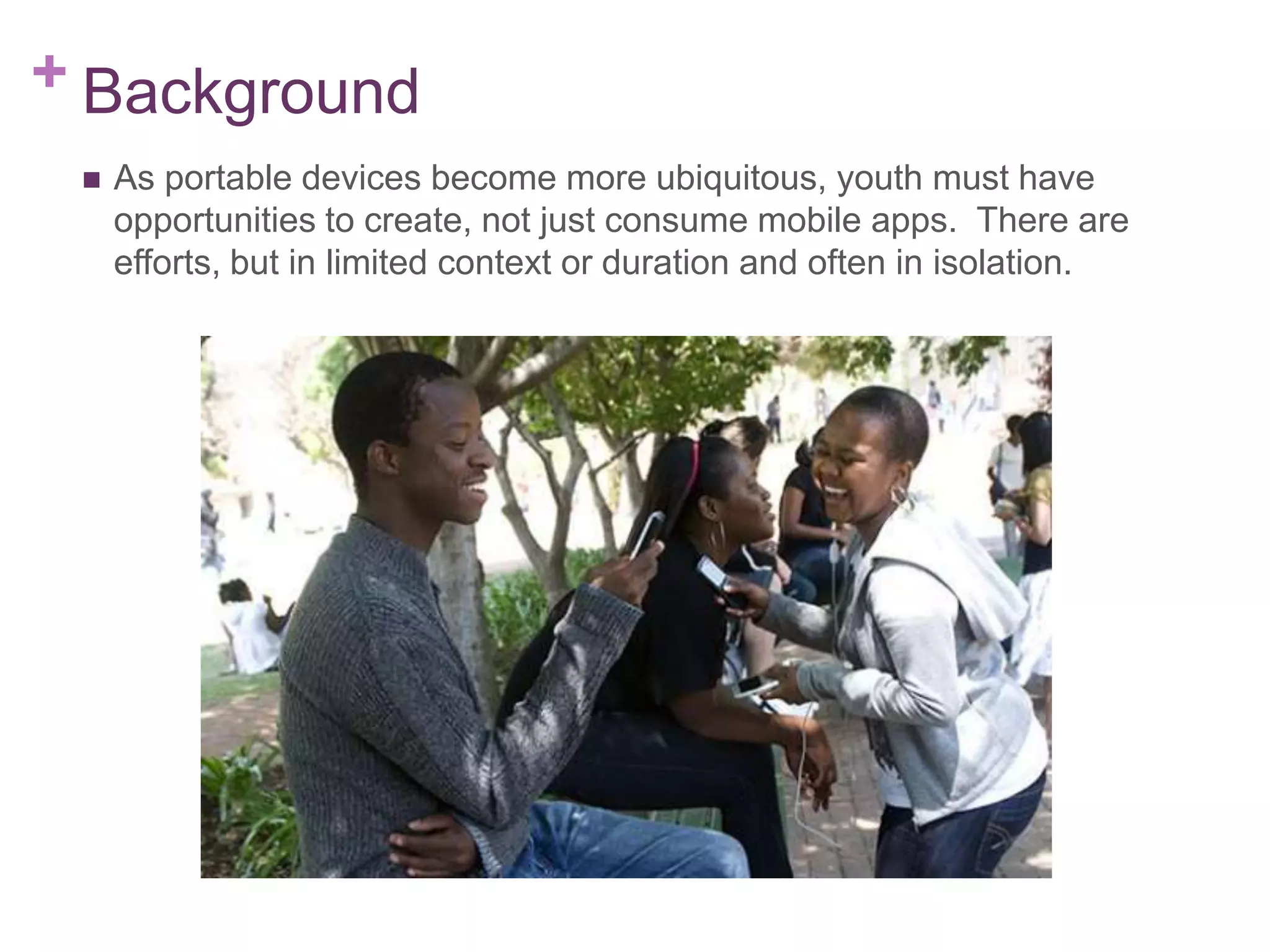
As portable devices become more ubiquitous, youth must have
opportunities to create, not just consume mobile apps.



There are efforts, but in limited context or duration and often in
isolation.
+

The Mobile Innovation Network
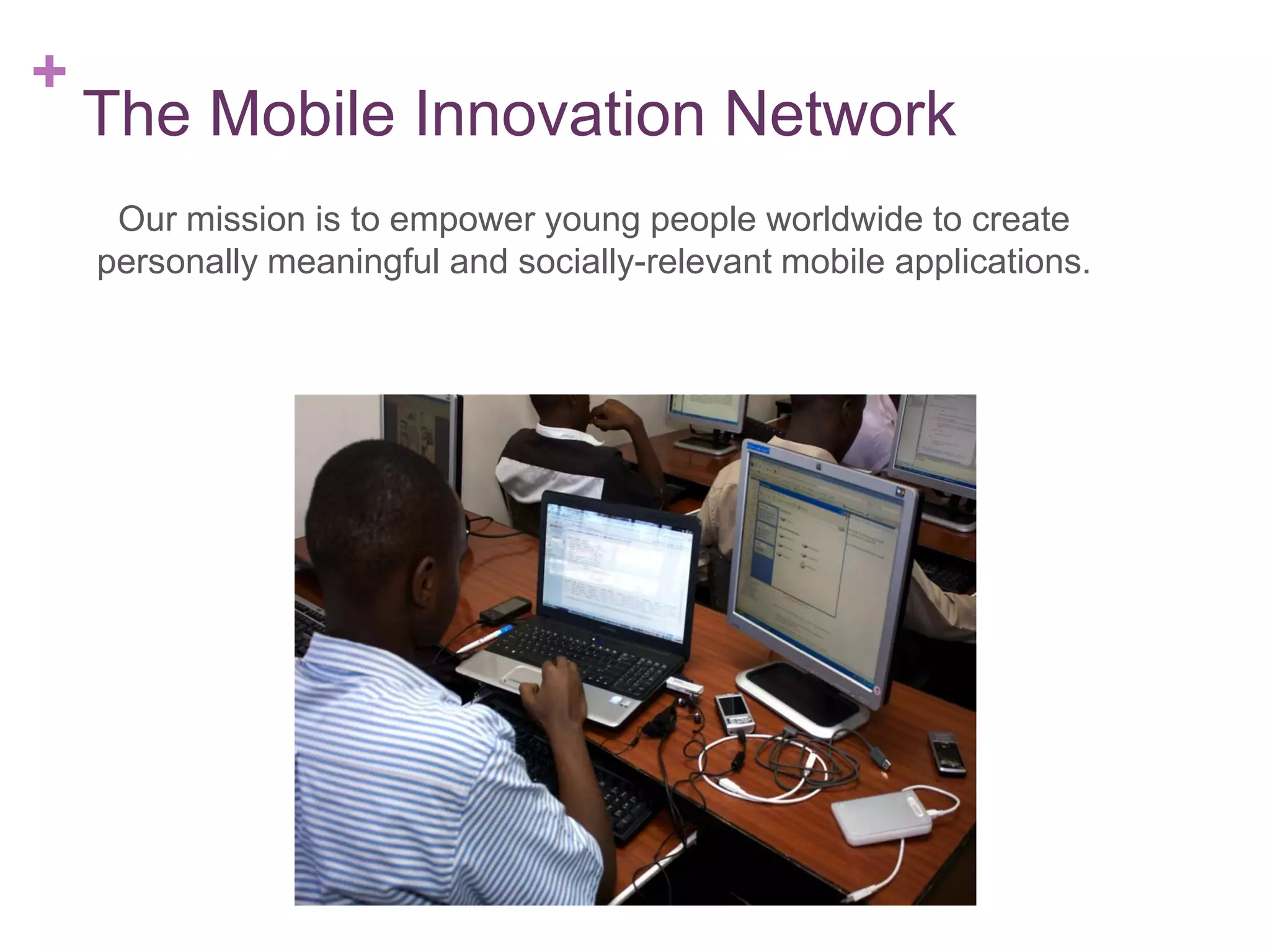
Our mission is to empower young people worldwide to create
personally meaningful and socially-relevant mobile applications.
+

What does a Mobile Innovation Club do?



Develop culture of young people learning, working and
tinkering with mobile apps;



Inspire youth created mobile solutions to locally meaningful
challenges;



Provide a meaningful context for youth skill acquisition;



Raise awareness of relevant career opportunities;



Foster connections with inspiring individuals and
representatives from local companies and organizations.
+

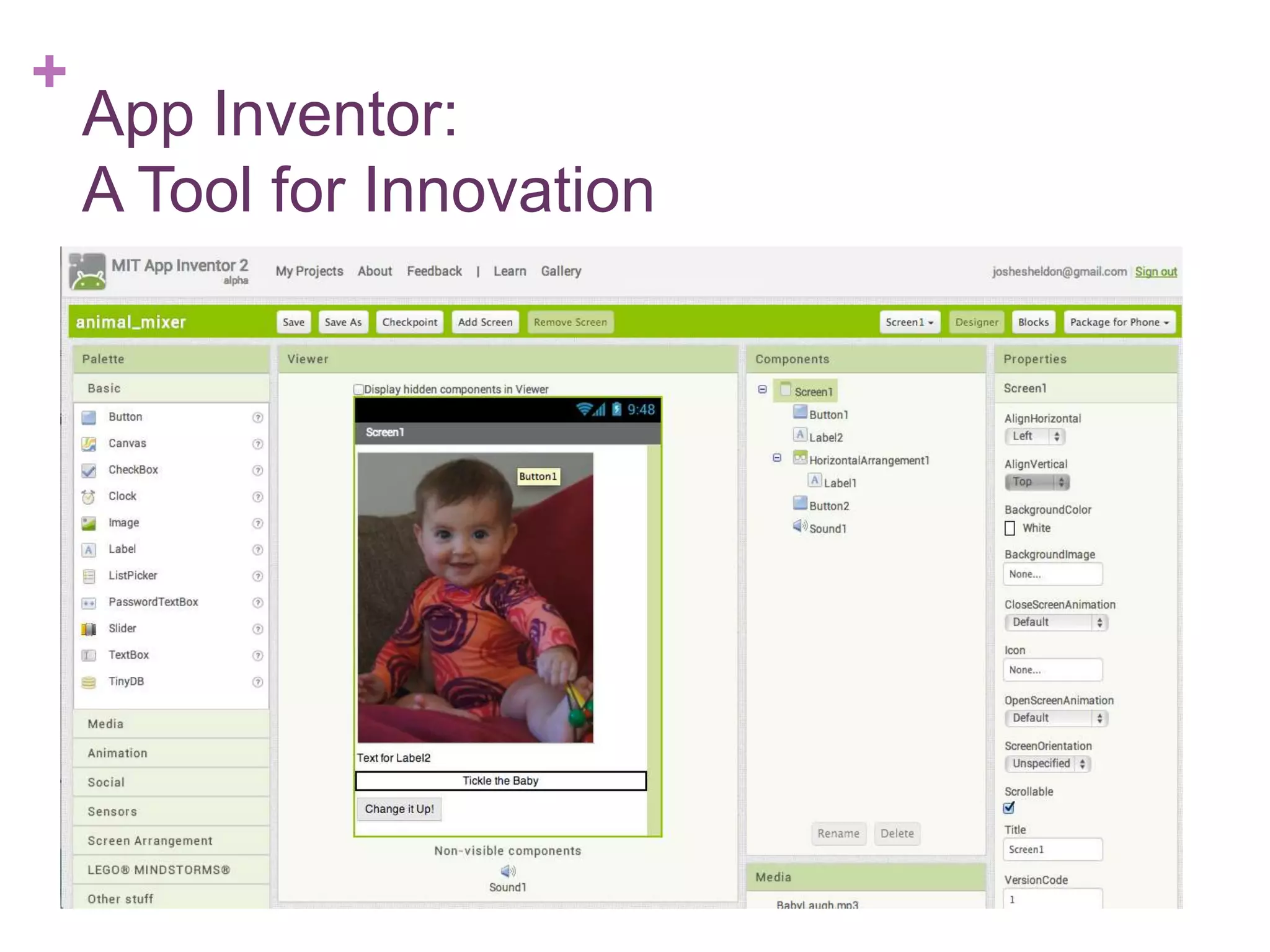
MIT App Inventor:
A Tool for Innovation
+

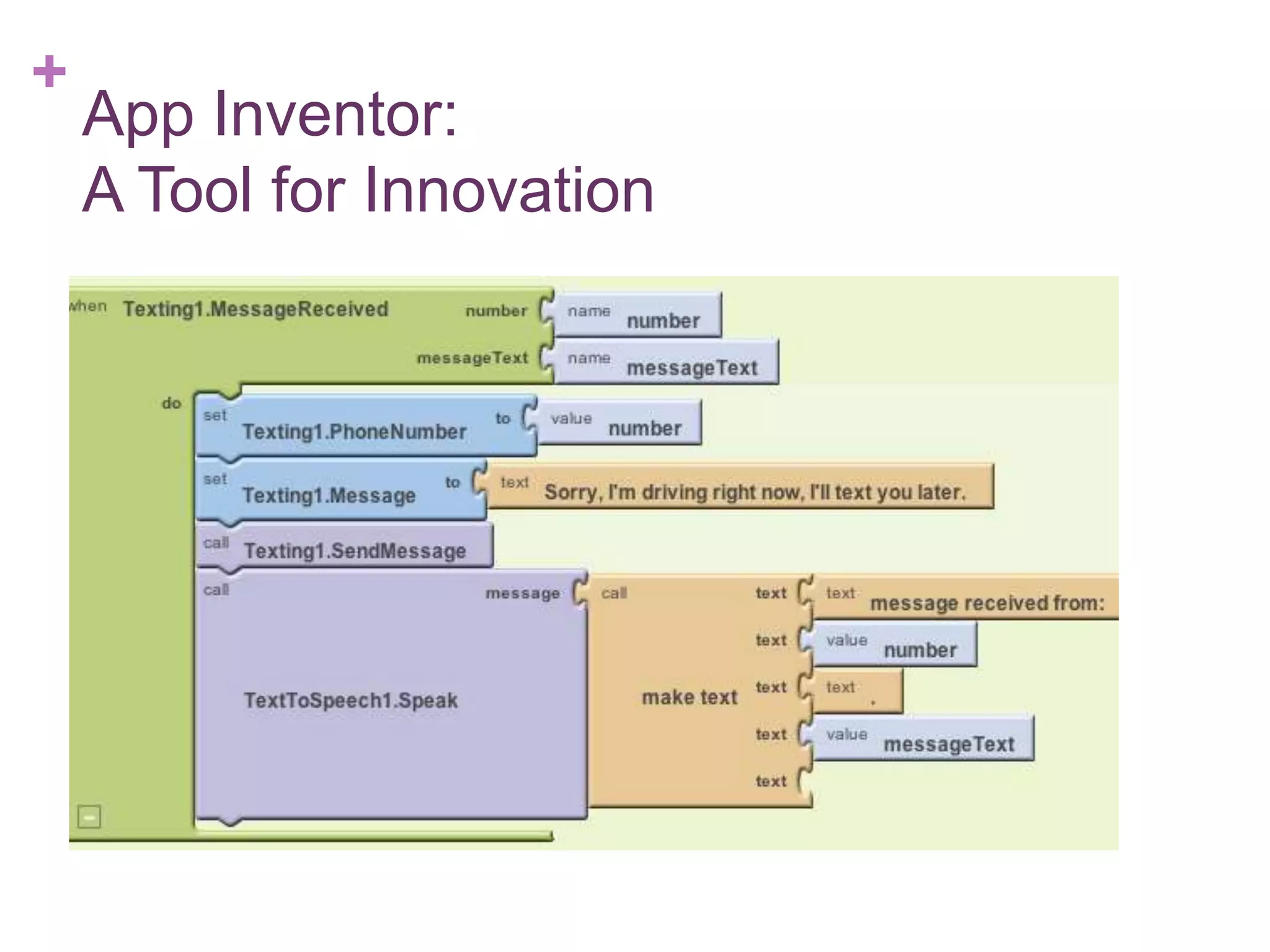
MIT App Inventor:
A Tool for Innovation
+

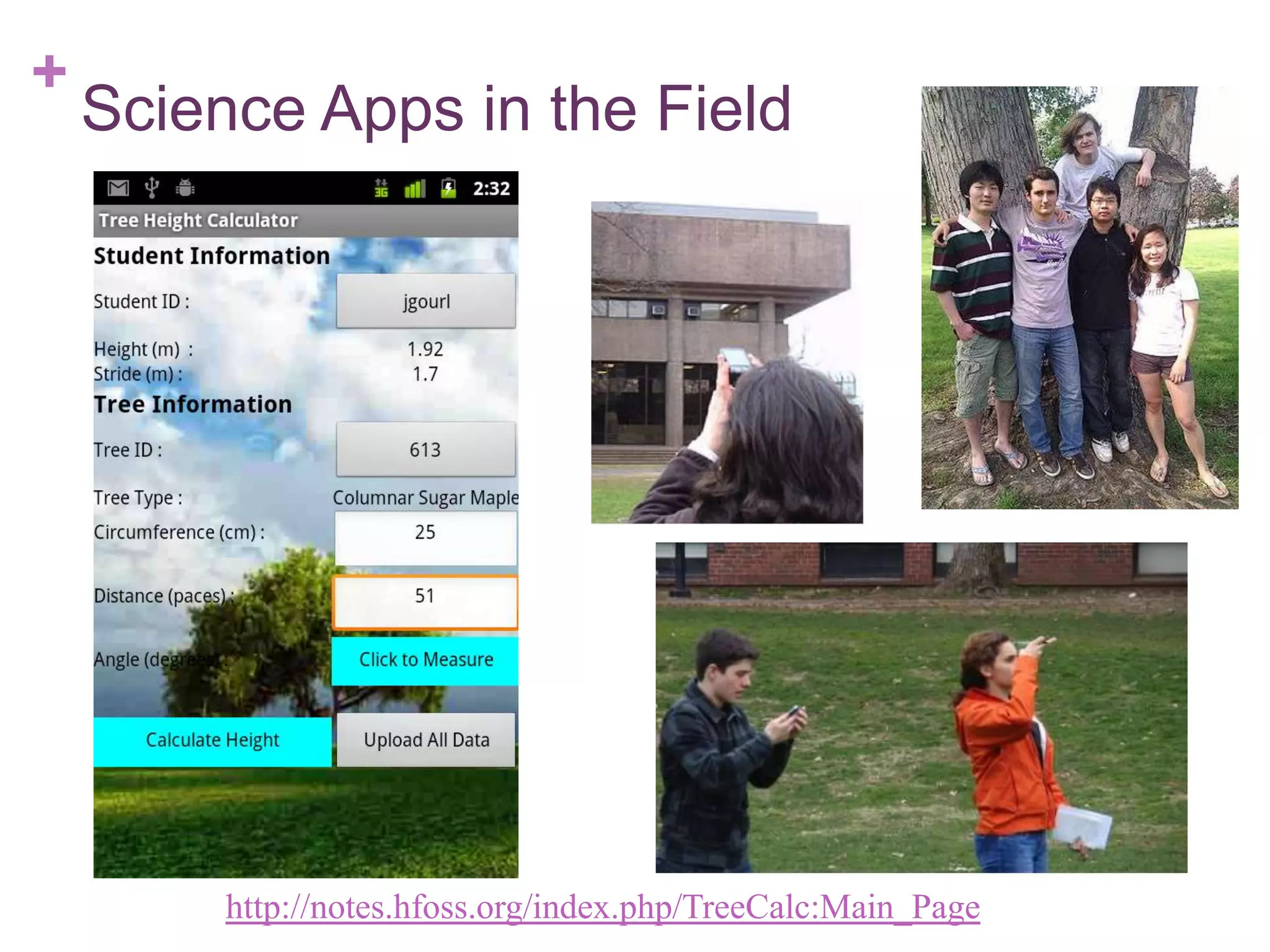
Science Apps in the Field

http://notes.hfoss.org/index.php/TreeCalc:Main_Page
+

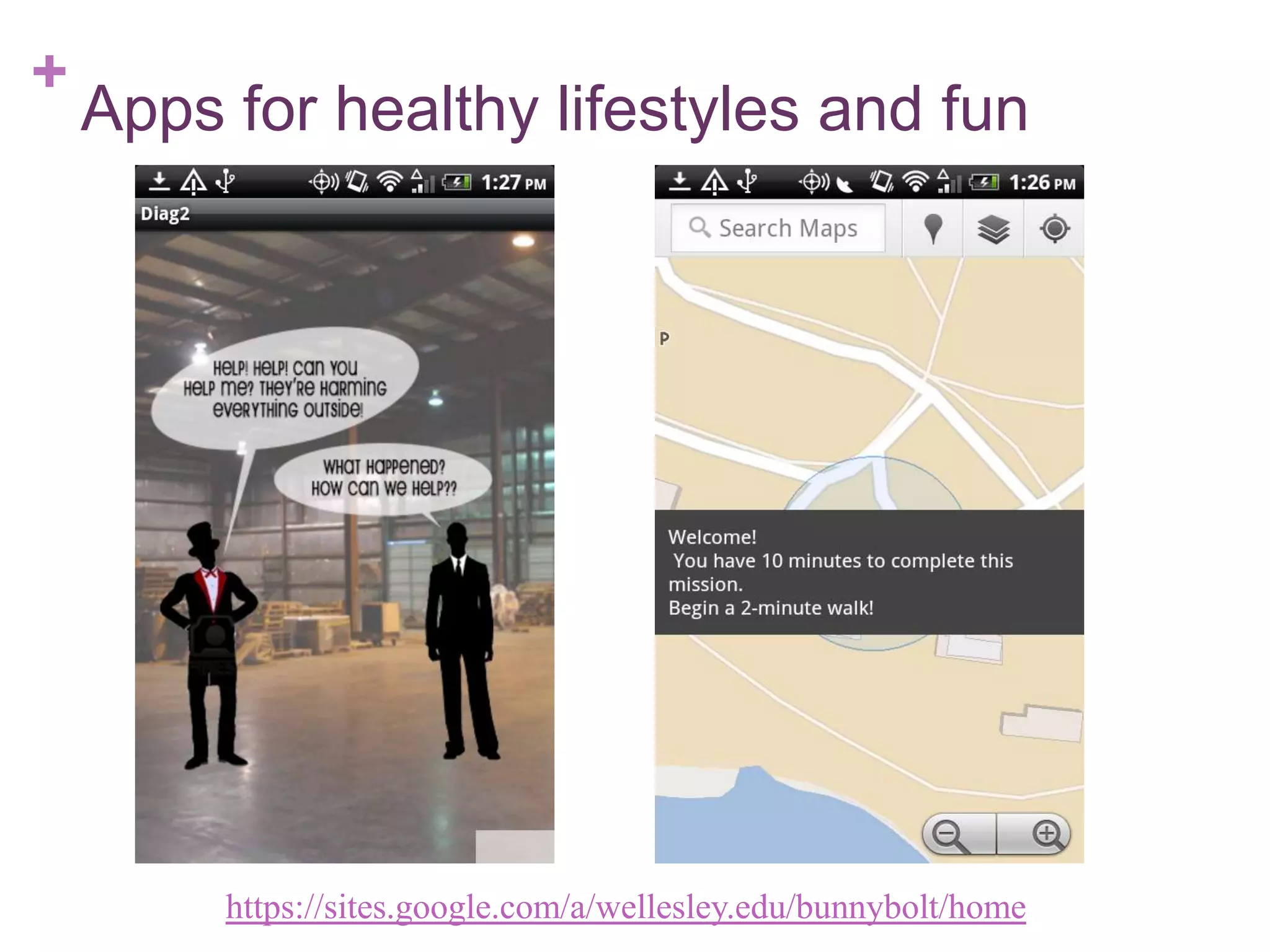
Apps for healthy lifestyles and fun

https://sites.google.com/a/wellesley.edu/bunnybolt/home
+

Apps for humanitarian and social good
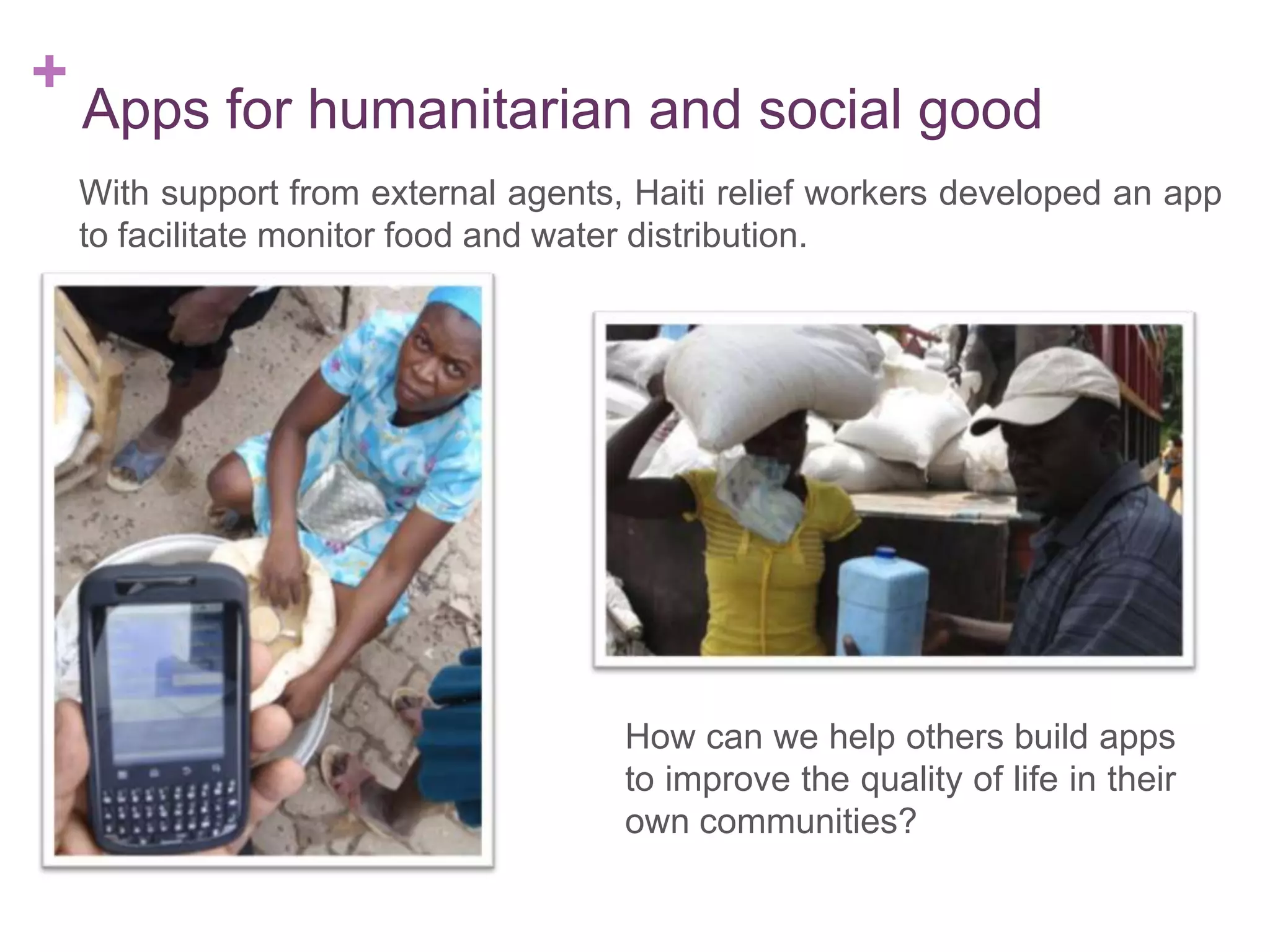
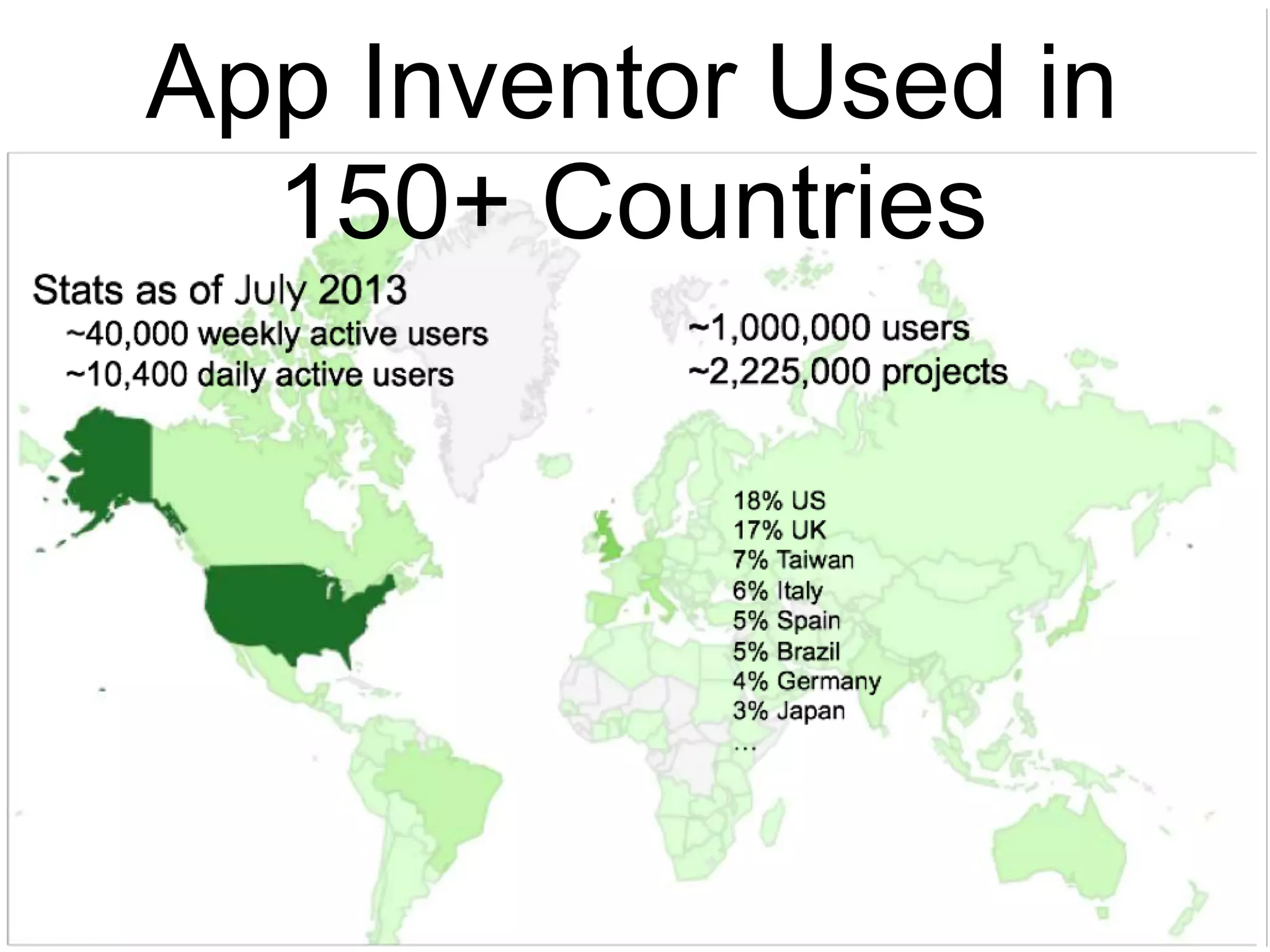
With support from external agents, Haiti relief workers developed an app
to facilitate monitor food and water distribution.

How can we help others build apps
to improve the quality of life in their
own communities?
+

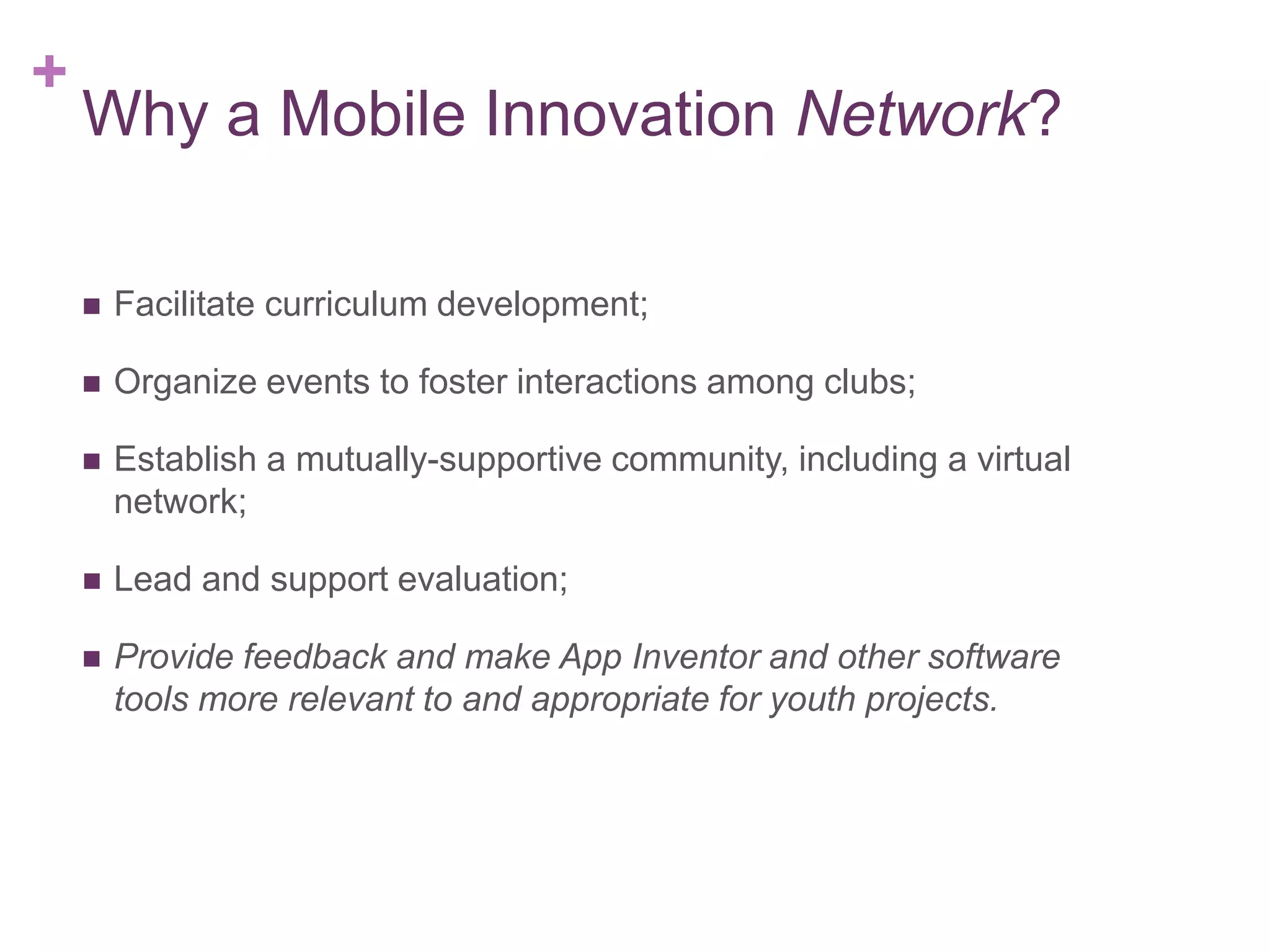
App Inventor Used in
150+ Countries
+

Why a Mobile Innovation Network?


Facilitate curriculum development;



Organize events to foster interactions among clubs;



Establish a mutually-supportive community, including a virtual
network;



Lead and support evaluation;



Provide feedback and make App Inventor and other software
tools more relevant to and appropriate for youth projects.
+

Who are current MIN members?


MIT Center for Mobile Learning: technical expertise,
partnerships



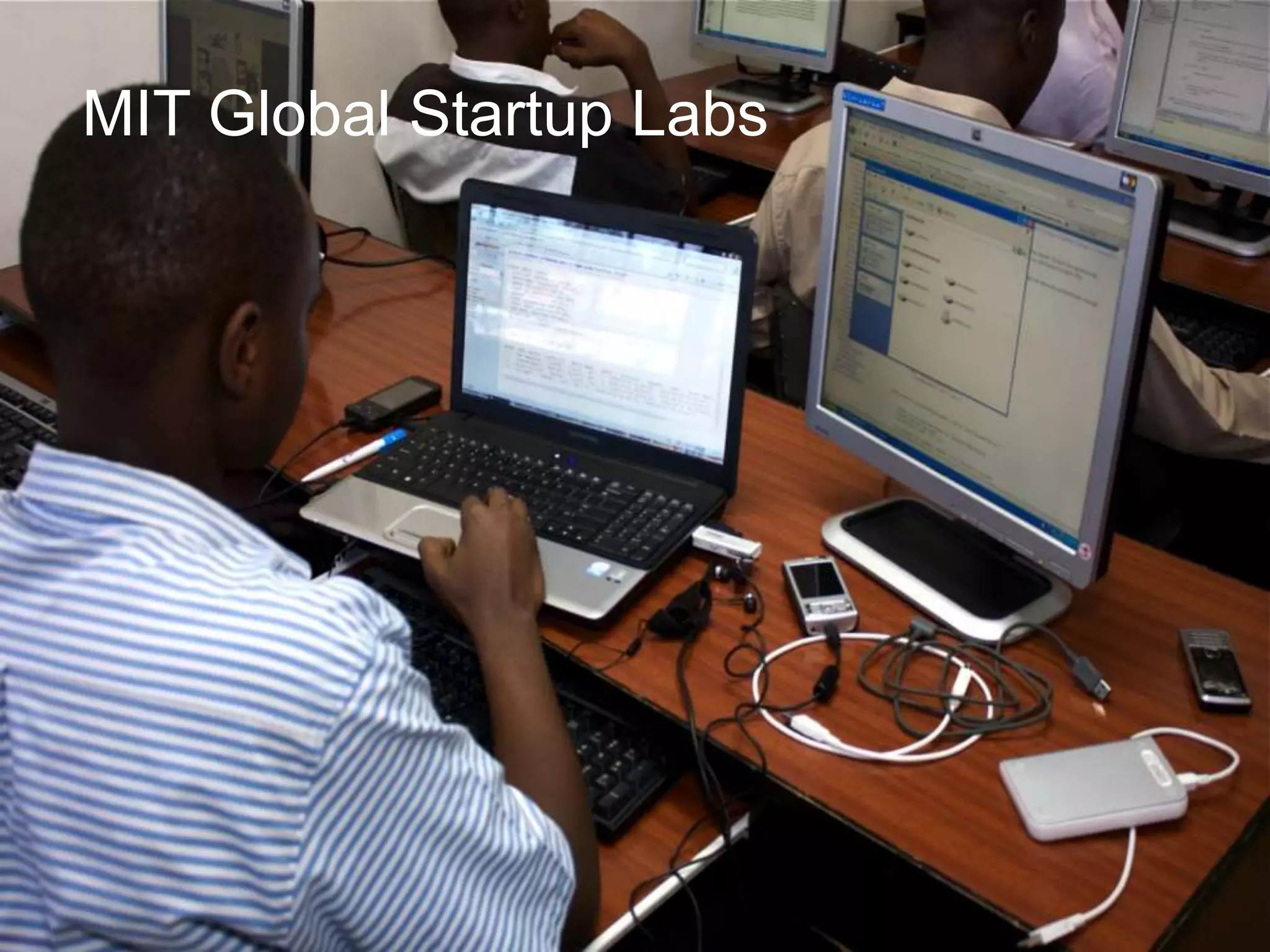
MIT Global Startup Lab: mobile technology development and
entrepreneurship in Africa and Southeast Asia



CSEV Foundation: online community and mobile entrepreneurial
ecosystem for Latin America



Global Minimum: innovation camps in Sierra Leone and Kenya



Humanitarian FOSS: student mentorship, technical know-how



Intel Computer Clubhouse Network: teens, media infrastructure
in 20 countries



Iridescent: science and technology with girls worldwide
+

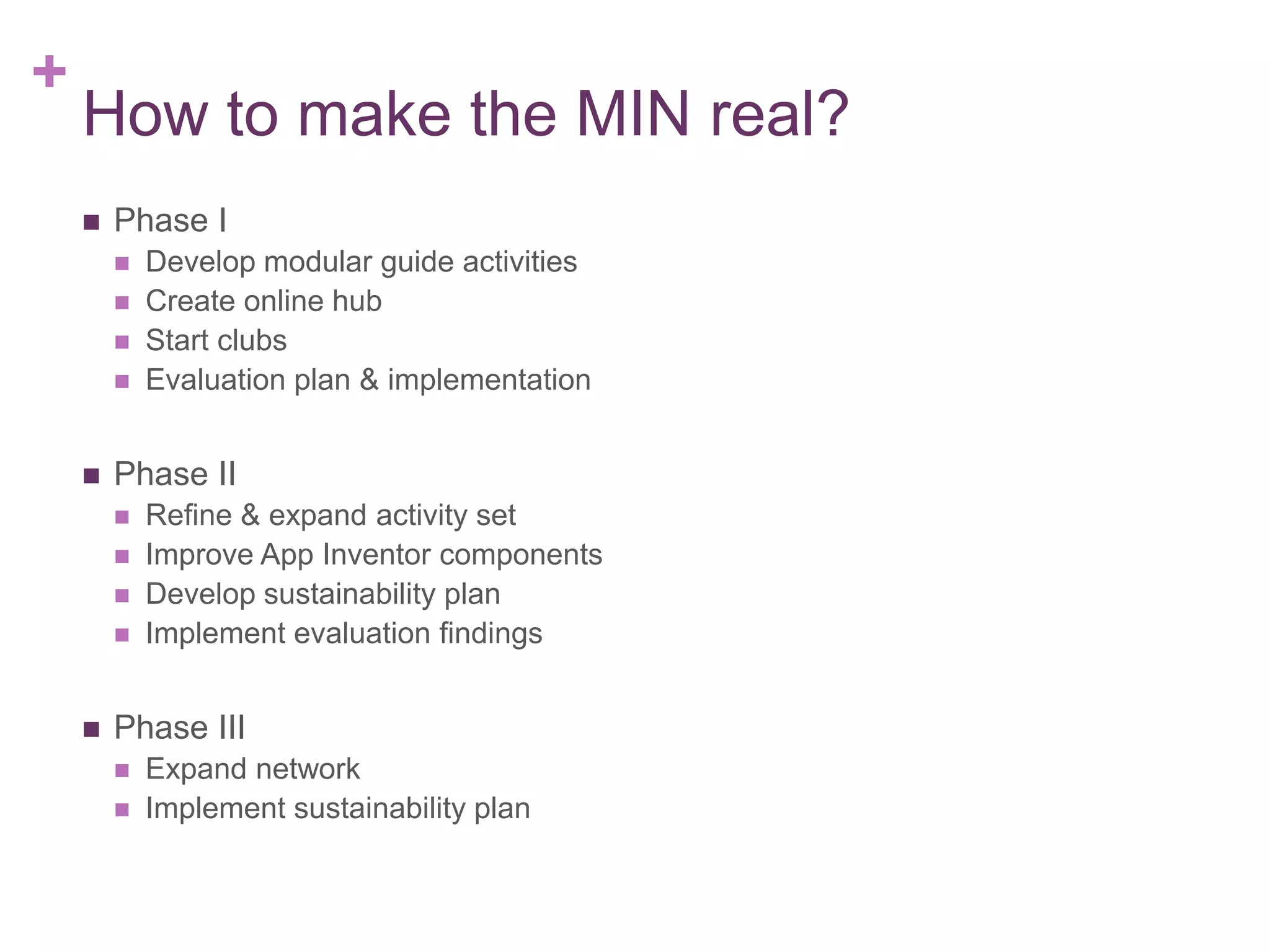
How to make the MIN real?


Phase I







Phase II







Develop modular guide activities
Create online hub
Start clubs
Evaluation plan & implementation

Refine & expand activity set
Improve App Inventor components
Develop sustainability plan
Implement evaluation findings

Phase III



Expand network
Implement sustainability plan
+

What does the MIN need?


Funding



Additional Partnerships with Local
Organizations/Companies Who Can Provide:
 Space
 Mentors
 Internships



Equipment – phones and/or tablets with data plans



Volunteers
+

Contacts

http://appinventor.mit.edu


Leo Burd, Research Scientist
leoburd@media.mit.edu



Josh Sheldon, Program Manager
jsheldon@mit.edu
+

Additional slides
+
We should provide local entrepreneurs and grassroots nonprofits with tools – and where appropriate and requested,
expertise – for them to create their own projects that make a
difference...
[...] we shouldn’t develop solutions to problems we don’t
understand, we shouldn’t take ownership of a problem that
isn’t ours and we certainly shouldn’t build things thousands of
miles away and then jump on a plane in search of a home for
them.
- Ken Banks, from
http://www.kiwanja.net/blog/2012/12/an-inconvenient-truth/
+

Research questions


What are the key technical, educational and infrastructural
elements of successful Mobile Innovation Clubs?



In what ways can App Inventor and the other technologies used
be improved to better support young people in the
implementation of their projects?



How to foster scalability and guarantee the sustainability of the
Mobile Innovation Network over time?
+

Curriculum goals


Technical skills (which will change over time)



Longer-lasting skills







Computational thinking
So-called 21st Century Skills:
 Flexibility and ability to adapt to new technologies and situations
 Self-esteem
 Self-initiative
 Collaboration
 Presentation skills
 Ability and willingness to learning from mistakes
Curriculum writing
College application, etc.
Business plan writing
+

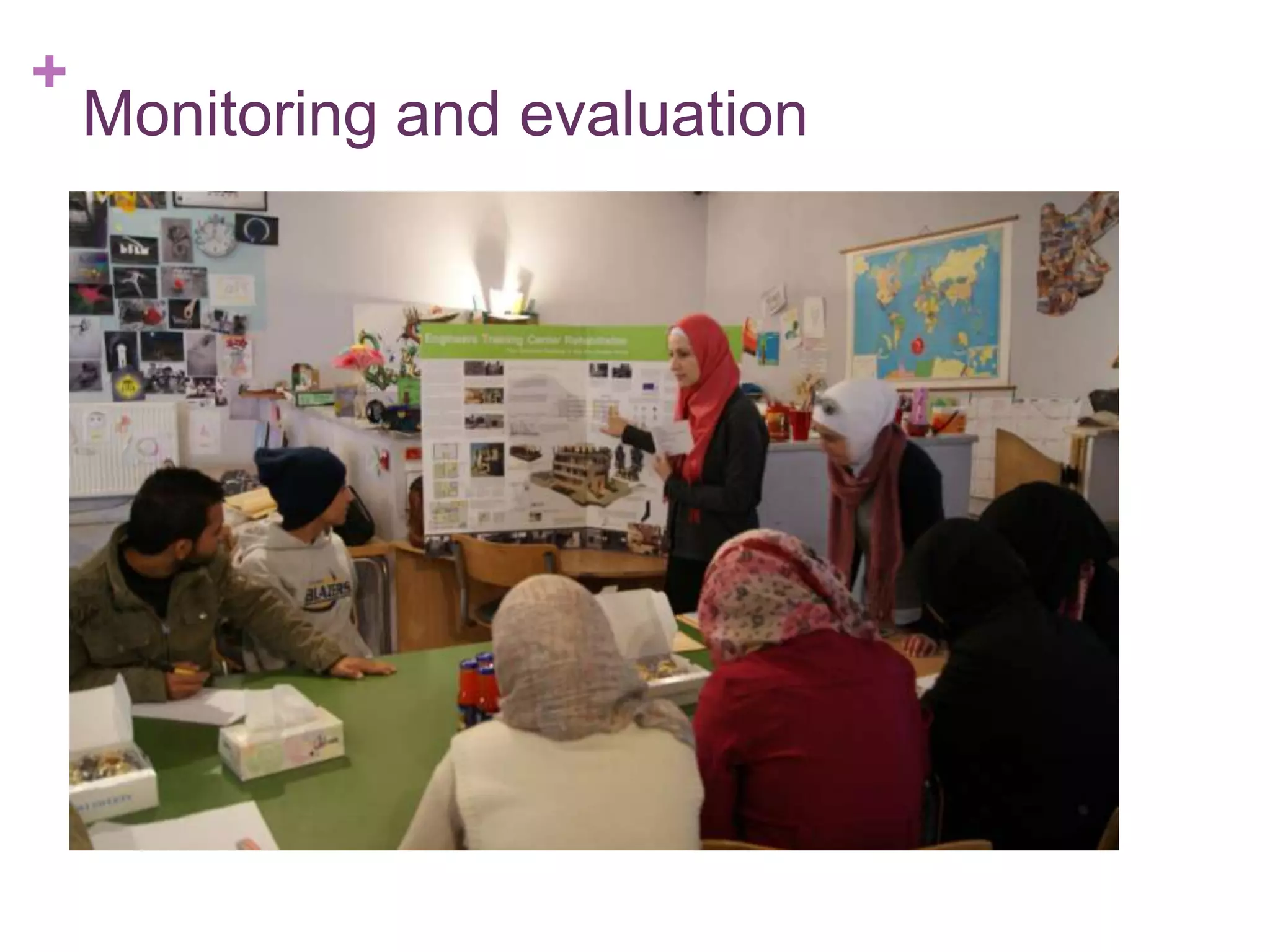
Monitoring and evaluation
One of the expected outcomes of the Mobile Innovation Network is to define a set
of indicators and assessment instruments to guide the evolution of the project at
the individual, club and network levels.


At the individual level






Acquisition of basic skills, concepts and attitudes (for the mobile world;

Common challenges inherent to the participation in the initiative.

At the Club level


Challenges inherent to the implementation and sustainability of the MIN projects;



Best practices;



Suggestions to improve App Inventor;





How to recruit, support and keep mentors engaged?

At the Network level


Total number of clubs, participants and projects;



Level of participation and lessons learned regarding inter-club initiatives such as design
competitions, webinars, etc.;



Overall impact in the community.
+

Monitoring and evaluation
+

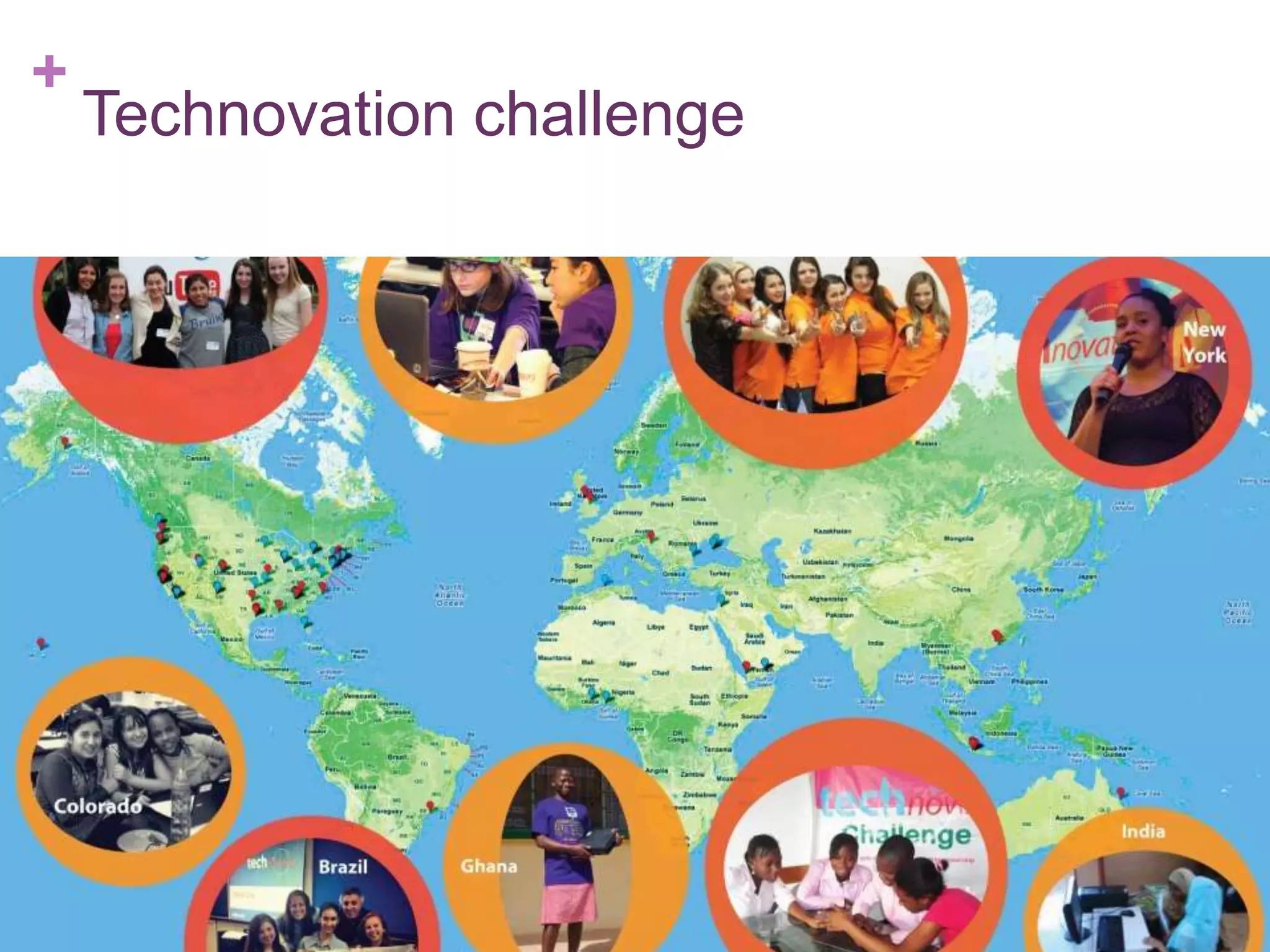
Technovation challenge
+
+

MIT Global Startup Labs
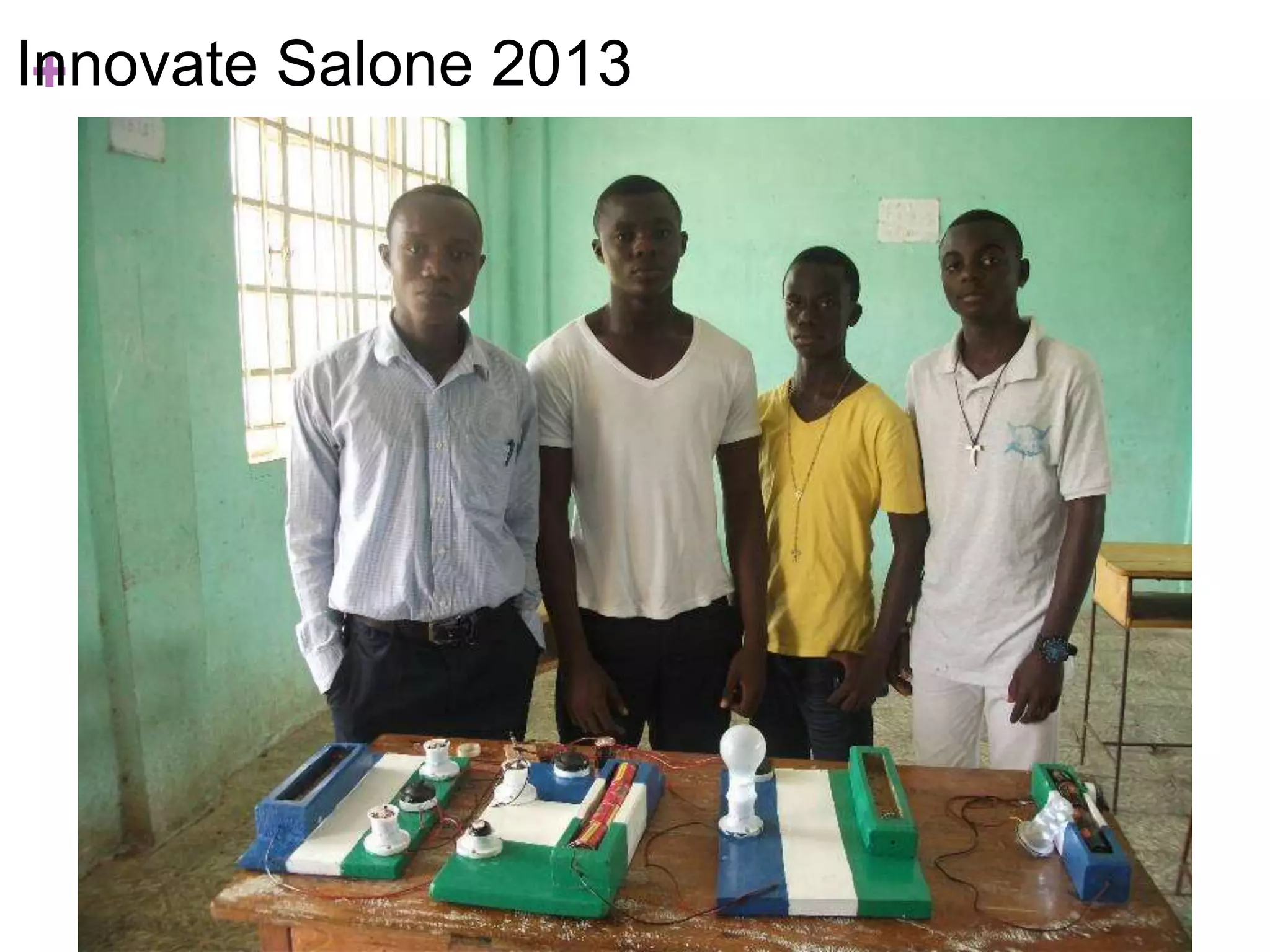
Innovate Salone 2013
+

The Mobile Innovation Network

  • 1.
    + The Mobile Innovation Network buildinglocal capacity for youth workforce development, entrepreneurship and citizenship in the mobile world a project of the Center for Mobile Learning at the MIT Media Lab
  • 2.
    + Background  As portabledevices become more ubiquitous, youth must have opportunities to create, not just consume mobile apps.  There are efforts, but in limited context or duration and often in isolation.
  • 3.
    + The Mobile InnovationNetwork Our mission is to empower young people worldwide to create personally meaningful and socially-relevant mobile applications.
  • 4.
    + What does aMobile Innovation Club do?  Develop culture of young people learning, working and tinkering with mobile apps;  Inspire youth created mobile solutions to locally meaningful challenges;  Provide a meaningful context for youth skill acquisition;  Raise awareness of relevant career opportunities;  Foster connections with inspiring individuals and representatives from local companies and organizations.
  • 5.
    + MIT App Inventor: ATool for Innovation
  • 6.
    + MIT App Inventor: ATool for Innovation
  • 7.
    + Science Apps inthe Field http://notes.hfoss.org/index.php/TreeCalc:Main_Page
  • 8.
    + Apps for healthylifestyles and fun https://sites.google.com/a/wellesley.edu/bunnybolt/home
  • 9.
    + Apps for humanitarianand social good With support from external agents, Haiti relief workers developed an app to facilitate monitor food and water distribution. How can we help others build apps to improve the quality of life in their own communities?
  • 10.
    + App Inventor Usedin 150+ Countries
  • 11.
    + Why a MobileInnovation Network?  Facilitate curriculum development;  Organize events to foster interactions among clubs;  Establish a mutually-supportive community, including a virtual network;  Lead and support evaluation;  Provide feedback and make App Inventor and other software tools more relevant to and appropriate for youth projects.
  • 12.
    + Who are currentMIN members?  MIT Center for Mobile Learning: technical expertise, partnerships  MIT Global Startup Lab: mobile technology development and entrepreneurship in Africa and Southeast Asia  CSEV Foundation: online community and mobile entrepreneurial ecosystem for Latin America  Global Minimum: innovation camps in Sierra Leone and Kenya  Humanitarian FOSS: student mentorship, technical know-how  Intel Computer Clubhouse Network: teens, media infrastructure in 20 countries  Iridescent: science and technology with girls worldwide
  • 13.
    + How to makethe MIN real?  Phase I      Phase II      Develop modular guide activities Create online hub Start clubs Evaluation plan & implementation Refine & expand activity set Improve App Inventor components Develop sustainability plan Implement evaluation findings Phase III   Expand network Implement sustainability plan
  • 14.
    + What does theMIN need?  Funding  Additional Partnerships with Local Organizations/Companies Who Can Provide:  Space  Mentors  Internships  Equipment – phones and/or tablets with data plans  Volunteers
  • 15.
    + Contacts http://appinventor.mit.edu  Leo Burd, ResearchScientist leoburd@media.mit.edu  Josh Sheldon, Program Manager jsheldon@mit.edu
  • 16.
  • 17.
    + We should providelocal entrepreneurs and grassroots nonprofits with tools – and where appropriate and requested, expertise – for them to create their own projects that make a difference... [...] we shouldn’t develop solutions to problems we don’t understand, we shouldn’t take ownership of a problem that isn’t ours and we certainly shouldn’t build things thousands of miles away and then jump on a plane in search of a home for them. - Ken Banks, from http://www.kiwanja.net/blog/2012/12/an-inconvenient-truth/
  • 18.
    + Research questions  What arethe key technical, educational and infrastructural elements of successful Mobile Innovation Clubs?  In what ways can App Inventor and the other technologies used be improved to better support young people in the implementation of their projects?  How to foster scalability and guarantee the sustainability of the Mobile Innovation Network over time?
  • 19.
    + Curriculum goals  Technical skills(which will change over time)  Longer-lasting skills      Computational thinking So-called 21st Century Skills:  Flexibility and ability to adapt to new technologies and situations  Self-esteem  Self-initiative  Collaboration  Presentation skills  Ability and willingness to learning from mistakes Curriculum writing College application, etc. Business plan writing
  • 20.
    + Monitoring and evaluation Oneof the expected outcomes of the Mobile Innovation Network is to define a set of indicators and assessment instruments to guide the evolution of the project at the individual, club and network levels.  At the individual level    Acquisition of basic skills, concepts and attitudes (for the mobile world; Common challenges inherent to the participation in the initiative. At the Club level  Challenges inherent to the implementation and sustainability of the MIN projects;  Best practices;  Suggestions to improve App Inventor;   How to recruit, support and keep mentors engaged? At the Network level  Total number of clubs, participants and projects;  Level of participation and lessons learned regarding inter-club initiatives such as design competitions, webinars, etc.;  Overall impact in the community.
  • 21.
  • 22.
  • 23.
  • 24.
  • 25.

Editor's Notes

  • #4 TheMIN will be an association of Mobile Innovation Clubs, groups formed by facilitators and youth members from community organizations and supported by like-minded technical learning centers.
  • #10 Commodity price tracker app inventor app being piloted at a market in rural Haiti as an example of potential app inventor apps in the field
  • #18 The Center for Mobile Learning invents and studies new mobile technologies to promote learning anywhere, anytime, and for anyone. By being able to take the technology with them, students can learn in their own way and in their own time. As a result, the student’s learning environment becomes personal.
  • #21 Part of the indicators above (number of participants, etc.) will be automatically collected via the MIN portal. Other indicators will be collected via a combination of methods including individual surveys, focus groups, direct observations, and interviews.
  • #23 Iridiscent:* runs the Technovation Challenge, an entrepreneurship program that uses App Inventor to engage girls from over 19 countries in the creation of apps to solve problems in their local community* Largest girls in technology program in the world 
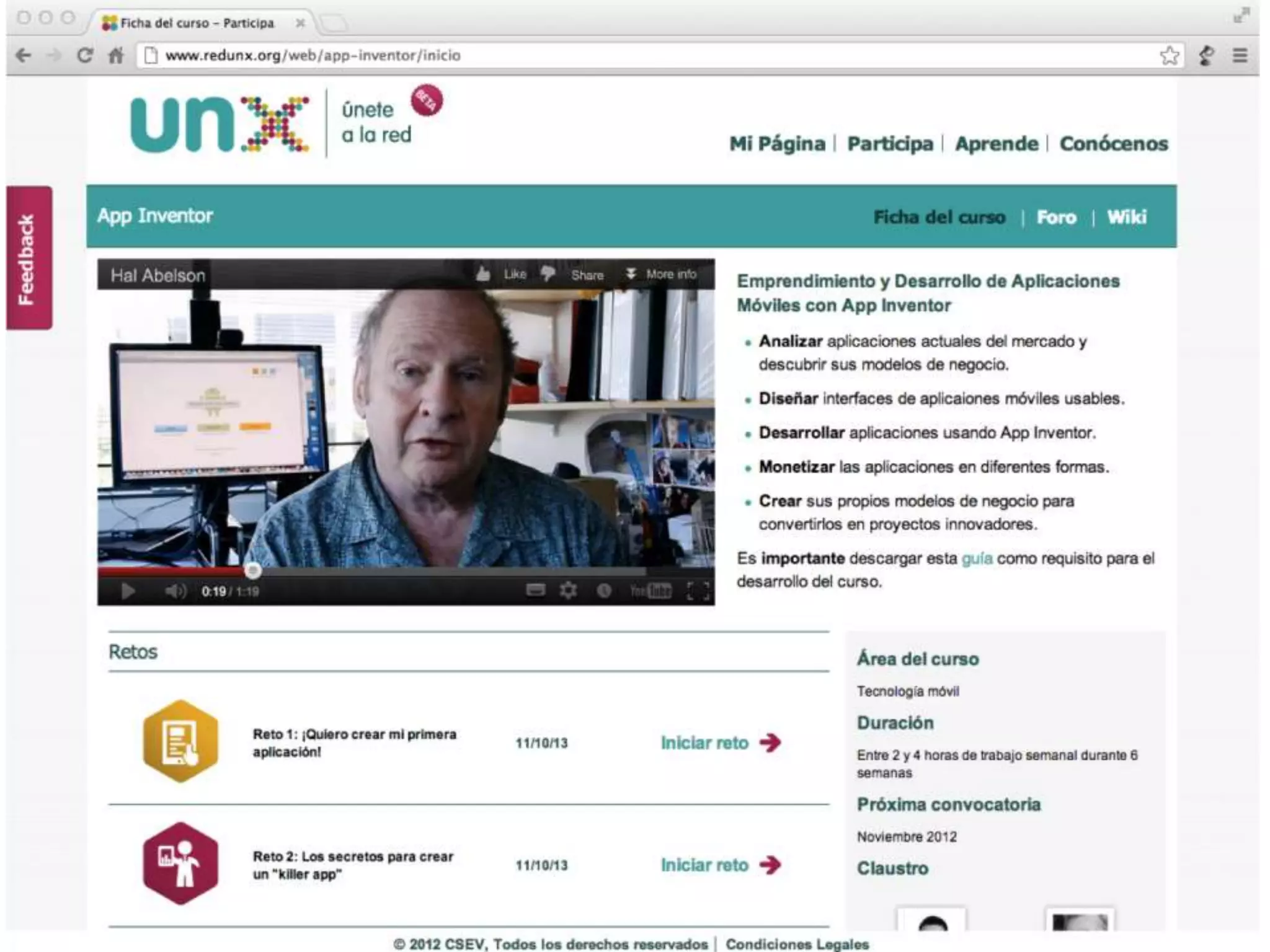
  • #24 CSEV Foundation’s unX initiative
  • #25 partners with universities in emerging regions and organizes advanced mobile and Internet technology courses taught by MIT student instructors.Focus on Mobile Technology, Entrepreneurship and Networking (VC contacts) Since 2000, AITI has sent nearly 120 MIT instructors to teach over 1500 students in five countries, resulting in the creation of businesses and the addition of course offerings at partner universitiesBasic stats•    Since 2000, 43 programs  •    10 developing world countries •    Over 1600 participants •    130 MIT instructors and mentors •    76% of participants continue with their startup after course
  • #26 finalists from our Innovate Salone 2013 competition