The K Method Of Studying
Angles
Authored By Adithya Ligory
The K Method of
Studying Angles
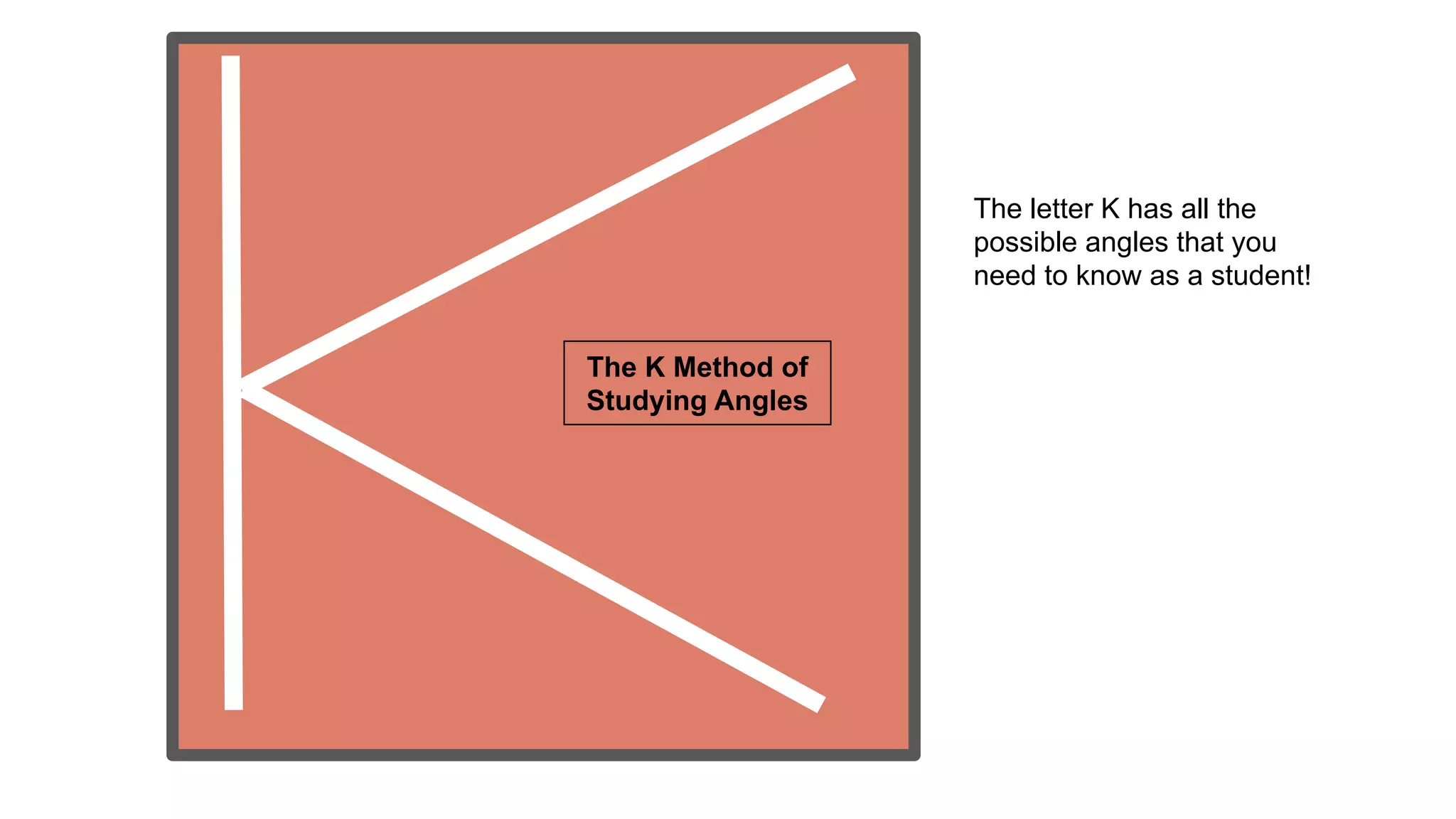
The letter K has all the
possible angles that you
need to know as a student!
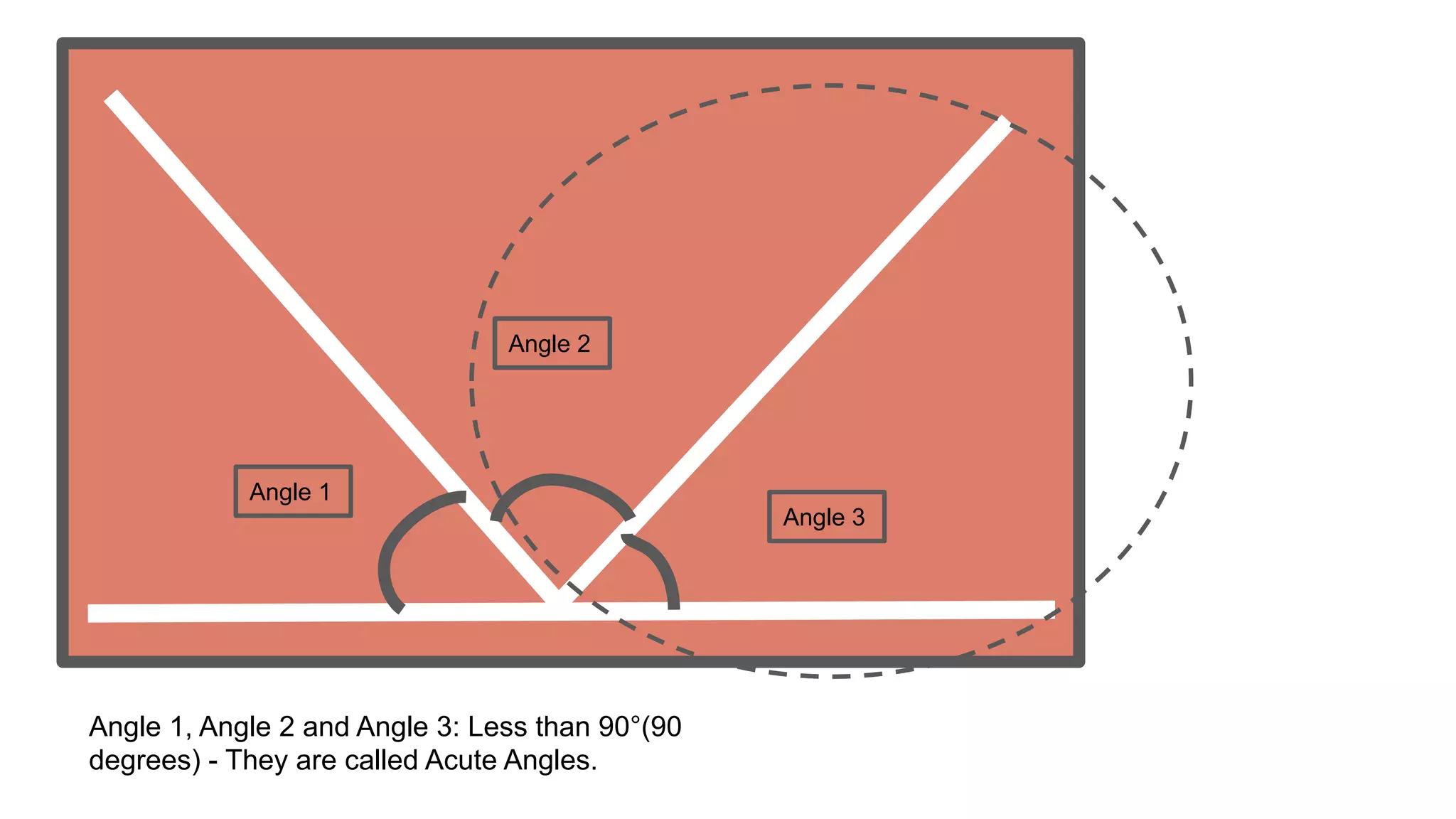
Angle 1
Angle 2
Angle 3
Angle 1, Angle 2 and Angle 3: Less than 90°(90
degrees) - They are called Acute Angles.
P
Q R
S
RQ
P
Angles ∠PQR when
divided by a line SQ
results in two angles
side by side called
Adjacent Angles
(∠PQS and ∠SQR)
P
S
RQ
∠SQR is 90° (90
degrees) or it’s called
a Right Angle.
∠PQS and ∠PQR
when added results in
90°. They are called
Complementary
Angles.
P
S RQ
∠SQR is a straight line and
this is equal to 180°.
∠PQS and ∠PQR when
added results in 180°. They
are called Supplementary
Angles.
The angle ∠PQS is an
Obtuse Angle as it is larger
than 90°, but this angle is
less than 180°.
P
S RQ
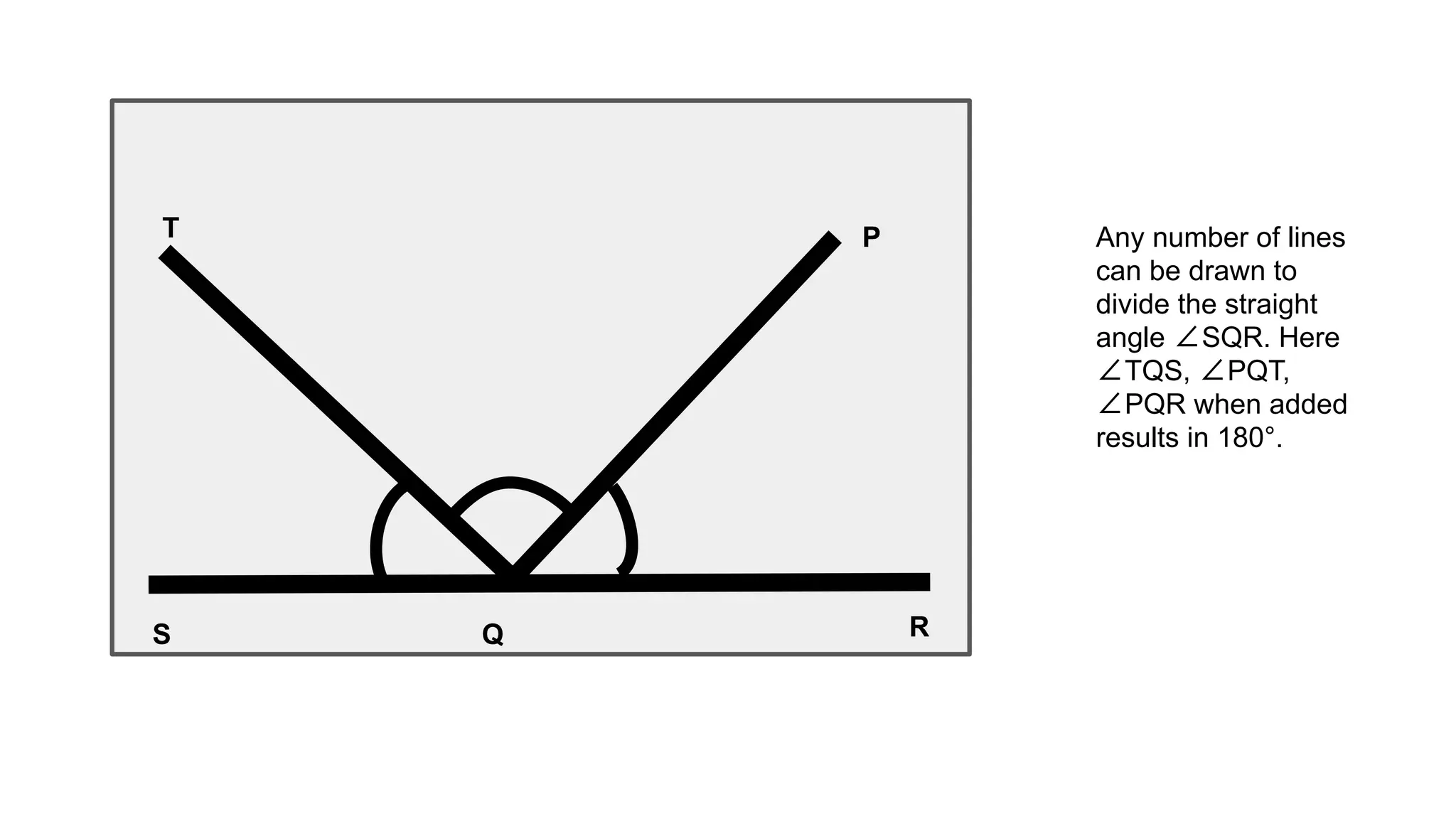
T Any number of lines
can be drawn to
divide the straight
angle ∠SQR. Here
∠TQS, ∠PQT,
∠PQR when added
results in 180°.
PR
S
T
Q
U V
1
2
3
4
5
6
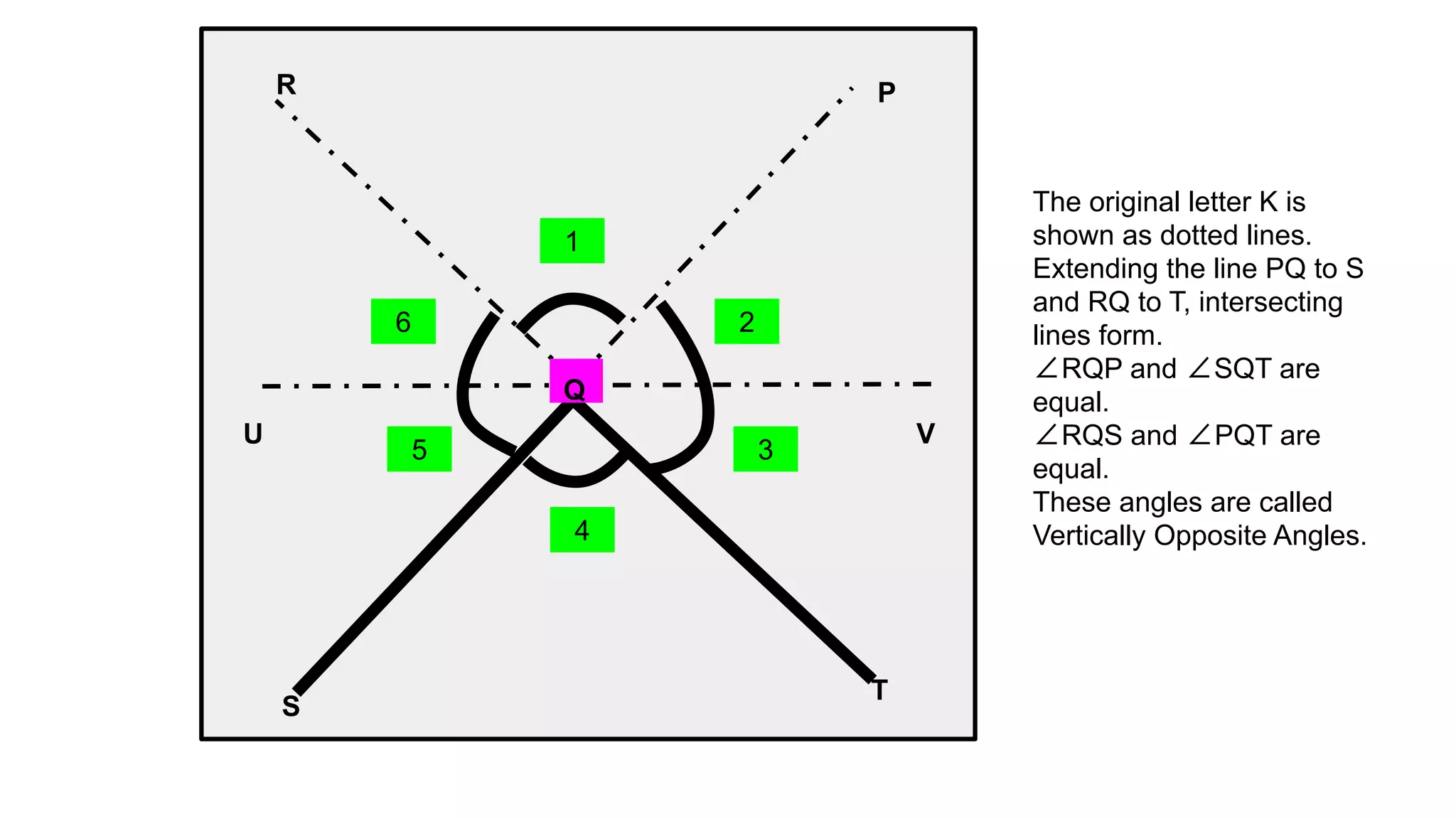
The original letter K is
shown as dotted lines.
Extending the line PQ to S
and RQ to T, intersecting
lines form.
∠RQP and ∠SQT are
equal.
∠RQS and ∠PQT are
equal.
These angles are called
Vertically Opposite Angles.
PR
S T
Equal vertical angles in
terms of angle size.
∠PQR and ∠SQT are
equal and are equal to 96°
(96 degrees)
∠RQS and ∠PQT are
equal to 84° (84 degrees)
Q
PR
S T
QU V
An angle that is 360° is
called a Circular Angle.
All angles shown here
add up to 360°.
∠RQU, ∠UQS,
∠SQT, ∠VQT, ∠PQV
and ∠PQR when
added together results
in 360°.
The K method of studying angles

The K method of studying angles

  • 1.
    The K MethodOf Studying Angles Authored By Adithya Ligory
  • 2.
    The K Methodof Studying Angles The letter K has all the possible angles that you need to know as a student!
  • 3.
    Angle 1 Angle 2 Angle3 Angle 1, Angle 2 and Angle 3: Less than 90°(90 degrees) - They are called Acute Angles.
  • 4.
    P Q R S RQ P Angles ∠PQRwhen divided by a line SQ results in two angles side by side called Adjacent Angles (∠PQS and ∠SQR)
  • 5.
    P S RQ ∠SQR is 90°(90 degrees) or it’s called a Right Angle. ∠PQS and ∠PQR when added results in 90°. They are called Complementary Angles.
  • 6.
    P S RQ ∠SQR isa straight line and this is equal to 180°. ∠PQS and ∠PQR when added results in 180°. They are called Supplementary Angles. The angle ∠PQS is an Obtuse Angle as it is larger than 90°, but this angle is less than 180°.
  • 7.
    P S RQ T Anynumber of lines can be drawn to divide the straight angle ∠SQR. Here ∠TQS, ∠PQT, ∠PQR when added results in 180°.
  • 8.
    PR S T Q U V 1 2 3 4 5 6 The originalletter K is shown as dotted lines. Extending the line PQ to S and RQ to T, intersecting lines form. ∠RQP and ∠SQT are equal. ∠RQS and ∠PQT are equal. These angles are called Vertically Opposite Angles.
  • 9.
    PR S T Equal verticalangles in terms of angle size. ∠PQR and ∠SQT are equal and are equal to 96° (96 degrees) ∠RQS and ∠PQT are equal to 84° (84 degrees) Q
  • 10.
    PR S T QU V Anangle that is 360° is called a Circular Angle. All angles shown here add up to 360°. ∠RQU, ∠UQS, ∠SQT, ∠VQT, ∠PQV and ∠PQR when added together results in 360°.