Introduction to Excretion
WhyOur Bodies Need to Remove Waste
Toxic Removal
Eliminates harmful metabolic by-products like urea and
ammonia
Homeostasis
Maintains fluid, electrolyte, and pH balance
Water Regulation
Controls body water levels and blood pressure
Blood Purity
Filters waste whilst retaining essential nutrients
Excretion is vital for survival—without it, toxic substances would accumulate and disrupt cellular function
3.
Overview of Human
ExcretoryOrgans
Primary Excretory
System
Kidneys: filter blood, produce
urine
Ureters: transport urine
downward
Urinary bladder: stores urine
Urethra: expels urine from body
Secondary Excretory
Organs
Lungs: remove CO₂ and water
vapour
Skin: excretes sweat (water, salts,
urea)
Liver: converts ammonia to urea
Large intestine: eliminates solid
waste
4.
The Kidneys
Structure, Nephrons,and Filtration
01
Filtration
Blood enters glomerulus; water and small molecules filtered into Bowman's
capsule
02
Reabsorption
Useful substances (glucose, amino acids, water) returned to bloodstream via
tubules
03
Secretion
Additional waste (ions, toxins) actively transported into tubule
04
Excretion
Concentrated urine flows to collecting duct, then to ureter
Each kidney contains approximately 1 million nephrons—the functional filtering units that process about 180 litres of blood daily
5.
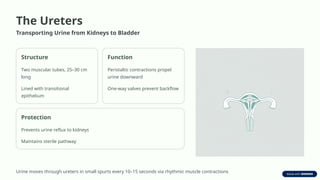
The Ureters
Transporting Urinefrom Kidneys to Bladder
Structure
Two muscular tubes, 25–30 cm
long
Lined with transitional
epithelium
Function
Peristaltic contractions propel
urine downward
One-way valves prevent backflow
Protection
Prevents urine reflux to kidneys
Maintains sterile pathway
Urine moves through ureters in small spurts every 10–15 seconds via rhythmic muscle contractions
6.
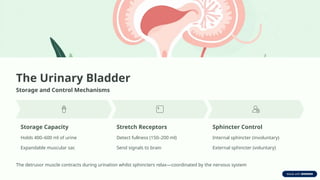
The Urinary Bladder
Storageand Control Mechanisms
Storage Capacity
Holds 400–600 ml of urine
Expandable muscular sac
Stretch Receptors
Detect fullness (150–200 ml)
Send signals to brain
Sphincter Control
Internal sphincter (involuntary)
External sphincter (voluntary)
The detrusor muscle contracts during urination whilst sphincters relax—coordinated by the nervous system
7.
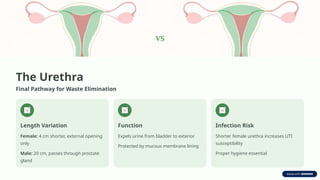
The Urethra
Final Pathwayfor Waste Elimination
Length Variation
Female: 4 cm shorter, external opening
only
Male: 20 cm, passes through prostate
gland
Function
Expels urine from bladder to exterior
Protected by mucous membrane lining
Infection Risk
Shorter female urethra increases UTI
susceptibility
Proper hygiene essential
8.
Additional Excretory Processes
Lungs,Skin, and Liver
Lungs
Remove: carbon dioxide, water vapour
Process: gas exchange during respiration
Volume: exhale ~200 ml water daily
Skin
Remove: water, salts, small amounts of urea
Process: sweat gland secretion
Function: thermoregulation and excretion
Liver
Remove: bile pigments, cholesterol
Process: converts toxic ammonia to urea
Role: detoxification and metabolism
These organs work synergistically with kidneys to maintain metabolic balance and eliminate diverse waste products
9.
Common Disorders ofthe Excretory System
Kidney Stones
Cause: mineral crystal formation
Symptoms: severe pain, blood in
urine, nausea
Urinary Tract Infections
(UTIs)
Cause: bacterial infection
Symptoms: burning sensation,
frequent urination, fever
Chronic Kidney Disease
Cause: diabetes, hypertension,
prolonged damage
Symptoms: fatigue, swelling,
reduced urine output
Renal Failure
Cause: sudden or gradual kidney
function loss
Symptoms: toxin build-up,
requires dialysis or transplant
Bladder Incontinence
Cause: weakened sphincter
muscles
Symptoms: involuntary urine
leakage
Early detection through regular check-ups can prevent progression of many excretory system disorders
10.
Maintaining Healthy KidneyFunction
Prevention Strategies
Stay Hydrated
Drink 2–3 litres of water daily to flush toxins and prevent stone formation
Balanced Diet
Reduce salt, processed foods; increase fruits, vegetables, and whole grains
Regular Exercise
Maintain healthy weight and blood pressure through physical activity
Monitor Health
Regular blood pressure and blood sugar checks; annual kidney function tests
Avoid Overmedication
Limit NSAIDs and consult doctors before taking supplements
Prevention is better than cure—simple lifestyle modifications can protect kidney health for life