Ahmed Maher Khalifa
Agenda
 Introduction
 Challenges facing future cities
 Infrastructure
 Water
 Population Increase
 Energy
 Going Green
 Conclusion
Introduction
 Challenges facing major cities aremanyandwith the
  use of technology, good planning and hard work, they
  can survive.
 Maximizing the use of technology to increase the
  quality of life.
 The more technology evolves the easier it gets to
  overcome challenges, yet the question of affordability
  needs an answer
Challenges
 Building solid infrastructures
 Limited water resources
 Migration tocities
 Maximizing use of technology to find new waysof
  generating energy
 Increasing Pollution
Infrastructure
 The need for reliable and sustainable infrastructure
 Hosting major sports events lead to infrastructure
  investments
 Creating and offering an advanced security system for
  people to feel safe and protected
 Investing inaffordablehealthcare system
Water

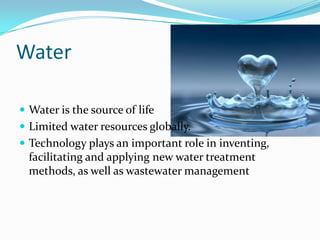
 Water is the source of life
 Limited water resources globally.
 Technology plays an important role in inventing,
  facilitating and applying new water treatment
  methods, as well as wastewater management
Population Increase
 Improvedtraffic systems to absorb increase
 Buildingreliable and efficient public transportations
 Electric vehicles are more environment friendly /“
  green “—major cities should adopt such
  transportation method.
 Efficient airports to accommodate larger traffic.
Energy
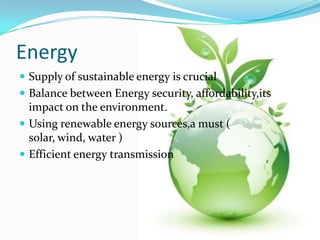
 Supply of sustainable energy is crucial
 Balance between Energy security, affordability,its
  impact on the environment.
 Using renewable energy sources,a must (
  solar, wind, water )
 Efficient energy transmission
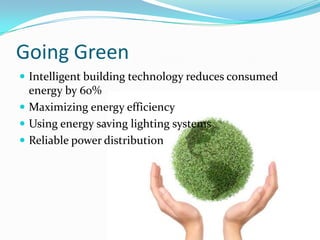
Going Green
 Intelligent building technology reduces consumed
  energy by 60%
 Maximizing energy efficiency
 Using energy saving lighting systems
 Reliable power distribution
Conclusion
Challenges :

 Increasing quality of life in cities


 Lack of Water resources and energy must be addressed
The GMC/IE MBA Presentation

The GMC/IE MBA Presentation

  • 1.
  • 2.
    Agenda  Introduction  Challengesfacing future cities  Infrastructure  Water  Population Increase  Energy  Going Green  Conclusion
  • 3.
    Introduction  Challenges facingmajor cities aremanyandwith the use of technology, good planning and hard work, they can survive.  Maximizing the use of technology to increase the quality of life.  The more technology evolves the easier it gets to overcome challenges, yet the question of affordability needs an answer
  • 4.
    Challenges  Building solidinfrastructures  Limited water resources  Migration tocities  Maximizing use of technology to find new waysof generating energy  Increasing Pollution
  • 5.
    Infrastructure  The needfor reliable and sustainable infrastructure  Hosting major sports events lead to infrastructure investments  Creating and offering an advanced security system for people to feel safe and protected  Investing inaffordablehealthcare system
  • 6.
    Water  Water isthe source of life  Limited water resources globally.  Technology plays an important role in inventing, facilitating and applying new water treatment methods, as well as wastewater management
  • 7.
    Population Increase  Improvedtrafficsystems to absorb increase  Buildingreliable and efficient public transportations  Electric vehicles are more environment friendly /“ green “—major cities should adopt such transportation method.  Efficient airports to accommodate larger traffic.
  • 8.
    Energy  Supply ofsustainable energy is crucial  Balance between Energy security, affordability,its impact on the environment.  Using renewable energy sources,a must ( solar, wind, water )  Efficient energy transmission
  • 9.
    Going Green  Intelligentbuilding technology reduces consumed energy by 60%  Maximizing energy efficiency  Using energy saving lighting systems  Reliable power distribution
  • 10.
    Conclusion Challenges :  Increasingquality of life in cities  Lack of Water resources and energy must be addressed