Peru
Introduction
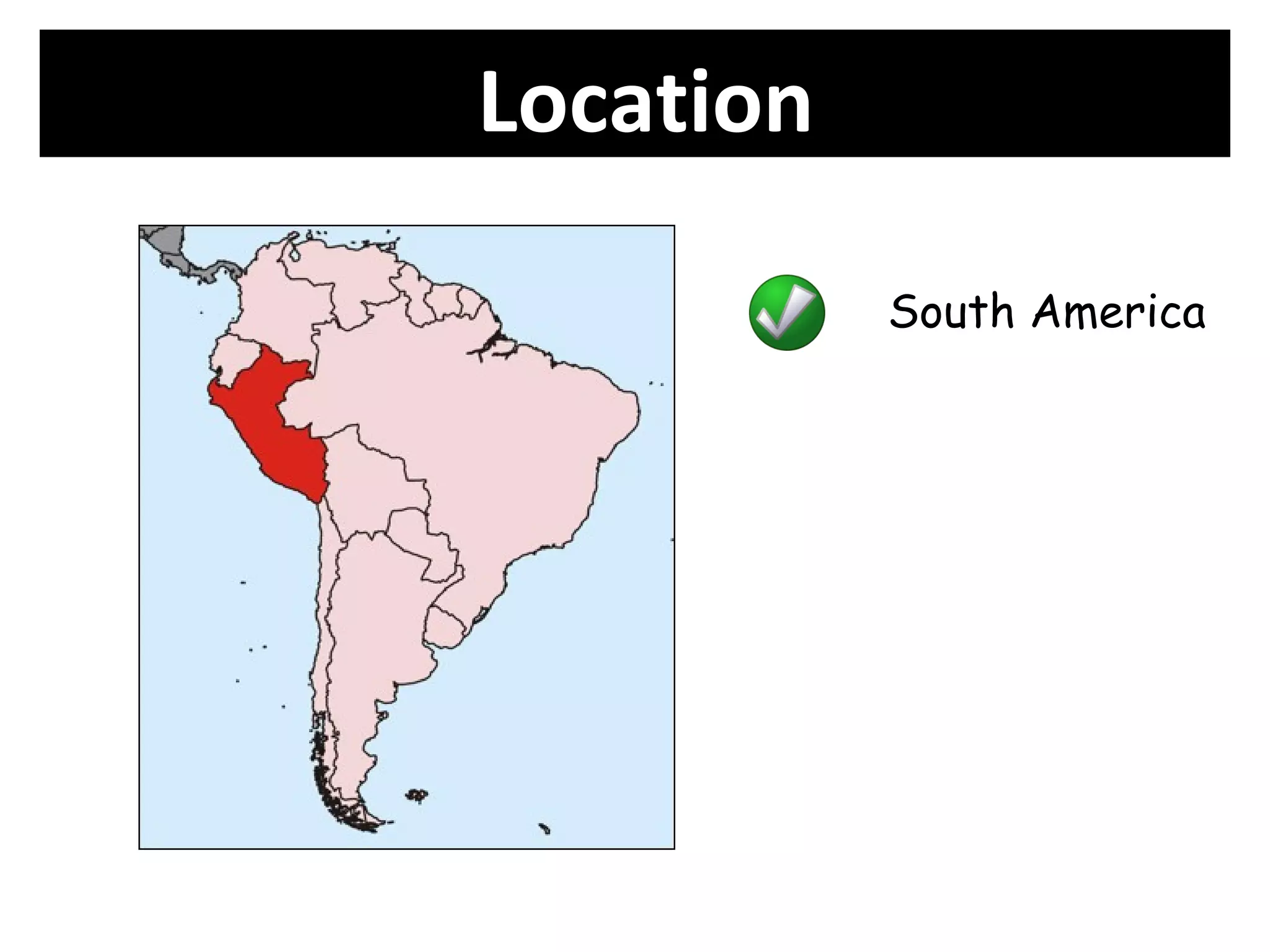
Location

           South America
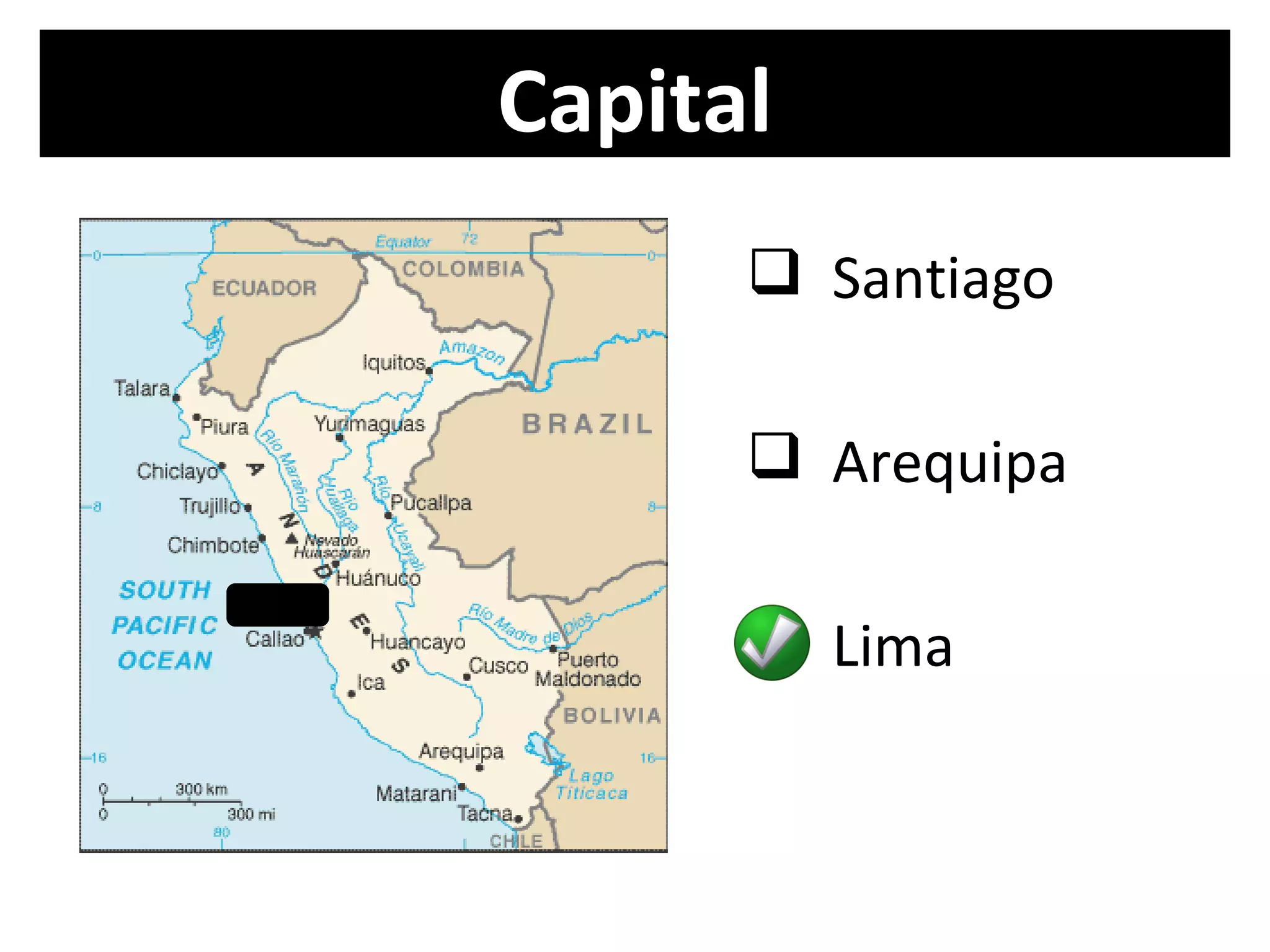
Capital
       Santiago

       Arequipa

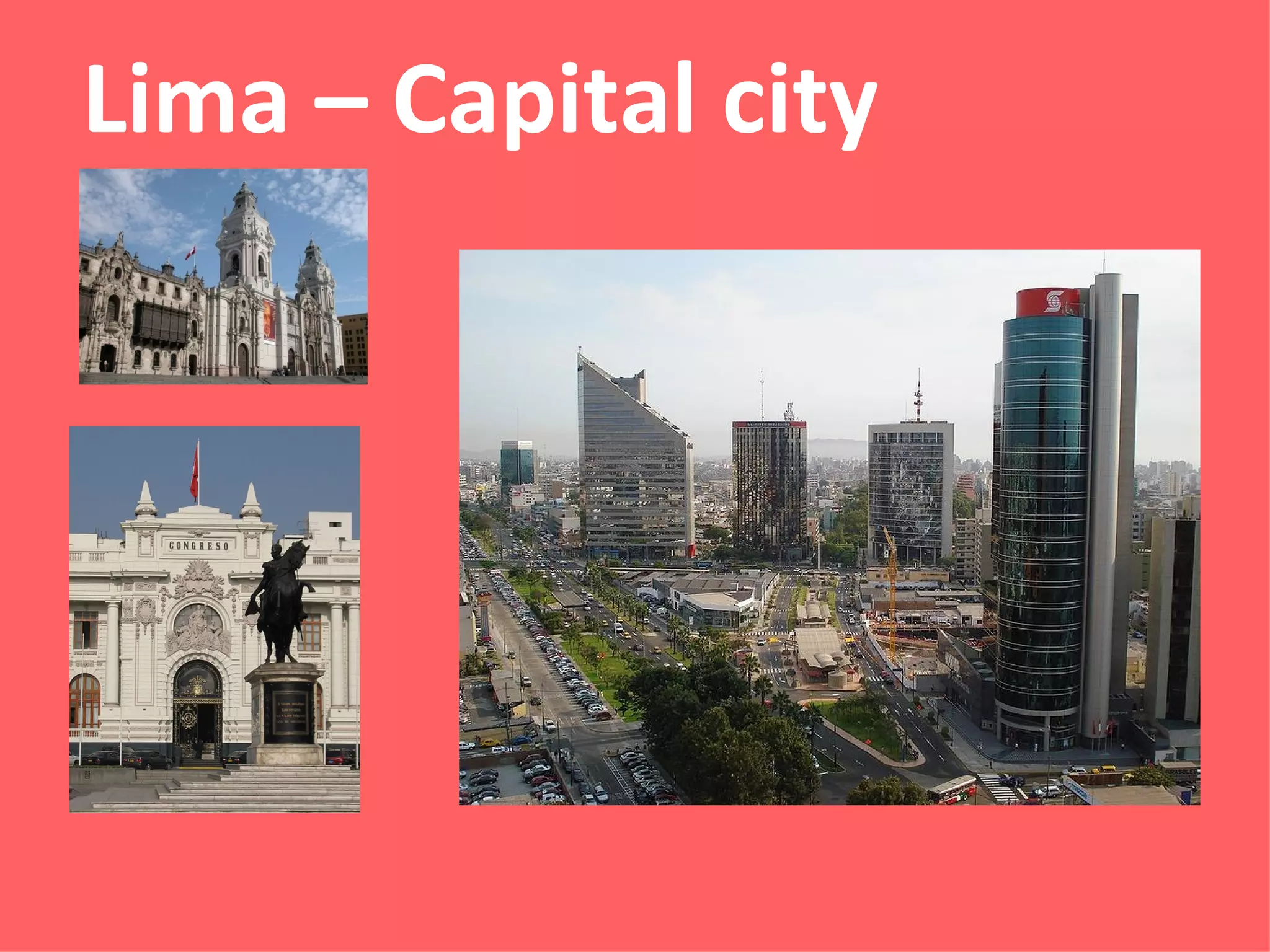
       Lima
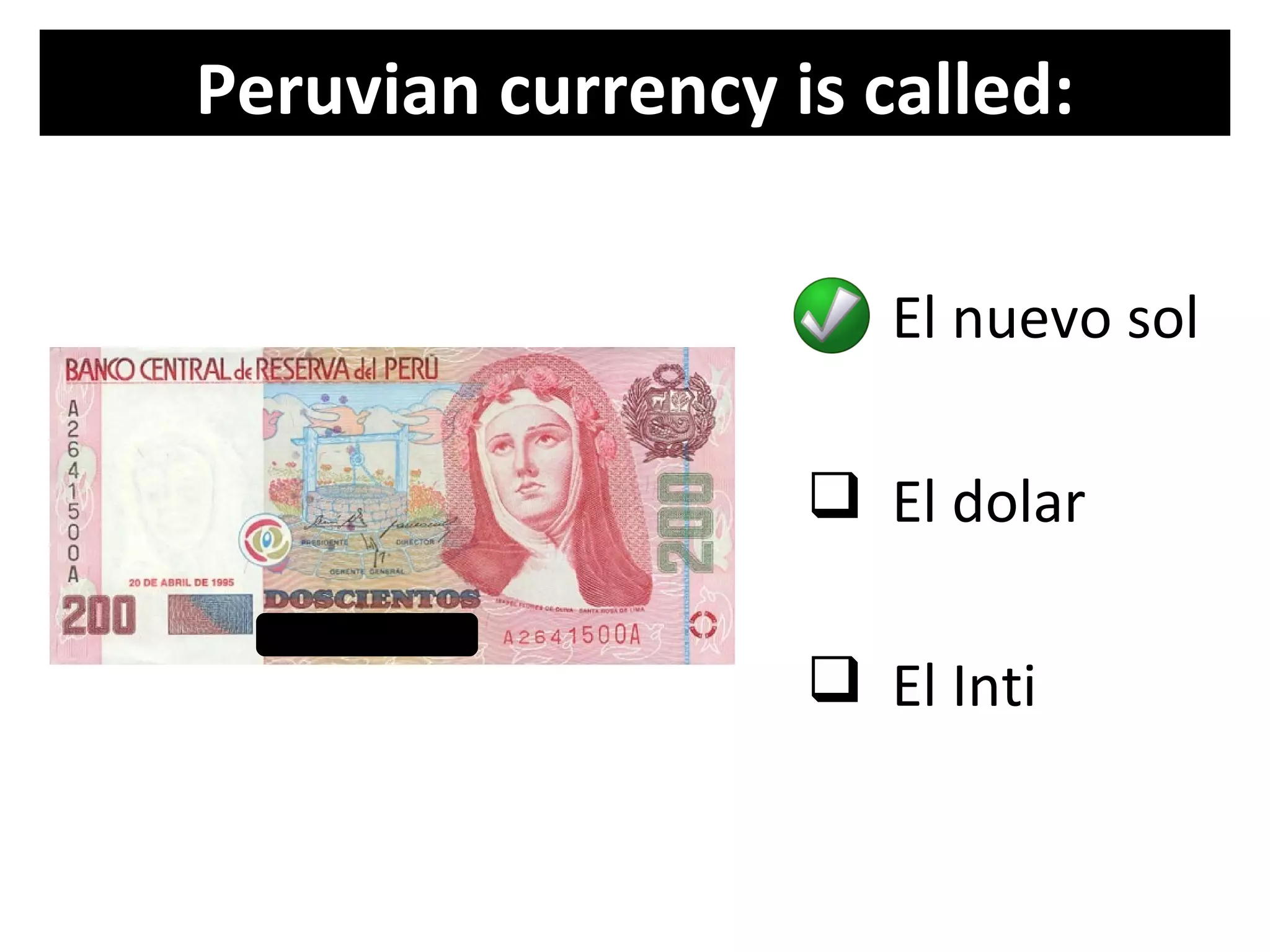
Peruvian currency is called:

                    El nuevo sol

                    El dolar

                    El Inti
Which languages are
     spoken in Peru?
Rimaykullayki    Spanish and English
     !           Spanish and
                 Quechua
                 Spanish y
    ¡Hola!
                 Portuguese
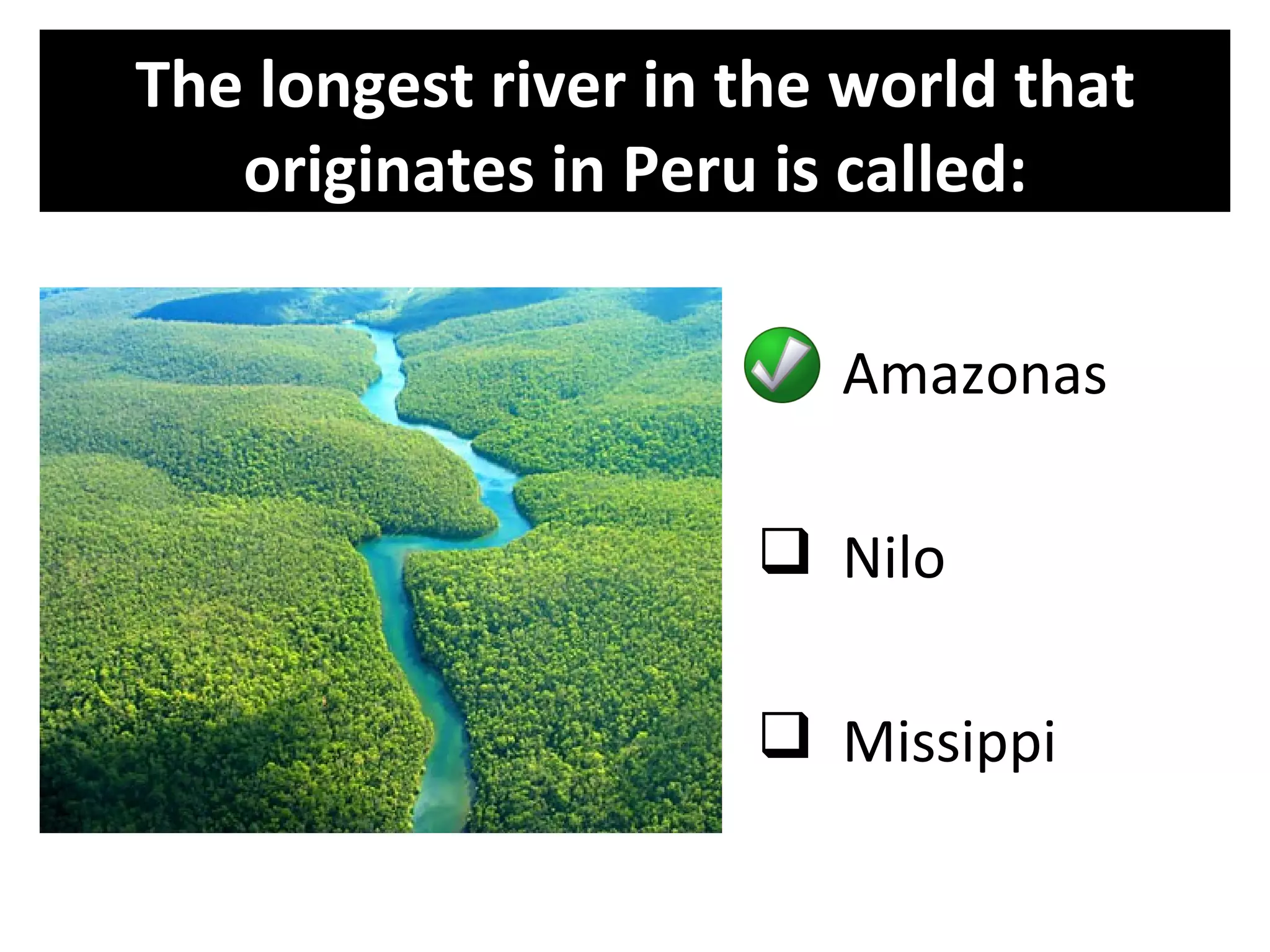
The longest river in the world that
   originates in Peru is called:

                      Amazonas

                      Nilo

                      Missippi
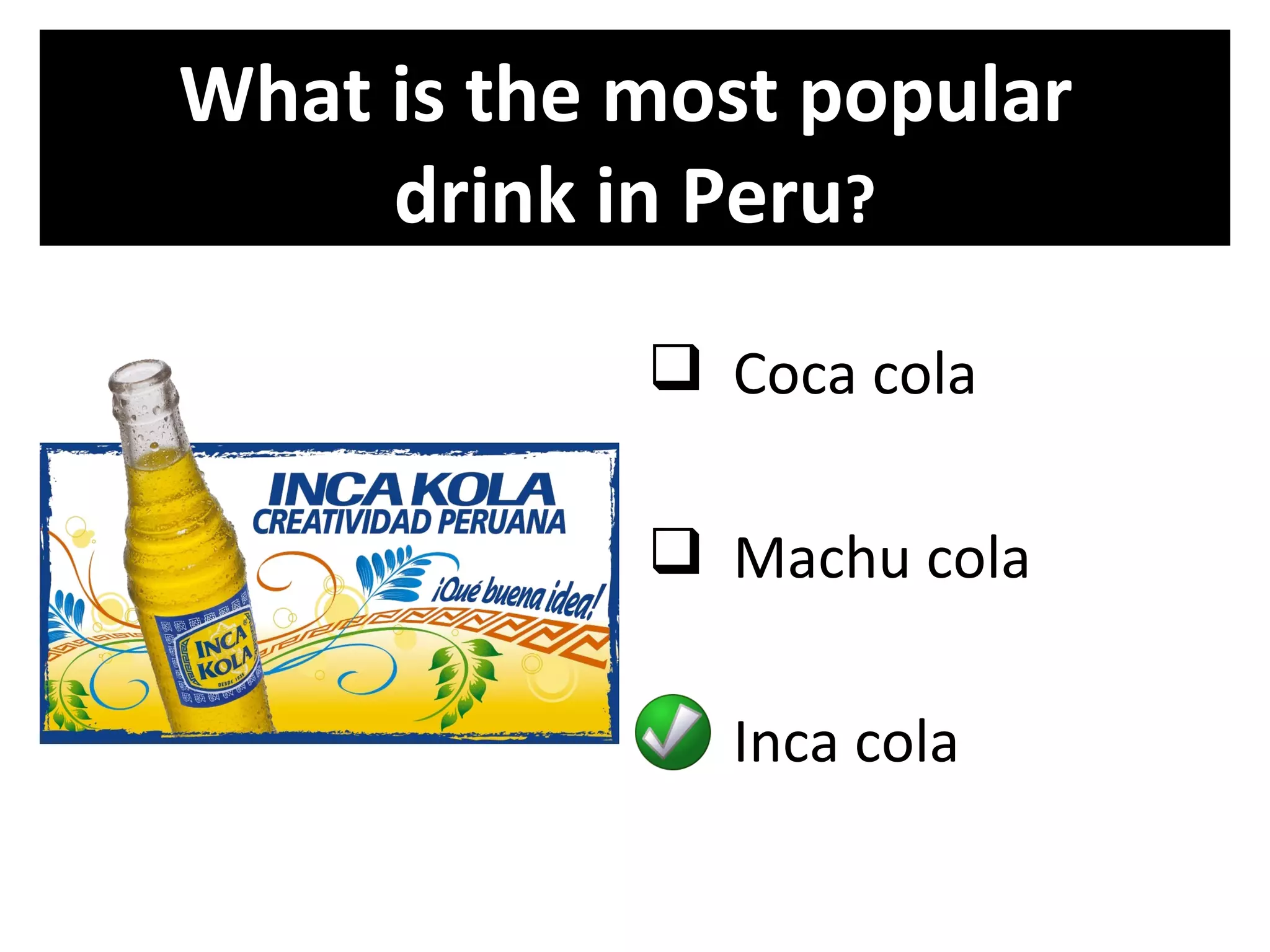
What is the most popular
     drink in Peru?
             Coca cola

             Machu cola

             Inca cola
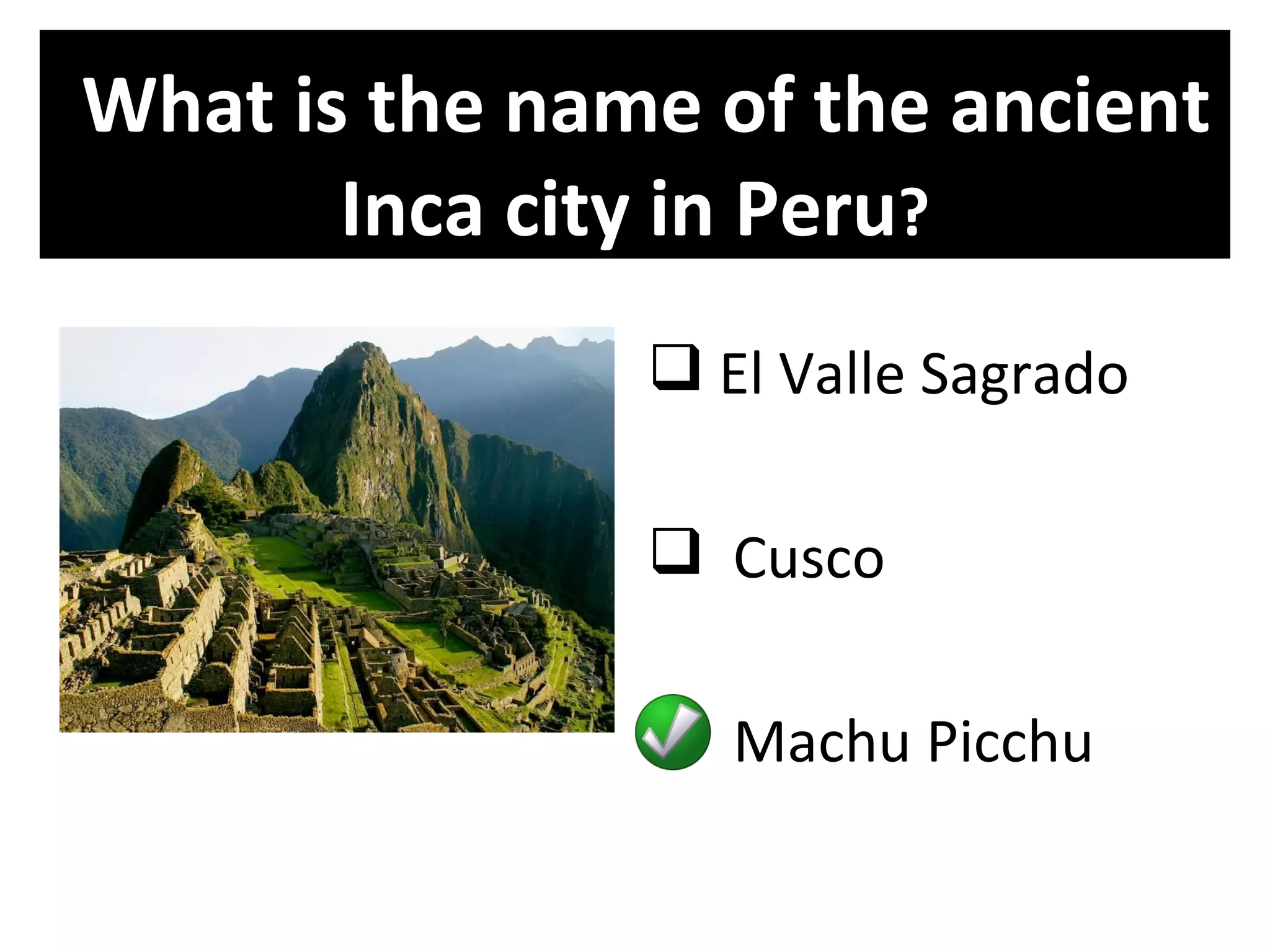
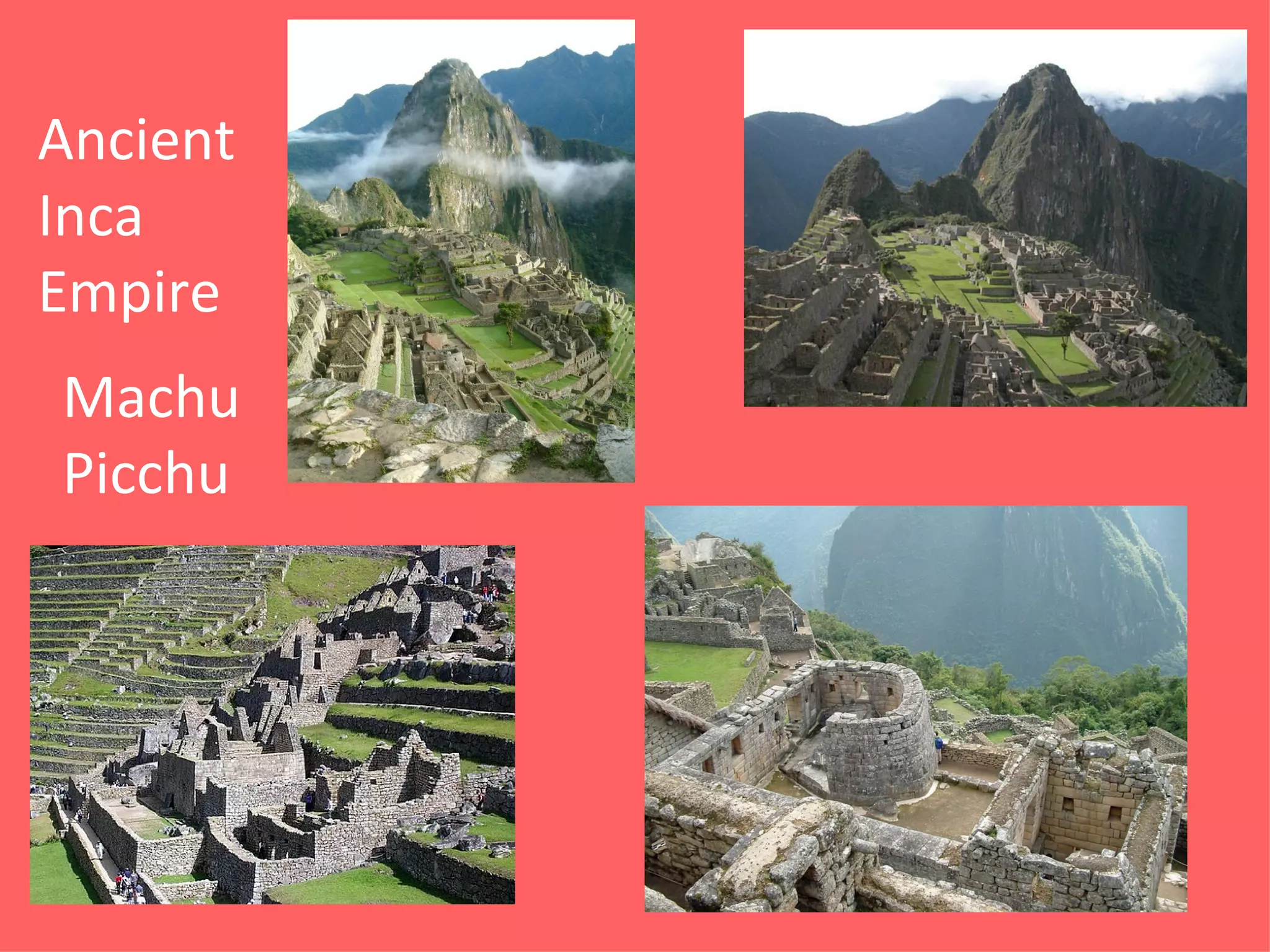
What is the name of the ancient
       Inca city in Peru?
                El Valle Sagrado

                Cusco

                Machu Picchu
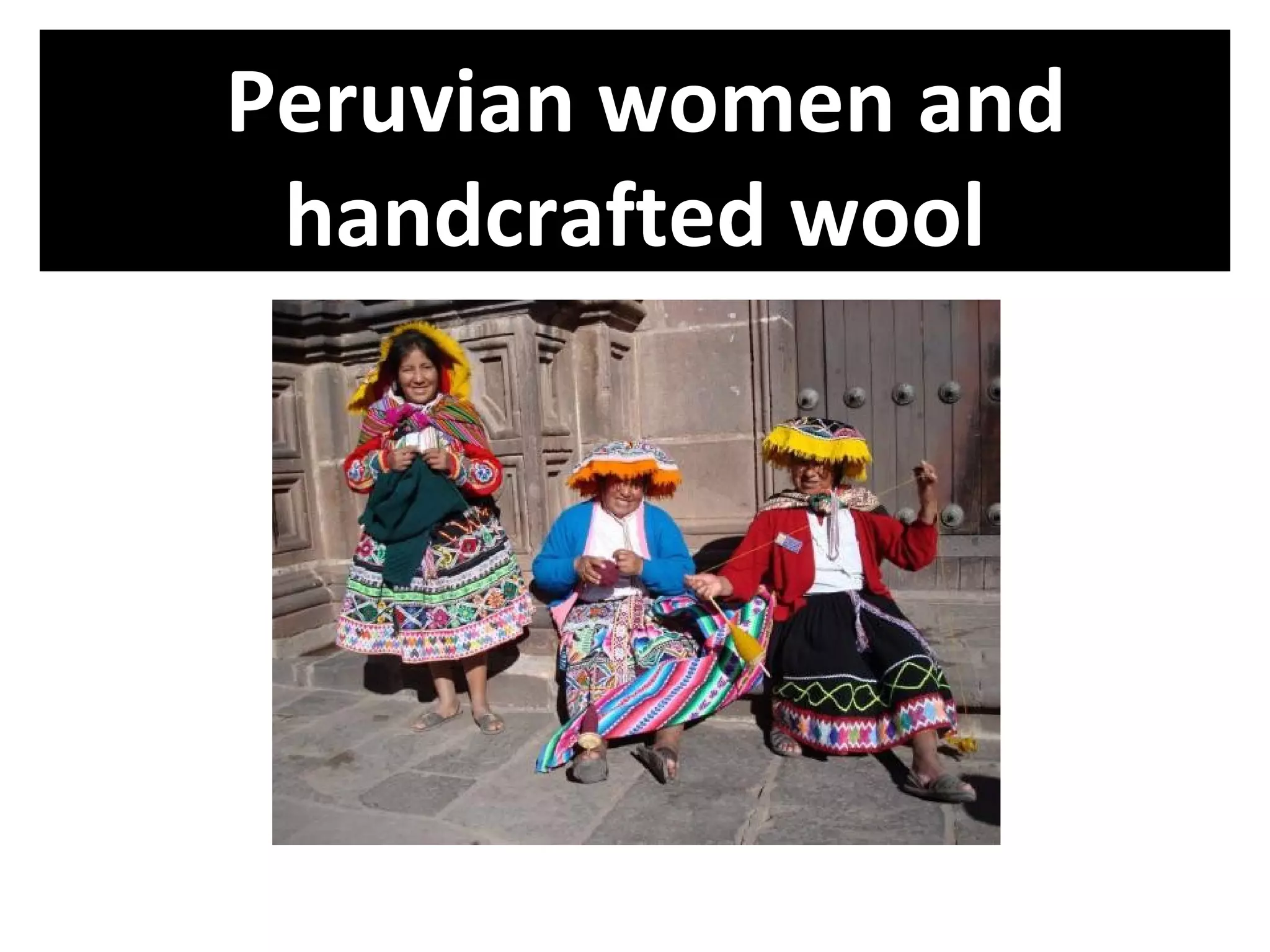
Peruvian women and
 handcrafted wool
Ancient
Inca
Empire
Machu
Picchu
Lima – Capital city
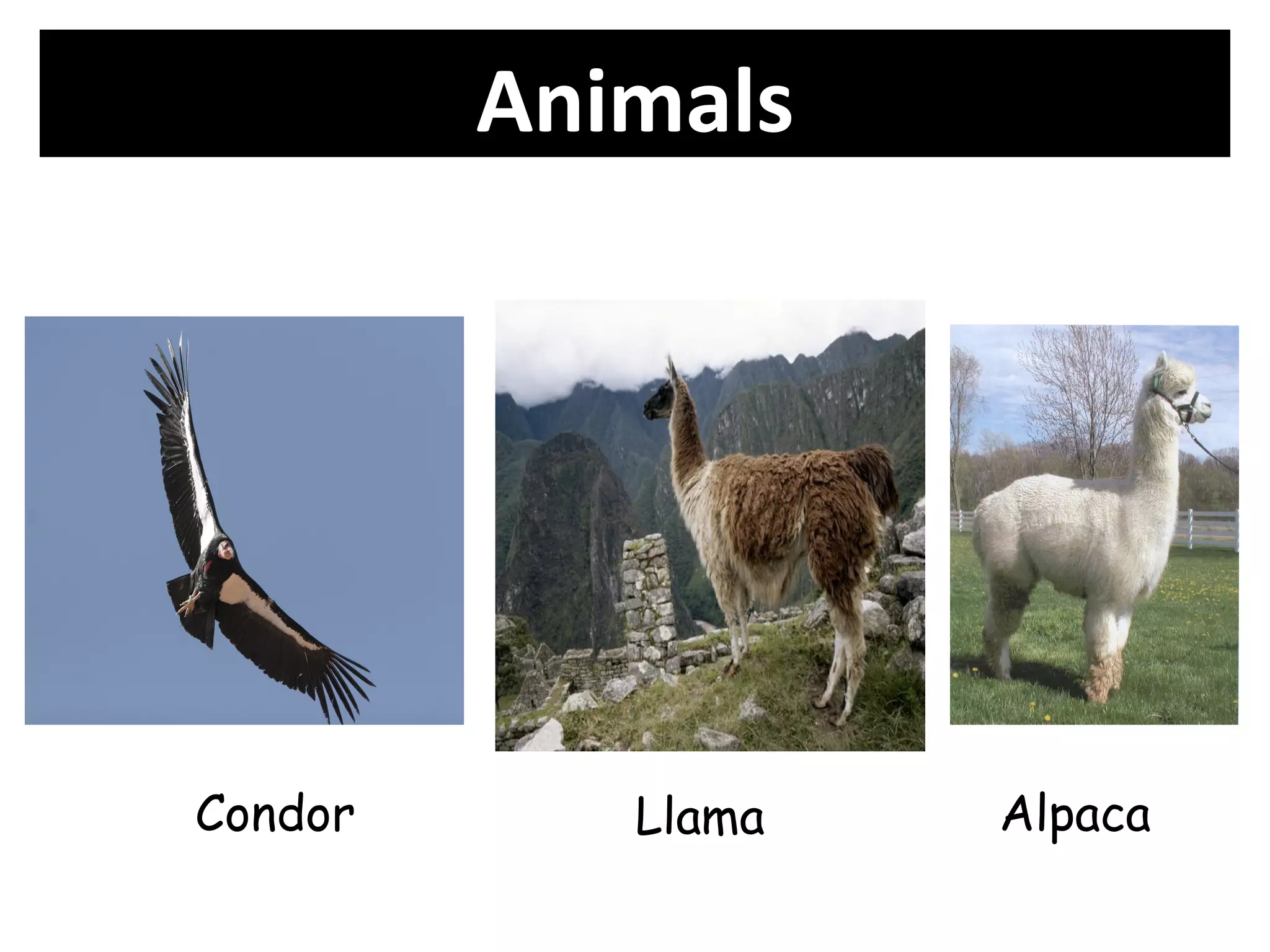
Animals


Condor      Llama   Alpaca
The frog and the condor
       A Peruvian tale
The Frog and the Condor
                  A peruvian tale


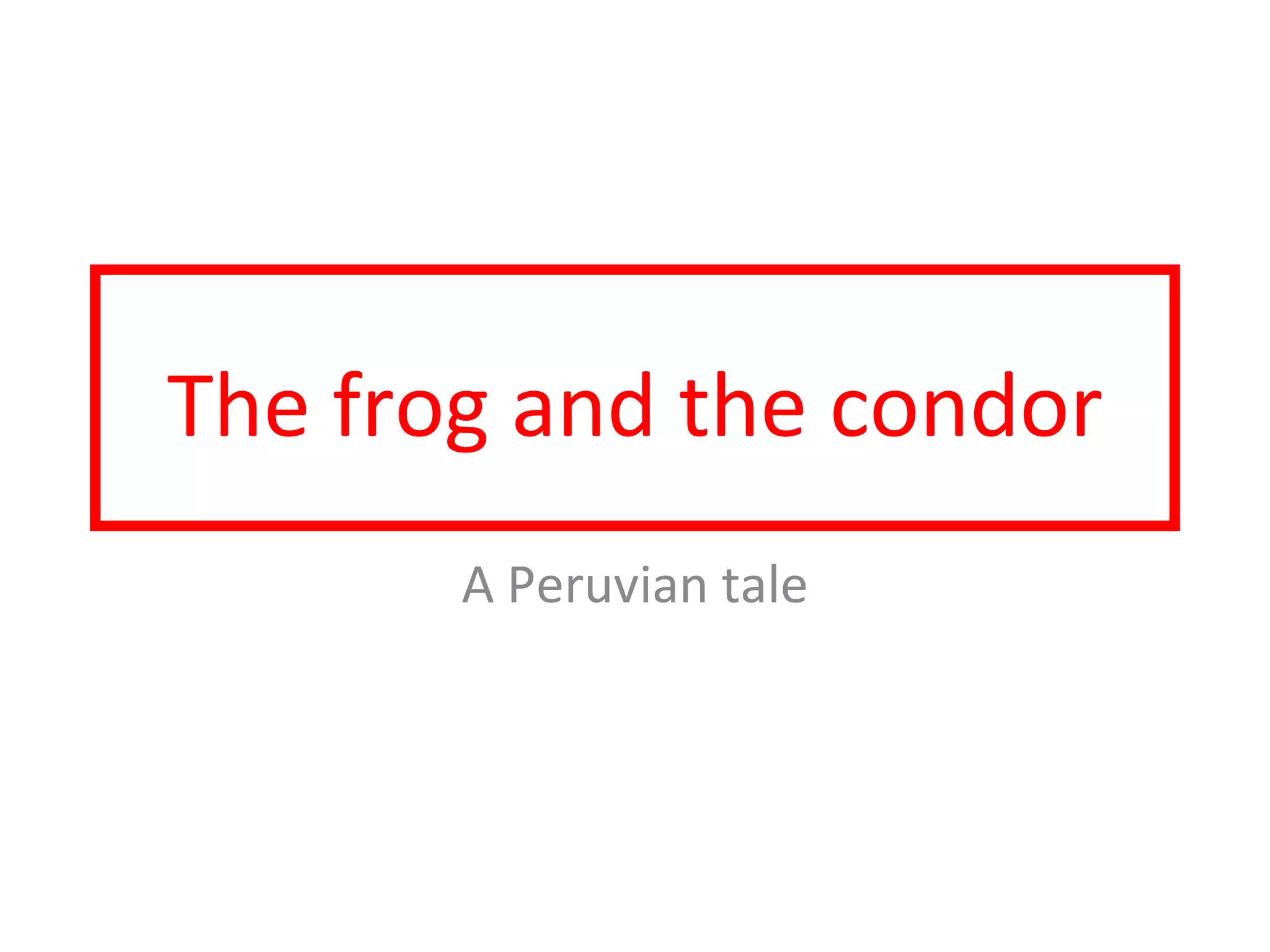
        High in the Andes Mountains there
        once lived a frog in a cool stream.

This poor frog was born not like the others - her
front right leg was nearly twice as long as her left
one. "If only I had two perfect legs like my
brothers and sisters," the frog bemoaned
whenever she caught her limping reflection in the
rushing waters
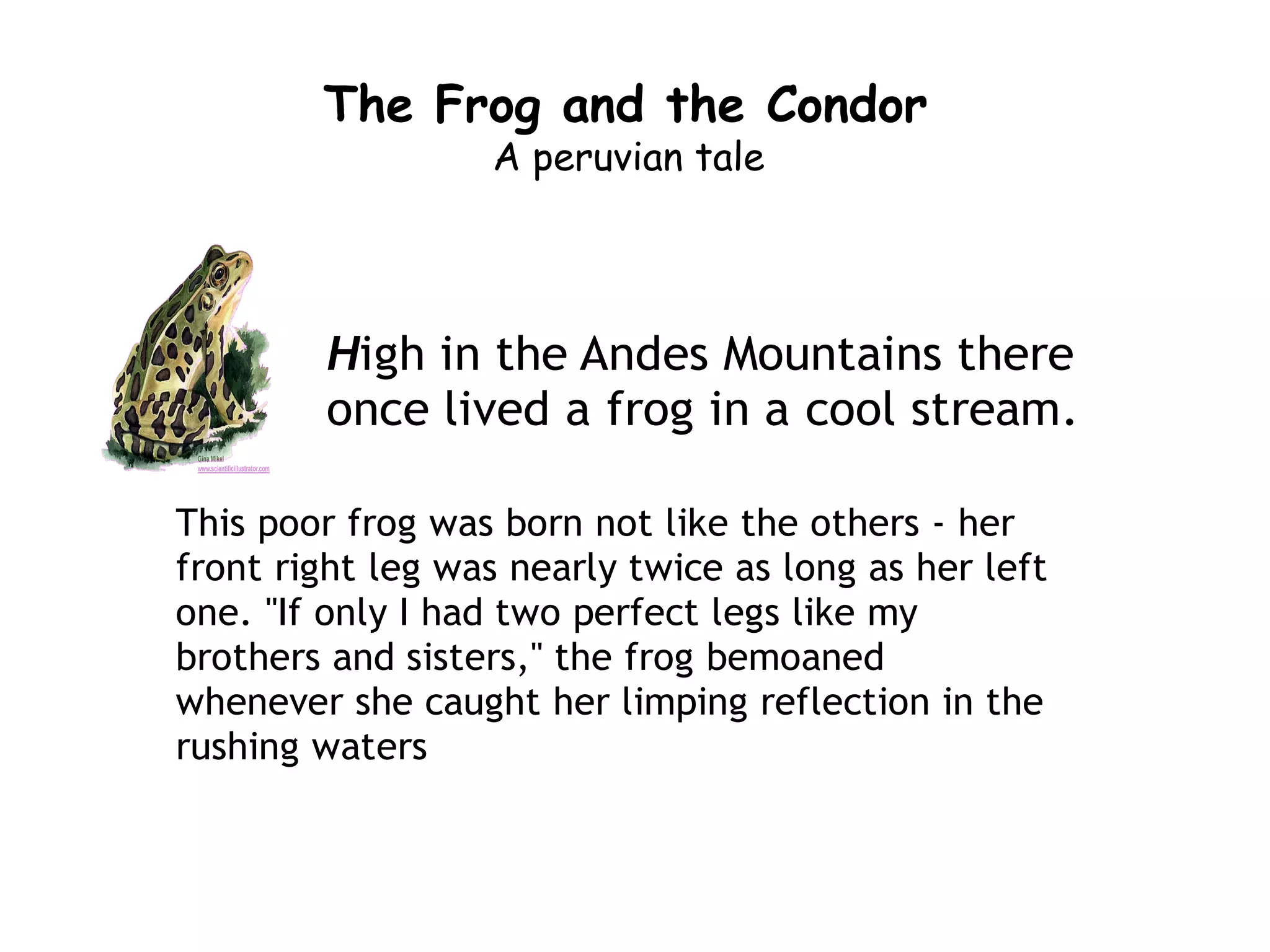
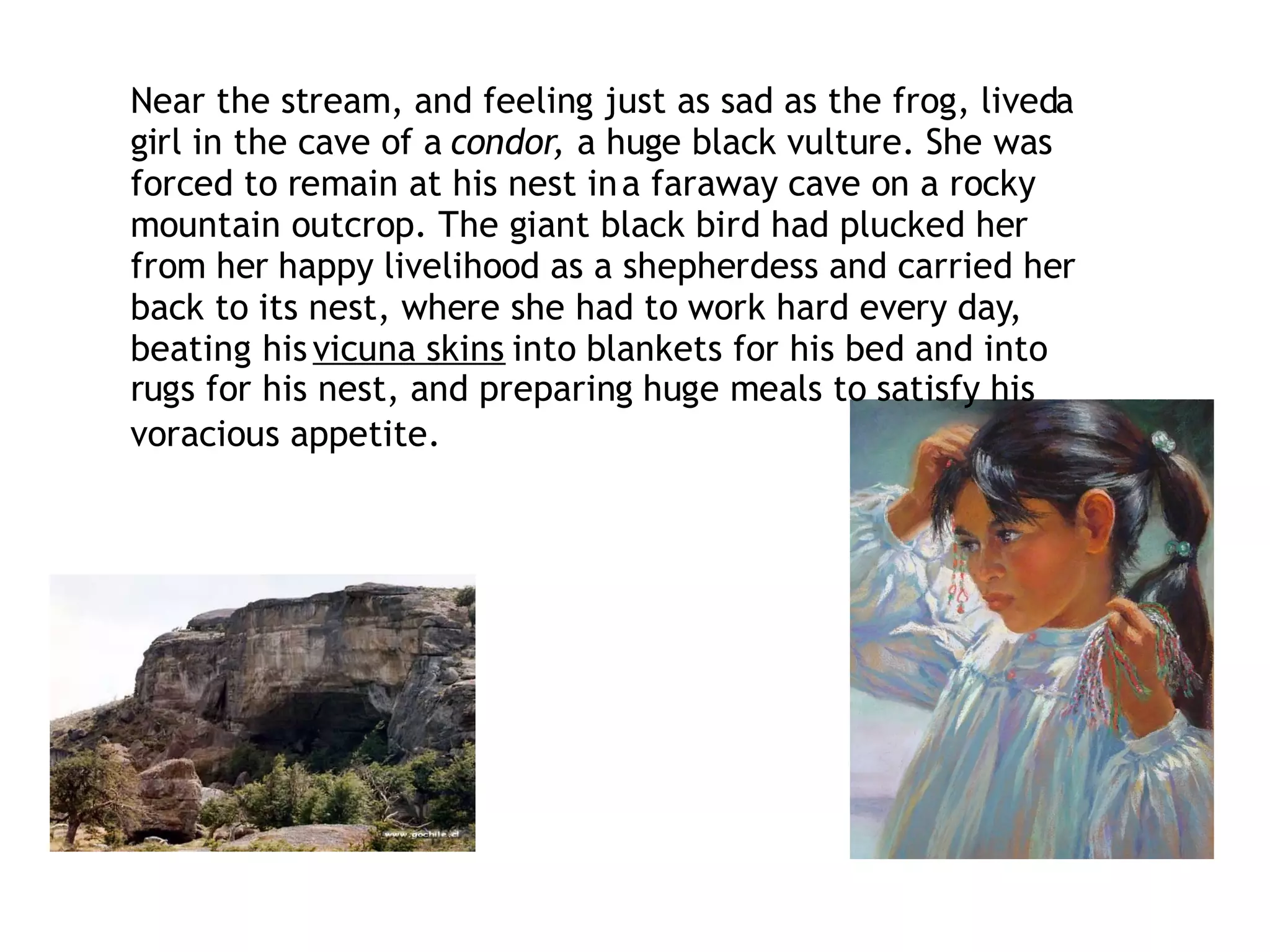
Near the stream, and feeling just as sad as the frog, liveda
girl in the cave of a condor, a huge black vulture. She was
forced to remain at his nest in a faraway cave on a rocky
mountain outcrop. The giant black bird had plucked her
from her happy livelihood as a shepherdess and carried her
back to its nest, where she had to work hard every day,
beating his vicuna skins into blankets for his bed and into
rugs for his nest, and preparing huge meals to satisfy his
voracious appetite.
The frog overhead the conversation between the
                      condor and the girl
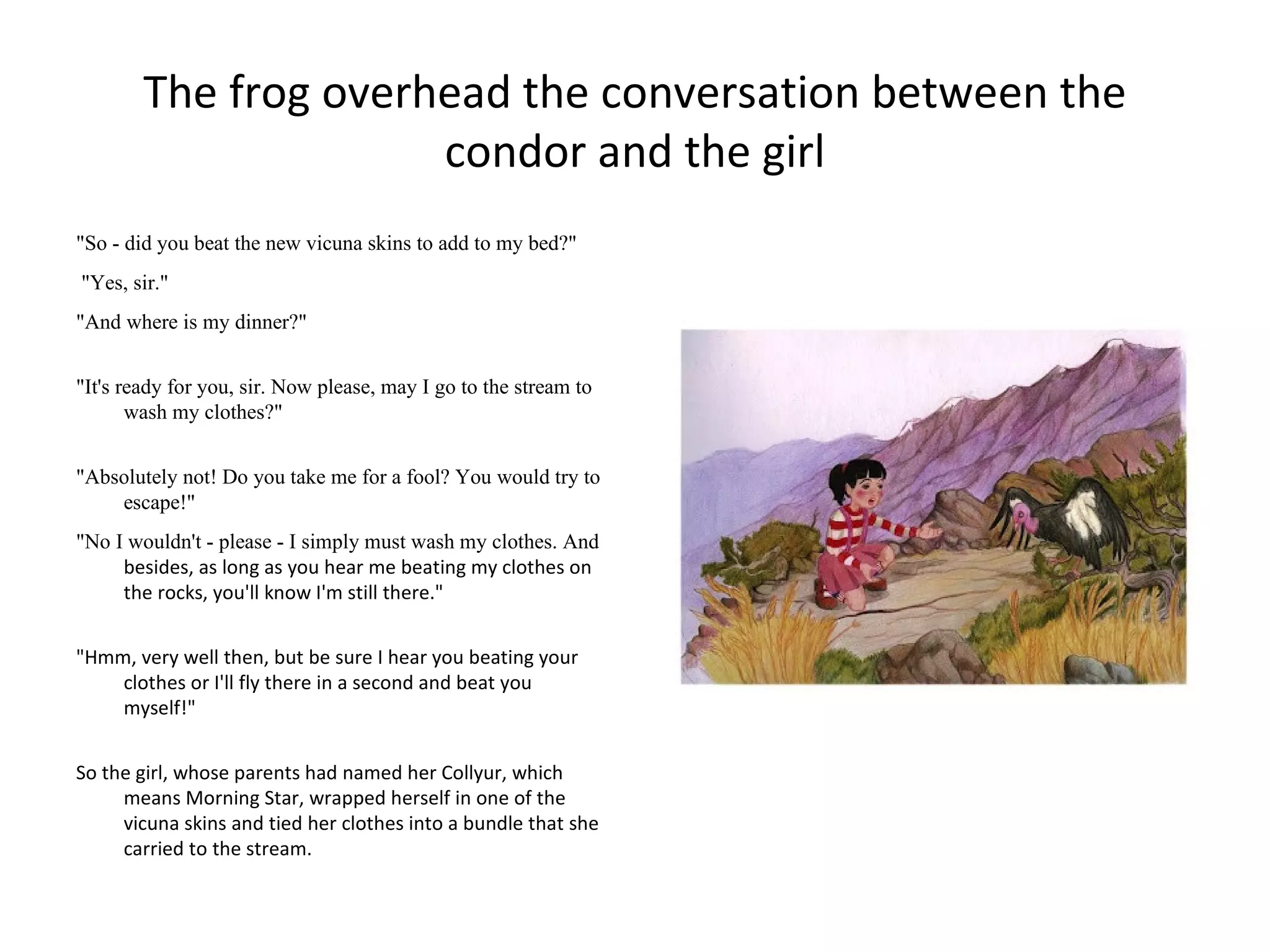
"So - did you beat the new vicuna skins to add to my bed?"
"Yes, sir."
"And where is my dinner?"


"It's ready for you, sir. Now please, may I go to the stream to
       wash my clothes?"


"Absolutely not! Do you take me for a fool? You would try to
    escape!"
"No I wouldn't - please - I simply must wash my clothes. And
     besides, as long as you hear me beating my clothes on
     the rocks, you'll know I'm still there."


"Hmm, very well then, but be sure I hear you beating your
    clothes or I'll fly there in a second and beat you
    myself!"


So the girl, whose parents had named her Collyur, which
     means Morning Star, wrapped herself in one of the
     vicuna skins and tied her clothes into a bundle that she
     carried to the stream.
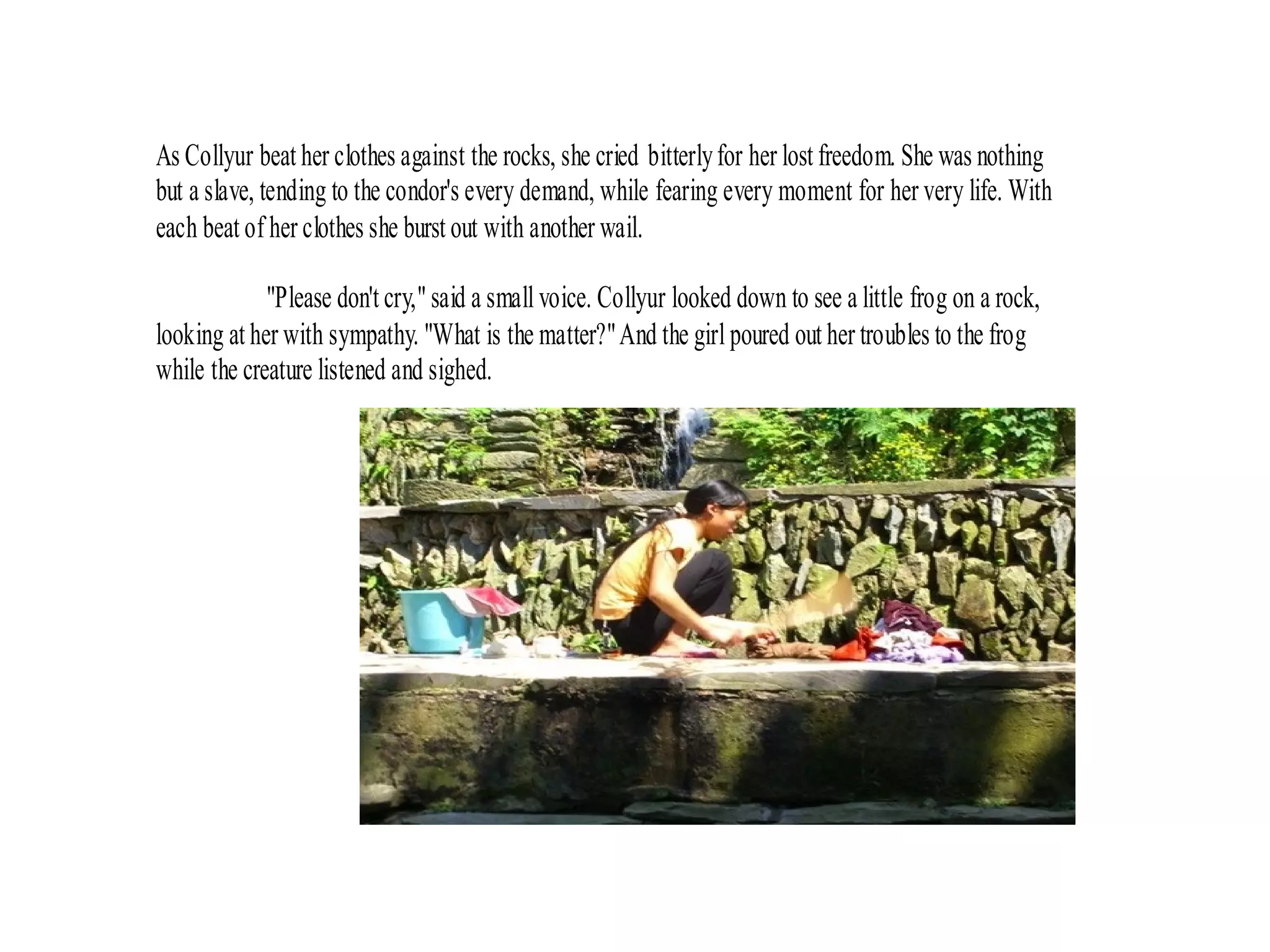
As Collyur beat her clothes against the rocks, she cried bitterly for her lost freedom. She was nothing
but a slave, tending to the condor's every demand, while fearing every moment for her very life. With
each beat of her clothes she burst out with another wail.

             "Please don't cry," said a small voice. Collyur looked down to see a little frog on a rock,
looking at her with sympathy. "What is the matter?" And the girl poured out her troubles to the frog
while the creature listened and sighed.
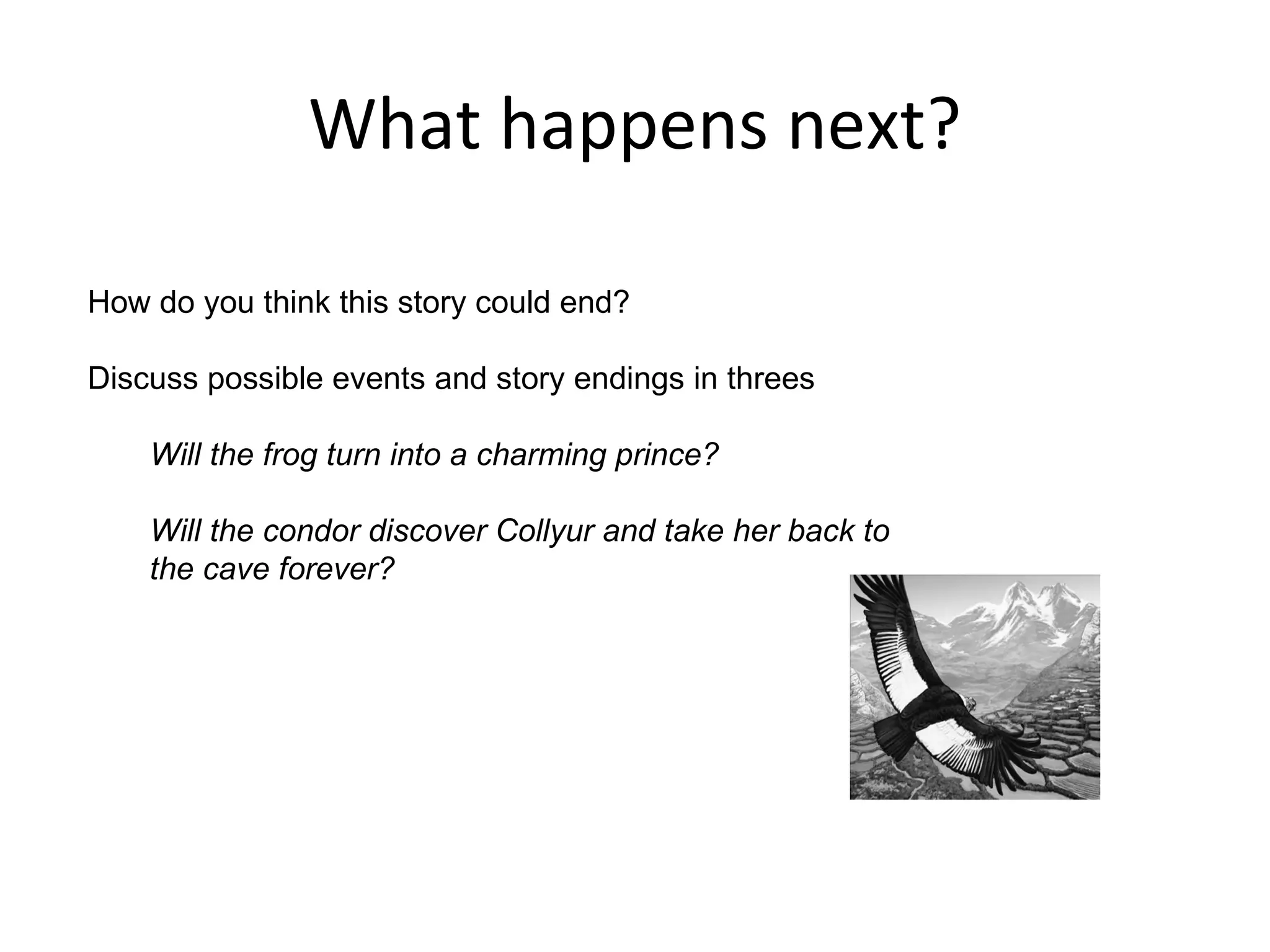
What happens next?

How do you think this story could end?

Discuss possible events and story endings in threes

    Will the frog turn into a charming prince?

    Will the condor discover Collyur and take her back to
    the cave forever?
Writing
Write two paragraphs (three for challenge)
- Describing the events that may follow
and
- A possible ending.


 1. Connectives and time expressions
    (then, afterwards, however, finally...)
 2. Adjectives to enhance your sentences
    (astonishing, glowing, charming, dull, cunning)
 3. Describe in detail
 4. Accurate and varied punctuation
Plenary
Comment on writings

Talk to a partner and say what´s wrong

Videos about Peru:
Machu Picchu doc
http://video.nationalgeographic.com/video/kids/people-places-kids/peru-machupicchu-kids/

Visit Peru
http://youtu.be/unosyHxNjhs

El cóndor pasa
http://youtu.be/CtUZzCe6-bk
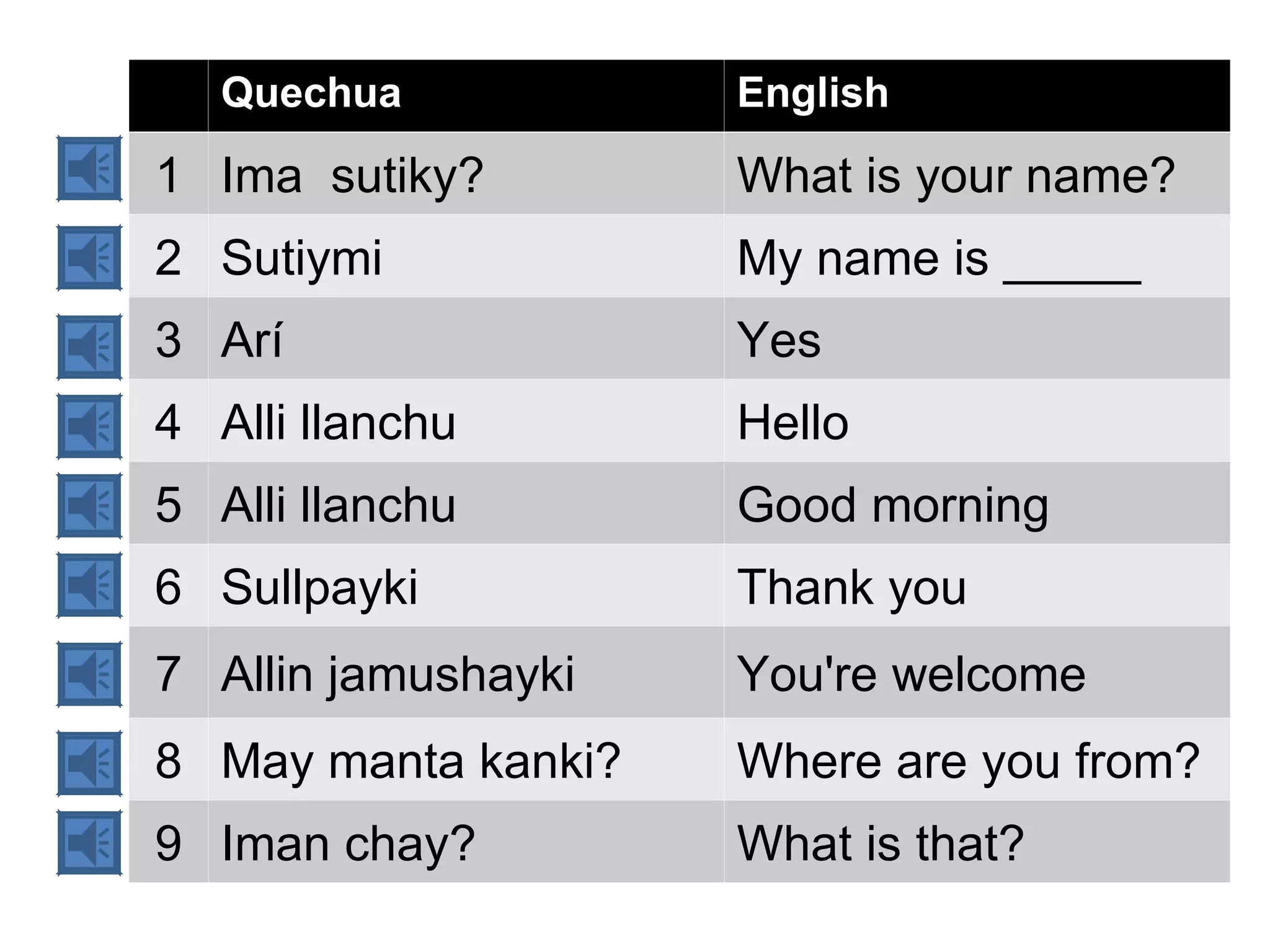
Quechua           English

1 Ima sutiky?        What is your name?
2 Sutiymi            My name is _____
3 Arí                Yes
4 Alli llanchu       Hello
5 Alli llanchu       Good morning
6 Sullpayki          Thank you
7 Allin jamushayki   You're welcome
8 May manta kanki?   Where are you from?
9 Iman chay?         What is that?

The Frog and the Condor

  • 1.
  • 2.
    Location South America
  • 3.
    Capital  Santiago  Arequipa  Lima
  • 4.
    Peruvian currency iscalled:  El nuevo sol  El dolar  El Inti
  • 5.
    Which languages are spoken in Peru? Rimaykullayki  Spanish and English !  Spanish and Quechua  Spanish y ¡Hola! Portuguese
  • 6.
    The longest riverin the world that originates in Peru is called:  Amazonas  Nilo  Missippi
  • 7.
    What is themost popular drink in Peru?  Coca cola  Machu cola  Inca cola
  • 8.
    What is thename of the ancient Inca city in Peru?  El Valle Sagrado  Cusco  Machu Picchu
  • 9.
    Peruvian women and handcrafted wool
  • 10.
  • 11.
  • 12.
    Animals Condor Llama Alpaca
  • 13.
    The frog andthe condor A Peruvian tale
  • 14.
    The Frog andthe Condor A peruvian tale High in the Andes Mountains there once lived a frog in a cool stream. This poor frog was born not like the others - her front right leg was nearly twice as long as her left one. "If only I had two perfect legs like my brothers and sisters," the frog bemoaned whenever she caught her limping reflection in the rushing waters
  • 15.
    Near the stream,and feeling just as sad as the frog, liveda girl in the cave of a condor, a huge black vulture. She was forced to remain at his nest in a faraway cave on a rocky mountain outcrop. The giant black bird had plucked her from her happy livelihood as a shepherdess and carried her back to its nest, where she had to work hard every day, beating his vicuna skins into blankets for his bed and into rugs for his nest, and preparing huge meals to satisfy his voracious appetite.
  • 16.
    The frog overheadthe conversation between the condor and the girl "So - did you beat the new vicuna skins to add to my bed?" "Yes, sir." "And where is my dinner?" "It's ready for you, sir. Now please, may I go to the stream to wash my clothes?" "Absolutely not! Do you take me for a fool? You would try to escape!" "No I wouldn't - please - I simply must wash my clothes. And besides, as long as you hear me beating my clothes on the rocks, you'll know I'm still there." "Hmm, very well then, but be sure I hear you beating your clothes or I'll fly there in a second and beat you myself!" So the girl, whose parents had named her Collyur, which means Morning Star, wrapped herself in one of the vicuna skins and tied her clothes into a bundle that she carried to the stream.
  • 17.
    As Collyur beather clothes against the rocks, she cried bitterly for her lost freedom. She was nothing but a slave, tending to the condor's every demand, while fearing every moment for her very life. With each beat of her clothes she burst out with another wail. "Please don't cry," said a small voice. Collyur looked down to see a little frog on a rock, looking at her with sympathy. "What is the matter?" And the girl poured out her troubles to the frog while the creature listened and sighed.
  • 18.
    What happens next? Howdo you think this story could end? Discuss possible events and story endings in threes Will the frog turn into a charming prince? Will the condor discover Collyur and take her back to the cave forever?
  • 19.
    Writing Write two paragraphs(three for challenge) - Describing the events that may follow and - A possible ending. 1. Connectives and time expressions (then, afterwards, however, finally...) 2. Adjectives to enhance your sentences (astonishing, glowing, charming, dull, cunning) 3. Describe in detail 4. Accurate and varied punctuation
  • 20.
    Plenary Comment on writings Talkto a partner and say what´s wrong Videos about Peru: Machu Picchu doc http://video.nationalgeographic.com/video/kids/people-places-kids/peru-machupicchu-kids/ Visit Peru http://youtu.be/unosyHxNjhs El cóndor pasa http://youtu.be/CtUZzCe6-bk
  • 21.
    Quechua English 1 Ima sutiky? What is your name? 2 Sutiymi My name is _____ 3 Arí Yes 4 Alli llanchu Hello 5 Alli llanchu Good morning 6 Sullpayki Thank you 7 Allin jamushayki You're welcome 8 May manta kanki? Where are you from? 9 Iman chay? What is that?

Editor's Notes

  • #5 200 nuevos soles are worth currently £47. For £1 you get 4.2 nuevos soles.
  • #6 Quechua Quechua is an Amerindian language (language spoken by the indigenous people of the Americas) native to South America and is related to Aymará. It was the official language of the Tawantinsuyu (Inca Empire). Quechua can be heard throughout South America, starting as far north as southern Colombia and Ecuador, Peru and Bolivia, and northwestern Argentina and northern Chile. In Colombia and Ecuador the dialect is widely different from the main branch and could almost be classified as another language, however it is not. Quechua had no written alphabet, but did have an accounting system based on khipu-strings. The khipu or quipu (meaning ‘knot’) strings were recording devices used by the Inca Empire. The khipu strings were made coloured cotton cords. On each cord a numeric value was represented by knots. These knots have not yet been fully deciphered, though some believe that the khipu are a primitive written language, and it is known that they were used for a number of purposes including taxes, census taking, and inventory. The following are some examples of Quechua words that have entered English through Spanish; coca, condor, guano, gaucho, jerky, Inca, llama, potato (from papa via patata), puma and quinoa. What is your name? - Imataq sutiyki? My name is _____ - ñuqap ... sutiymi Goodbye - rikunakusun yes - arí no - mana Hello - rimaykullayki, napaykullayki Good morning - windía How are you? - Ima hinalla? Please - allichu Thank you - añay Where are you from? - Maymantataq hamunki? You're welcome - ni imamanta What is that? - ima chayri?