The Five Love Languages
Teenagers
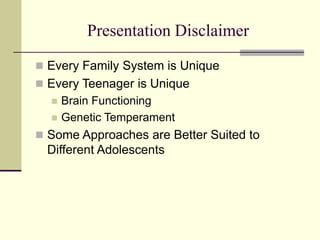
Presentation Disclaimer
 Every Family System is Unique
 Every Teenager is Unique
 Brain Functioning
 Genetic Temperament
 Some Approaches are Better Suited to
Different Adolescents
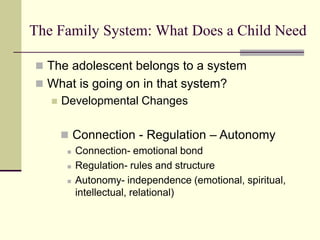
The Family System: What Does a Child Need
 The adolescent belongs to a system
 What is going on in that system?
 Developmental Changes
 Connection - Regulation – Autonomy
 Connection- emotional bond
 Regulation- rules and structure
 Autonomy- independence (emotional, spiritual,
intellectual, relational)
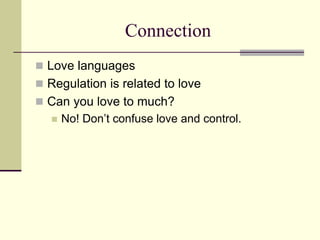
Connection
 Love languages
 Regulation is related to love
 Can you love to much?
 No! Don’t confuse love and control.
Love Languages
 Everyone has a Love Tank
 We Receive Love Differently
 There are Five Primary Love Languages
 Words of Affirmation
 Physical Touch
 Quality Time
 Acts of Service
 Gifts
30 Second Love Language Test
 I feel loved when people express how grateful
they are for me, and for the simple things I do
 I feel especially loved when a person gives me
undivided attention and spends time with me
 I feel especially loved by someone who brings
me gifts and other tangible expressions of love
 I feel especially loved when others do things for
me
 I feel especially loved when a person expresses
love through physical contact
Words of Affirmation
Love Language #1
 During and Unsure Time They Need to be
Assured
 Words of Praise (focus on behavior)
 Be Sincere
 Be Specific
 Words of Affection (focus on teenager)
 “I love you”
 When and Where
 “I enjoy you”
 “You’ are _____ (great, wonderful, …..”
Physical Touch
Love Language #2
 Time
 The anti-touch time
 Place
 Public Settings (autonomy)
 Appropriate Manner for Physical Touch
 Hug, Back Rub, Hold Hands, Pats etc.
 Just because you like it doesn’t mean they do
 Example: “I feel like a kitty”
 Physical Touch to Correct
 A Word to Fathers
 Daughters- Physical Dev.; Sons- Boy Code
 Abuse
Quality Time
Love Language #3
 Challenges
 Movement Towards Peers is Normal
 Giving Undivided Attention
 Challenges (Time and Focus)
 Proximity is not Togetherness
 Sports
 Focus on the Teenager
 Quality Activities (Plan with Them)
 Focus on Hearing not Saying (next slide)
Guidelines for Quality Conversations
 Maintain Eye Contact
 Don’t Multitask
 Listen for Feelings
 Observe Body
Language
 Refuse to Interrupt
 Ask Reflective
Questions
 Express Understanding
 Ask Permission to
Share Your Perspective
 Rate Differences
 Average rate of speech
is125 to 175 words per
minute whereas the brain
can process 500 to 1,000
words a minute (challenge
to not wander in our
thoughts)
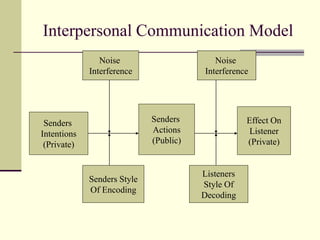
Interpersonal Communication Model
Senders
Intentions
(Private)
Noise
Interference
Effect On
Listener
(Private)
Senders
Actions
(Public)
Noise
Interference
Senders Style
Of Encoding
Listeners
Style Of
Decoding
Acts of Service
Love Language #4
 Service
 Attitude
 Daily and Mundane Acts: Duty or Loving Service?
 Manipulation or Behavior Modification
 I will do _____ if you will ______.
 Modeling and Reciprocal Love
 Teach Independence
 Guideline: Do acts of service for them that they
cannot do for themselves
 Family Game
 “I really appreciate that…”
Gifts
Love Language #5
 Gift- a visible, tangible evidence of emotional
love
 Greek word for gift (charis)- undeserved gift
 Undeserved, Not a reward, not a manipulation
 Gift Giving and the Ceremony
 Jacob “We love you and want you to have this”
 Jesse “We love you and would like to pay for..”
 Counterfeit Gifts- gifts designed to take the
place of true love
 You Cannot Buy Love
Discovering Their Love Language
 Parental Flexibility
 Developmental Changes
 Mood Changes Due to Environment
 Steps to Discovery
 Ask Questions
 What would make our relationship better?
 Make Observations
 How do they show love?
 Experiment
 Treatment= Tx (Tx1 then Tx2 then Tx3 etc…)
 Give them a choice between Tx1
Discovering Their Love Language
 You Possess the Power to Determine a
Child’s Love Language by What You Do or Do
Not Do.
Love and Anger
 The adolescent belongs to a system
 What is going on in that system?
 Developmental Changes
 Connection - Regulation – Autonomy
 Connection- emotional bond
 Regulation- rules and structure
 Autonomy- independence (emotional, spiritual,
intellectual, relational)
Regulation
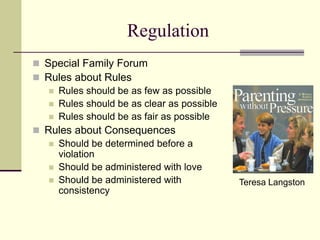
Teresa Langston
 Special Family Forum
 Rules about Rules
 Rules should be as few as possible
 Rules should be as clear as possible
 Rules should be as fair as possible
 Rules about Consequences
 Should be determined before a
violation
 Should be administered with love
 Should be administered with
consistency
Autonomy
 Psychological Control
 Controlling the thoughts, beliefs, and emotions
of the child.
 The message is that I don’t trust you to think
for yourself.
 Low self-esteem, poor motivation, poor
decision making and problem solving skills.

The Five Love Languages.ppt

  • 1.
    The Five LoveLanguages Teenagers
  • 2.
    Presentation Disclaimer  EveryFamily System is Unique  Every Teenager is Unique  Brain Functioning  Genetic Temperament  Some Approaches are Better Suited to Different Adolescents
  • 3.
    The Family System:What Does a Child Need  The adolescent belongs to a system  What is going on in that system?  Developmental Changes  Connection - Regulation – Autonomy  Connection- emotional bond  Regulation- rules and structure  Autonomy- independence (emotional, spiritual, intellectual, relational)
  • 4.
    Connection  Love languages Regulation is related to love  Can you love to much?  No! Don’t confuse love and control.
  • 5.
    Love Languages  Everyonehas a Love Tank  We Receive Love Differently  There are Five Primary Love Languages  Words of Affirmation  Physical Touch  Quality Time  Acts of Service  Gifts
  • 6.
    30 Second LoveLanguage Test  I feel loved when people express how grateful they are for me, and for the simple things I do  I feel especially loved when a person gives me undivided attention and spends time with me  I feel especially loved by someone who brings me gifts and other tangible expressions of love  I feel especially loved when others do things for me  I feel especially loved when a person expresses love through physical contact
  • 7.
    Words of Affirmation LoveLanguage #1  During and Unsure Time They Need to be Assured  Words of Praise (focus on behavior)  Be Sincere  Be Specific  Words of Affection (focus on teenager)  “I love you”  When and Where  “I enjoy you”  “You’ are _____ (great, wonderful, …..”
  • 8.
    Physical Touch Love Language#2  Time  The anti-touch time  Place  Public Settings (autonomy)  Appropriate Manner for Physical Touch  Hug, Back Rub, Hold Hands, Pats etc.  Just because you like it doesn’t mean they do  Example: “I feel like a kitty”  Physical Touch to Correct  A Word to Fathers  Daughters- Physical Dev.; Sons- Boy Code  Abuse
  • 9.
    Quality Time Love Language#3  Challenges  Movement Towards Peers is Normal  Giving Undivided Attention  Challenges (Time and Focus)  Proximity is not Togetherness  Sports  Focus on the Teenager  Quality Activities (Plan with Them)  Focus on Hearing not Saying (next slide)
  • 10.
    Guidelines for QualityConversations  Maintain Eye Contact  Don’t Multitask  Listen for Feelings  Observe Body Language  Refuse to Interrupt  Ask Reflective Questions  Express Understanding  Ask Permission to Share Your Perspective  Rate Differences  Average rate of speech is125 to 175 words per minute whereas the brain can process 500 to 1,000 words a minute (challenge to not wander in our thoughts)
  • 11.
    Interpersonal Communication Model Senders Intentions (Private) Noise Interference EffectOn Listener (Private) Senders Actions (Public) Noise Interference Senders Style Of Encoding Listeners Style Of Decoding
  • 12.
    Acts of Service LoveLanguage #4  Service  Attitude  Daily and Mundane Acts: Duty or Loving Service?  Manipulation or Behavior Modification  I will do _____ if you will ______.  Modeling and Reciprocal Love  Teach Independence  Guideline: Do acts of service for them that they cannot do for themselves  Family Game  “I really appreciate that…”
  • 13.
    Gifts Love Language #5 Gift- a visible, tangible evidence of emotional love  Greek word for gift (charis)- undeserved gift  Undeserved, Not a reward, not a manipulation  Gift Giving and the Ceremony  Jacob “We love you and want you to have this”  Jesse “We love you and would like to pay for..”  Counterfeit Gifts- gifts designed to take the place of true love  You Cannot Buy Love
  • 14.
    Discovering Their LoveLanguage  Parental Flexibility  Developmental Changes  Mood Changes Due to Environment  Steps to Discovery  Ask Questions  What would make our relationship better?  Make Observations  How do they show love?  Experiment  Treatment= Tx (Tx1 then Tx2 then Tx3 etc…)  Give them a choice between Tx1
  • 15.
    Discovering Their LoveLanguage  You Possess the Power to Determine a Child’s Love Language by What You Do or Do Not Do.
  • 16.
    Love and Anger The adolescent belongs to a system  What is going on in that system?  Developmental Changes  Connection - Regulation – Autonomy  Connection- emotional bond  Regulation- rules and structure  Autonomy- independence (emotional, spiritual, intellectual, relational)
  • 17.
    Regulation Teresa Langston  SpecialFamily Forum  Rules about Rules  Rules should be as few as possible  Rules should be as clear as possible  Rules should be as fair as possible  Rules about Consequences  Should be determined before a violation  Should be administered with love  Should be administered with consistency
  • 18.
    Autonomy  Psychological Control Controlling the thoughts, beliefs, and emotions of the child.  The message is that I don’t trust you to think for yourself.  Low self-esteem, poor motivation, poor decision making and problem solving skills.