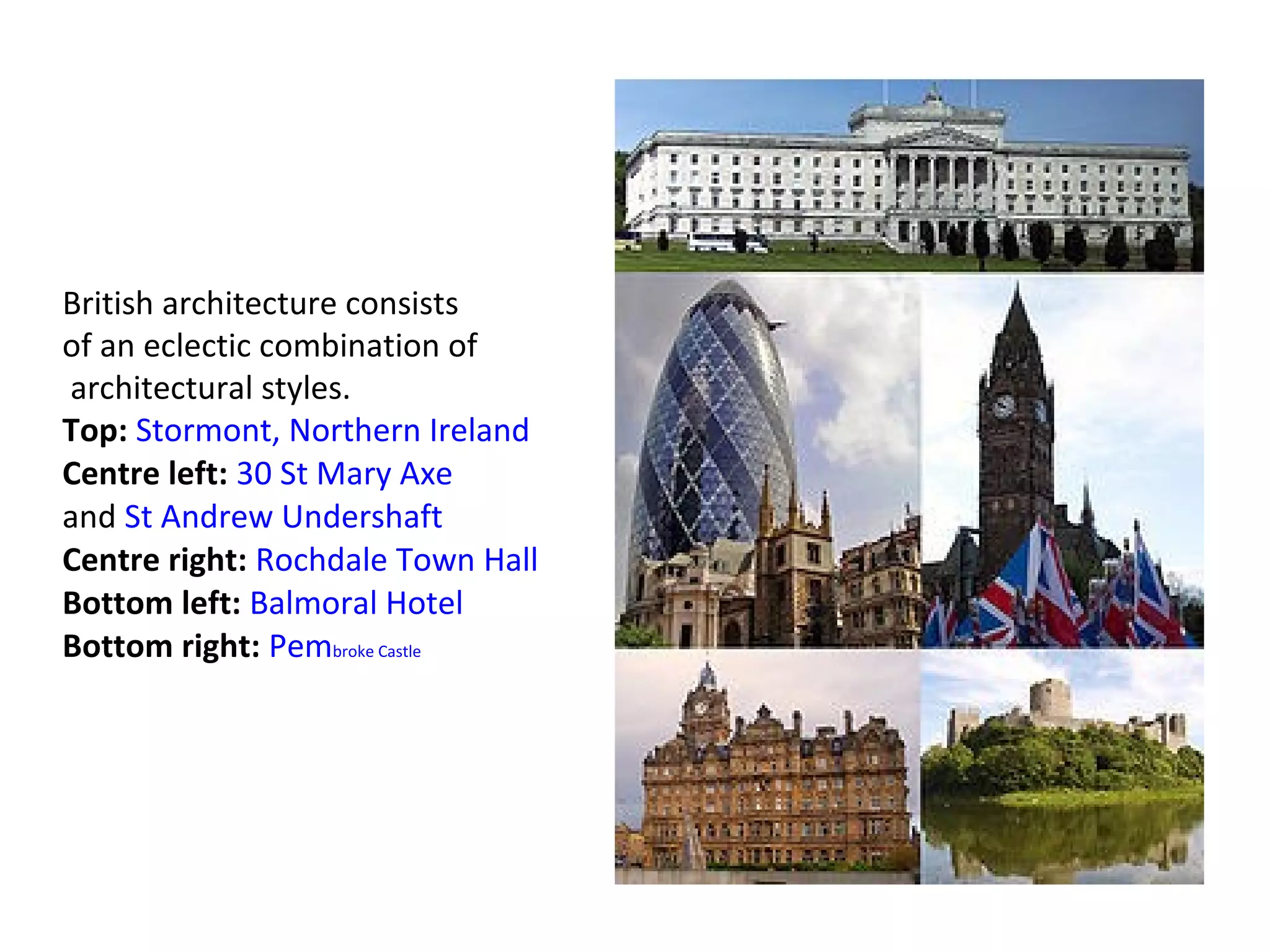
British architecture consists
of an eclectic combination of
architectural styles.
Top: Stormont, Northern Ireland
Centre left: 30 St Mary Axe
and St Andrew Undershaft
Centre right: Rochdale Town Hall
Bottom left: Balmoral Hotel
Bottom right: Pembroke Castle
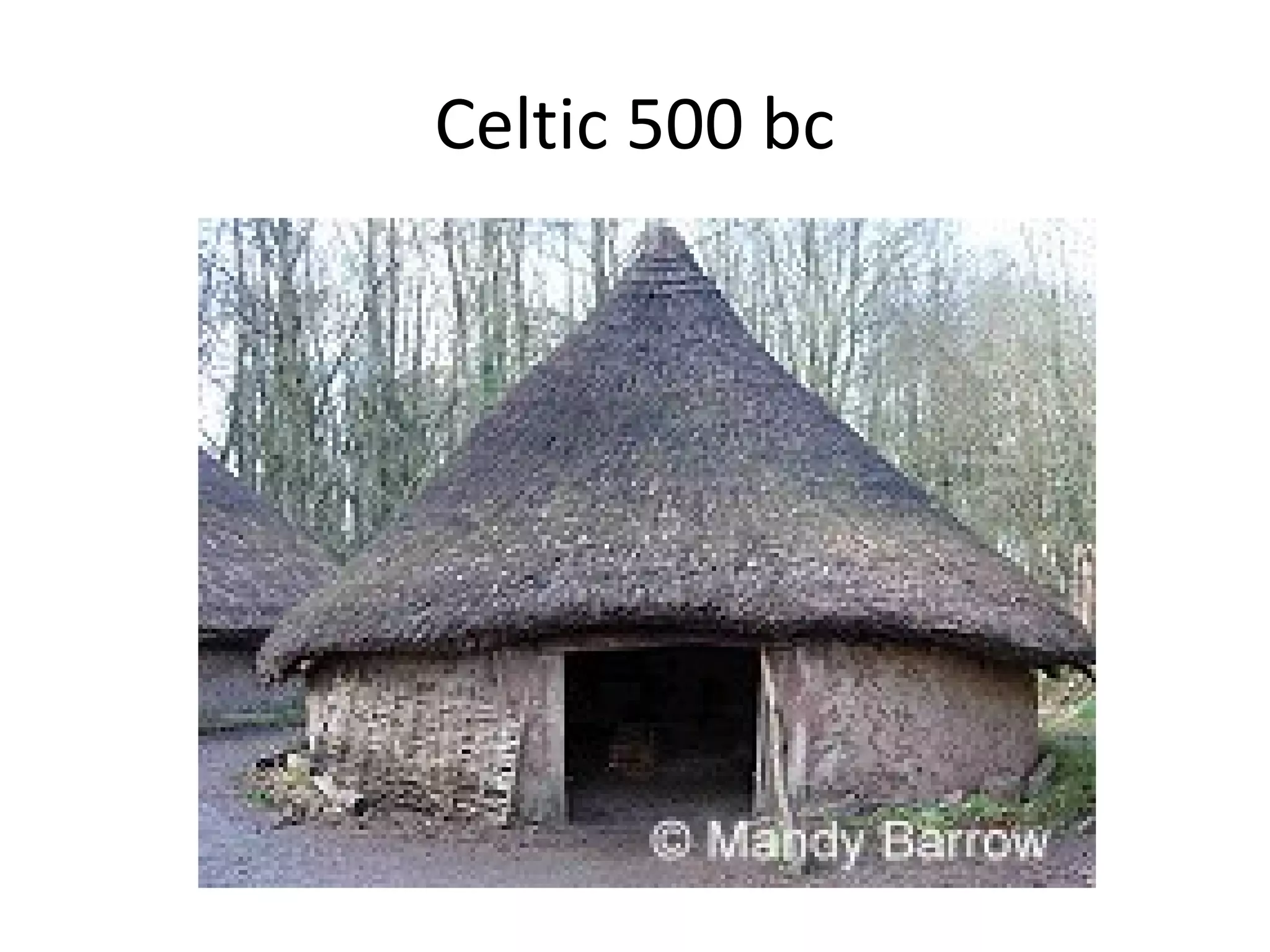
Celtic 500 bc
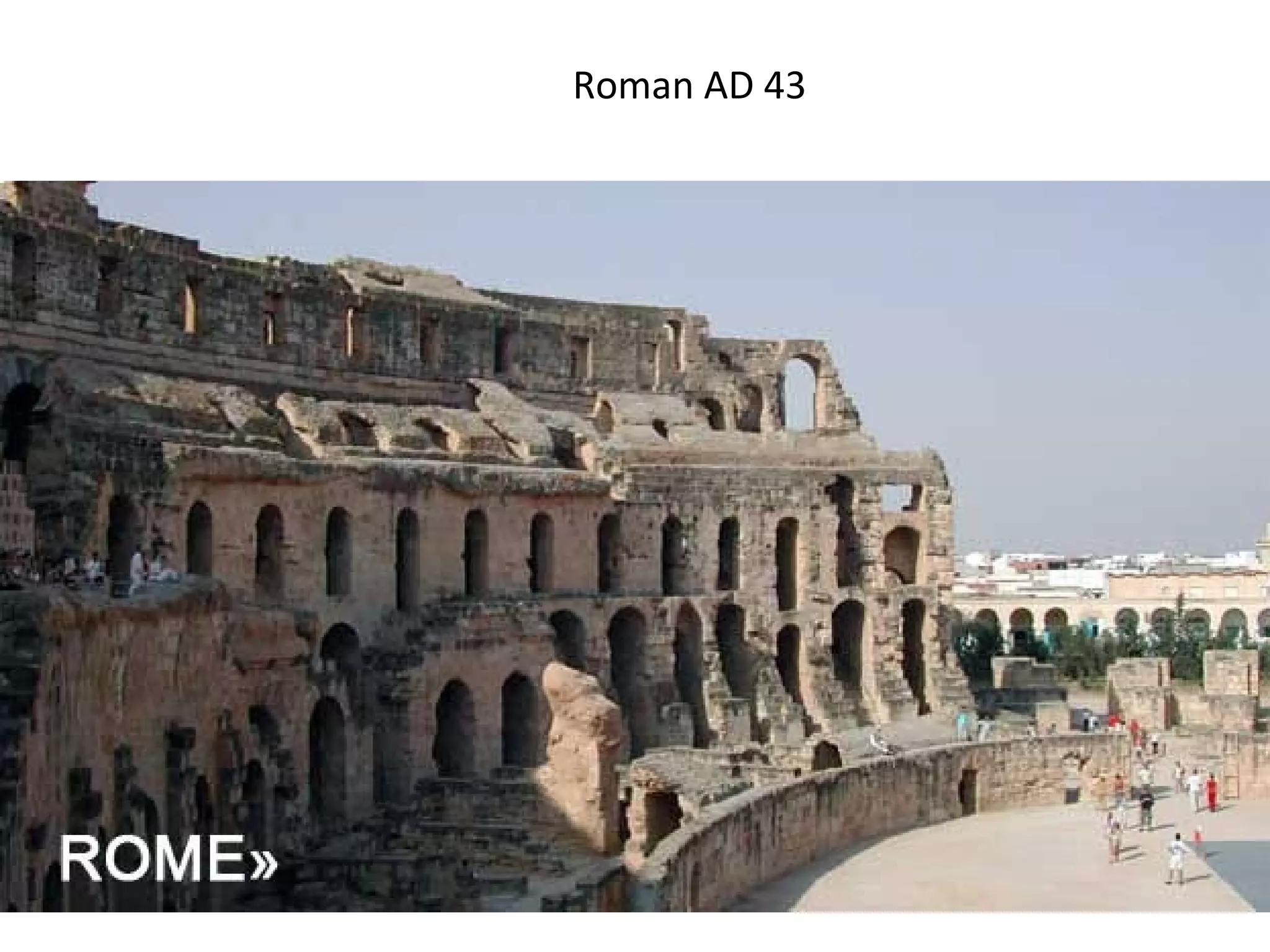
Roman AD 43
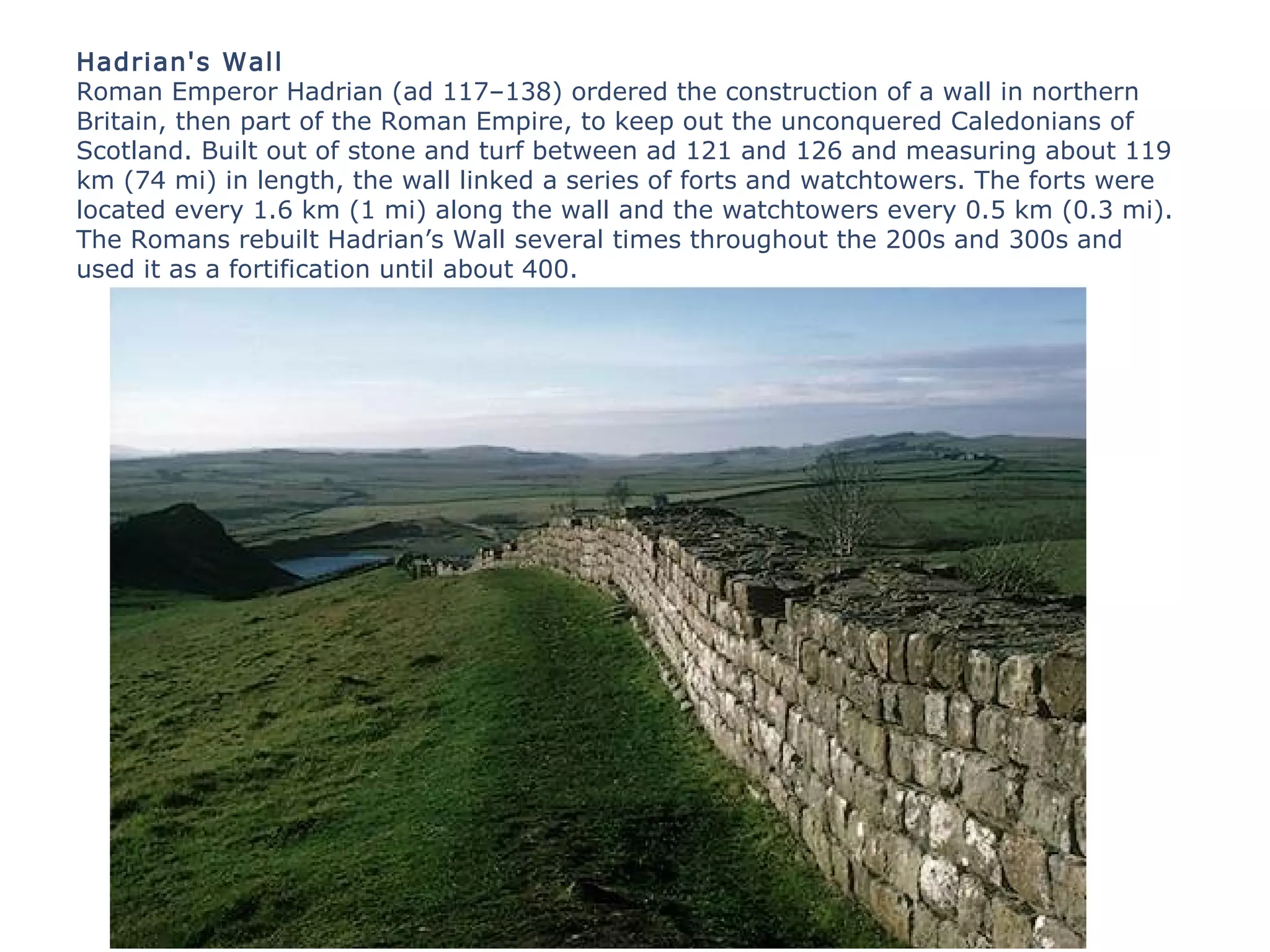
Hadrian's Wall
Roman Emperor Hadrian (ad 117–138) ordered the construction of a wall in northern
Britain, then part of the Roman Empire, to keep out the unconquered Caledonians of
Scotland. Built out of stone and turf between ad 121 and 126 and measuring about 119
km (74 mi) in length, the wall linked a series of forts and watchtowers. The forts were
located every 1.6 km (1 mi) along the wall and the watchtowers every 0.5 km (0.3 mi).
The Romans rebuilt Hadrian’s Wall several times throughout the 200s and 300s and
used it as a fortification until about 400.
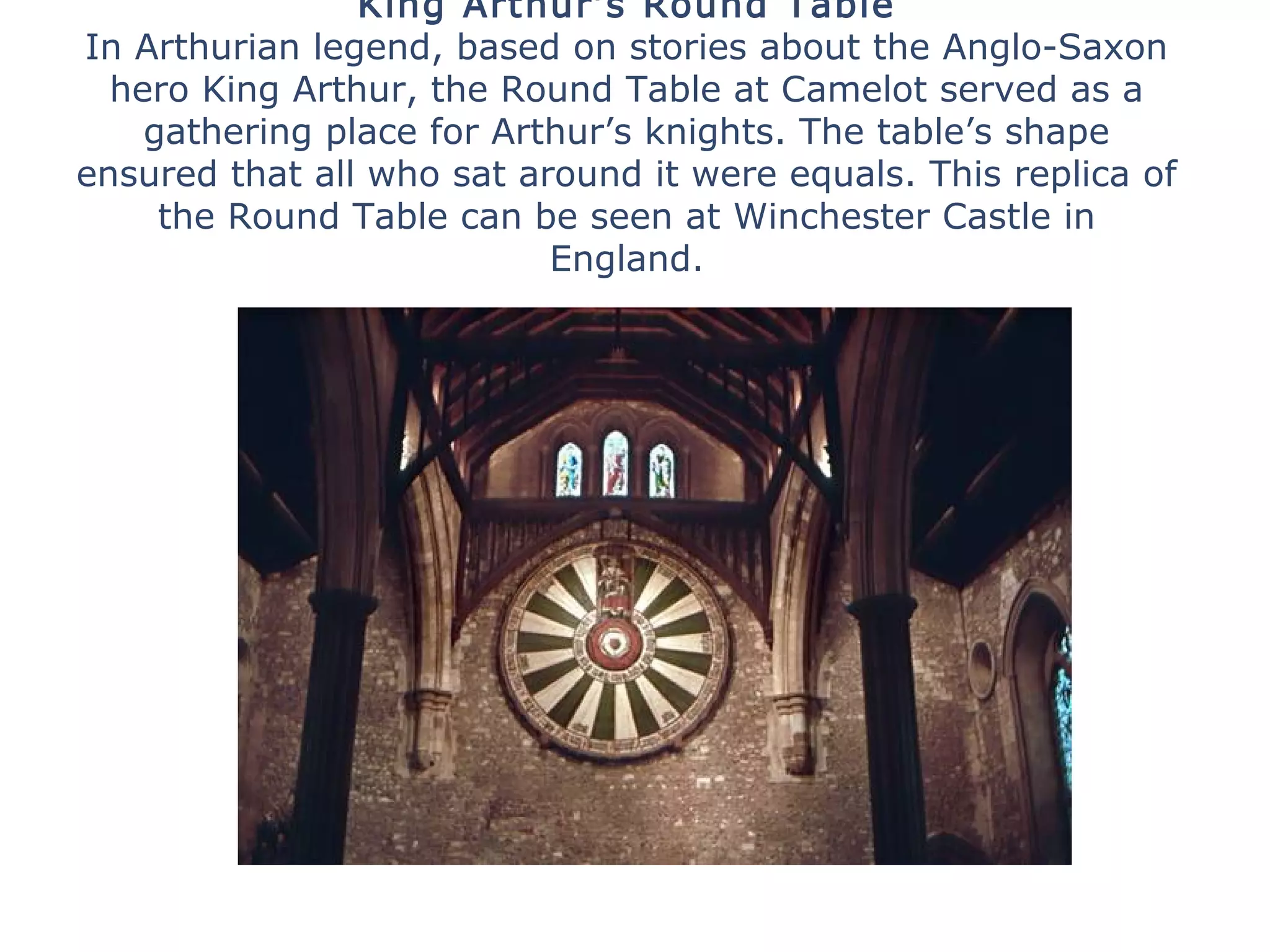
King Arthur’s Round Table
In Arthurian legend, based on stories about the Anglo-Saxon
hero King Arthur, the Round Table at Camelot served as a
gathering place for Arthur’s knights. The table’s shape
ensured that all who sat around it were equals. This replica of
the Round Table can be seen at Winchester Castle in
England.
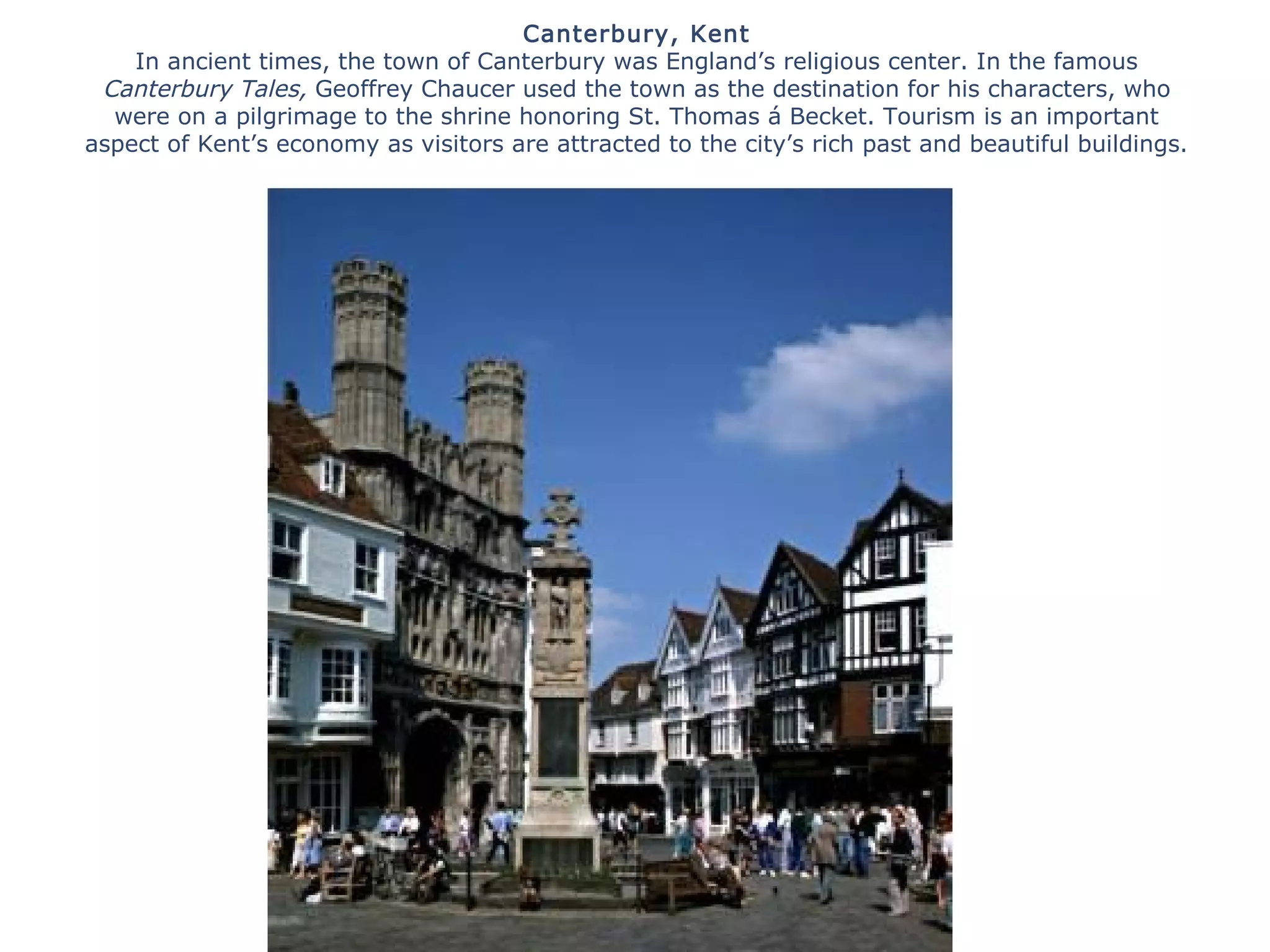
Canterbury, Kent
In ancient times, the town of Canterbury was England’s religious center. In the famous
Canterbury Tales, Geoffrey Chaucer used the town as the destination for his characters, who
were on a pilgrimage to the shrine honoring St. Thomas á Becket. Tourism is an important
aspect of Kent’s economy as visitors are attracted to the city’s rich past and beautiful buildings.
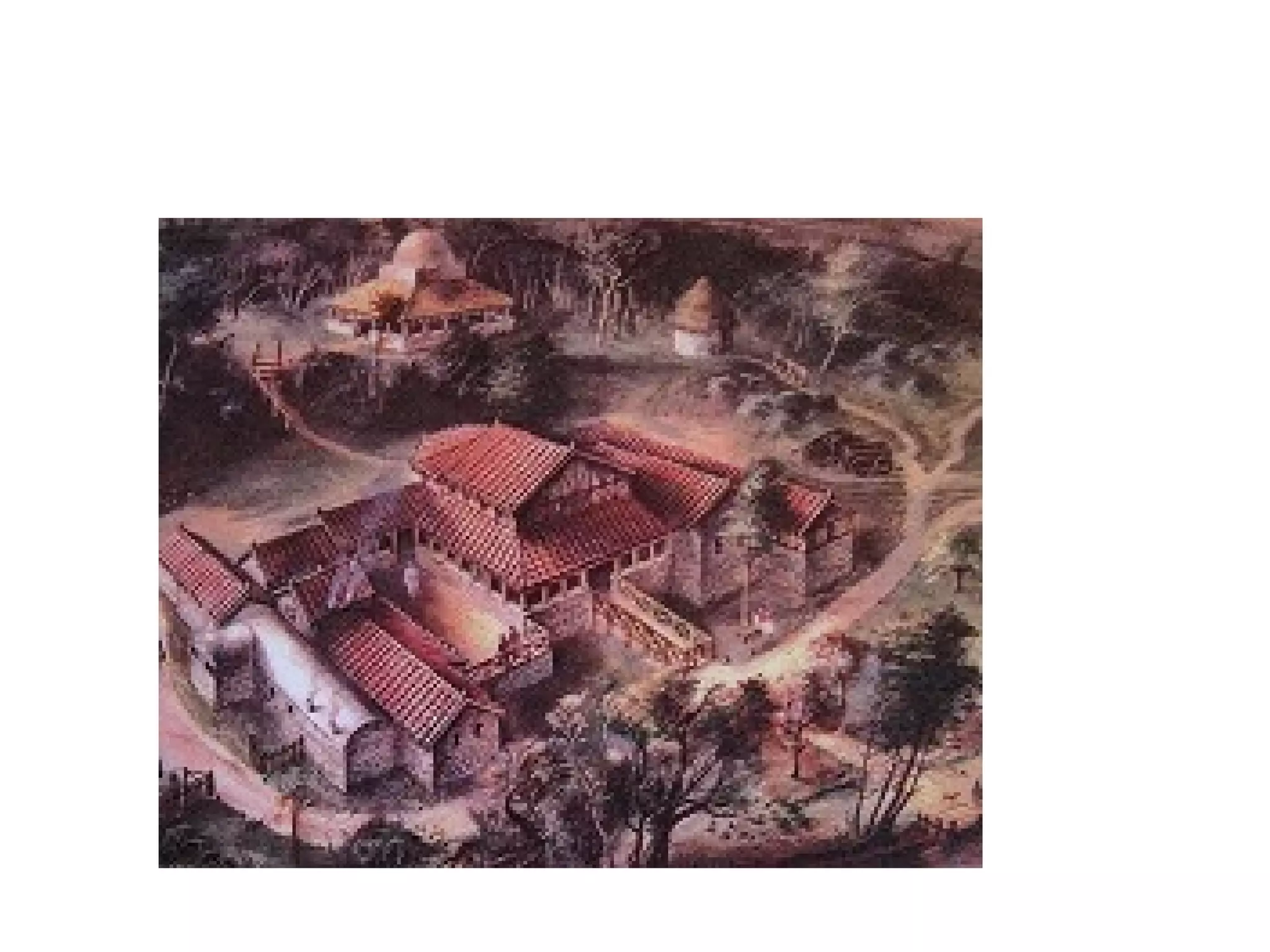
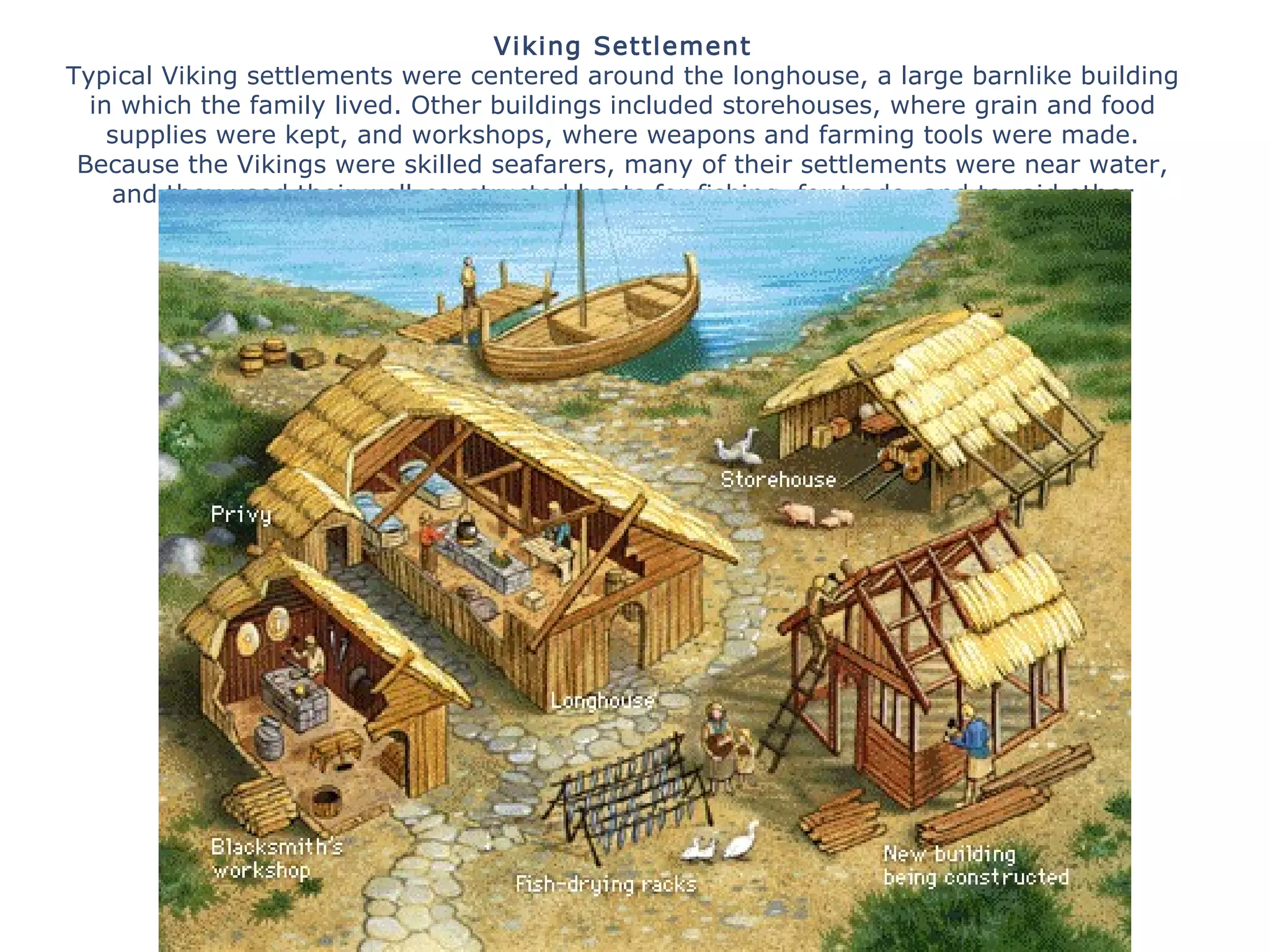
Viking Settlement
Typical Viking settlements were centered around the longhouse, a large barnlike building
in which the family lived. Other buildings included storehouses, where grain and food
supplies were kept, and workshops, where weapons and farming tools were made.
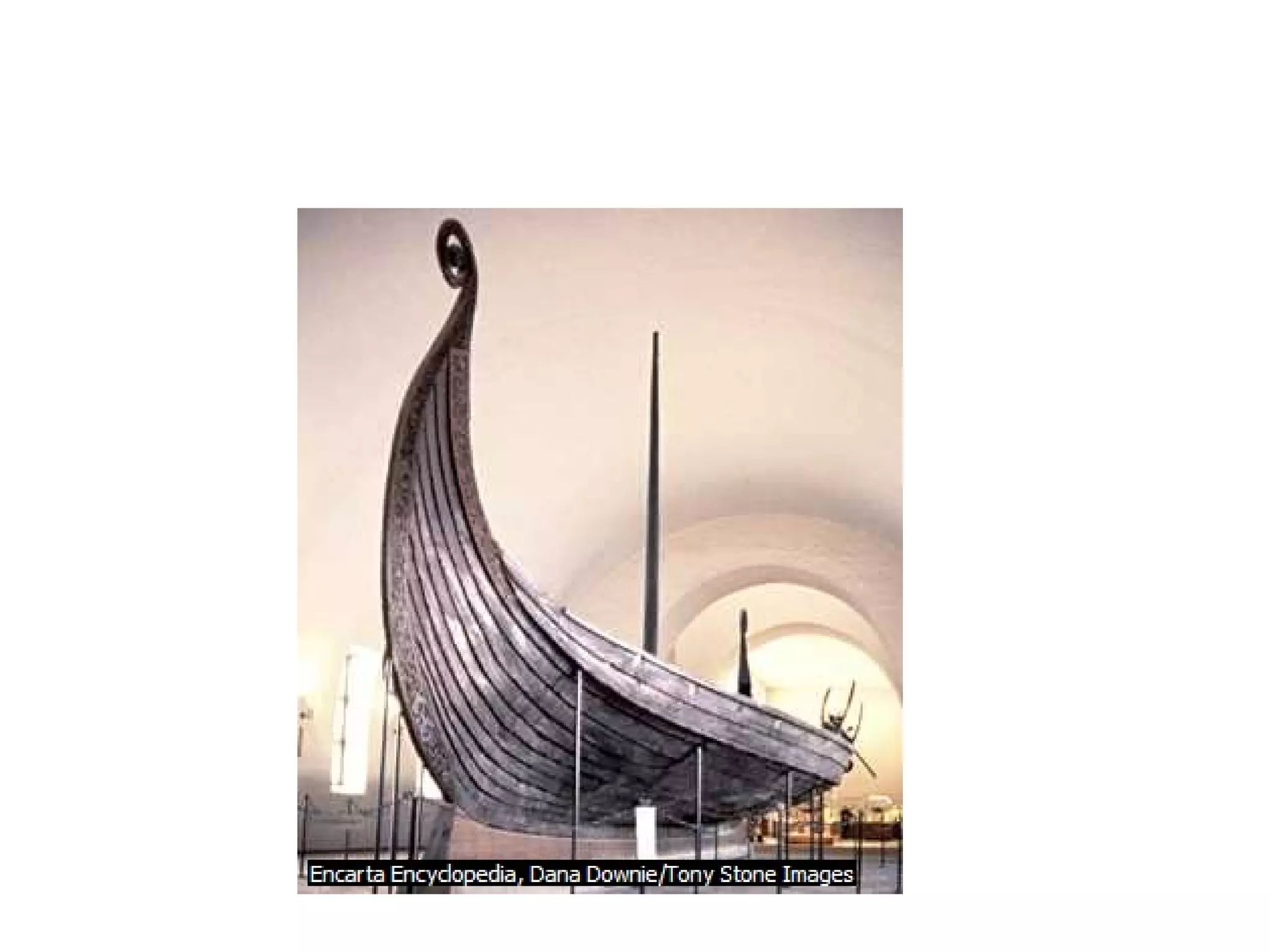
Because the Vikings were skilled seafarers, many of their settlements were near water,
and they used their well-constructed boats for fishing, for trade, and to raid other
settlements and villages.
All rights reserved.
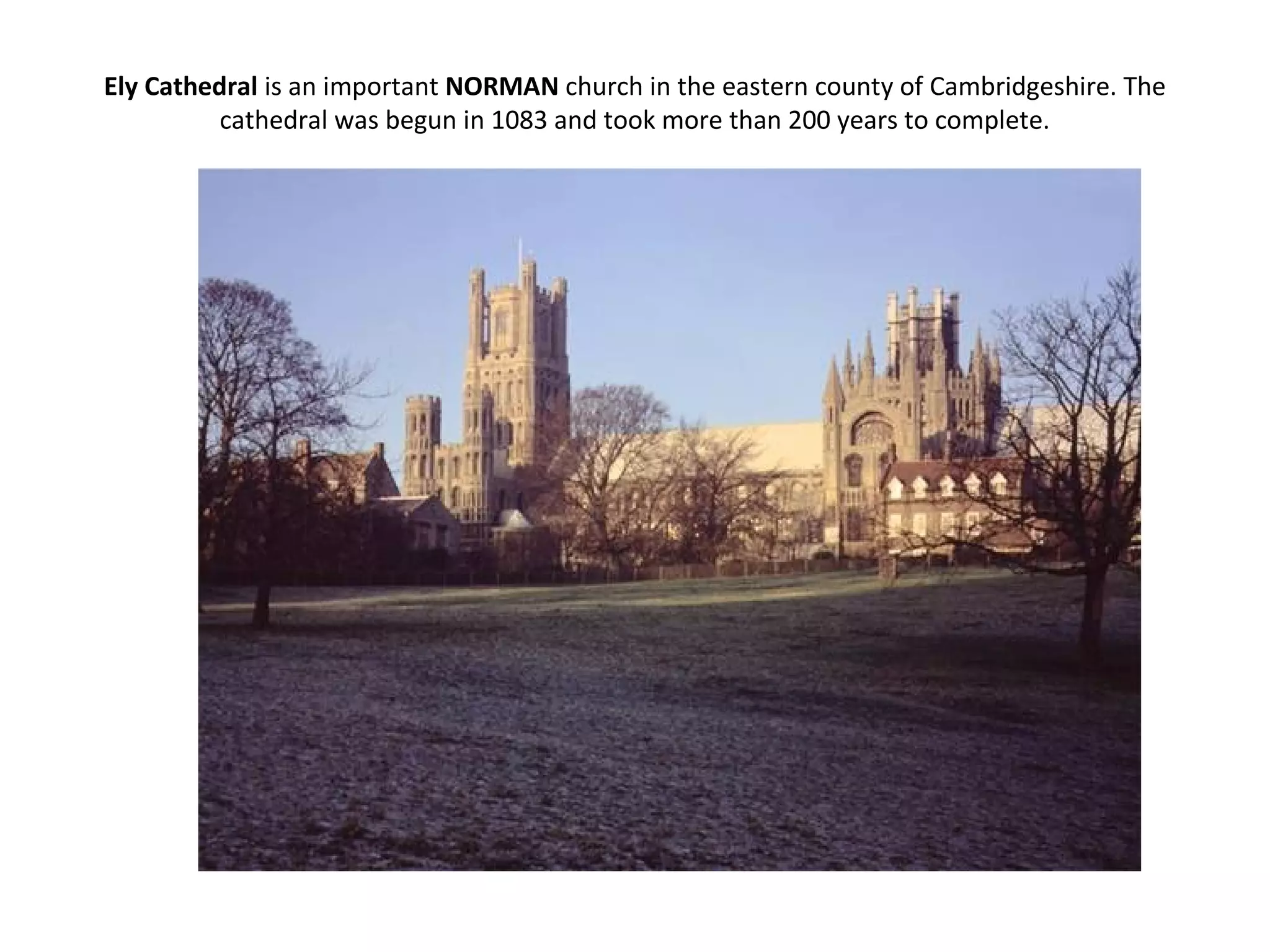
Ely Cathedral is an important NORMAN church in the eastern county of Cambridgeshire. The
cathedral was begun in 1083 and took more than 200 years to complete.
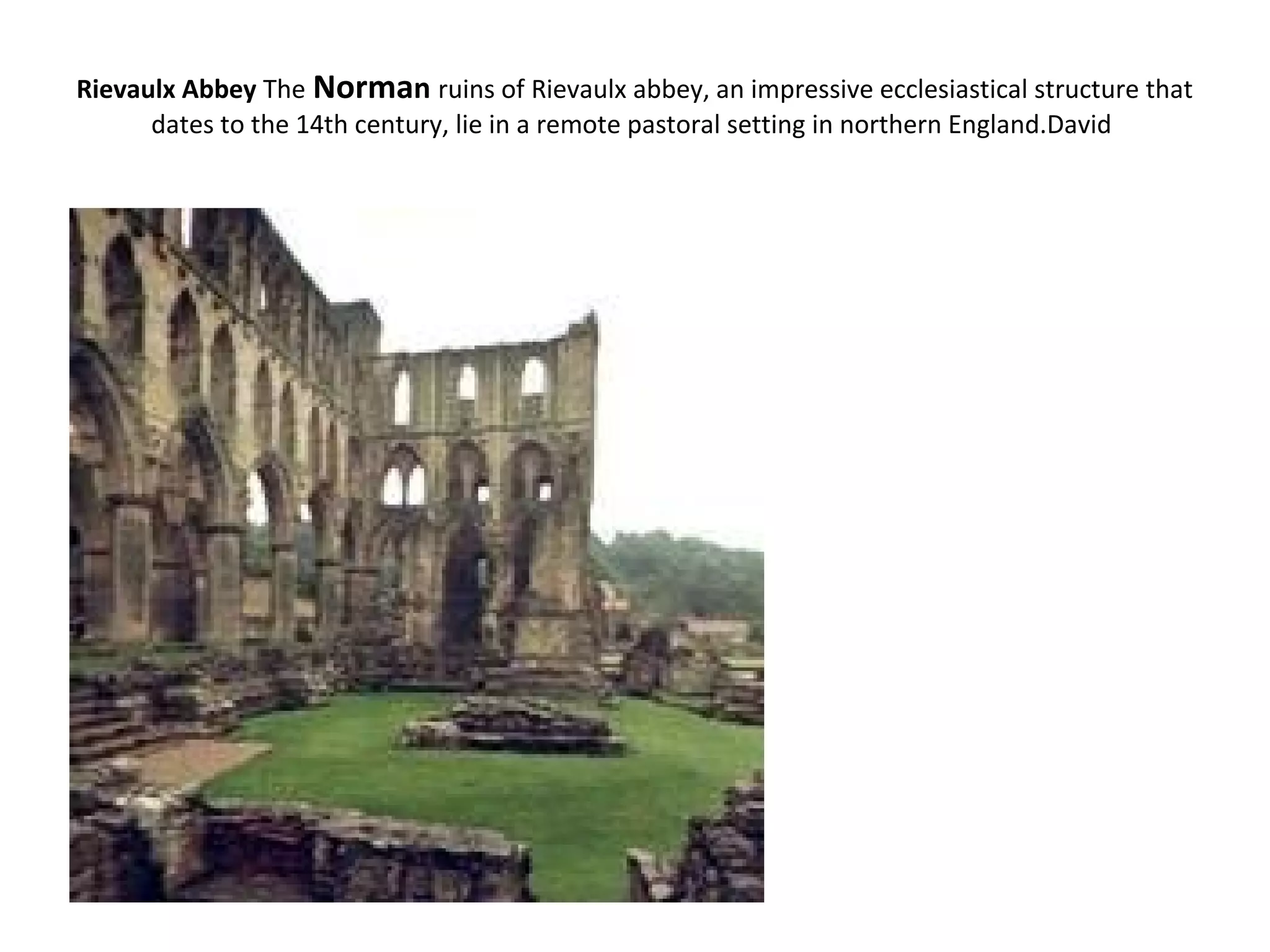
Rievaulx Abbey The Norman ruins of Rievaulx abbey, an impressive ecclesiastical structure that
dates to the 14th century, lie in a remote pastoral setting in northern England.David
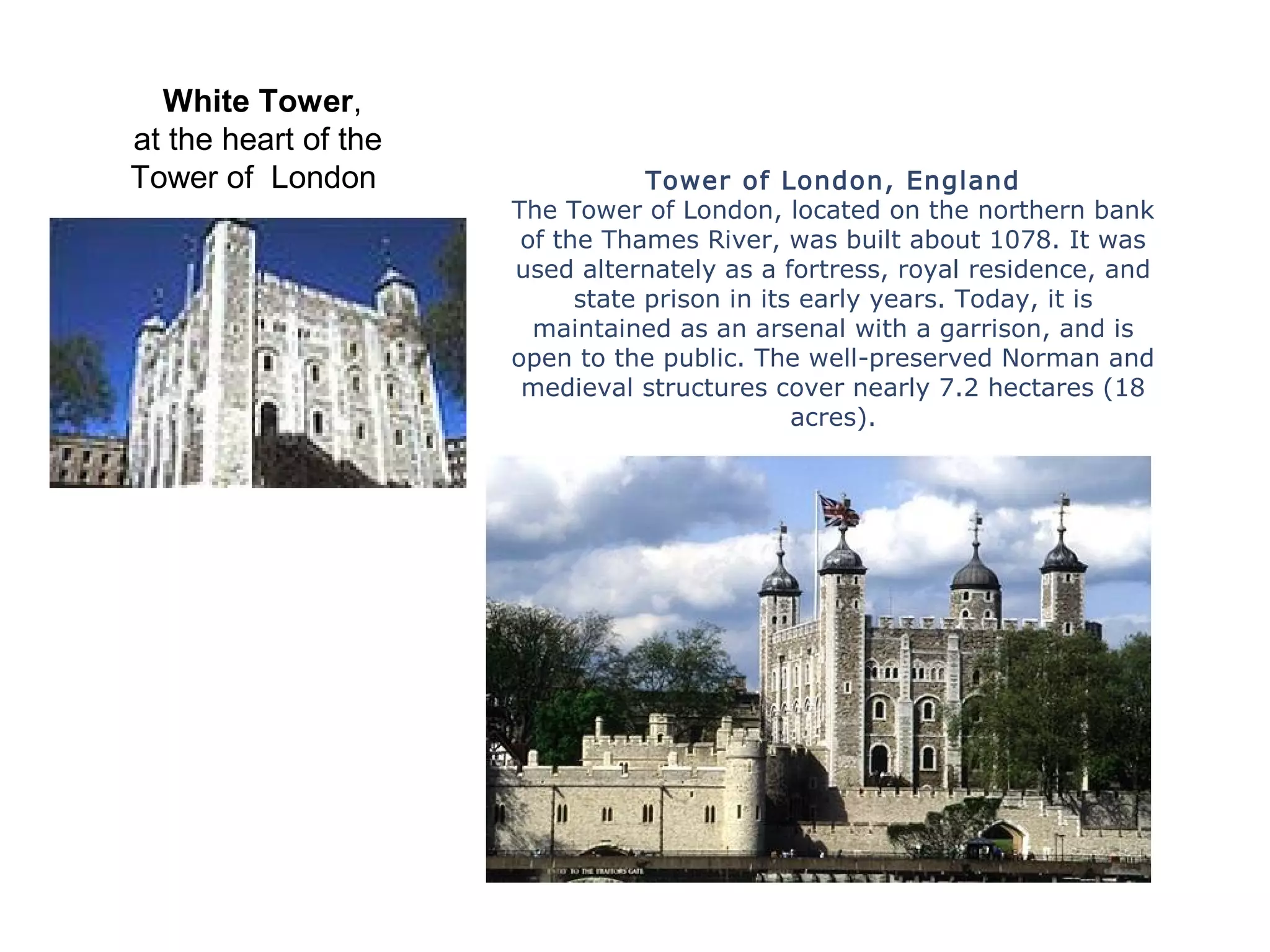
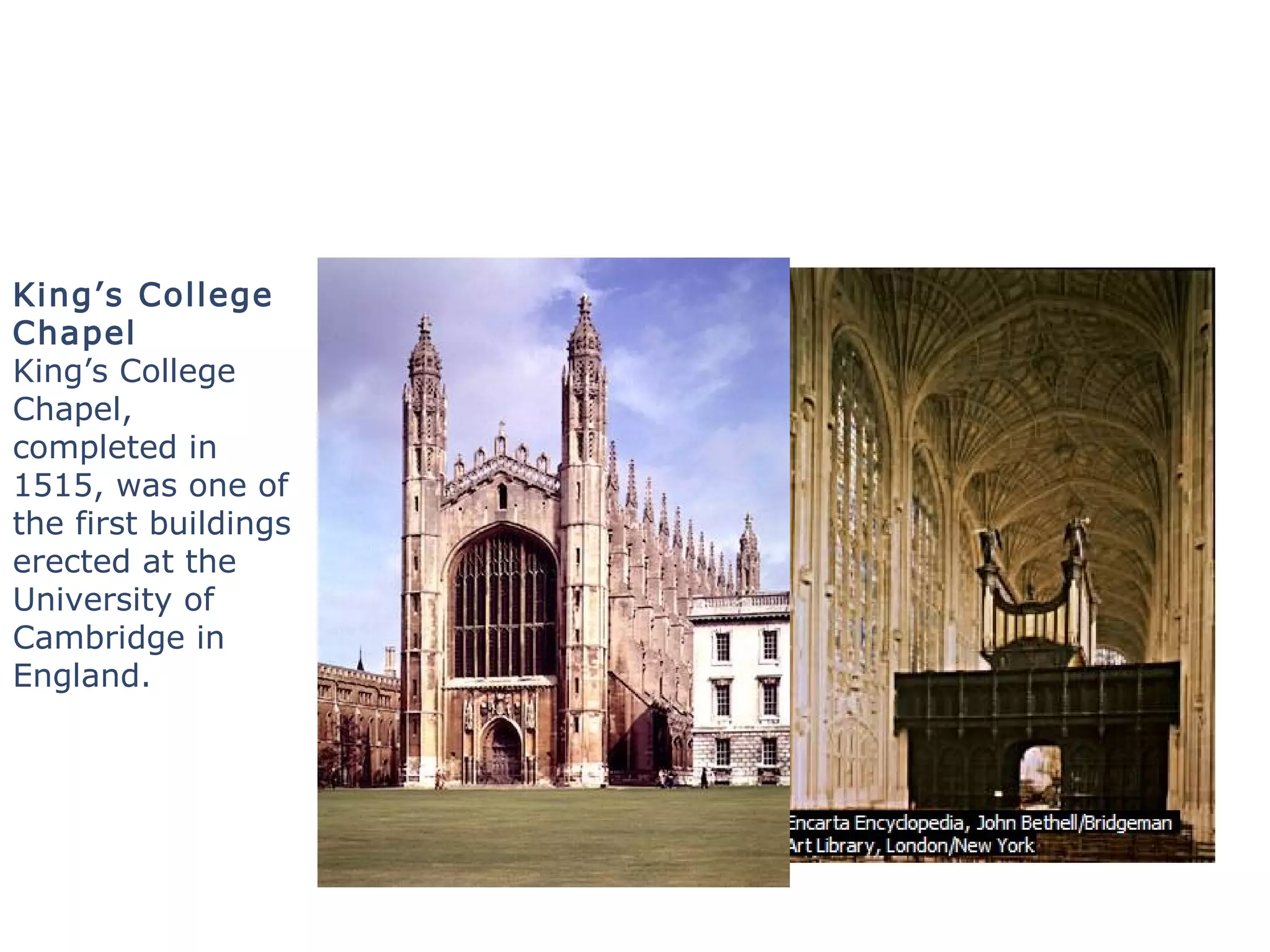
Tower of London, England
The Tower of London, located on the northern bank
of the Thames River, was built about 1078. It was
used alternately as a fortress, royal residence, and
state prison in its early years. Today, it is
maintained as an arsenal with a garrison, and is
open to the public. The well-preserved Norman and
medieval structures cover nearly 7.2 hectares (18
acres).
White Tower,
at the heart of the
Tower of London
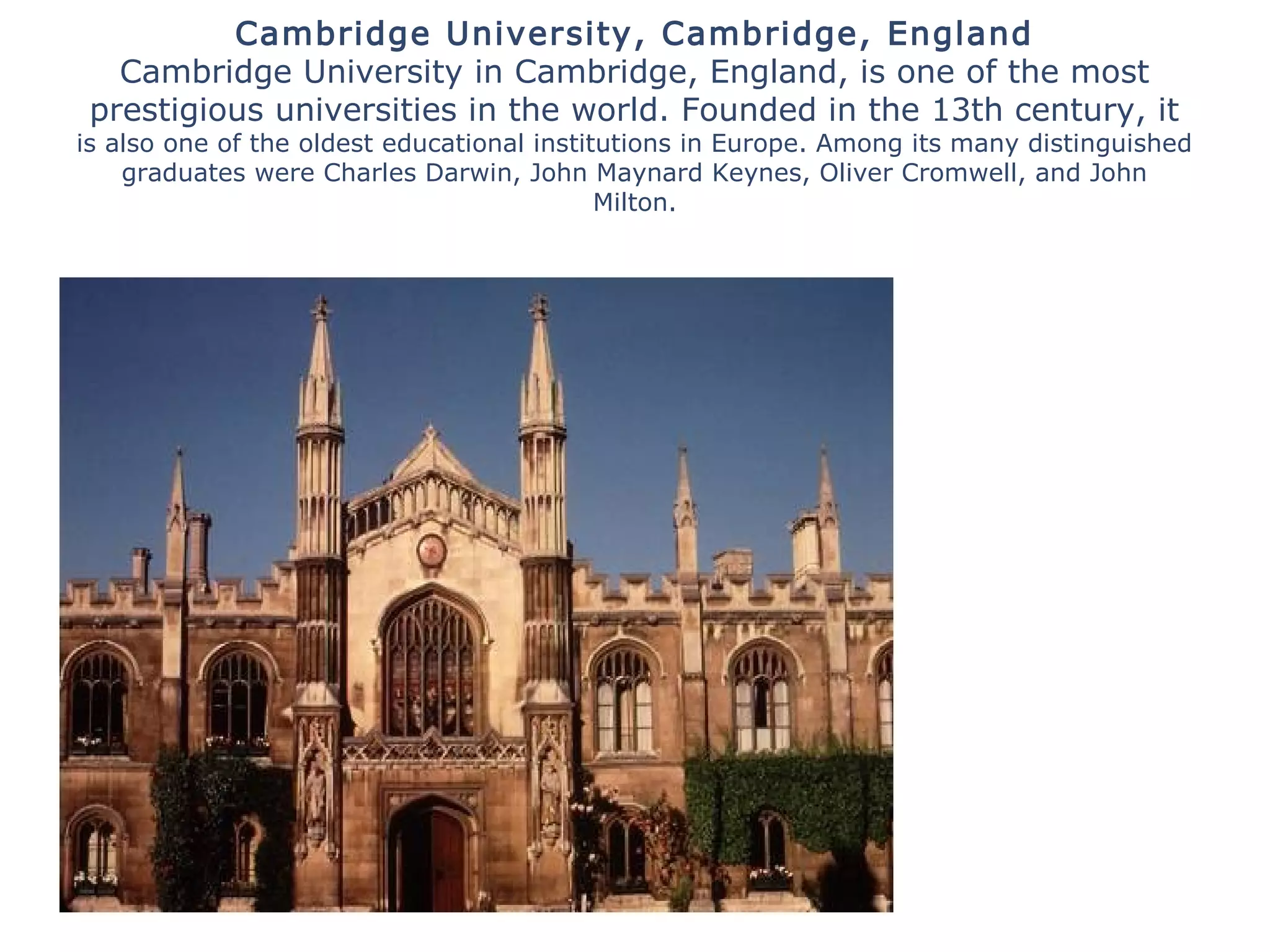
King’s College
Chapel
King’s College
Chapel,
completed in
1515, was one of
the first buildings
erected at the
University of
Cambridge in
England.
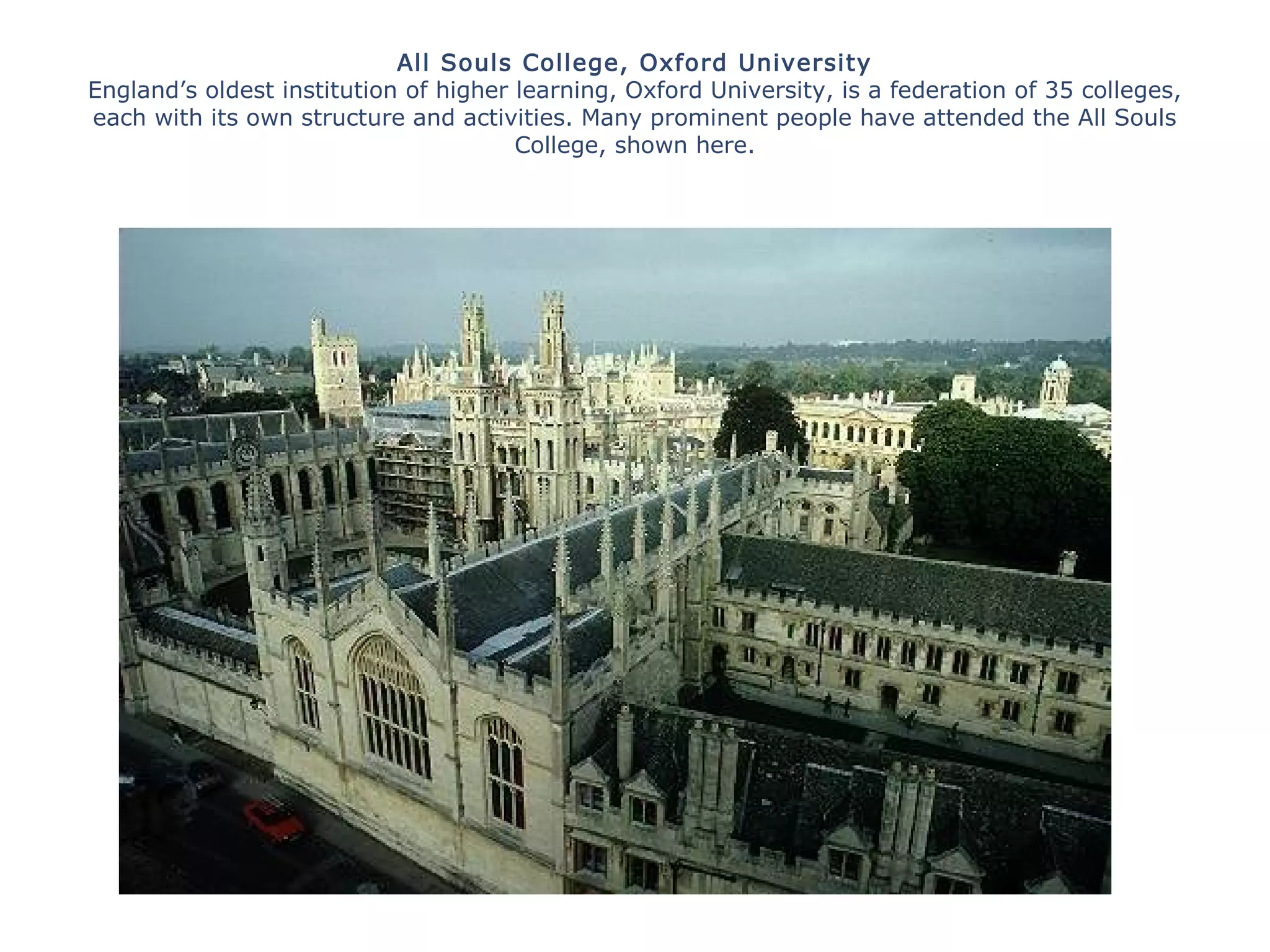
Cambridge University, Cambridge, England
Cambridge University in Cambridge, England, is one of the most
prestigious universities in the world. Founded in the 13th century, it
is also one of the oldest educational institutions in Europe. Among its many distinguished
graduates were Charles Darwin, John Maynard Keynes, Oliver Cromwell, and John
Milton.
All Souls College, Oxford University
England’s oldest institution of higher learning, Oxford University, is a federation of 35 colleges,
each with its own structure and activities. Many prominent people have attended the All Souls
College, shown here.
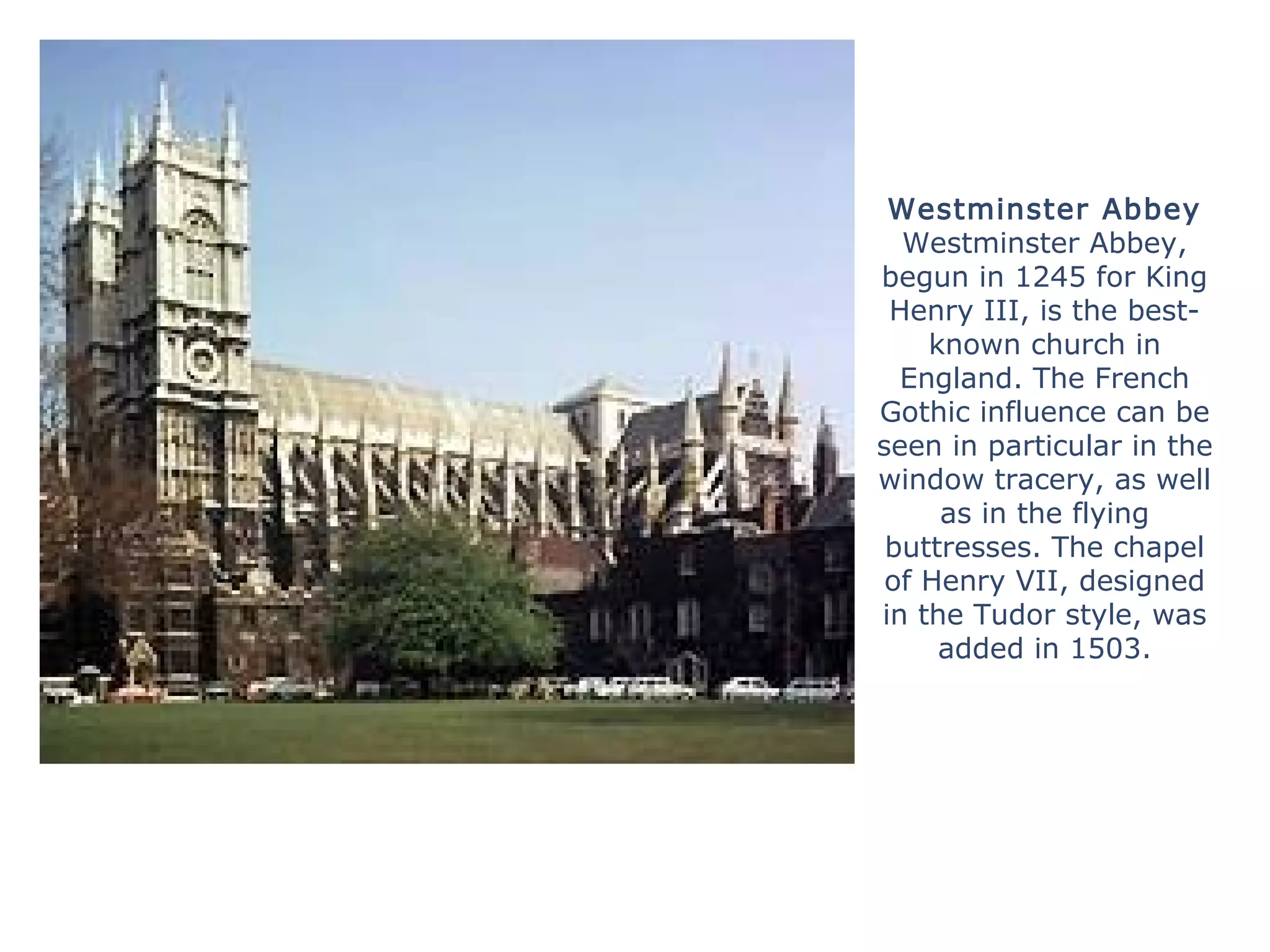
Westminster Abbey
Westminster Abbey,
begun in 1245 for King
Henry III, is the best-
known church in
England. The French
Gothic influence can be
seen in particular in the
window tracery, as well
as in the flying
buttresses. The chapel
of Henry VII, designed
in the Tudor style, was
added in 1503.
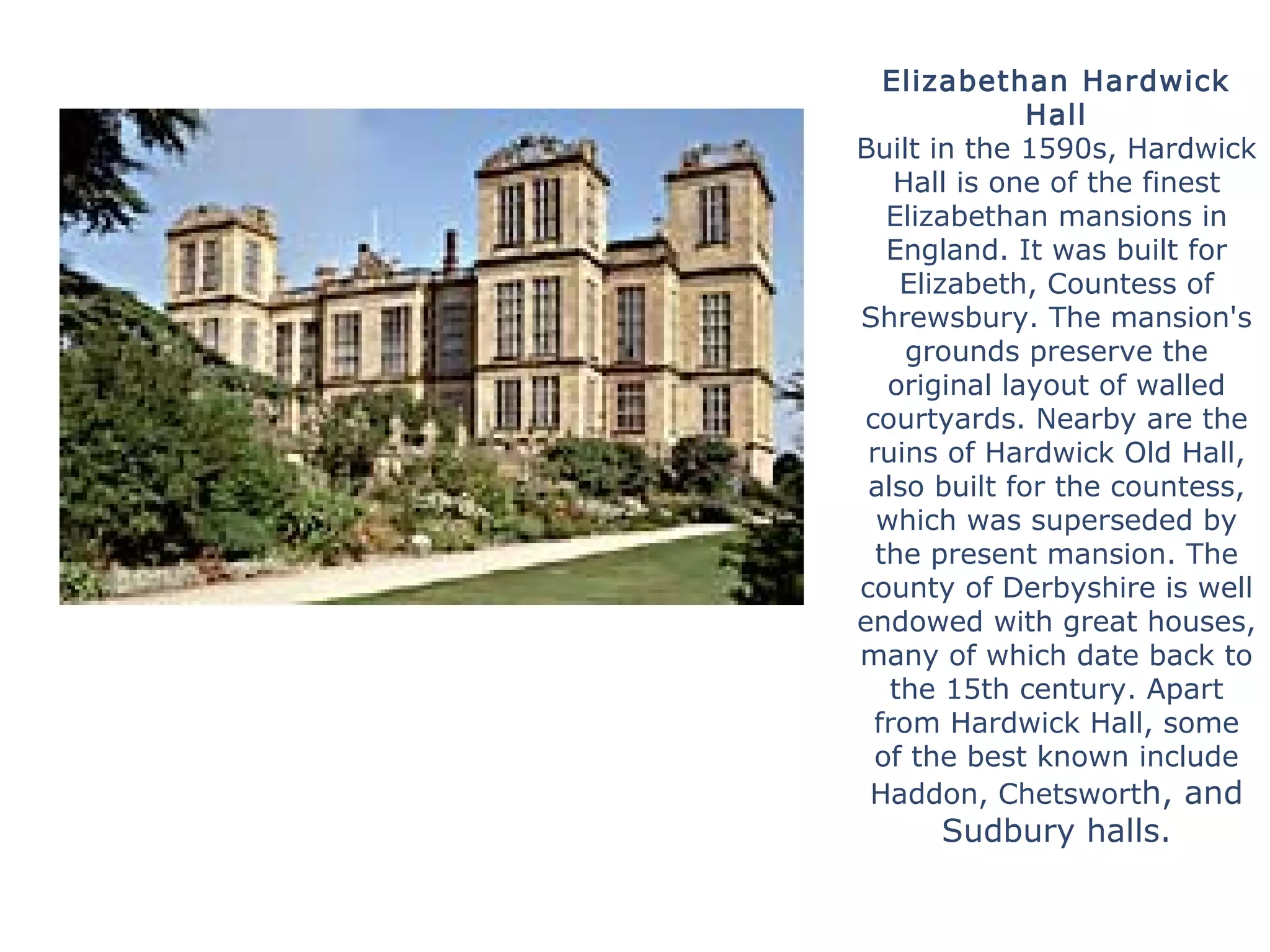
Elizabethan Hardwick
Hall
Built in the 1590s, Hardwick
Hall is one of the finest
Elizabethan mansions in
England. It was built for
Elizabeth, Countess of
Shrewsbury. The mansion's
grounds preserve the
original layout of walled
courtyards. Nearby are the
ruins of Hardwick Old Hall,
also built for the countess,
which was superseded by
the present mansion. The
county of Derbyshire is well
endowed with great houses,
many of which date back to
the 15th century. Apart
from Hardwick Hall, some
of the best known include
Haddon, Chetsworth, and
Sudbury halls.

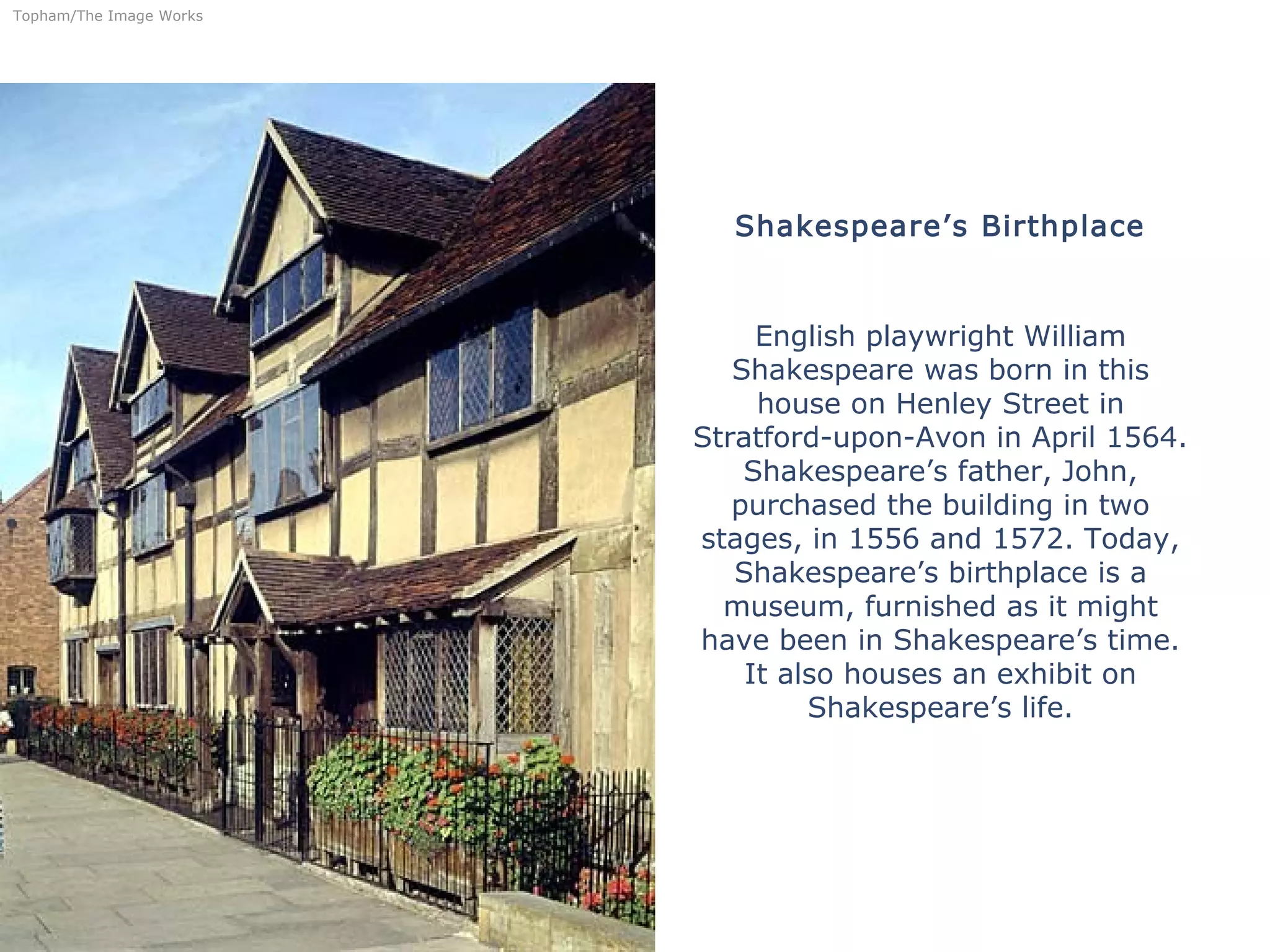
Shakespeare’s Birthplace
English playwright William
Shakespeare was born in this
house on Henley Street in
Stratford-upon-Avon in April 1564.
Shakespeare’s father, John,
purchased the building in two
stages, in 1556 and 1572. Today,
Shakespeare’s birthplace is a
museum, furnished as it might
have been in Shakespeare’s time.
It also houses an exhibit on
Shakespeare’s life.
Topham/The Image Works
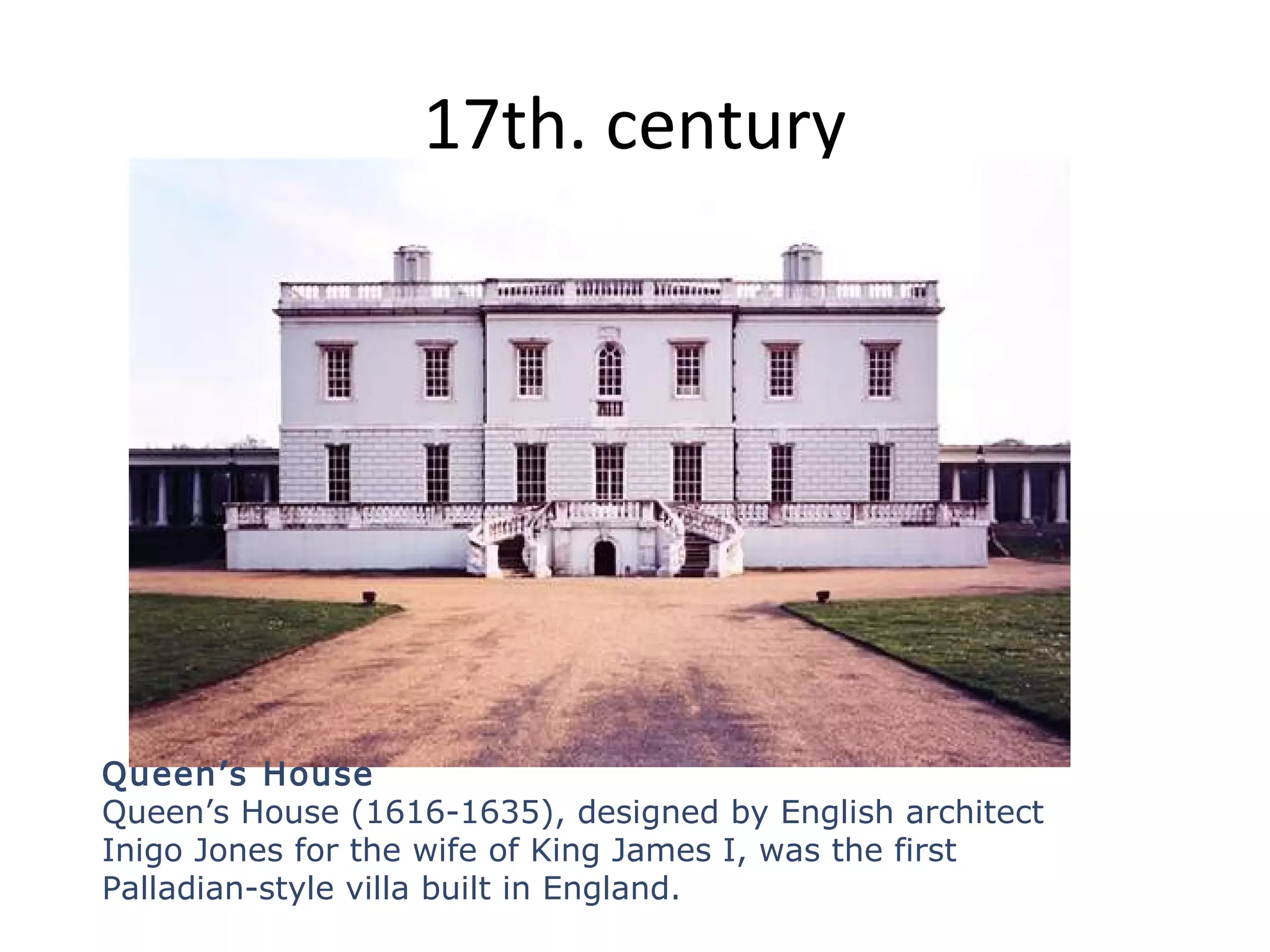
17th. century
Queen’s House
Queen’s House (1616-1635), designed by English architect
Inigo Jones for the wife of King James I, was the first
Palladian-style villa built in England.
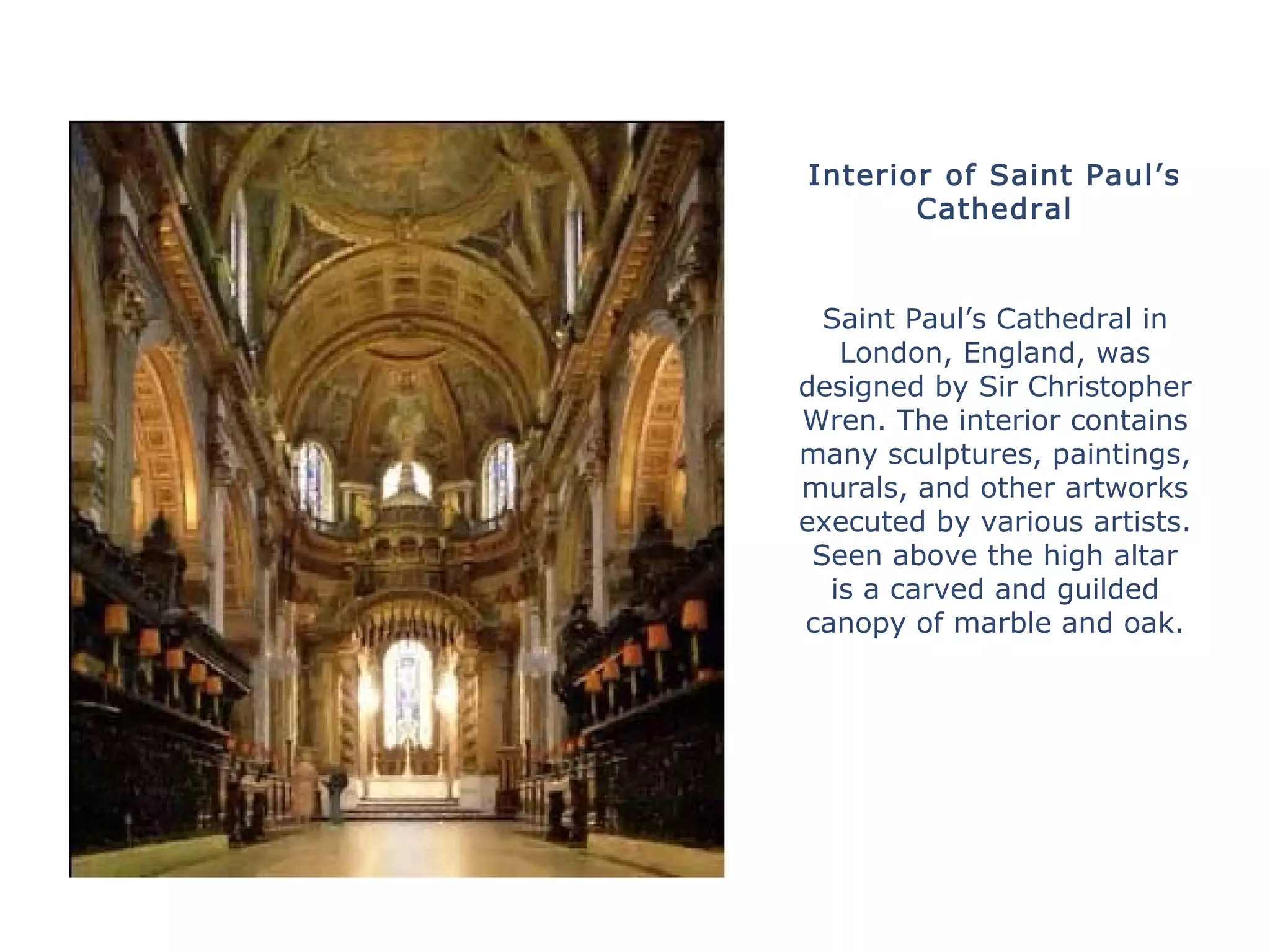
Interior of Saint Paul’s
Cathedral
Saint Paul’s Cathedral in
London, England, was
designed by Sir Christopher
Wren. The interior contains
many sculptures, paintings,
murals, and other artworks
executed by various artists.
Seen above the high altar
is a carved and guilded
canopy of marble and oak.
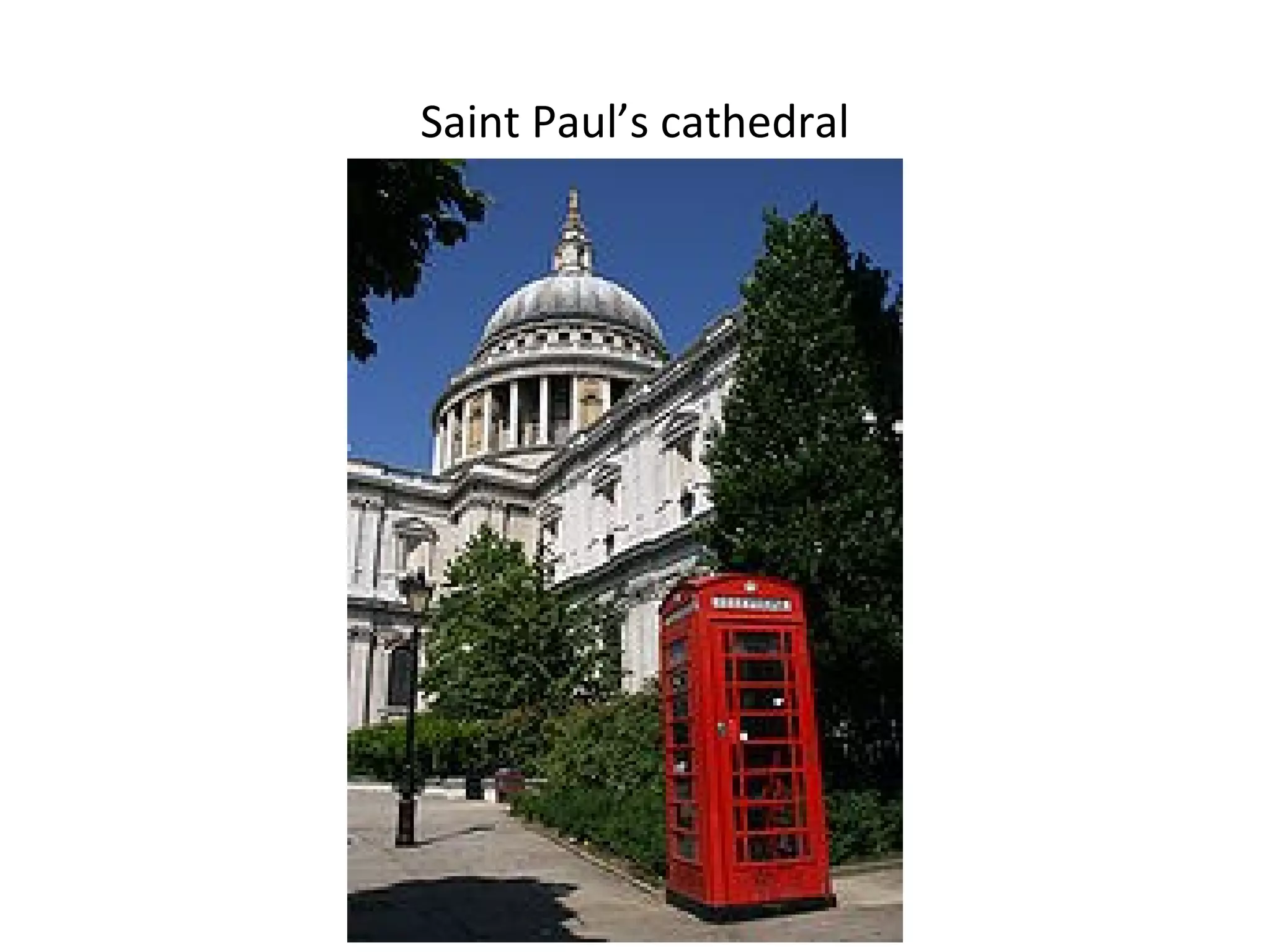
Saint Paul’s cathedral
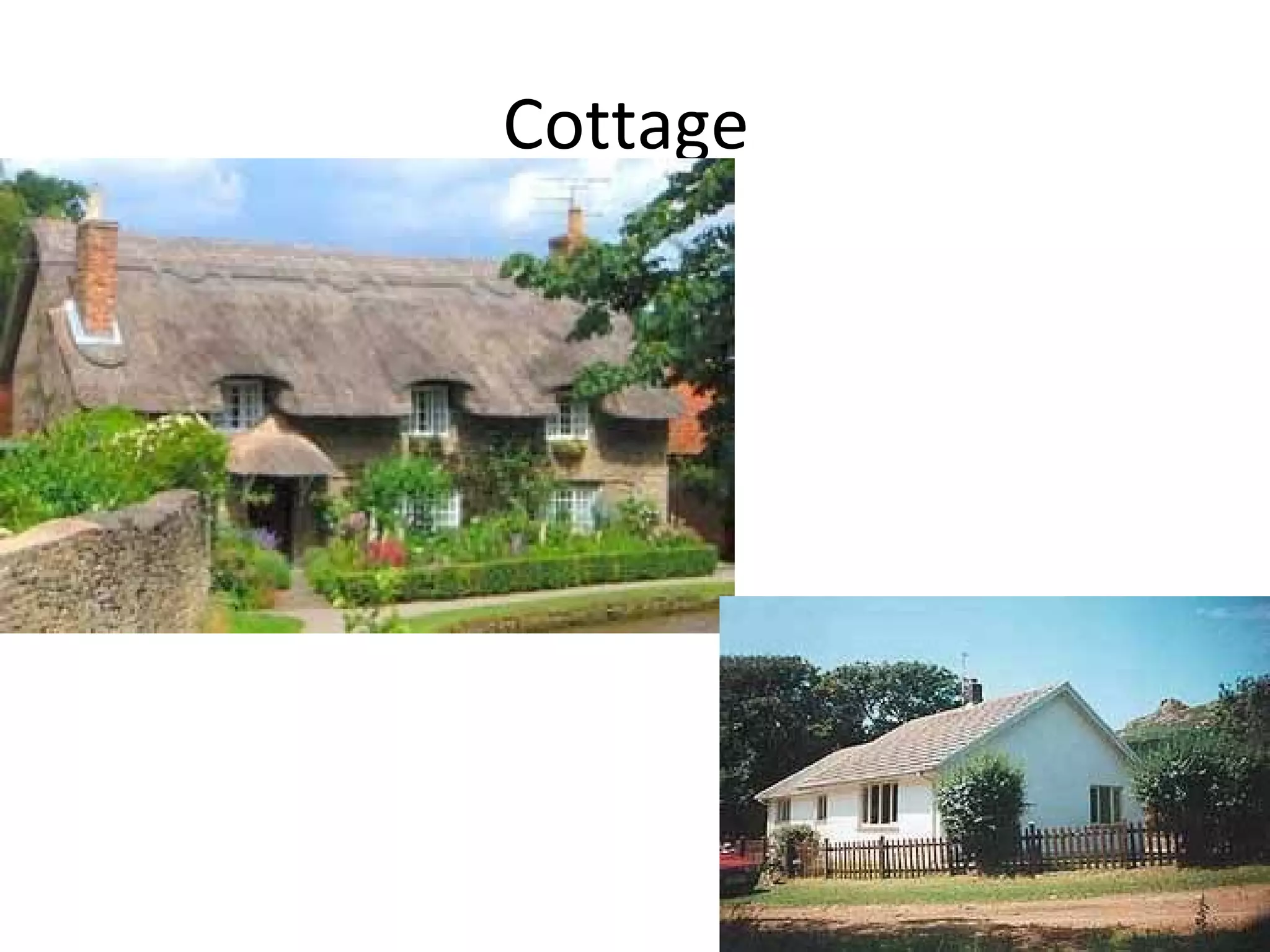
Cottage
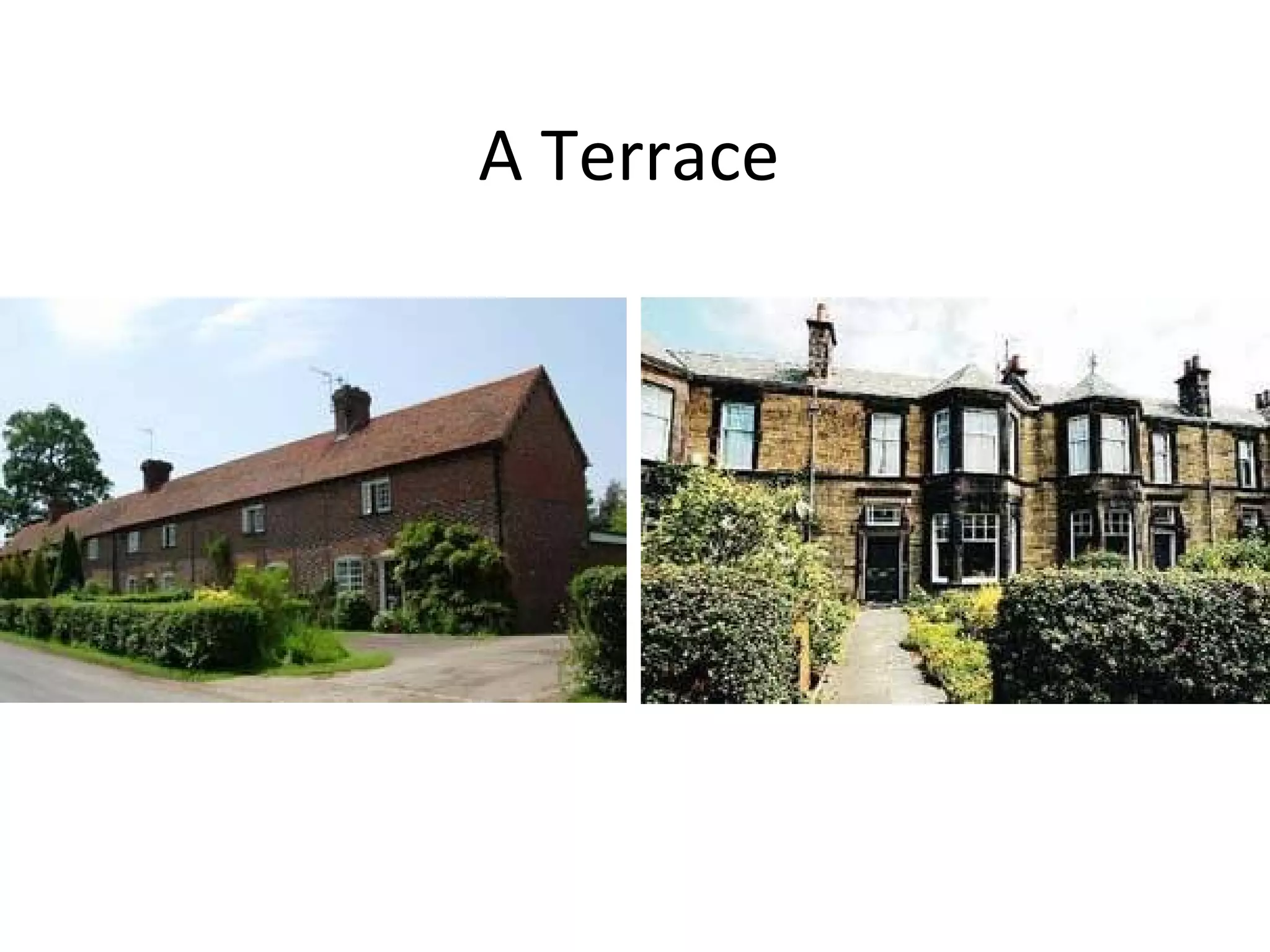
A Terrace
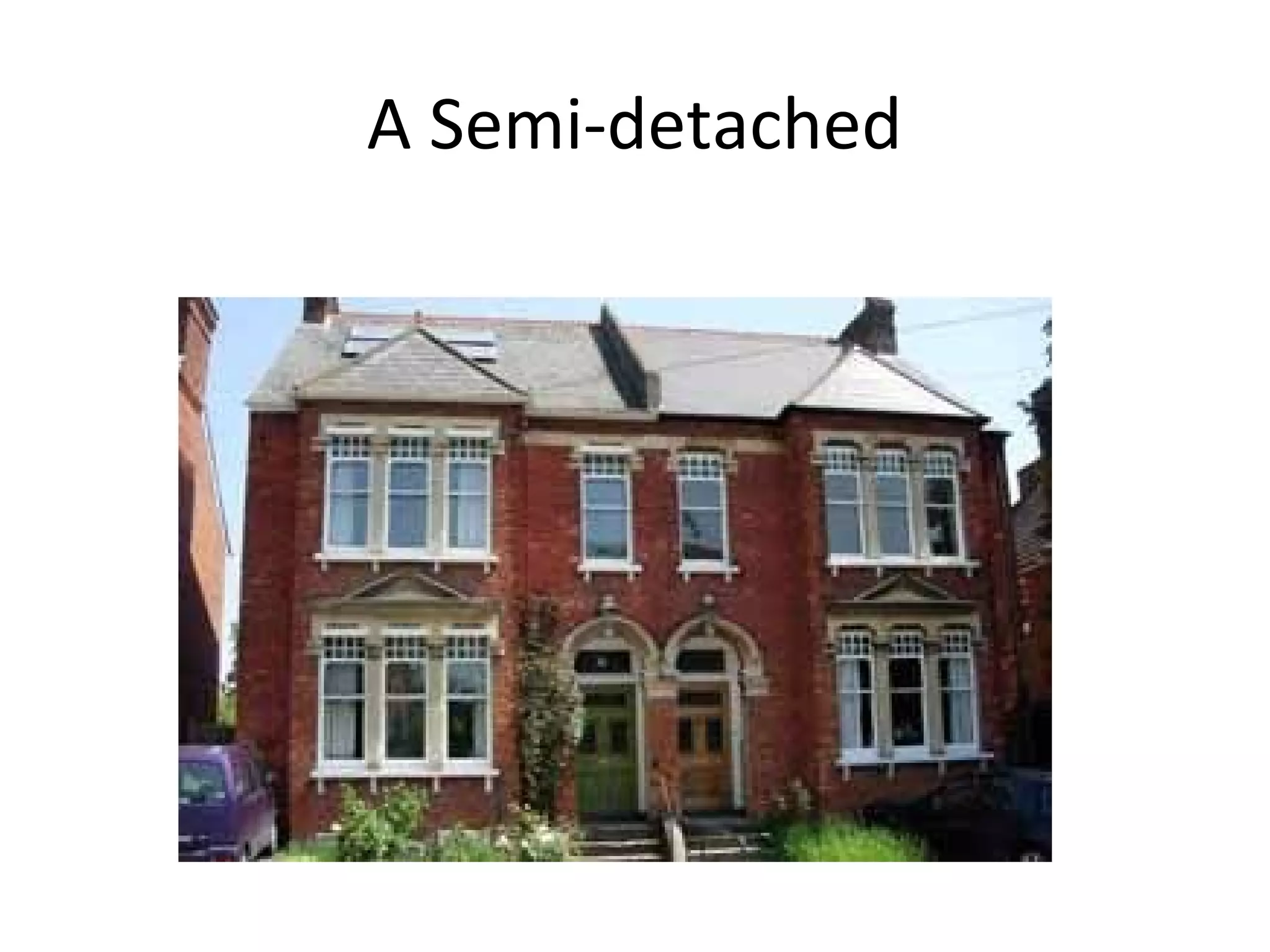
A Semi-detached
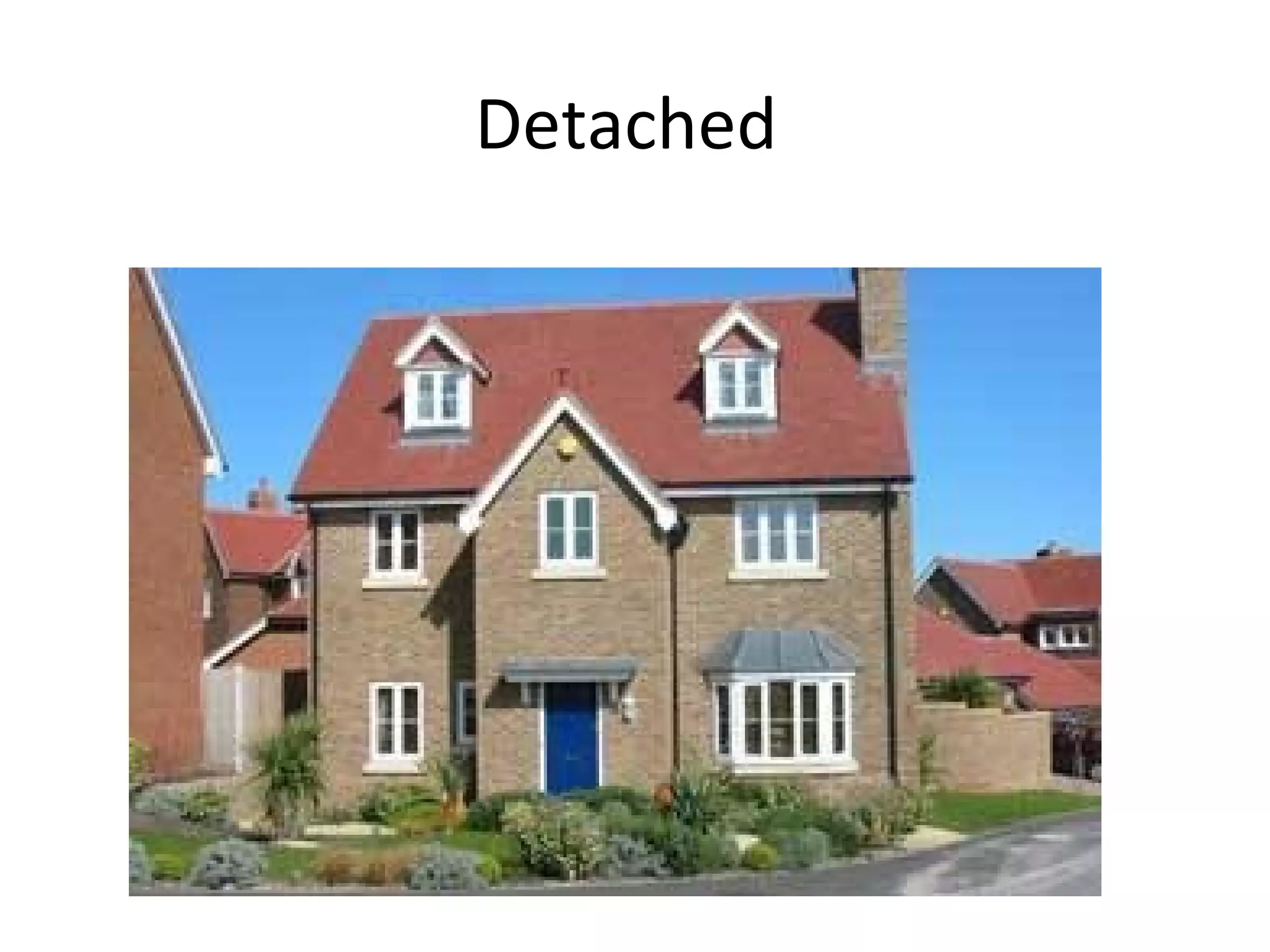
Detached
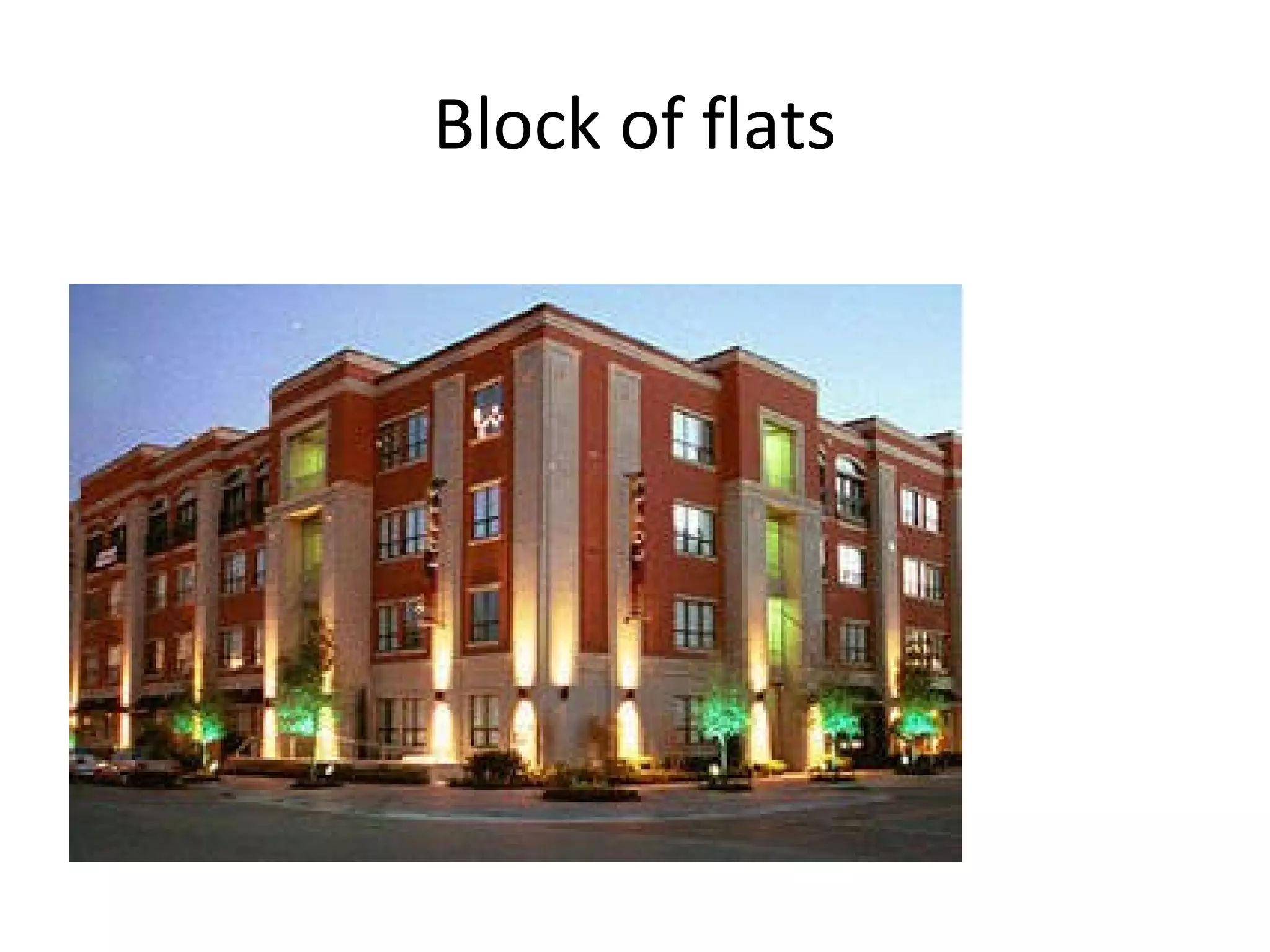
Block of flats
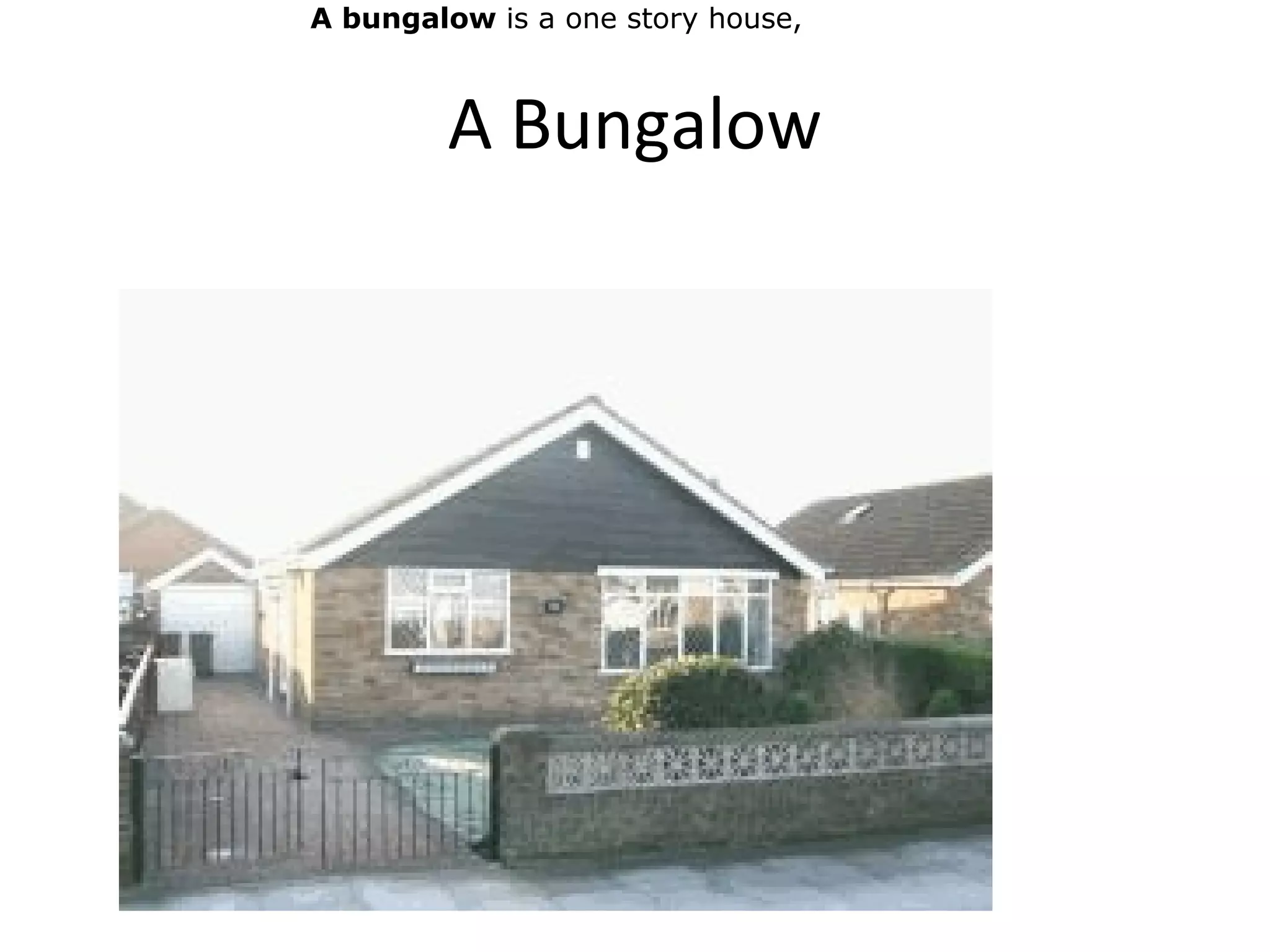
A Bungalow
A bungalow is a one story house,
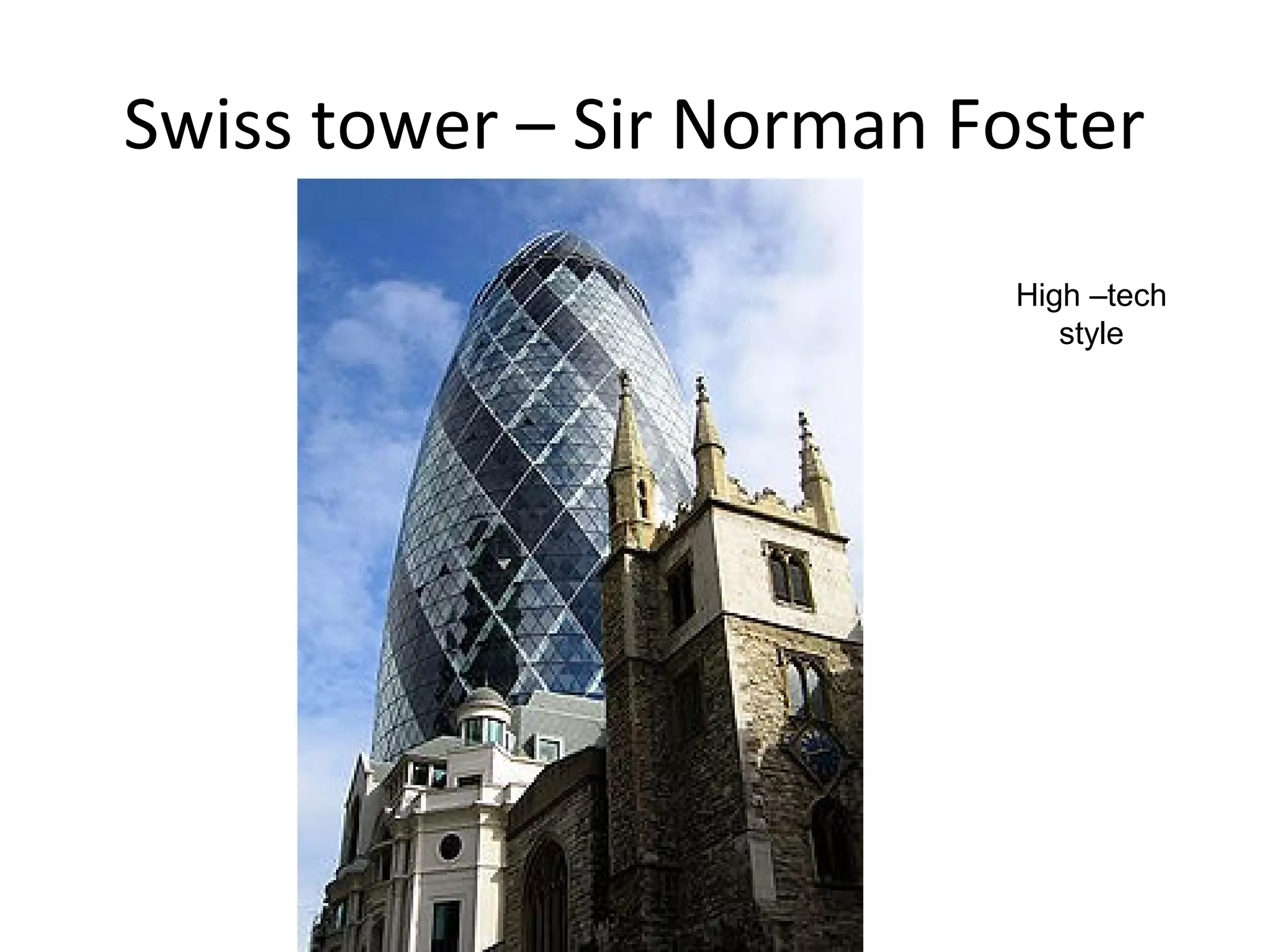
Swiss tower – Sir Norman Foster
High –tech
style
The united states of america
T.
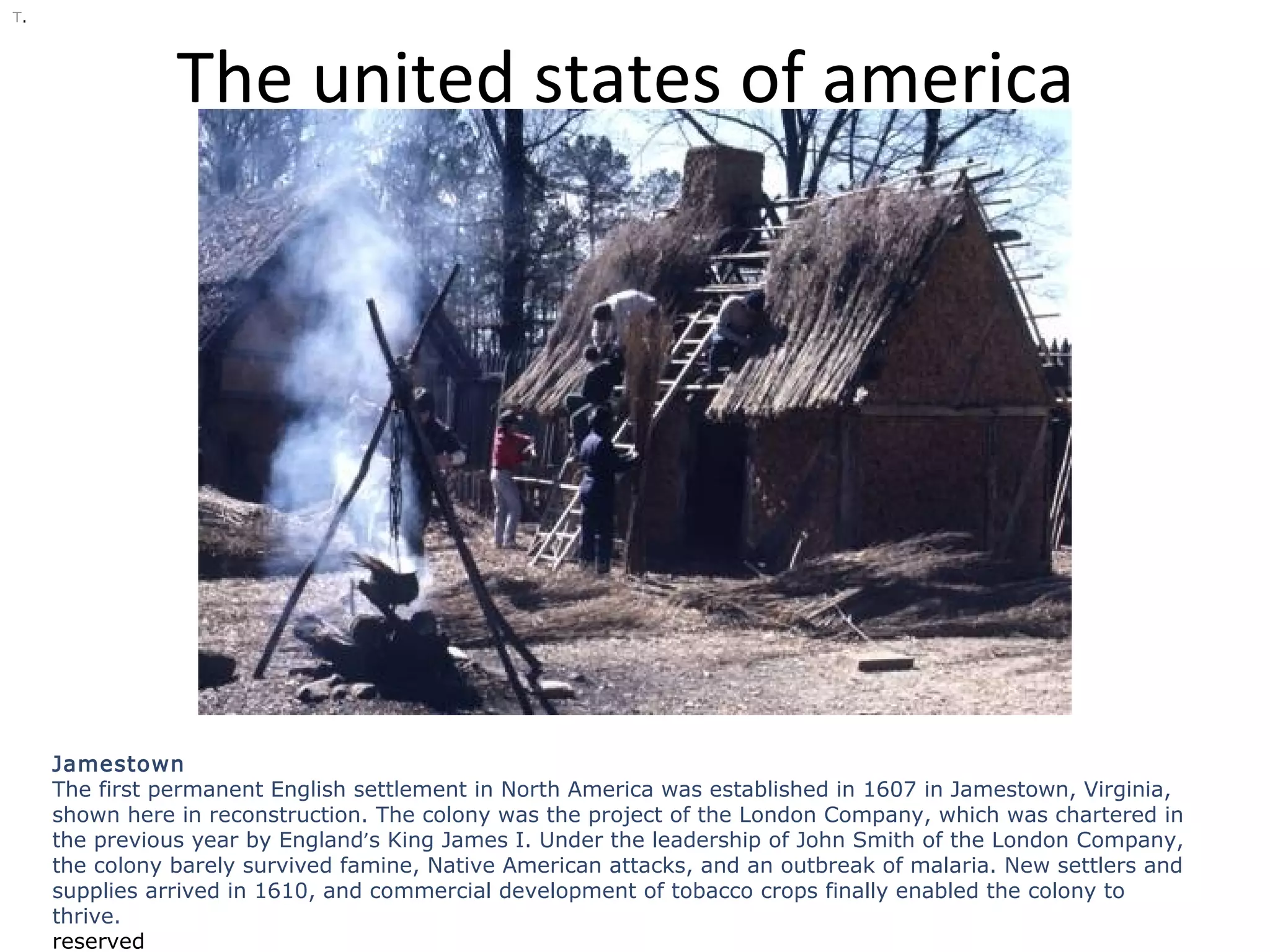
Jamestown
The first permanent English settlement in North America was established in 1607 in Jamestown, Virginia,
shown here in reconstruction. The colony was the project of the London Company, which was chartered in
the previous year by England’s King James I. Under the leadership of John Smith of the London Company,
the colony barely survived famine, Native American attacks, and an outbreak of malaria. New settlers and
supplies arrived in 1610, and commercial development of tobacco crops finally enabled the colony to
thrive.
reserved
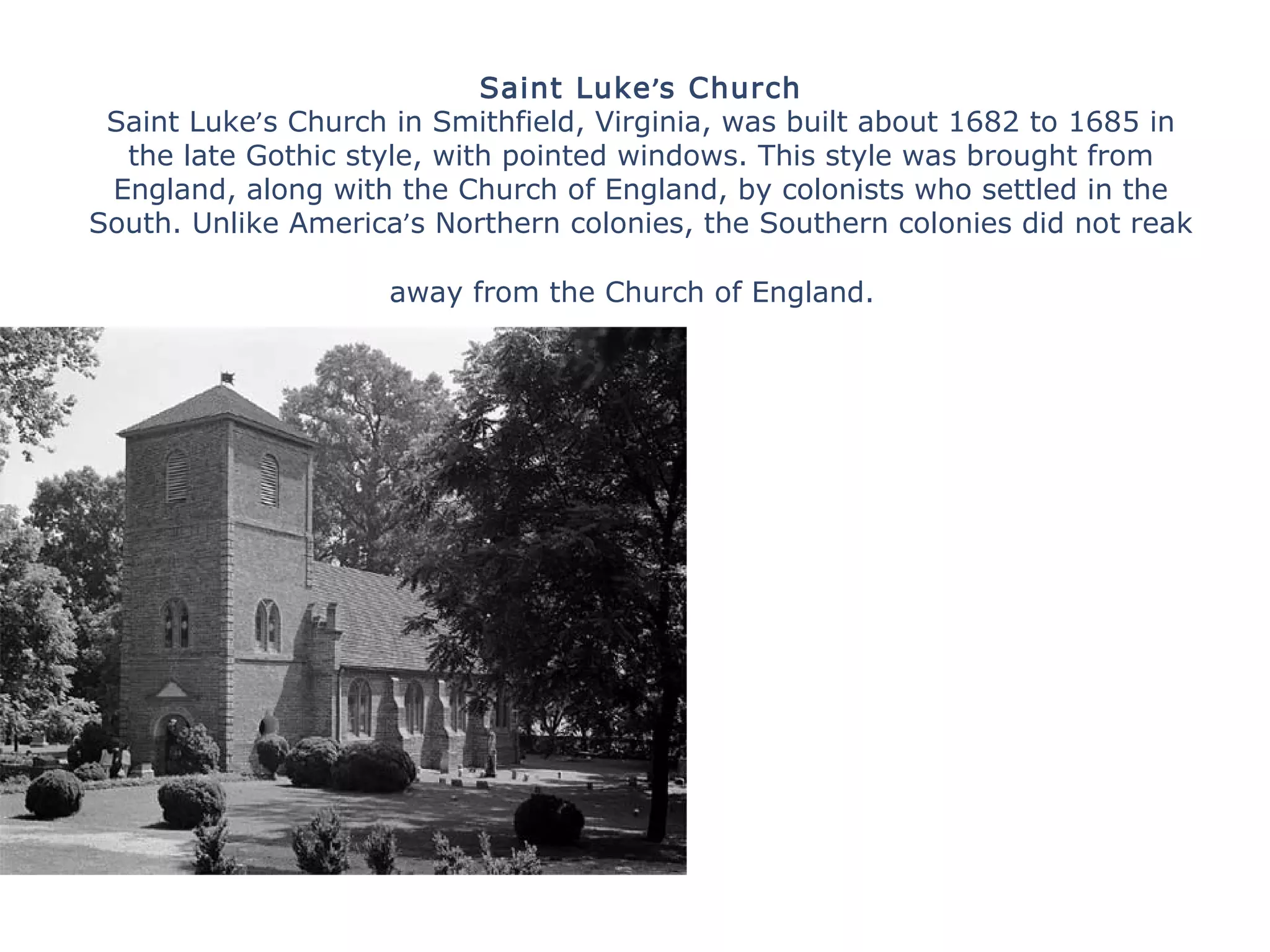
Saint Luke’s Church
Saint Luke’s Church in Smithfield, Virginia, was built about 1682 to 1685 in
the late Gothic style, with pointed windows. This style was brought from
England, along with the Church of England, by colonists who settled in the
South. Unlike America’s Northern colonies, the Southern colonies did not reak
away from the Church of England.
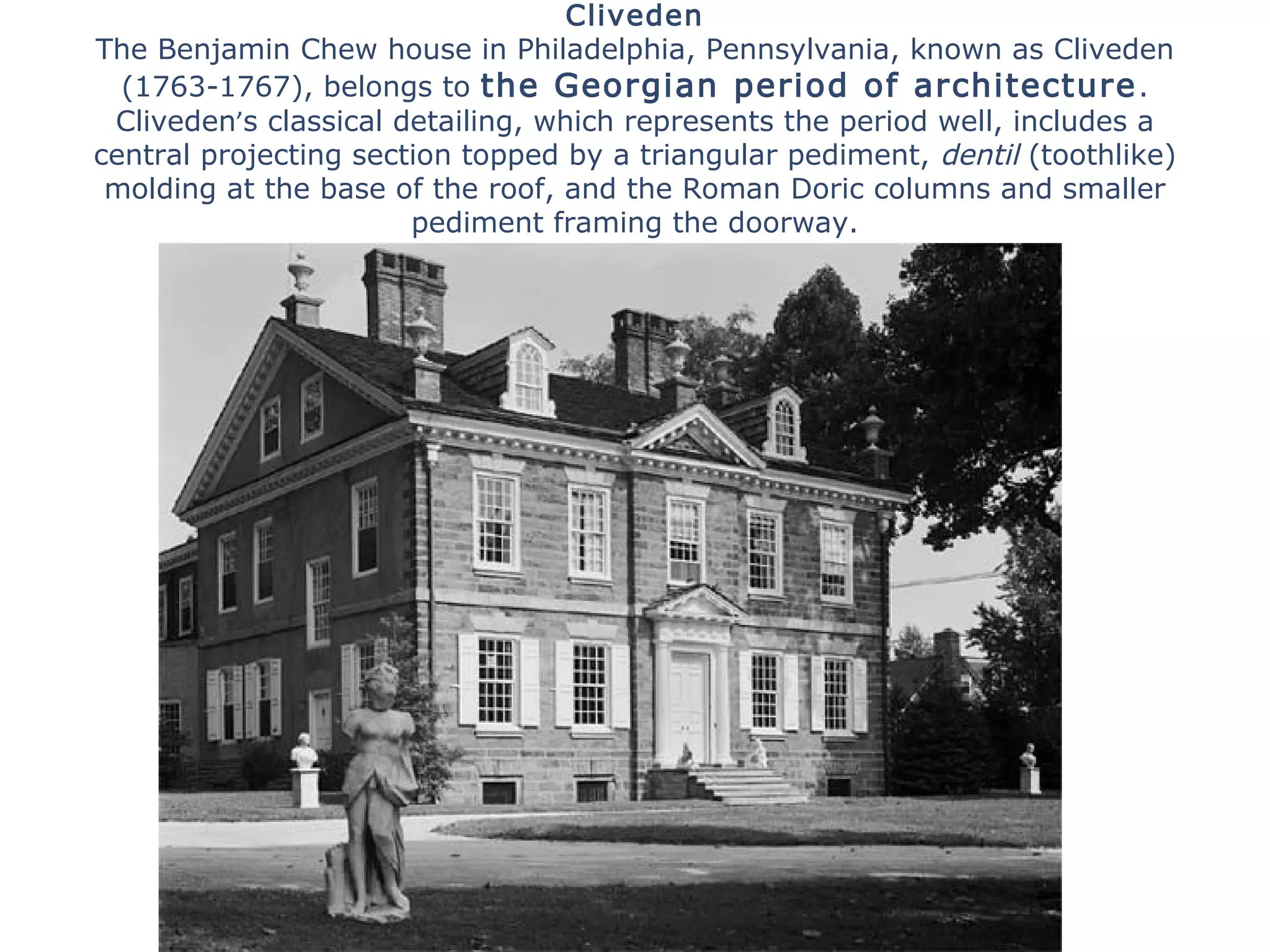
Cliveden
The Benjamin Chew house in Philadelphia, Pennsylvania, known as Cliveden
(1763-1767), belongs to the Georgian period of architecture.
Cliveden’s classical detailing, which represents the period well, includes a
central projecting section topped by a triangular pediment, dentil (toothlike)
molding at the base of the roof, and the Roman Doric columns and smaller
pediment framing the doorway.
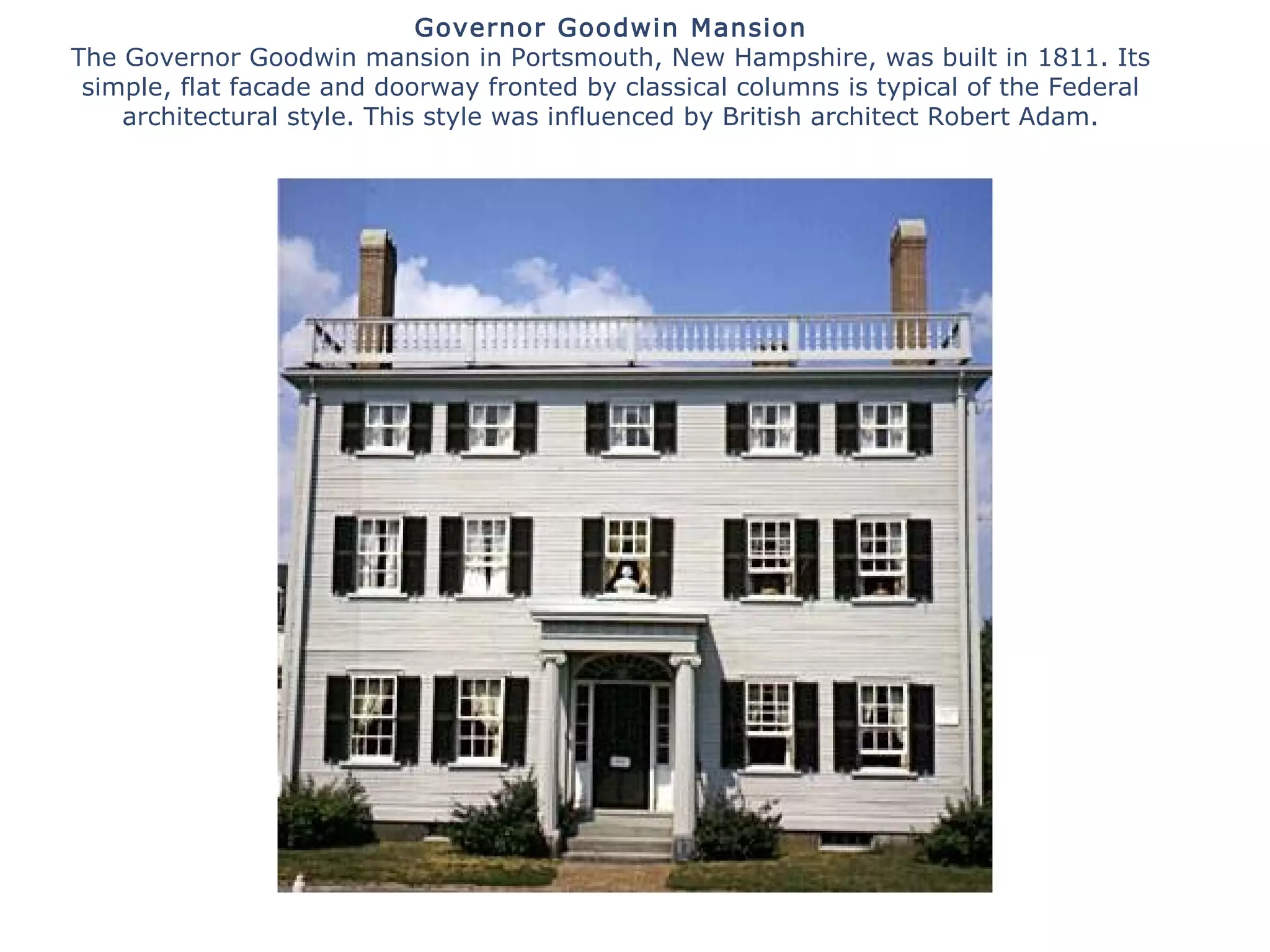
Governor Goodwin Mansion
The Governor Goodwin mansion in Portsmouth, New Hampshire, was built in 1811. Its
simple, flat facade and doorway fronted by classical columns is typical of the Federal
architectural style. This style was influenced by British architect Robert Adam.
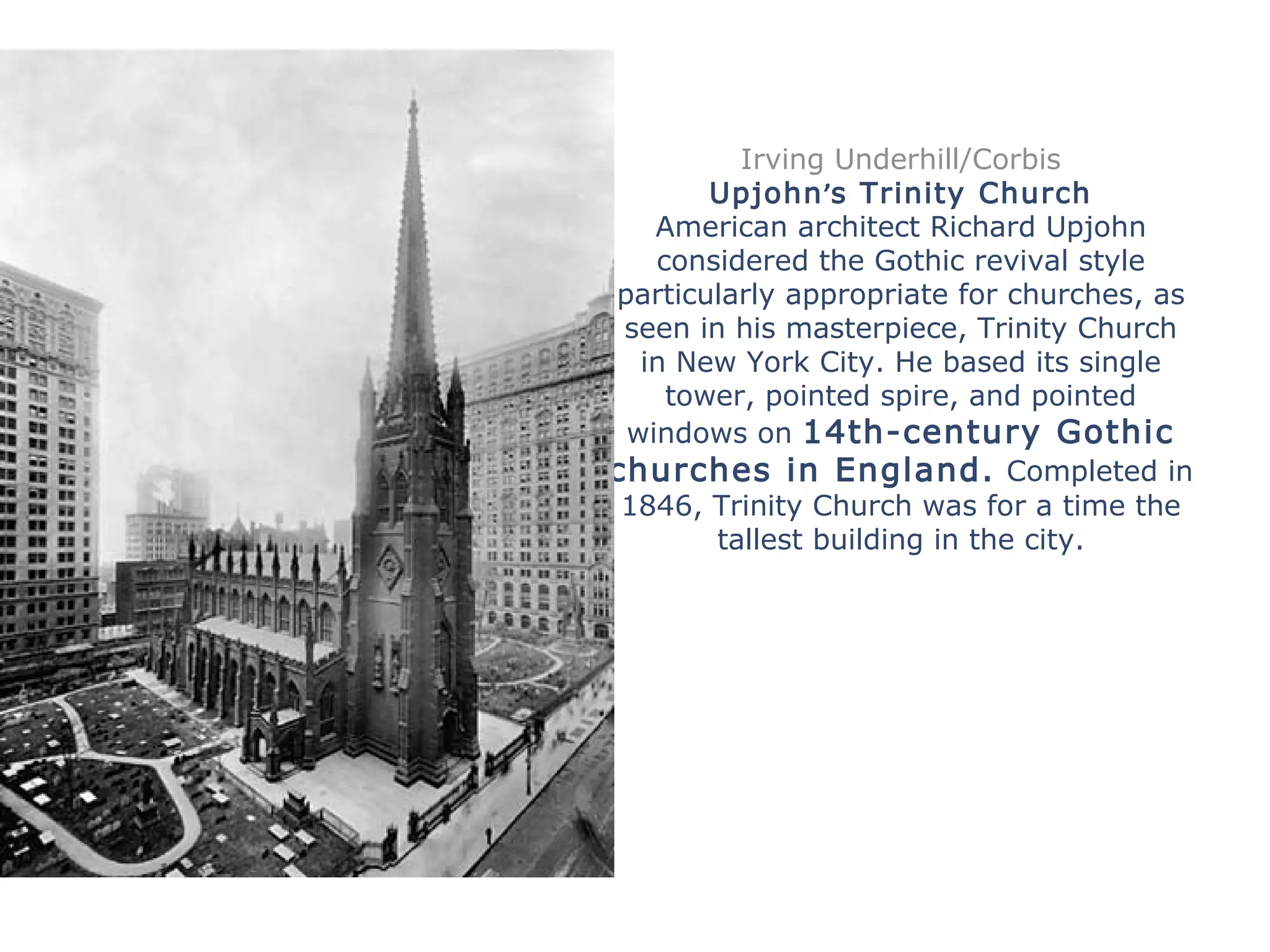
Irving Underhill/Corbis
Upjohn’s Trinity Church
American architect Richard Upjohn
considered the Gothic revival style
particularly appropriate for churches, as
seen in his masterpiece, Trinity Church
in New York City. He based its single
tower, pointed spire, and pointed
windows on 14th-century Gothic
churches in England. Completed in
1846, Trinity Church was for a time the
tallest building in the city.
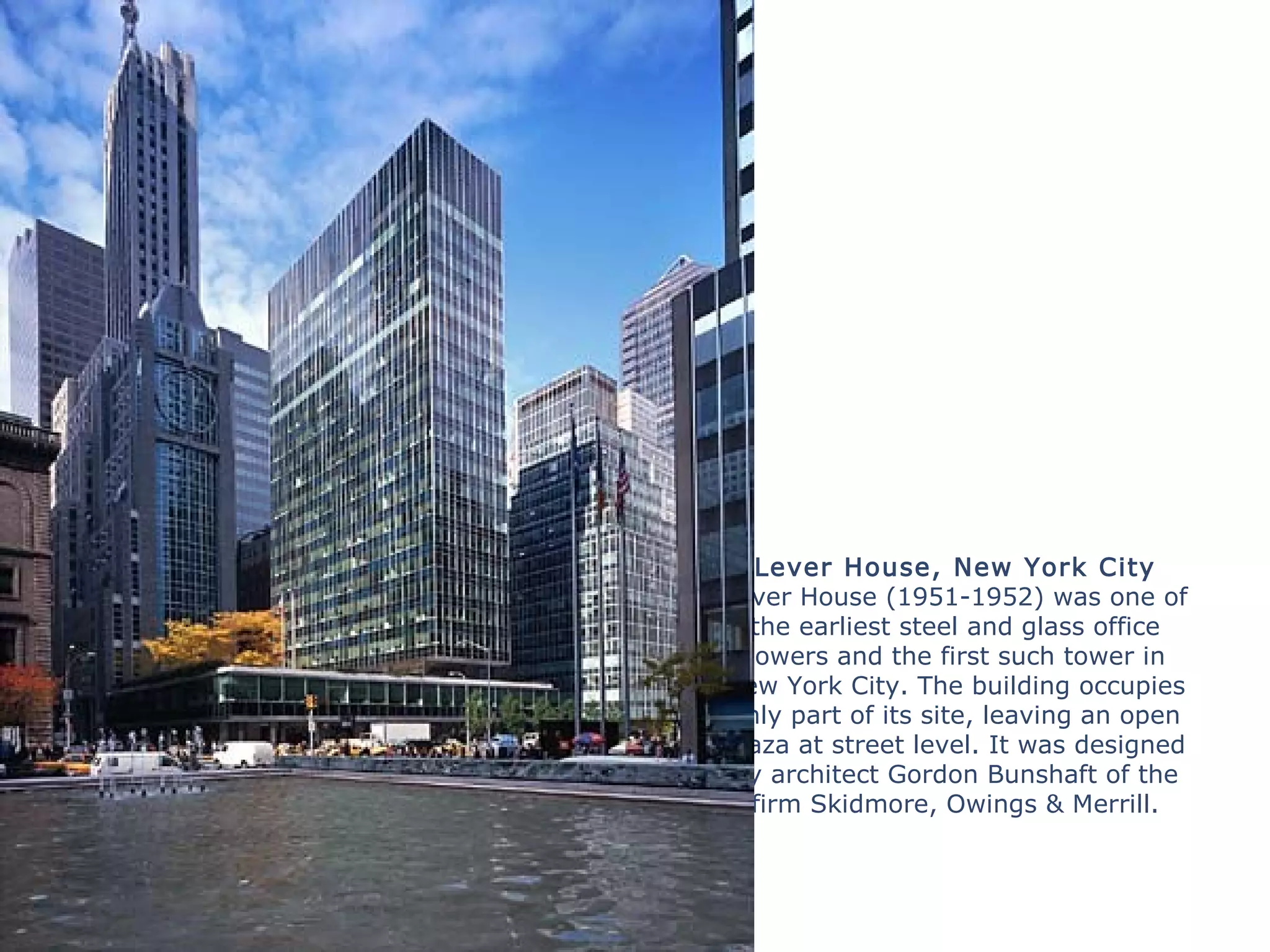
Lever House, New York City
Lever House (1951-1952) was one of
the earliest steel and glass office
towers and the first such tower in
New York City. The building occupies
only part of its site, leaving an open
plaza at street level. It was designed
by architect Gordon Bunshaft of the
firm Skidmore, Owings & Merrill.
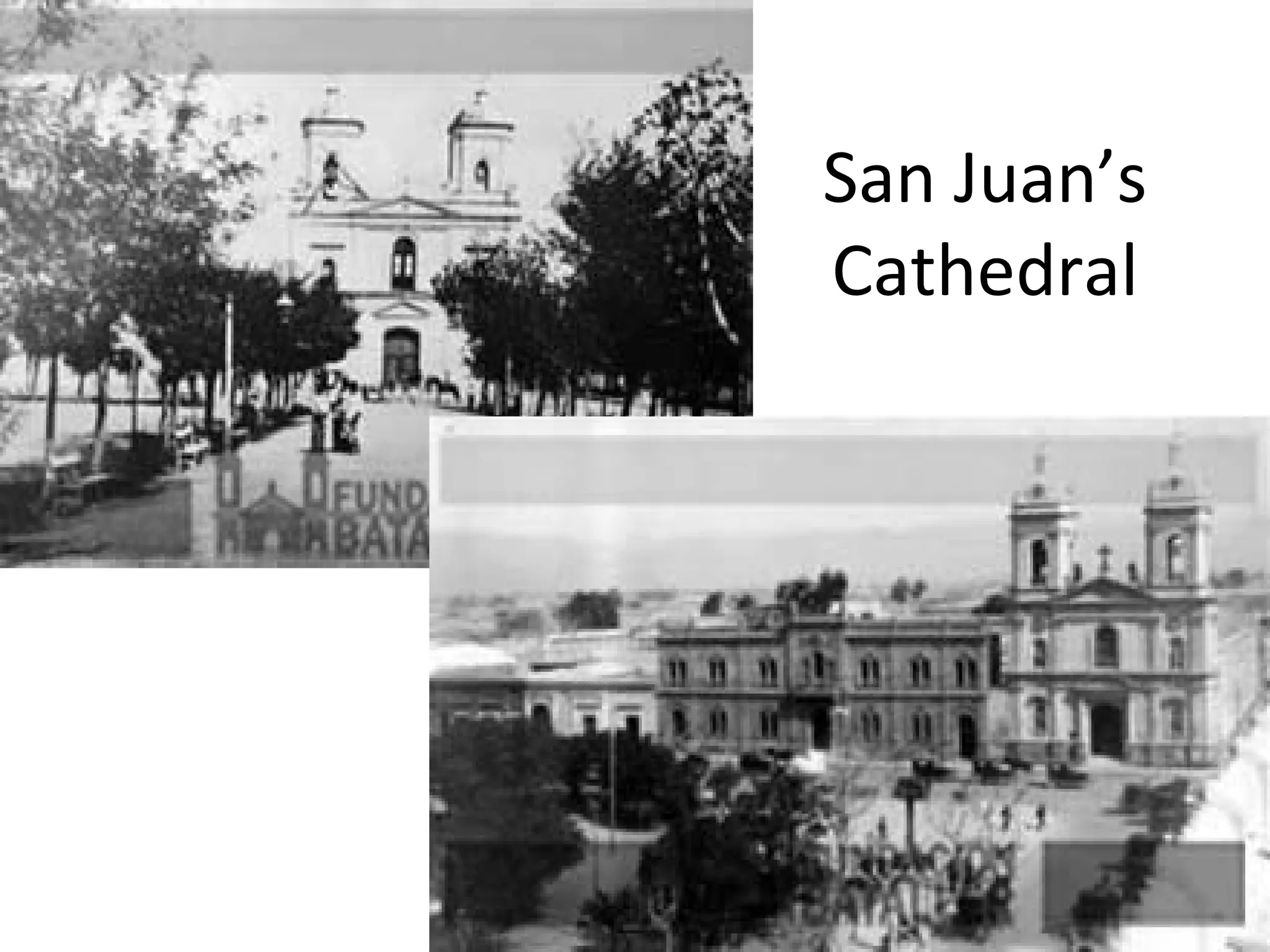
San Juan’s
Cathedral
San Juan’s Cathedral after the
earthquake 1944
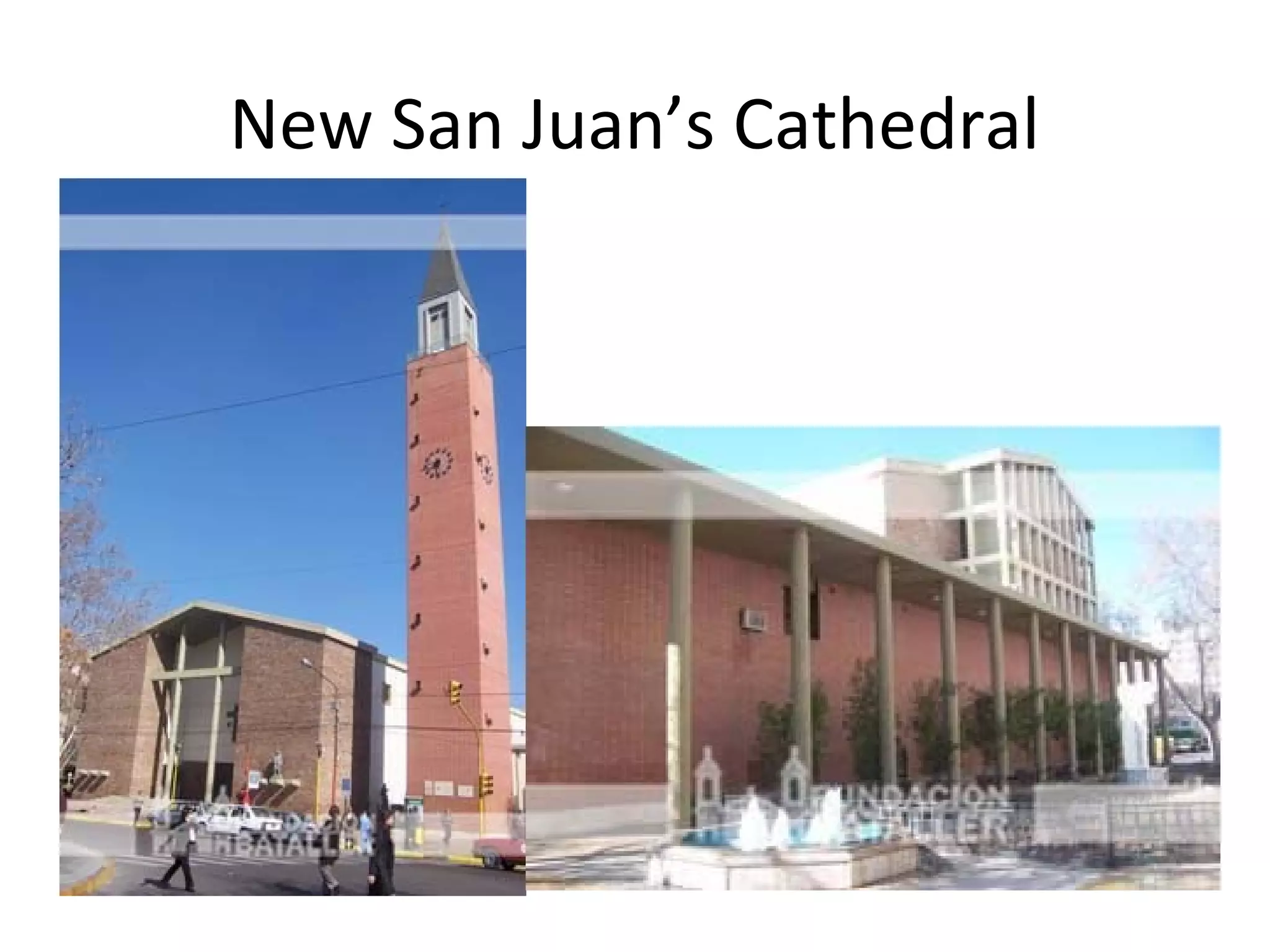
New San Juan’s Cathedral

The evolutions of british architecture

  • 1.
    British architecture consists ofan eclectic combination of architectural styles. Top: Stormont, Northern Ireland Centre left: 30 St Mary Axe and St Andrew Undershaft Centre right: Rochdale Town Hall Bottom left: Balmoral Hotel Bottom right: Pembroke Castle
  • 2.
  • 3.
  • 6.
    Hadrian's Wall Roman EmperorHadrian (ad 117–138) ordered the construction of a wall in northern Britain, then part of the Roman Empire, to keep out the unconquered Caledonians of Scotland. Built out of stone and turf between ad 121 and 126 and measuring about 119 km (74 mi) in length, the wall linked a series of forts and watchtowers. The forts were located every 1.6 km (1 mi) along the wall and the watchtowers every 0.5 km (0.3 mi). The Romans rebuilt Hadrian’s Wall several times throughout the 200s and 300s and used it as a fortification until about 400.
  • 7.
    King Arthur’s RoundTable In Arthurian legend, based on stories about the Anglo-Saxon hero King Arthur, the Round Table at Camelot served as a gathering place for Arthur’s knights. The table’s shape ensured that all who sat around it were equals. This replica of the Round Table can be seen at Winchester Castle in England.
  • 8.
    Canterbury, Kent In ancienttimes, the town of Canterbury was England’s religious center. In the famous Canterbury Tales, Geoffrey Chaucer used the town as the destination for his characters, who were on a pilgrimage to the shrine honoring St. Thomas á Becket. Tourism is an important aspect of Kent’s economy as visitors are attracted to the city’s rich past and beautiful buildings.
  • 9.
    Viking Settlement Typical Vikingsettlements were centered around the longhouse, a large barnlike building in which the family lived. Other buildings included storehouses, where grain and food supplies were kept, and workshops, where weapons and farming tools were made. Because the Vikings were skilled seafarers, many of their settlements were near water, and they used their well-constructed boats for fishing, for trade, and to raid other settlements and villages. All rights reserved.
  • 11.
    Ely Cathedral isan important NORMAN church in the eastern county of Cambridgeshire. The cathedral was begun in 1083 and took more than 200 years to complete.
  • 12.
    Rievaulx Abbey TheNorman ruins of Rievaulx abbey, an impressive ecclesiastical structure that dates to the 14th century, lie in a remote pastoral setting in northern England.David
  • 13.
    Tower of London,England The Tower of London, located on the northern bank of the Thames River, was built about 1078. It was used alternately as a fortress, royal residence, and state prison in its early years. Today, it is maintained as an arsenal with a garrison, and is open to the public. The well-preserved Norman and medieval structures cover nearly 7.2 hectares (18 acres). White Tower, at the heart of the Tower of London
  • 14.
    King’s College Chapel King’s College Chapel, completedin 1515, was one of the first buildings erected at the University of Cambridge in England.
  • 15.
    Cambridge University, Cambridge,England Cambridge University in Cambridge, England, is one of the most prestigious universities in the world. Founded in the 13th century, it is also one of the oldest educational institutions in Europe. Among its many distinguished graduates were Charles Darwin, John Maynard Keynes, Oliver Cromwell, and John Milton.
  • 16.
    All Souls College,Oxford University England’s oldest institution of higher learning, Oxford University, is a federation of 35 colleges, each with its own structure and activities. Many prominent people have attended the All Souls College, shown here.
  • 17.
    Westminster Abbey Westminster Abbey, begunin 1245 for King Henry III, is the best- known church in England. The French Gothic influence can be seen in particular in the window tracery, as well as in the flying buttresses. The chapel of Henry VII, designed in the Tudor style, was added in 1503.
  • 18.
    Elizabethan Hardwick Hall Built inthe 1590s, Hardwick Hall is one of the finest Elizabethan mansions in England. It was built for Elizabeth, Countess of Shrewsbury. The mansion's grounds preserve the original layout of walled courtyards. Nearby are the ruins of Hardwick Old Hall, also built for the countess, which was superseded by the present mansion. The county of Derbyshire is well endowed with great houses, many of which date back to the 15th century. Apart from Hardwick Hall, some of the best known include Haddon, Chetsworth, and Sudbury halls.
  • 19.
    Shakespeare’s Birthplace English playwrightWilliam Shakespeare was born in this house on Henley Street in Stratford-upon-Avon in April 1564. Shakespeare’s father, John, purchased the building in two stages, in 1556 and 1572. Today, Shakespeare’s birthplace is a museum, furnished as it might have been in Shakespeare’s time. It also houses an exhibit on Shakespeare’s life. Topham/The Image Works
  • 20.
    17th. century Queen’s House Queen’sHouse (1616-1635), designed by English architect Inigo Jones for the wife of King James I, was the first Palladian-style villa built in England.
  • 21.
    Interior of SaintPaul’s Cathedral Saint Paul’s Cathedral in London, England, was designed by Sir Christopher Wren. The interior contains many sculptures, paintings, murals, and other artworks executed by various artists. Seen above the high altar is a carved and guilded canopy of marble and oak.
  • 22.
  • 23.
  • 24.
  • 25.
  • 26.
  • 27.
  • 28.
    A Bungalow A bungalowis a one story house,
  • 29.
    Swiss tower –Sir Norman Foster High –tech style
  • 30.
    The united statesof america T. Jamestown The first permanent English settlement in North America was established in 1607 in Jamestown, Virginia, shown here in reconstruction. The colony was the project of the London Company, which was chartered in the previous year by England’s King James I. Under the leadership of John Smith of the London Company, the colony barely survived famine, Native American attacks, and an outbreak of malaria. New settlers and supplies arrived in 1610, and commercial development of tobacco crops finally enabled the colony to thrive. reserved
  • 31.
    Saint Luke’s Church SaintLuke’s Church in Smithfield, Virginia, was built about 1682 to 1685 in the late Gothic style, with pointed windows. This style was brought from England, along with the Church of England, by colonists who settled in the South. Unlike America’s Northern colonies, the Southern colonies did not reak away from the Church of England.
  • 32.
    Cliveden The Benjamin Chewhouse in Philadelphia, Pennsylvania, known as Cliveden (1763-1767), belongs to the Georgian period of architecture. Cliveden’s classical detailing, which represents the period well, includes a central projecting section topped by a triangular pediment, dentil (toothlike) molding at the base of the roof, and the Roman Doric columns and smaller pediment framing the doorway.
  • 33.
    Governor Goodwin Mansion TheGovernor Goodwin mansion in Portsmouth, New Hampshire, was built in 1811. Its simple, flat facade and doorway fronted by classical columns is typical of the Federal architectural style. This style was influenced by British architect Robert Adam.
  • 34.
    Irving Underhill/Corbis Upjohn’s TrinityChurch American architect Richard Upjohn considered the Gothic revival style particularly appropriate for churches, as seen in his masterpiece, Trinity Church in New York City. He based its single tower, pointed spire, and pointed windows on 14th-century Gothic churches in England. Completed in 1846, Trinity Church was for a time the tallest building in the city.
  • 35.
    Lever House, NewYork City Lever House (1951-1952) was one of the earliest steel and glass office towers and the first such tower in New York City. The building occupies only part of its site, leaving an open plaza at street level. It was designed by architect Gordon Bunshaft of the firm Skidmore, Owings & Merrill.
  • 36.
  • 37.
    San Juan’s Cathedralafter the earthquake 1944
  • 38.