By teacher: Marisol González
THE ENGLISH LANGUAGE
AROUND THE WORLD
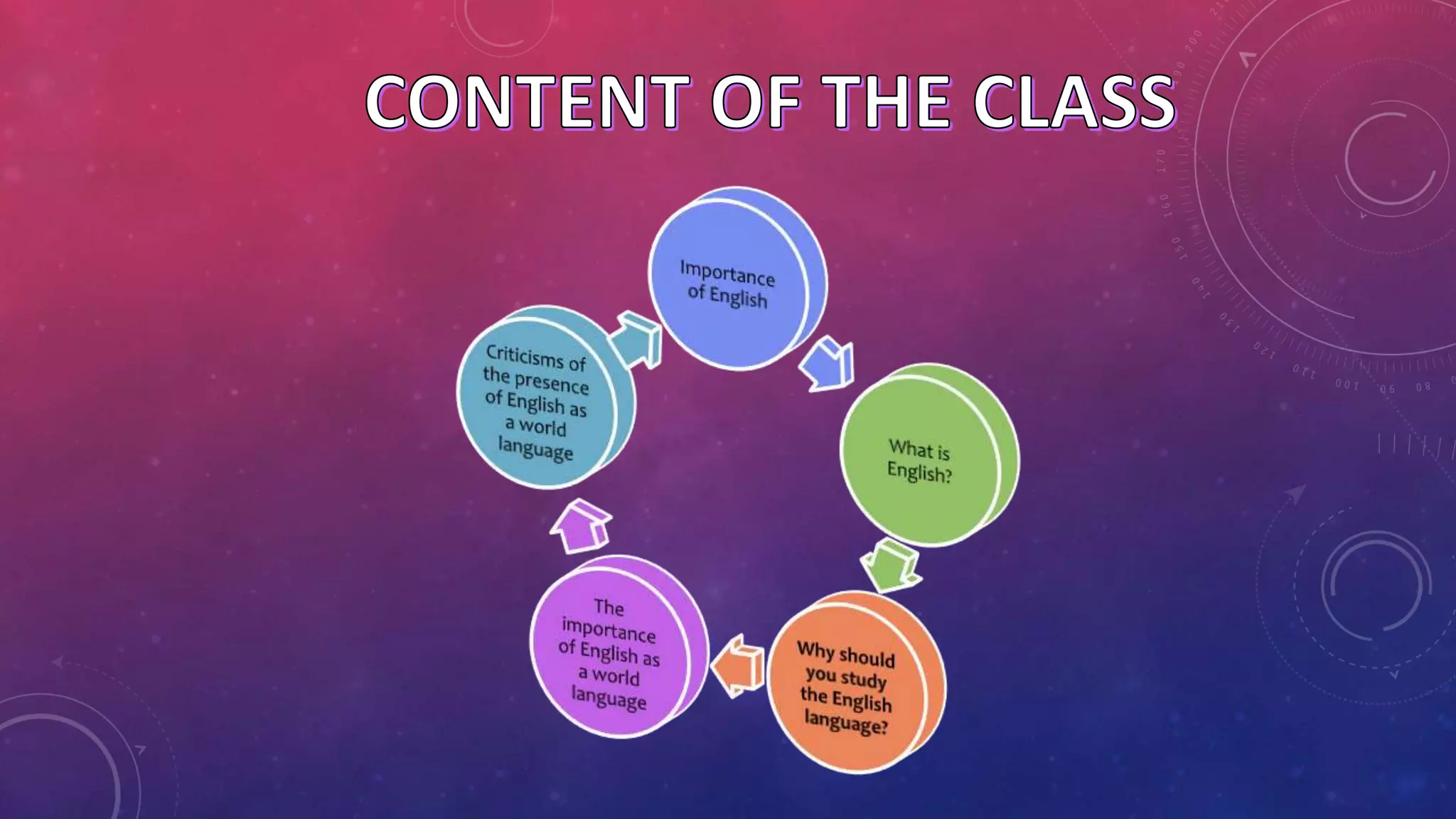
IMPORTANCE OF
THE ENGLISH LANGUAGE
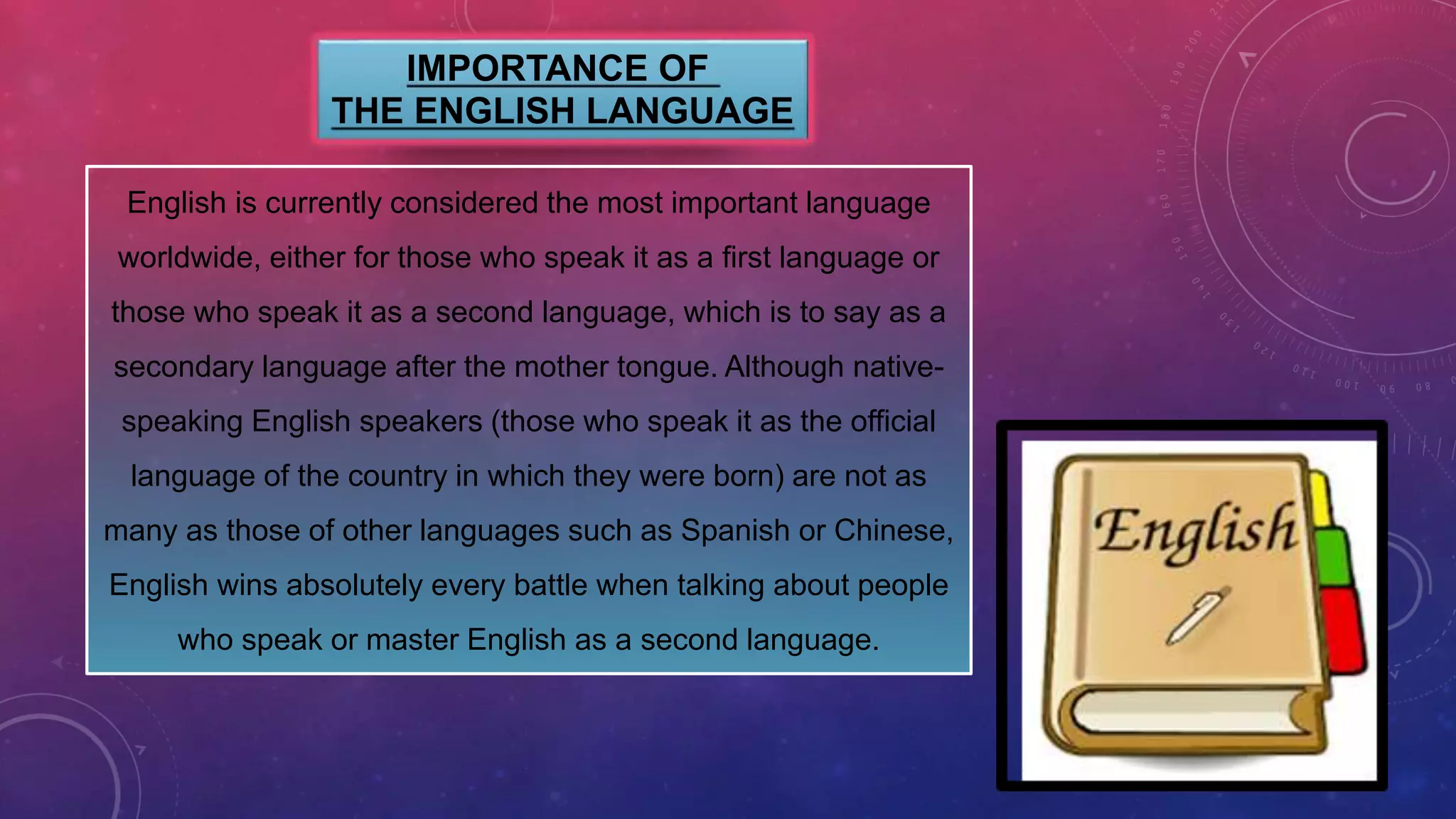
English is currently considered the most important language
worldwide, either for those who speak it as a first language or
those who speak it as a second language, which is to say as a
secondary language after the mother tongue. Although native-
speaking English speakers (those who speak it as the official
language of the country in which they were born) are not as
many as those of other languages such as Spanish or Chinese,
English wins absolutely every battle when talking about people
who speak or master English as a second language.
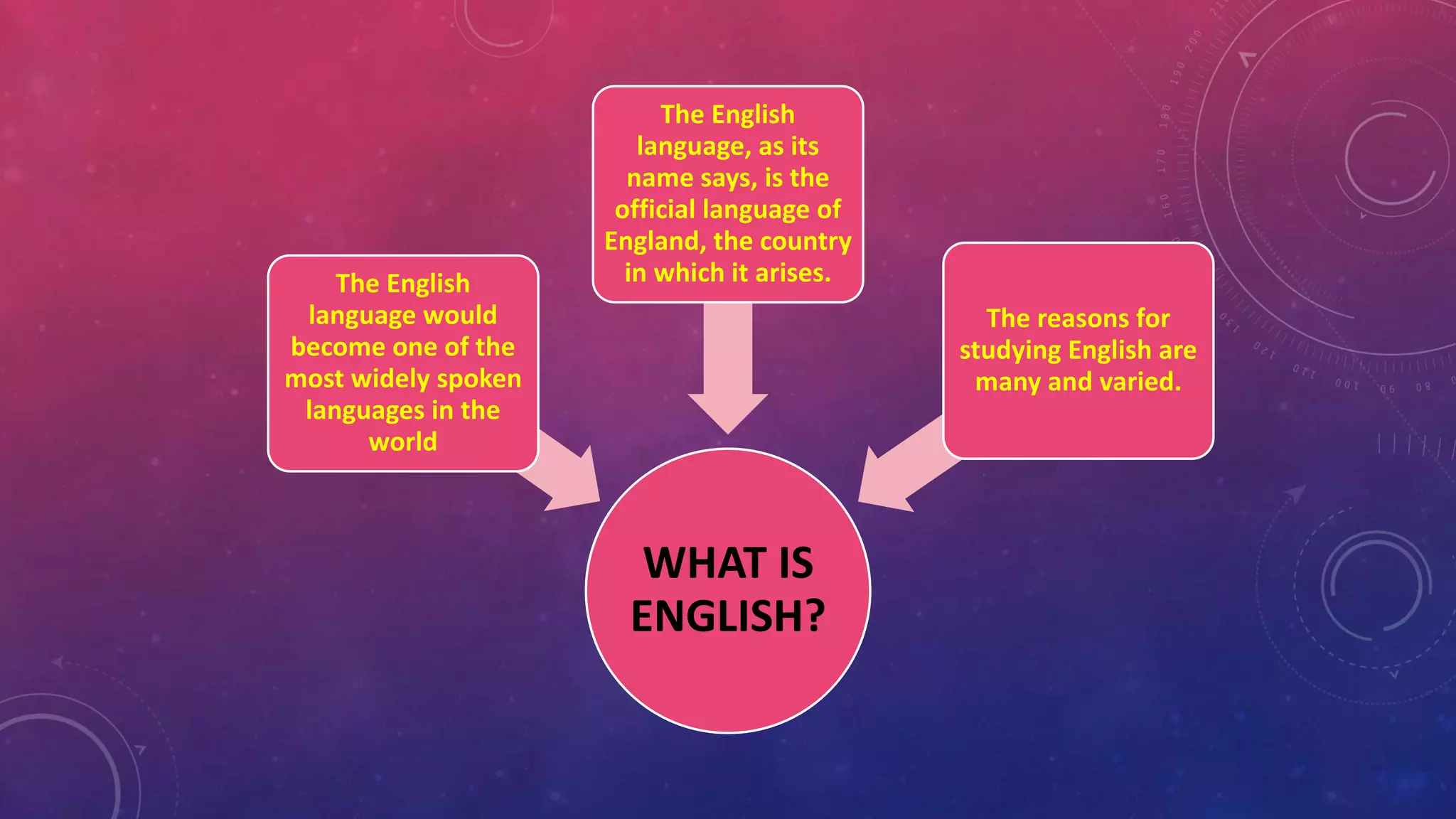
WHAT IS
ENGLISH?
The English
language would
become one of the
most widely spoken
languages in the
world
The English
language, as its
name says, is the
official language of
England, the country
in which it arises.
The reasons for
studying English are
many and varied.
WHY SHOULD YOU STUDY
THE ENGLISH LANGUAGE?
Reasons to learn English:
 It is essential to work
 It's the universal language
 It will open you to new cultures
 You will travel without problems
 It is the most learned language
 To improve yourself
 Anglophone art and literature
 Eliminates weaknesses
 Enjoy a well-deserved vacation
Today it is essential to train at the level of English not only for work
issues (have a good level of English is certainly a good gateway to
better jobs) but also to communicate, to access greater knowledge
and information, to be updated, etc.
CRITICISMS OF THE PRESENCE OF ENGLISH
AS A WORLD LANGUAGE
From many places a critical vision of the phenomenon of English is
made to understand it as an invasion more on the part of the most
powerful countries to which they have less power. It is even pointed
out that many times the local and native languages of other parts of
the world are more complex than English itself and that this speaks of
much more elaborate cultures than the Anglo-Saxon one. On the other
hand, recognition is requested to other languages that are slowly
growing, such as Chinese or Spanish.
Finally, many theorists demand respect, revival
and recovery of languages that have been lost
by the impressive invasion of English, for
example the American and African languages.
The english language around the world

The english language around the world

  • 1.
    By teacher: MarisolGonzález THE ENGLISH LANGUAGE AROUND THE WORLD
  • 3.
    IMPORTANCE OF THE ENGLISHLANGUAGE English is currently considered the most important language worldwide, either for those who speak it as a first language or those who speak it as a second language, which is to say as a secondary language after the mother tongue. Although native- speaking English speakers (those who speak it as the official language of the country in which they were born) are not as many as those of other languages such as Spanish or Chinese, English wins absolutely every battle when talking about people who speak or master English as a second language.
  • 4.
    WHAT IS ENGLISH? The English languagewould become one of the most widely spoken languages in the world The English language, as its name says, is the official language of England, the country in which it arises. The reasons for studying English are many and varied.
  • 5.
    WHY SHOULD YOUSTUDY THE ENGLISH LANGUAGE? Reasons to learn English:  It is essential to work  It's the universal language  It will open you to new cultures  You will travel without problems  It is the most learned language  To improve yourself  Anglophone art and literature  Eliminates weaknesses  Enjoy a well-deserved vacation
  • 6.
    Today it isessential to train at the level of English not only for work issues (have a good level of English is certainly a good gateway to better jobs) but also to communicate, to access greater knowledge and information, to be updated, etc.
  • 7.
    CRITICISMS OF THEPRESENCE OF ENGLISH AS A WORLD LANGUAGE From many places a critical vision of the phenomenon of English is made to understand it as an invasion more on the part of the most powerful countries to which they have less power. It is even pointed out that many times the local and native languages of other parts of the world are more complex than English itself and that this speaks of much more elaborate cultures than the Anglo-Saxon one. On the other hand, recognition is requested to other languages that are slowly growing, such as Chinese or Spanish.
  • 8.
    Finally, many theoristsdemand respect, revival and recovery of languages that have been lost by the impressive invasion of English, for example the American and African languages.