DUBLIN
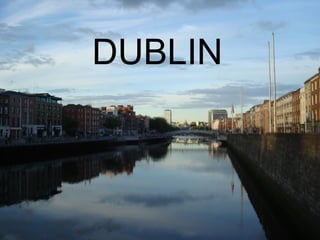
Dublin is the capital and most
       populous city of Ireland.
It is situated near the midpoint of
      Ireland's east coast, at the
       mouth of the River Liffey
Originally founded as a Viking
   settlement in the 9th century
    evolved into the Kingdom of
 Dublin and became the island's
principal city following the Norman
              invasion.
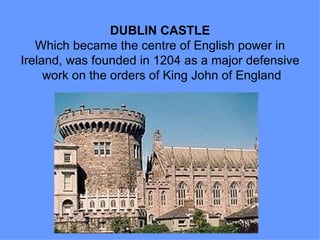
DUBLIN CASTLE
   Which became the centre of English power in
Ireland, was founded in 1204 as a major defensive
     work on the orders of King John of England
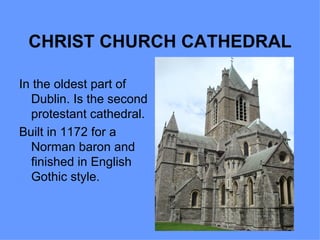
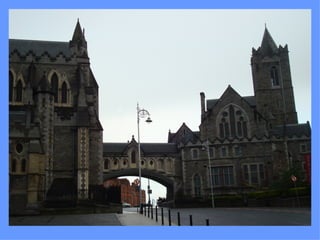
CHRIST CHURCH CATHEDRAL

In the oldest part of
  Dublin. Is the second
  protestant cathedral.
Built in 1172 for a
  Norman baron and
  finished in English
  Gothic style.
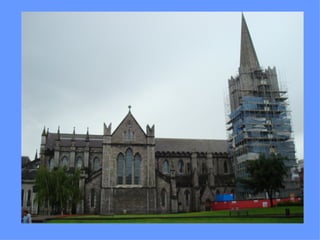
SAINT PATRICK’S CATHEDRAL

Built in honour of Ireland’s patron saint,
Saint Patrick’s Cathedral stands adjacent
 to the famous well where tradition has it
Saint Patrick baptized converts on his visit
                  to Dublin.
  The present building dates from 1220.
It is today the National Cathedral of the
  Church of Ireland and also serves as a
     popular tourist attraction in Ireland.
Dublin was incorporated into the English
Crown as The Pale, The Tudor conquest
of Ireland in the 16th century spelt a new
               era for Dublin.
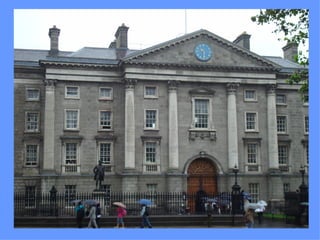
Determined to make Dublin a Protestant
    city, Queen Elizabeth I of England
 established Trinity College in 1592 as a
 solely Protestant university and ordered
 that the Catholic St. Patrick's and Christ
    Church cathedrals be converted to
                Protestant.
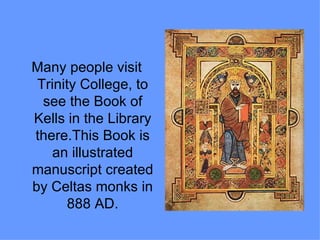
Many people visit
 Trinity College, to
  see the Book of
Kells in the Library
there.This Book is
   an illustrated
manuscript created
by Celtas monks in
       888 AD.
As the city continued to prosper
     during the 18th century,
 georgian dublin became, for a
    short period, the second
    largest city of the British
             Empire.
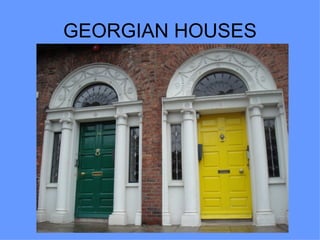
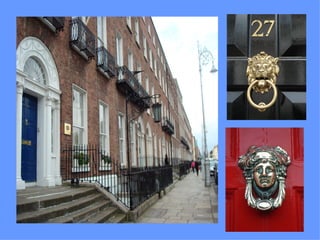
GEORGIAN HOUSES
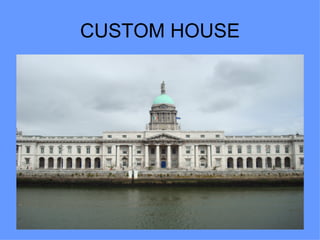
The vast majority of Dublin's most
 notable architecture dates from this
   period, such as the the Custom
   House, Temple Bar and Grafton
street, remaining areas that were not
  affected by the wave of Georgian
 reconstruction and maintained their
          medieval character.
CUSTOM HOUSE
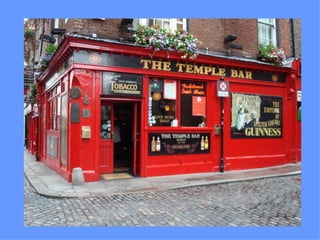
TEMPLE BAR
It is an area on the south bank of the
   river Liffey in central Dublin. Unlike
 the areas surrounding it, Temple Bar
    has preserved its medieval street
  pattern, with many narrow streets. It
     is promoted as "Dublin's cultural
 quarter" and has a lively nightlife that
          is popular with tourists.
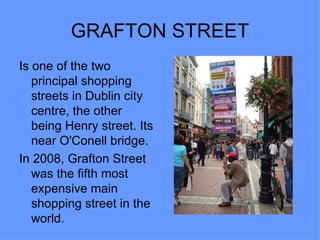
GRAFTON STREET
Is one of the two
   principal shopping
   streets in Dublin city
   centre, the other
   being Henry street. Its
   near O'Conell bridge.
In 2008, Grafton Street
   was the fifth most
   expensive main
   shopping street in the
   world.
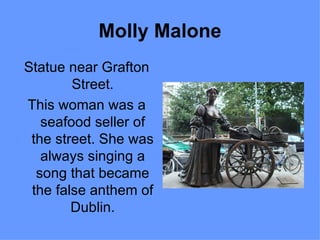
Molly Malone
Statue near Grafton
        Street.
This woman was a
   seafood seller of
 the street. She was
   always singing a
  song that became
 the false anthem of
        Dublin.
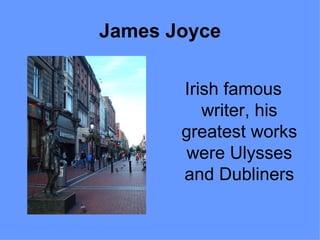
James Joyce

       Irish famous
          writer, his
       greatest works
        were Ulysses
       and Dubliners
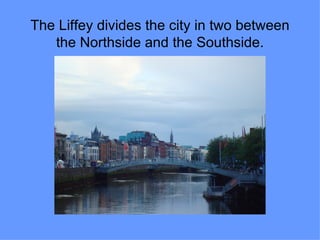
The Liffey divides the city in two between
   the Northside and the Southside.
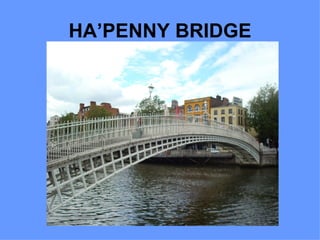
HA’PENNY BRIDGE
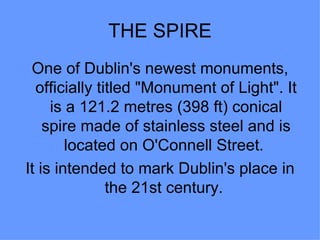
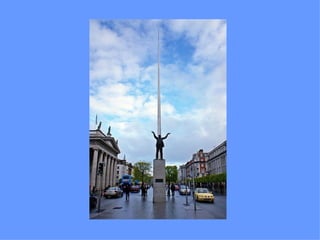
THE SPIRE
 One of Dublin's newest monuments,
  officially titled "Monument of Light". It
     is a 121.2 metres (398 ft) conical
    spire made of stainless steel and is
        located on O'Connell Street.
It is intended to mark Dublin's place in
               the 21st century.
PARKS
Dublin has more green spaces per
  square kilometre than any other
    European capital city. The
 council also plants approximately
     5,000 trees annually and
 manages over 1,500 hectares of
               parks.
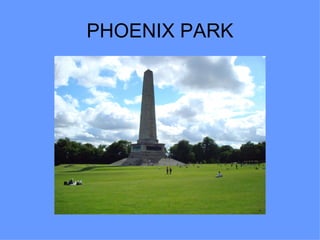
PHOENIX PARK
STEPHEN’S GREEN
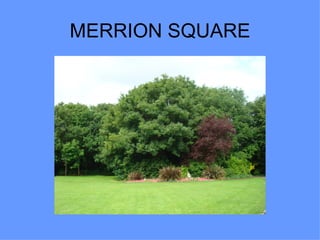
MERRION SQUARE
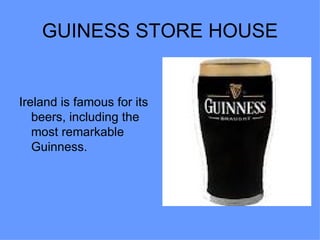
GUINESS STORE HOUSE


Ireland is famous for its
   beers, including the
   most remarkable
   Guinness.
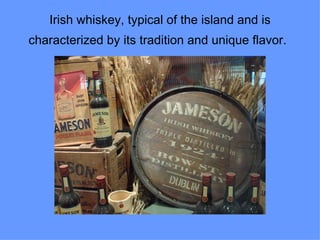
Irish whiskey, typical of the island and is
characterized by its tradition and unique flavor.
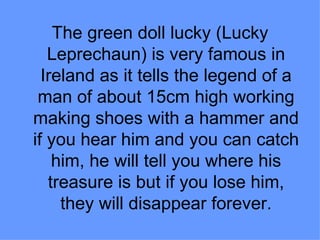
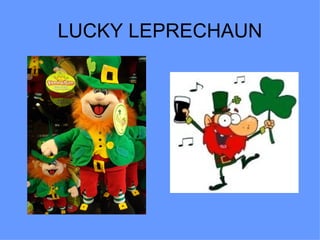
The green doll lucky (Lucky
   Leprechaun) is very famous in
  Ireland as it tells the legend of a
 man of about 15cm high working
making shoes with a hammer and
if you hear him and you can catch
    him, he will tell you where his
   treasure is but if you lose him,
     they will disappear forever.
LUCKY LEPRECHAUN
If you have enjoyed this explanation of
 Dublin, don’t hesitate to join us the first
            week of october


                  

Presentation of Dublin

  • 1.
  • 2.
    Dublin is thecapital and most populous city of Ireland. It is situated near the midpoint of Ireland's east coast, at the mouth of the River Liffey
  • 3.
    Originally founded asa Viking settlement in the 9th century evolved into the Kingdom of Dublin and became the island's principal city following the Norman invasion.
  • 4.
    DUBLIN CASTLE Which became the centre of English power in Ireland, was founded in 1204 as a major defensive work on the orders of King John of England
  • 5.
    CHRIST CHURCH CATHEDRAL Inthe oldest part of Dublin. Is the second protestant cathedral. Built in 1172 for a Norman baron and finished in English Gothic style.
  • 7.
    SAINT PATRICK’S CATHEDRAL Builtin honour of Ireland’s patron saint, Saint Patrick’s Cathedral stands adjacent to the famous well where tradition has it Saint Patrick baptized converts on his visit to Dublin. The present building dates from 1220. It is today the National Cathedral of the Church of Ireland and also serves as a popular tourist attraction in Ireland.
  • 9.
    Dublin was incorporatedinto the English Crown as The Pale, The Tudor conquest of Ireland in the 16th century spelt a new era for Dublin. Determined to make Dublin a Protestant city, Queen Elizabeth I of England established Trinity College in 1592 as a solely Protestant university and ordered that the Catholic St. Patrick's and Christ Church cathedrals be converted to Protestant.
  • 11.
    Many people visit Trinity College, to see the Book of Kells in the Library there.This Book is an illustrated manuscript created by Celtas monks in 888 AD.
  • 12.
    As the citycontinued to prosper during the 18th century, georgian dublin became, for a short period, the second largest city of the British Empire.
  • 13.
  • 15.
    The vast majorityof Dublin's most notable architecture dates from this period, such as the the Custom House, Temple Bar and Grafton street, remaining areas that were not affected by the wave of Georgian reconstruction and maintained their medieval character.
  • 16.
  • 17.
    TEMPLE BAR It isan area on the south bank of the river Liffey in central Dublin. Unlike the areas surrounding it, Temple Bar has preserved its medieval street pattern, with many narrow streets. It is promoted as "Dublin's cultural quarter" and has a lively nightlife that is popular with tourists.
  • 19.
    GRAFTON STREET Is oneof the two principal shopping streets in Dublin city centre, the other being Henry street. Its near O'Conell bridge. In 2008, Grafton Street was the fifth most expensive main shopping street in the world.
  • 20.
    Molly Malone Statue nearGrafton Street. This woman was a seafood seller of the street. She was always singing a song that became the false anthem of Dublin.
  • 21.
    James Joyce Irish famous writer, his greatest works were Ulysses and Dubliners
  • 22.
    The Liffey dividesthe city in two between the Northside and the Southside.
  • 23.
  • 24.
    THE SPIRE Oneof Dublin's newest monuments, officially titled "Monument of Light". It is a 121.2 metres (398 ft) conical spire made of stainless steel and is located on O'Connell Street. It is intended to mark Dublin's place in the 21st century.
  • 26.
    PARKS Dublin has moregreen spaces per square kilometre than any other European capital city. The council also plants approximately 5,000 trees annually and manages over 1,500 hectares of parks.
  • 27.
  • 28.
  • 29.
  • 30.
    GUINESS STORE HOUSE Irelandis famous for its beers, including the most remarkable Guinness.
  • 31.
    Irish whiskey, typicalof the island and is characterized by its tradition and unique flavor.
  • 32.
    The green dolllucky (Lucky Leprechaun) is very famous in Ireland as it tells the legend of a man of about 15cm high working making shoes with a hammer and if you hear him and you can catch him, he will tell you where his treasure is but if you lose him, they will disappear forever.
  • 33.
  • 34.
    If you haveenjoyed this explanation of Dublin, don’t hesitate to join us the first week of october 