The
Earth
GEOLOGY
From the Ancient Greek
geo means "earth" and
logia mean "study of”
GEOLOGY
An earth science comprising the
study of Earth interior and
composition. The Earth has
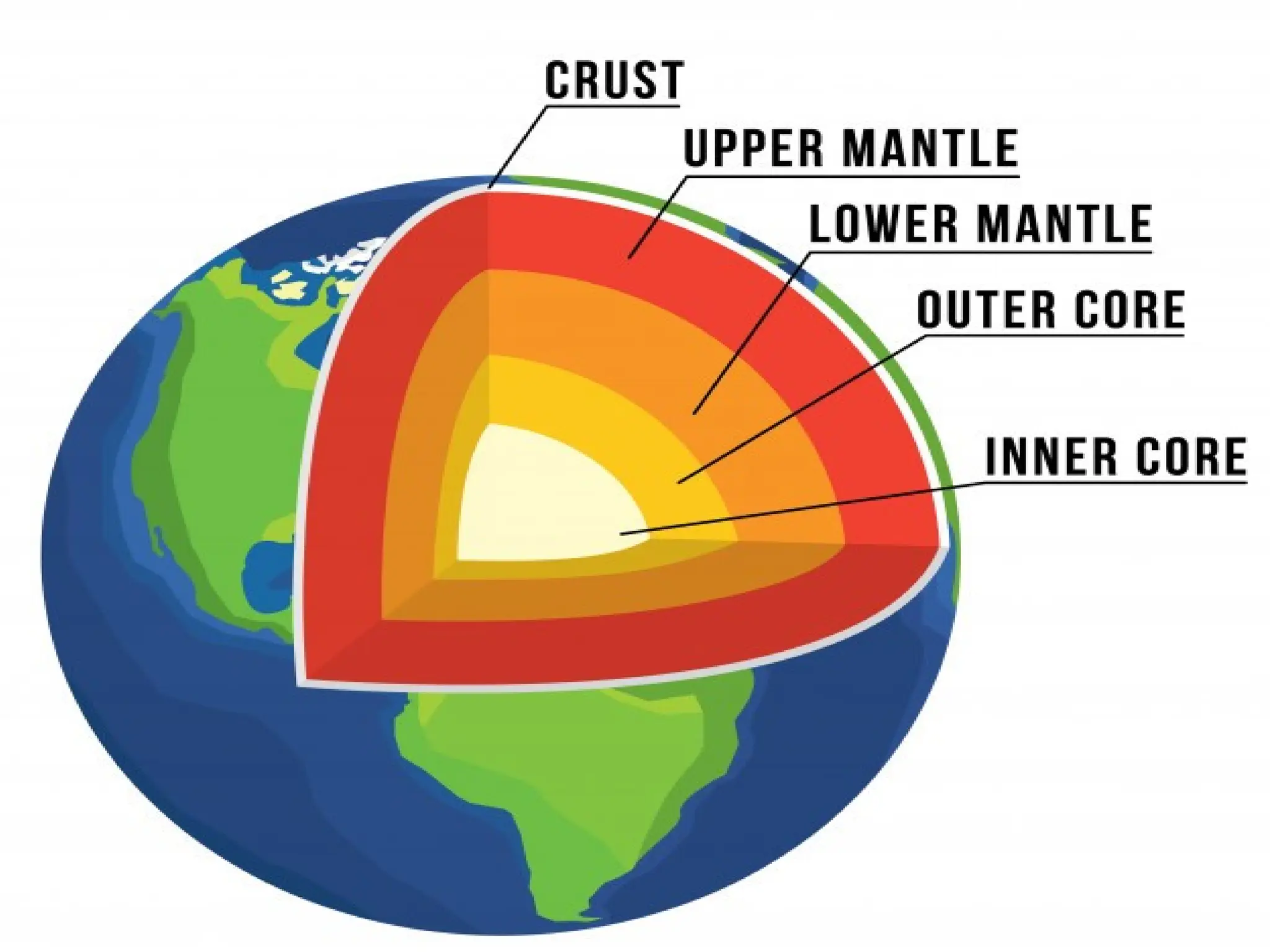
layered structures namely the
crust, mantle, inner core and
outer core.
The Earth has layered
structures which are important
for understanding the PLATE
TECTONICS THEORY. Studying
the Earth’s interior can help us
understand earthquakes,
volcanoes, and more about the
Earth’s natural processes.
The Layers
of the
Earth’s
interior
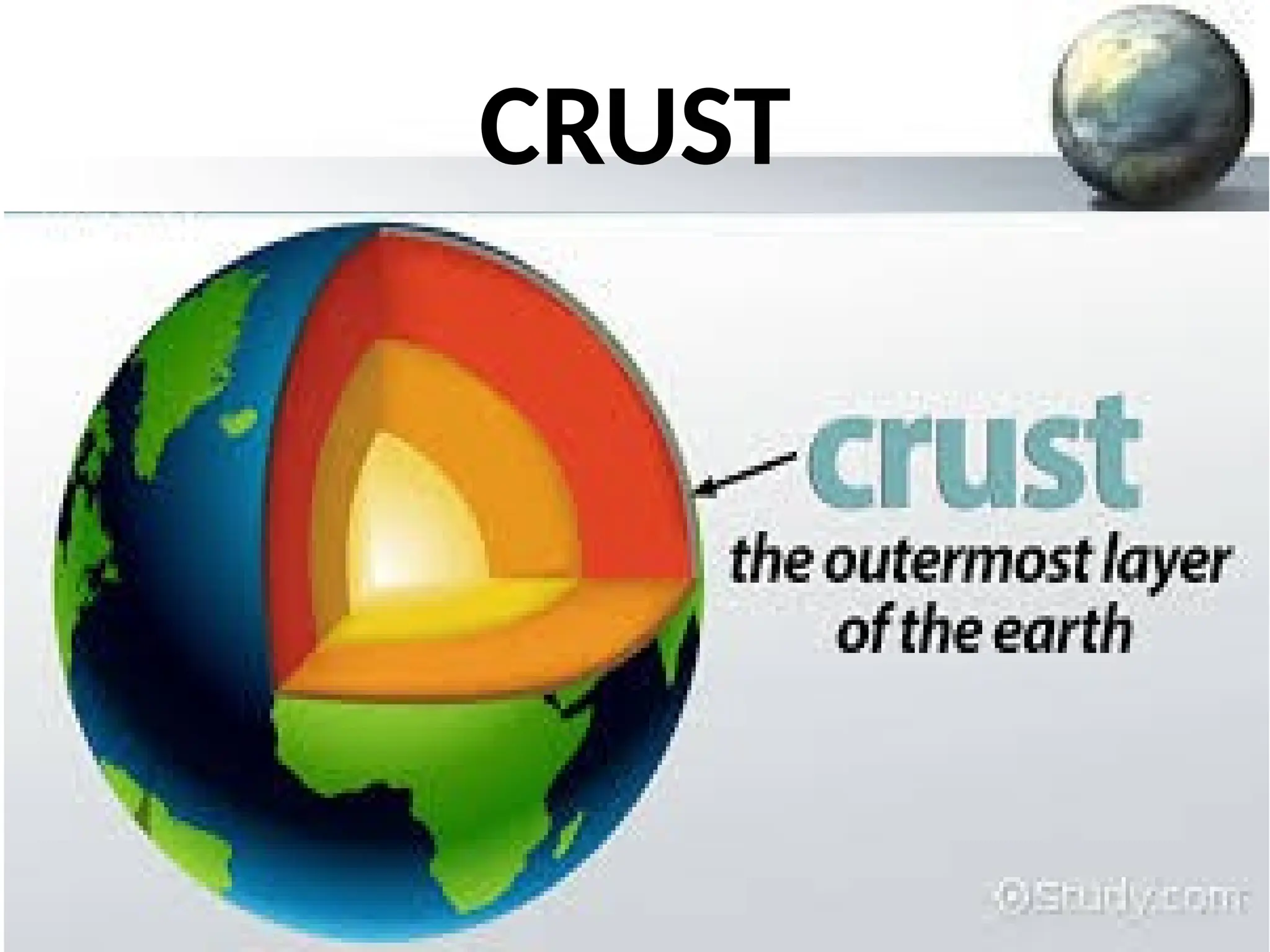
CRUST
CRUST
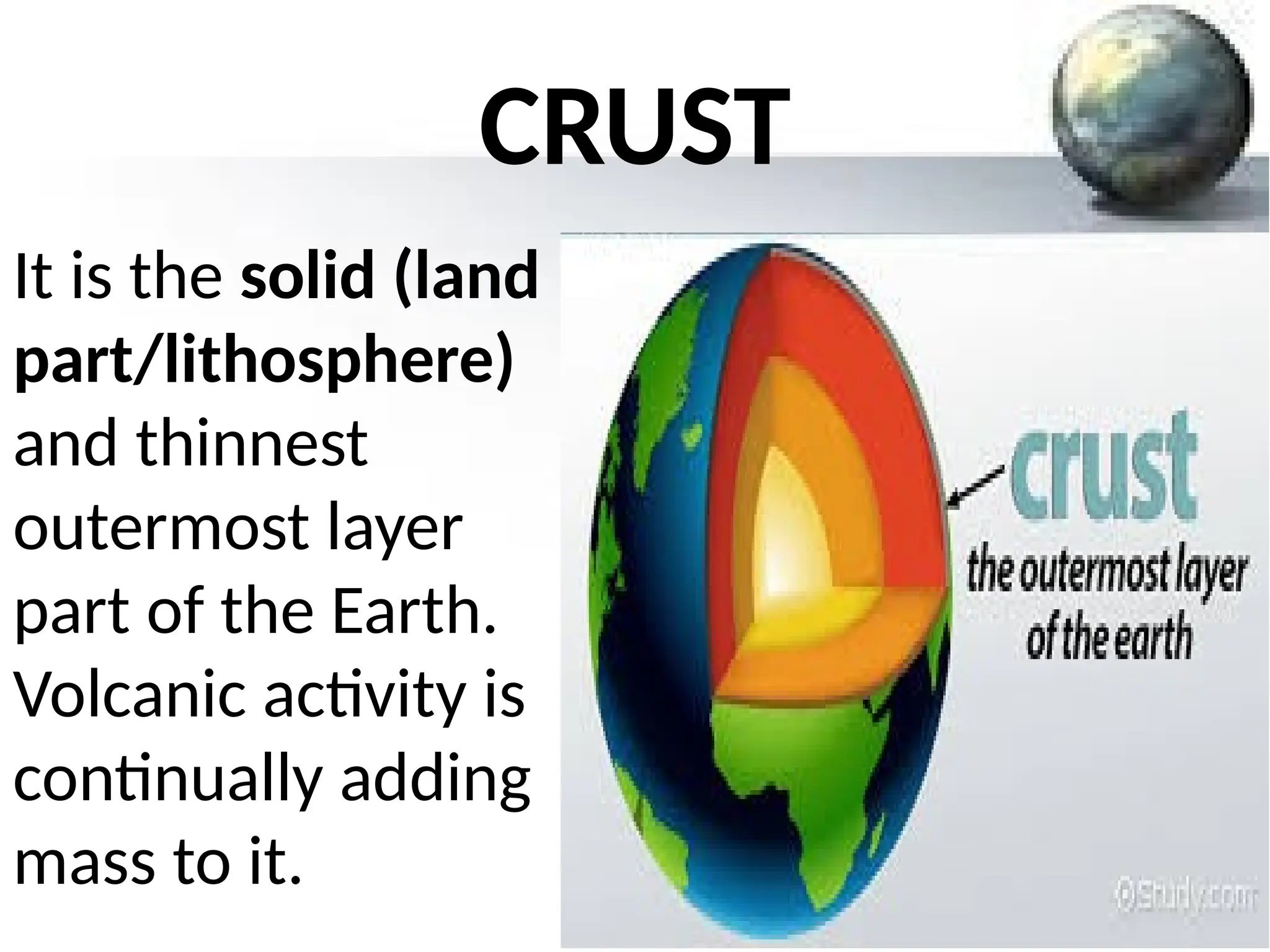
It is the solid (land
part/lithosphere)
and thinnest
outermost layer
part of the Earth.
Volcanic activity is
continually adding
mass to it.
CRUST
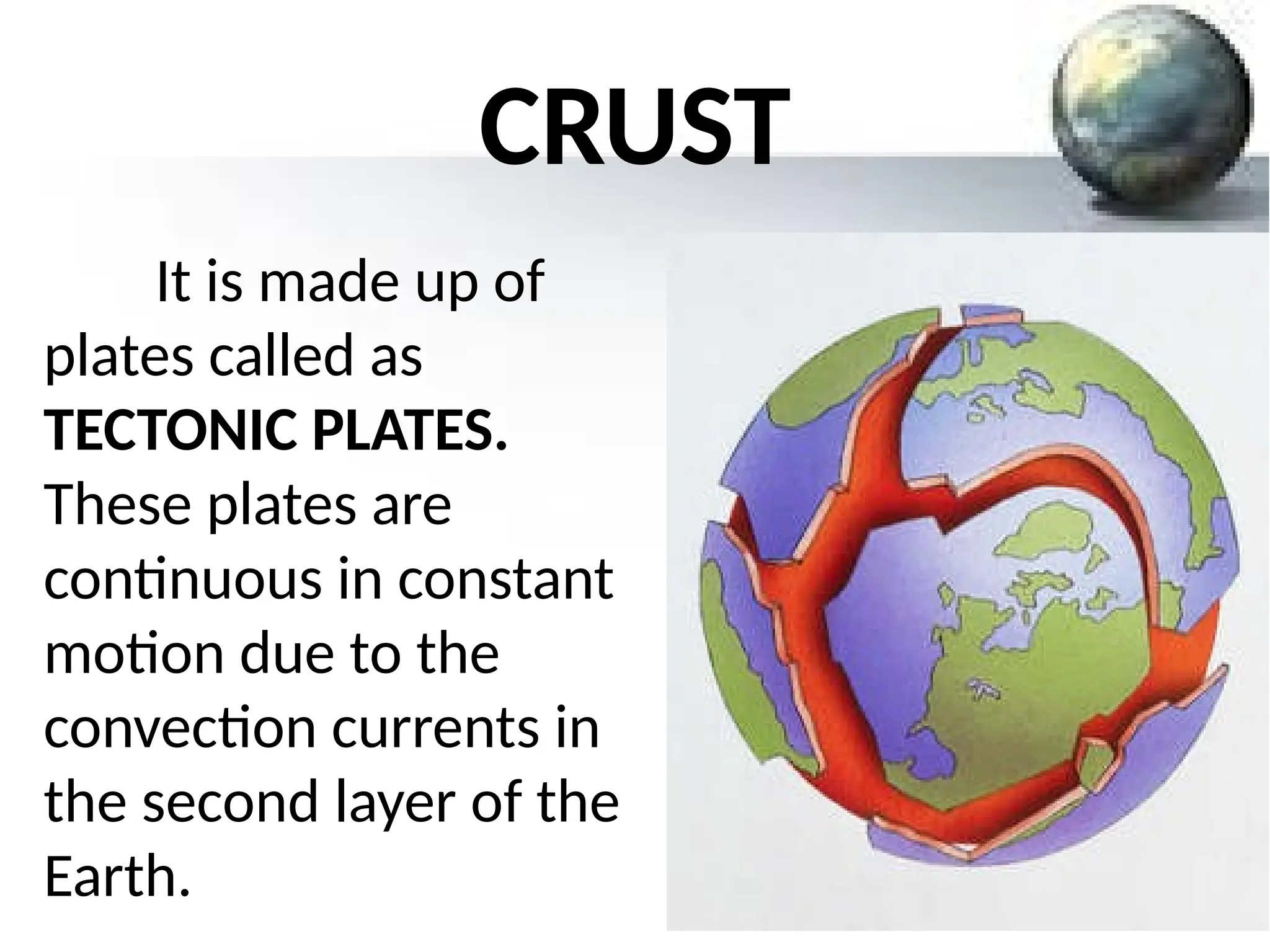
It is made up of
plates called as
TECTONIC PLATES.
These plates are
continuous in constant
motion due to the
convection currents in
the second layer of the
Earth.
CRUST
•Consist all kinds of rocks,
soil and everything you see
above the Earth’s surface
•It is the land which we walk
Continental Crust
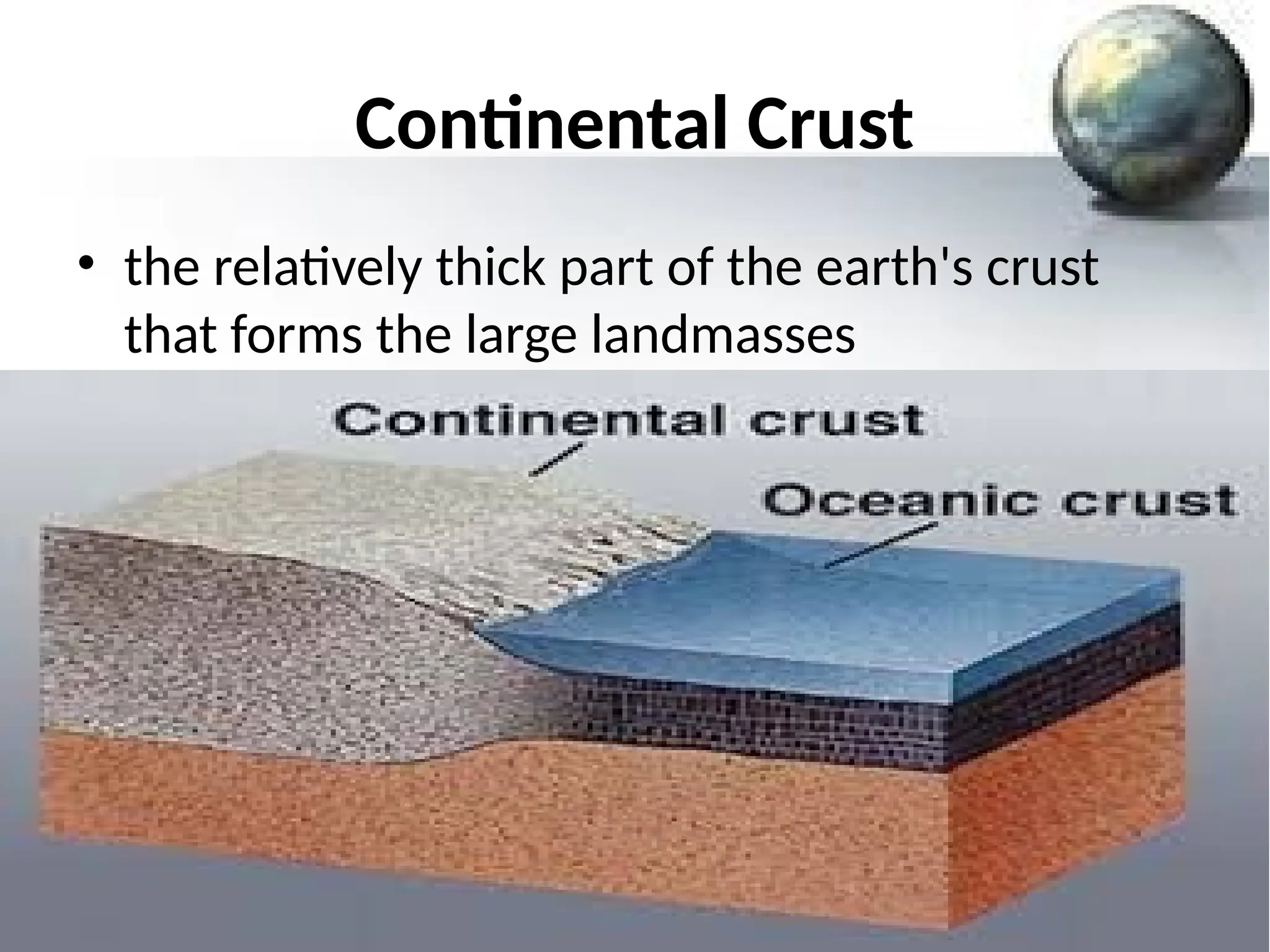
• the relatively thick part of the earth's crust
that forms the large landmasses
Oceanic Crust
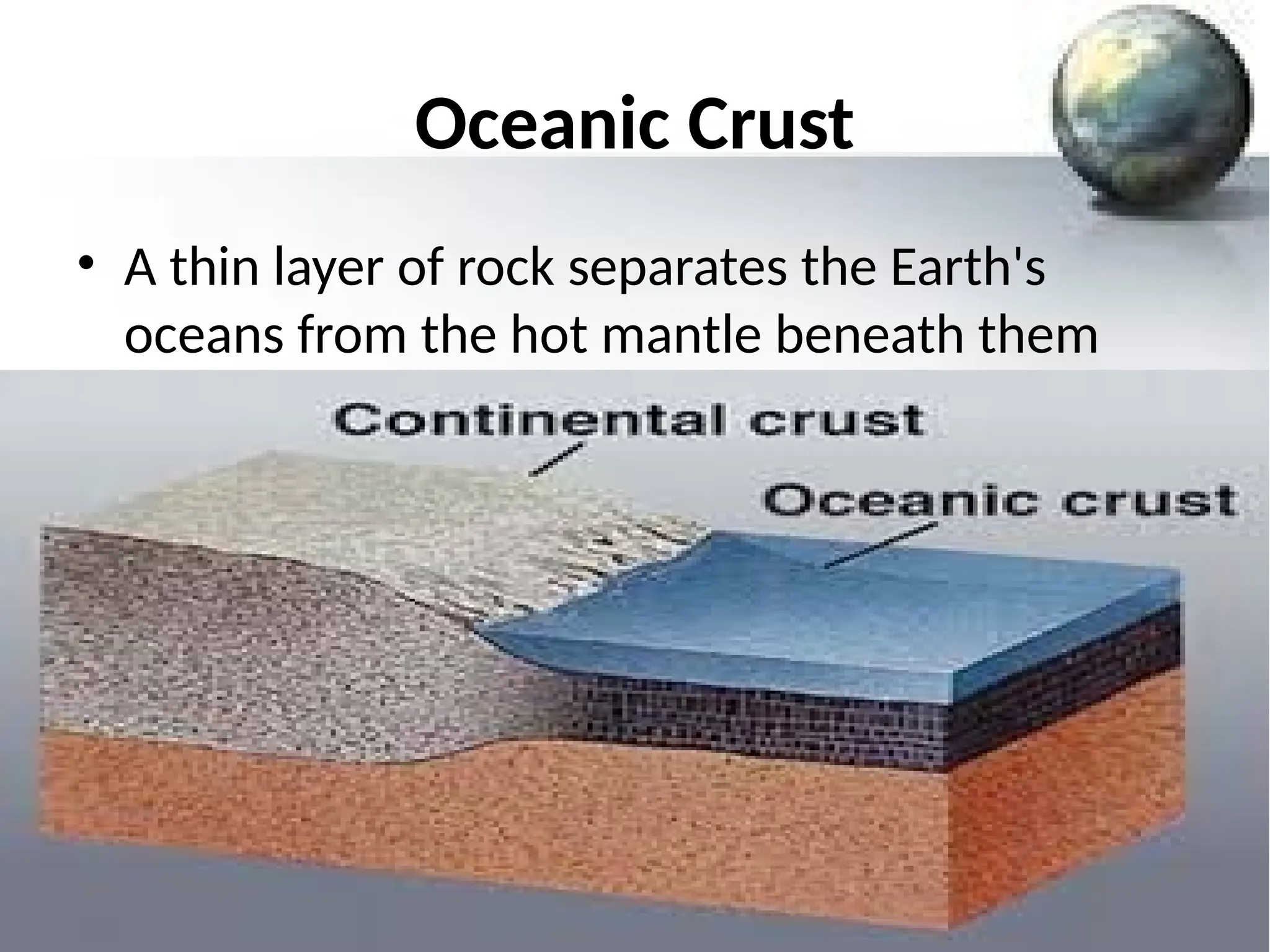
• A thin layer of rock separates the Earth's
oceans from the hot mantle beneath them
Mantle
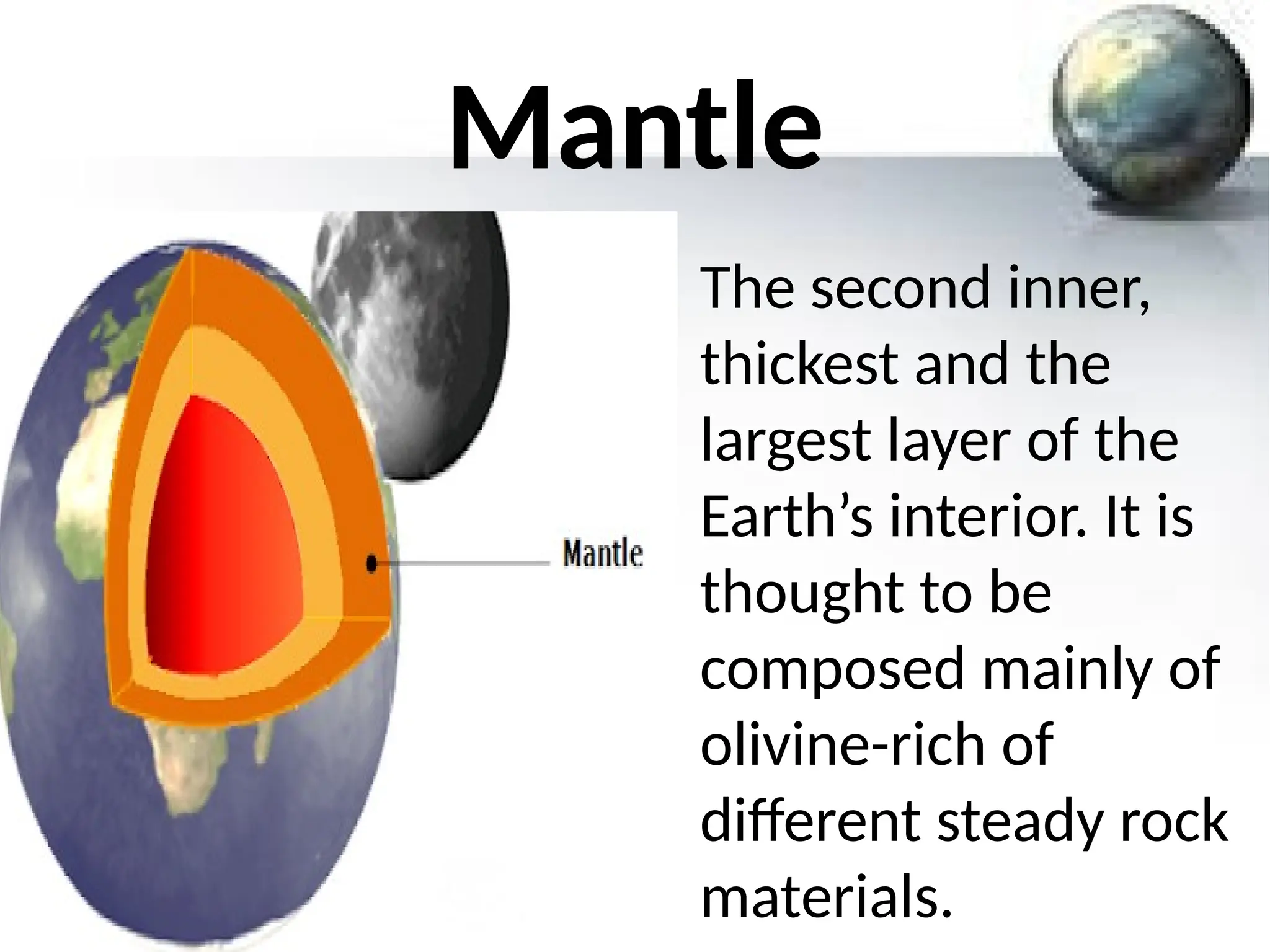
The second inner,
thickest and the
largest layer of the
Earth’s interior. It is
thought to be
composed mainly of
olivine-rich of
different steady rock
materials.
Mantle
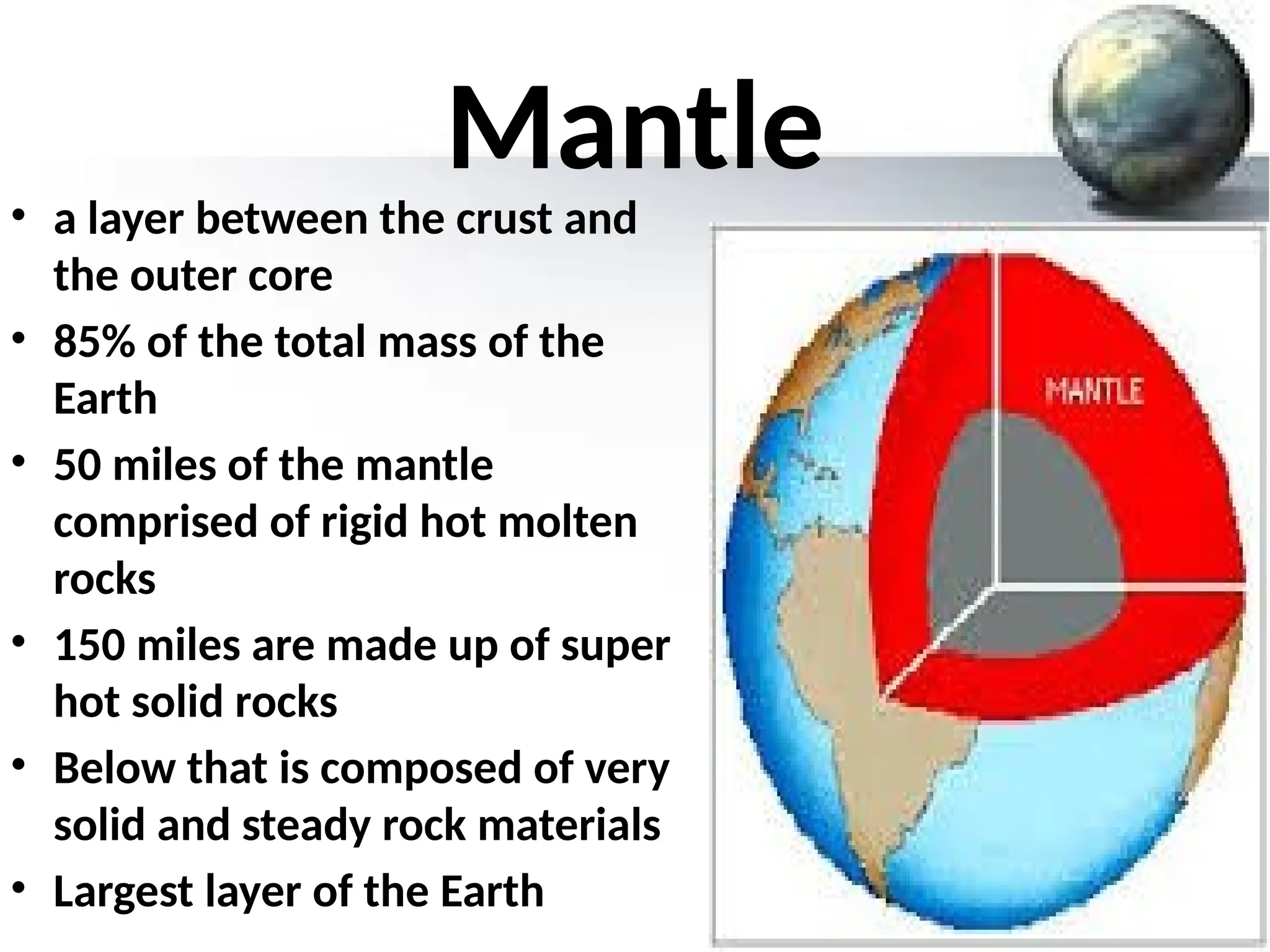
• a layer between the crust and
the outer core
• 85% of the total mass of the
Earth
• 50 miles of the mantle
comprised of rigid hot molten
rocks
• 150 miles are made up of super
hot solid rocks
• Below that is composed of very
solid and steady rock materials
• Largest layer of the Earth
Mantle
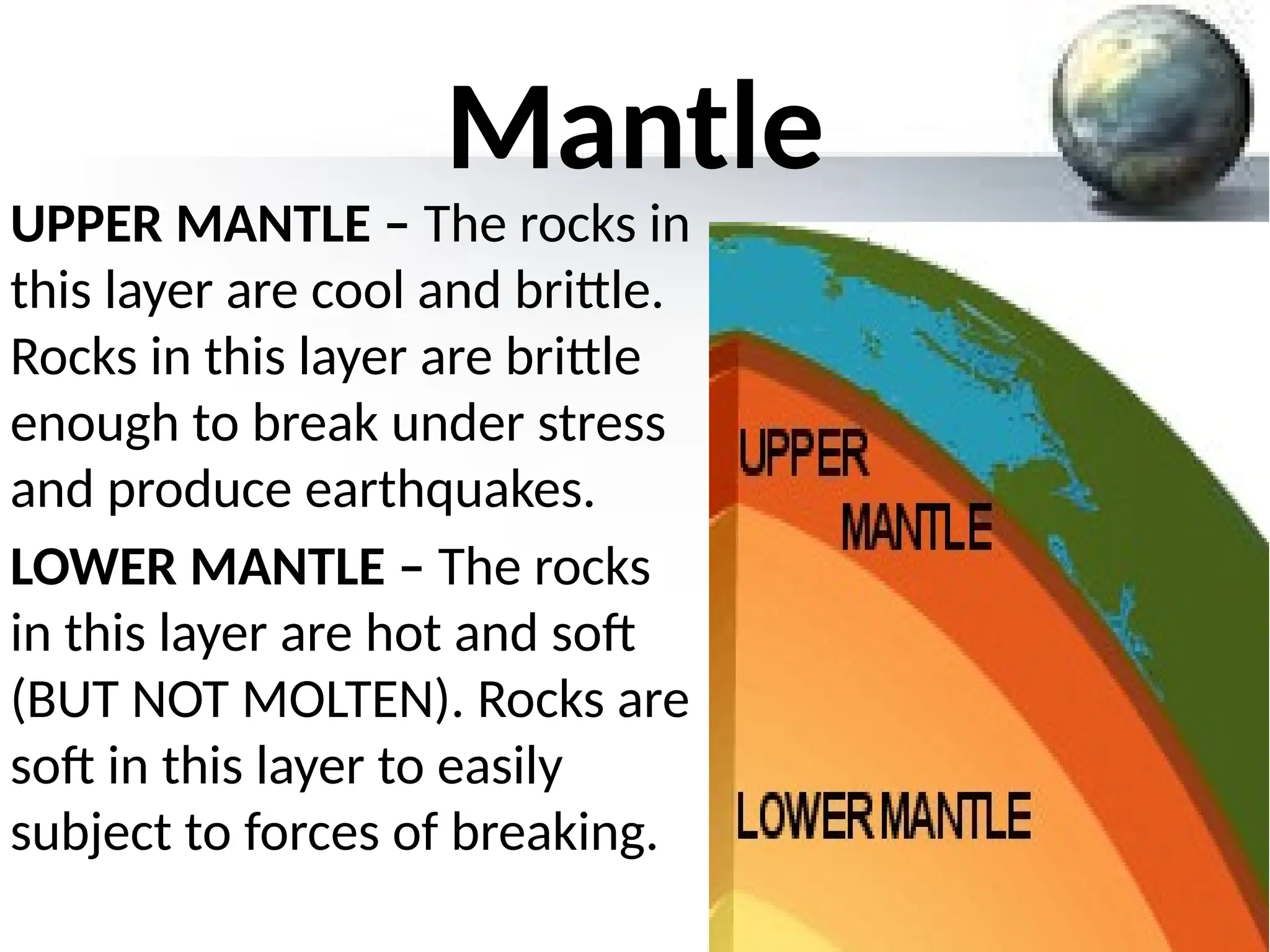
UPPER MANTLE – The rocks in
this layer are cool and brittle.
Rocks in this layer are brittle
enough to break under stress
and produce earthquakes.
LOWER MANTLE – The rocks
in this layer are hot and soft
(BUT NOT MOLTEN). Rocks are
soft in this layer to easily
subject to forces of breaking.
Core
This layer is very hot, very dense center of our
planet. The ball-shaped core lies beneath the
cool, brittle crust and the mostly-solid mantle
Core
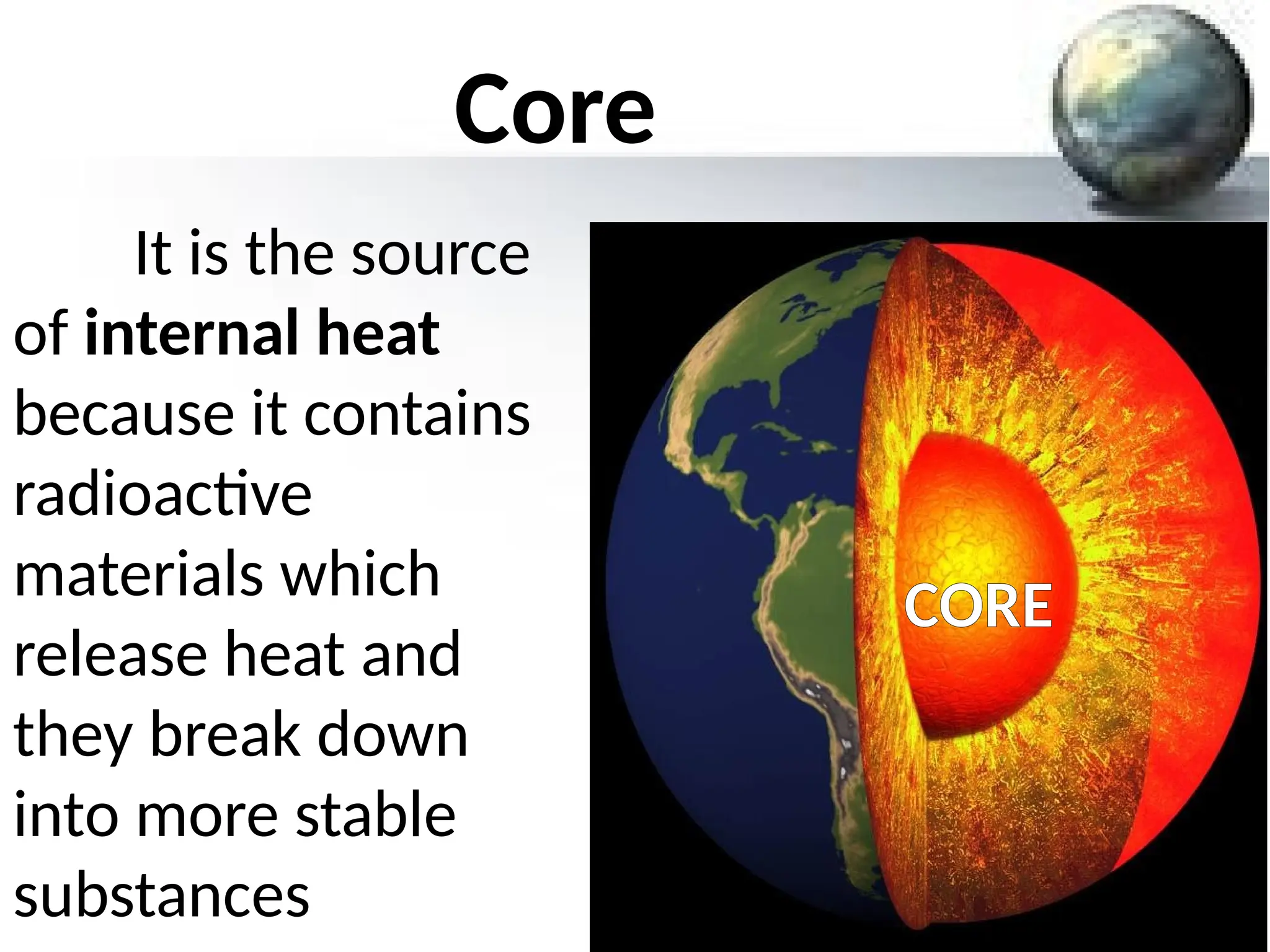
It is the source
of internal heat
because it contains
radioactive
materials which
release heat and
they break down
into more stable
substances
CORE
Core
• It consists of the innermost layer(s)
of the Earth; which may be
composed of solid and liquid layers
Outer Core
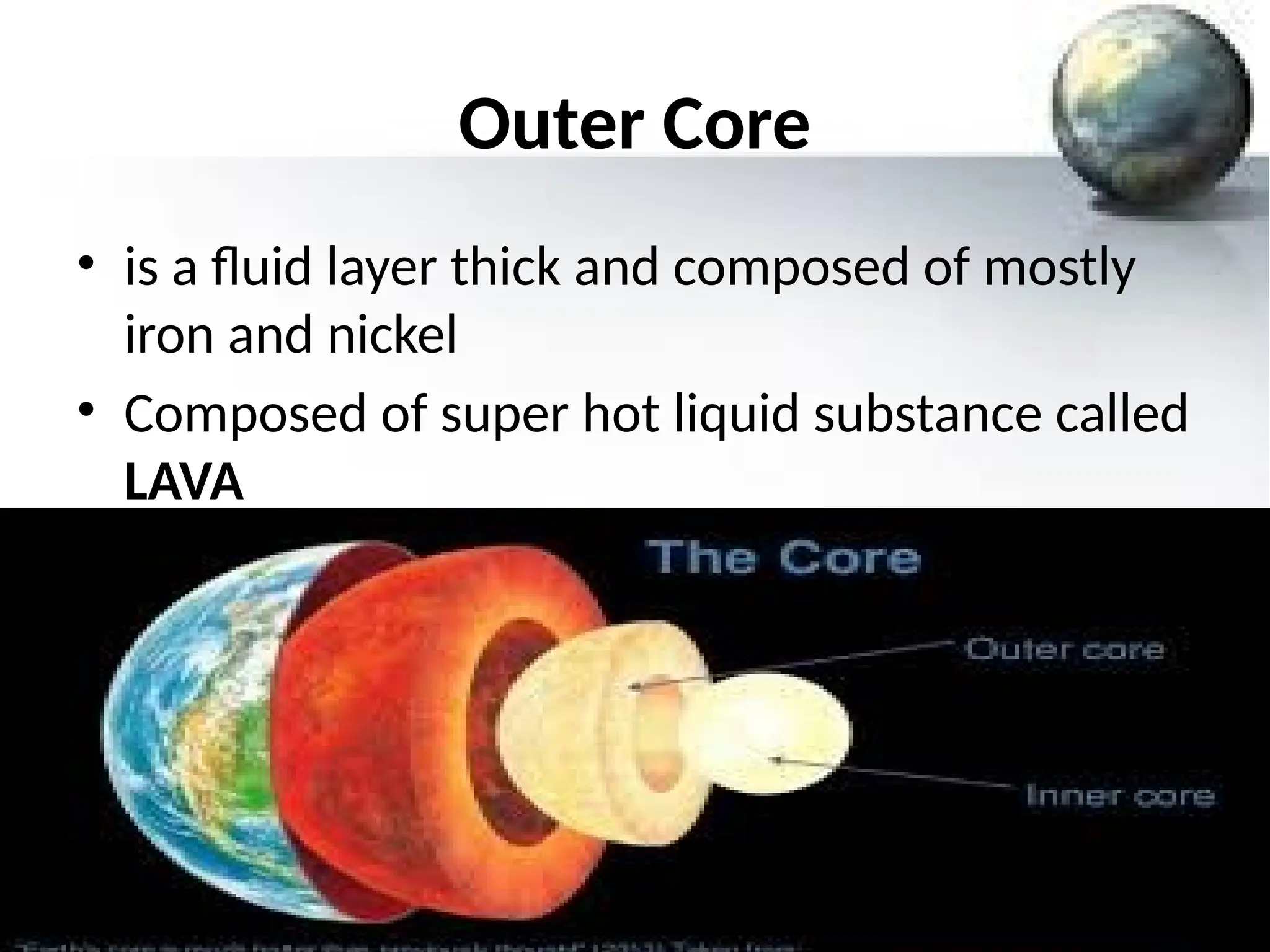
• is a fluid layer thick and composed of mostly
iron and nickel
• Composed of super hot liquid substance called
LAVA
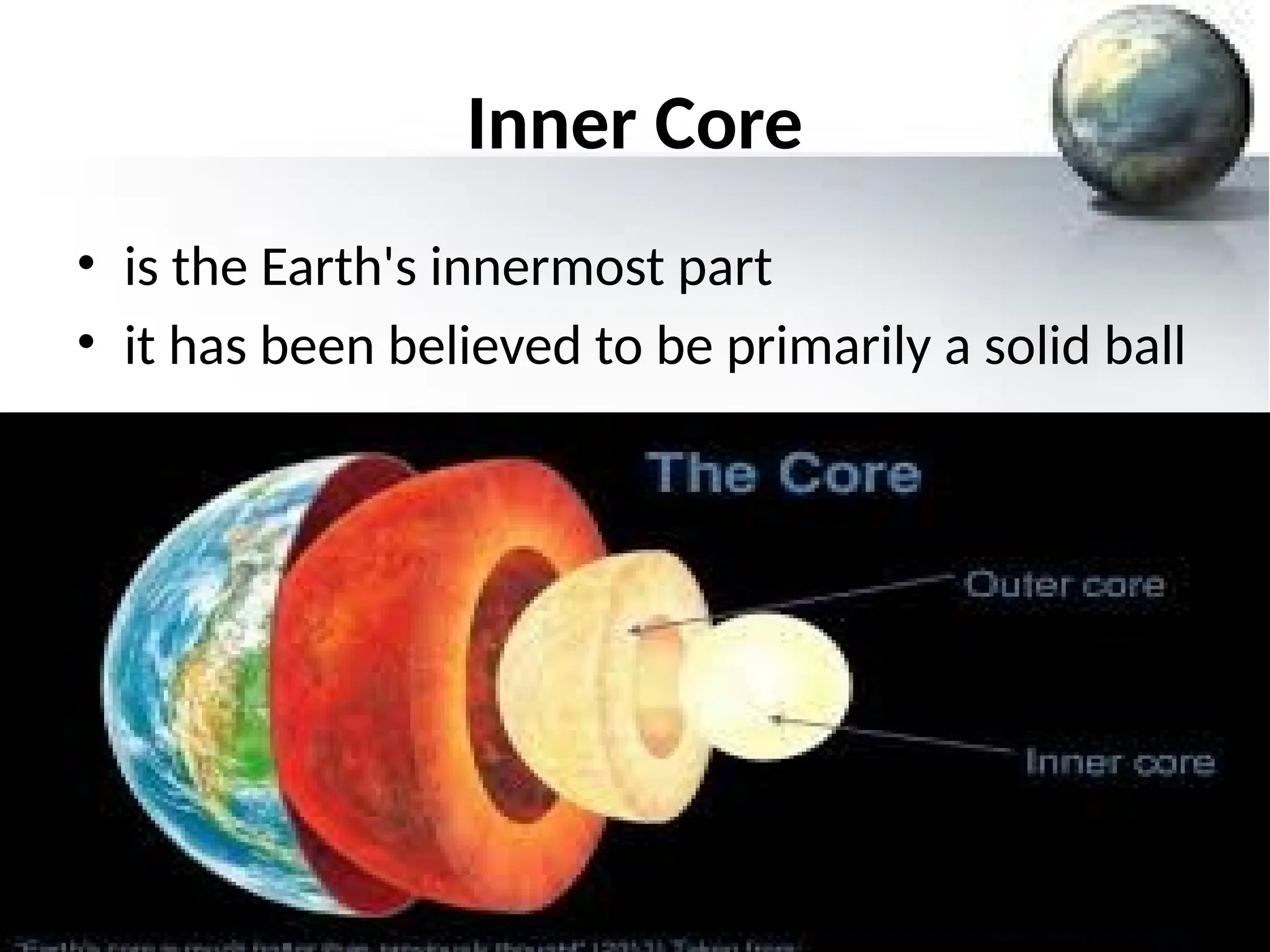
Inner Core
• is the Earth's innermost part
• it has been believed to be primarily a solid ball
The Earth and the Plate Tectonics the Plate Tectonic Theory

The Earth and the Plate Tectonics the Plate Tectonic Theory

  • 1.
  • 2.
    GEOLOGY From the AncientGreek geo means "earth" and logia mean "study of”
  • 3.
    GEOLOGY An earth sciencecomprising the study of Earth interior and composition. The Earth has layered structures namely the crust, mantle, inner core and outer core.
  • 4.
    The Earth haslayered structures which are important for understanding the PLATE TECTONICS THEORY. Studying the Earth’s interior can help us understand earthquakes, volcanoes, and more about the Earth’s natural processes.
  • 5.
  • 6.
  • 7.
    CRUST It is thesolid (land part/lithosphere) and thinnest outermost layer part of the Earth. Volcanic activity is continually adding mass to it.
  • 8.
    CRUST It is madeup of plates called as TECTONIC PLATES. These plates are continuous in constant motion due to the convection currents in the second layer of the Earth.
  • 9.
    CRUST •Consist all kindsof rocks, soil and everything you see above the Earth’s surface •It is the land which we walk
  • 10.
    Continental Crust • therelatively thick part of the earth's crust that forms the large landmasses
  • 11.
    Oceanic Crust • Athin layer of rock separates the Earth's oceans from the hot mantle beneath them
  • 12.
    Mantle The second inner, thickestand the largest layer of the Earth’s interior. It is thought to be composed mainly of olivine-rich of different steady rock materials.
  • 13.
    Mantle • a layerbetween the crust and the outer core • 85% of the total mass of the Earth • 50 miles of the mantle comprised of rigid hot molten rocks • 150 miles are made up of super hot solid rocks • Below that is composed of very solid and steady rock materials • Largest layer of the Earth
  • 14.
    Mantle UPPER MANTLE –The rocks in this layer are cool and brittle. Rocks in this layer are brittle enough to break under stress and produce earthquakes. LOWER MANTLE – The rocks in this layer are hot and soft (BUT NOT MOLTEN). Rocks are soft in this layer to easily subject to forces of breaking.
  • 15.
    Core This layer isvery hot, very dense center of our planet. The ball-shaped core lies beneath the cool, brittle crust and the mostly-solid mantle
  • 16.
    Core It is thesource of internal heat because it contains radioactive materials which release heat and they break down into more stable substances CORE
  • 17.
    Core • It consistsof the innermost layer(s) of the Earth; which may be composed of solid and liquid layers
  • 18.
    Outer Core • isa fluid layer thick and composed of mostly iron and nickel • Composed of super hot liquid substance called LAVA
  • 19.
    Inner Core • isthe Earth's innermost part • it has been believed to be primarily a solid ball