Darby Esswein
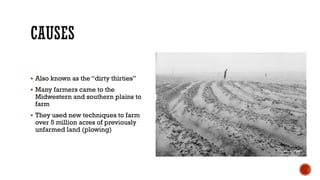
 Also known as the “dirty thirties”
 Many farmers came to the
Midwestern and southern plains to
farm
 They used new techniques to farm
over 5 million acres of previously
unfarmed land (plowing)
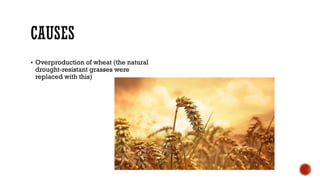
 Overproduction of wheat (the natural
drought-resistant grasses were
replaced with this)
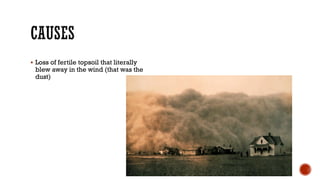
 Loss of fertile topsoil that literally
blew away in the wind (that was the
dust)
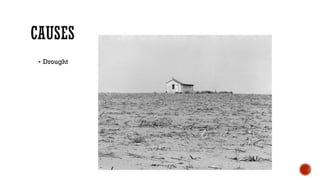
 Drought
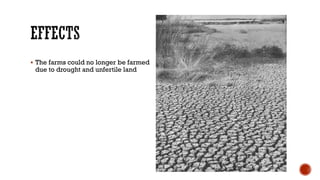
 The farms could no longer be farmed
due to drought and unfertile land
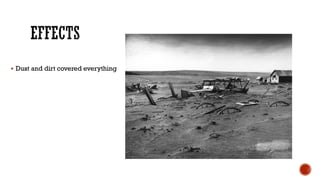
 Dust and dirt covered everything
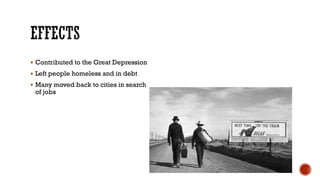
 Contributed to the Great Depression
 Left people homeless and in debt
 Many moved back to cities in search
of jobs
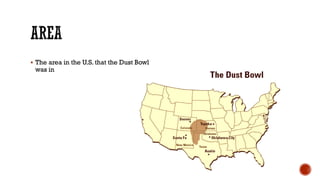
 The area in the U.S. that the Dust Bowl
was in

The dust bowl

  • 1.
  • 2.
     Also knownas the “dirty thirties”  Many farmers came to the Midwestern and southern plains to farm  They used new techniques to farm over 5 million acres of previously unfarmed land (plowing)
  • 3.
     Overproduction ofwheat (the natural drought-resistant grasses were replaced with this)
  • 4.
     Loss offertile topsoil that literally blew away in the wind (that was the dust)
  • 5.
  • 6.
     The farmscould no longer be farmed due to drought and unfertile land
  • 7.
     Dust anddirt covered everything
  • 8.
     Contributed tothe Great Depression  Left people homeless and in debt  Many moved back to cities in search of jobs
  • 9.
     The areain the U.S. that the Dust Bowl was in