The development of DNA sequencing Technology
Presented by
Md. Ushama Shafoyat
Id: 0423260003
Department of Biomedical Engineering (BME)
Military Institute of Science and Technology.
Contents
 Introduction
 Early DNA Sequencing Techniques
 Next-Generation Sequencing (NGS)
 The Human Genome Project
 Third-Generation Sequencing
 Advancements in Accuracy and Speed
 Applications of DNA Sequencing
 Future Perspectives
 Conclusion
Introduction
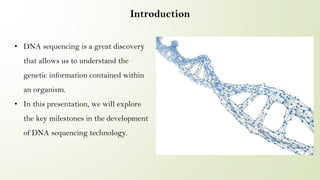
• DNA sequencing is a great discovery
that allows us to understand the
genetic information contained within
an organism.
• In this presentation, we will explore
the key milestones in the development
of DNA sequencing technology.
Early DNA Sequencing Techniques
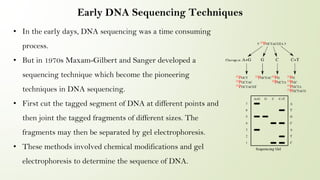
• In the early days, DNA sequencing was a time consuming
process.
• But in 1970s Maxam-Gilbert and Sanger developed a
sequencing technique which become the pioneering
techniques in DNA sequencing.
• First cut the tagged segment of DNA at different points and
then joint the tagged fragments of different sizes. The
fragments may then be separated by gel electrophoresis.
• These methods involved chemical modifications and gel
electrophoresis to determine the sequence of DNA.
Next-Generation Sequencing (NGS)
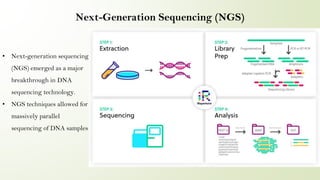
• Next-generation sequencing
(NGS) emerged as a major
breakthrough in DNA
sequencing technology.
• NGS techniques allowed for
massively parallel
sequencing of DNA samples.
The Human Genome Project (HGP)
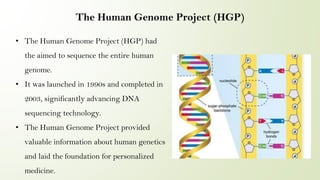
• The Human Genome Project (HGP) had
the aimed to sequence the entire human
genome.
• It was launched in 1990s and completed in
2003, significantly advancing DNA
sequencing technology.
• The Human Genome Project provided
valuable information about human genetics
and laid the foundation for personalized
medicine.
Third-Generation Sequencing
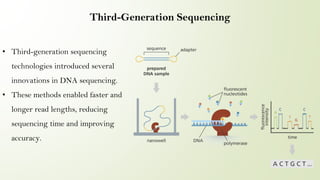
• Third-generation sequencing
technologies introduced several
innovations in DNA sequencing.
• These methods enabled faster and
longer read lengths, reducing
sequencing time and improving
accuracy.
Advancements in Accuracy and Speed
• Over time, DNA sequencing technologies
have seen significant advancements in
accuracy and speed.
• Error rates have been reduced, enabling
more reliable analysis of genetic
information.
• DNA data storage have been developed
through which we can easily study any
DNA sequence.
Applications of DNA Sequencing
• DNA sequencing technology has revolutionized various fields,
including genomics, medicine, and agriculture.
• It has facilitated the identification of disease-causing genetic mutations
and personalized treatment options.
• The development of vaccine, DNA sequencing helps to understand the
specific DNA parts which take part in disease formation.
• In agriculture, DNA sequencing is used to enhance yield, develop
disease-resistant plants, and improve livestock breeding.
Future Perspectives
• The future of DNA sequencing technology holds immense
potential.
• Advances in technology may make sequencing faster, cheaper, and
more accessible.
• Emerging techniques like long-read sequencing and single-cell
sequencing will continue to push the boundaries of genomic
research.
Conclusion
• DNA sequencing technology has come a long way
since its first invented, transforming our
understanding of genetics and genomics.
• From the early methods to next-generation
sequencing and beyond, each advancement has
opened new doors for scientific discovery.
• The continued development of DNA sequencing
technology will undoubtedly drive breakthroughs in
medicine, vaccine developments, agriculture, and
other fields.
References
1. https://www.biocompare.com/Molecular-Biology/9187-Next-Generation-
Sequencing/
2. https://www.britannica.com/event/Human-Genome-Project
3. https://www.yourgenome.org/stories/pacbio-and-third-generation-
sequencing/
4. https://en.wikipedia.org/wiki/Maxam%E2%80%93Gilbert_sequencing
5. https://irepertoire.com/ngs-overview-from-sample-to-sequencer-to-results/
6. https://pubs.acs.org/doi/10.1021/acsnano.2c06748
Thank You
Any
Comments

The development of DNA sequencing Technology.pptx

  • 1.
    The development ofDNA sequencing Technology Presented by Md. Ushama Shafoyat Id: 0423260003 Department of Biomedical Engineering (BME) Military Institute of Science and Technology.
  • 2.
    Contents  Introduction  EarlyDNA Sequencing Techniques  Next-Generation Sequencing (NGS)  The Human Genome Project  Third-Generation Sequencing  Advancements in Accuracy and Speed  Applications of DNA Sequencing  Future Perspectives  Conclusion
  • 3.
    Introduction • DNA sequencingis a great discovery that allows us to understand the genetic information contained within an organism. • In this presentation, we will explore the key milestones in the development of DNA sequencing technology.
  • 4.
    Early DNA SequencingTechniques • In the early days, DNA sequencing was a time consuming process. • But in 1970s Maxam-Gilbert and Sanger developed a sequencing technique which become the pioneering techniques in DNA sequencing. • First cut the tagged segment of DNA at different points and then joint the tagged fragments of different sizes. The fragments may then be separated by gel electrophoresis. • These methods involved chemical modifications and gel electrophoresis to determine the sequence of DNA.
  • 5.
    Next-Generation Sequencing (NGS) •Next-generation sequencing (NGS) emerged as a major breakthrough in DNA sequencing technology. • NGS techniques allowed for massively parallel sequencing of DNA samples.
  • 6.
    The Human GenomeProject (HGP) • The Human Genome Project (HGP) had the aimed to sequence the entire human genome. • It was launched in 1990s and completed in 2003, significantly advancing DNA sequencing technology. • The Human Genome Project provided valuable information about human genetics and laid the foundation for personalized medicine.
  • 7.
    Third-Generation Sequencing • Third-generationsequencing technologies introduced several innovations in DNA sequencing. • These methods enabled faster and longer read lengths, reducing sequencing time and improving accuracy.
  • 8.
    Advancements in Accuracyand Speed • Over time, DNA sequencing technologies have seen significant advancements in accuracy and speed. • Error rates have been reduced, enabling more reliable analysis of genetic information. • DNA data storage have been developed through which we can easily study any DNA sequence.
  • 9.
    Applications of DNASequencing • DNA sequencing technology has revolutionized various fields, including genomics, medicine, and agriculture. • It has facilitated the identification of disease-causing genetic mutations and personalized treatment options. • The development of vaccine, DNA sequencing helps to understand the specific DNA parts which take part in disease formation. • In agriculture, DNA sequencing is used to enhance yield, develop disease-resistant plants, and improve livestock breeding.
  • 10.
    Future Perspectives • Thefuture of DNA sequencing technology holds immense potential. • Advances in technology may make sequencing faster, cheaper, and more accessible. • Emerging techniques like long-read sequencing and single-cell sequencing will continue to push the boundaries of genomic research.
  • 11.
    Conclusion • DNA sequencingtechnology has come a long way since its first invented, transforming our understanding of genetics and genomics. • From the early methods to next-generation sequencing and beyond, each advancement has opened new doors for scientific discovery. • The continued development of DNA sequencing technology will undoubtedly drive breakthroughs in medicine, vaccine developments, agriculture, and other fields.
  • 12.
    References 1. https://www.biocompare.com/Molecular-Biology/9187-Next-Generation- Sequencing/ 2. https://www.britannica.com/event/Human-Genome-Project 3.https://www.yourgenome.org/stories/pacbio-and-third-generation- sequencing/ 4. https://en.wikipedia.org/wiki/Maxam%E2%80%93Gilbert_sequencing 5. https://irepertoire.com/ngs-overview-from-sample-to-sequencer-to-results/ 6. https://pubs.acs.org/doi/10.1021/acsnano.2c06748
  • 13.