Industrial Grade Gasification
Delivering Affordable Renewable Technology
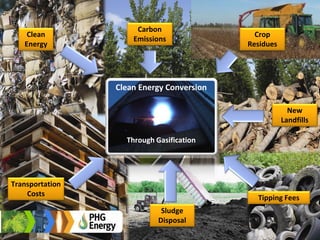
Through Gasification
Clean Energy Conversion
Tipping Fees
Transportation
Costs
New
Landfills
Carbon
Emissions
Sludge
Disposal
Clean
Energy
Crop
Residues
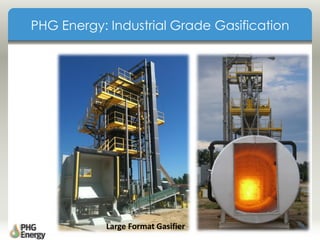
PHG Energy: Industrial Grade Gasification
Large Format Gasifier
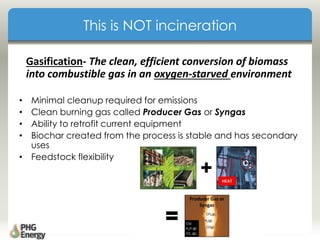
This is NOT incineration
• Minimal cleanup required for emissions
• Clean burning gas called Producer Gas or Syngas
• Ability to retrofit current equipment
• Biochar created from the process is stable and has secondary
uses
• Feedstock flexibility
Gasification- The clean, efficient conversion of biomass
into combustible gas in an oxygen-starved environment
Applications
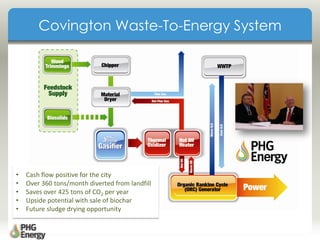
Covington Waste-To-Energy System
• Cash flow positive for the city
• Over 360 tons/month diverted from landfill
• Saves over 425 tons of CO2 per year
• Upside potential with sale of biochar
• Future sludge drying opportunity
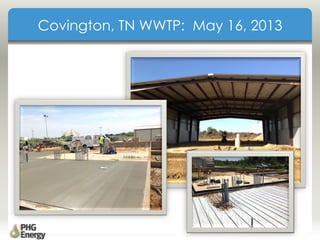
Covington, TN WWTP: May 16, 2013
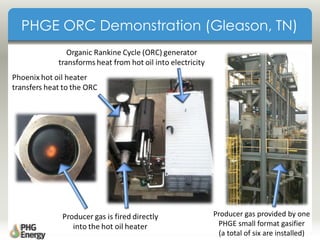
PHGE ORC Demonstration (Gleason, TN)
Producer gas provided by one
PHGE small format gasifier
(a total of six are installed)
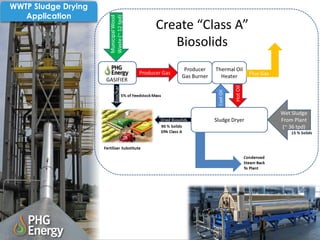
WWTP Sludge Drying
Application
Create “Class A”
Biosolids
Industrial Grade Gasification
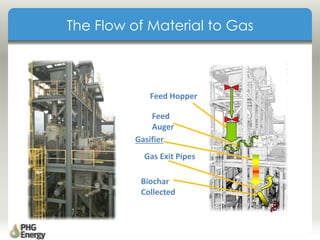
The Flow of Material to Gas
Feed Hopper
Feed
Auger
Gasifier
Biochar
Collected
Gas Exit Pipes
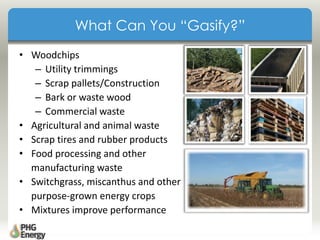
What Can You “Gasify?”
• Woodchips
– Utility trimmings
– Scrap pallets/Construction
– Bark or waste wood
– Commercial waste
• Agricultural and animal waste
• Scrap tires and rubber products
• Food processing and other
manufacturing waste
• Switchgrass, miscanthus and other
purpose-grown energy crops
• Mixtures improve performance
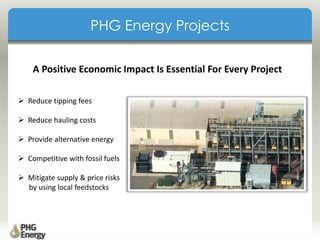
A Positive Economic Impact Is Essential For Every Project
 Reduce tipping fees
 Reduce hauling costs
 Provide alternative energy
 Competitive with fossil fuels
 Mitigate supply & price risks
by using local feedstocks
PHG Energy Projects
WWW.PHGEnergy.com
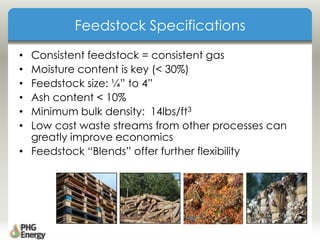
Feedstock Specifications
• Consistent feedstock = consistent gas
• Moisture content is key (< 30%)
• Feedstock size: ¼” to 4”
• Ash content < 10%
• Minimum bulk density: 14lbs/ft3
• Low cost waste streams from other processes can
greatly improve economics
• Feedstock “Blends” offer further flexibility
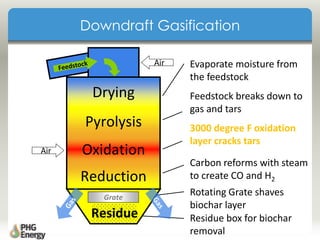
Downdraft Gasification
Evaporate moisture from
the feedstock
Feedstock breaks down to
gas and tars
3000 degree F oxidation
layer cracks tars
Carbon reforms with steam
to create CO and H2
Rotating Grate shaves
biochar layer
Residue box for biochar
removal
Drying
Pyrolysis
Oxidation
Reduction
Grate
Residue
Air
Air

The Covington Wastewater Energy Project Progress

  • 1.
  • 2.
    Delivering Affordable RenewableTechnology Through Gasification Clean Energy Conversion Tipping Fees Transportation Costs New Landfills Carbon Emissions Sludge Disposal Clean Energy Crop Residues
  • 3.
    PHG Energy: IndustrialGrade Gasification Large Format Gasifier
  • 4.
    This is NOTincineration • Minimal cleanup required for emissions • Clean burning gas called Producer Gas or Syngas • Ability to retrofit current equipment • Biochar created from the process is stable and has secondary uses • Feedstock flexibility Gasification- The clean, efficient conversion of biomass into combustible gas in an oxygen-starved environment
  • 5.
  • 6.
    Covington Waste-To-Energy System •Cash flow positive for the city • Over 360 tons/month diverted from landfill • Saves over 425 tons of CO2 per year • Upside potential with sale of biochar • Future sludge drying opportunity
  • 7.
    Covington, TN WWTP:May 16, 2013
  • 8.
    PHGE ORC Demonstration(Gleason, TN) Producer gas provided by one PHGE small format gasifier (a total of six are installed)
  • 9.
  • 10.
  • 11.
    The Flow ofMaterial to Gas Feed Hopper Feed Auger Gasifier Biochar Collected Gas Exit Pipes
  • 12.
    What Can You“Gasify?” • Woodchips – Utility trimmings – Scrap pallets/Construction – Bark or waste wood – Commercial waste • Agricultural and animal waste • Scrap tires and rubber products • Food processing and other manufacturing waste • Switchgrass, miscanthus and other purpose-grown energy crops • Mixtures improve performance
  • 13.
    A Positive EconomicImpact Is Essential For Every Project  Reduce tipping fees  Reduce hauling costs  Provide alternative energy  Competitive with fossil fuels  Mitigate supply & price risks by using local feedstocks PHG Energy Projects
  • 14.
  • 15.
    Feedstock Specifications • Consistentfeedstock = consistent gas • Moisture content is key (< 30%) • Feedstock size: ¼” to 4” • Ash content < 10% • Minimum bulk density: 14lbs/ft3 • Low cost waste streams from other processes can greatly improve economics • Feedstock “Blends” offer further flexibility
  • 16.
    Downdraft Gasification Evaporate moisturefrom the feedstock Feedstock breaks down to gas and tars 3000 degree F oxidation layer cracks tars Carbon reforms with steam to create CO and H2 Rotating Grate shaves biochar layer Residue box for biochar removal Drying Pyrolysis Oxidation Reduction Grate Residue Air Air