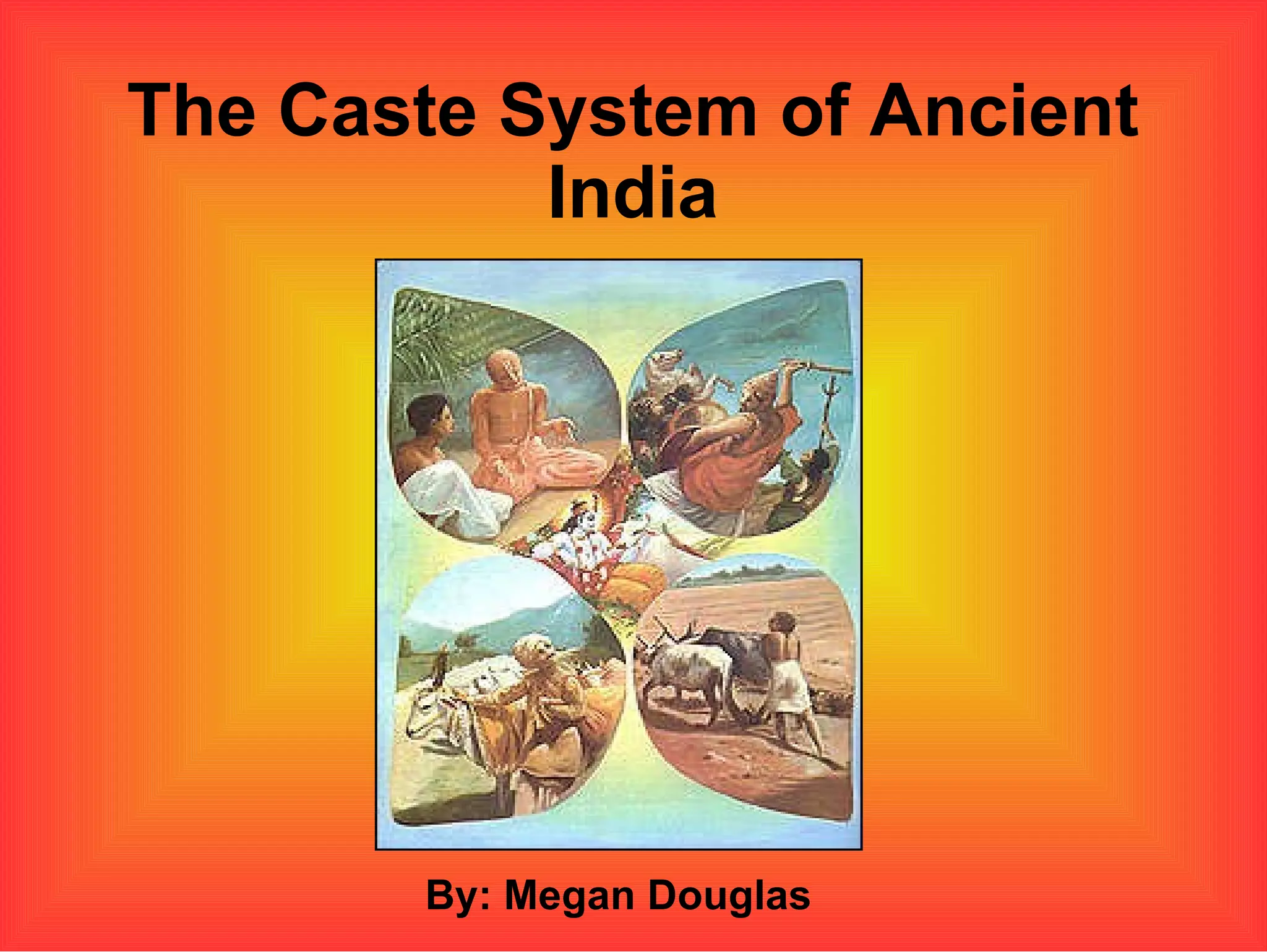
The Caste System of Ancient India By: Megan Douglas
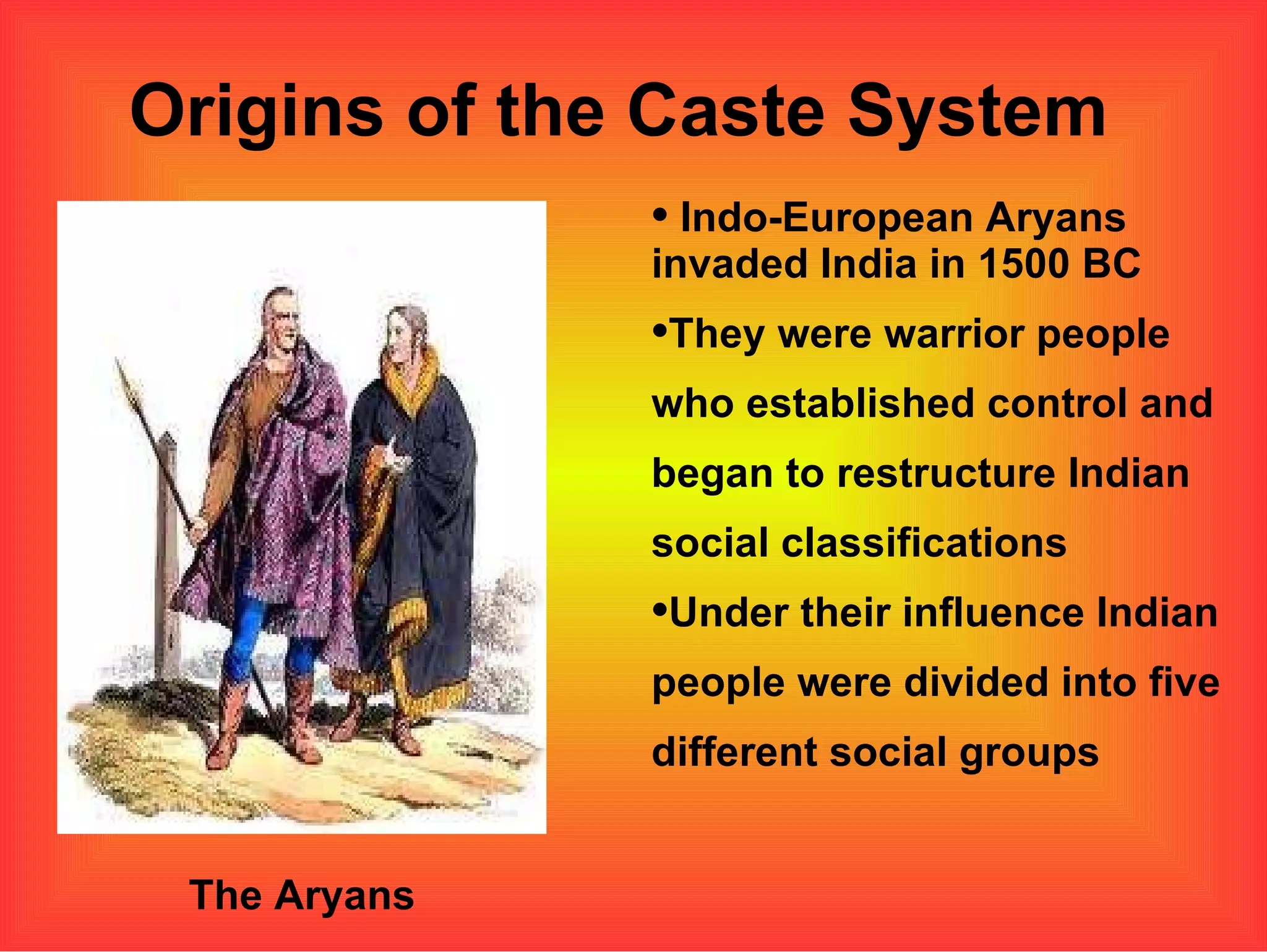
Origins of the Caste System Indo-European Aryans invaded India in 1500 BC They were warrior people who established control and began to restructure Indian social classifications Under their influence Indian people were divided into five different social groups The Aryans
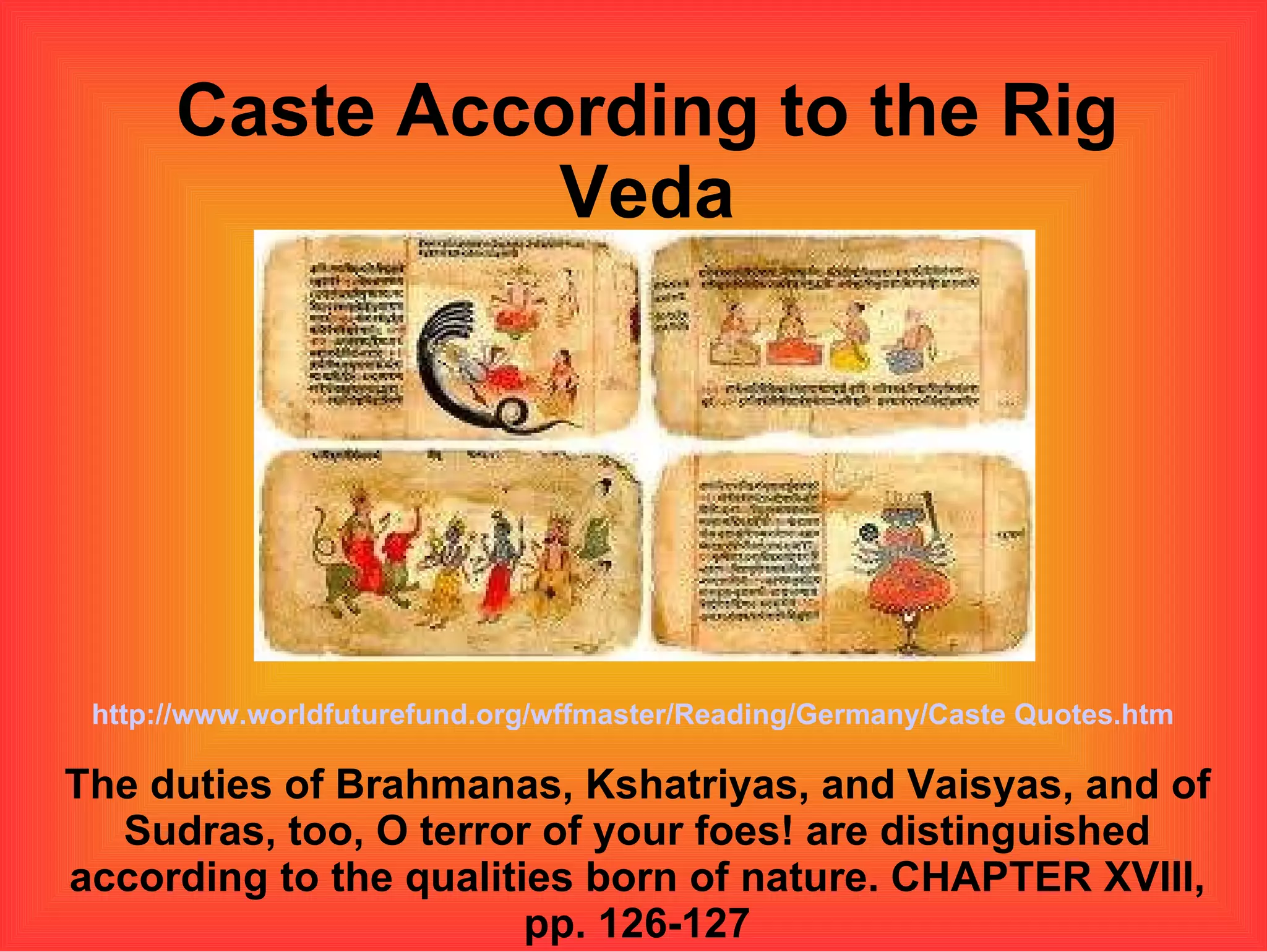
Caste According to the Rig Veda The duties of Brahmanas, Kshatriyas, and Vaisyas, and of Sudras, too, O terror of your foes! are distinguished according to the qualities born of nature. CHAPTER XVIII, pp. 126-127 http://www.worldfuturefund.org/wffmaster/Reading/Germany/Caste Quotes.htm
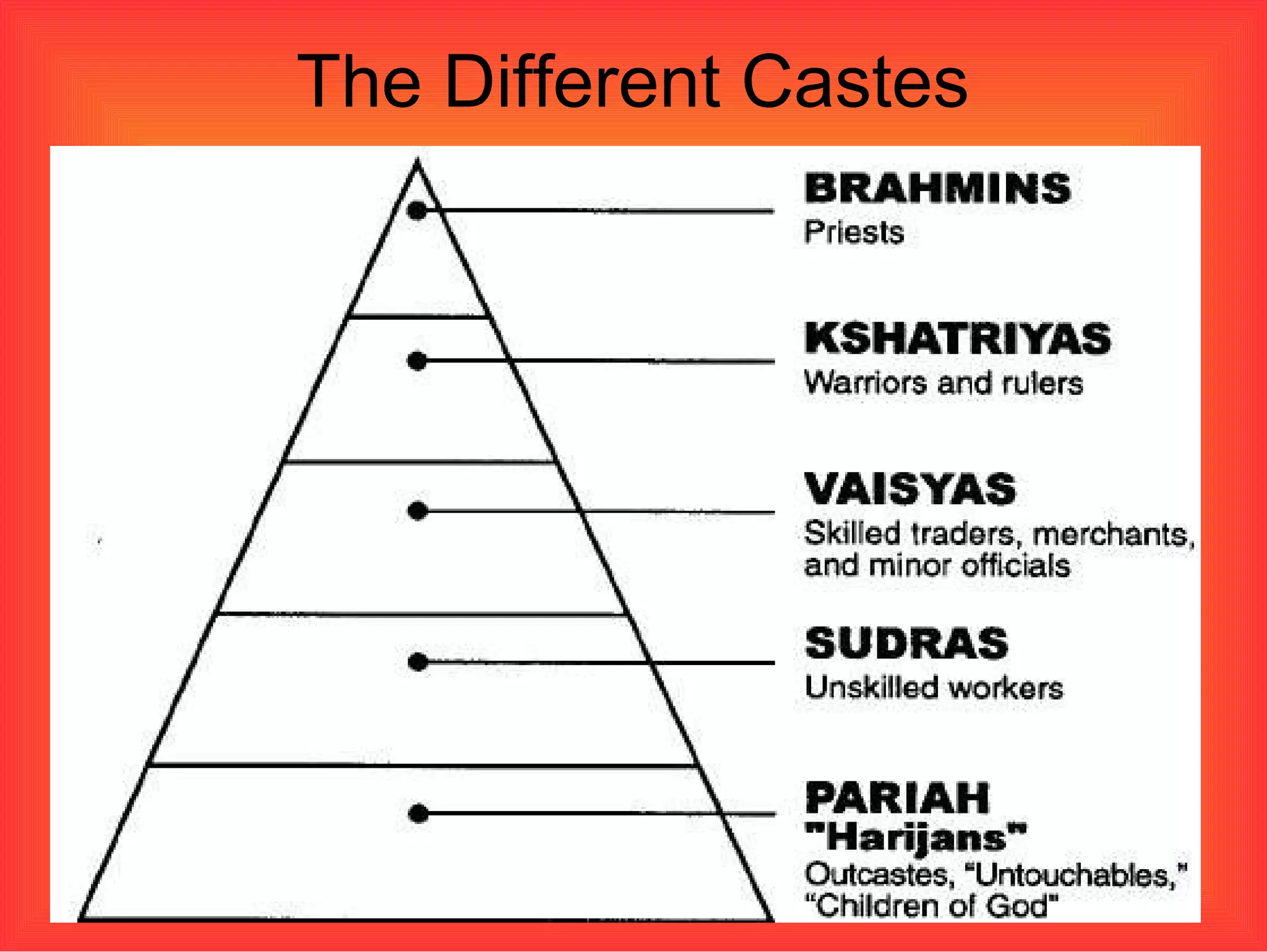
The Different Castes
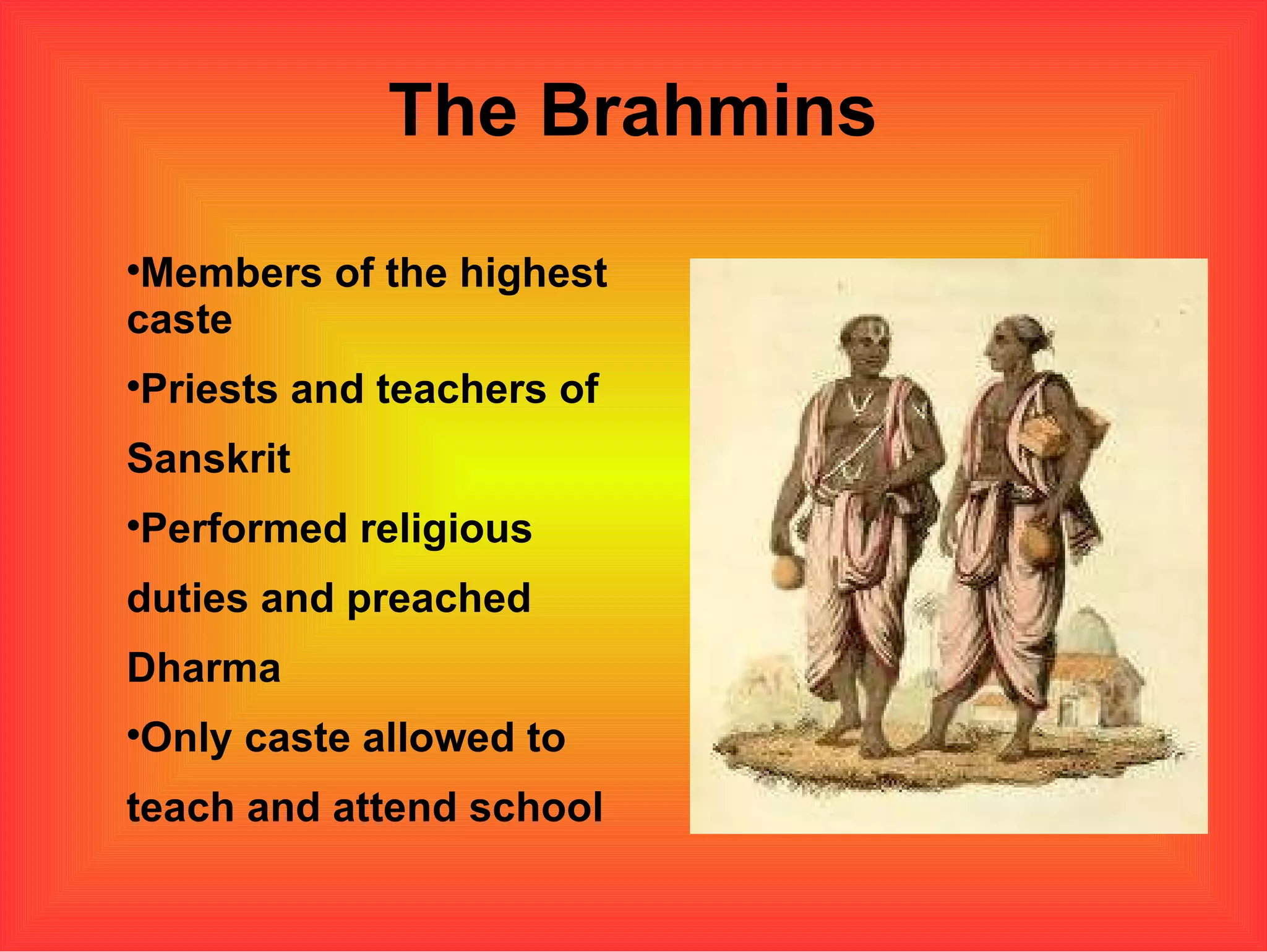
The Brahmins Members of the highest caste Priests and teachers of Sanskrit Performed religious duties and preached Dharma Only caste allowed to teach and attend school
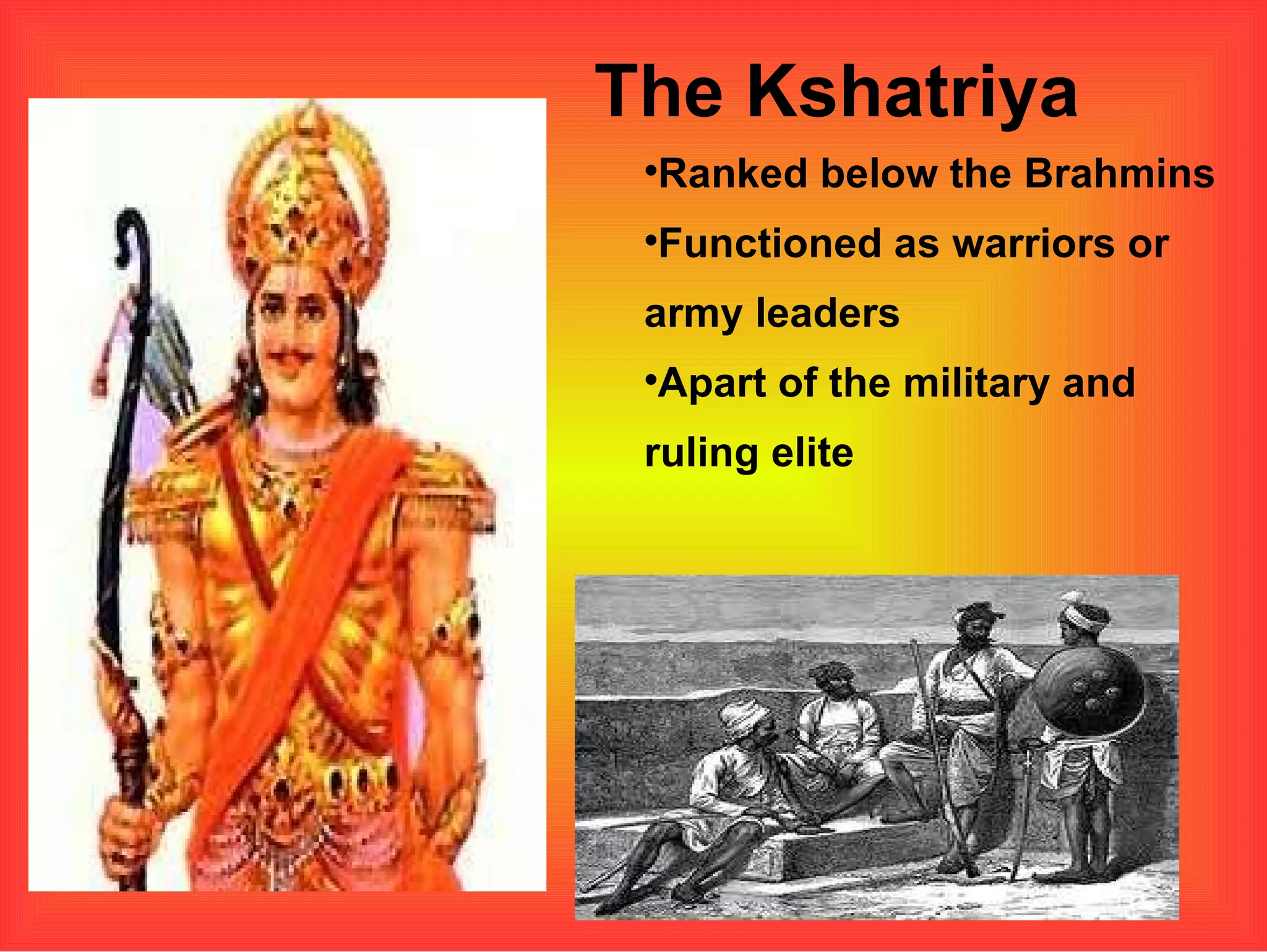
The Kshatriya Ranked below the Brahmins Functioned as warriors or army leaders Apart of the military and ruling elite
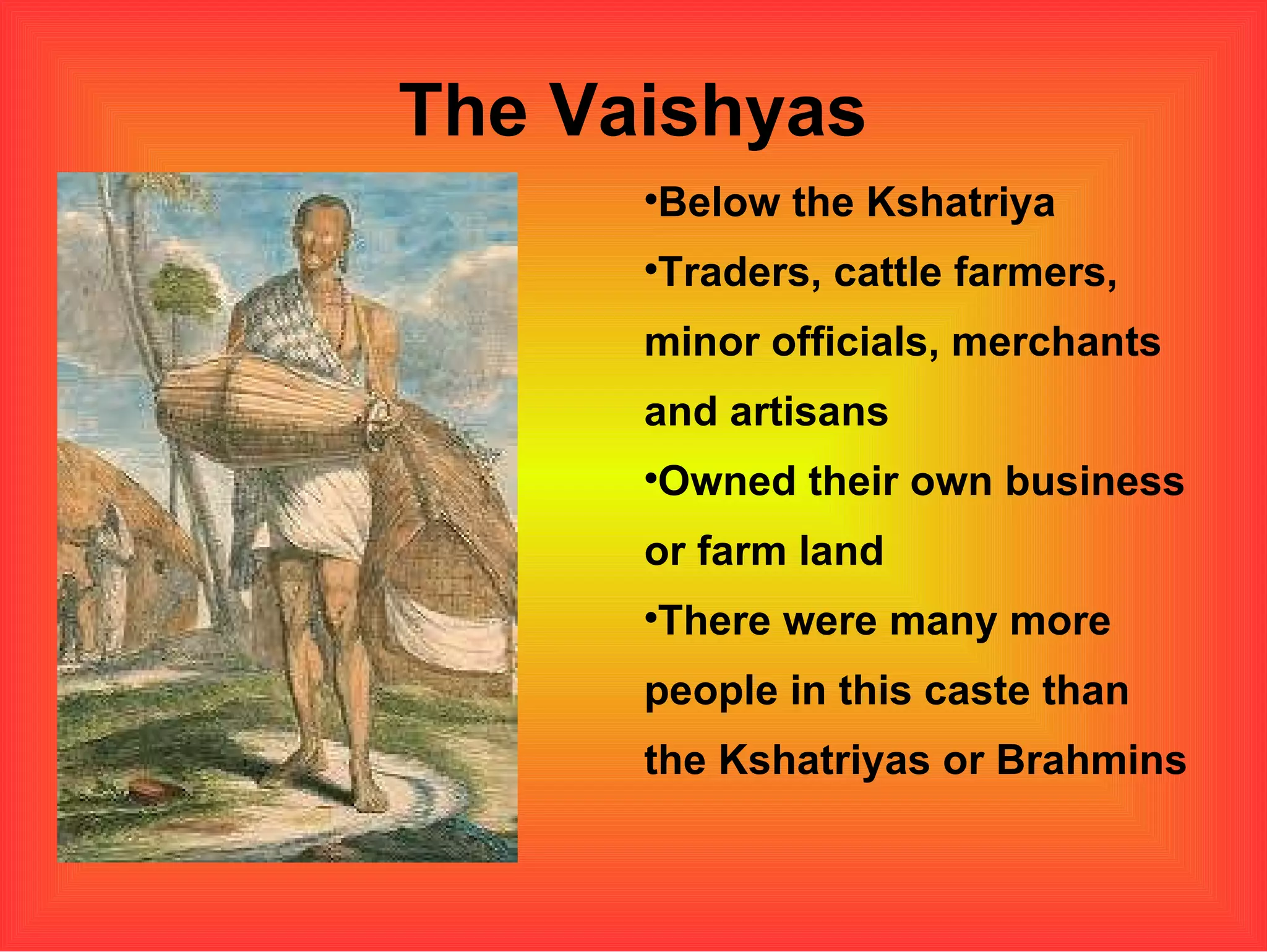
The Vaishyas Below the Kshatriya Traders, cattle farmers, minor officials, merchants and artisans Owned their own business or farm land There were many more people in this caste than the Kshatriyas or Brahmins
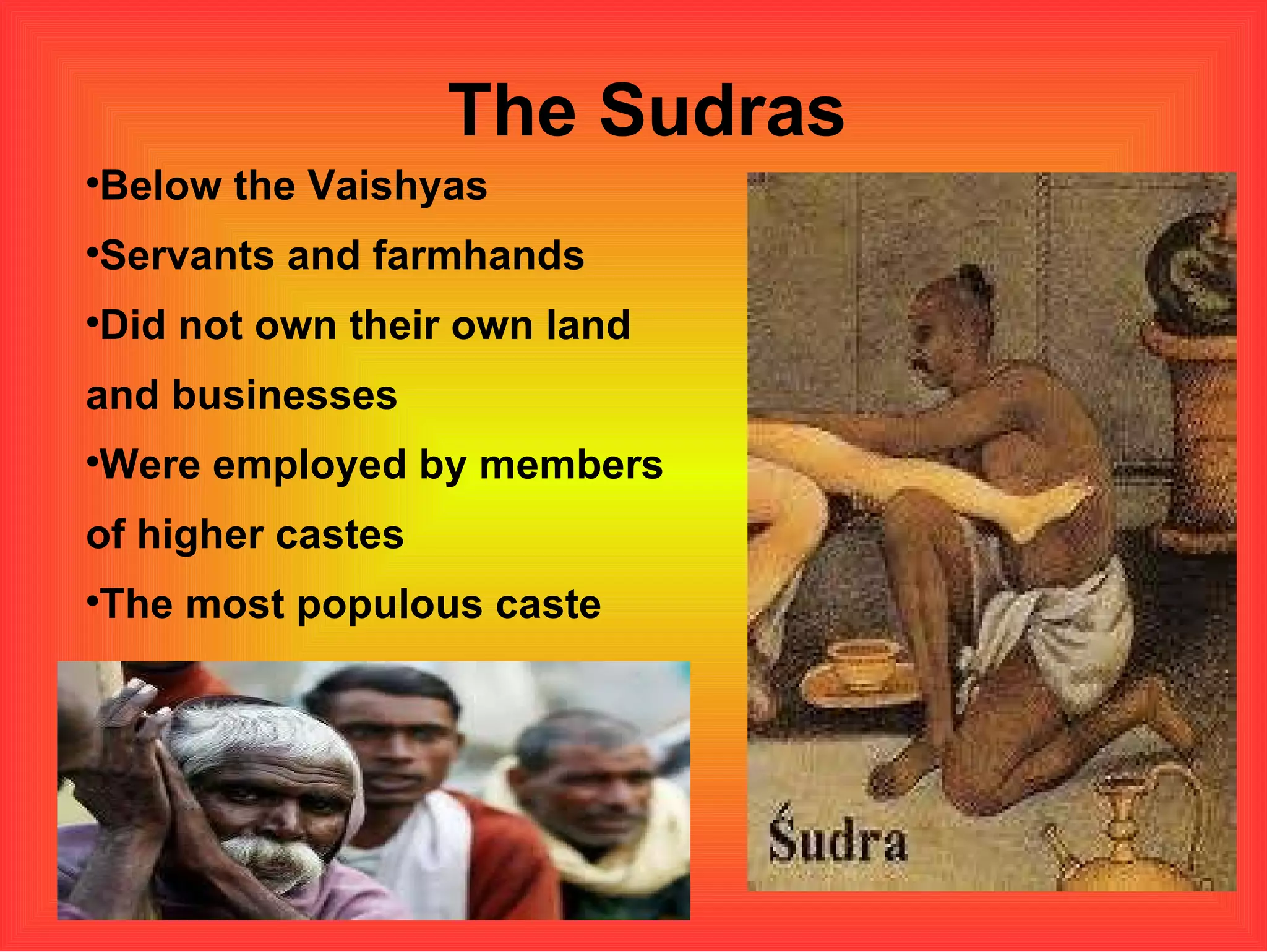
The Sudras Below the Vaishyas Servants and farmhands Did not own their own land and businesses  Were employed by members of higher castes The most populous caste
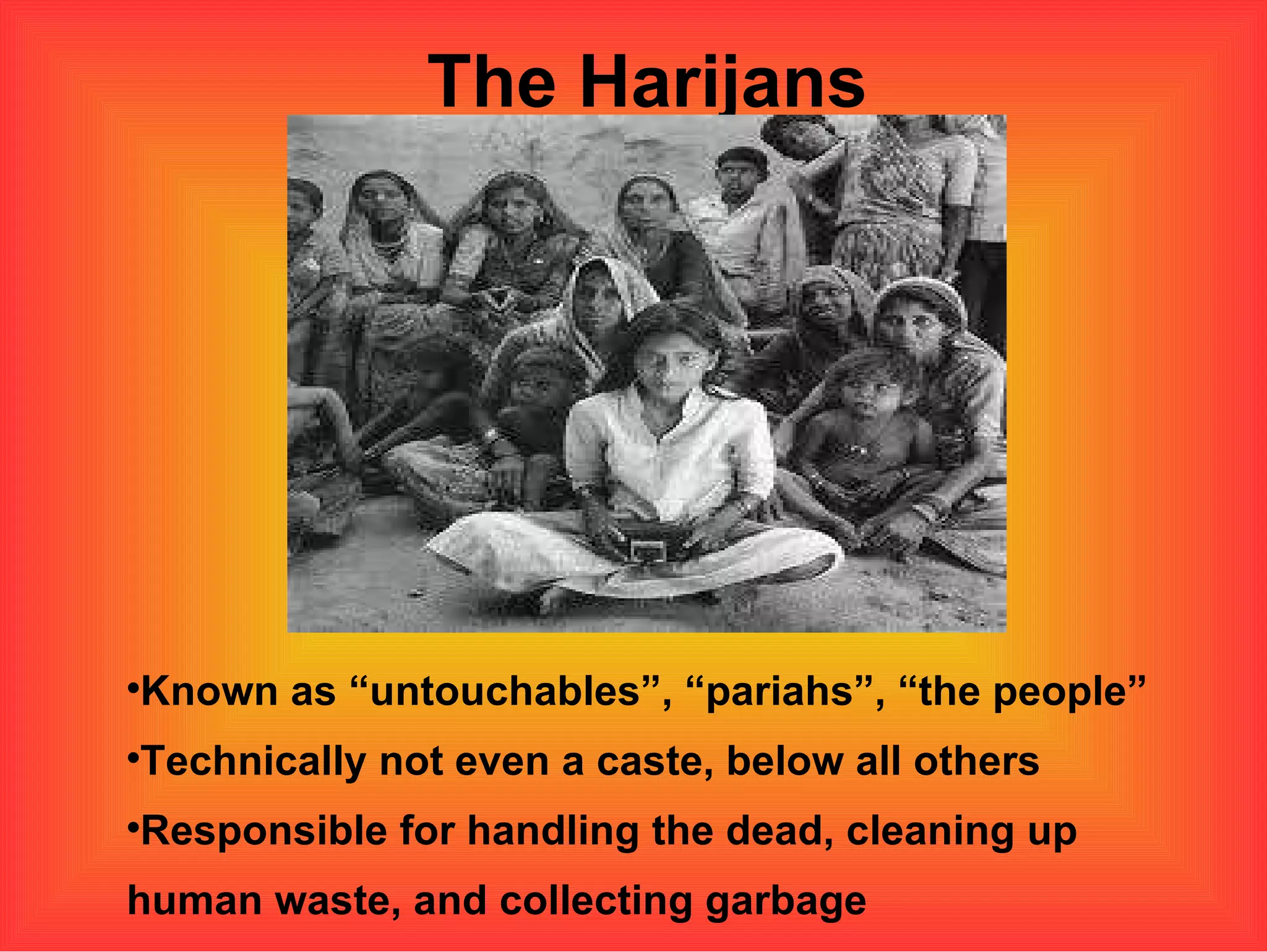
The Harijans Known as “untouchables”, “pariahs”, “the people” Technically not even a caste, below all others Responsible for handling the dead, cleaning up human waste, and collecting garbage
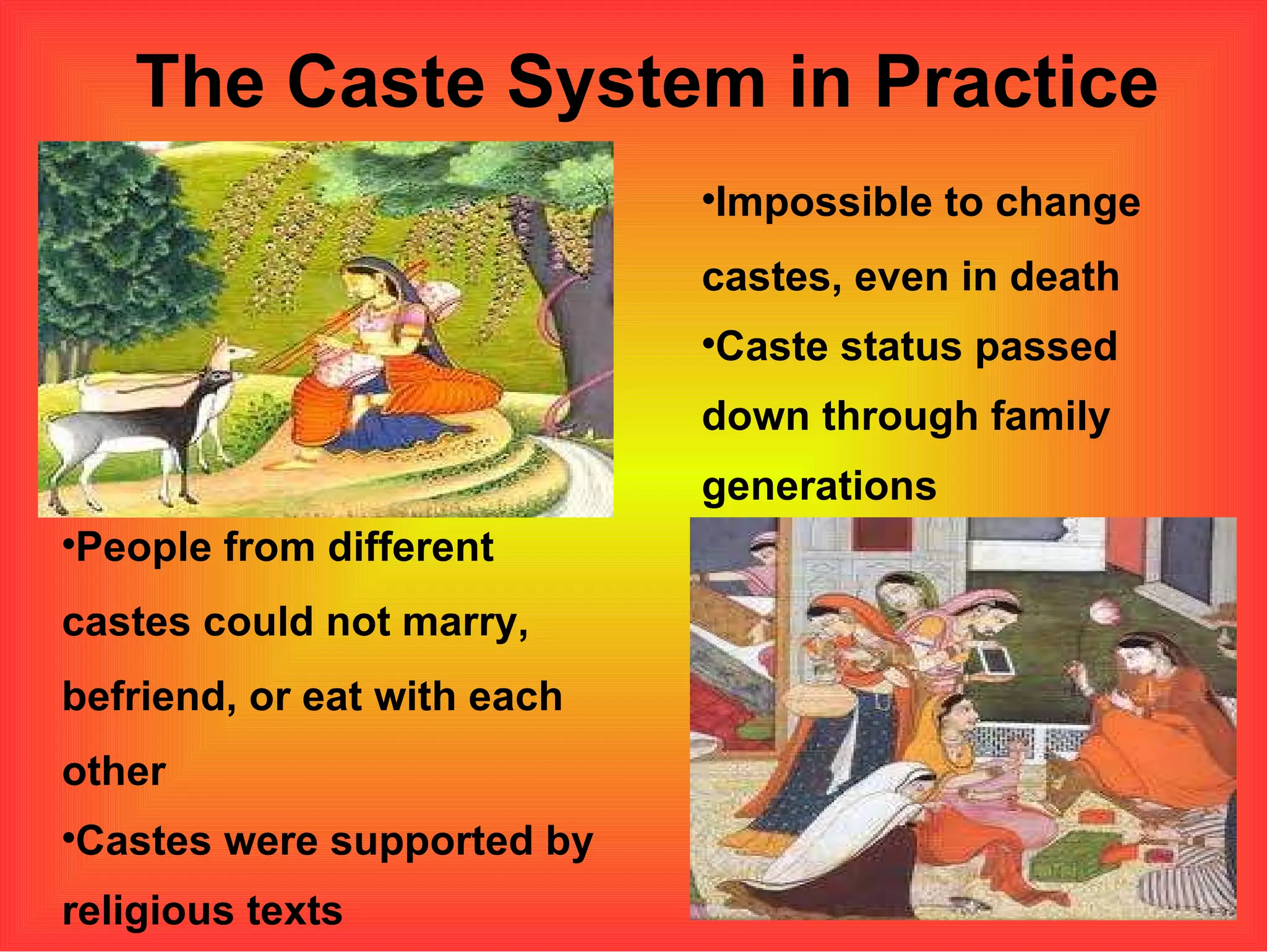
The Caste System in Practice Impossible to change castes, even in death Caste status passed down through family generations People from different castes could not marry, befriend, or eat with each other  Castes were supported by religious texts
Resources for Standard 6.5.4: Outline the social structure of ancient India's caste system http://en.wikipedia.org/wiki/Caste_system_in_India http://www.historyforkids.org/learn/india/people/ http://www.historytution.com/ancient_india/castesystem.html

The Caste System of Ancient India

  • 1.
    The Caste Systemof Ancient India By: Megan Douglas
  • 2.
    Origins of theCaste System Indo-European Aryans invaded India in 1500 BC They were warrior people who established control and began to restructure Indian social classifications Under their influence Indian people were divided into five different social groups The Aryans
  • 3.
    Caste According tothe Rig Veda The duties of Brahmanas, Kshatriyas, and Vaisyas, and of Sudras, too, O terror of your foes! are distinguished according to the qualities born of nature. CHAPTER XVIII, pp. 126-127 http://www.worldfuturefund.org/wffmaster/Reading/Germany/Caste Quotes.htm
  • 4.
  • 5.
    The Brahmins Membersof the highest caste Priests and teachers of Sanskrit Performed religious duties and preached Dharma Only caste allowed to teach and attend school
  • 6.
    The Kshatriya Rankedbelow the Brahmins Functioned as warriors or army leaders Apart of the military and ruling elite
  • 7.
    The Vaishyas Belowthe Kshatriya Traders, cattle farmers, minor officials, merchants and artisans Owned their own business or farm land There were many more people in this caste than the Kshatriyas or Brahmins
  • 8.
    The Sudras Belowthe Vaishyas Servants and farmhands Did not own their own land and businesses Were employed by members of higher castes The most populous caste
  • 9.
    The Harijans Knownas “untouchables”, “pariahs”, “the people” Technically not even a caste, below all others Responsible for handling the dead, cleaning up human waste, and collecting garbage
  • 10.
    The Caste Systemin Practice Impossible to change castes, even in death Caste status passed down through family generations People from different castes could not marry, befriend, or eat with each other Castes were supported by religious texts
  • 11.
    Resources for Standard6.5.4: Outline the social structure of ancient India's caste system http://en.wikipedia.org/wiki/Caste_system_in_India http://www.historyforkids.org/learn/india/people/ http://www.historytution.com/ancient_india/castesystem.html