THE CASTE
SYSTEM
CONELYN C. LLORIN
TEACHER III
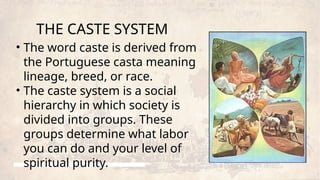
• The word caste is derived from
the Portuguese casta meaning
lineage, breed, or race.
• The caste system is a social
hierarchy in which society is
divided into groups. These
groups determine what labor
you can do and your level of
spiritual purity.
THE CASTE SYSTEM
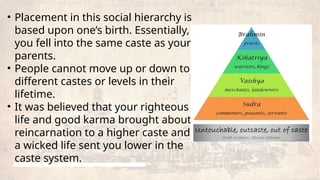
• Placement in this social hierarchy is
based upon one’s birth. Essentially,
you fell into the same caste as your
parents.
• People cannot move up or down to
different castes or levels in their
lifetime.
• It was believed that your righteous
life and good karma brought about
reincarnation to a higher caste and
a wicked life sent you lower in the
caste system.
ORIGIN OF CASTE SYSTEM
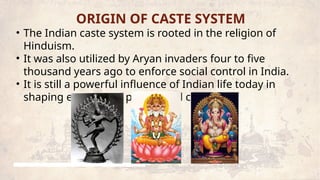
• The Indian caste system is rooted in the religion of
Hinduism.
• It was also utilized by Aryan invaders four to five
thousand years ago to enforce social control in India.
• It is still a powerful influence of Indian life today in
shaping economics, politics and culture.
CASTE SYSTEM- LEVELS
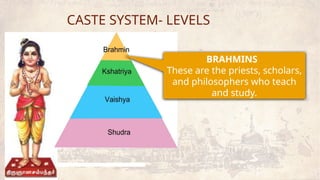
BRAHMINS
These are the priests, scholars,
and philosophers who teach
and study.
CASTE SYSTEM- LEVELS
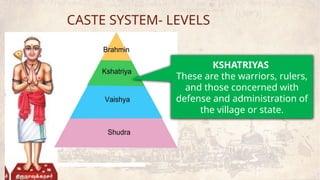
KSHATRIYAS
These are the warriors, rulers,
and those concerned with
defense and administration of
the village or state.
CASTE SYSTEM- LEVELS
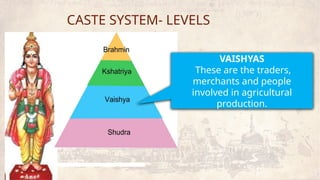
VAISHYAS
These are the traders,
merchants and people
involved in agricultural
production.
CASTE SYSTEM- LEVELS
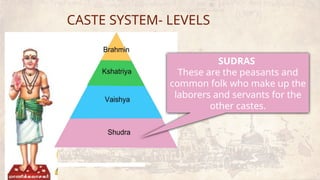
SUDRAS
These are the peasants and
common folk who make up the
laborers and servants for the
other castes.
CASTE SYSTEM- OTHER LEVEL
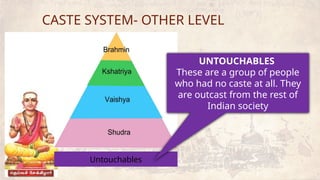
Untouchables
UNTOUCHABLES
These are a group of people
who had no caste at all. They
are outcast from the rest of
Indian society
CASTE SYSTEM- IN PRACTICE
• It defined a person’s expectations
-Determined what kinds of foods one may eat
• It defined a person’s future
-Determined specific job or vocational roles
• Because of the law of Karma, people do not
resist the caste system.
• They believe they are there because of their
actions in previous lives.
• This encourages the individual to fulfill his role or duty
of his or her caste, because their position in the next
life is sure to improve.
• If you did something outside your caste, you could be
excommunicated from your caste. That would cut you
off from doing any work to support yourself because
you could only do the jobs allowed by your caste.

ARALING PANLIPUNAN INDIAN-CASTE SYSTEM.pptx

  • 1.
    THE CASTE SYSTEM CONELYN C.LLORIN TEACHER III
  • 2.
    • The wordcaste is derived from the Portuguese casta meaning lineage, breed, or race. • The caste system is a social hierarchy in which society is divided into groups. These groups determine what labor you can do and your level of spiritual purity. THE CASTE SYSTEM
  • 3.
    • Placement inthis social hierarchy is based upon one’s birth. Essentially, you fell into the same caste as your parents. • People cannot move up or down to different castes or levels in their lifetime. • It was believed that your righteous life and good karma brought about reincarnation to a higher caste and a wicked life sent you lower in the caste system.
  • 4.
    ORIGIN OF CASTESYSTEM • The Indian caste system is rooted in the religion of Hinduism. • It was also utilized by Aryan invaders four to five thousand years ago to enforce social control in India. • It is still a powerful influence of Indian life today in shaping economics, politics and culture.
  • 5.
    CASTE SYSTEM- LEVELS BRAHMINS Theseare the priests, scholars, and philosophers who teach and study.
  • 6.
    CASTE SYSTEM- LEVELS KSHATRIYAS Theseare the warriors, rulers, and those concerned with defense and administration of the village or state.
  • 7.
    CASTE SYSTEM- LEVELS VAISHYAS Theseare the traders, merchants and people involved in agricultural production.
  • 8.
    CASTE SYSTEM- LEVELS SUDRAS Theseare the peasants and common folk who make up the laborers and servants for the other castes.
  • 9.
    CASTE SYSTEM- OTHERLEVEL Untouchables UNTOUCHABLES These are a group of people who had no caste at all. They are outcast from the rest of Indian society
  • 10.
    CASTE SYSTEM- INPRACTICE • It defined a person’s expectations -Determined what kinds of foods one may eat • It defined a person’s future -Determined specific job or vocational roles • Because of the law of Karma, people do not resist the caste system. • They believe they are there because of their actions in previous lives.
  • 11.
    • This encouragesthe individual to fulfill his role or duty of his or her caste, because their position in the next life is sure to improve. • If you did something outside your caste, you could be excommunicated from your caste. That would cut you off from doing any work to support yourself because you could only do the jobs allowed by your caste.