Caste System
The Evolution and the Effects of
Indian Caste System

-Anand Jhunjhunwala
BBM-B
Trimester – I
Roll No. 3
Origin
• Indo-European Aryans invaded our country in
1500 BC
• They were warriors who established control
and began to restructure our social
classifications.
• Under their influence, people were divided
into five different classes.
The Different Castes
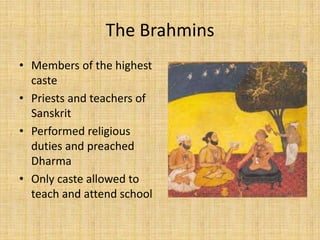
The Brahmins
• Members of the highest
caste
• Priests and teachers of
Sanskrit
• Performed religious
duties and preached
Dharma
• Only caste allowed to
teach and attend school
The Kshatriyas
• Ranked below the
Brahmins
• Functioned as warriors
or army leaders
• Apart of the miltary.
• Had Political influence
• Women could not be
warriors but could
belong to this class.
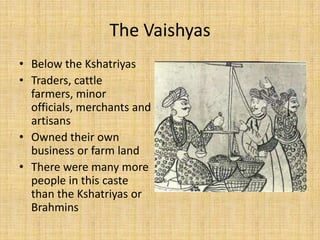
The Vaishyas
• Below the Kshatriyas
• Traders, cattle
farmers, minor
officials, merchants and
artisans
• Owned their own
business or farm land
• There were many more
people in this caste
than the Kshatriyas or
Brahmins
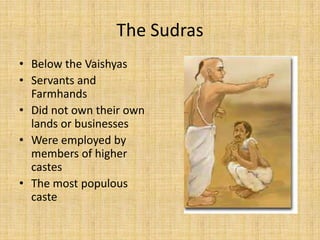
The Sudras
• Below the Vaishyas
• Servants and
Farmhands
• Did not own their own
lands or businesses
• Were employed by
members of higher
castes
• The most populous
caste
The Harijans
• Known as
“Untouchables, Pariahs”
• Technically not even a
caste, below all others
• Responsible for
handling the
dead, cleaning human
wastes, and collecting
garbage.
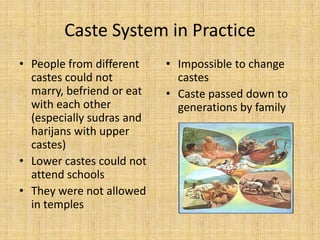
Caste System in Practice
• People from different
castes could not
marry, befriend or eat
with each other
(especially sudras and
harijans with upper
castes)
• Lower castes could not
attend schools
• They were not allowed
in temples

• Impossible to change
castes
• Caste passed down to
generations by family

Caste system

  • 1.
    Caste System The Evolutionand the Effects of Indian Caste System -Anand Jhunjhunwala BBM-B Trimester – I Roll No. 3
  • 2.
    Origin • Indo-European Aryansinvaded our country in 1500 BC • They were warriors who established control and began to restructure our social classifications. • Under their influence, people were divided into five different classes.
  • 3.
  • 4.
    The Brahmins • Membersof the highest caste • Priests and teachers of Sanskrit • Performed religious duties and preached Dharma • Only caste allowed to teach and attend school
  • 5.
    The Kshatriyas • Rankedbelow the Brahmins • Functioned as warriors or army leaders • Apart of the miltary. • Had Political influence • Women could not be warriors but could belong to this class.
  • 6.
    The Vaishyas • Belowthe Kshatriyas • Traders, cattle farmers, minor officials, merchants and artisans • Owned their own business or farm land • There were many more people in this caste than the Kshatriyas or Brahmins
  • 7.
    The Sudras • Belowthe Vaishyas • Servants and Farmhands • Did not own their own lands or businesses • Were employed by members of higher castes • The most populous caste
  • 8.
    The Harijans • Knownas “Untouchables, Pariahs” • Technically not even a caste, below all others • Responsible for handling the dead, cleaning human wastes, and collecting garbage.
  • 9.
    Caste System inPractice • People from different castes could not marry, befriend or eat with each other (especially sudras and harijans with upper castes) • Lower castes could not attend schools • They were not allowed in temples • Impossible to change castes • Caste passed down to generations by family