THE 2018 ENTERPRISE
CLOUD TRENDS REPORT
April 2018
iboss - research results1
DEMOGRAPHICS PART 1 - ITDMs
iboss - research results2
…respondent type …organization sector …organization size
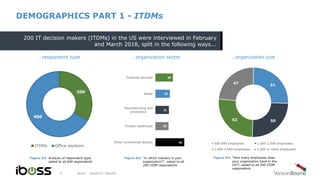
200 IT decision makers (ITDMs) in the US were interviewed in February
and March 2018, split in the following ways...
Figure D1: Analysis of respondent type,
asked to all 600 respondents
Figure D2: “In which industry is your
organization?”, asked to all
200 ITDM respondents
Figure D3: “How many employees does
your organization have in the
US?”, asked to all 200 ITDM
respondents
200
400
ITDMs Office workers
40
33
31
30
66
Financial services
Retail
Manufacturing and
production
Private healthcare
Other commercial sectors
51
5052
47
500-999 employees 1,000-2,999 employees
3,000-4,999 employees 5,000 or more employees
DEMOGRAPHICS PART 2 – Office Workers
iboss - research results3
…respondent type …organization sector …organization size
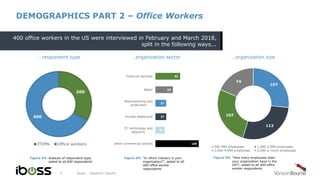
400 office workers in the US were interviewed in February and March 2018,
split in the following ways...
Figure D4: Analysis of respondent type,
asked to all 600 respondents
Figure D5: “In which industry is your
organization?”, asked to all
400 office worker
respondents
Figure D6: “How many employees does
your organization have in the
US?”, asked to all 400 office
worker respondents
200
400
ITDMs Office workers
85
60
37
37
32
149
Financial services
Retail
Manufacturing and
production
Private healthcare
IT, technology and
telecoms
Other commercial sectors
107
112
107
74
500-999 employees 1,000-2,999 employees
3,000-4,999 employees 5,000 or more employees
FOUR AREAS OF INTEREST:
1. Cloud Use in Organizations
2. The Use of SaaS
3. Remote Working and SaaS Vulnerabilities
4. Shadow IT
iboss - research results4
1. Cloud Use in Organizations
iboss - research results5iboss - research results5
IT budget being spent on cloud
iboss - research results6
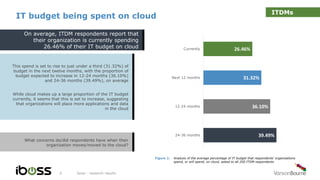
Figure 1: Analysis of the average percentage of IT budget that respondents' organizations
spend, or will spend, on cloud, asked to all 200 ITDM respondents
On average, ITDM respondents report that
their organization is currently spending
26.46% of their IT budget on cloud
This spend is set to rise to just under a third (31.32%) of
budget in the next twelve months, with the proportion of
budget expected to increase in 12-24 months (36.10%)
and 24-36 months (39.49%), on average
While cloud makes up a large proportion of the IT budget
currently, it seems that this is set to increase, suggesting
that organizations will place more applications and data
in the cloud
What concerns do/did respondents have when their
organization moves/moved to the cloud?
26.46%
31.32%
36.10%
39.49%
Currently
Next 12 months
12-24 months
24-36 months
ITDMs
Concerns and drivers on cloud migration
iboss - research results7
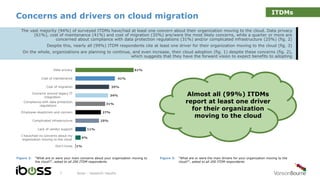
The vast majority (94%) of surveyed ITDMs have/had at least one concern about their organization moving to the cloud. Data privacy
(61%), cost of maintenance (41%) and cost of migration (35%) are/were the most likely concerns, while a quarter or more are
concerned about compliance with data protection regulations (31%) and/or complicated infrastructure (25%) (fig. 2)
Despite this, nearly all (99%) ITDM respondents cite at least one driver for their organization moving to the cloud (fig. 3)
On the whole, organizations are planning to continue, and even increase, their cloud adoption (fig. 1) despite these concerns (fig. 2),
which suggests that they have the forward vision to expect benefits to adopting
Figure 2: “What are or were your main concerns about your organization moving to
the cloud?”, asked to all 200 ITDM respondents
Figure 3: “What are or were the main drivers for your organization moving to the
cloud?”, asked to all 200 ITDM respondents
61%
41%
35%
34%
31%
27%
25%
11%
6%
1%
Data privacy
Cost of maintenance
Cost of migration
Concerns around legacy IT
integration
Compliance with data protection
regulations
Employee skepticism and concern
Complicated infrastructure
Lack of vendor support
I have/had no concerns about my
organization moving to the cloud
Don't know
Almost all (99%) ITDMs
report at least one driver
for their organization
moving to the cloud
ITDMs
Adapting security policies to a cloud environments
iboss - research results8
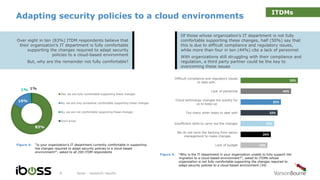
Figure 4: “Is your organization’s IT department currently comfortable in supporting
the changes required to adapt security policies to a cloud-based
environment?”, asked to all 200 ITDM respondents
Figure 5: “Why is the IT department in your organization unable to fully support the
migration to a cloud-based environment?”, asked to ITDMs whose
organization is not fully comfortable supporting the changes required to
adapt security policies to a cloud-based environment (34)
Over eight in ten (83%) ITDM respondents believe that
their organization’s IT department is fully comfortable
supporting the changes required to adapt security
policies to a cloud-based environment
But, why are the remainder not fully comfortable?
Of those whose organization’s IT department is not fully
comfortable supporting these changes, half (50%) say that
this is due to difficult compliance and regulatory issues,
while more than four in ten (44%) cite a lack of personnel
With organizations still struggling with their compliance and
regulation, a third party partner could be the key to
overcoming these issues
83%
16%
1% 1%
Yes, we are fully comfortable supporting these changes
No, we are only somewhat comfortable supporting these changes
No, we are not comfortable supporting these changes
Don’t know
50%
44%
35%
32%
29%
26%
24%
Difficult compliance and regulatory issues
to deal with
Lack of personnel
Cloud technology changes too quickly for
us to keep up
Too many other tasks to deal with
Insufficient skills to carry out the changes
We do not have the backing from senior
management to make changes
Lack of budget
ITDMs
Security policies in a cloud environment
iboss - research results9
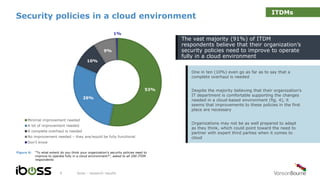
One in ten (10%) even go as far as to say that a
complete overhaul is needed
Despite the majority believing that their organization’s
IT department is comfortable supporting the changes
needed in a cloud-based environment (fig. 4), it
seems that improvements to these policies in the first
place are necessary
Organizations may not be as well prepared to adapt
as they think, which could point toward the need to
partner with expert third parties when it comes to
cloud
Figure 6: “To what extent do you think your organization's security policies need to
improve to operate fully in a cloud environment?”, asked to all 200 ITDM
respondents
The vast majority (91%) of ITDM
respondents believe that their organization’s
security policies need to improve to operate
fully in a cloud environment
53%
29%
10%
9%
1%
Minimal improvement needed
A lot of improvement needed
A complete overhaul is needed
No improvement needed – they are/would be fully functional
Don't know
ITDMs
iboss - research results10
2. The Use of SaaS
iboss - research results10
Keeping applications on-premises
iboss - research results11
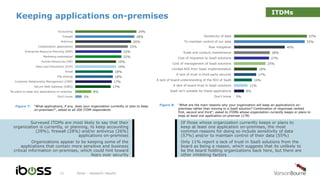
Figure 7: “What applications, if any, does your organization currently or plan to keep
on-premises?”, asked to all 200 ITDM respondents
Figure 8: “What are the main reasons why your organization will keep an application/s on-
premises rather than moving to a SaaS solution? Combination of responses ranked
first, second and third”, asked to ITDMs whose organization currently keeps or plans to
keep at least one application on-premise (179)
Surveyed ITDMs are most likely to say that their
organization is currently, or planning, to keep accounting
(29%), firewall (28%) and/or antivirus (26%)
applications on-premises
Organizations appear to be keeping some of the
applications that contain more sensitive and business
critical information on-premises, which could hint toward
fears over security
Of those whose organization currently keeps or plans to
keep at least one application on-premises, the most
common reasons for doing so include sensitivity of data
(57%) and/or to maintain control of their data (55%)
Only 11% report a lack of trust in SaaS solutions from the
board as being a reason, which suggests that its unlikely to
be the board holding organizations back here, but there are
other inhibiting factors
29%
28%
26%
25%
22%
22%
19%
19%
18%
18%
17%
17%
8%
3%
Accounting
Firewall
Antivirus
Collaboration applications
Enterprise Resource Planning (ERP)
Marketing automation
Human Resources (HR)
Data Loss Prevention (DLP)
Email
File sharing
Customer Relationship Management (CRM)
Secure Web Gateway (SWG)
No plans to keep any applications on-premise
Don’t know
57%
55%
40%
28%
27%
25%
18%
17%
14%
11%
8%
0%
Sensitivity of data
To maintain control of our data
Risk mitigation
Scale and conduct maintenance
Cost of migration to SaaS solutions
Cost of management of SaaS solutions
Limited ROI from SaaS implementation
A lack of trust in third party security
A lack of board understanding of the ROI of SaaS
A lack of board trust in SaaS solutions
SaaS isn't suitable for these applications
Don't know
ITDMs
Increase in SaaS applications
iboss - research results12
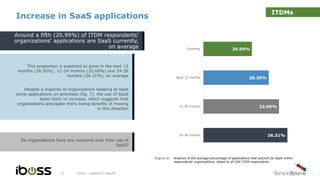
Figure 9: Analysis of the average percentage of applications that are/will be SaaS within
respondents' organizations, asked to all 200 ITDM respondents
Around a fifth (20.99%) of ITDM respondents’
organizations’ applications are SaaS currently,
on average
This proportion is expected to grow in the next 12
months (28.26%), 12-24 months (32.69%) and 24-36
months (36.31%), on average
Despite a majority of organizations keeping at least
some applications on-premises (fig. 7), the use of SaaS
looks likely to increase, which suggests that
organizations anticipate there being benefits of moving
in this direction
Do organizations have any concerns over their use of
SaaS?
20.99%
28.26%
32.69%
36.31%
Currently
Next 12 months
12-24 months
24-36 months
ITDMs
Concerns over SaaS
iboss - research results13
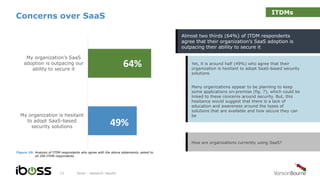
Yet, it is around half (49%) who agree that their
organization is hesitant to adopt SaaS-based security
solutions
Many organizations appear to be planning to keep
some applications on-premise (fig. 7), which could be
linked to these concerns around security. But, this
hesitance would suggest that there is a lack of
education and awareness around the types of
solutions that are available and how secure they can
be
Almost two thirds (64%) of ITDM respondents
agree that their organization’s SaaS adoption is
outpacing their ability to secure it
64%
49%
My organization’s SaaS
adoption is outpacing our
ability to secure it
My organization is hesitant
to adopt SaaS-based
security solutions
How are organizations currently using SaaS?
ITDMs
Figure 10: Analysis of ITDM respondents who agree with the above statements, asked to
all 200 ITDM respondents
Current SaaS use
iboss - research results14
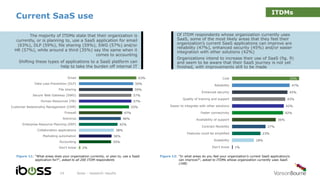
The majority of ITDMs state that their organization is
currently, or is planning to, use a SaaS application for email
(63%), DLP (59%), file sharing (59%), SWG (57%) and/or
HR (57%), while around a third (35%) say the same when it
comes to accounting
Shifting these types of applications to a SaaS platform can
help to take the burden off internal IT
Of ITDM respondents whose organization currently uses
SaaS, some of the most likely areas that they feel their
organization’s current SaaS applications can improve are
reliability (47%), enhanced security (45%) and/or easier
integration with other solutions (42%)
Organizations intend to increase their use of SaaS (fig. 9)
and seem to be aware that their SaaS journey is not yet
finished, with improvements still to be made
63%
59%
59%
57%
57%
55%
47%
46%
42%
38%
36%
35%
2%
Email
Data Loss Prevention (DLP)
File sharing
Secure Web Gateway (SWG)
Human Resources (HR)
Customer Relationship Management (CRM)
Firewall
Antivirus
Enterprise Resource Planning (ERP)
Collaboration applications
Marketing automation
Accounting
Don’t know
55%
47%
45%
43%
42%
42%
36%
27%
23%
18%
1%
Cost
Reliability
Enhanced security
Quality of training and support
Easier to integrate with other solutions
Faster connectivity
Availability of support
Contract flexibility
Features could be simplified
Scalability
Don’t know
ITDMs
Figure 11: “What areas does your organization currently, or plan to, use a SaaS
application for?”, asked to all 200 ITDM respondents
Figure 12: “In what areas do you feel your organization’s current SaaS application/s
can improve?”, asked to ITDMs whose organization currently uses SaaS
(168)
Benefits of SaaS – office workers
iboss - research results15
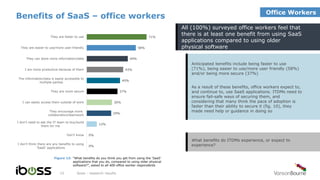
Anticipated benefits include being faster to use
(71%), being easier to use/more user friendly (58%)
and/or being more secure (37%)
As a result of these benefits, office workers expect to,
and continue to, use SaaS applications. ITDMs need to
ensure fail-safe ways of securing them, and
considering that many think the pace of adoption is
faster than their ability to secure it (fig. 10), they
made need help or guidance in doing so
What benefits do ITDMs experience, or expect to
experience?
All (100%) surveyed office workers feel that
there is at least one benefit from using SaaS
applications compared to using older
physical software
71%
58%
49%
43%
40%
37%
30%
29%
12%
0%
0%
They are faster to use
They are easier to use/more user-friendly
They can store more information/data
I am more productive because of them
The information/data is easily accessible to
multiple parties
They are more secure
I can easily access them outside of work
They encourage more
collaboration/teamwork
I don’t need to ask the IT team to buy/build
them for me
Don’t know
I don’t think there are any benefits to using
‘SaaS’ applications
Office Workers
Figure 13: “What benefits do you think you get from using the ‘SaaS’
applications that you do, compared to using older physical
software?”, asked to all 400 office worker respondents
Benefits of SaaS - ITDMs
iboss - research results16
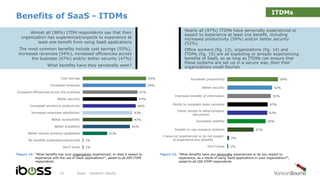
Figure 14: “What benefits has your organization experienced, or does it expect to
experience with the use of SaaS applications?”, asked to all 200 ITDM
respondents
Figure 15: “What benefits have you personally experienced or do you expect to
experience, as a result of using SaaS applications in your organization?”,
asked to all 200 ITDM respondents
Almost all (98%) ITDM respondents say that their
organization has experienced/expects to experience at
least one benefit from using SaaS applications
The most common benefits include cost savings (55%),
increased revenues (54%), increased efficiencies across
the business (47%) and/or better security (47%)
What benefits have they personally seen?
Nearly all (97%) ITDMs have personally experienced or
expect to experience at least one benefit, including
increased productivity (59%) and/or better security
(52%)
Office workers (fig. 13), organizations (fig. 14) and
ITDMs (fig. 15) are all expecting or already experiencing
benefits of SaaS, so as long as ITDMs can ensure that
these systems are set up in a secure way, then their
organizations could flourish
55%
54%
47%
47%
46%
43%
43%
41%
21%
1%
1%
Cost savings
Increased revenues
Increased efficiencies across the business
Better security
Increased workforce productivity
Increased employee satisfaction
Better accessibility
Better scalability
Better remote working capabilities
No benefits expected/experienced
Don't know
59%
52%
51%
47%
47%
45%
31%
2%
1%
Increased productivity
Better security
Improved transfer of information
Ability to complete tasks remotely
Faster access to data/company
documents
Increased visibility
Simpler to use company systems
I have not experienced or do not expect
to experience any benefits
Don’t know
ITDMs
iboss - research results17
3. Remote Work & SaaS Vulnerabilities
iboss - research results17
Remote working
iboss - research results18
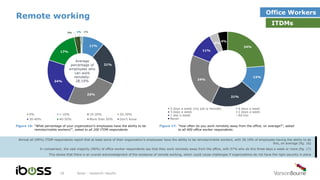
Almost all (99%) ITDM respondents report that at least some of their organization’s employees have the ability to be remote/mobile workers, with 28.19% of employees having the ability to do
this, on average (fig. 16)
In comparison, the vast majority (96%) of office worker respondents say that they work remotely away from the office, with 57% who do this three days a week or more (fig. 17)
This shows that there is an overall acknowledgment of the existence of remote working, which could cause challenges if organizations do not have the right security in place
Figure 16: “What percentage of your organization’s employees have the ability to be
remote/mobile workers?”, asked to all 200 ITDM respondents
Figure 17: “How often do you work remotely away from the office, on average?”, asked
to all 400 office worker respondents
1%
11%
21%
25%
24%
17%
3% 1%
0% 1-10% 10-20% 20-30%
30-40% 40-50% More than 50% Don’t know
24%
13%
21%
24%
11%
4%
4%
5 days a week (my job is remote) 4 days a week
3 days a week 2 days a week
1 day a week Ad hoc
Never
Average
percentage of
employees who
can work
remotely:
28.19%
Office Workers
ITDMs
Remote working policies
iboss - research results19
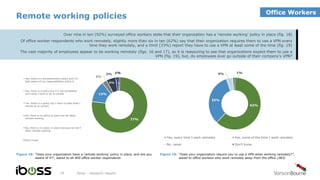
Figure 18: “Does your organization have a ‘remote working’ policy in place, and are you
aware of it?”, asked to all 400 office worker respondents
Figure 19: “Does your organization require you to use a VPN when working remotely?”,
asked to office workers who work remotely away from the office (383)
Over nine in ten (92%) surveyed office workers state that their organization has a ‘remote working’ policy in place (fig. 18)
Of office worker respondents who work remotely, slightly more than six in ten (62%) say that their organization requires them to use a VPN every
time they work remotely, and a third (33%) report they have to use a VPN at least some of the time (fig. 19)
The vast majority of employees appear to be working remotely (figs. 16 and 17), so it is reassuring to see that organizations expect them to use a
VPN (fig. 19), but, do employees ever go outside of their company’s VPN?
77%
13%
3%
6%
2% 1%
Yes, there is a comprehensive policy and I’m
fully aware of my responsibilities within it
Yes, there is a policy but I’m not completely
sure what I have to do to comply
Yes, there is a policy but I have no idea what I
should do to comply
No, there is no policy in place but we allow
remote working
No, there is no policy in place because we don’t
allow remote working
Don’t know
62%
33%
4% 1%
Yes, every time I work remotely Yes, some of the time I work remotely
No, never Don’t know
Office Workers
Accessing SaaS applications outside of a VPN
iboss - research results20
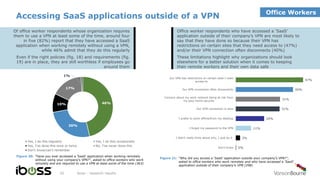
Figure 20: “Have you ever accessed a 'SaaS' application when working remotely
without using your company's VPN?”, asked to office workers who work
remotely and are required to use a VPN at least some of the time (363)
Figure 21: “Why did you access a ‘SaaS’ application outside your company’s VPN?”,
asked to office workers who work remotely and who have accessed a 'SaaS'
application outside of their company's VPN (298)
Of office worker respondents whose organization requires
them to use a VPN at least some of the time, around four
in five (82%) report that they have accessed a SaaS
application when working remotely without using a VPN,
while 46% admit that they do this regularly
Even if the right policies (fig. 18) and requirements (fig.
19) are in place, they are still worthless if employees go
around them
Office worker respondents who have accessed a ‘SaaS’
application outside of their company’s VPN are most likely to
say that they have done so because their VPN has
restrictions on certain sites that they need access to (47%)
and/or their VPN connection often disconnects (40%)
These limitations highlight why organizations should look
elsewhere for a better solution when it comes to keeping
their remote workers and their own data safe
46%
26%
10%
17%
1%
Yes, I do this regularly Yes, I do this occasionally
Yes, I've done this once or twice No, I've never done this
Don't know/can't remember
47%
40%
31%
31%
20%
11%
3%
0%
Our VPN has restrictions on certain sites I need
access to
Our VPN connection often disconnects
Concern about my work network being at risk from
my poor home security
Our VPN connection is slow
I prefer to work offline/from my desktop
I forgot my password to the VPN
I didn’t really think about why, I just do it
Don’t know
Office Workers
Breaching remote working cybersecurity policies
iboss - research results21
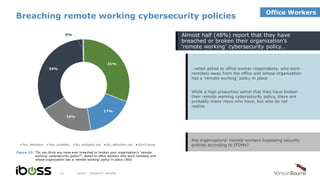
…when asked to office worker respondents, who work
remotely away from the office and whose organization
has a ‘remote working’ policy in place
While a high proportion admit that they have broken
their remote working cybersecurity policy, there are
probably many more who have, but who do not
realize
Are organizations’ remote workers bypassing security
policies according to ITDMs?
Figure 22: “Do you think you have ever breached or broken your organization’s ‘remote
working’ cybersecurity policy?”, asked to office workers who work remotely and
whose organization has a 'remote working' policy in place (360)
Almost half (48%) report that they have
breached or broken their organization’s
‘remote working’ cybersecurity policy…
31%
17%
19%
34%
0%
Yes, definitely Yes, probably No, probably not No, definitely not Don’t know
Office Workers
Remote workers bypassing security policies
iboss - research results22
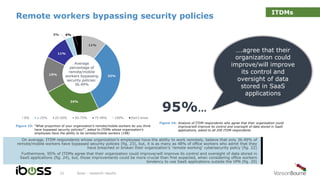
On average, ITDM respondents whose organization’s employees have the ability to work remotely, believe that only 36.49% of
remote/mobile workers have bypassed security policies (fig. 23), but, it is as many as 48% of office workers who admit that they
have breached or broken their organization’s ‘remote working’ cybersecurity policy (fig. 22)
Furthermore, 95% of ITDMs agree that their organization could improve/will improve its control and oversight of data stored in
SaaS applications (fig. 24), but, those improvements could be more crucial than first expected, when considering office workers
tendency to use SaaS applications outside the VPN (fig. 20)
Figure 23: “What proportion of your organization’s remote/mobile workers do you think
have bypassed security policies?”, asked to ITDMs whose organization's
employees have the ability to be remote/mobile workers (198)
Figure 24: Analysis of ITDM respondents who agree that their organization could
improve/will improve its control and oversight of data stored in SaaS
applications, asked to all 200 ITDM respondents
11%
32%
24%
15%
11%
3% 4%
0% 1-25% 25-50% 50-75% 75-99% 100% Don’t know
Average
percentage of
remote/mobile
workers bypassing
security policies:
36.49%
95%...
….agree that their
organization could
improve/will improve
its control and
oversight of data
stored in SaaS
applications
ITDMs
iboss - research results23
4. Shadow IT
iboss - research results23
Shadow IT in the workplace
iboss - research results24
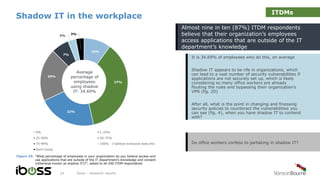
It is 34.69% of employees who do this, on average
Shadow IT appears to be rife in organizations, which
can lead to a vast number of security vulnerabilities if
applications are not securely set up, which is likely
considering so many office workers are already
flouting the rules and bypassing their organization’s
VPN (fig. 20)
After all, what is the point in changing and finessing
security policies to counteract the vulnerabilities you
can see (fig. 4), when you have shadow IT to contend
with?
Do office workers confess to partaking in shadow IT?
Figure 25: “What percentage of employees in your organization do you believe access and
use applications that are outside of the IT department’s knowledge and consent
(otherwise known as shadow IT)?”, asked to all 200 ITDM respondents
Almost nine in ten (87%) ITDM respondents
believe that their organization’s employees
access applications that are outside of the IT
department’s knowledge
10%
37%
22%
20%
7%
3%
3%
0% 1-25%
25-50% 50-75%
75-99% 100% - I believe everyone does this
Don’t know
Average
percentage of
employees
using shadow
IT: 34.69%
ITDMs
Office workers bypassing IT
iboss - research results25
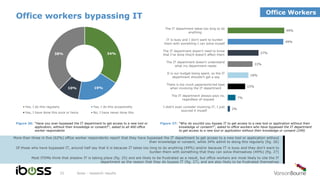
More than three in five (62%) office worker respondents report that they have bypassed the IT department to get access to a new tool or application without
their knowledge or consent, while 34% admit to doing this regularly (fig. 26)
Of those who have bypassed IT, around half say that it is because IT takes too long to do anything (49%) and/or because IT is busy and they don’t want to
burden them with something that they can solve themselves (49%) (fig. 27)
Most ITDMs think that shadow IT is taking place (fig. 25) and are likely to be frustrated as a result, but office workers are most likely to cite the IT
department as the reason that they do bypass IT (fig. 27), and are also likely to be frustrated themselves
Figure 26: “Have you ever bypassed the IT department to get access to a new tool or
application, without their knowledge or consent?”, asked to all 400 office
worker respondents
Figure 27: “Why do you/did you bypass IT to get access to a new tool or application without their
knowledge or consent?”, asked to office workers who have bypassed the IT department
to get access to a new tool or application without their knowledge or consent (249)
34%
19%10%
38%
Yes, I do this regularly Yes, I do this occasionally
Yes, I have done this once or twice No, I have never done this
49%
49%
27%
22%
18%
15%
7%
2%
The IT department takes too long to do
anything
IT is busy and I don’t want to burden
them with something I can solve myself
The IT department doesn’t need to know
that I’ve done this/it doesn’t affect them
The IT department doesn’t understand
what my department needs
It is our budget being spent, so the IT
department shouldn’t get a say
There is too much paperwork/red tape
when involving the IT department
The IT department always says no,
regardless of request
I didn’t even consider involving IT, I just
sourced it myself
Office Workers
72%
53%
It is more important for me to get
access to applications I need to do my
job effectively than to tell the IT
department what applications I am using
The IT department is more interested in
putting up barriers to the use of new
applications than helping set them up
properly and securely
Office worker frustrations
iboss - research results26
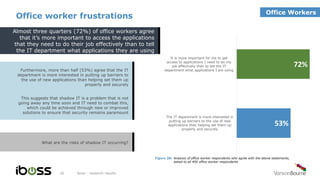
Figure 28: Analysis of office worker respondents who agree with the above statements,
asked to all 400 office worker respondents
Almost three quarters (72%) of office workers agree
that it’s more important to access the applications
that they need to do their job effectively than to tell
the IT department what applications they are using
Furthermore, more than half (53%) agree that the IT
department is more interested in putting up barriers to
the use of new applications than helping set them up
properly and securely
This suggests that shadow IT is a problem that is not
going away any time soon and IT need to combat this,
which could be achieved through new or improved
solutions to ensure that security remains paramount
What are the risks of shadow IT occurring?
Office Workers
Risks of shadow IT
iboss - research results27
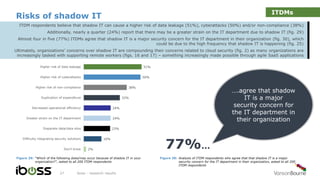
ITDM respondents believe that shadow IT can cause a higher risk of data leakage (51%), cyberattacks (50%) and/or non-compliance (38%)
Additionally, nearly a quarter (24%) report that there may be a greater strain on the IT department due to shadow IT (fig. 29)
Almost four in five (77%) ITDMs agree that shadow IT is a major security concern for the IT department in their organization (fig. 30), which
could be due to the high frequency that shadow IT is happening (fig. 25)
Ultimately, organizations’ concerns over shadow IT are compounding their concerns related to cloud security (fig. 2) as many organizations are
increasingly tasked with supporting remote workers (figs. 16 and 17) – something increasingly made possible through agile SaaS applications
Figure 29: “Which of the following does/may occur because of shadow IT in your
organization?”, asked to all 200 ITDM respondents
Figure 30: Analysis of ITDM respondents who agree that that shadow IT is a major
security concern for the IT department in their organization, asked to all 200
ITDM respondents
51%
50%
38%
32%
24%
24%
23%
16%
2%
Higher risk of data leakage
Higher risk of cyberattacks
Higher risk of non-compliance
Duplication of expenditure
Decreased operational efficiency
Greater strain on the IT department
Disparate data/data silos
Difficulty integrating security solutions
Don’t know 77%...
….agree that shadow
IT is a major
security concern for
the IT department in
their organization
ITDMs
In summary…
iboss - research results28
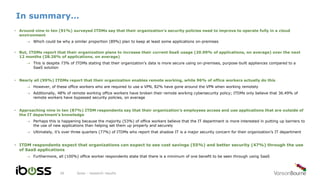
• Around nine in ten (91%) surveyed ITDMs say that their organization’s security policies need to improve to operate fully in a cloud
environment
 Which could be why a similar proportion (89%) plan to keep at least some applications on-premises
• But, ITDMs report that their organization plans to increase their current SaaS usage (20.99% of applications, on average) over the next
12 months (28.26% of applications, on average)
 This is despite 73% of ITDMs stating that their organization’s data is more secure using on-premises, purpose-built appliances compared to a
SaaS solution
• Nearly all (99%) ITDMs report that their organization enables remote working, while 96% of office workers actually do this
 However, of these office workers who are required to use a VPN, 82% have gone around the VPN when working remotely
 Additionally, 48% of remote working office workers have broken their remote working cybersecurity policy; ITDMs only believe that 36.49% of
remote workers have bypassed security policies, on average
• Approaching nine in ten (87%) ITDM respondents say that their organization’s employees access and use applications that are outside of
the IT department’s knowledge
 Perhaps this is happening because the majority (53%) of office workers believe that the IT department is more interested in putting up barriers to
the use of new applications than helping set them up properly and securely
 Ultimately, it’s over three quarters (77%) of ITDMs who report that shadow IT is a major security concern for their organization’s IT department
• ITDM respondents expect that organizations can expect to see cost savings (55%) and better security (47%) through the use
of SaaS applications
 Furthermore, all (100%) office worker respondents state that there is a minimum of one benefit to be seen through using SaaS
iboss - research results29
5. Appendix
iboss - research results29
20%
42%
28%
8%
3%
None 1-10 11-30 31-50 More than 50 Don’t know
Quantity of SaaS applications
iboss - research results30
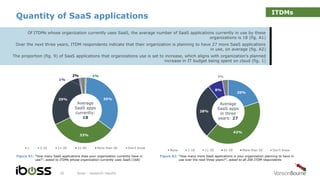
Figure A1: “How many SaaS applications does your organization currently have in
use?”, asked to ITDMs whose organization currently uses SaaS (168)
Figure A2: “How many more SaaS applications is your organization planning to have in
use over the next three years?”, asked to all 200 ITDM respondents
Of ITDMs whose organization currently uses SaaS, the average number of SaaS applications currently in use by these
organizations is 18 (fig. A1)
Over the next three years, ITDM respondents indicate that their organization is planning to have 27 more SaaS applications
in use, on average (fig. A2)
The proportion (fig. 9) of SaaS applications that organizations use is set to increase, which aligns with organization’s planned
increase in IT budget being spent on cloud (fig. 1)
1%
35%
33%
29%
1%
2%
1 2-10 11-20 21-50 More than 50 Don’t know
Average
SaaS apps
currently:
18
Average
SaaS apps
in three
years: 27
ITDMs
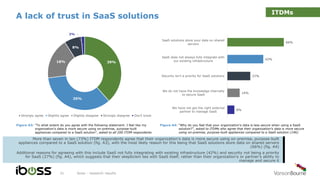
More than seven in ten (73%) ITDM respondents agree that their organization’s data is more secure using on-premise, purpose-built
appliances compared to a SaaS solution (fig. A3), with the most likely reason for this being that SaaS solutions store data on shared servers
(66%) (fig. A4)
Additional reasons for agreeing with this include SaaS not fully integrating with existing infrastructure (42%) and security not being a priority
for SaaS (27%) (fig. A4), which suggests that their skepticism lies with SaaS itself, rather than their organization’s or partner’s ability to
manage and secure it
A lack of trust in SaaS solutions
iboss - research results31
Figure A3: “To what extent do you agree with the following statement: I feel like my
organization’s data is more secure using on-premise, purpose-built
appliances compared to a SaaS solution”, asked to all 200 ITDM respondents
Figure A4: “Why do you feel that your organization's data is less secure when using a SaaS
solution?”, asked to ITDMs who agree that their organization's data is more secure
using on-premise, purpose-built appliances compared to a SaaS solution (146)
39%
35%
18%
8%
2%
Strongly agree Slightly agree Slightly disagree Strongly disagree Don’t know
66%
42%
27%
14%
8%
SaaS solutions store your data on shared
servers
SaaS does not always fully integrate with
our existing infrastructure
Security isn't a priority for SaaS solutions
We do not have the knowledge internally
to secure SaaS
We have not got the right external
partner to manage SaaS
ITDMs
Time to value for SaaS implementation
iboss - research results32
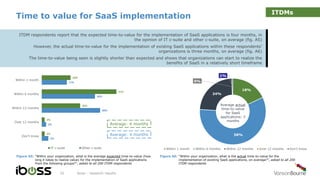
Figure A5: “Within your organization, what is the average expected time-to-value (how
long it takes to realize value) for the implementation of SaaS applications
from the following groups?”, asked to all 200 ITDM respondents
Figure A6: “Within your organization, what is the actual time-to-value for the
implementation of existing SaaS applications, on average?”, asked to all 200
ITDM respondents
ITDM respondents report that the expected time-to-value for the implementation of SaaS applications is four months, in
the opinion of IT c-suite and other c-suite, on average (fig. A5)
However, the actual time-to-value for the implementation of existing SaaS applications within these respondents’
organizations is three months, on average (fig. A6)
The time-to-value being seen is slightly shorter than expected and shows that organizations can start to realize the
benefits of SaaS in a relatively short timeframe
20%
51%
26%
2%
2%
17%
36%
40%
3%
5%
Within 1 month
Within 6 months
Within 12 months
Over 12 months
Don’t know
IT c-suite Other c-suite
18%
58%
24%
0%
1%
Within 1 month Within 6 months Within 12 months Over 12 months Don’t know
Average: 4 months
Average: 4 months
Average actual
time-to-value
for SaaS
applications: 3
months
ITDMs
Expected ROI for the implementation of SaaS
iboss - research results33
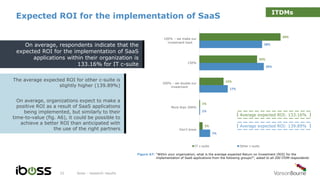
Figure A7: “Within your organization, what is the average expected Return on Investment (ROI) for the
implementation of SaaS applications from the following groups?”, asked to all 200 ITDM respondents
On average, respondents indicate that the
expected ROI for the implementation of SaaS
applications within their organization is
133.16% for IT c-suite
The average expected ROI for other c-suite is
slightly higher (139.89%)
On average, organizations expect to make a
positive ROI as a result of SaaS applications
being implemented, but similarly to their
time-to-value (fig. A6), it could be possible to
achieve a better ROI than anticipated with
the use of the right partners
49%
35%
15%
1%
2%
38%
39%
17%
1%
7%
100% – we make our
investment back
150%
200% - we double our
investment
More than 200%
Don’t know
IT c-suite Other c-suite
Average expected ROI: 133.16%
Average expected ROI: 139.89%
ITDMs
THE 2018 ENTERPRISE
CLOUD TRENDS REPORT
April 2018
iboss - research results34

The 2018 Enterprise Cloud Trends Report

  • 1.
    THE 2018 ENTERPRISE CLOUDTRENDS REPORT April 2018 iboss - research results1
  • 2.
    DEMOGRAPHICS PART 1- ITDMs iboss - research results2 …respondent type …organization sector …organization size 200 IT decision makers (ITDMs) in the US were interviewed in February and March 2018, split in the following ways... Figure D1: Analysis of respondent type, asked to all 600 respondents Figure D2: “In which industry is your organization?”, asked to all 200 ITDM respondents Figure D3: “How many employees does your organization have in the US?”, asked to all 200 ITDM respondents 200 400 ITDMs Office workers 40 33 31 30 66 Financial services Retail Manufacturing and production Private healthcare Other commercial sectors 51 5052 47 500-999 employees 1,000-2,999 employees 3,000-4,999 employees 5,000 or more employees
  • 3.
    DEMOGRAPHICS PART 2– Office Workers iboss - research results3 …respondent type …organization sector …organization size 400 office workers in the US were interviewed in February and March 2018, split in the following ways... Figure D4: Analysis of respondent type, asked to all 600 respondents Figure D5: “In which industry is your organization?”, asked to all 400 office worker respondents Figure D6: “How many employees does your organization have in the US?”, asked to all 400 office worker respondents 200 400 ITDMs Office workers 85 60 37 37 32 149 Financial services Retail Manufacturing and production Private healthcare IT, technology and telecoms Other commercial sectors 107 112 107 74 500-999 employees 1,000-2,999 employees 3,000-4,999 employees 5,000 or more employees
  • 4.
    FOUR AREAS OFINTEREST: 1. Cloud Use in Organizations 2. The Use of SaaS 3. Remote Working and SaaS Vulnerabilities 4. Shadow IT iboss - research results4
  • 5.
    1. Cloud Usein Organizations iboss - research results5iboss - research results5
  • 6.
    IT budget beingspent on cloud iboss - research results6 Figure 1: Analysis of the average percentage of IT budget that respondents' organizations spend, or will spend, on cloud, asked to all 200 ITDM respondents On average, ITDM respondents report that their organization is currently spending 26.46% of their IT budget on cloud This spend is set to rise to just under a third (31.32%) of budget in the next twelve months, with the proportion of budget expected to increase in 12-24 months (36.10%) and 24-36 months (39.49%), on average While cloud makes up a large proportion of the IT budget currently, it seems that this is set to increase, suggesting that organizations will place more applications and data in the cloud What concerns do/did respondents have when their organization moves/moved to the cloud? 26.46% 31.32% 36.10% 39.49% Currently Next 12 months 12-24 months 24-36 months ITDMs
  • 7.
    Concerns and driverson cloud migration iboss - research results7 The vast majority (94%) of surveyed ITDMs have/had at least one concern about their organization moving to the cloud. Data privacy (61%), cost of maintenance (41%) and cost of migration (35%) are/were the most likely concerns, while a quarter or more are concerned about compliance with data protection regulations (31%) and/or complicated infrastructure (25%) (fig. 2) Despite this, nearly all (99%) ITDM respondents cite at least one driver for their organization moving to the cloud (fig. 3) On the whole, organizations are planning to continue, and even increase, their cloud adoption (fig. 1) despite these concerns (fig. 2), which suggests that they have the forward vision to expect benefits to adopting Figure 2: “What are or were your main concerns about your organization moving to the cloud?”, asked to all 200 ITDM respondents Figure 3: “What are or were the main drivers for your organization moving to the cloud?”, asked to all 200 ITDM respondents 61% 41% 35% 34% 31% 27% 25% 11% 6% 1% Data privacy Cost of maintenance Cost of migration Concerns around legacy IT integration Compliance with data protection regulations Employee skepticism and concern Complicated infrastructure Lack of vendor support I have/had no concerns about my organization moving to the cloud Don't know Almost all (99%) ITDMs report at least one driver for their organization moving to the cloud ITDMs
  • 8.
    Adapting security policiesto a cloud environments iboss - research results8 Figure 4: “Is your organization’s IT department currently comfortable in supporting the changes required to adapt security policies to a cloud-based environment?”, asked to all 200 ITDM respondents Figure 5: “Why is the IT department in your organization unable to fully support the migration to a cloud-based environment?”, asked to ITDMs whose organization is not fully comfortable supporting the changes required to adapt security policies to a cloud-based environment (34) Over eight in ten (83%) ITDM respondents believe that their organization’s IT department is fully comfortable supporting the changes required to adapt security policies to a cloud-based environment But, why are the remainder not fully comfortable? Of those whose organization’s IT department is not fully comfortable supporting these changes, half (50%) say that this is due to difficult compliance and regulatory issues, while more than four in ten (44%) cite a lack of personnel With organizations still struggling with their compliance and regulation, a third party partner could be the key to overcoming these issues 83% 16% 1% 1% Yes, we are fully comfortable supporting these changes No, we are only somewhat comfortable supporting these changes No, we are not comfortable supporting these changes Don’t know 50% 44% 35% 32% 29% 26% 24% Difficult compliance and regulatory issues to deal with Lack of personnel Cloud technology changes too quickly for us to keep up Too many other tasks to deal with Insufficient skills to carry out the changes We do not have the backing from senior management to make changes Lack of budget ITDMs
  • 9.
    Security policies ina cloud environment iboss - research results9 One in ten (10%) even go as far as to say that a complete overhaul is needed Despite the majority believing that their organization’s IT department is comfortable supporting the changes needed in a cloud-based environment (fig. 4), it seems that improvements to these policies in the first place are necessary Organizations may not be as well prepared to adapt as they think, which could point toward the need to partner with expert third parties when it comes to cloud Figure 6: “To what extent do you think your organization's security policies need to improve to operate fully in a cloud environment?”, asked to all 200 ITDM respondents The vast majority (91%) of ITDM respondents believe that their organization’s security policies need to improve to operate fully in a cloud environment 53% 29% 10% 9% 1% Minimal improvement needed A lot of improvement needed A complete overhaul is needed No improvement needed – they are/would be fully functional Don't know ITDMs
  • 10.
    iboss - researchresults10 2. The Use of SaaS iboss - research results10
  • 11.
    Keeping applications on-premises iboss- research results11 Figure 7: “What applications, if any, does your organization currently or plan to keep on-premises?”, asked to all 200 ITDM respondents Figure 8: “What are the main reasons why your organization will keep an application/s on- premises rather than moving to a SaaS solution? Combination of responses ranked first, second and third”, asked to ITDMs whose organization currently keeps or plans to keep at least one application on-premise (179) Surveyed ITDMs are most likely to say that their organization is currently, or planning, to keep accounting (29%), firewall (28%) and/or antivirus (26%) applications on-premises Organizations appear to be keeping some of the applications that contain more sensitive and business critical information on-premises, which could hint toward fears over security Of those whose organization currently keeps or plans to keep at least one application on-premises, the most common reasons for doing so include sensitivity of data (57%) and/or to maintain control of their data (55%) Only 11% report a lack of trust in SaaS solutions from the board as being a reason, which suggests that its unlikely to be the board holding organizations back here, but there are other inhibiting factors 29% 28% 26% 25% 22% 22% 19% 19% 18% 18% 17% 17% 8% 3% Accounting Firewall Antivirus Collaboration applications Enterprise Resource Planning (ERP) Marketing automation Human Resources (HR) Data Loss Prevention (DLP) Email File sharing Customer Relationship Management (CRM) Secure Web Gateway (SWG) No plans to keep any applications on-premise Don’t know 57% 55% 40% 28% 27% 25% 18% 17% 14% 11% 8% 0% Sensitivity of data To maintain control of our data Risk mitigation Scale and conduct maintenance Cost of migration to SaaS solutions Cost of management of SaaS solutions Limited ROI from SaaS implementation A lack of trust in third party security A lack of board understanding of the ROI of SaaS A lack of board trust in SaaS solutions SaaS isn't suitable for these applications Don't know ITDMs
  • 12.
    Increase in SaaSapplications iboss - research results12 Figure 9: Analysis of the average percentage of applications that are/will be SaaS within respondents' organizations, asked to all 200 ITDM respondents Around a fifth (20.99%) of ITDM respondents’ organizations’ applications are SaaS currently, on average This proportion is expected to grow in the next 12 months (28.26%), 12-24 months (32.69%) and 24-36 months (36.31%), on average Despite a majority of organizations keeping at least some applications on-premises (fig. 7), the use of SaaS looks likely to increase, which suggests that organizations anticipate there being benefits of moving in this direction Do organizations have any concerns over their use of SaaS? 20.99% 28.26% 32.69% 36.31% Currently Next 12 months 12-24 months 24-36 months ITDMs
  • 13.
    Concerns over SaaS iboss- research results13 Yet, it is around half (49%) who agree that their organization is hesitant to adopt SaaS-based security solutions Many organizations appear to be planning to keep some applications on-premise (fig. 7), which could be linked to these concerns around security. But, this hesitance would suggest that there is a lack of education and awareness around the types of solutions that are available and how secure they can be Almost two thirds (64%) of ITDM respondents agree that their organization’s SaaS adoption is outpacing their ability to secure it 64% 49% My organization’s SaaS adoption is outpacing our ability to secure it My organization is hesitant to adopt SaaS-based security solutions How are organizations currently using SaaS? ITDMs Figure 10: Analysis of ITDM respondents who agree with the above statements, asked to all 200 ITDM respondents
  • 14.
    Current SaaS use iboss- research results14 The majority of ITDMs state that their organization is currently, or is planning to, use a SaaS application for email (63%), DLP (59%), file sharing (59%), SWG (57%) and/or HR (57%), while around a third (35%) say the same when it comes to accounting Shifting these types of applications to a SaaS platform can help to take the burden off internal IT Of ITDM respondents whose organization currently uses SaaS, some of the most likely areas that they feel their organization’s current SaaS applications can improve are reliability (47%), enhanced security (45%) and/or easier integration with other solutions (42%) Organizations intend to increase their use of SaaS (fig. 9) and seem to be aware that their SaaS journey is not yet finished, with improvements still to be made 63% 59% 59% 57% 57% 55% 47% 46% 42% 38% 36% 35% 2% Email Data Loss Prevention (DLP) File sharing Secure Web Gateway (SWG) Human Resources (HR) Customer Relationship Management (CRM) Firewall Antivirus Enterprise Resource Planning (ERP) Collaboration applications Marketing automation Accounting Don’t know 55% 47% 45% 43% 42% 42% 36% 27% 23% 18% 1% Cost Reliability Enhanced security Quality of training and support Easier to integrate with other solutions Faster connectivity Availability of support Contract flexibility Features could be simplified Scalability Don’t know ITDMs Figure 11: “What areas does your organization currently, or plan to, use a SaaS application for?”, asked to all 200 ITDM respondents Figure 12: “In what areas do you feel your organization’s current SaaS application/s can improve?”, asked to ITDMs whose organization currently uses SaaS (168)
  • 15.
    Benefits of SaaS– office workers iboss - research results15 Anticipated benefits include being faster to use (71%), being easier to use/more user friendly (58%) and/or being more secure (37%) As a result of these benefits, office workers expect to, and continue to, use SaaS applications. ITDMs need to ensure fail-safe ways of securing them, and considering that many think the pace of adoption is faster than their ability to secure it (fig. 10), they made need help or guidance in doing so What benefits do ITDMs experience, or expect to experience? All (100%) surveyed office workers feel that there is at least one benefit from using SaaS applications compared to using older physical software 71% 58% 49% 43% 40% 37% 30% 29% 12% 0% 0% They are faster to use They are easier to use/more user-friendly They can store more information/data I am more productive because of them The information/data is easily accessible to multiple parties They are more secure I can easily access them outside of work They encourage more collaboration/teamwork I don’t need to ask the IT team to buy/build them for me Don’t know I don’t think there are any benefits to using ‘SaaS’ applications Office Workers Figure 13: “What benefits do you think you get from using the ‘SaaS’ applications that you do, compared to using older physical software?”, asked to all 400 office worker respondents
  • 16.
    Benefits of SaaS- ITDMs iboss - research results16 Figure 14: “What benefits has your organization experienced, or does it expect to experience with the use of SaaS applications?”, asked to all 200 ITDM respondents Figure 15: “What benefits have you personally experienced or do you expect to experience, as a result of using SaaS applications in your organization?”, asked to all 200 ITDM respondents Almost all (98%) ITDM respondents say that their organization has experienced/expects to experience at least one benefit from using SaaS applications The most common benefits include cost savings (55%), increased revenues (54%), increased efficiencies across the business (47%) and/or better security (47%) What benefits have they personally seen? Nearly all (97%) ITDMs have personally experienced or expect to experience at least one benefit, including increased productivity (59%) and/or better security (52%) Office workers (fig. 13), organizations (fig. 14) and ITDMs (fig. 15) are all expecting or already experiencing benefits of SaaS, so as long as ITDMs can ensure that these systems are set up in a secure way, then their organizations could flourish 55% 54% 47% 47% 46% 43% 43% 41% 21% 1% 1% Cost savings Increased revenues Increased efficiencies across the business Better security Increased workforce productivity Increased employee satisfaction Better accessibility Better scalability Better remote working capabilities No benefits expected/experienced Don't know 59% 52% 51% 47% 47% 45% 31% 2% 1% Increased productivity Better security Improved transfer of information Ability to complete tasks remotely Faster access to data/company documents Increased visibility Simpler to use company systems I have not experienced or do not expect to experience any benefits Don’t know ITDMs
  • 17.
    iboss - researchresults17 3. Remote Work & SaaS Vulnerabilities iboss - research results17
  • 18.
    Remote working iboss -research results18 Almost all (99%) ITDM respondents report that at least some of their organization’s employees have the ability to be remote/mobile workers, with 28.19% of employees having the ability to do this, on average (fig. 16) In comparison, the vast majority (96%) of office worker respondents say that they work remotely away from the office, with 57% who do this three days a week or more (fig. 17) This shows that there is an overall acknowledgment of the existence of remote working, which could cause challenges if organizations do not have the right security in place Figure 16: “What percentage of your organization’s employees have the ability to be remote/mobile workers?”, asked to all 200 ITDM respondents Figure 17: “How often do you work remotely away from the office, on average?”, asked to all 400 office worker respondents 1% 11% 21% 25% 24% 17% 3% 1% 0% 1-10% 10-20% 20-30% 30-40% 40-50% More than 50% Don’t know 24% 13% 21% 24% 11% 4% 4% 5 days a week (my job is remote) 4 days a week 3 days a week 2 days a week 1 day a week Ad hoc Never Average percentage of employees who can work remotely: 28.19% Office Workers ITDMs
  • 19.
    Remote working policies iboss- research results19 Figure 18: “Does your organization have a ‘remote working’ policy in place, and are you aware of it?”, asked to all 400 office worker respondents Figure 19: “Does your organization require you to use a VPN when working remotely?”, asked to office workers who work remotely away from the office (383) Over nine in ten (92%) surveyed office workers state that their organization has a ‘remote working’ policy in place (fig. 18) Of office worker respondents who work remotely, slightly more than six in ten (62%) say that their organization requires them to use a VPN every time they work remotely, and a third (33%) report they have to use a VPN at least some of the time (fig. 19) The vast majority of employees appear to be working remotely (figs. 16 and 17), so it is reassuring to see that organizations expect them to use a VPN (fig. 19), but, do employees ever go outside of their company’s VPN? 77% 13% 3% 6% 2% 1% Yes, there is a comprehensive policy and I’m fully aware of my responsibilities within it Yes, there is a policy but I’m not completely sure what I have to do to comply Yes, there is a policy but I have no idea what I should do to comply No, there is no policy in place but we allow remote working No, there is no policy in place because we don’t allow remote working Don’t know 62% 33% 4% 1% Yes, every time I work remotely Yes, some of the time I work remotely No, never Don’t know Office Workers
  • 20.
    Accessing SaaS applicationsoutside of a VPN iboss - research results20 Figure 20: “Have you ever accessed a 'SaaS' application when working remotely without using your company's VPN?”, asked to office workers who work remotely and are required to use a VPN at least some of the time (363) Figure 21: “Why did you access a ‘SaaS’ application outside your company’s VPN?”, asked to office workers who work remotely and who have accessed a 'SaaS' application outside of their company's VPN (298) Of office worker respondents whose organization requires them to use a VPN at least some of the time, around four in five (82%) report that they have accessed a SaaS application when working remotely without using a VPN, while 46% admit that they do this regularly Even if the right policies (fig. 18) and requirements (fig. 19) are in place, they are still worthless if employees go around them Office worker respondents who have accessed a ‘SaaS’ application outside of their company’s VPN are most likely to say that they have done so because their VPN has restrictions on certain sites that they need access to (47%) and/or their VPN connection often disconnects (40%) These limitations highlight why organizations should look elsewhere for a better solution when it comes to keeping their remote workers and their own data safe 46% 26% 10% 17% 1% Yes, I do this regularly Yes, I do this occasionally Yes, I've done this once or twice No, I've never done this Don't know/can't remember 47% 40% 31% 31% 20% 11% 3% 0% Our VPN has restrictions on certain sites I need access to Our VPN connection often disconnects Concern about my work network being at risk from my poor home security Our VPN connection is slow I prefer to work offline/from my desktop I forgot my password to the VPN I didn’t really think about why, I just do it Don’t know Office Workers
  • 21.
    Breaching remote workingcybersecurity policies iboss - research results21 …when asked to office worker respondents, who work remotely away from the office and whose organization has a ‘remote working’ policy in place While a high proportion admit that they have broken their remote working cybersecurity policy, there are probably many more who have, but who do not realize Are organizations’ remote workers bypassing security policies according to ITDMs? Figure 22: “Do you think you have ever breached or broken your organization’s ‘remote working’ cybersecurity policy?”, asked to office workers who work remotely and whose organization has a 'remote working' policy in place (360) Almost half (48%) report that they have breached or broken their organization’s ‘remote working’ cybersecurity policy… 31% 17% 19% 34% 0% Yes, definitely Yes, probably No, probably not No, definitely not Don’t know Office Workers
  • 22.
    Remote workers bypassingsecurity policies iboss - research results22 On average, ITDM respondents whose organization’s employees have the ability to work remotely, believe that only 36.49% of remote/mobile workers have bypassed security policies (fig. 23), but, it is as many as 48% of office workers who admit that they have breached or broken their organization’s ‘remote working’ cybersecurity policy (fig. 22) Furthermore, 95% of ITDMs agree that their organization could improve/will improve its control and oversight of data stored in SaaS applications (fig. 24), but, those improvements could be more crucial than first expected, when considering office workers tendency to use SaaS applications outside the VPN (fig. 20) Figure 23: “What proportion of your organization’s remote/mobile workers do you think have bypassed security policies?”, asked to ITDMs whose organization's employees have the ability to be remote/mobile workers (198) Figure 24: Analysis of ITDM respondents who agree that their organization could improve/will improve its control and oversight of data stored in SaaS applications, asked to all 200 ITDM respondents 11% 32% 24% 15% 11% 3% 4% 0% 1-25% 25-50% 50-75% 75-99% 100% Don’t know Average percentage of remote/mobile workers bypassing security policies: 36.49% 95%... ….agree that their organization could improve/will improve its control and oversight of data stored in SaaS applications ITDMs
  • 23.
    iboss - researchresults23 4. Shadow IT iboss - research results23
  • 24.
    Shadow IT inthe workplace iboss - research results24 It is 34.69% of employees who do this, on average Shadow IT appears to be rife in organizations, which can lead to a vast number of security vulnerabilities if applications are not securely set up, which is likely considering so many office workers are already flouting the rules and bypassing their organization’s VPN (fig. 20) After all, what is the point in changing and finessing security policies to counteract the vulnerabilities you can see (fig. 4), when you have shadow IT to contend with? Do office workers confess to partaking in shadow IT? Figure 25: “What percentage of employees in your organization do you believe access and use applications that are outside of the IT department’s knowledge and consent (otherwise known as shadow IT)?”, asked to all 200 ITDM respondents Almost nine in ten (87%) ITDM respondents believe that their organization’s employees access applications that are outside of the IT department’s knowledge 10% 37% 22% 20% 7% 3% 3% 0% 1-25% 25-50% 50-75% 75-99% 100% - I believe everyone does this Don’t know Average percentage of employees using shadow IT: 34.69% ITDMs
  • 25.
    Office workers bypassingIT iboss - research results25 More than three in five (62%) office worker respondents report that they have bypassed the IT department to get access to a new tool or application without their knowledge or consent, while 34% admit to doing this regularly (fig. 26) Of those who have bypassed IT, around half say that it is because IT takes too long to do anything (49%) and/or because IT is busy and they don’t want to burden them with something that they can solve themselves (49%) (fig. 27) Most ITDMs think that shadow IT is taking place (fig. 25) and are likely to be frustrated as a result, but office workers are most likely to cite the IT department as the reason that they do bypass IT (fig. 27), and are also likely to be frustrated themselves Figure 26: “Have you ever bypassed the IT department to get access to a new tool or application, without their knowledge or consent?”, asked to all 400 office worker respondents Figure 27: “Why do you/did you bypass IT to get access to a new tool or application without their knowledge or consent?”, asked to office workers who have bypassed the IT department to get access to a new tool or application without their knowledge or consent (249) 34% 19%10% 38% Yes, I do this regularly Yes, I do this occasionally Yes, I have done this once or twice No, I have never done this 49% 49% 27% 22% 18% 15% 7% 2% The IT department takes too long to do anything IT is busy and I don’t want to burden them with something I can solve myself The IT department doesn’t need to know that I’ve done this/it doesn’t affect them The IT department doesn’t understand what my department needs It is our budget being spent, so the IT department shouldn’t get a say There is too much paperwork/red tape when involving the IT department The IT department always says no, regardless of request I didn’t even consider involving IT, I just sourced it myself Office Workers
  • 26.
    72% 53% It is moreimportant for me to get access to applications I need to do my job effectively than to tell the IT department what applications I am using The IT department is more interested in putting up barriers to the use of new applications than helping set them up properly and securely Office worker frustrations iboss - research results26 Figure 28: Analysis of office worker respondents who agree with the above statements, asked to all 400 office worker respondents Almost three quarters (72%) of office workers agree that it’s more important to access the applications that they need to do their job effectively than to tell the IT department what applications they are using Furthermore, more than half (53%) agree that the IT department is more interested in putting up barriers to the use of new applications than helping set them up properly and securely This suggests that shadow IT is a problem that is not going away any time soon and IT need to combat this, which could be achieved through new or improved solutions to ensure that security remains paramount What are the risks of shadow IT occurring? Office Workers
  • 27.
    Risks of shadowIT iboss - research results27 ITDM respondents believe that shadow IT can cause a higher risk of data leakage (51%), cyberattacks (50%) and/or non-compliance (38%) Additionally, nearly a quarter (24%) report that there may be a greater strain on the IT department due to shadow IT (fig. 29) Almost four in five (77%) ITDMs agree that shadow IT is a major security concern for the IT department in their organization (fig. 30), which could be due to the high frequency that shadow IT is happening (fig. 25) Ultimately, organizations’ concerns over shadow IT are compounding their concerns related to cloud security (fig. 2) as many organizations are increasingly tasked with supporting remote workers (figs. 16 and 17) – something increasingly made possible through agile SaaS applications Figure 29: “Which of the following does/may occur because of shadow IT in your organization?”, asked to all 200 ITDM respondents Figure 30: Analysis of ITDM respondents who agree that that shadow IT is a major security concern for the IT department in their organization, asked to all 200 ITDM respondents 51% 50% 38% 32% 24% 24% 23% 16% 2% Higher risk of data leakage Higher risk of cyberattacks Higher risk of non-compliance Duplication of expenditure Decreased operational efficiency Greater strain on the IT department Disparate data/data silos Difficulty integrating security solutions Don’t know 77%... ….agree that shadow IT is a major security concern for the IT department in their organization ITDMs
  • 28.
    In summary… iboss -research results28 • Around nine in ten (91%) surveyed ITDMs say that their organization’s security policies need to improve to operate fully in a cloud environment  Which could be why a similar proportion (89%) plan to keep at least some applications on-premises • But, ITDMs report that their organization plans to increase their current SaaS usage (20.99% of applications, on average) over the next 12 months (28.26% of applications, on average)  This is despite 73% of ITDMs stating that their organization’s data is more secure using on-premises, purpose-built appliances compared to a SaaS solution • Nearly all (99%) ITDMs report that their organization enables remote working, while 96% of office workers actually do this  However, of these office workers who are required to use a VPN, 82% have gone around the VPN when working remotely  Additionally, 48% of remote working office workers have broken their remote working cybersecurity policy; ITDMs only believe that 36.49% of remote workers have bypassed security policies, on average • Approaching nine in ten (87%) ITDM respondents say that their organization’s employees access and use applications that are outside of the IT department’s knowledge  Perhaps this is happening because the majority (53%) of office workers believe that the IT department is more interested in putting up barriers to the use of new applications than helping set them up properly and securely  Ultimately, it’s over three quarters (77%) of ITDMs who report that shadow IT is a major security concern for their organization’s IT department • ITDM respondents expect that organizations can expect to see cost savings (55%) and better security (47%) through the use of SaaS applications  Furthermore, all (100%) office worker respondents state that there is a minimum of one benefit to be seen through using SaaS
  • 29.
    iboss - researchresults29 5. Appendix iboss - research results29
  • 30.
    20% 42% 28% 8% 3% None 1-10 11-3031-50 More than 50 Don’t know Quantity of SaaS applications iboss - research results30 Figure A1: “How many SaaS applications does your organization currently have in use?”, asked to ITDMs whose organization currently uses SaaS (168) Figure A2: “How many more SaaS applications is your organization planning to have in use over the next three years?”, asked to all 200 ITDM respondents Of ITDMs whose organization currently uses SaaS, the average number of SaaS applications currently in use by these organizations is 18 (fig. A1) Over the next three years, ITDM respondents indicate that their organization is planning to have 27 more SaaS applications in use, on average (fig. A2) The proportion (fig. 9) of SaaS applications that organizations use is set to increase, which aligns with organization’s planned increase in IT budget being spent on cloud (fig. 1) 1% 35% 33% 29% 1% 2% 1 2-10 11-20 21-50 More than 50 Don’t know Average SaaS apps currently: 18 Average SaaS apps in three years: 27 ITDMs
  • 31.
    More than sevenin ten (73%) ITDM respondents agree that their organization’s data is more secure using on-premise, purpose-built appliances compared to a SaaS solution (fig. A3), with the most likely reason for this being that SaaS solutions store data on shared servers (66%) (fig. A4) Additional reasons for agreeing with this include SaaS not fully integrating with existing infrastructure (42%) and security not being a priority for SaaS (27%) (fig. A4), which suggests that their skepticism lies with SaaS itself, rather than their organization’s or partner’s ability to manage and secure it A lack of trust in SaaS solutions iboss - research results31 Figure A3: “To what extent do you agree with the following statement: I feel like my organization’s data is more secure using on-premise, purpose-built appliances compared to a SaaS solution”, asked to all 200 ITDM respondents Figure A4: “Why do you feel that your organization's data is less secure when using a SaaS solution?”, asked to ITDMs who agree that their organization's data is more secure using on-premise, purpose-built appliances compared to a SaaS solution (146) 39% 35% 18% 8% 2% Strongly agree Slightly agree Slightly disagree Strongly disagree Don’t know 66% 42% 27% 14% 8% SaaS solutions store your data on shared servers SaaS does not always fully integrate with our existing infrastructure Security isn't a priority for SaaS solutions We do not have the knowledge internally to secure SaaS We have not got the right external partner to manage SaaS ITDMs
  • 32.
    Time to valuefor SaaS implementation iboss - research results32 Figure A5: “Within your organization, what is the average expected time-to-value (how long it takes to realize value) for the implementation of SaaS applications from the following groups?”, asked to all 200 ITDM respondents Figure A6: “Within your organization, what is the actual time-to-value for the implementation of existing SaaS applications, on average?”, asked to all 200 ITDM respondents ITDM respondents report that the expected time-to-value for the implementation of SaaS applications is four months, in the opinion of IT c-suite and other c-suite, on average (fig. A5) However, the actual time-to-value for the implementation of existing SaaS applications within these respondents’ organizations is three months, on average (fig. A6) The time-to-value being seen is slightly shorter than expected and shows that organizations can start to realize the benefits of SaaS in a relatively short timeframe 20% 51% 26% 2% 2% 17% 36% 40% 3% 5% Within 1 month Within 6 months Within 12 months Over 12 months Don’t know IT c-suite Other c-suite 18% 58% 24% 0% 1% Within 1 month Within 6 months Within 12 months Over 12 months Don’t know Average: 4 months Average: 4 months Average actual time-to-value for SaaS applications: 3 months ITDMs
  • 33.
    Expected ROI forthe implementation of SaaS iboss - research results33 Figure A7: “Within your organization, what is the average expected Return on Investment (ROI) for the implementation of SaaS applications from the following groups?”, asked to all 200 ITDM respondents On average, respondents indicate that the expected ROI for the implementation of SaaS applications within their organization is 133.16% for IT c-suite The average expected ROI for other c-suite is slightly higher (139.89%) On average, organizations expect to make a positive ROI as a result of SaaS applications being implemented, but similarly to their time-to-value (fig. A6), it could be possible to achieve a better ROI than anticipated with the use of the right partners 49% 35% 15% 1% 2% 38% 39% 17% 1% 7% 100% – we make our investment back 150% 200% - we double our investment More than 200% Don’t know IT c-suite Other c-suite Average expected ROI: 133.16% Average expected ROI: 139.89% ITDMs
  • 34.
    THE 2018 ENTERPRISE CLOUDTRENDS REPORT April 2018 iboss - research results34