


Chris Helme Presentation
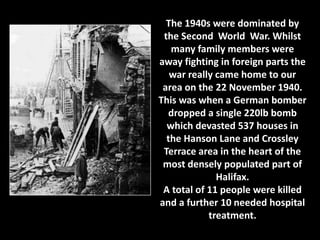
The 1940s were dominated by 
the Second World War. Whilst 
many family members were 
away fighting in foreign parts the 
war really came home to our 
area on the 22 November 1940. 
This was when a German bomber 
dropped a single 220lb bomb 
which devasted 537 houses in 
the Hanson Lane and Crossley 
Terrace area in the heart of the 
most densely populated part of 
Halifax. 
A total of 11 people were killed 
and a further 10 needed hospital 
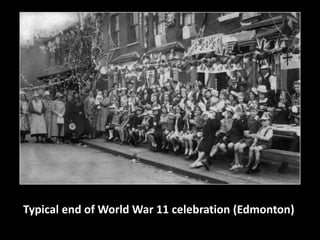
treatment.
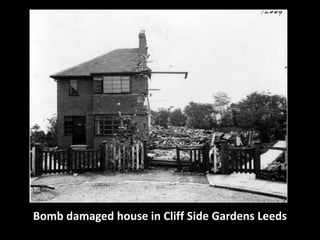
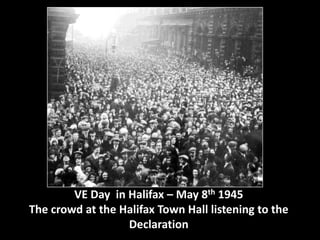
Bomb damaged house in Cliff Side Gardens Leeds
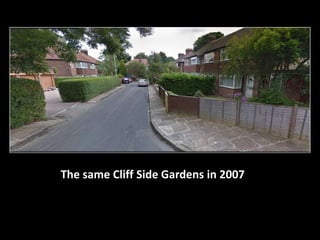
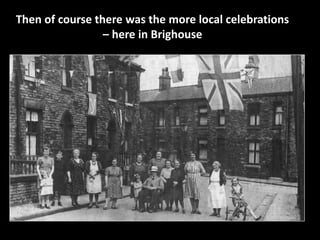
The same Cliff Side Gardens in 2007
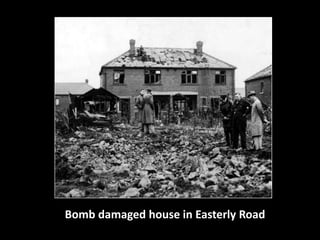
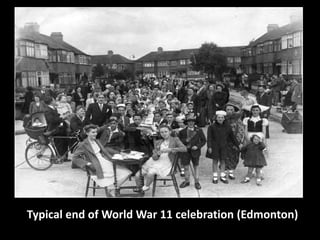
Bomb damaged house in Easterly Road
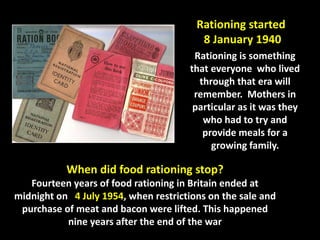
Rationing started 
8 January 1940 
Rationing is something 
that everyone who lived 
through that era will 
remember. Mothers in 
particular as it was they 
who had to try and 
provide meals for a 
growing family. 
When did food rationing stop? 
Fourteen years of food rationing in Britain ended at 
midnight on 4 July 1954, when restrictions on the sale and 
purchase of meat and bacon were lifted. This happened 
nine years after the end of the war
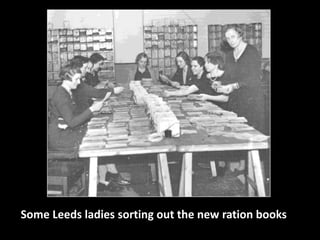
Some Leeds ladies sorting out the new ration books
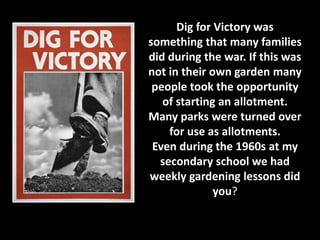
Dig for Victory was 
something that many families 
did during the war. If this was 
not in their own garden many 
people took the opportunity 
of starting an allotment. 
Many parks were turned over 
for use as allotments. 
Even during the 1960s at my 
secondary school we had 
weekly gardening lessons did 
you?
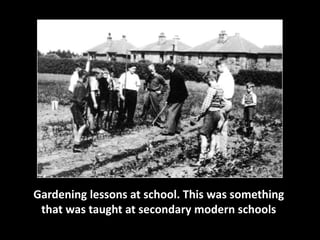
Gardening lessons at school. This was something 
that was taught at secondary modern schools
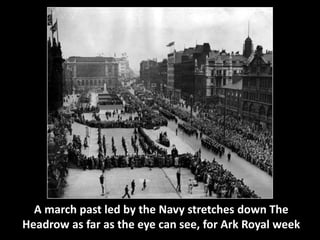
A march past led by the Navy stretches down The 
Headrow as far as the eye can see, for Ark Royal week
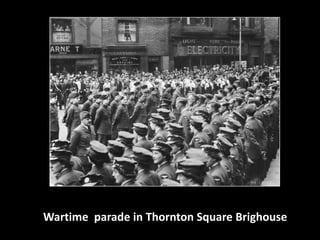
Wartime parade in Thornton Square Brighouse
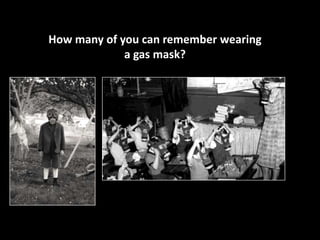
How many of you can remember wearing 
a gas mask?
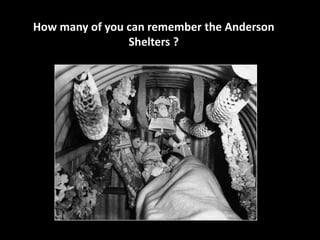
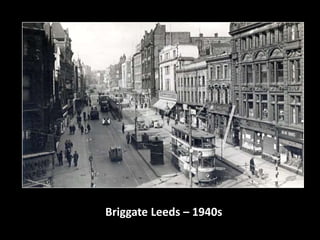
How many of you can remember the Anderson 
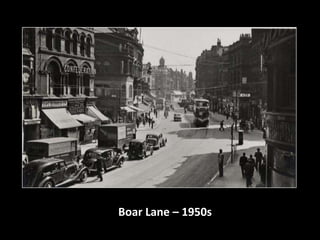
Shelters ?
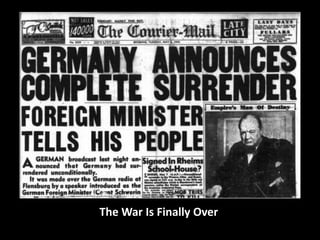
The War Is Finally Over
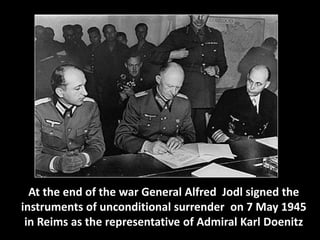
At the end of the war General Alfred Jodl signed the 
instruments of unconditional surrender on 7 May 1945 
in Reims as the representative of Admiral Karl Doenitz
Typical end of World War 11 celebration (Edmonton)
VE Day in Halifax – May 8th 1945 
The crowd at the Halifax Town Hall listening to the 
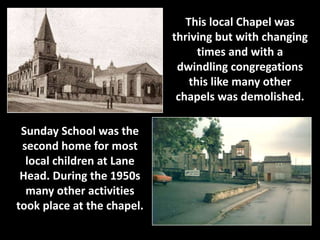
Declaration
Then of course there was the more local celebrations 
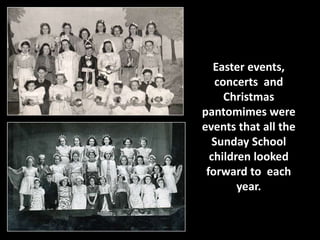
– here in Brighouse
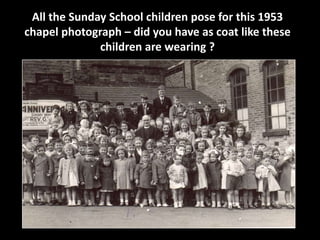
Typical end of World War 11 celebration (Edmonton)
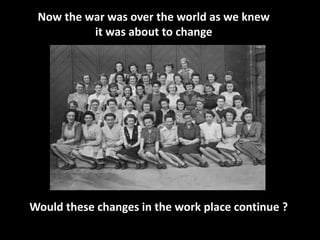
Now the war was over the world as we knew 
it was about to change 
Would these changes in the work place continue ?
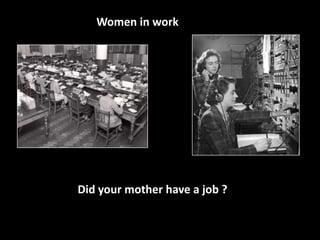
Women in work 
Did your mother have a job ?
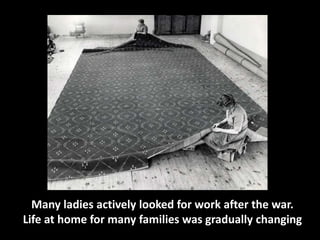
Many ladies actively looked for work after the war. 
Life at home for many families was gradually changing
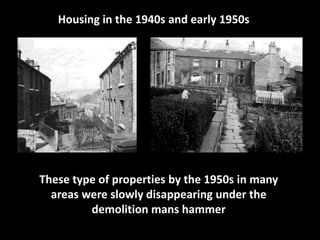
Housing in the 1940s and early 1950s 
These type of properties by the 1950s in many 
areas were slowly disappearing under the 
demolition mans hammer
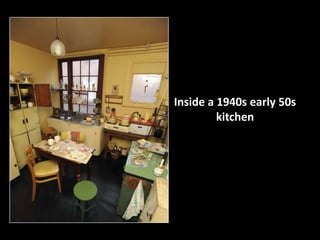
Inside a 1940s early 50s 
kitchen
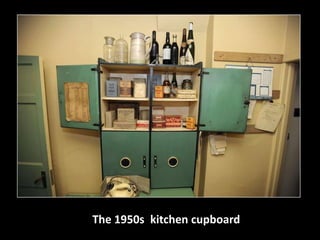
The 1950s kitchen cupboard
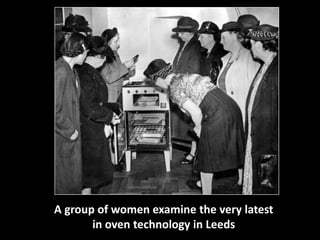
A group of women examine the very latest 
in oven technology in Leeds
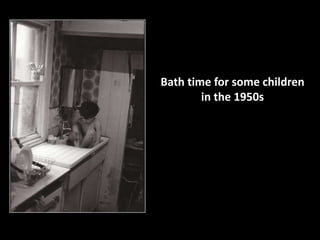
Bath time for some children 
in the 1950s
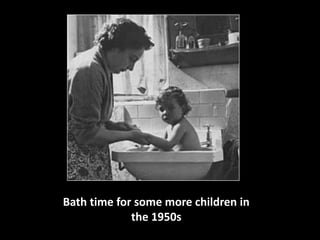
Bath time for some more children in 
the 1950s
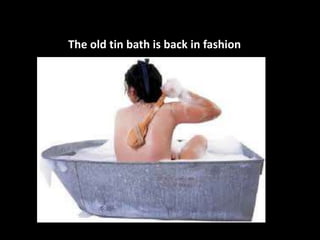
The old tin bath is back in fashion
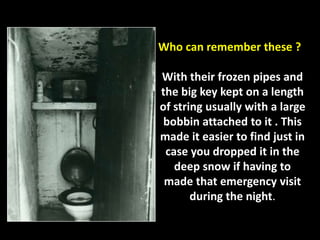
Who can remember these ? 
With their frozen pipes and 
the big key kept on a length 
of string usually with a large 
bobbin attached to it . This 
made it easier to find just in 
case you dropped it in the 
deep snow if having to 
made that emergency visit 
during the night.
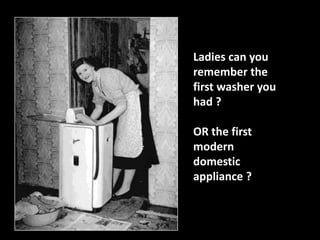
Ladies can you 
remember the 
first washer you 
had ? 
OR the first 
modern 
domestic 
appliance ?
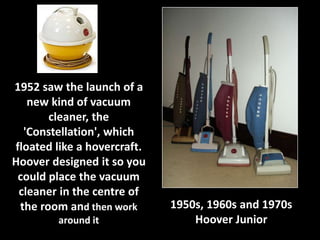
1952 saw the launch of a 
new kind of vacuum 
cleaner, the 
'Constellation', which 
floated like a hovercraft. 
Hoover designed it so you 
could place the vacuum 
cleaner in the centre of 
the room and then work 
around it 
1950s, 1960s and 1970s 
Hoover Junior
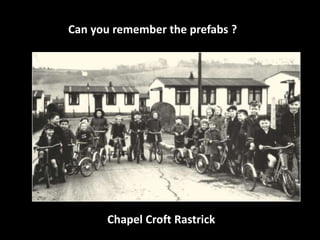
Can you remember the prefabs ? 
Chapel Croft Rastrick
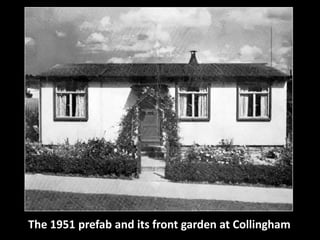
The 1951 prefab and its front garden at Collingham
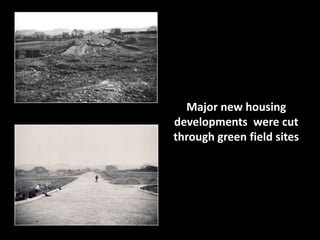
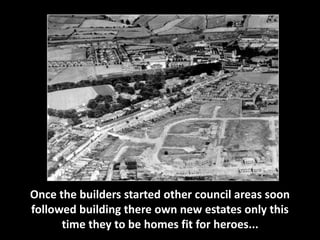
Major new housing 
developments were cut 
through green field sites
Once the builders started other council areas soon 
followed building there own new estates only this 
time they to be homes fit for heroes...
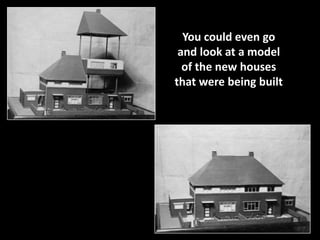
You could even go 
and look at a model 
of the new houses 
that were being built
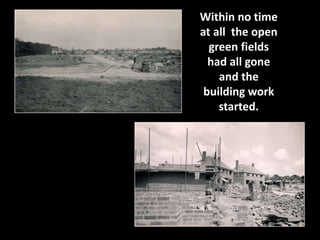
Within no time 
at all the open 
green fields 
had all gone 
and the 
building work 
started.
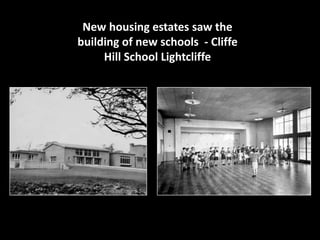
New housing estates saw the 
building of new schools - Cliffe 
Hill School Lightcliffe
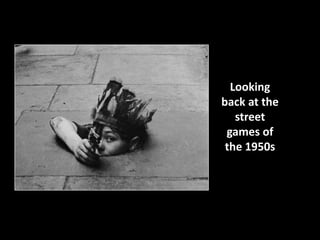
Looking 
back at the 
street 
games of 
the 1950s
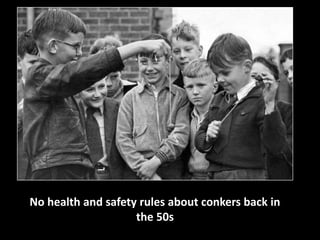
No health and safety rules about conkers back in 
the 50s
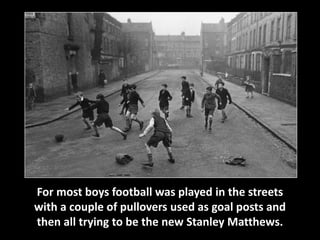
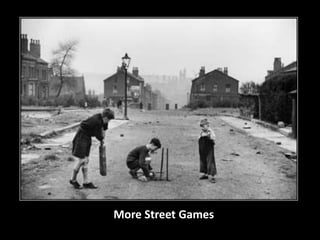
For most boys football was played in the streets 
with a couple of pullovers used as goal posts and 
then all trying to be the new Stanley Matthews.
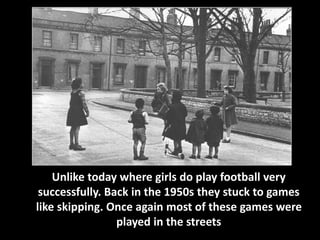
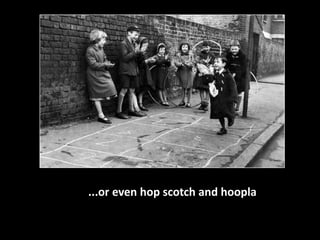
Unlike today where girls do play football very 
successfully. Back in the 1950s they stuck to games 
like skipping. Once again most of these games were 
played in the streets
More Street Games
...or even hop scotch and hoopla
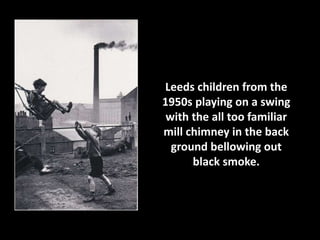
Leeds children from the 
1950s playing on a swing 
with the all too familiar 
mill chimney in the back 
ground bellowing out 
black smoke.
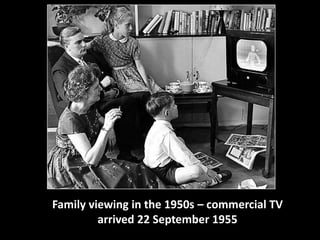
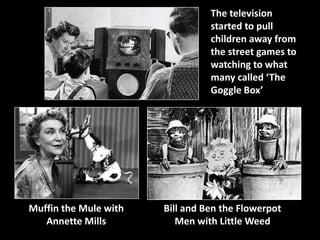
Family viewing in the 1950s – commercial TV 
arrived 22 September 1955
Muffin the Mule with 
Annette Mills 
The television 
started to pull 
children away from 
the street games to 
watching to what 
many called ‘The 
Goggle Box’ 
Bill and Ben the Flowerpot 
Men with Little Weed
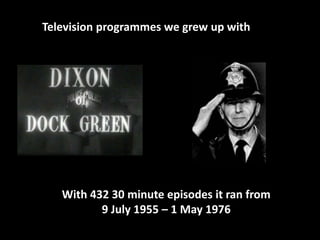
Television programmes we grew up with 
With 432 30 minute episodes it ran from 
9 July 1955 – 1 May 1976
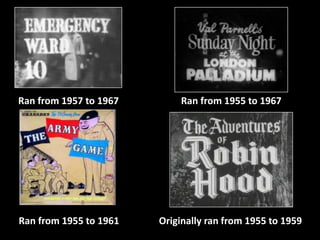
Ran from 1957 to 1967 Ran from 1955 to 1967 
Ran from 1955 to 1961 Originally ran from 1955 to 1959
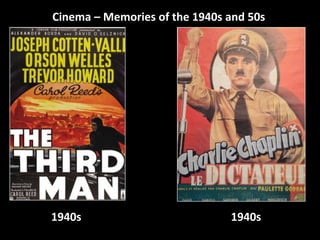
Cinema – Memories of the 1940s and 50s 
1940s 1940s
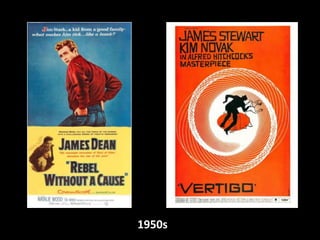
1950s
CINEMA NAMES 
Essoldo – what does this mean 
Esther, SOLomon and his daughter, Dorothy Sheckman 
Odeon – what does this mean? 
Oscar Deutsch Entertains Our Nation 
Why did the old time cinemas tend to have short 
names : 
1. Rex 2. Roxy 3. Royal, 4. Gem, 5. Regent, 6. Grand 
7. Ritz and the 8. Rio etc... 
Short names - the illuminated sign outside was cheaper
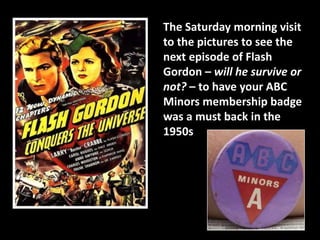
The Saturday morning visit 
to the pictures to see the 
next episode of Flash 
Gordon – will he survive or 
not? – to have your ABC 
Minors membership badge 
was a must back in the 
1950s
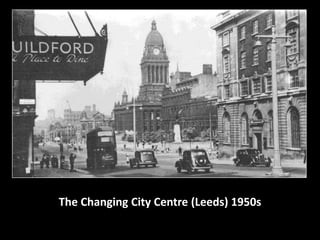
The Changing City Centre (Leeds) 1950s
Lower Woolshops, Halifax – early 60s 
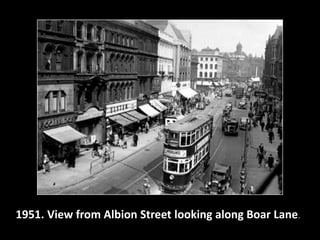
1951. View from Albion Street looking along Boar Lane.
Boar Lane – 1950s
Briggate Leeds – 1940s
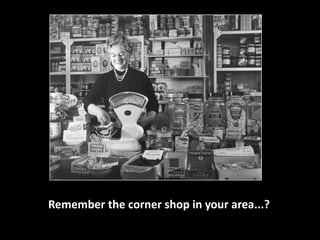
Remember the corner shop in your area...?
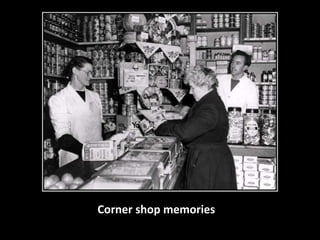
Corner shop memories
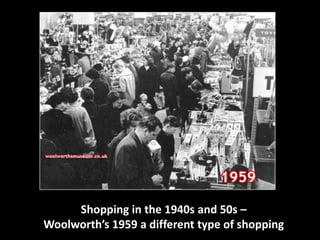
Shopping in the 1940s and 50s – 
Woolworth’s 1959 a different type of shopping
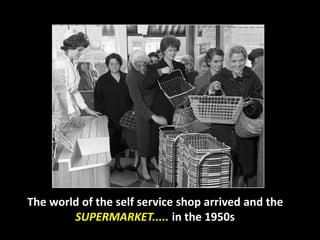
The world of the self service shop arrived and the 
SUPERMARKET..... in the 1950s
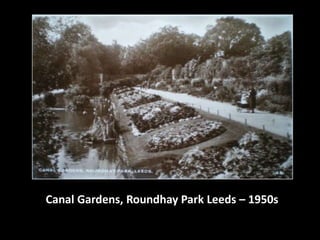
Canal Gardens, Roundhay Park Leeds – 1950s
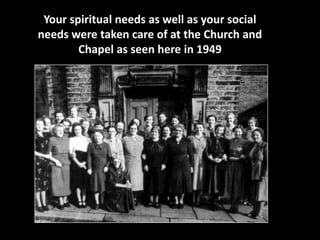
Your spiritual needs as well as your social 
needs were taken care of at the Church and 
Chapel as seen here in 1949
This local Chapel was 
thriving but with changing 
times and with a 
dwindling congregations 
this like many other 
chapels was demolished. 
Sunday School was the 
second home for most 
local children at Lane 
Head. During the 1950s 
many other activities 
took place at the chapel.
Easter events, 
concerts and 
Christmas 
pantomimes were 
events that all the 
Sunday School 
children looked 
forward to each 
year.
All the Sunday School children pose for this 1953 
chapel photograph – did you have as coat like these 
children are wearing ?
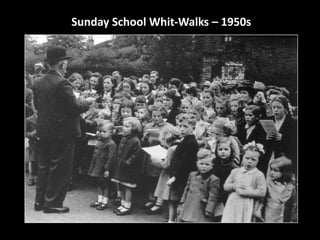
Sunday School Whit-Walks – 1950s
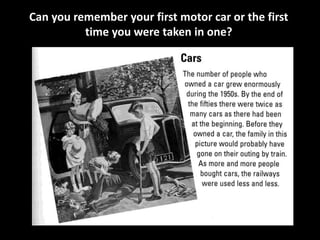
Can you remember your first motor car or the first 
time you were taken in one?
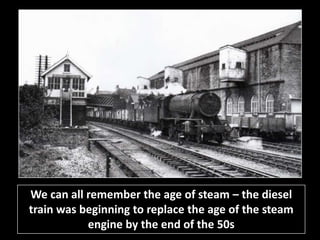
We can all remember the age of steam – the diesel 
train was beginning to replace the age of the steam 
engine by the end of the 50s
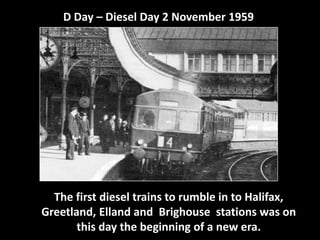
D Day – Diesel Day 2 November 1959 
The first diesel trains to rumble in to Halifax, 
Greetland, Elland and Brighouse stations was on 
this day the beginning of a new era.
This collection of images date back to 60 
years ago which for some of us is a life 
time. But for some of you those days will 
seem only like yesterday. 
I hope these few images have brought 
you back some happy memories from 
your childhood days. 
Hold on to those memories for as long as 
you can they are very precious.
The End

The 1940s & 50s remembered

  • 1.
  • 2.
    The 1940s weredominated by the Second World War. Whilst many family members were away fighting in foreign parts the war really came home to our area on the 22 November 1940. This was when a German bomber dropped a single 220lb bomb which devasted 537 houses in the Hanson Lane and Crossley Terrace area in the heart of the most densely populated part of Halifax. A total of 11 people were killed and a further 10 needed hospital treatment.
  • 3.
    Bomb damaged housein Cliff Side Gardens Leeds
  • 4.
    The same CliffSide Gardens in 2007
  • 5.
    Bomb damaged housein Easterly Road
  • 6.
    Rationing started 8January 1940 Rationing is something that everyone who lived through that era will remember. Mothers in particular as it was they who had to try and provide meals for a growing family. When did food rationing stop? Fourteen years of food rationing in Britain ended at midnight on 4 July 1954, when restrictions on the sale and purchase of meat and bacon were lifted. This happened nine years after the end of the war
  • 7.
    Some Leeds ladiessorting out the new ration books
  • 8.
    Dig for Victorywas something that many families did during the war. If this was not in their own garden many people took the opportunity of starting an allotment. Many parks were turned over for use as allotments. Even during the 1960s at my secondary school we had weekly gardening lessons did you?
  • 9.
    Gardening lessons atschool. This was something that was taught at secondary modern schools
  • 10.
    A march pastled by the Navy stretches down The Headrow as far as the eye can see, for Ark Royal week
  • 11.
    Wartime parade inThornton Square Brighouse
  • 12.
    How many ofyou can remember wearing a gas mask?
  • 13.
    How many ofyou can remember the Anderson Shelters ?
  • 14.
    The War IsFinally Over
  • 15.
    At the endof the war General Alfred Jodl signed the instruments of unconditional surrender on 7 May 1945 in Reims as the representative of Admiral Karl Doenitz
  • 16.
    Typical end ofWorld War 11 celebration (Edmonton)
  • 17.
    VE Day inHalifax – May 8th 1945 The crowd at the Halifax Town Hall listening to the Declaration
  • 18.
    Then of coursethere was the more local celebrations – here in Brighouse
  • 19.
    Typical end ofWorld War 11 celebration (Edmonton)
  • 20.
    Now the warwas over the world as we knew it was about to change Would these changes in the work place continue ?
  • 21.
    Women in work Did your mother have a job ?
  • 22.
    Many ladies activelylooked for work after the war. Life at home for many families was gradually changing
  • 23.
    Housing in the1940s and early 1950s These type of properties by the 1950s in many areas were slowly disappearing under the demolition mans hammer
  • 24.
    Inside a 1940searly 50s kitchen
  • 25.
  • 26.
    A group ofwomen examine the very latest in oven technology in Leeds
  • 27.
    Bath time forsome children in the 1950s
  • 28.
    Bath time forsome more children in the 1950s
  • 29.
    The old tinbath is back in fashion
  • 30.
    Who can rememberthese ? With their frozen pipes and the big key kept on a length of string usually with a large bobbin attached to it . This made it easier to find just in case you dropped it in the deep snow if having to made that emergency visit during the night.
  • 31.
    Ladies can you remember the first washer you had ? OR the first modern domestic appliance ?
  • 32.
    1952 saw thelaunch of a new kind of vacuum cleaner, the 'Constellation', which floated like a hovercraft. Hoover designed it so you could place the vacuum cleaner in the centre of the room and then work around it 1950s, 1960s and 1970s Hoover Junior
  • 33.
    Can you rememberthe prefabs ? Chapel Croft Rastrick
  • 34.
    The 1951 prefaband its front garden at Collingham
  • 35.
    Major new housing developments were cut through green field sites
  • 36.
    Once the buildersstarted other council areas soon followed building there own new estates only this time they to be homes fit for heroes...
  • 37.
    You could evengo and look at a model of the new houses that were being built
  • 38.
    Within no time at all the open green fields had all gone and the building work started.
  • 39.
    New housing estatessaw the building of new schools - Cliffe Hill School Lightcliffe
  • 40.
    Looking back atthe street games of the 1950s
  • 41.
    No health andsafety rules about conkers back in the 50s
  • 42.
    For most boysfootball was played in the streets with a couple of pullovers used as goal posts and then all trying to be the new Stanley Matthews.
  • 43.
    Unlike today wheregirls do play football very successfully. Back in the 1950s they stuck to games like skipping. Once again most of these games were played in the streets
  • 44.
  • 45.
    ...or even hopscotch and hoopla
  • 46.
    Leeds children fromthe 1950s playing on a swing with the all too familiar mill chimney in the back ground bellowing out black smoke.
  • 47.
    Family viewing inthe 1950s – commercial TV arrived 22 September 1955
  • 48.
    Muffin the Mulewith Annette Mills The television started to pull children away from the street games to watching to what many called ‘The Goggle Box’ Bill and Ben the Flowerpot Men with Little Weed
  • 49.
    Television programmes wegrew up with With 432 30 minute episodes it ran from 9 July 1955 – 1 May 1976
  • 50.
    Ran from 1957to 1967 Ran from 1955 to 1967 Ran from 1955 to 1961 Originally ran from 1955 to 1959
  • 51.
    Cinema – Memoriesof the 1940s and 50s 1940s 1940s
  • 52.
  • 53.
    CINEMA NAMES Essoldo– what does this mean Esther, SOLomon and his daughter, Dorothy Sheckman Odeon – what does this mean? Oscar Deutsch Entertains Our Nation Why did the old time cinemas tend to have short names : 1. Rex 2. Roxy 3. Royal, 4. Gem, 5. Regent, 6. Grand 7. Ritz and the 8. Rio etc... Short names - the illuminated sign outside was cheaper
  • 54.
    The Saturday morningvisit to the pictures to see the next episode of Flash Gordon – will he survive or not? – to have your ABC Minors membership badge was a must back in the 1950s
  • 55.
    The Changing CityCentre (Leeds) 1950s
  • 56.
    Lower Woolshops, Halifax– early 60s 1951. View from Albion Street looking along Boar Lane.
  • 57.
  • 58.
  • 59.
    Remember the cornershop in your area...?
  • 60.
  • 61.
    Shopping in the1940s and 50s – Woolworth’s 1959 a different type of shopping
  • 62.
    The world ofthe self service shop arrived and the SUPERMARKET..... in the 1950s
  • 63.
    Canal Gardens, RoundhayPark Leeds – 1950s
  • 64.
    Your spiritual needsas well as your social needs were taken care of at the Church and Chapel as seen here in 1949
  • 65.
    This local Chapelwas thriving but with changing times and with a dwindling congregations this like many other chapels was demolished. Sunday School was the second home for most local children at Lane Head. During the 1950s many other activities took place at the chapel.
  • 66.
    Easter events, concertsand Christmas pantomimes were events that all the Sunday School children looked forward to each year.
  • 67.
    All the SundaySchool children pose for this 1953 chapel photograph – did you have as coat like these children are wearing ?
  • 68.
  • 69.
    Can you rememberyour first motor car or the first time you were taken in one?
  • 70.
    We can allremember the age of steam – the diesel train was beginning to replace the age of the steam engine by the end of the 50s
  • 71.
    D Day –Diesel Day 2 November 1959 The first diesel trains to rumble in to Halifax, Greetland, Elland and Brighouse stations was on this day the beginning of a new era.
  • 72.
    This collection ofimages date back to 60 years ago which for some of us is a life time. But for some of you those days will seem only like yesterday. I hope these few images have brought you back some happy memories from your childhood days. Hold on to those memories for as long as you can they are very precious.
  • 73.

Editor's Notes

  • #3 The 1940s were dominated by the Second World War. Whilst many family members were away fighting in foreign parts the war really came home to our area on the 22 November 1940. This was when a German bomber dropped a single 220lb bomb which devasted 537 houses in the Hanson Lane and Crossley Terrace area in the heart of the most densely populated part of Halifax. A total of 11 people were killed and a further 10 needed hospital treatment.
  • #7 Rationing started 8 January 1940 Rationing is something that everyone who lived through that era will remember. Mothers in particular as it was they who had to try and provide meals for a growing family. When did food rationing stop? Fourteen years of food rationing in Britain ended at midnight on 4 July 1954, when restrictions on the sale and purchase of meat and bacon were lifted. This happened nine years after the end of the war
  • #10 Gardening lessons at school. This was something that was taught at secondary modern schools
  • #12 Wartime parade in Thornton Square Brighouse
  • #13 How many of you can remember wearing a gas mask?
  • #14 How many of you can remember the Anderson Shelters ?
  • #15 The War Is Finally Over At the end of the war General Alfred Jodl signed the instruments of unconditional surrender  on 7 May 1945 in Reims as the representative of Admiral Karl Doenitz
  • #18 VE Day in Halifax – May 8th 1945 The crowd at the Halifax Town Hall listening to the Declaration
  • #19 Then of course there was the more local celebrations – here at Larkhill Terrace which is now part of the car park outside Brighouse Parish Church
  • #21 Now the war was over the world as we knew it was about to change Some of the ladies at GEC Bailiffe Bridge who did war work – Would these changes in the work place continue ?
  • #22 Women in work Did your mother have a job ?
  • #23 Many ladies actively looked for work after the war life at home for many families was gradually changing
  • #24 Housing in the 1940s and early 1950s Little Woodhouse, Rastrick put on demolition order 1956 Stoney Place, Rastrick put on demolition order 1956
  • #25 Inside a 1940s early 50s kitchen
  • #26 The 1950s kitchen cupboard
  • #28 Bath time for some children in the 1950s
  • #29 Bath time for some more children in the 1950s
  • #30 The old tin bath is back in fashion
  • #31 Who can remember these ? With their frozen pipes and the big key kept on a length of string usually with a large bobbin attached to it . This made it easier to find just in case you dropped it in the deep snow if having to made that emergency visit during the night
  • #32 Ladies can you remember the first washer you had ? OR the first modern domestic appliance ?
  • #33 1952 saw the launch of a new kind of vacuum cleaner, the 'Constellation', which floated like a hovercraft. Hoover designed it so you could place the vacuum cleaner in the centre of the room and then work around it 1950s, 1960s and 1970s Hoover Junior
  • #34 Can you remember the prefabs ? Chapel Croft Rastrick
  • #36 A major housing development in Field Lane Rastrick
  • #37 Another very large housing development at Stoney Lane Lightcliffe between 1949 - 1953
  • #38 You could even go and look at a model of the new houses that were being built
  • #39 Within no time at all the open green fields had all gone and the building work started.
  • #40 New housing estates saw the building of new schools - Cliffe Hill School Lightcliffe
  • #41 Looking back at the street games of the 1950s
  • #42 No health and safety rules about conkers back in the 50s
  • #43 For most boys football was played in the streets with a couple of pullovers used as goal posts and then all trying be the new Stanley Matthews
  • #44 Unlike today where girls do play football very successfully back in the 1950s they stuck to games like skipping. Once again most of these games were played in the streets
  • #46 ...or even hop scotch and hoopla
  • #49 The television started to pull children away from the street games to watching to what many called ‘The Goggle Box’ Muffin the Mule with Annette Mills Bill and Ben the Flowerpot Men with Little Weed