Nama : selvy Ariska
Nim : 11453201795
Sistem Informasi
Fakultas Sains dan Teknologi
Uin Suska Riau
A. SOFTWARE DEVELOPMENT MODELS
 Before discussing the V-model, we will look at
the model which came before it.The waterfall
model was one of the earliest models to be
designed. It has anatural timeline where tasks
are executed in a sequential fashion. We start at
thetop of the waterfall with a feasibility study
and flow down through the variousproject tasks
finishing with implementation into the live
environment. Designflows through into
development, which in turn flows into build, and
finally oninto test. Testing tends to happen
towards the end of the project life cycle
sodefects are detected close to the live
implementation date.
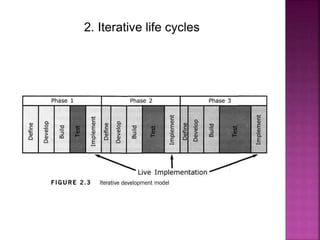
2. Iterative life cycles
3. Testing within a life cycle model
1. n summary, whichever life cycle model is being
used, there are several characteristics of good
testing:
2. for every development activity there is a
corresponding testing activity;
3. each test level has test objectives specific to
that level;
4. the analysis and design of tests for a given test
level should begin during thecorresponding
development activity;
5. testers should be involved in reviewing
documents as soon as drafts are available in
the development cycle.
B. TEST LEVELS
1. Component testing
Component testing may be done in isolation
from the rest of the system depending on the
context of the development life cycle and
the system. Most often stubsand drivers are
used to replace the missing software and
simulate the interfacebetween the software
components in a simple manner. A stub is
called from thesoftware component to be
tested; a driver calls a component to be
tested (seeFigure 2.5).
2. Integration testing
Integration testing tests interfaces between
components, interactions to different parts
of a system such as an operating system, file
system and hardware or interfaces between
systems. Note that integration testing should
bedifferentiated from other integration
activities. Integration testing is oftencarried
out by the integrator, but preferably by a
specific integration tester ortest team.
System testingis concerned with the behavior of
the whole system/product asdefined by the scope of
a development project or product. It may include
testsbased on risks and/or requirements
specification, business processes, use cases,or other
high level descriptions of system behavior,
interactions with the operating system, and system
resources. System testing is most often the final test
onbehalf of development to verify that the system to
be delivered meets the specification and its purpose
may be to find as many defects as possible. Most
oftenit is carried out by specialist testers that form a
dedicated, and sometimes independent, test team
within development, reporting to the development
manageror project manager.
5. Acceptance testing
When the development organization has
performed its system test and has corrected all
or most defects, the system will be delivered to
the user or customerfor acceptance testing. The
acceptance test should answer questions such
as:'Can the system be released?', 'What, if any,
are the outstanding (business)risks?' and 'Has
development met their obligations?'. Acceptance
testing ismost often the responsibility of the user
or customer, although other stakeholders may be
involved as well. The execution of the
acceptance test requires a testenvironment that
is for most aspects, representative of the
production environment ('as-if production').

Testing throughout the software life cycle

  • 1.
    Nama : selvyAriska Nim : 11453201795 Sistem Informasi Fakultas Sains dan Teknologi Uin Suska Riau
  • 2.
  • 3.
     Before discussingthe V-model, we will look at the model which came before it.The waterfall model was one of the earliest models to be designed. It has anatural timeline where tasks are executed in a sequential fashion. We start at thetop of the waterfall with a feasibility study and flow down through the variousproject tasks finishing with implementation into the live environment. Designflows through into development, which in turn flows into build, and finally oninto test. Testing tends to happen towards the end of the project life cycle sodefects are detected close to the live implementation date.
  • 4.
  • 5.
    3. Testing withina life cycle model 1. n summary, whichever life cycle model is being used, there are several characteristics of good testing: 2. for every development activity there is a corresponding testing activity; 3. each test level has test objectives specific to that level; 4. the analysis and design of tests for a given test level should begin during thecorresponding development activity; 5. testers should be involved in reviewing documents as soon as drafts are available in the development cycle.
  • 6.
  • 7.
    1. Component testing Componenttesting may be done in isolation from the rest of the system depending on the context of the development life cycle and the system. Most often stubsand drivers are used to replace the missing software and simulate the interfacebetween the software components in a simple manner. A stub is called from thesoftware component to be tested; a driver calls a component to be tested (seeFigure 2.5).
  • 8.
    2. Integration testing Integrationtesting tests interfaces between components, interactions to different parts of a system such as an operating system, file system and hardware or interfaces between systems. Note that integration testing should bedifferentiated from other integration activities. Integration testing is oftencarried out by the integrator, but preferably by a specific integration tester ortest team.
  • 9.
    System testingis concernedwith the behavior of the whole system/product asdefined by the scope of a development project or product. It may include testsbased on risks and/or requirements specification, business processes, use cases,or other high level descriptions of system behavior, interactions with the operating system, and system resources. System testing is most often the final test onbehalf of development to verify that the system to be delivered meets the specification and its purpose may be to find as many defects as possible. Most oftenit is carried out by specialist testers that form a dedicated, and sometimes independent, test team within development, reporting to the development manageror project manager.
  • 10.
    5. Acceptance testing Whenthe development organization has performed its system test and has corrected all or most defects, the system will be delivered to the user or customerfor acceptance testing. The acceptance test should answer questions such as:'Can the system be released?', 'What, if any, are the outstanding (business)risks?' and 'Has development met their obligations?'. Acceptance testing ismost often the responsibility of the user or customer, although other stakeholders may be involved as well. The execution of the acceptance test requires a testenvironment that is for most aspects, representative of the production environment ('as-if production').