TESTING AND DIFFERENT TYPES
OF TESTING IN OOAD
OOAD TESTING
TESTING
 Software testing is the process of evaluation a
software item to detect differences between given
input and expected output. Also to assess the feature
of A software item. Testing assesses the quality of the
product. Software testing is a process that should be
done during the development process. In other
words software testing is a verification and
validation process.
TYPES OF TESTING
 It has different types that are as follows:
 System testing
 Unit Testing
 Integration Testing
 User Testing
SYSTEM TESTING
 System Testing is the testing of a complete and fully
integrated software product.
 Usually software is only one element of a larger
computer based system. Ultimately, software is
interfaced with other software/hardware systems.
 System Testing is actually a series of different tests
whose sole purpose is to exercise the full computer
based system.
CATEGORY OF SYSTEM TESTING
 BLACK BOX TESTING:-
 System test falls under the black box testing category
of software testing.
 WHITE BOX TESTING:-
 White box testing is the testing of the internal
workings or code of a software application. In
contrast, black box or System Testing is the opposite.
System test involves the external workings of the
software from the user's perspective
UNIT TESTING
 Unit testing, a testing technique using which
individual modules are tested to determine if there
are any issues by the developer himself. It is
concerned with functional correctness of the
standalone modules.
 The main aim is to isolate each unit of the system to
identify, analyze and fix the defects.
ADVANTAGES OF UNIT TESTING
 Reduces Defects in the Newly developed features or
reduces bugs when changing the existing
functionality.
 Reduces Cost of Testing as defects are captured in
very early phase.
 Improves design and allows better refactoring of
code.
 Unit Tests, when integrated with build gives the
quality of the build as well.
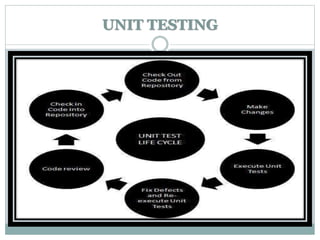
UNIT TESTING
INTEGRATION TESTING
 Integration testing is testing in which a group of
components are combined to produce output. Also,
the interaction between software and hardware is
tested in integration testing if software and hardware
components have any relation. It may fall under both
white box testing and black box testing.
INTEGRATION STRATEGIES
 Big-Bang Integration
 Top Down Integration
 Bottom Up Integration
 Hybrid Integration
USER TESTING
 Usability testing, a non-functional testing technique
that is a measure of how easily the system can be
used by end users. It is difficult to evaluate and
measure but can be evaluated based on the below
parameters:
 Level of Skill required to learn/use the software. It
should maintain the balance for both novice and
expert user.
 Time required to get used to in using the software.
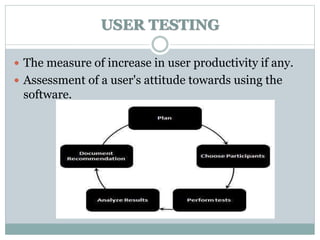
USER TESTING
 The measure of increase in user productivity if any.
 Assessment of a user's attitude towards using the
software.

Testing and types of Testing

  • 1.
    TESTING AND DIFFERENTTYPES OF TESTING IN OOAD OOAD TESTING
  • 2.
    TESTING  Software testingis the process of evaluation a software item to detect differences between given input and expected output. Also to assess the feature of A software item. Testing assesses the quality of the product. Software testing is a process that should be done during the development process. In other words software testing is a verification and validation process.
  • 3.
    TYPES OF TESTING It has different types that are as follows:  System testing  Unit Testing  Integration Testing  User Testing
  • 4.
    SYSTEM TESTING  SystemTesting is the testing of a complete and fully integrated software product.  Usually software is only one element of a larger computer based system. Ultimately, software is interfaced with other software/hardware systems.  System Testing is actually a series of different tests whose sole purpose is to exercise the full computer based system.
  • 5.
    CATEGORY OF SYSTEMTESTING  BLACK BOX TESTING:-  System test falls under the black box testing category of software testing.  WHITE BOX TESTING:-  White box testing is the testing of the internal workings or code of a software application. In contrast, black box or System Testing is the opposite. System test involves the external workings of the software from the user's perspective
  • 6.
    UNIT TESTING  Unittesting, a testing technique using which individual modules are tested to determine if there are any issues by the developer himself. It is concerned with functional correctness of the standalone modules.  The main aim is to isolate each unit of the system to identify, analyze and fix the defects.
  • 7.
    ADVANTAGES OF UNITTESTING  Reduces Defects in the Newly developed features or reduces bugs when changing the existing functionality.  Reduces Cost of Testing as defects are captured in very early phase.  Improves design and allows better refactoring of code.  Unit Tests, when integrated with build gives the quality of the build as well.
  • 8.
  • 9.
    INTEGRATION TESTING  Integrationtesting is testing in which a group of components are combined to produce output. Also, the interaction between software and hardware is tested in integration testing if software and hardware components have any relation. It may fall under both white box testing and black box testing.
  • 10.
    INTEGRATION STRATEGIES  Big-BangIntegration  Top Down Integration  Bottom Up Integration  Hybrid Integration
  • 11.
    USER TESTING  Usabilitytesting, a non-functional testing technique that is a measure of how easily the system can be used by end users. It is difficult to evaluate and measure but can be evaluated based on the below parameters:  Level of Skill required to learn/use the software. It should maintain the balance for both novice and expert user.  Time required to get used to in using the software.
  • 12.
    USER TESTING  Themeasure of increase in user productivity if any.  Assessment of a user's attitude towards using the software.