
Addressing the Cultural
Dissonance of ELLs with
Limited Formal Education

   TESOL Convention
     BOSTON 2010
             Andrea DeCapua
        The College of New Rochelle

           Helaine W. Marshall
          Long Island University
Students with
 Limited/Interrupted Formal
         Education
• How do we refer to them?

  • LFS   (Freeman & Freeman, 2002)
  • SIFE (NY State Department of Education)
  • SLIFE (DeCapua, Smathers, & Tang, 2008)
Needs of SLIFE
• Learn basic and grade-level subject
  area concepts

• Develop basic literacy skills

• Develop academic ways of thinking
• Adapt to cultural differences in
  learning and teaching
The Role of Culture in
Learning, Teaching, and
Understanding

Culture acts as a filter or set of lenses
through which we view and interpret the
world around us.


(DeCapua & Wintergerst, 2004)
Culturally-Based
Assumptions of Teaching and
         Learning

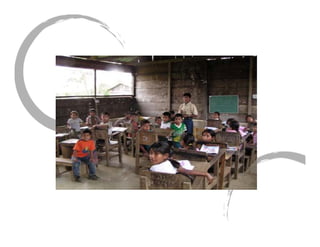
Literacy
    The learner comes to school with
    age- appropriate preparation for
    literacy development
Literacy Issues
• Little print material in home and/or
  community
• Family members have low or no
  literacy
• Language not codified or only
  recently
• Lack of print material available in the
  native language
Two Important Dimensions
       of Culture


  Individualism
              and
                    Collectivism
Individualism
• Personal efforts praised, rewarded
• Personal interests, desires, wants
  primary
• Personal judgments
• Personal responsibility
• “self-actualization”
(Hofstede, 2001; Oyserman & Lee, 2008; Triandis, 2000)
Culturally - Based
Assumptions of Teaching and
         Learning
 Individualism
 • One goal of K-12 instruction is to
   produce an independent learner
 • Students come to school with an
   urge to compete and excel as an
   individual
  (DeCapua & Marshall, 2009; Marshall 1998)
Collectivism
• People see themselves as part of an
  interconnected whole
• “Web” of relationships
• Group is more important than any
  single individual
• “We” rather than “I.”
(Hofstede, 2001; Oyserman & Lee, 2008; Triandis, 2000)
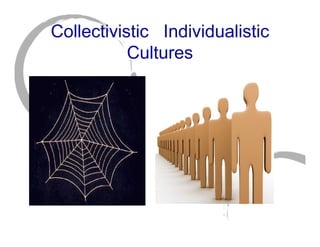
Collectivistic Individualistic
           Cultures
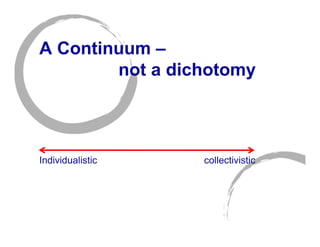
A Continuum –
        not a dichotomy


Individualistic   collectivistic
Culturally-Based
 Assumptions of Teaching
      and Learning

Academic Ways of Thinking
   Students come to school ready for
   age-appropriate classroom
   learning activities
Academic Ways of Thinking

  •   Classification
  •   Sorting
  •   Sequencing / historical time
  •   Compare/contrast
  •   Defining
Pragmatic Ways of Thinking
               Daily Life

   •   Cooking
   •   Childcare
   •   Farming
   •   Crafts
   •   Religious practices
(Ibarra, 2001)
Mutually Adaptive Learning
     Paradigm - MALP
• Instructional Model

• Elements from students’ learning paradigm

• Elements from U.S. learning paradigm

• Transitional approach to close achievement
  gap
    (Marshall, 1998; DeCapua & Marshall, 2010)
Mutually Adaptive Learning
    Paradigm- MALP

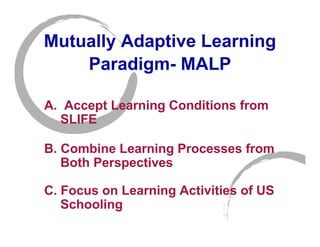
A. Accept Learning Conditions from
  SLIFE

B. Combine Learning Processes from
   Both Perspectives

C. Focus on Learning Activities of US
   Schooling
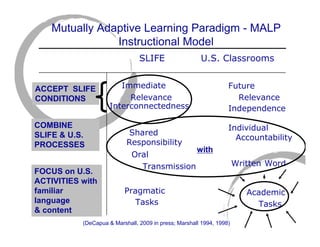
Mutually Adaptive Learning Paradigm - MALP
                Instructional Model
                                SLIFE                  U.S. Classrooms


ACCEPT SLIFE            Immediate                                 Future
CONDITIONS                Relevance                                 Relevance
                     Interconnectedness                           Independence

COMBINE                                                           Individual
SLIFE & U.S.                Shared
                                                                    Accountability
PROCESSES                  Responsibility
                                                      with
                             Oral
                               Transmission                           Written Word
FOCUS on U.S.
ACTIVITIES with
familiar                  Pragmatic                                      Academic
language                     Tasks                                         Tasks
& content
           (DeCapua & Marshall, 2009 in press; Marshall 1994, 1998)
Bringing the two worlds
       together


          MALP &
  Project-Based Learning
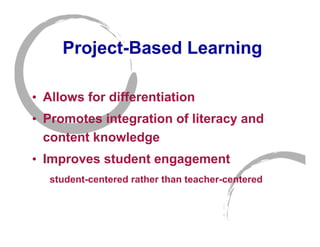
Project-Based Learning

• Allows for differentiation
• Promotes integration of literacy and
  content knowledge
• Improves student engagement
   student-centered rather than teacher-centered
…and from a MALP perspective

• Fosters community
• Provides immediate relevance
• Allows for shared responsibility &
  individual accountability
• Accommodates oral transmission &
  print
• Encourages academic ways of
  thinking
Examples of MALP Projects
•   Surveys and Polls
•   Collections
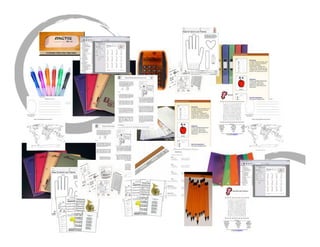
•   Newcomer Booklets
•   Timelines
•   Shared Events
•   Concept Posters
•   Class Newsletters
More about MALP?

   Our website: http://malp.pbworks.com

Andrea DeCapua adecapua@cnr.edu
Helaine W Marshall helaine.marshall@liu.edu

Addressing the Cultural Dissonance of ELLs with Limited Formal Education

  • 1.
    Addressing the Cultural Dissonanceof ELLs with Limited Formal Education TESOL Convention BOSTON 2010 Andrea DeCapua The College of New Rochelle Helaine W. Marshall Long Island University
  • 2.
    Students with Limited/InterruptedFormal Education • How do we refer to them? • LFS (Freeman & Freeman, 2002) • SIFE (NY State Department of Education) • SLIFE (DeCapua, Smathers, & Tang, 2008)
  • 3.
    Needs of SLIFE •Learn basic and grade-level subject area concepts • Develop basic literacy skills • Develop academic ways of thinking • Adapt to cultural differences in learning and teaching
  • 4.
    The Role ofCulture in Learning, Teaching, and Understanding Culture acts as a filter or set of lenses through which we view and interpret the world around us. (DeCapua & Wintergerst, 2004)
  • 5.
    Culturally-Based Assumptions of Teachingand Learning Literacy The learner comes to school with age- appropriate preparation for literacy development
  • 7.
    Literacy Issues • Littleprint material in home and/or community • Family members have low or no literacy • Language not codified or only recently • Lack of print material available in the native language
  • 9.
    Two Important Dimensions of Culture Individualism and Collectivism
  • 10.
    Individualism • Personal effortspraised, rewarded • Personal interests, desires, wants primary • Personal judgments • Personal responsibility • “self-actualization” (Hofstede, 2001; Oyserman & Lee, 2008; Triandis, 2000)
  • 11.
    Culturally - Based Assumptionsof Teaching and Learning Individualism • One goal of K-12 instruction is to produce an independent learner • Students come to school with an urge to compete and excel as an individual (DeCapua & Marshall, 2009; Marshall 1998)
  • 12.
    Collectivism • People seethemselves as part of an interconnected whole • “Web” of relationships • Group is more important than any single individual • “We” rather than “I.” (Hofstede, 2001; Oyserman & Lee, 2008; Triandis, 2000)
  • 13.
  • 14.
    A Continuum – not a dichotomy Individualistic collectivistic
  • 15.
    Culturally-Based Assumptions ofTeaching and Learning Academic Ways of Thinking Students come to school ready for age-appropriate classroom learning activities
  • 17.
    Academic Ways ofThinking • Classification • Sorting • Sequencing / historical time • Compare/contrast • Defining
  • 18.
    Pragmatic Ways ofThinking Daily Life • Cooking • Childcare • Farming • Crafts • Religious practices
  • 19.
  • 20.
    Mutually Adaptive Learning Paradigm - MALP • Instructional Model • Elements from students’ learning paradigm • Elements from U.S. learning paradigm • Transitional approach to close achievement gap (Marshall, 1998; DeCapua & Marshall, 2010)
  • 21.
    Mutually Adaptive Learning Paradigm- MALP A. Accept Learning Conditions from SLIFE B. Combine Learning Processes from Both Perspectives C. Focus on Learning Activities of US Schooling
  • 22.
    Mutually Adaptive LearningParadigm - MALP Instructional Model SLIFE U.S. Classrooms ACCEPT SLIFE Immediate Future CONDITIONS Relevance Relevance Interconnectedness Independence COMBINE Individual SLIFE & U.S. Shared Accountability PROCESSES Responsibility with Oral Transmission Written Word FOCUS on U.S. ACTIVITIES with familiar Pragmatic Academic language Tasks Tasks & content (DeCapua & Marshall, 2009 in press; Marshall 1994, 1998)
  • 23.
    Bringing the twoworlds together MALP & Project-Based Learning
  • 24.
    Project-Based Learning • Allowsfor differentiation • Promotes integration of literacy and content knowledge • Improves student engagement student-centered rather than teacher-centered
  • 25.
    …and from aMALP perspective • Fosters community • Provides immediate relevance • Allows for shared responsibility & individual accountability • Accommodates oral transmission & print • Encourages academic ways of thinking
  • 28.
    Examples of MALPProjects • Surveys and Polls • Collections • Newcomer Booklets • Timelines • Shared Events • Concept Posters • Class Newsletters
  • 29.
    More about MALP? Our website: http://malp.pbworks.com Andrea DeCapua adecapua@cnr.edu Helaine W Marshall helaine.marshall@liu.edu