Key Note Address
Eng.Dr. Adam M. Sebbit
Department of Mechanical Engineering,
Makerere University
amsebbit@gmail.com
+256-772-485-803
Energy
• Energy is very important ingredient in national development. It
spurs and create demand /spin offs !
• The country with energy large energy supply and fair policies
(energy and investment )attracts more local & foreign investments.
• Industries will develop and local /small scale industries is expected
to feed these industries, those located in rural areas need energy.
• It is also important to under stand the role of energy in the
international scene. That will give some idea why the government
may come out with policies .
• Energy has became part and parcel of national and international
security.
• Countries are trying their best to meet national energy demand and
reduce dependence by imports. Those with excess push for export
• Some of the developed countries protects the oil supply routes and
now expanding to Africa (well known oil and gas reserves)
Energy
• Energy consumption measures the level of national
development (per capita energy consumption 344kg OE
Uganda).
• Energy is the largest contributors of greenhouse gases. It is
one of the major causes of climate change.
• The changes in weather pattern ( longer draughts, flood in
some areas, it is getting hotter during the day)
• The use of diesel, petrol, coal , unsustainable use of
biomass are among the contributors to global warming
• To sustain the ecological system , energy is needed, the
main source being the sun(derived e.g wind, biomass )
• Most of the ongoing research is how to generate energy at
lower cost , efficient use & sustainability
The Modern Energy
• Modern energy tends to address the issues of impacts
of energy on environment.
– Clean electricity for general use in all sectors
– LPG to replace/ supplement charcoal (cost & environment)
– Solar thermal & PV and other renewable sources of energy
– Biomass modern applications : e.g. biofuels & gasification
• The area of application is expanding, other older
tecnonologies are coming back
– Gasification with different capacities ( few kilowatts to
thousand) thermal and electric generation)
– Biogas ( thermal, light, mechanical run engines, electricity)
The modern energy
• The modern energy in the rural setting can spur
development and create a needs.
• It can increase business opportunities by creating jobs
in various sectors , results in poverty alleviation.
– Education / communication (schools, training centers)
– Health( health facilities and training centers)
– Agriculture (value added, agro processing, water supply)
– Use of solar for drying of fruits (mangoes, pineapple)
– Improved well being of the community /reduced migration
• PV can also be used for water pumping (but high cost)
• Wind is a viable options for water pumping and
electricity generation ( but it is site specific)
Mini grid / independent grid
• Energy for rural transformation phase 1
• Supply electric energy the workshop
• Households within the complex
• Training institution complex
• Feed stock , wood/timber cutting
• Of resent was repaired ( after several years )
• Human resource / two were trained one
remained
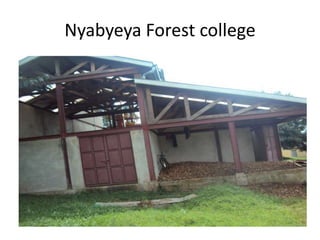
Nyabyeya Forest college
60 + 80 kW gasifier
Kagando Hospital
• The capacity 60 kW
• Energy supplied only to hospital
• The households
• No sale to the community ( old policy)
• Cables just passed over the buildings along the
way.
• The system failure , it was undergoing
rehabilitation
• The demand in increasing within the hospital
complex.
Cross Flow Turbines/ Maintanace
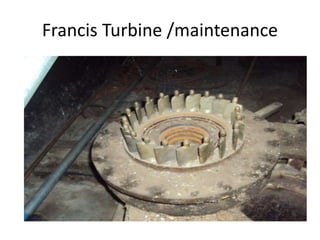
Francis Turbine /maintenance
The Challenges
• The upfront cost of new technologies & technology
transfer ( the terms and conditions)
• The sustainability of the modern energy systems
mostly in the rural setting & political inference
• Maintenance of the technologies and social capital
• At times limited participation of some of the key
stakeholders at crucial points along the cycle of energy
system chain (generation of modern energy to end).
• High willingness to pay against low ability to pay
• Human resources development within the value chain
• Retention of high skilled labour force along the chain.
The Challenges
• Create sense of ownership / buy in by the community,
engagement of local at on set.
• The boundary and responsibility and capability
• The culture divide in development (solar installation)
• The general risk of any business (payment for services &
perceived donations, change in mind set)
• The degree of flexibility in the village set up due to the
social interaction.
• The management of natural resources , is most important
capital for the national development, at times ignored
• Policies formulated by the government, at times limited
input at the local level ( ordinance , by laws e.g water
shade catchment, clean water supply, reduce silt in rivers )
Challenges
• Patenting innovation is a challenge. The
lengthy procedure
• Protecting portents by the government
• Some countries fail in implementation of
policies they formulate.
• Critical mass to support community project
and can stand by the founders of the project.
• Firm stand by the community project
developers & the business enterprises
Opportunities
• There are other co benefits which can complement
energy projects , e.g. water harvest at all levels
• Exploitation of other resources e.g. wind pumping (
piston system for deep water levels)
• Energy system management / keep track of the cost.
• Gold standard projects / other carbon financing
• There are grants which can come as additional to the
project. Example soil fertility gasification, biogas
system. Try UNDP small grants (US$ 50,000)
• It is easier to build on what is available than to start
new . Team work is good tool for success.
Opportunities
• Dialogue with the government for favorable policies
for the benefit of those in the low energy ladders
• A lot of effort should be put in modern biomass
technologies (such as wood, charcoal, bio fuels)
• The private sector can easily push for the laws but it is
better to work also with NGOs (generally good at
advocacy ) as long as there is mutual benefit.
• As long as the population is on increase and the
country is developing, the thirst for modern energy will
also increase at all levels.
• The energy should be used for income generation
Conclusion
• Maintain and improve on the social capital
• Create platform of communication where update on
success can be communicated and flag if there is
problem/challenges
• Learn how to engage the government, but the case of triple
helix, in all of the success stories, where taken up by the
government. The central role of entrepreneurs diminished
• The energy projects should be protected jealously for
success and continuity.
• Diversification is important , but should be controlled to
manageable level other that spreading too thin.
• One should not loss hope but share successes and failures.
.
•Thanks for
listening
•Asante sana

Terrat | Aug-15 | Key note address

  • 1.
    Key Note Address Eng.Dr.Adam M. Sebbit Department of Mechanical Engineering, Makerere University amsebbit@gmail.com +256-772-485-803
  • 2.
    Energy • Energy isvery important ingredient in national development. It spurs and create demand /spin offs ! • The country with energy large energy supply and fair policies (energy and investment )attracts more local & foreign investments. • Industries will develop and local /small scale industries is expected to feed these industries, those located in rural areas need energy. • It is also important to under stand the role of energy in the international scene. That will give some idea why the government may come out with policies . • Energy has became part and parcel of national and international security. • Countries are trying their best to meet national energy demand and reduce dependence by imports. Those with excess push for export • Some of the developed countries protects the oil supply routes and now expanding to Africa (well known oil and gas reserves)
  • 3.
    Energy • Energy consumptionmeasures the level of national development (per capita energy consumption 344kg OE Uganda). • Energy is the largest contributors of greenhouse gases. It is one of the major causes of climate change. • The changes in weather pattern ( longer draughts, flood in some areas, it is getting hotter during the day) • The use of diesel, petrol, coal , unsustainable use of biomass are among the contributors to global warming • To sustain the ecological system , energy is needed, the main source being the sun(derived e.g wind, biomass ) • Most of the ongoing research is how to generate energy at lower cost , efficient use & sustainability
  • 4.
    The Modern Energy •Modern energy tends to address the issues of impacts of energy on environment. – Clean electricity for general use in all sectors – LPG to replace/ supplement charcoal (cost & environment) – Solar thermal & PV and other renewable sources of energy – Biomass modern applications : e.g. biofuels & gasification • The area of application is expanding, other older tecnonologies are coming back – Gasification with different capacities ( few kilowatts to thousand) thermal and electric generation) – Biogas ( thermal, light, mechanical run engines, electricity)
  • 5.
    The modern energy •The modern energy in the rural setting can spur development and create a needs. • It can increase business opportunities by creating jobs in various sectors , results in poverty alleviation. – Education / communication (schools, training centers) – Health( health facilities and training centers) – Agriculture (value added, agro processing, water supply) – Use of solar for drying of fruits (mangoes, pineapple) – Improved well being of the community /reduced migration • PV can also be used for water pumping (but high cost) • Wind is a viable options for water pumping and electricity generation ( but it is site specific)
  • 6.
    Mini grid /independent grid • Energy for rural transformation phase 1 • Supply electric energy the workshop • Households within the complex • Training institution complex • Feed stock , wood/timber cutting • Of resent was repaired ( after several years ) • Human resource / two were trained one remained
  • 7.
  • 9.
    60 + 80kW gasifier
  • 10.
    Kagando Hospital • Thecapacity 60 kW • Energy supplied only to hospital • The households • No sale to the community ( old policy) • Cables just passed over the buildings along the way. • The system failure , it was undergoing rehabilitation • The demand in increasing within the hospital complex.
  • 11.
  • 12.
  • 13.
    The Challenges • Theupfront cost of new technologies & technology transfer ( the terms and conditions) • The sustainability of the modern energy systems mostly in the rural setting & political inference • Maintenance of the technologies and social capital • At times limited participation of some of the key stakeholders at crucial points along the cycle of energy system chain (generation of modern energy to end). • High willingness to pay against low ability to pay • Human resources development within the value chain • Retention of high skilled labour force along the chain.
  • 14.
    The Challenges • Createsense of ownership / buy in by the community, engagement of local at on set. • The boundary and responsibility and capability • The culture divide in development (solar installation) • The general risk of any business (payment for services & perceived donations, change in mind set) • The degree of flexibility in the village set up due to the social interaction. • The management of natural resources , is most important capital for the national development, at times ignored • Policies formulated by the government, at times limited input at the local level ( ordinance , by laws e.g water shade catchment, clean water supply, reduce silt in rivers )
  • 15.
    Challenges • Patenting innovationis a challenge. The lengthy procedure • Protecting portents by the government • Some countries fail in implementation of policies they formulate. • Critical mass to support community project and can stand by the founders of the project. • Firm stand by the community project developers & the business enterprises
  • 16.
    Opportunities • There areother co benefits which can complement energy projects , e.g. water harvest at all levels • Exploitation of other resources e.g. wind pumping ( piston system for deep water levels) • Energy system management / keep track of the cost. • Gold standard projects / other carbon financing • There are grants which can come as additional to the project. Example soil fertility gasification, biogas system. Try UNDP small grants (US$ 50,000) • It is easier to build on what is available than to start new . Team work is good tool for success.
  • 17.
    Opportunities • Dialogue withthe government for favorable policies for the benefit of those in the low energy ladders • A lot of effort should be put in modern biomass technologies (such as wood, charcoal, bio fuels) • The private sector can easily push for the laws but it is better to work also with NGOs (generally good at advocacy ) as long as there is mutual benefit. • As long as the population is on increase and the country is developing, the thirst for modern energy will also increase at all levels. • The energy should be used for income generation
  • 18.
    Conclusion • Maintain andimprove on the social capital • Create platform of communication where update on success can be communicated and flag if there is problem/challenges • Learn how to engage the government, but the case of triple helix, in all of the success stories, where taken up by the government. The central role of entrepreneurs diminished • The energy projects should be protected jealously for success and continuity. • Diversification is important , but should be controlled to manageable level other that spreading too thin. • One should not loss hope but share successes and failures.
  • 19.