AGRICULTURE
Presented by: Vikram Rajput, Gyandeep Hazarika, Kumari Kajal, Vibha Pandey
तेर
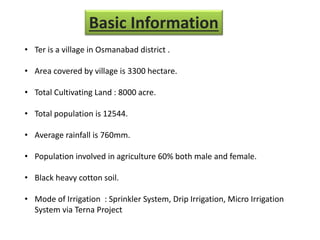
• Ter is a village in Osmanabad district .
• Area covered by village is 3300 hectare.
• Total Cultivating Land : 8000 acre.
• Total population is 12544.
• Average rainfall is 760mm.
• Population involved in agriculture 60% both male and female.
• Black heavy cotton soil.
• Mode of Irrigation : Sprinkler System, Drip Irrigation, Micro Irrigation
System via Terna Project
Basic Information
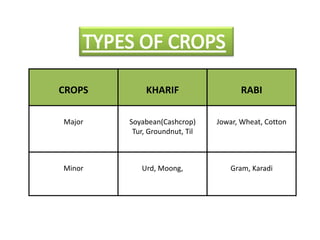
CROPS KHARIF RABI
Major Soyabean(Cashcrop)
Tur, Groundnut, Til
Jowar, Wheat, Cotton
Minor Urd, Moong, Gram, Karadi
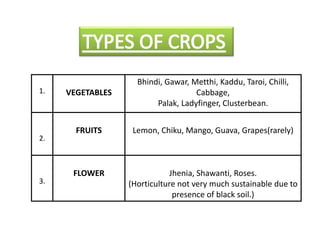
1. VEGETABLES
Bhindi, Gawar, Metthi, Kaddu, Taroi, Chilli,
Cabbage,
Palak, Ladyfinger, Clusterbean.
2.
FRUITS Lemon, Chiku, Mango, Guava, Grapes(rarely)
3.
FLOWER Jhenia, Shawanti, Roses.
(Horticulture not very much sustainable due to
presence of black soil.)
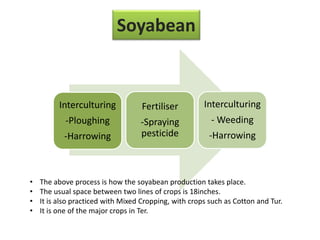
Soyabean
Interculturing
-Ploughing
-Harrowing
Fertiliser
-Spraying
pesticide
Interculturing
- Weeding
-Harrowing
• The above process is how the soyabean production takes place.
• The usual space between two lines of crops is 18inches.
• It is also practiced with Mixed Cropping, with crops such as Cotton and Tur.
• It is one of the major crops in Ter.
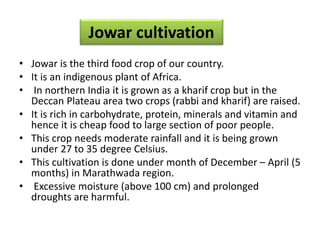
Jowar cultivation
• Jowar is the third food crop of our country.
• It is an indigenous plant of Africa.
• In northern India it is grown as a kharif crop but in the
Deccan Plateau area two crops (rabbi and kharif) are raised.
• It is rich in carbohydrate, protein, minerals and vitamin and
hence it is cheap food to large section of poor people.
• This crop needs moderate rainfall and it is being grown
under 27 to 35 degree Celsius.
• This cultivation is done under month of December – April (5
months) in Marathwada region.
• Excessive moisture (above 100 cm) and prolonged
droughts are harmful.
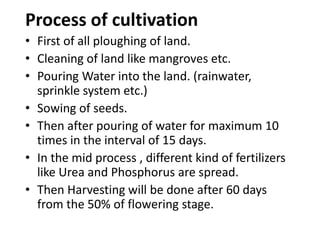
Process of cultivation
• First of all ploughing of land.
• Cleaning of land like mangroves etc.
• Pouring Water into the land. (rainwater,
sprinkle system etc.)
• Sowing of seeds.
• Then after pouring of water for maximum 10
times in the interval of 15 days.
• In the mid process , different kind of fertilizers
like Urea and Phosphorus are spread.
• Then Harvesting will be done after 60 days
from the 50% of flowering stage.
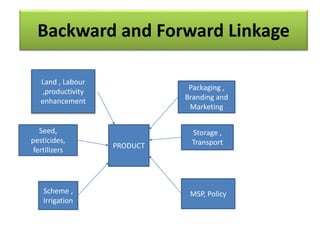
Backward and Forward Linkage
Land , Labour
,productivity
enhancement
Seed,
pesticides,
fertilizers
Scheme ,
Irrigation
Packaging ,
Branding and
Marketing
Storage ,
Transport
MSP, Policy
PRODUCT
Marketing
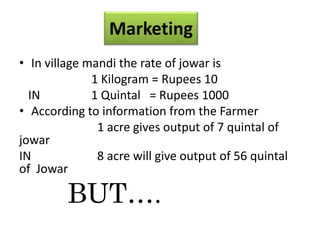
• In village mandi the rate of jowar is
1 Kilogram = Rupees 10
IN 1 Quintal = Rupees 1000
• According to information from the Farmer
1 acre gives output of 7 quintal of
jowar
IN 8 acre will give output of 56 quintal
of Jowar
BUT….
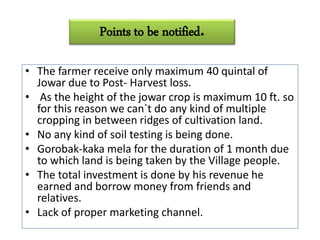
Points to be notified.
• The farmer receive only maximum 40 quintal of
Jowar due to Post- Harvest loss.
• As the height of the jowar crop is maximum 10 ft. so
for this reason we can`t do any kind of multiple
cropping in between ridges of cultivation land.
• No any kind of soil testing is being done.
• Gorobak-kaka mela for the duration of 1 month due
to which land is being taken by the Village people.
• The total investment is done by his revenue he
earned and borrow money from friends and
relatives.
• Lack of proper marketing channel.
• Proper awareness needed while using fertilizers.
There should be a soil testing initiative for required
use of pesticide.
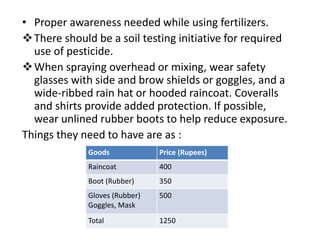
When spraying overhead or mixing, wear safety
glasses with side and brow shields or goggles, and a
wide-ribbed rain hat or hooded raincoat. Coveralls
and shirts provide added protection. If possible,
wear unlined rubber boots to help reduce exposure.
Things they need to have are as :
Goods Price (Rupees)
Raincoat 400
Boot (Rubber) 350
Gloves (Rubber)
Goggles, Mask
500
Total 1250
Service linkage
• There should be a new service linkage to be
develop among the farmers, financial
institution and govt.
• In Bazar Samiti, the presence of farmer is
necessary, so they can easily grade the crops.
References
• http://www.census2011.co.in/data/village/56
1428-ter-maharashtra.html
• Local Residents
THANK YOU
Special Thanks to Sudheer Sir and classmates for accompanying us throughout the visit.

Ter agriculture

  • 1.
    AGRICULTURE Presented by: VikramRajput, Gyandeep Hazarika, Kumari Kajal, Vibha Pandey तेर
  • 2.
    • Ter isa village in Osmanabad district . • Area covered by village is 3300 hectare. • Total Cultivating Land : 8000 acre. • Total population is 12544. • Average rainfall is 760mm. • Population involved in agriculture 60% both male and female. • Black heavy cotton soil. • Mode of Irrigation : Sprinkler System, Drip Irrigation, Micro Irrigation System via Terna Project Basic Information
  • 3.
    CROPS KHARIF RABI MajorSoyabean(Cashcrop) Tur, Groundnut, Til Jowar, Wheat, Cotton Minor Urd, Moong, Gram, Karadi
  • 4.
    1. VEGETABLES Bhindi, Gawar,Metthi, Kaddu, Taroi, Chilli, Cabbage, Palak, Ladyfinger, Clusterbean. 2. FRUITS Lemon, Chiku, Mango, Guava, Grapes(rarely) 3. FLOWER Jhenia, Shawanti, Roses. (Horticulture not very much sustainable due to presence of black soil.)
  • 5.
    Soyabean Interculturing -Ploughing -Harrowing Fertiliser -Spraying pesticide Interculturing - Weeding -Harrowing • Theabove process is how the soyabean production takes place. • The usual space between two lines of crops is 18inches. • It is also practiced with Mixed Cropping, with crops such as Cotton and Tur. • It is one of the major crops in Ter.
  • 6.
    Jowar cultivation • Jowaris the third food crop of our country. • It is an indigenous plant of Africa. • In northern India it is grown as a kharif crop but in the Deccan Plateau area two crops (rabbi and kharif) are raised. • It is rich in carbohydrate, protein, minerals and vitamin and hence it is cheap food to large section of poor people. • This crop needs moderate rainfall and it is being grown under 27 to 35 degree Celsius. • This cultivation is done under month of December – April (5 months) in Marathwada region. • Excessive moisture (above 100 cm) and prolonged droughts are harmful.
  • 7.
    Process of cultivation •First of all ploughing of land. • Cleaning of land like mangroves etc. • Pouring Water into the land. (rainwater, sprinkle system etc.) • Sowing of seeds. • Then after pouring of water for maximum 10 times in the interval of 15 days. • In the mid process , different kind of fertilizers like Urea and Phosphorus are spread. • Then Harvesting will be done after 60 days from the 50% of flowering stage.
  • 8.
    Backward and ForwardLinkage Land , Labour ,productivity enhancement Seed, pesticides, fertilizers Scheme , Irrigation Packaging , Branding and Marketing Storage , Transport MSP, Policy PRODUCT
  • 9.
    Marketing • In villagemandi the rate of jowar is 1 Kilogram = Rupees 10 IN 1 Quintal = Rupees 1000 • According to information from the Farmer 1 acre gives output of 7 quintal of jowar IN 8 acre will give output of 56 quintal of Jowar BUT….
  • 10.
    Points to benotified. • The farmer receive only maximum 40 quintal of Jowar due to Post- Harvest loss. • As the height of the jowar crop is maximum 10 ft. so for this reason we can`t do any kind of multiple cropping in between ridges of cultivation land. • No any kind of soil testing is being done. • Gorobak-kaka mela for the duration of 1 month due to which land is being taken by the Village people. • The total investment is done by his revenue he earned and borrow money from friends and relatives. • Lack of proper marketing channel.
  • 11.
    • Proper awarenessneeded while using fertilizers. There should be a soil testing initiative for required use of pesticide. When spraying overhead or mixing, wear safety glasses with side and brow shields or goggles, and a wide-ribbed rain hat or hooded raincoat. Coveralls and shirts provide added protection. If possible, wear unlined rubber boots to help reduce exposure. Things they need to have are as : Goods Price (Rupees) Raincoat 400 Boot (Rubber) 350 Gloves (Rubber) Goggles, Mask 500 Total 1250
  • 12.
    Service linkage • Thereshould be a new service linkage to be develop among the farmers, financial institution and govt. • In Bazar Samiti, the presence of farmer is necessary, so they can easily grade the crops.
  • 13.
  • 14.
    THANK YOU Special Thanksto Sudheer Sir and classmates for accompanying us throughout the visit.