SS
Ten Slides in Ten Minutes:
A Perspective on Organisational Design
Presented by:
Bill Graham APM.APMP
July, 2013
bill.graham@sales-synthesis.co.za
Dominant ExclusiveEmerging PervasiveAbsent
Symbiotic
relationship
with clients
Sustainability
Making the competitors irrelevant
Projects ParticularPerforming PertinentPeople Places
The Sustainable Business Imperative
Building mutually beneficial and sustainable long-term client relationships
Source: Sales Synthesis
Multi-National Companies [MNCs] may embrace a
new dawn or a long dark night.
Know where you are going
Slide: 2
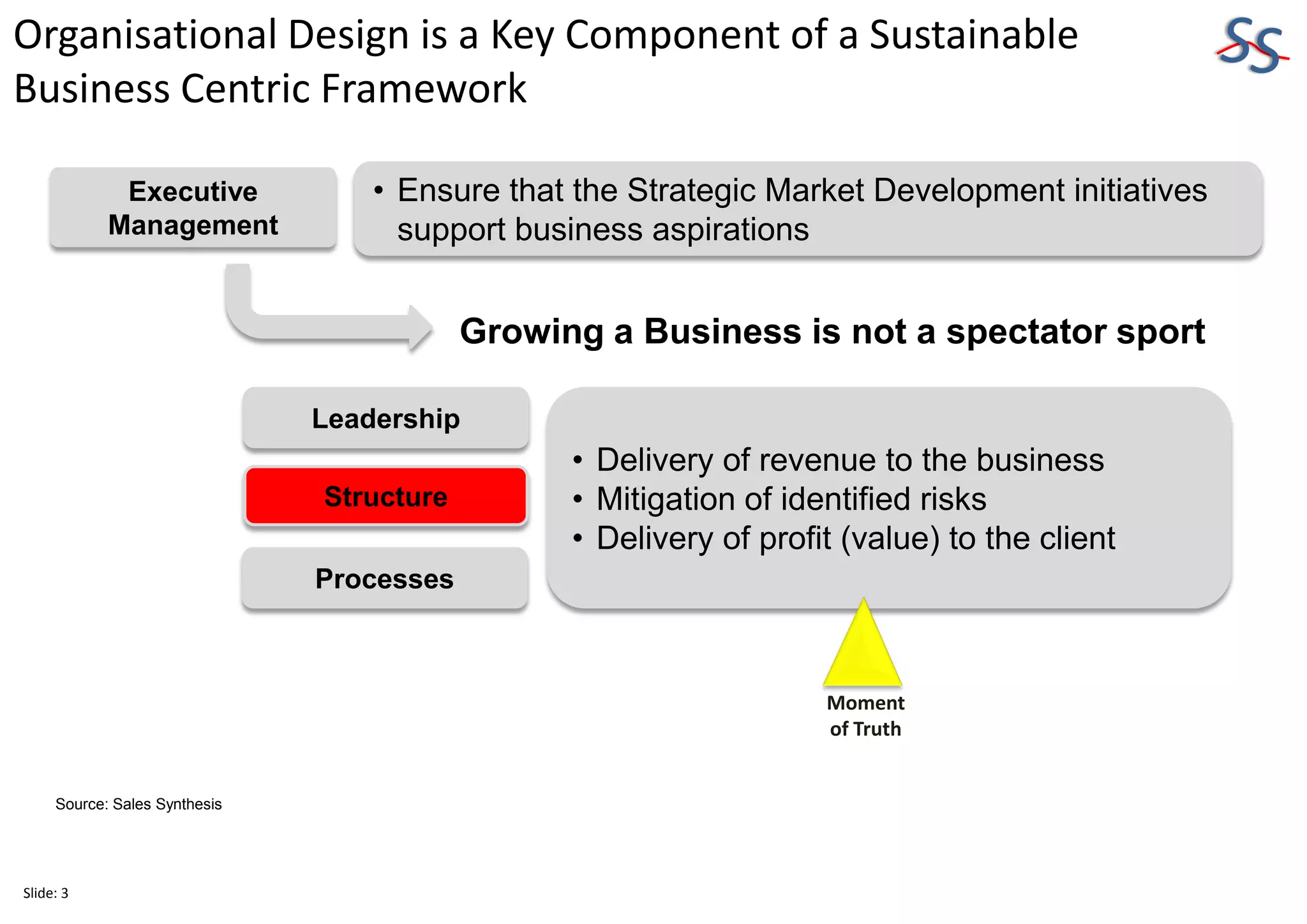
Leadership
Executive
Management
• Ensure that the Strategic Market Development initiatives
support business aspirations
• Delivery of revenue to the business
• Mitigation of identified risks
• Delivery of profit (value) to the client
Structure
Processes
Growing a Business is not a spectator sport
Source: Sales Synthesis
Organisational Design is a Key Component of a Sustainable
Business Centric Framework
Moment
of Truth
Slide: 3
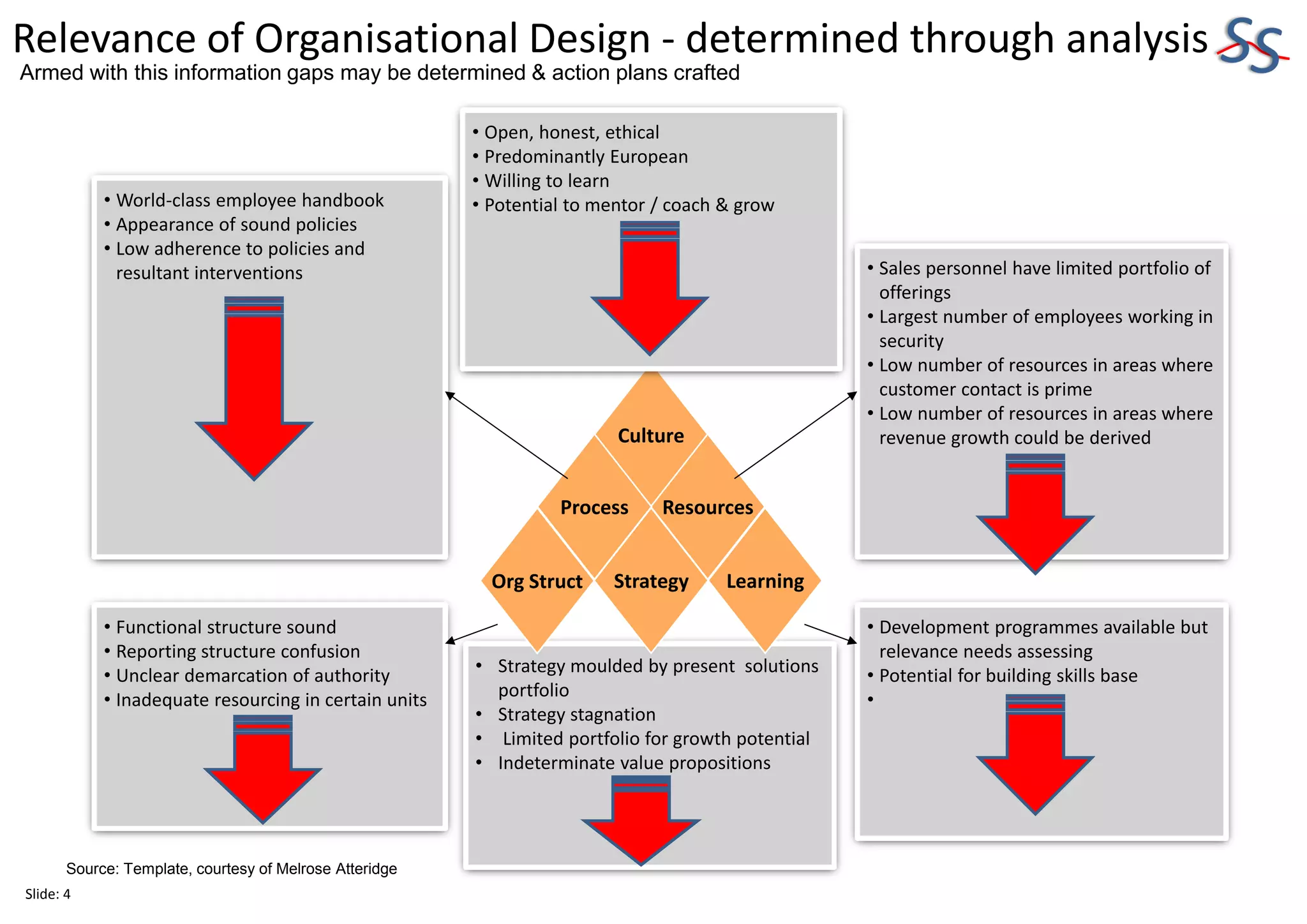
• Strategy moulded by present solutions
portfolio
• Strategy stagnation
• Limited portfolio for growth potential
• Indeterminate value propositions
Culture
ResourcesProcess
Org Struct Strategy Learning
• Sales personnel have limited portfolio of
offerings
• Largest number of employees working in
security
• Low number of resources in areas where
customer contact is prime
• Low number of resources in areas where
revenue growth could be derived
• Development programmes available but
relevance needs assessing
• Potential for building skills base
•
• Open, honest, ethical
• Predominantly European
• Willing to learn
• Potential to mentor / coach & grow
• Functional structure sound
• Reporting structure confusion
• Unclear demarcation of authority
• Inadequate resourcing in certain units
• World-class employee handbook
• Appearance of sound policies
• Low adherence to policies and
resultant interventions
Relevance of Organisational Design - determined through analysis
Slide: 4
Armed with this information gaps may be determined & action plans crafted
Source: Template, courtesy of Melrose Atteridge
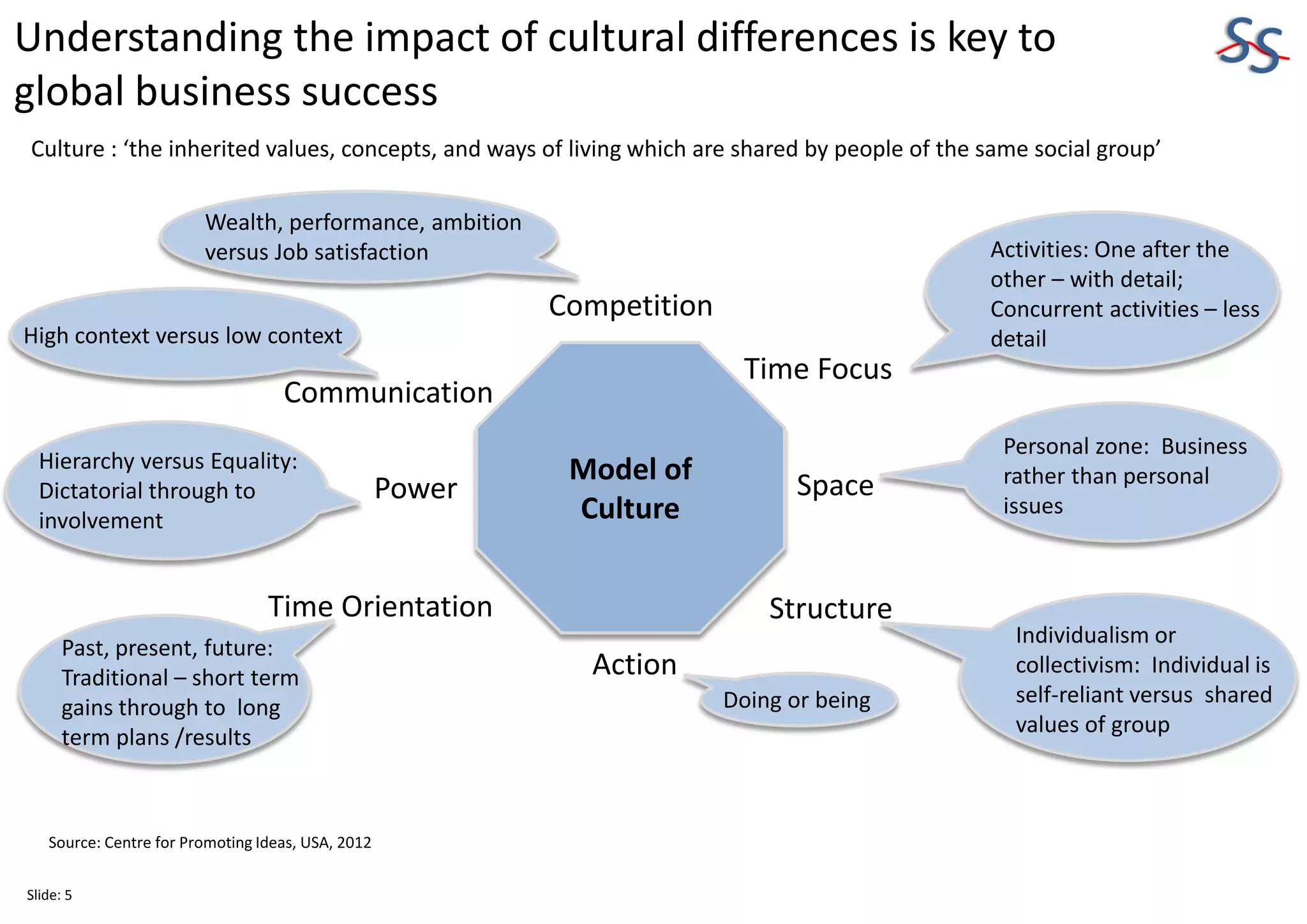
Understanding the impact of cultural differences is key to
global business success
Model of
Culture
Time Focus
Space
Structure
Action
Time Orientation
Power
Communication
Competition
Source: Centre for Promoting Ideas, USA, 2012
Culture : ‘the inherited values, concepts, and ways of living which are shared by people of the same social group’
Activities: One after the
other – with detail;
Concurrent activities – less
detail
Past, present, future:
Traditional – short term
gains through to long
term plans /results
Hierarchy versus Equality:
Dictatorial through to
involvement
Wealth, performance, ambition
versus Job satisfaction
Doing or being
Individualism or
collectivism: Individual is
self-reliant versus shared
values of group
Personal zone: Business
rather than personal
issues
High context versus low context
Slide: 5
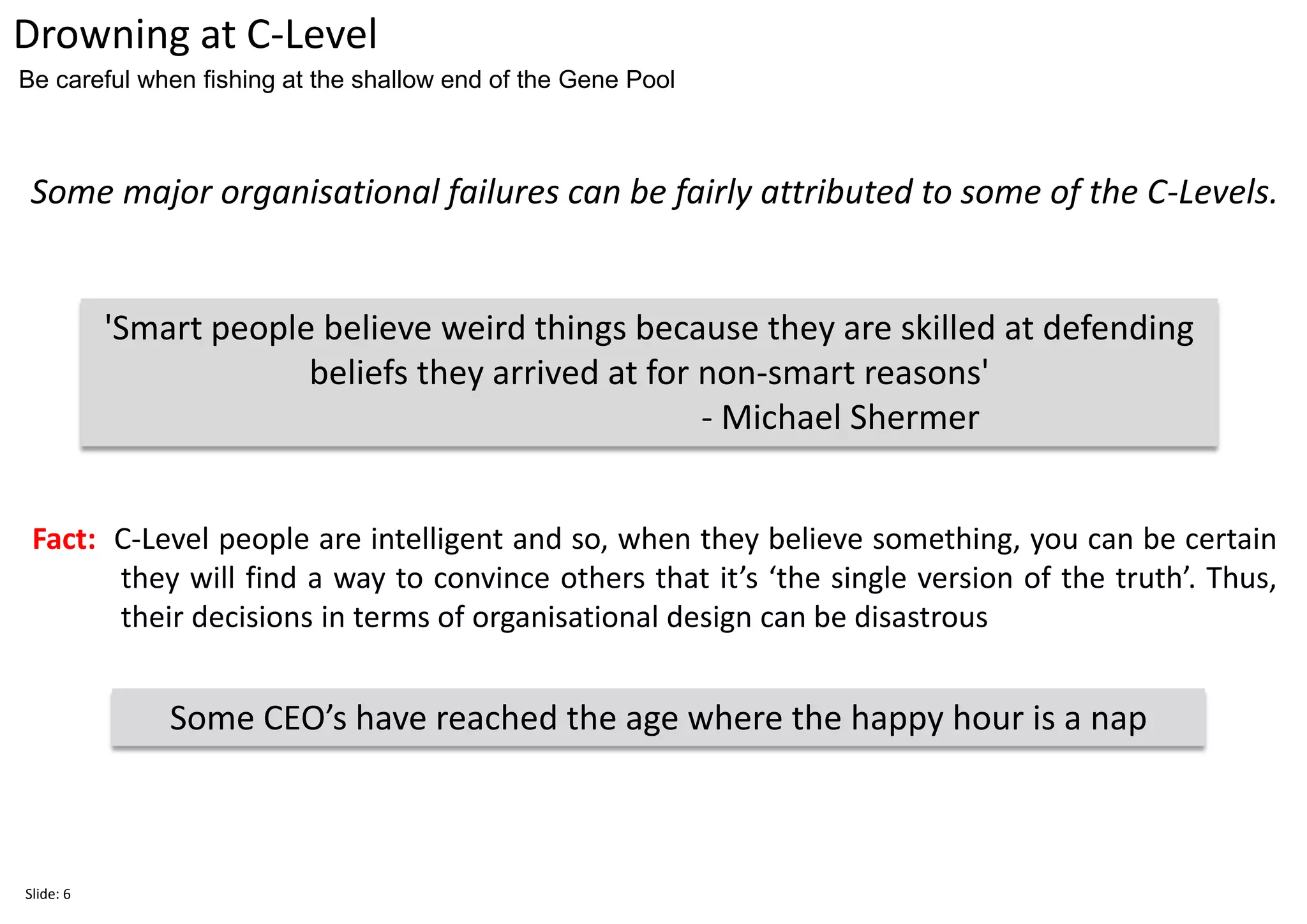
Some major organisational failures can be fairly attributed to some of the C-Levels.
Drowning at C-Level
Some CEO’s have reached the age where the happy hour is a nap
Be careful when fishing at the shallow end of the Gene Pool
'Smart people believe weird things because they are skilled at defending
beliefs they arrived at for non-smart reasons'
- Michael Shermer
Fact: C-Level people are intelligent and so, when they believe something, you can be certain
they will find a way to convince others that it’s ‘the single version of the truth’. Thus,
their decisions in terms of organisational design can be disastrous
Slide: 6
The Organisational Design Paradox – Lowering of Productivity
Source: Sales Synthesis
Number of Resources in a key Business Unit
Productivity
The crest of sensibility
[Optimal Design]
Slide: 7
An over-resourced key Business Unit, impacts across the whole organisation
The trajectory of hopelessness
The Organisational Design Paradox – Over-Resourcing across
other Business Units to be able to Service at ‘Optimal Level’
Source: Sales Synthesis
Slide: 8
An over-resourced key Business Unit, impacts across the whole organisation
Over-
Resourced Key
Business Unit
Optimum Resourcing
Inflated Resourcing to
interact with the over-
resourcing of the Key
Business Unit
Business Units
Inter Business Unit
Interaction
Points to Ponder
Slide: 9
• Most businesses reward those that are supportive of the group’s strategies and
punish those who challenge the authority of the leaders by raising doubt/s
• 'The mere fact that a man is noted in his particular field of research, astronomy,
physics, or mathematics should not be considered as presumptive evidence of
his ability to see correctly things outside his experience.'
- Joseph Rinn
• Business Personality: The shared culture, about a company, about each other,
about the value of treating others with respect, about being proud of who you –
and your colleagues are - and about loyalty and integrity [Being good when no
one is watching]
• ‘If you are riding a dead horse, the best strategy is to dismount.'
- unknown
• Legacy structures cannot drive new business opportunities.
Q&A
Slide: 10

Ten slides in Ten minutes - A Perspective on Organisational Design

  • 1.
    SS Ten Slides inTen Minutes: A Perspective on Organisational Design Presented by: Bill Graham APM.APMP July, 2013 bill.graham@sales-synthesis.co.za
  • 2.
    Dominant ExclusiveEmerging PervasiveAbsent Symbiotic relationship withclients Sustainability Making the competitors irrelevant Projects ParticularPerforming PertinentPeople Places The Sustainable Business Imperative Building mutually beneficial and sustainable long-term client relationships Source: Sales Synthesis Multi-National Companies [MNCs] may embrace a new dawn or a long dark night. Know where you are going Slide: 2
  • 3.
    Leadership Executive Management • Ensure thatthe Strategic Market Development initiatives support business aspirations • Delivery of revenue to the business • Mitigation of identified risks • Delivery of profit (value) to the client Structure Processes Growing a Business is not a spectator sport Source: Sales Synthesis Organisational Design is a Key Component of a Sustainable Business Centric Framework Moment of Truth Slide: 3
  • 4.
    • Strategy mouldedby present solutions portfolio • Strategy stagnation • Limited portfolio for growth potential • Indeterminate value propositions Culture ResourcesProcess Org Struct Strategy Learning • Sales personnel have limited portfolio of offerings • Largest number of employees working in security • Low number of resources in areas where customer contact is prime • Low number of resources in areas where revenue growth could be derived • Development programmes available but relevance needs assessing • Potential for building skills base • • Open, honest, ethical • Predominantly European • Willing to learn • Potential to mentor / coach & grow • Functional structure sound • Reporting structure confusion • Unclear demarcation of authority • Inadequate resourcing in certain units • World-class employee handbook • Appearance of sound policies • Low adherence to policies and resultant interventions Relevance of Organisational Design - determined through analysis Slide: 4 Armed with this information gaps may be determined & action plans crafted Source: Template, courtesy of Melrose Atteridge
  • 5.
    Understanding the impactof cultural differences is key to global business success Model of Culture Time Focus Space Structure Action Time Orientation Power Communication Competition Source: Centre for Promoting Ideas, USA, 2012 Culture : ‘the inherited values, concepts, and ways of living which are shared by people of the same social group’ Activities: One after the other – with detail; Concurrent activities – less detail Past, present, future: Traditional – short term gains through to long term plans /results Hierarchy versus Equality: Dictatorial through to involvement Wealth, performance, ambition versus Job satisfaction Doing or being Individualism or collectivism: Individual is self-reliant versus shared values of group Personal zone: Business rather than personal issues High context versus low context Slide: 5
  • 6.
    Some major organisationalfailures can be fairly attributed to some of the C-Levels. Drowning at C-Level Some CEO’s have reached the age where the happy hour is a nap Be careful when fishing at the shallow end of the Gene Pool 'Smart people believe weird things because they are skilled at defending beliefs they arrived at for non-smart reasons' - Michael Shermer Fact: C-Level people are intelligent and so, when they believe something, you can be certain they will find a way to convince others that it’s ‘the single version of the truth’. Thus, their decisions in terms of organisational design can be disastrous Slide: 6
  • 7.
    The Organisational DesignParadox – Lowering of Productivity Source: Sales Synthesis Number of Resources in a key Business Unit Productivity The crest of sensibility [Optimal Design] Slide: 7 An over-resourced key Business Unit, impacts across the whole organisation The trajectory of hopelessness
  • 8.
    The Organisational DesignParadox – Over-Resourcing across other Business Units to be able to Service at ‘Optimal Level’ Source: Sales Synthesis Slide: 8 An over-resourced key Business Unit, impacts across the whole organisation Over- Resourced Key Business Unit Optimum Resourcing Inflated Resourcing to interact with the over- resourcing of the Key Business Unit Business Units Inter Business Unit Interaction
  • 9.
    Points to Ponder Slide:9 • Most businesses reward those that are supportive of the group’s strategies and punish those who challenge the authority of the leaders by raising doubt/s • 'The mere fact that a man is noted in his particular field of research, astronomy, physics, or mathematics should not be considered as presumptive evidence of his ability to see correctly things outside his experience.' - Joseph Rinn • Business Personality: The shared culture, about a company, about each other, about the value of treating others with respect, about being proud of who you – and your colleagues are - and about loyalty and integrity [Being good when no one is watching] • ‘If you are riding a dead horse, the best strategy is to dismount.' - unknown • Legacy structures cannot drive new business opportunities.
  • 10.