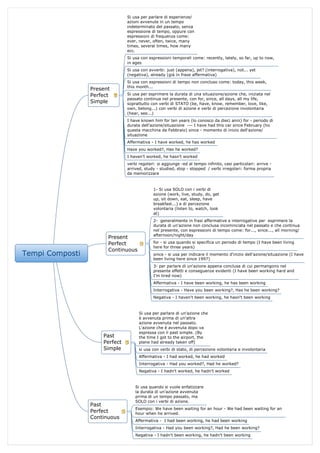
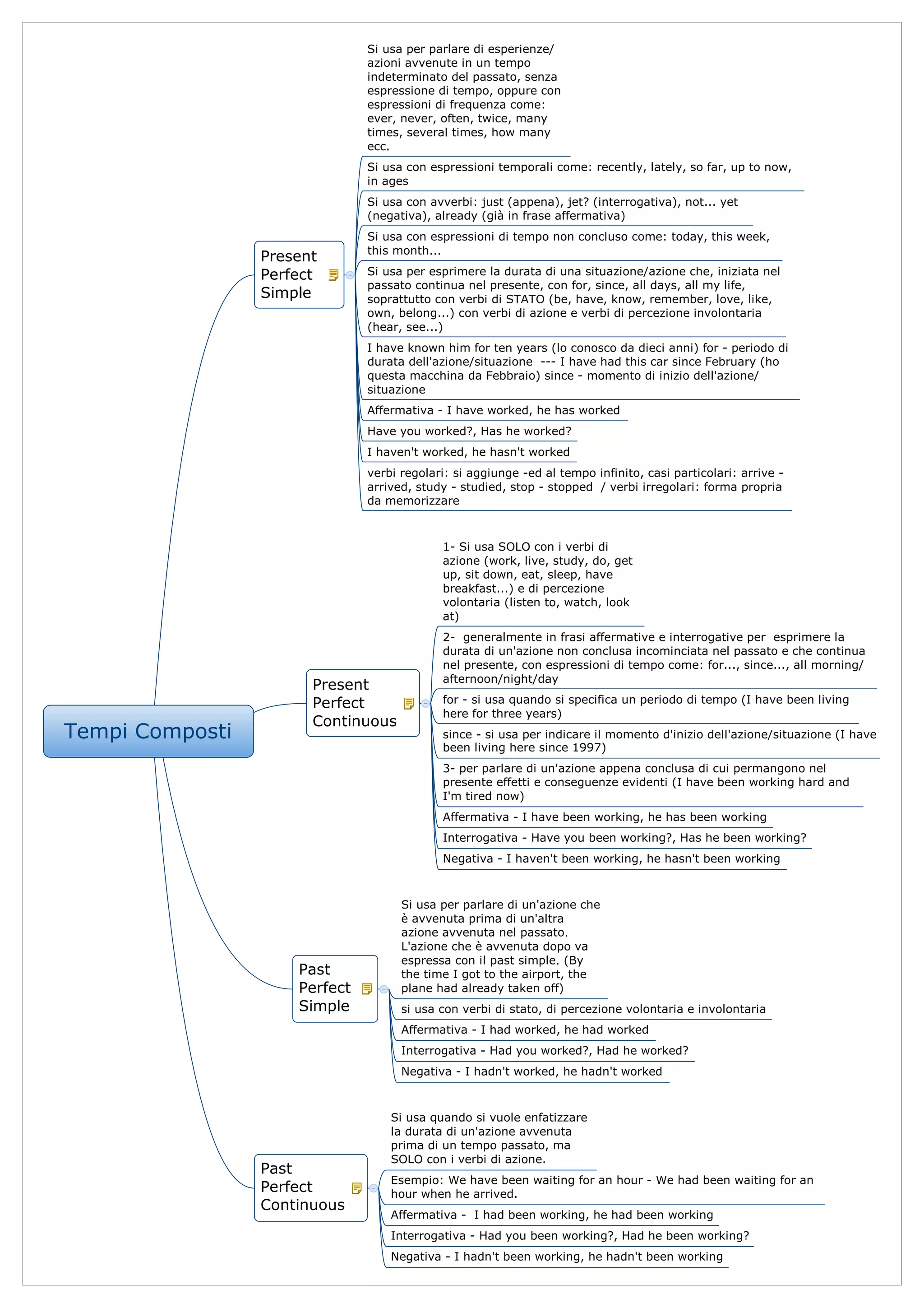
Tempi Composti
Present
Perfect
Simple
Si usa per parlare di esperienze/
azioni avvenute in un tempo
indeterminato del passato, senza
espressione di tempo, oppure con
espressioni di frequenza come:
ever, never, often, twice, many
times, several times, how many
ecc.
Si usa con espressioni temporali come: recently, lately, so far, up to now,
in ages
Si usa con avverbi: just (appena), jet? (interrogativa), not... yet
(negativa), already (già in frase affermativa)
Si usa con espressioni di tempo non concluso come: today, this week,
this month...
Si usa per esprimere la durata di una situazione/azione che, iniziata nel
passato continua nel presente, con for, since, all days, all my life,
soprattutto con verbi di STATO (be, have, know, remember, love, like,
own, belong...) con verbi di azione e verbi di percezione involontaria
(hear, see...)
I have known him for ten years (lo conosco da dieci anni) for - periodo di
durata dell'azione/situazione --- I have had this car since February (ho
questa macchina da Febbraio) since - momento di inizio dell'azione/
situazione
Affermativa - I have worked, he has worked
Have you worked?, Has he worked?
I haven't worked, he hasn't worked
verbi regolari: si aggiunge -ed al tempo infinito, casi particolari: arrive -
arrived, study - studied, stop - stopped / verbi irregolari: forma propria
da memorizzare
Present
Perfect
Continuous
1- Si usa SOLO con i verbi di
azione (work, live, study, do, get
up, sit down, eat, sleep, have
breakfast...) e di percezione
volontaria (listen to, watch, look
at)
2- generalmente in frasi affermative e interrogative per esprimere la
durata di un'azione non conclusa incominciata nel passato e che continua
nel presente, con espressioni di tempo come: for..., since..., all morning/
afternoon/night/day
for - si usa quando si specifica un periodo di tempo (I have been living
here for three years)
since - si usa per indicare il momento d'inizio dell'azione/situazione (I have
been living here since 1997)
3- per parlare di un'azione appena conclusa di cui permangono nel
presente effetti e conseguenze evidenti (I have been working hard and
I'm tired now)
Affermativa - I have been working, he has been working
Interrogativa - Have you been working?, Has he been working?
Negativa - I haven't been working, he hasn't been working
Past
Perfect
Simple
Si usa per parlare di un'azione che
è avvenuta prima di un'altra
azione avvenuta nel passato.
L'azione che è avvenuta dopo va
espressa con il past simple. (By
the time I got to the airport, the
plane had already taken off)
si usa con verbi di stato, di percezione volontaria e involontaria
Affermativa - I had worked, he had worked
Interrogativa - Had you worked?, Had he worked?
Negativa - I hadn't worked, he hadn't worked
Past
Perfect
Continuous
Si usa quando si vuole enfatizzare
la durata di un'azione avvenuta
prima di un tempo passato, ma
SOLO con i verbi di azione.
Esempio: We have been waiting for an hour - We had been waiting for an
hour when he arrived.
Affermativa - I had been working, he had been working
Interrogativa - Had you been working?, Had he been working?
Negativa - I hadn't been working, he hadn't been working

Tempi composti

  • 1.
    Tempi Composti Present Perfect Simple Si usaper parlare di esperienze/ azioni avvenute in un tempo indeterminato del passato, senza espressione di tempo, oppure con espressioni di frequenza come: ever, never, often, twice, many times, several times, how many ecc. Si usa con espressioni temporali come: recently, lately, so far, up to now, in ages Si usa con avverbi: just (appena), jet? (interrogativa), not... yet (negativa), already (già in frase affermativa) Si usa con espressioni di tempo non concluso come: today, this week, this month... Si usa per esprimere la durata di una situazione/azione che, iniziata nel passato continua nel presente, con for, since, all days, all my life, soprattutto con verbi di STATO (be, have, know, remember, love, like, own, belong...) con verbi di azione e verbi di percezione involontaria (hear, see...) I have known him for ten years (lo conosco da dieci anni) for - periodo di durata dell'azione/situazione --- I have had this car since February (ho questa macchina da Febbraio) since - momento di inizio dell'azione/ situazione Affermativa - I have worked, he has worked Have you worked?, Has he worked? I haven't worked, he hasn't worked verbi regolari: si aggiunge -ed al tempo infinito, casi particolari: arrive - arrived, study - studied, stop - stopped / verbi irregolari: forma propria da memorizzare Present Perfect Continuous 1- Si usa SOLO con i verbi di azione (work, live, study, do, get up, sit down, eat, sleep, have breakfast...) e di percezione volontaria (listen to, watch, look at) 2- generalmente in frasi affermative e interrogative per esprimere la durata di un'azione non conclusa incominciata nel passato e che continua nel presente, con espressioni di tempo come: for..., since..., all morning/ afternoon/night/day for - si usa quando si specifica un periodo di tempo (I have been living here for three years) since - si usa per indicare il momento d'inizio dell'azione/situazione (I have been living here since 1997) 3- per parlare di un'azione appena conclusa di cui permangono nel presente effetti e conseguenze evidenti (I have been working hard and I'm tired now) Affermativa - I have been working, he has been working Interrogativa - Have you been working?, Has he been working? Negativa - I haven't been working, he hasn't been working Past Perfect Simple Si usa per parlare di un'azione che è avvenuta prima di un'altra azione avvenuta nel passato. L'azione che è avvenuta dopo va espressa con il past simple. (By the time I got to the airport, the plane had already taken off) si usa con verbi di stato, di percezione volontaria e involontaria Affermativa - I had worked, he had worked Interrogativa - Had you worked?, Had he worked? Negativa - I hadn't worked, he hadn't worked Past Perfect Continuous Si usa quando si vuole enfatizzare la durata di un'azione avvenuta prima di un tempo passato, ma SOLO con i verbi di azione. Esempio: We have been waiting for an hour - We had been waiting for an hour when he arrived. Affermativa - I had been working, he had been working Interrogativa - Had you been working?, Had he been working? Negativa - I hadn't been working, he hadn't been working