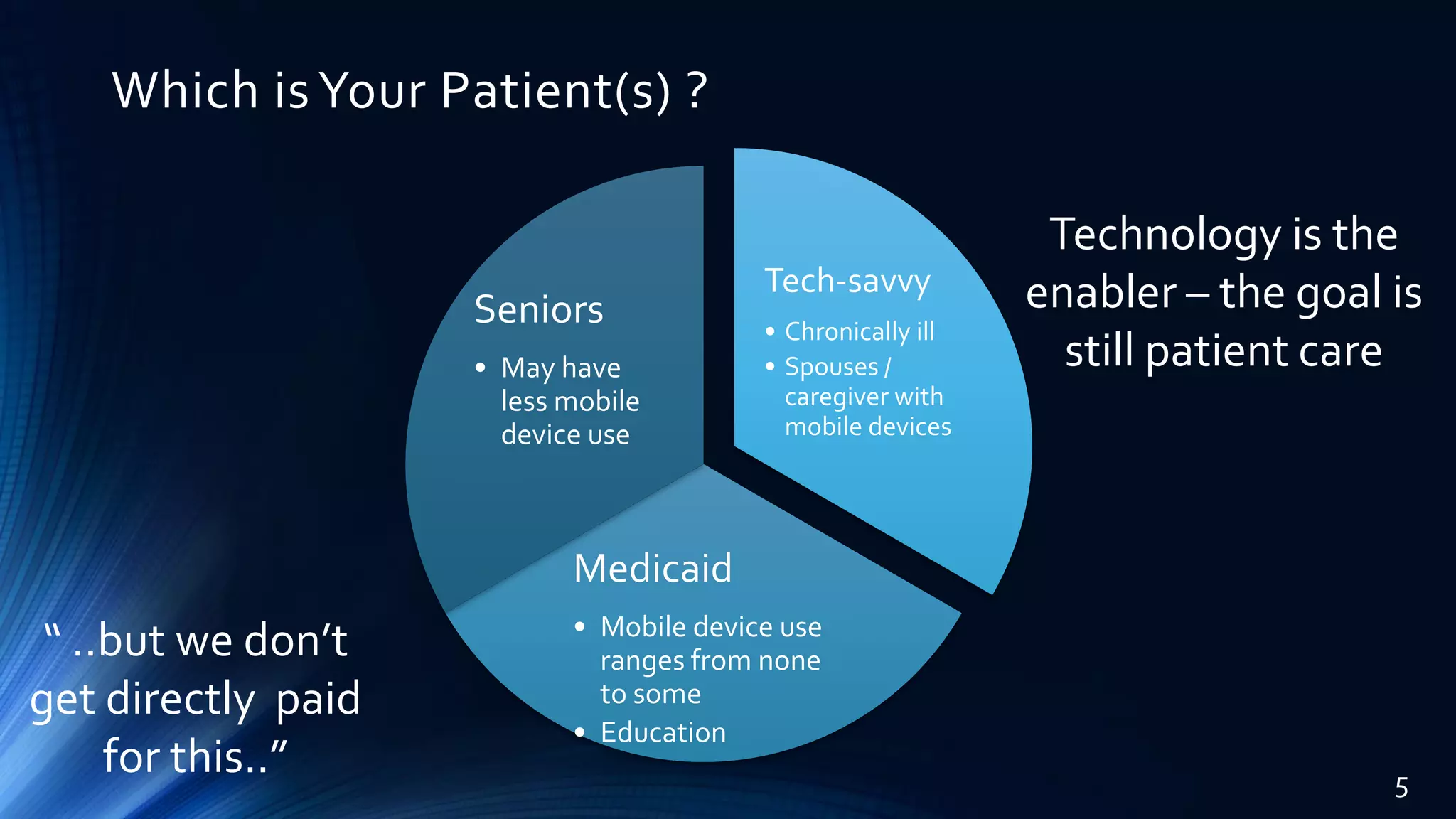
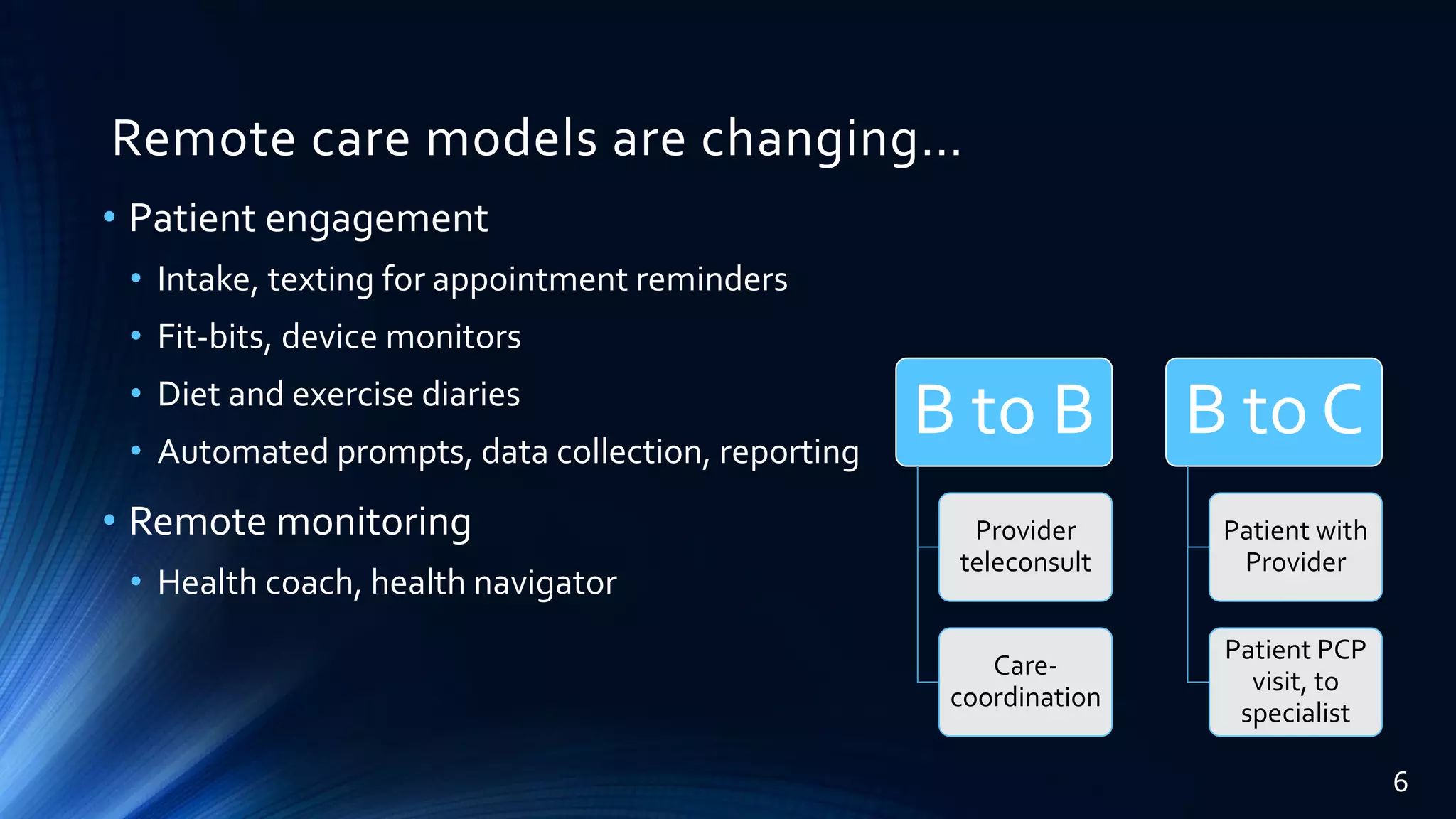
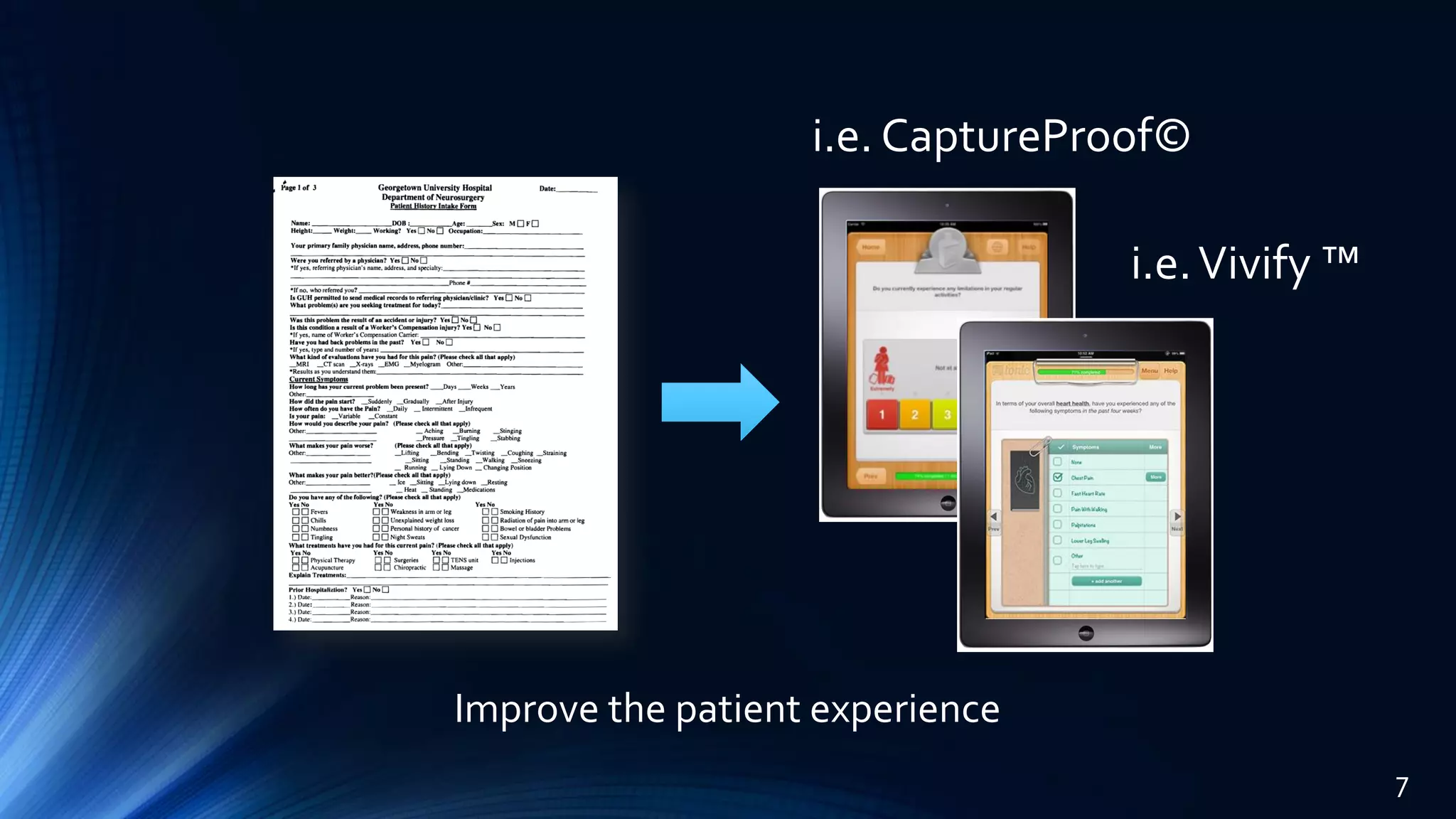
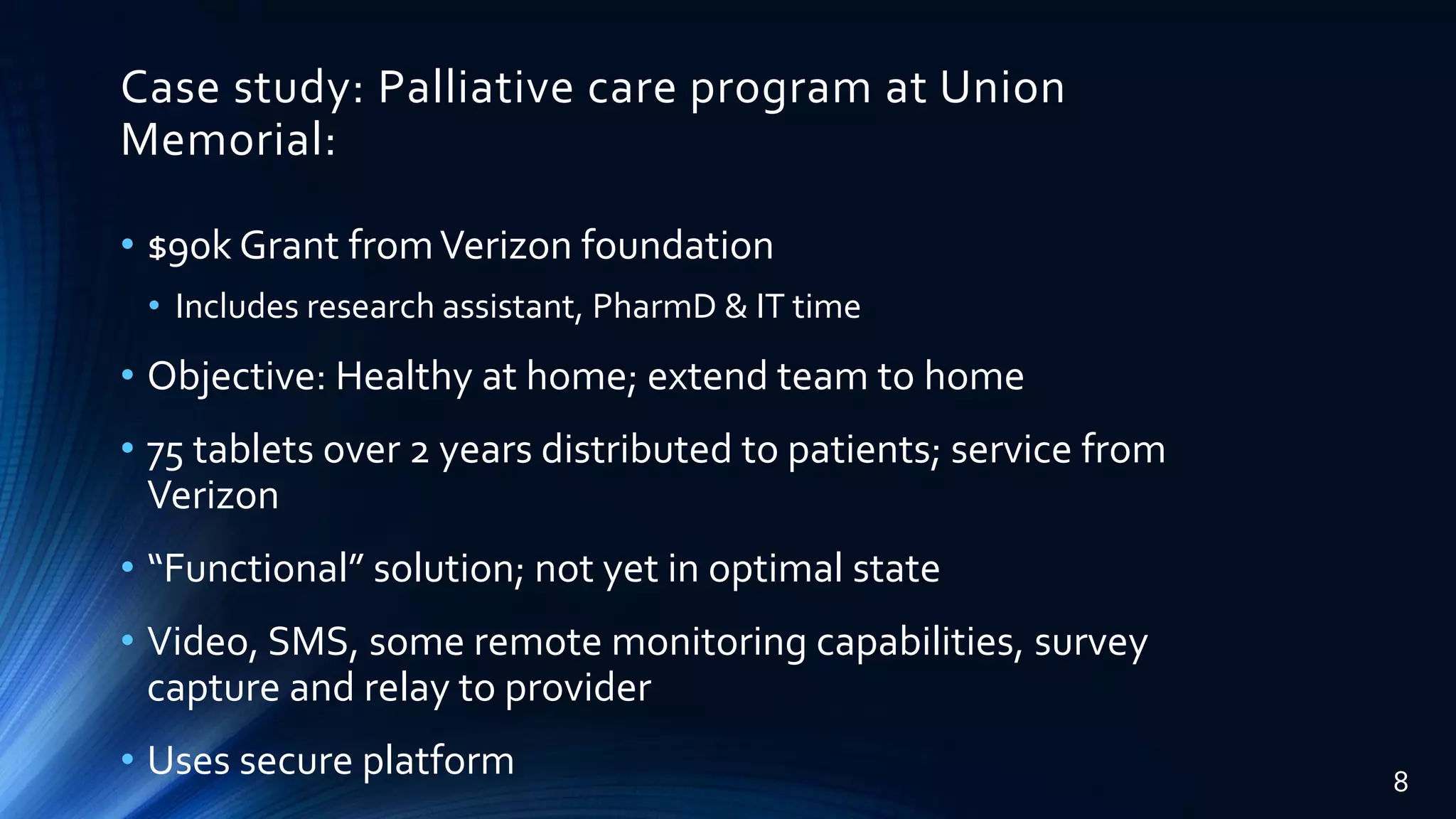
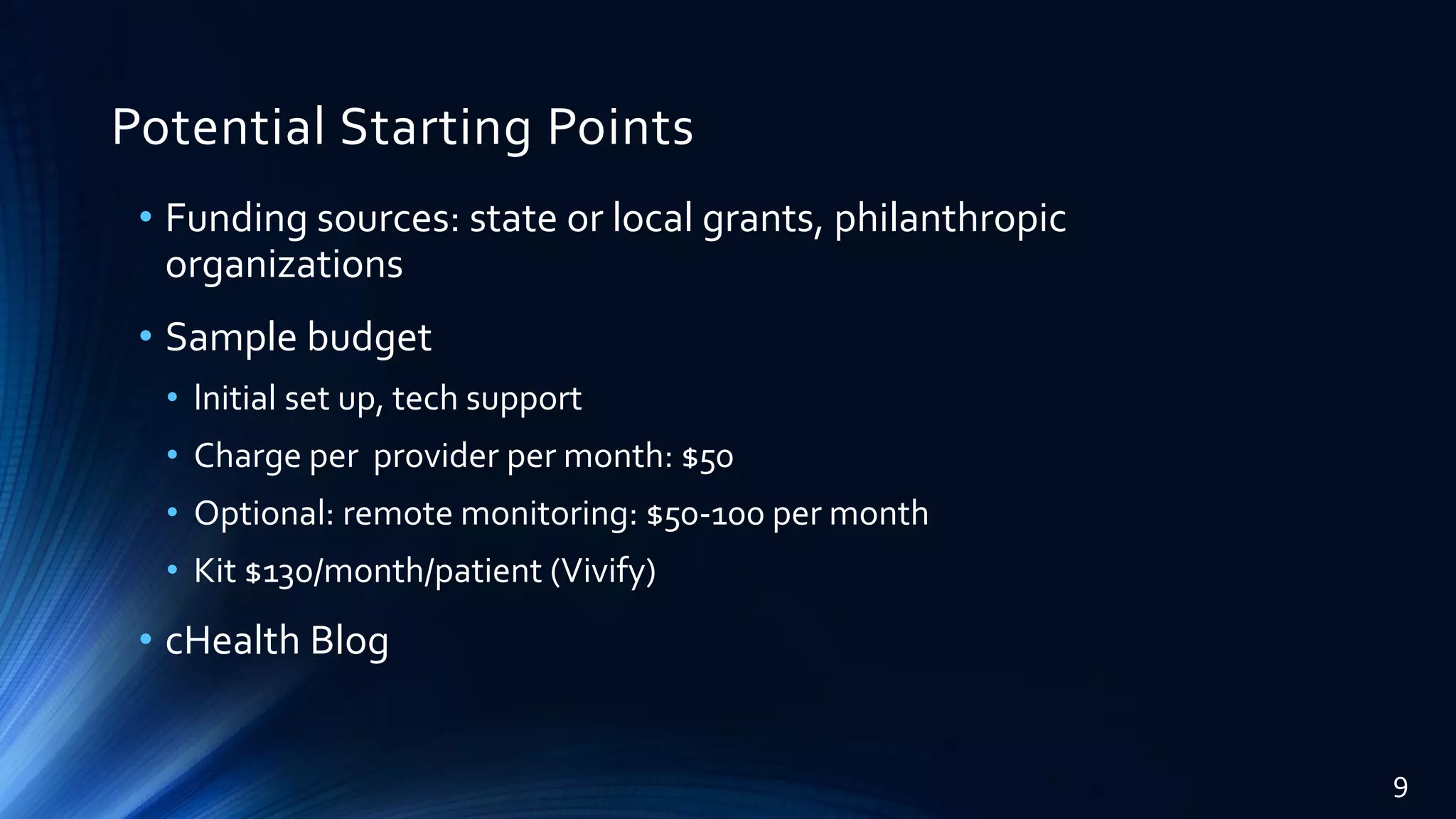
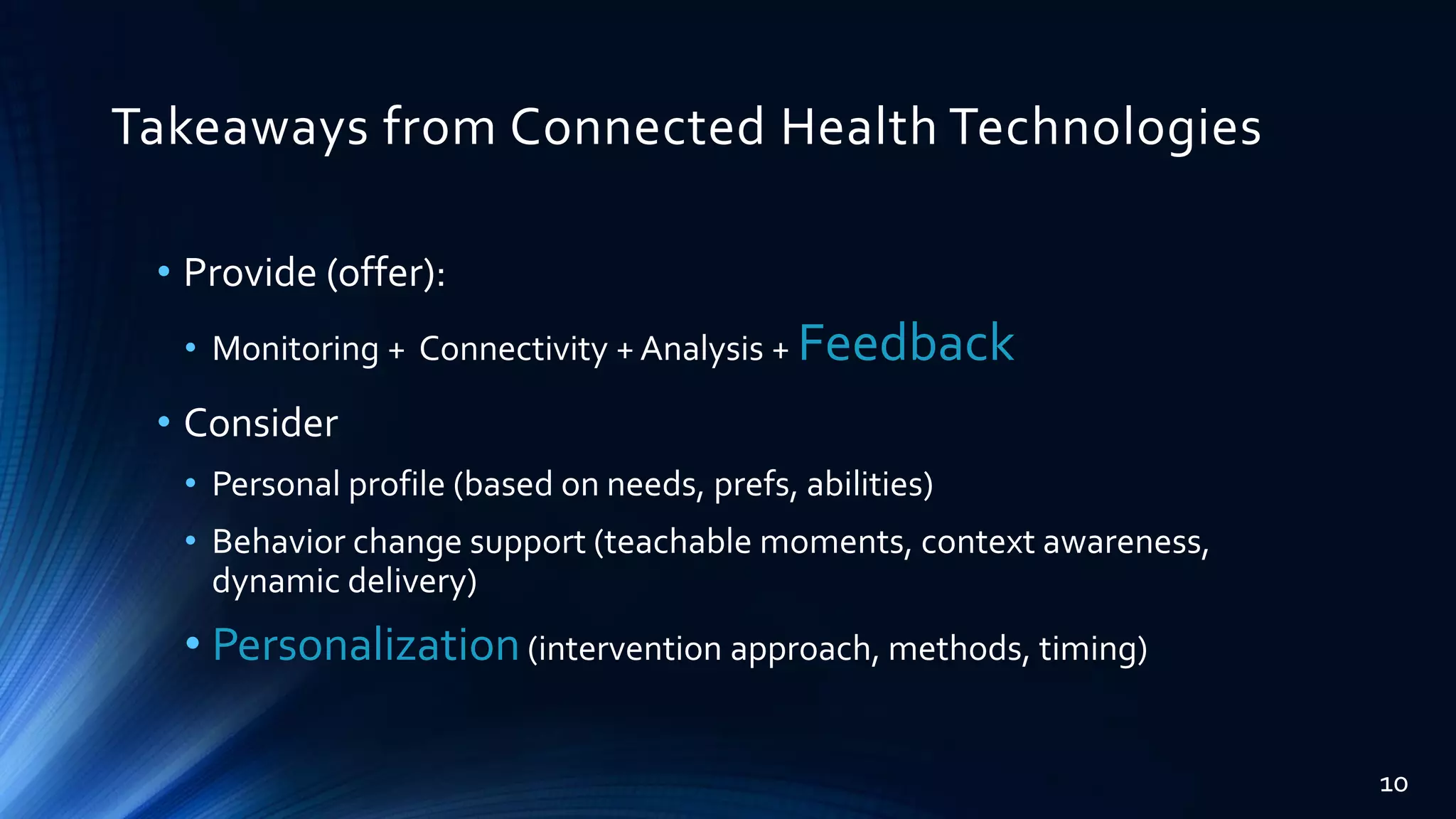
This document discusses the use of digital technologies to support complex care and super-utilizer patients. It begins by addressing privacy concerns under HIPAA and noting some technologies like FaceTime and texting may be allowed if secure and discoverable. It then discusses different patient populations and their technology use. Several remote care models using engagement technologies like devices, monitoring, and health coaching are presented. A case study of a palliative care program using tablets is described. Potential funding sources and sample budgets for remote care programs are provided. Takeaways focus on technologies providing monitoring, connectivity, analysis, and feedback to support behavior change in a personalized way.