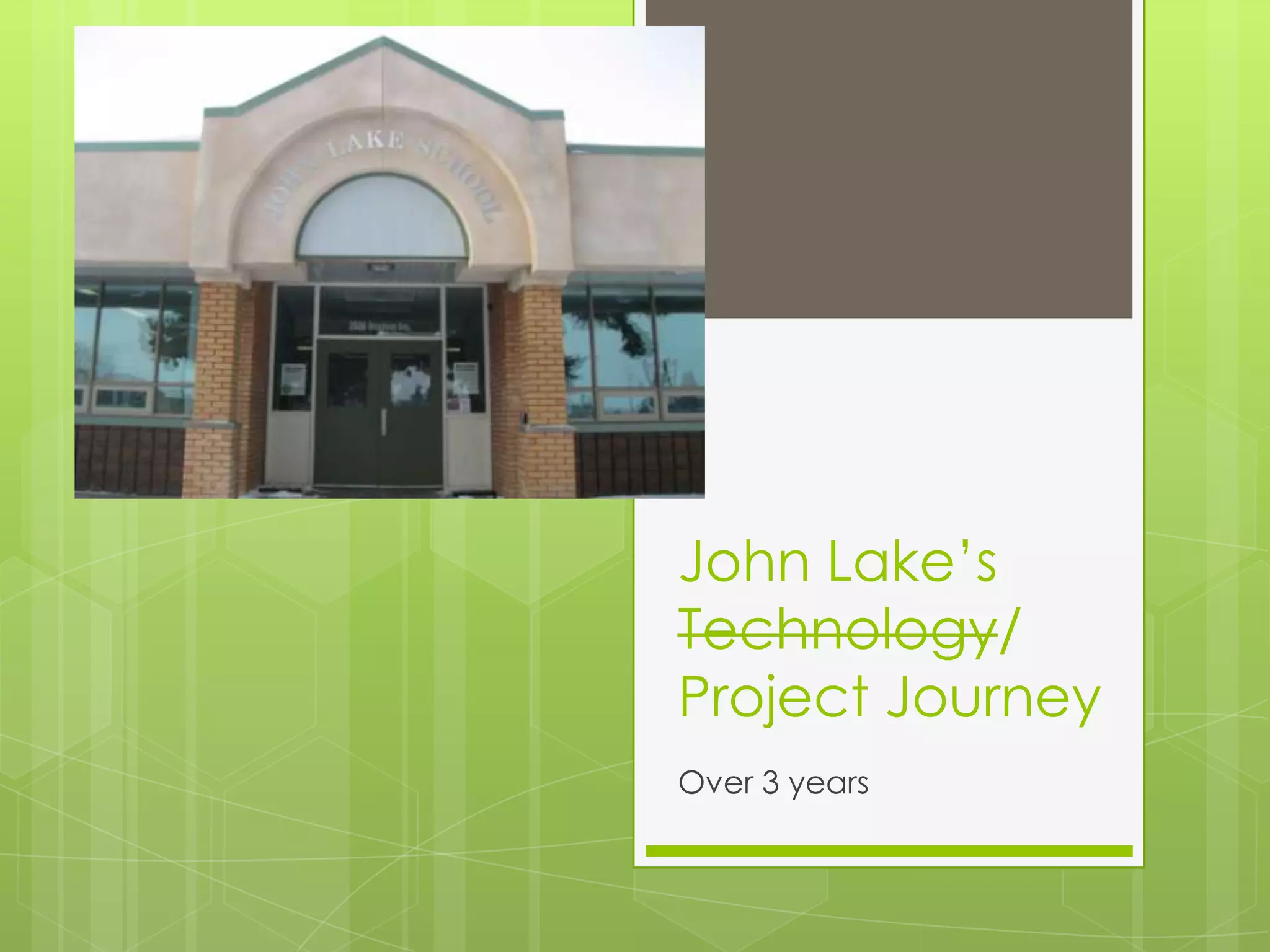
John Lake’s
Technology/
Project Journey
Over 3 years
Realtime Board
http://realtimeboard.com/app


Libguide:
http://elementarylibguides.sps
d.sk.ca/johnlake
Points to Consider around
          Technology
There are 3 Orders of Change
 First Order Change – LITERACY - Efforts, Doing,
  Optional, Volunteerism, Quantitative
 This is the WHATEVER phase – do anything, just
  DO something!
Consider:
 If we had something, what would we have?
 If we did have stuff, what would we measure?
Second Order Change
          ADAPTING
 Second   order Change – Results geared,
  Learning Targets evident, Pervasive,
  Everyone GOES!!
 Projects are connected to learning but
  with broad goals
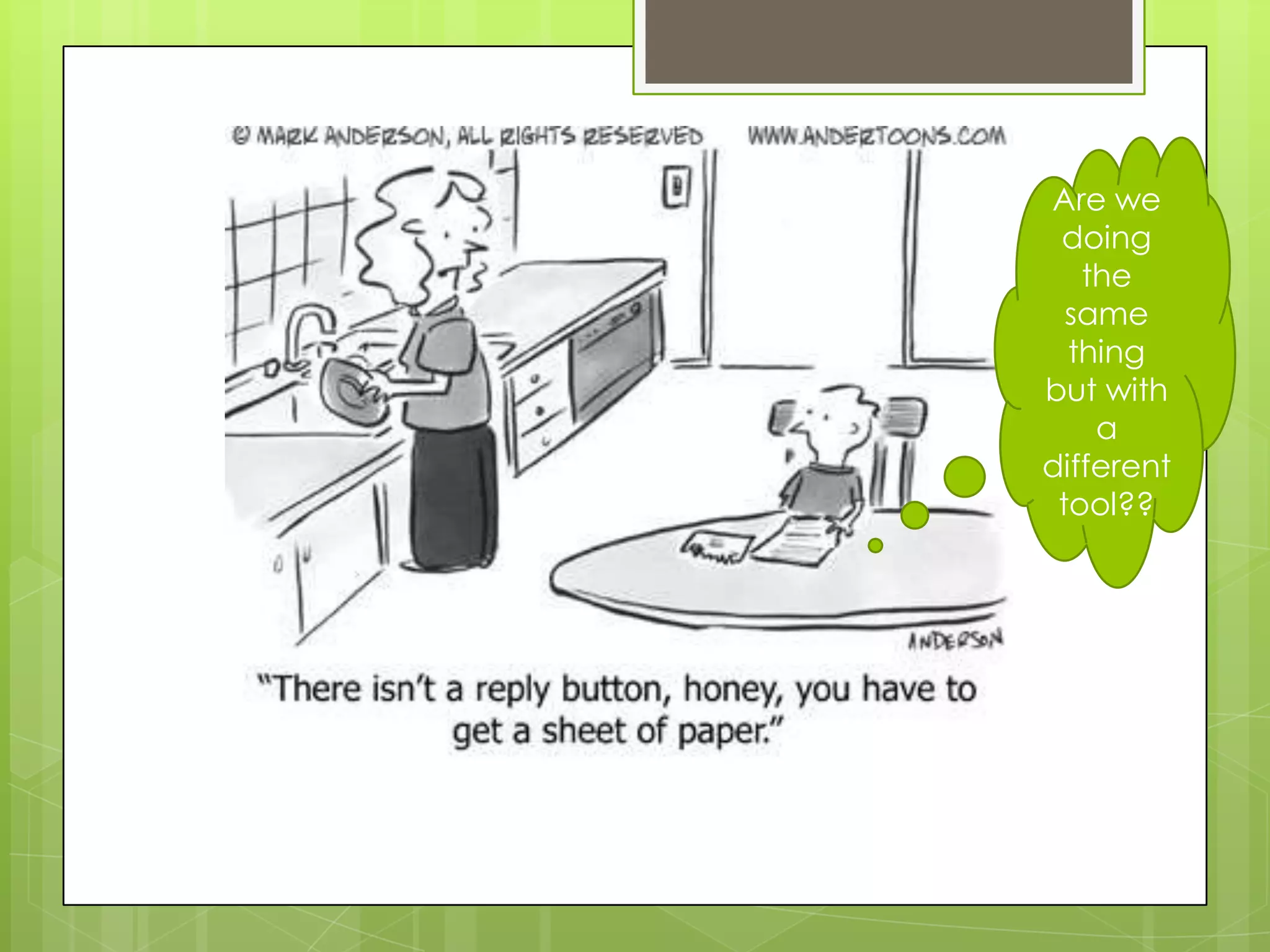
Are we
 doing
   the
  same
  thing
but with
    a
different
 tool??
Third Order Change
            TRANSFORMING
 Third order – Hard to achieve, and MUST
  be data driven
 Technology is INTEGRATED across the
  curriculum

 What level do you feel you are at?
 What level is your current staff at?
 What could you do in your current position
 to help others move forward?
Technology is only
technology if it is
new….
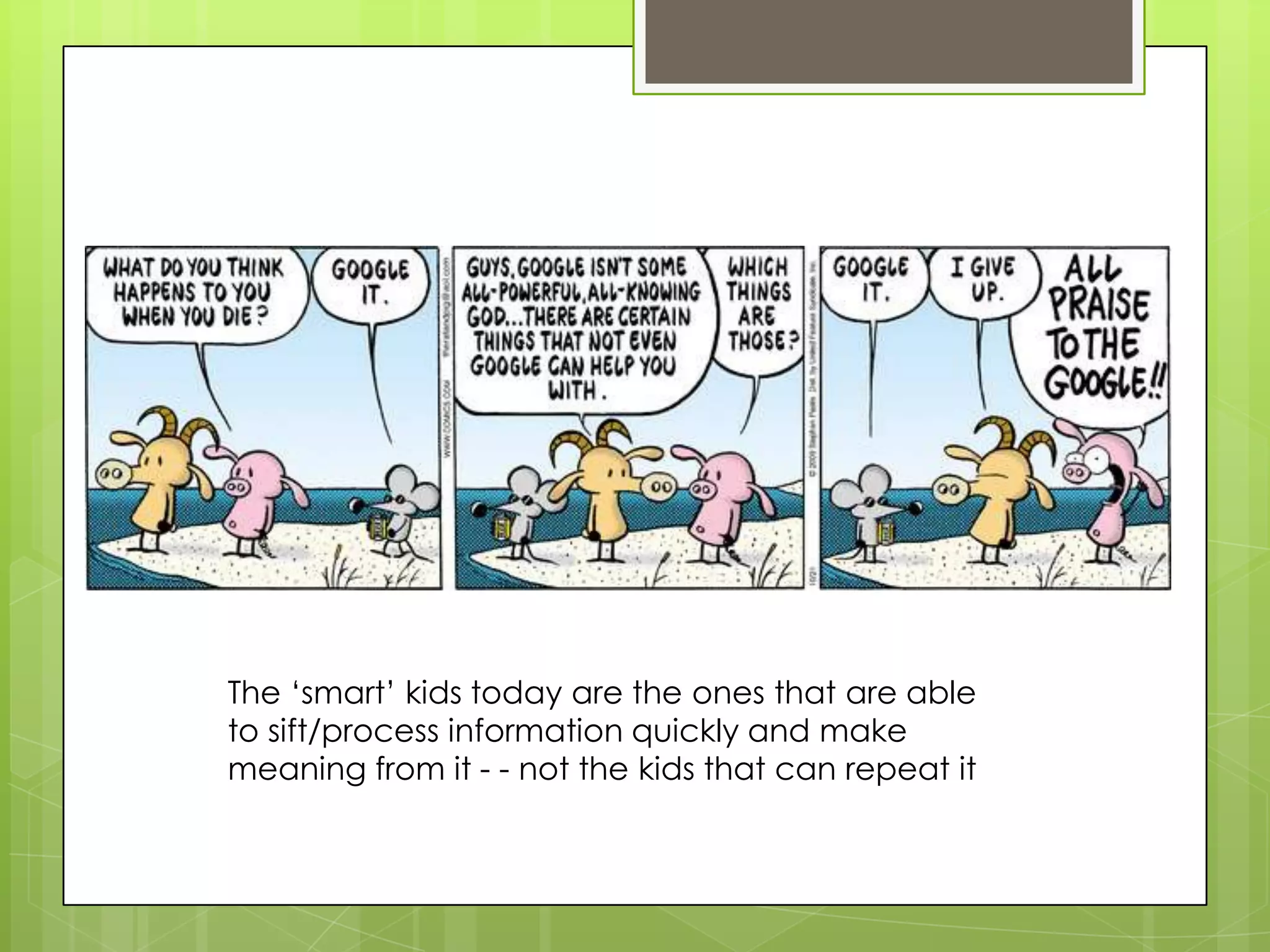
The ‘smart’ kids today are the ones that are able
to sift/process information quickly and make
meaning from it - - not the kids that can repeat it
What to Consider When
Forming Essential Questions to
 Drive Inquiry Based Projects?
 Need to create specific, measurable
  outcomes from curriculum around LEARNING
Consider:
 What do you want the student to be able to
  do/show you?
 Are you creating efforts goals or results goals?
 What would you measure? Are you counting
  the doings or considering the RESULT of the
  doing?
Key Ideas
   Remember the HEAT (Higher order thinking,
    Engaged Students, Authentic Tasks,
    Technology Uses)
   Must be outcome driven
   We need to ask ourselves what we expect
    students to learn/show us/be able to do from
    these outcomes
   Always consider LAT (LITERACY, ADAPTING
    AND TRANSFORMING) and how it relates to
    HEAT
HEAT RUBRIC


http://slitech.wordpress.com/2009/12/18/are-you-
turning-up-the-h-e-a-t-in-your-classroom/

http://coachingheat.wikispaces.com/home
Four Main Goal Categories
 Technology   Efforts (counting the doings)
 Techology Results (what’s going to
  happen)
 Learning Efforts
 Learning Results
KEYWORDS: LEARNING and STUDENTS
Trend - 2010
 Our  goals around technology (in our
  system) – 80% tech efforts, 10% tech
  results, 10% learning efforts
 Shift towards – 67% Learning Results – 19%
  Tech Efforts, 14% Tech results
 Where is your levels at?
 What about your school/staff?
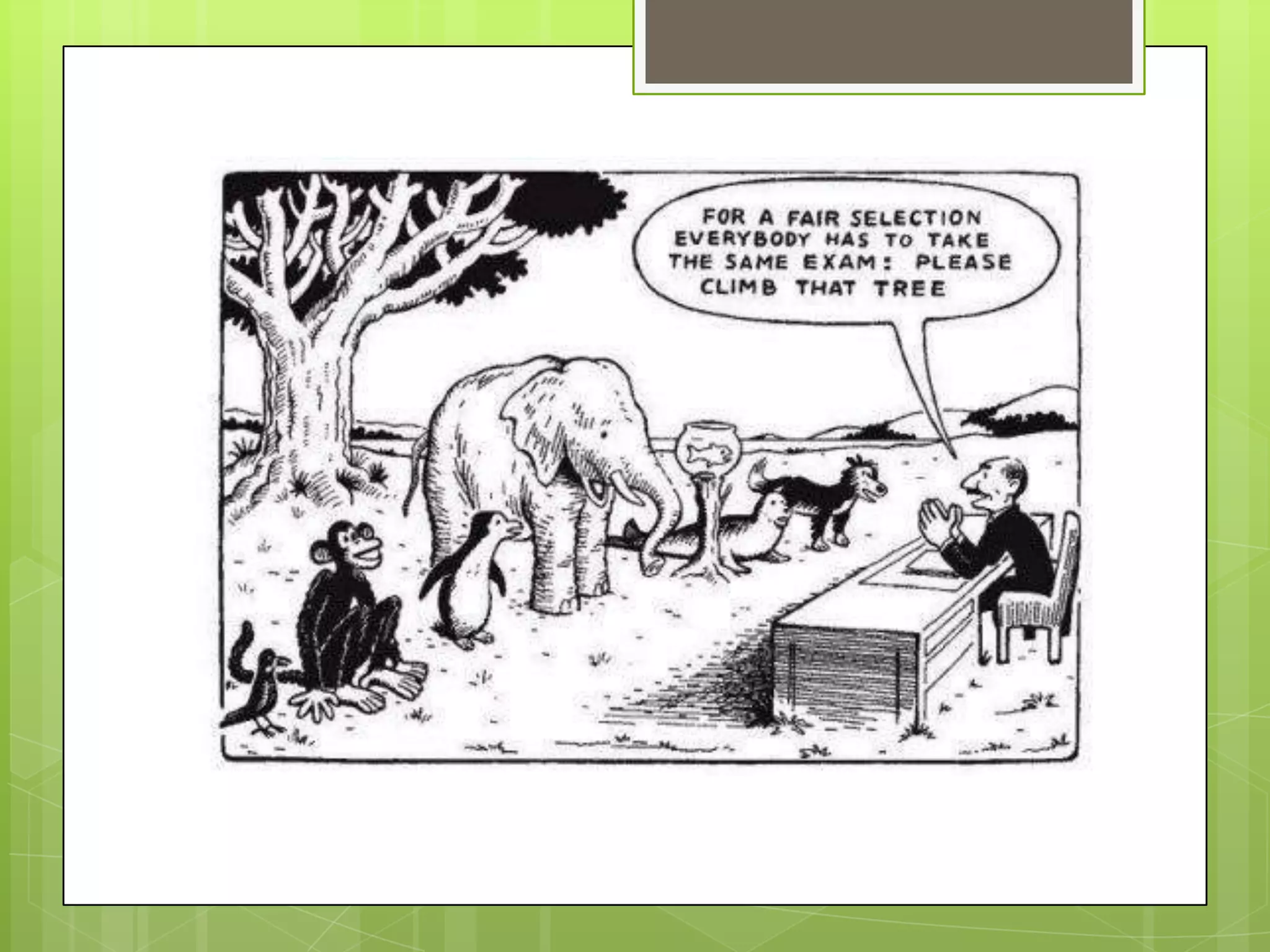
Multiple Intelligences
Premise: All students can learn and achieve
outcomes - - just may need a different path and
TECHNOLOGY can assist with that


        DI – Differentiated
             Instruction

The person doing the most is learning the most
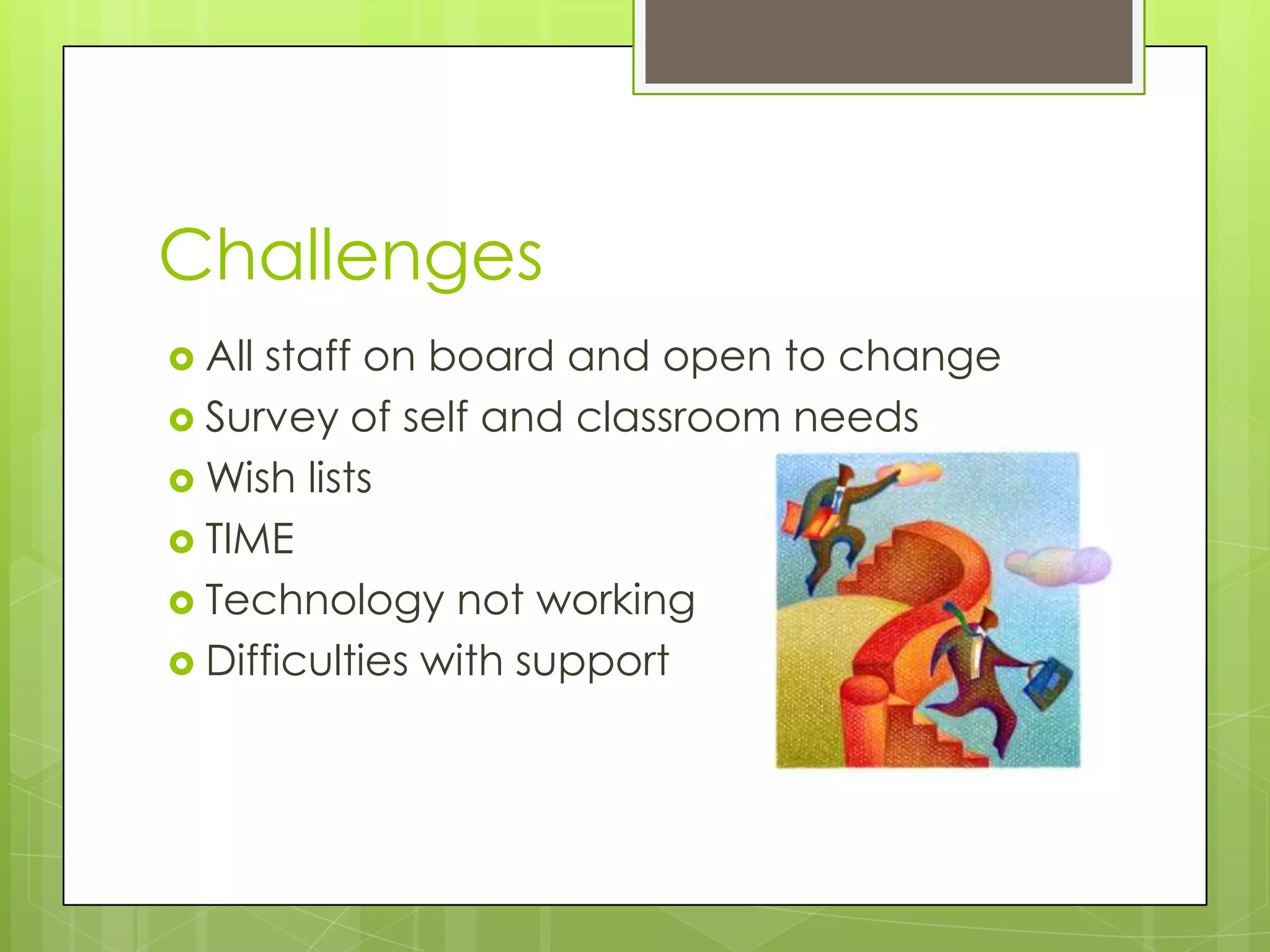
Challenges
 Allstaff on board and open to change
 Survey of self and classroom needs
 Wish lists
 TIME
 Technology not working
 Difficulties with support
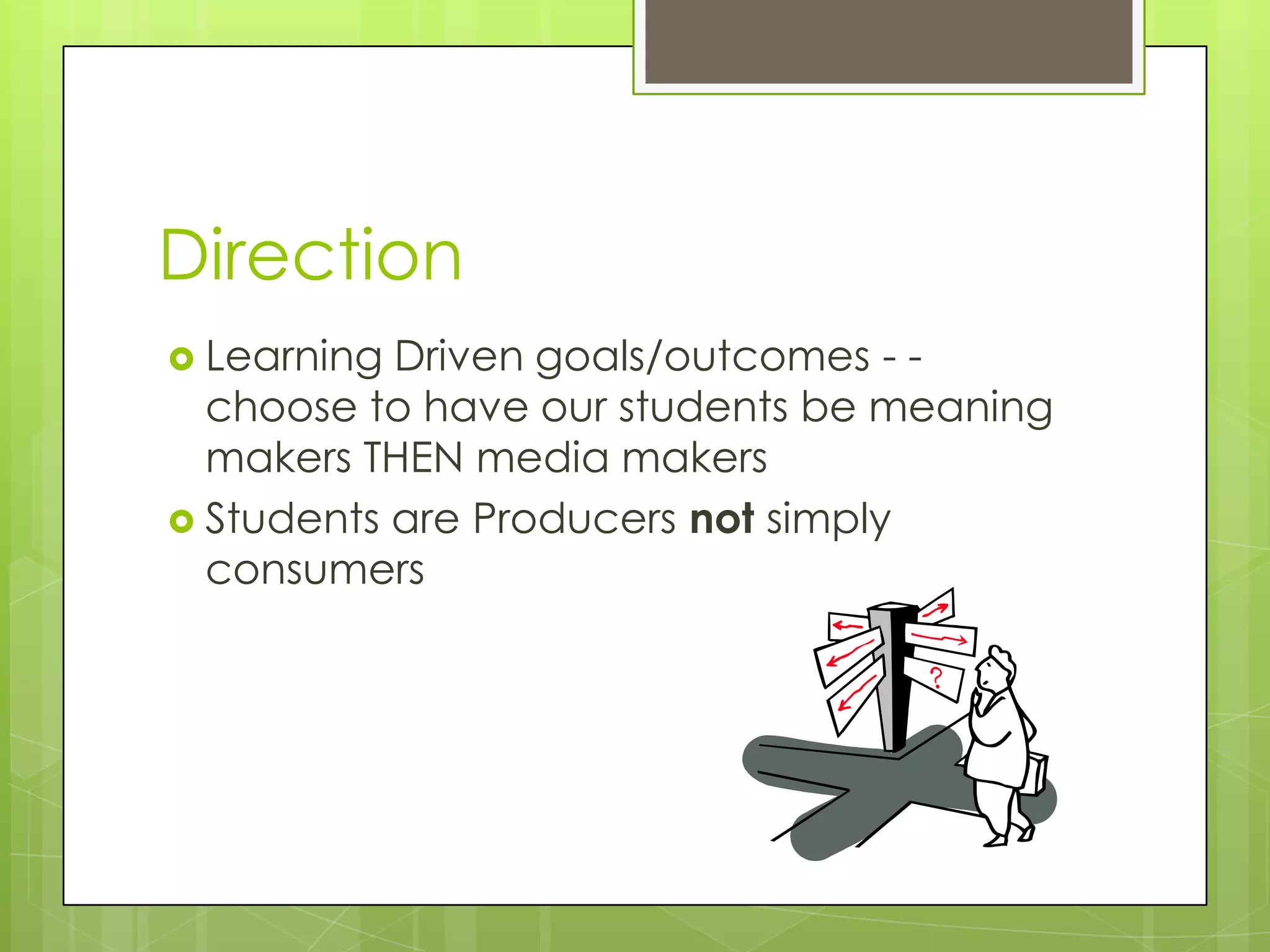
Direction
 Learning Driven goals/outcomes - -
  choose to have our students be meaning
  makers THEN media makers
 Students are Producers not simply
  consumers
Consider…
 Everyone  is at a different starting point - -
  honour that point and do our best to
  support them to move to next level
 Take their strengths and move forward
  with those in mind
 Everyone completes one project
  (minimum) that has a strong essential
  question driving work
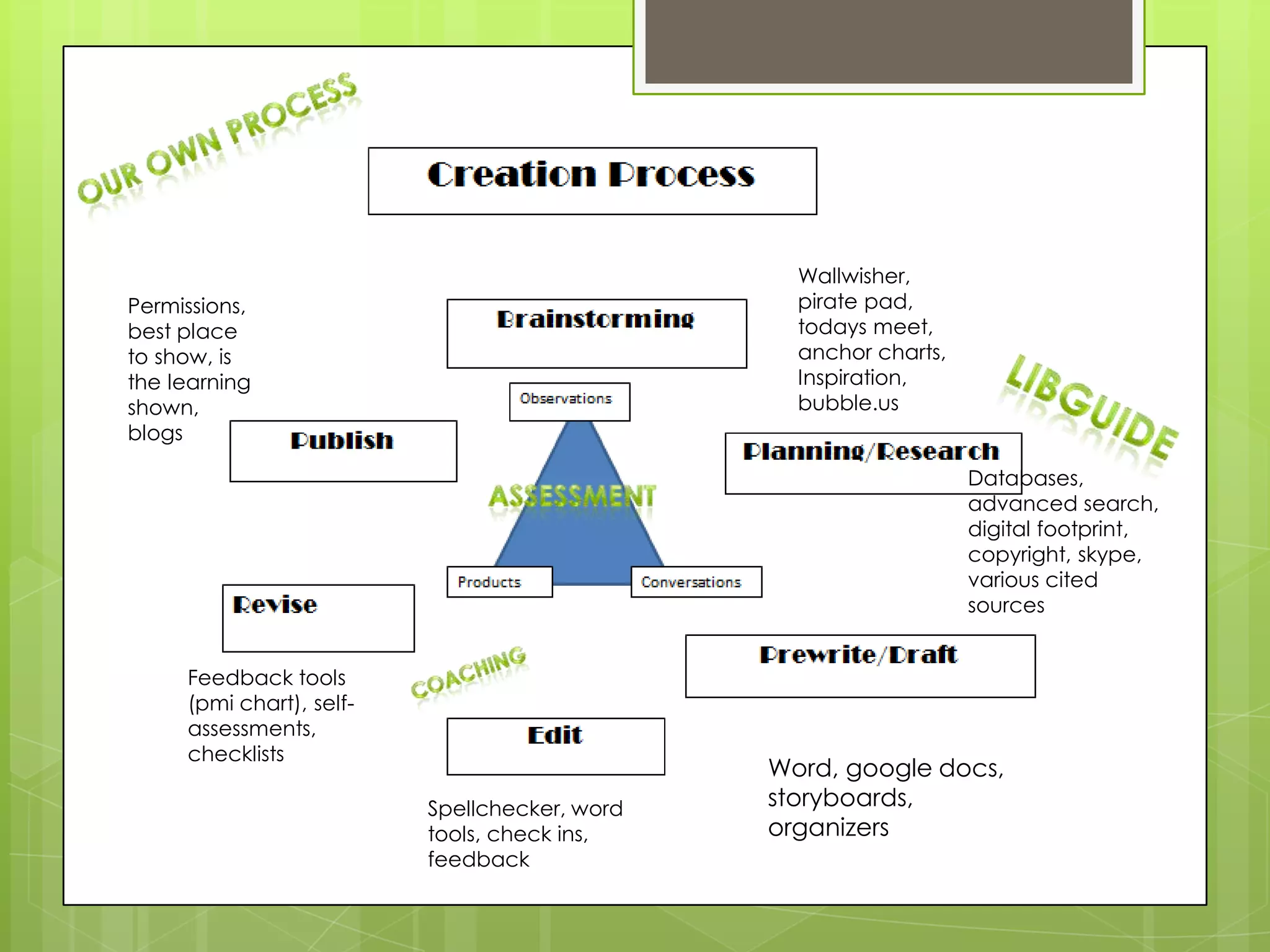
Wallwisher,
Permissions,                                     pirate pad,
best place                                       todays meet,
to show, is                                      anchor charts,
the learning                                     Inspiration,
shown,                                           bubble.us
blogs

                                                                  Databases,
                                                                  advanced search,
                                                                  digital footprint,
                                                                  copyright, skype,
                                                                  various cited
                                                                  sources


     Feedback tools
     (pmi chart), self-
     assessments,
     checklists
                                               Word, google docs,
                          Spellchecker, word   storyboards,
                          tools, check ins,    organizers
                          feedback
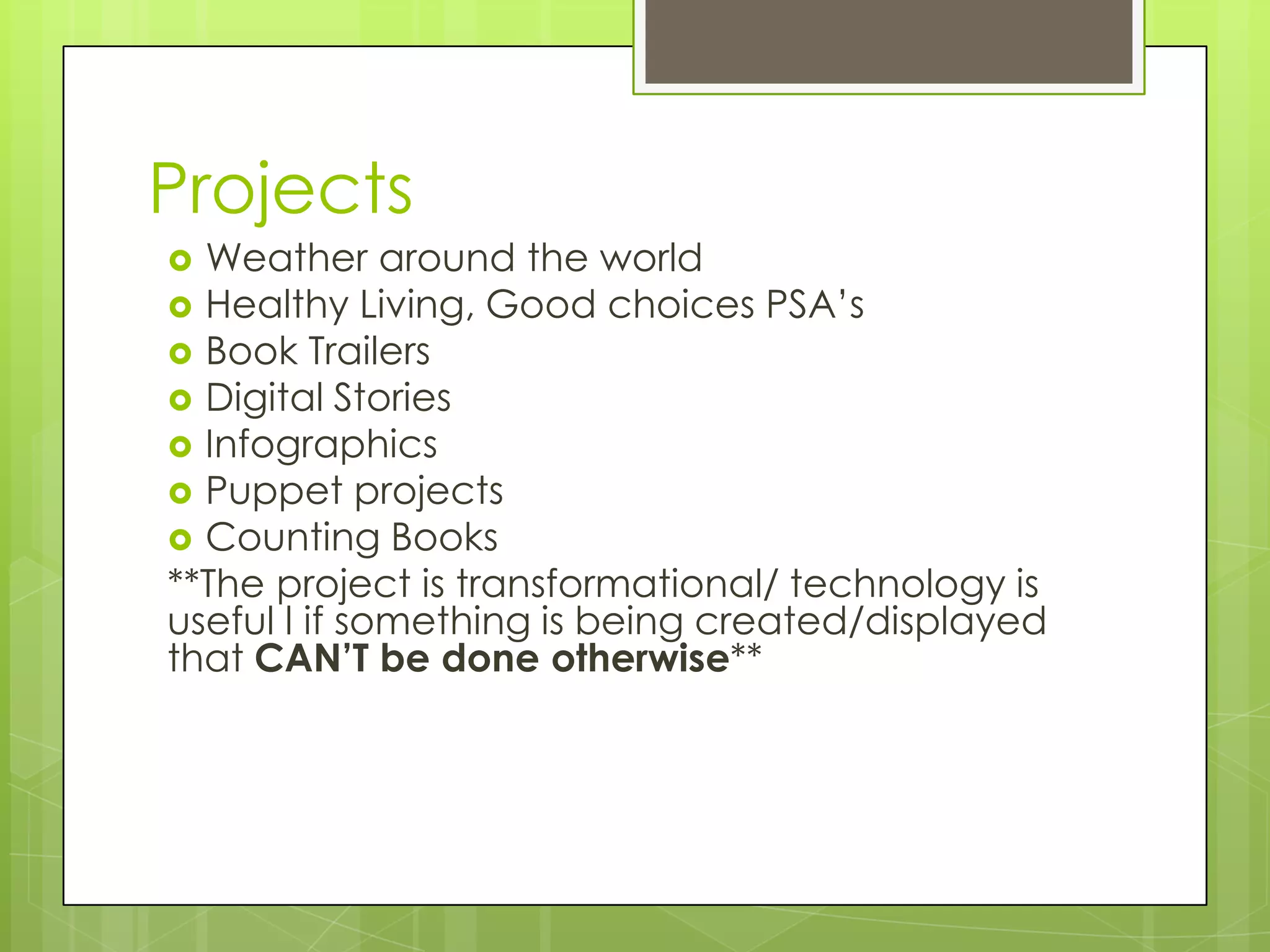
Projects
 Weather around the world
 Healthy Living, Good choices PSA’s
 Book Trailers
 Digital Stories
 Infographics
 Puppet projects
 Counting Books
**The project is transformational/ technology is
useful l if something is being created/displayed
that CAN’T be done otherwise**
Tools used to reach outcomes
in Projects
   PSA’s – i-movie, windows movie maker,
    animoto
   Infographics -
   Explaining thinking – audacity, educreations,
    podcasts, videos
   Explaining learning – slideshare, prezi, comic
    life, glogster
   Today’s Meets, wallwisher, organizers
   Various online tools (bubble.us)
   MANY MORE
Blogs
 http://elementarylibguides.spsd.sk.ca/johnlake
       Grade K-2 – Main Page –
       Theresa Dolgopol’s blog
       Grade 6-8 – Main Page – Mitch Lowe’s
Blog
Biggest challenges:
Choosing   best tool for the
 purpose
Feeling comfortable to open
 projects up for students to use
 more than one tool
TIME
Next Steps - Discoveries
 We  get tired of using technology - -
  balance needed
 Continue to focus on covering outcomes
  with technology integrated
 Explore best uses of our technology
 Collaborate more with other groups
  outside of our school/board
 BLOGS (wider audience)
You never know
how far you’ve
travelled until you
stop, turn around,
and take a look
back.

Technology journey

  • 1.
  • 2.
  • 3.
    Points to Consideraround Technology There are 3 Orders of Change  First Order Change – LITERACY - Efforts, Doing, Optional, Volunteerism, Quantitative  This is the WHATEVER phase – do anything, just DO something! Consider:  If we had something, what would we have?  If we did have stuff, what would we measure?
  • 4.
    Second Order Change ADAPTING  Second order Change – Results geared, Learning Targets evident, Pervasive, Everyone GOES!!  Projects are connected to learning but with broad goals
  • 5.
    Are we doing the same thing but with a different tool??
  • 7.
    Third Order Change TRANSFORMING  Third order – Hard to achieve, and MUST be data driven  Technology is INTEGRATED across the curriculum What level do you feel you are at? What level is your current staff at? What could you do in your current position to help others move forward?
  • 8.
  • 9.
    The ‘smart’ kidstoday are the ones that are able to sift/process information quickly and make meaning from it - - not the kids that can repeat it
  • 10.
    What to ConsiderWhen Forming Essential Questions to Drive Inquiry Based Projects?  Need to create specific, measurable outcomes from curriculum around LEARNING Consider:  What do you want the student to be able to do/show you?  Are you creating efforts goals or results goals?  What would you measure? Are you counting the doings or considering the RESULT of the doing?
  • 11.
    Key Ideas  Remember the HEAT (Higher order thinking, Engaged Students, Authentic Tasks, Technology Uses)  Must be outcome driven  We need to ask ourselves what we expect students to learn/show us/be able to do from these outcomes  Always consider LAT (LITERACY, ADAPTING AND TRANSFORMING) and how it relates to HEAT
  • 12.
  • 13.
    Four Main GoalCategories  Technology Efforts (counting the doings)  Techology Results (what’s going to happen)  Learning Efforts  Learning Results KEYWORDS: LEARNING and STUDENTS
  • 14.
    Trend - 2010 Our goals around technology (in our system) – 80% tech efforts, 10% tech results, 10% learning efforts  Shift towards – 67% Learning Results – 19% Tech Efforts, 14% Tech results  Where is your levels at?  What about your school/staff?
  • 15.
    Multiple Intelligences Premise: Allstudents can learn and achieve outcomes - - just may need a different path and TECHNOLOGY can assist with that DI – Differentiated Instruction The person doing the most is learning the most
  • 17.
    Challenges  Allstaff onboard and open to change  Survey of self and classroom needs  Wish lists  TIME  Technology not working  Difficulties with support
  • 18.
    Direction  Learning Drivengoals/outcomes - - choose to have our students be meaning makers THEN media makers  Students are Producers not simply consumers
  • 19.
    Consider…  Everyone is at a different starting point - - honour that point and do our best to support them to move to next level  Take their strengths and move forward with those in mind  Everyone completes one project (minimum) that has a strong essential question driving work
  • 20.
    Wallwisher, Permissions, pirate pad, best place todays meet, to show, is anchor charts, the learning Inspiration, shown, bubble.us blogs Databases, advanced search, digital footprint, copyright, skype, various cited sources Feedback tools (pmi chart), self- assessments, checklists Word, google docs, Spellchecker, word storyboards, tools, check ins, organizers feedback
  • 21.
    Projects  Weather aroundthe world  Healthy Living, Good choices PSA’s  Book Trailers  Digital Stories  Infographics  Puppet projects  Counting Books **The project is transformational/ technology is useful l if something is being created/displayed that CAN’T be done otherwise**
  • 22.
    Tools used toreach outcomes in Projects  PSA’s – i-movie, windows movie maker, animoto  Infographics -  Explaining thinking – audacity, educreations, podcasts, videos  Explaining learning – slideshare, prezi, comic life, glogster  Today’s Meets, wallwisher, organizers  Various online tools (bubble.us)  MANY MORE
  • 23.
    Blogs  http://elementarylibguides.spsd.sk.ca/johnlake Grade K-2 – Main Page – Theresa Dolgopol’s blog Grade 6-8 – Main Page – Mitch Lowe’s Blog
  • 24.
    Biggest challenges: Choosing best tool for the purpose Feeling comfortable to open projects up for students to use more than one tool TIME
  • 25.
    Next Steps -Discoveries  We get tired of using technology - - balance needed  Continue to focus on covering outcomes with technology integrated  Explore best uses of our technology  Collaborate more with other groups outside of our school/board  BLOGS (wider audience)
  • 26.
    You never know howfar you’ve travelled until you stop, turn around, and take a look back.