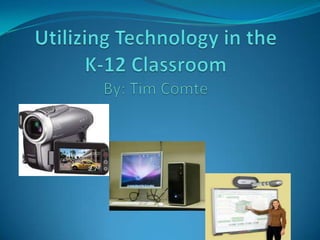
Utilizing Technology in the K-12 ClassroomBy: Tim Comte
Students and TechnologyK-12 students have the ability to learn with technology successful as well as throughout the progression of their lives. It is due to this, that technology can be utilized effectively to educate students and at the same time, technology enhances students learning, which equates to a more responsive classroom.
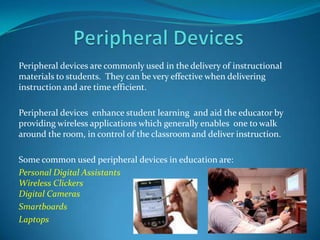
Peripheral DevicesPeripheral devices are commonly used in the delivery of instructional materials to students.  They can be very effective when delivering instruction and are time efficient. Peripheral devices  enhance student learning  and aid the educator by providing wireless applications which generally enables  one to walk around the room, in control of the classroom and deliver instruction.Some common used peripheral devices in education are:Personal Digital Assistants Wireless ClickersDigital CamerasSmartboardsLaptops
Integrating Technology into Your LessonsThe very first step you have to consider when integrating technology, is to determine your purpose to do so. When integrating technology ask yourself,” Do I plan on using the technology for students to develop projects? or for yourself to teach using the technology? or even for students to teach other students.?Next, every educator  normally has two avenues to integrate technology in to the classroom. Generally, you can either use online tools or your on tools to develop your lessons around.If you choose to utilizing your own tools, your have evaluate what you have(digital  camcorder, powerpoint software, PDAs) then develop  your lessons based on what is at your disposal.
Online Tools If you are integrating technology, online tools is always an option.  There are numerous online site which can be used educationally, most of which are free to use. Every educator should utilize as many online tools as possible as well as strive to always explore new online avenues to  utilize in the development of lessons and the deliver y of instruction materials. Zunal is a very popular online tool which is utilized frequently. You can  create you own webquest, have your students create their own, and even utilize other webquest.A few online tools areSlideshare, www.slideshare.com–slide show presentationsPrezi. www.prezi.com –presentation, lesson developmentZunal, www.zunal.com –Webquest, online projectsWebs, www.webs.com –free online webpage, digital libraries
The Role of TechnologyTechnology plays many vital role when it comes to k-12 education.  Below is  a list of some of the many vital roles technology can play;Lesson Design, Creation, Instruction and EvaluationEngaging Student Interest, Response, and ParticipationEnhancing Student LearningProviding  Visual and Vocal Aid and InstructionGroup Projects and PresentationsCreating External Environment LessonsMonitoring and Evaluating Student Performance
ConclusionTechnology in education in today's modern times is a must. Educators today must be capable  of utilizing technology in lessons throughout an academic year. Students also needs to utilize technology through carefully developed  instructional materials  and not just learn by watching  movies. Further, online tools are free and greatly expand your course content and your own tools need to be sufficient to cerate an entire school years worth on new and creative projects using technology.
The End

Technology in the K-12 classroom

  • 1.
    Utilizing Technology inthe K-12 ClassroomBy: Tim Comte
  • 2.
    Students and TechnologyK-12students have the ability to learn with technology successful as well as throughout the progression of their lives. It is due to this, that technology can be utilized effectively to educate students and at the same time, technology enhances students learning, which equates to a more responsive classroom.
  • 3.
    Peripheral DevicesPeripheral devicesare commonly used in the delivery of instructional materials to students. They can be very effective when delivering instruction and are time efficient. Peripheral devices enhance student learning and aid the educator by providing wireless applications which generally enables one to walk around the room, in control of the classroom and deliver instruction.Some common used peripheral devices in education are:Personal Digital Assistants Wireless ClickersDigital CamerasSmartboardsLaptops
  • 4.
    Integrating Technology intoYour LessonsThe very first step you have to consider when integrating technology, is to determine your purpose to do so. When integrating technology ask yourself,” Do I plan on using the technology for students to develop projects? or for yourself to teach using the technology? or even for students to teach other students.?Next, every educator normally has two avenues to integrate technology in to the classroom. Generally, you can either use online tools or your on tools to develop your lessons around.If you choose to utilizing your own tools, your have evaluate what you have(digital camcorder, powerpoint software, PDAs) then develop your lessons based on what is at your disposal.
  • 5.
    Online Tools Ifyou are integrating technology, online tools is always an option. There are numerous online site which can be used educationally, most of which are free to use. Every educator should utilize as many online tools as possible as well as strive to always explore new online avenues to utilize in the development of lessons and the deliver y of instruction materials. Zunal is a very popular online tool which is utilized frequently. You can create you own webquest, have your students create their own, and even utilize other webquest.A few online tools areSlideshare, www.slideshare.com–slide show presentationsPrezi. www.prezi.com –presentation, lesson developmentZunal, www.zunal.com –Webquest, online projectsWebs, www.webs.com –free online webpage, digital libraries
  • 6.
    The Role ofTechnologyTechnology plays many vital role when it comes to k-12 education. Below is a list of some of the many vital roles technology can play;Lesson Design, Creation, Instruction and EvaluationEngaging Student Interest, Response, and ParticipationEnhancing Student LearningProviding Visual and Vocal Aid and InstructionGroup Projects and PresentationsCreating External Environment LessonsMonitoring and Evaluating Student Performance
  • 7.
    ConclusionTechnology in educationin today's modern times is a must. Educators today must be capable of utilizing technology in lessons throughout an academic year. Students also needs to utilize technology through carefully developed instructional materials and not just learn by watching movies. Further, online tools are free and greatly expand your course content and your own tools need to be sufficient to cerate an entire school years worth on new and creative projects using technology.
  • 8.